
利率风险

Search documents
征文优秀文章 | 应用国债期货管理债券投资风险的实践与创新
Xin Lang Cai Jing· 2025-12-02 23:18
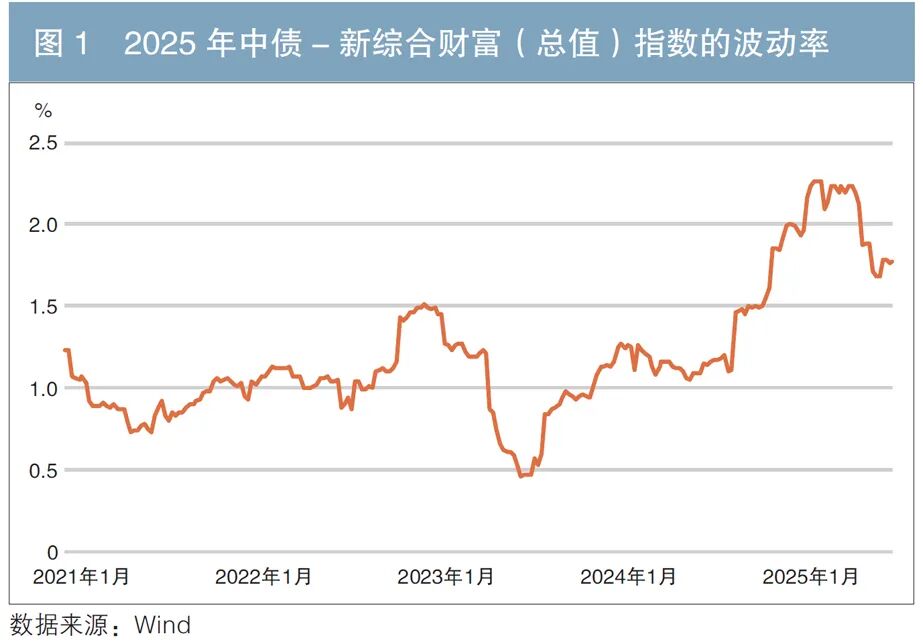
Group 1 - The article discusses the complexities faced by financial institutions in bond investment under a low interest rate environment, emphasizing the need for both capturing downward yield benefits and mitigating upward interest rate risks [2][6][29] - It highlights the significant decline in bond yields, with the 10-year government bond yield dropping to a historical low of 1.6%-1.9% from January to July 2025, and the increased volatility in bond yields, complicating risk management for financial institutions [2][4][6] - The article proposes the innovative use of government bond futures for risk management, particularly during periods of significant interest rate increases, and suggests a quantitative hedging mechanism to enhance risk management effectiveness [1][29][30] Group 2 - Financial institutions are encouraged to utilize government bond futures to manage various types of risks, including interest rate risk, duration gap risk, liquidity risk, credit spread risk, and yield curve risk [1][29][30] - The article provides practical examples of how government bond futures can be employed to hedge against rising interest rates, demonstrating the effectiveness of using the modified duration method for calculating hedge ratios [9][10][26] - It emphasizes the importance of expanding participation in the government bond futures market among banks and insurance institutions to enhance their risk management capabilities and achieve high-quality investment management [30]

六大行下架五年期大额存单:不是不让存,是银行扛不住了!
Sou Hu Cai Jing· 2025-11-29 01:42
"刚凑够20万,想存个五年期大额存单,怎么各大银行都没了?" 最近不少储户发现,工行、建行、农行等六大国有银行,手机App里已找不到五年期大额存单的身影。就连三年期产品也"手慢无",农行标着"额度紧张", 工行直接显示"售罄"。 这不是银行"嫌钱少",恰恰是被逼的。背后藏着银行的生存焦虑——净息差持续收窄,高成本存款已成"负担"。 银行赚钱的逻辑很简单:低息吸储,高息放贷,赚中间的利息差(净息差)。但现在这个"差价"已经薄得像纸。 国家金融监督管理总局数据显示,2025年三季度末,商业银行净息差仅1.42%,处于历史低位。对六大行来说,这个数字更不乐观,普遍低于行业平均。 五年期大额存单,曾是银行的"吸储利器",但也是"成本高地"。之前这类产品利率普遍在2.5%以上,而银行放贷的主力——房贷利率,现在不少城市已经降 到3.5%以下。 算笔账就清楚:银行以2.5%的利率吸收存款,再以3.5%的利率放出去,扣除运营成本后几乎不赚钱。要是遇到借款人提前还款,银行更是"赔本赚吆喝"。 某股份制银行人士直言:"现在拉一笔五年期大额存单,就像背上一个长期包袱,不如干脆下架,把成本降下来。" 银行下架五年期产品,还有个深层 ...

中外市场概况、估值逻辑与未来展望:浮息债:利率波动下的防御之盾与价值之选
Hua Yuan Zheng Quan· 2025-11-27 07:57
Report Industry Investment Rating No relevant content provided. Core Viewpoints of the Report - The domestic floating - rate bond market has gone through three stages: initial development, scale expansion, and adjustment and transformation, with significant room for improvement in market scale and product structure [2][74]. - The US floating - rate bond market is relatively mature, mainly including TIPS and FRNs, with different issuance subjects and benchmark interest rates from the domestic market [17]. - The valuation of floating - rate bonds is complex, and their secondary - market liquidity is insufficient. Issuers and investors choose floating - rate bonds for different reasons, such as cost reduction and risk avoidance [2][38]. Summary by Relevant Catalogs 1. Domestic Floating - Rate Bond Market Development - The domestic floating - rate bond market started in 1995 and has experienced three rounds of expansion. In 2025 (as of October 13), 103 floating - rate bonds were issued, with a scale of 293.57 billion yuan [2][5]. - As of October 13, 2025, the domestic floating - rate bond stock was 648.991 billion yuan, accounting for 0.34% of the total bond balance. Policy - bank bonds are the largest variety, and the top three benchmark - interest - rate types in terms of scale are DR007, 1 - year LPR, and 5 - year LPR [2][6]. - The remaining maturity of outstanding floating - rate bonds is highly concentrated in the 1 - 3 - year medium - and short - term varieties, with a balance - scale proportion of 79.01% [15]. 2. US Floating - Rate Bond Market - As of June 30, 2025, the US floating - rate bond (TIPs + FRNs) stock was approximately $3.39 trillion, accounting for 9.36% of the total US - dollar bond scale. The main products are TIPs and FRNs [17]. - TIPs are linked to the CPI, with a fixed coupon rate and a floating principal to resist inflation. As of June 30, 2025, the TIPs stock was approximately $1.73 trillion, accounting for 51.03% of floating - rate government bonds [17]. - FRNs are linked to the US benchmark interest rate, with a more diverse range of issuers. As of June 30, 2025, the FRNs stock was approximately $1.66 trillion, accounting for 48.97% of floating - rate government bonds [22]. 3. Floating - Rate Bond Valuation - The pricing of floating - rate bonds is driven by two factors: current benchmark - interest - rate changes triggering coupon resets and changes in market expectations of future interest rates. YTM may be "distorted" in analyzing floating - rate bonds [38]. - Quantitative valuation analysis of floating - rate bonds is subjective because future cash flows cannot be determined in advance and rely on forward - interest - rate forecasts. Current methods include the ChinaBond valuation method, forward - interest - rate prediction, and using comparable fixed - rate bonds for valuation [46]. 4. Secondary - Market Trading of Floating - Rate Bonds - With the decline of the interest - rate center, the trading activity of floating - rate bonds has decreased. Their liquidity is generally lower than that of fixed - rate bonds of the same period [52][55]. - The five floating - rate bonds with the best liquidity as of October 19, 2025, are 25 Guokai 14, 25 Nongfa Qingfa 09, 25 Nongfa 09, 24 Nongfa 09, and 25 Guokai Kechuang 01. Liquidity is better for bonds with a large stock scale, a remaining maturity of 1 - 3 years, and a recent issuance date [61]. 5. Reasons for Issuers and Investors to Choose Floating - Rate Bonds - For issuers, floating - rate bonds can reduce issuance costs in a declining or stable interest - rate environment, have a built - in risk - hedging function, and help broaden financing channels [64][65]. - For investors, floating - rate bonds are an effective tool to avoid interest - rate risks and achieve asset - liability matching. Investing in floating - rate bonds with a high repricing frequency can reduce the duration exposure of commercial - bank asset portfolios [70][71]. 6. Future Outlook for the Domestic Floating - Rate Bond Market - The domestic floating - rate bond market has significant room for improvement in market scale, product structure, and function. Local governments and enterprises can issue floating - rate bonds with the government - bond yield as the benchmark, and the central government can issue floating - rate bonds linked to inflation indicators [74][75]. - Banks' self - operation of floating - rate bonds can effectively alleviate interest - rate risks. To improve liquidity, multi - dimensional measures should be taken, such as expanding issuance scale, standardizing terms, and unifying quotation methods [74][75].
美联储“分裂”推高政策不确定性,投资者严防利率“黑天鹅”!
Jin Shi Shu Ju· 2025-11-27 02:36
Core Viewpoint - The Federal Reserve's mixed signals regarding the timing and extent of interest rate cuts have accelerated the inflow of hedge funds into swap options and derivatives linked to overnight rates, as investors seek to hedge against increasing policy uncertainty [1][2]. Group 1: Market Reactions - The short-term volatility of long-term interest rate swap options (10-year and 30-year) has begun to rise, particularly for maturities of three months or less [1]. - The volume of U.S. interest rate swap options surged to $887 billion in the week ending November 7, marking an 18% increase from the previous week, indicating heightened investor willingness to hedge against significant volatility [3]. - The implied volatility of three-month swap options linked to the 10-year swap rate reached a one-month high of 22.23 basis points on November 18, before retreating to 20.79 basis points [3]. Group 2: Federal Reserve's Position - Some Federal Reserve officials, including New York Fed President John Williams and Governor Christopher Waller, suggest that a rate cut may be necessary in December due to a weak labor market, which has put downward pressure on U.S. Treasury yields [2]. - In contrast, several regional Fed presidents advocate for pausing rate cuts until inflation shows a more convincing decline towards the 2% target [2][3]. - The CME FedWatch Tool indicates an 85% probability of a rate cut in December, up from 50% a week prior [2]. Group 3: Investor Sentiment - Analysts note that the hedging activity remains balanced to cover two potential outcomes from the Fed's December meeting: another rate cut or a pause in easing to await clearer economic signals [2]. - The trading structure of swap options does not show a clear inclination towards whether the Fed will cut rates or pause, with the one-year U.S. swap curve area primarily reflecting bets on falling rates [4]. - The surge in open interest for three-month SOFR options expiring in March 2026 suggests that investors anticipate a slight increase in rates while also factoring in the possibility of the Fed maintaining stable rates in the first quarter [5].
日度策略参考-20251125
Guo Mao Qi Huo· 2025-11-25 06:25
Report Summary 1) Report Industry Investment Rating No specific industry investment ratings are provided in the report. 2) Core Viewpoints - The current macro - level is in a relative vacuum period. The A - share market lacks a clear upward main line, and trading volume remains low. Short - term market differences are expected to be gradually digested during the index's shock adjustment, waiting for a new driving main line to push the index higher [1]. - Asset shortage and weak economy are favorable for bond futures, but the central bank has recently warned of interest - rate risks, suppressing the upward space [1]. 3) Summary by Related Catalogs Equity Index - The A - share market lacks a clear upward main line, with low trading volume. Short - term market differences will be digested in the index's shock adjustment, and a new driving main line is awaited for further upward movement [1]. Bonds - Asset shortage and weak economy are good for bond futures, but short - term central bank's interest - rate risk warning restricts the rise [1]. Non - ferrous Metals - Copper: Market sentiment is volatile recently, and copper prices may fluctuate [1]. - Aluminum: With limited industrial drivers and volatile macro sentiment, aluminum prices are oscillating at a high level [1]. - Alumina: Domestic alumina production capacity continues to be released. Production and inventory are both increasing, and the fundamentals are weak. Prices are oscillating around the cost line [1]. - Zinc: The Fed has large internal differences, and the macro sentiment is expected to be volatile. Although there are short - term improvement signs in the domestic fundamentals, the oversupply pattern remains. Zinc prices are expected to fluctuate [1]. - Nickel: The Fed has large internal differences, and the macro sentiment has improved in the short term after the China - US presidential call. Indonesia restricts nickel - related smelting project approvals. With a planned monthly production cut of about 6,000 metric tons in Indonesian intermediate products, nickel prices have a repair expectation if the macro sentiment improves. It is recommended to focus on short - term operations, consider a light - position long - nickel and short - stainless - steel strategy. In the long - term, the primary nickel market remains oversupplied [1]. - Stainless Steel: The Fed has large internal differences, and the macro sentiment has improved in the short term. The price of raw material nickel - iron has weakened again, and the social inventory of stainless steel has increased. Steel mills' production cuts in November are limited. Stainless - steel futures are looking for a bottom in oscillation. It is recommended to focus on short - term operations, consider a light - position long - nickel and short - stainless - steel strategy, and pay attention to short - selling hedging opportunities at high prices [1]. - Tin: The Fed's differences are increasing, and the macro situation is volatile. Indonesia's tin exports have declined significantly. Considering the un - repaired tin - ore supply and terminal demand expectations, tin is still regarded as bullish in the long term [1]. Precious Metals and New Energy - Precious Metals: There are still differences regarding a December interest - rate cut. Precious - metal prices may fluctuate, and attention should be paid to US economic data [1]. - Industrial Silicon: Northwest production capacity is continuously resuming, and the start - up in the southwest is weaker than in previous years. The impact of the dry season is weakening. Polysilicon production in November has decreased, and there is a joint production cut in the organic - silicon industry [1]. - Polysilicon: There is an expectation of production - capacity reduction in the long term. Terminal installations will increase marginally in the fourth quarter. The anti - involution policy has not been implemented for a long time, and market sentiment has faded [1]. - Carbonate Lithium: The traditional peak season for new energy vehicles is approaching, energy - storage demand is strong, and the supply side is resuming production. However, there are concerns about potential weakening of industrial demand in the off - season [1]. Steel and Iron - Rebar: In the off - season, there are concerns about potential weakening of industrial demand. During the short - term macro vacuum period, although the valuation is low, the price increase space is limited. The virtual value accumulation strategy can be appropriately participated in [1]. - Hot - Rolled Coil: The off - season effect is not obvious, but the industrial structure is still loose. During the short - term macro vacuum period, the basis is acceptable. The spot - futures positive arbitrage can be appropriately participated in, or option strategies can be used to optimize costs or sales profits [1]. - Iron Ore: The near - month contracts are restricted by production cuts, but the commodity sentiment is good, and the far - month contracts still have upward opportunities [1]. - Ferroalloy: Short - term production profits are poor, cost support is strengthening, direct demand is acceptable, but supply is high, and the downstream is under pressure. The price rebound is limited [1]. Chemicals - Soda Ash: It follows the glass market, but supply and demand are average, and there is significant upward resistance [1]. - Coke and Coking Coal: From a valuation perspective, the current decline of coke and coking coal is close to the end. From a driving perspective, downstream replenishment is expected to start around mid - December. For now, a short - term trading strategy is recommended for single - side trading, and a wait - and - see attitude is advisable for the long - term [1]. Agricultural Products - Soybean Oil: The rumor that "the US delays the implementation of preferential cuts for imported bio - fuel raw materials" has been refuted, which has a positive impact on US soybeans and soybean oil. Domestic soybean - oil basis may be stable or weak under high - pressure crushing. It is recommended to wait and see [1]. - Rapeseed Oil: The industry is optimistic about the supply of Australian rapeseed and imported crude rapeseed oil. It is recommended to wait and see [1]. - Cotton: There is a strong expectation of a domestic new - crop harvest, and the purchase price of seed cotton supports the cost of lint. Downstream start - up remains low, but spinning mills' inventory is not high, with rigid replenishment demand. The cotton market is currently in a situation of "having support but no driver" [1]. - Sugar: The global sugar supply has shifted from shortage to surplus, and raw - sugar prices are under pressure. The supply pressure of the domestic new crop has increased year - on - year, and Zhengzhou sugar is expected to follow the decline of raw sugar [1]. - Corn: Short - term supply is tight due to farmers' reluctance to sell, logistics tensions in the Northeast, and low downstream inventory. The spot price is firm, and the futures price has rebounded. It is recommended to be cautious about going long before the supply pressure is fully released [1]. - Bean Meal: Short - term attention should be paid to China's purchase of US soybeans, which may support the US soybean market. Without obvious weather problems, the market is expected to shift to trading the abundant supply of South American new crops from December to January. It is recommended to short MO5 on rallies [1]. Pulp and Logs - Pulp: The pulp - futures price has risen above the registration - warehouse - receipt cost of most coniferous - pulp delivery products. After new warehouse - receipt registration, a 1 - 3 reverse arbitrage can be considered [1]. - Logs: The fundamentals of logs have weakened, but this has been priced into the market. After a sharp decline in the futures price, the risk - return ratio of short - selling is low. It is recommended to wait and see [1]. Livestock - Pig: The current spot price is gradually stabilizing. Supported by demand and with the weight of pigs for slaughter not fully reduced, the production capacity still needs to be further released [1]. Energy - Crude Oil: OPEC + plans to continue a small - scale production increase in December, the Russia - Ukraine peace agreement is being promoted, and the US has increased a new round of sanctions against Russia [1]. - Fuel Oil: Short - term supply - demand contradictions are not prominent, and it follows the crude - oil market [1]. - Asphalt: The "14th Five - Year Plan" rush - work demand is likely to be falsified, and the supply of Ma Rui crude oil is sufficient. The asphalt profit is high [1]. - Natural Rubber (HK): The raw - material cost has strong support, the spot - futures price difference is at a low level, and the number of RU盘 - face warehouse receipts is low after the cancellation of old - rubber warehouse receipts [1]. - BR Rubber: The cost support of butadiene is insufficient, the supply of synthetic rubber is abundant, high - start - up and high - inventory have not yet suppressed the price. There are signs of price stabilization, and the subsequent rebound amplitude should be noted [1]. Petrochemicals - PTA: Gasoline profit and low benzene price support PX. Overseas and some domestic device malfunctions have led to a decline in the load of aromatics - production devices. Domestic large - scale PTA devices are under rotational inspection, and domestic PTA production has decreased [1]. - Ethylene Glycol: The decline in crude - oil prices has led to a fall in ethylene - glycol prices. The increase in coal prices has slightly strengthened the cost support of domestic ethylene glycol. The strong expectation of domestic device commissioning suppresses the increase in ethylene - glycol prices [1]. - Short - Fiber: Gasoline profit and low benzene price support PX. The PTA price has rebounded, and the short - fiber basis has strengthened. Short - fiber prices continue to closely follow the cost [1]. - Styrene: The Asian benzene price is still weak, and the operating rates of STDP and reforming units have decreased. The price of pure benzene in the US Gulf has increased by 30 US dollars, and some US devices have reduced their loads. The benzene - blending logic in the US has promoted the price increase of pure benzene [1]. Plastics - PE: Export sentiment has eased, but domestic demand is insufficient. There is support from anti - involution and the cost side [1]. - PP: The supply pressure is large due to high operating rates and relatively low downstream improvement and expectations. The high price of propylene monomers provides strong cost support [1]. - PVC: The futures price is returning to fundamentals. With fewer subsequent overhauls and new - capacity release, supply pressure is increasing, while demand is weakening and orders are poor [1]. Others - Caustic Soda: Some alumina plants' delivery schedules have slowed down. There are fewer subsequent overhauls, and there is inventory - accumulation pressure in Shandong. The price of liquid chlorine is high, and the absolute price is low. There is a risk of short - squeeze in near - month contracts due to limited warehouse receipts [1]. - LPG: The international oil and gas fundamentals are continuously loose, and CP/FEI prices are weakening. The PG price has repaired its valuation, combustion demand is gradually restarting, and the domestic spot fundamentals are stable with chemical - industry rigid demand support [1]. - Shipping: The macro - positive sentiment has been gradually digested, the peak - season price - increase expectation has been priced in advance, and the shipping - capacity supply in November is relatively loose [1].
欧洲2400亿美元转往亚洲,美联储出手拯救破产银行,危机解除了?
Sou Hu Cai Jing· 2025-11-22 06:28
2023年3月那会儿,美国银行圈子突然炸锅了。先是硅谷银行3月10日被加州监管直接关门,这是2008年后美国第二大银行倒闭案,资产两千多亿美元。 客户主要是科技创业公司和风投,存款大多没保险。之前美联储连着加息,债券价格跌惨了,硅谷银行手里一大堆长期国债和抵押证券,未实现损失好几十 亿。3月8日他们宣布卖证券补窟窿,还想增发股票,结果客户慌了,两天提走四百多亿,银行现金一下子见底。 市场怕传染,第一共和银行股价三天跌七成,资产两千一百亿,未保险存款占比高,债券损失也重。3月16日,十一家大银行凑了三百亿存款塞进去,想稳 住,但效果一般。 欧洲那边,瑞士信贷老毛病犯了。从2021年起丑闻不断,Archegos爆仓、Greensill崩盘,2022年客户提走一千二百亿瑞郎。 2023年3月15日,大股东沙特国家银行说不加钱了,股价一天跌两成多。瑞士央行先给五百亿瑞郎流动性,3月19日直接让瑞银三十亿瑞郎买下,整个过程政 府推的,没让股东投票。 紧接着3月12日,签名银行也倒了,资产一千多亿,搞加密货币业务的多,存款一样跑得飞快。同一天,监管宣布这两家所有存款都保,包括超25万刀那部 分,钱从存款保险基金出,后来再 ...

日度策略参考-20251118
Guo Mao Qi Huo· 2025-11-18 06:12
Report Industry Investment Ratings - Not provided in the given content Core Views of the Report - The current macro - level is in a relatively vacuum period, A - shares lack a clear upward main line, trading volume remains low, and short - term market divergence is expected to be gradually digested during the index's shock adjustment, waiting for a new driving main line to push the index up further [1] - Asset shortage and weak economy are beneficial to bond futures, but the central bank has recently warned of interest - rate risks, suppressing the upward trend, and the market is expected to fluctuate within a certain range [1] - The recent cooling of the market's expectation of a Fed rate cut in December has led to a callback in copper, aluminum, and other non - ferrous metal prices, but the callback range of copper is expected to be limited. For different non - ferrous metals, there are different fundamental factors affecting their prices [1] - For various commodities such as steel, energy, and agricultural products, their prices are affected by factors such as seasonality, supply - demand relationship, cost, and macro - sentiment, and most of them are expected to fluctuate in the short term, with different risk and opportunity characteristics [1] Summary by Related Catalogs Stock and Bond Markets - A - shares lack a clear upward main line, trading volume is low, and short - term divergence will be digested during shock adjustment, waiting for a new driving factor [1] - Asset shortage and weak economy are beneficial to bond futures, but short - term interest - rate risks suppress the upward trend [1] Non - ferrous Metals - Copper price has a limited callback due to the cooling of the Fed rate - cut expectation in December [1] - Aluminum price has a callback due to the cooling of the Fed rate - cut expectation and limited industrial - side drive [1] - Alumina production and inventory are increasing, and the price fluctuates around the cost line [1] - Zinc has support below due to low LME inventory and signs of improvement in the domestic fundamentals [1] - Nickel price may fluctuate weakly in the short term due to macro - weakness and high inventory, and the long - term surplus pattern of primary nickel continues [1] - Stainless steel futures are looking for a bottom in shock, and short - term operations are recommended, paying attention to selling - hedging opportunities [1] - Tin is still bullish in the long - term despite short - term pressure from the Fed rate - cut expectation [1] Precious Metals and New Energy - Precious metals may be under pressure in the short term due to the hawkish statements of Fed officials, and attention should be paid to the upcoming US economic data [1] - Industrial silicon: Northwest production capacity is resuming, Southwest start - up is weaker than usual, and it is affected by polysilicon [1] - Polysilicon: There is an expectation of production - capacity reduction in the long - term, and terminal installation increases marginally in the fourth quarter [1] - Lithium carbonate: It may fluctuate due to the approaching peak season of new energy vehicles, strong energy - storage demand, and high hedging pressure [1] Steel and Iron Ore - For steel products, the off - season effect is not obvious, but the industrial structure is still loose, and attention should be paid to the upward pressure on prices after the macro - sentiment is realized [1] - Iron ore: Direct demand is okay, with cost support, but supply is high, inventory is accumulating, and the price rebound space is limited [1] Agricultural Products - Palm oil is expected to run weakly due to the increase in production in the first half of November [1] - Soybean oil has support from domestic consumption demand and export window, but the CBOT soybean's retracement of policy premium has a short - term negative impact [1] - Rapeseed oil: The inability of Canada to cancel tariffs on Chinese electric vehicles and plans to increase biodiesel production capacity make it difficult for Canadian rapeseed to be exported to China in the short term, and the basis is stable and slightly strong [1] - Cotton market is currently in a situation of "having support but no driver", and future attention should be paid to relevant policies and planting conditions [1] - Sugar: Global sugar supply turns from shortage to surplus, and Zhengzhou sugar is expected to be under pressure and follow the trend of raw sugar [1] - Corn: Short - term spot prices are firm, but the selling pressure is postponed, and the upward drive of the futures price is weak [1] - Soybean meal: The short - term upward expectation lacks impetus, and the market may start to trade the selling pressure of South American new crops from December to January [1] Energy and Chemicals - Fuel oil: Affected by OPEC+ production increase, geopolitical factors, and trade policies, it is expected to fluctuate [1] - Asphalt: The short - term supply - demand contradiction is not prominent, and it is expected to decline due to factors such as the possible falsification of the "14th Five - Year Plan" construction demand [1] - Rubber: Different types of rubber have different price trends affected by factors such as cost, supply - demand, and market atmosphere [1] - PTA and related products: Their prices are affected by factors such as gasoline profit, device maintenance, and raw - material cost [1] - Ethylene glycol: Its price is affected by the decline of crude oil price, the increase of coal price, and the strong expectation of domestic device commissioning [1] - Other chemicals: Their prices are affected by factors such as supply - demand relationship, cost, and device maintenance [1]
Circle收入或受影响 目标价下调至70美元
Sou Hu Cai Jing· 2025-11-17 03:36
Group 1 - The core viewpoint of the article is that Mizuho has downgraded Circle's target price due to concerns over interest rates and market risks [1] - Circle's majority of revenue comes from interest on USDC reserves, which are primarily invested in short-term U.S. Treasury bonds, repurchase agreements, and cash [1] - A decline in interest rates or underperformance in USDC growth could negatively impact the company's revenue [1] Group 2 - Mizuho has reiterated a "underperform" rating for Circle and lowered the target price from $84 to $70 [1] - The market consensus for Circle is expected to be adjusted downward in the coming years due to lower interest rates, poor USDC promotion, and rising issuance costs [1]
日度策略参考-20251110
Guo Mao Qi Huo· 2025-11-10 07:16
Report Industry Investment Ratings - No specific industry investment ratings are provided in the report. Core Views of the Report - The current macro - level is in a relatively vacuum period, A - shares lack a clear upward main line, market trading volume remains low, and stock indices continue to fluctuate, while having strong support below due to policy protection and abundant macro - liquidity [1]. - Asset shortage and weak economy are beneficial to bond futures, but the central bank's short - term reminder of interest rate risks suppresses the upward space [1]. Summaries According to Related Catalogs Macro Finance - **Stock Index**: A - shares lack a clear upward main line, trading volume is low, and the index fluctuates while having strong support below [1]. - **Treasury Bonds**: Asset shortage and weak economy are beneficial to bond futures, but short - term interest rate risk warnings suppress the upward space [1]. Non - ferrous Metals - **Copper**: High prices suppress downstream demand, and market risk preference declines, but the downward space is expected to be limited [1]. - **Aluminum**: The industrial driving force is limited in the near term, and the price maintains high - level fluctuations [1]. - **Alumina**: Domestic production capacity continues to be released, production and inventory increase, and the fundamentals are weak. Attention should be paid to cost support [1]. - **Zinc**: LME inventory continues to decline, and the risk of cornering the market drives the price up. The price is expected to remain high, but chasing high prices requires caution due to domestic over - supply [1]. - **Nickel**: The short - term price may rebound with fluctuations, but beware of high inventory suppression. The long - term pattern of primary nickel is over - supply [1]. - **Stainless Steel**: The social inventory has slightly decreased, and the production schedule in October is stable. The futures price fluctuates at the bottom, and short - term operations are recommended [1]. - **Tin**: In the long - term, pay attention to the opportunity of buying on dips [1]. Precious Metals and New Energy - **Precious Metals**: They are expected to continue to fluctuate in a range in the short term, with support below. Pay attention to the progress of the US government shutdown and Trump's tariff ruling [1]. - **Industrial Silicon**: Northwest production capacity resumes, southwest start - up is weaker than usual, and the impact of the dry season weakens. Polysilicon production in November decreases [1]. - **Lithium Carbonate**: It fluctuates. The traditional peak season for new energy vehicles is coming, energy storage demand is strong, but the hedging pressure is large [1]. Ferrous Metals - **Rebar**: There are concerns about potential weakening of industrial demand in the off - season. After the realization of macro - sentiment, pay attention to the upward pressure [1]. - **Hot - Rolled Coil**: The off - season effect is not obvious, but the industrial structure is still loose. Pay attention to the upward pressure on the price after the realization of macro - sentiment [1]. - **Iron Ore**: The near - month contract is restricted by production cuts, but the far - month has upward opportunities [1]. - **Glass**: Supply and demand are supportive, the valuation is low, but short - term sentiment dominates and the price fluctuates strongly [1]. - **Soda Ash**: It follows glass, but the supply and demand are average, and the upward resistance of the price is large [1]. - **Coking Coal and Coke**: Coking coal's trend is tangled near the previous high, and coke's high - point price includes the expectation of five rounds of price increases. The steel - coke game is intense, and the price may return to the shock range [1]. Agricultural Products - **Palm Oil**: It still faces the dual pressures of seasonal production increase and weak exports in the short term. A rebound may occur if export data improves in November [1]. - **Soybean Oil**: The purchase of US soybeans by China may bring a loose expectation, and the rebound momentum is insufficient [1]. - **Rapeseed Oil**: The meeting between Chinese and Canadian leaders brings a relaxation expectation, and the bumper harvest of Canadian rapeseed presses the price [1]. - **Cotton**: The new - year cotton demand is uncertain. The downward space of the futures price is limited, but the basis and the futures price may be under pressure [1]. - **Sugar**: The price has seasonal upward momentum in the short term, but the rebound space is expected to be limited after the new sugar is listed [1]. - **Corn**: The supply still faces selling pressure, and the short - term price is expected to fluctuate at a low level, with a medium - to - long - term rebound expected [1]. - **Soybeans**: The domestic soybean futures are expected to follow the US market and fluctuate strongly in the short term, but the global supply pattern restricts the rebound height [1]. - **Paper Pulp**: The trading logic is about the old warehouse receipts of the 11 - contract. The downward pressure on the futures price is large, and a 11 - 1 reverse spread is recommended [1]. - **Hogs**: The futures price follows the spot price and stabilizes and then weakens. There is still pressure on the supply in November [1]. Energy and Chemicals - **Fuel Oil**: OPEC+ plans to maintain a small increase in production in December, geopolitical speculation cools down, and market sentiment eases [1]. - **Asphalt**: The short - term supply - demand contradiction is not prominent, and it follows crude oil. The profit is relatively high [1]. - **BR Rubber**: It is bearish. The cost support weakens, and the supply is loose [1]. - **PTA**: Gasoline profit and low benzene price support PX. Overseas and domestic device problems lead to a decline in PTA production [1]. - **Ethylene Glycol**: The price follows the decline of crude oil, but the cost support from coal strengthens slightly [1]. - **Short - Fiber**: The price follows the cost closely, and the basis strengthens [1]. - **Styrene**: The Asian benzene price is weak, the arbitrage window is closed, and the profit of styrene plants decreases [1]. - **Urea**: The export sentiment eases, and the upward space is limited, but there is support from anti - involution and cost [1]. - **PE**: The inventory pressure is large under high supply, the maintenance intensity weakens, and the downstream demand increases slowly [1]. - **PVC**: The supply pressure is large due to reduced maintenance and new production capacity, but the cost support strengthens [1]. - **Caustic Soda**: There is a risk of cornering the market due to planned alumina production in Guangxi, reduced maintenance concentration, and limited near - month warehouse receipts [1]. - **LPG**: The international oil and gas fundamentals are loose, and the domestic spot market stabilizes [1]. Others - **Container Shipping on European Routes**: Macro - positive sentiment is digested, the expected price increase in the peak season is pre - priced, and the shipping capacity supply in November is relatively loose [1]
日度策略参考-20251107
Guo Mao Qi Huo· 2025-11-07 06:35
Report Industry Investment Rating No relevant content provided. Core Viewpoints of the Report - The current macro - level is in a relatively vacuum period, A - shares lack a clear upward main line, market trading volume remains low, and the stock index continues to fluctuate, accumulating momentum for the next round of upward movement. Meanwhile, with policy support and abundant macro - liquidity, there is still strong support below the stock index [1]. Summary by Related Catalogs Macro Finance - **Treasury Bonds**: Asset shortage and weak economy are beneficial to bond futures, but the central bank has recently warned of interest - rate risks, suppressing the upward space, showing an oscillating trend [1]. - **Copper**: The tight pattern of US dollar liquidity has eased, market risk appetite has recovered, and copper prices have stopped falling [1]. - **Aluminum**: Recently, the industrial - side driving force is limited, and the macro - level benefits have been digested, so aluminum prices are oscillating [1]. - **Alumina**: With still a small profit in production, domestic alumina production capacity is continuously released, and both production and inventory are increasing, putting pressure on the spot price. Recently, attention should be paid to the cost support [1]. - **Zinc**: The US government shutdown has reached the longest historical record, and market risk - aversion sentiment has increased. The LME zinc inventory has been continuously decreasing, and the short - squeeze movement has driven zinc prices higher. However, considering the domestic oversupply, caution is needed when chasing high prices [1]. Non - ferrous Metals - **Nickel**: The better - than - expected US ADP data has alleviated concerns about the US economic recession, but the expectation of the Fed's interest - rate cut has been suppressed, and market risk appetite has fluctuated. Indonesia has recently restricted the approval of nickel - related smelting projects again, but the approved projects are not affected. In the fourth quarter, attention should be paid to the approval of nickel - ore quotas in 2026. Nickel prices may oscillate in the short term, and high inventory pressure should be watched out for. It is recommended to trade within a short - term range, and the long - term surplus pattern of primary nickel will continue [1]. - **Stainless Steel**: The better - than - expected US ADP data has alleviated concerns about the US economic recession, but the expectation of the Fed's interest - rate cut has been suppressed, and market risk appetite has fluctuated. Indonesia has restricted the approval of nickel - related smelting projects again, but the approved projects are not affected. In the fourth quarter, attention should be paid to the progress of the approval of Indonesian nickel - ore quotas, and the premium at the ore end is currently stable. The price of raw - material ferronickel has weakened slightly, the social inventory of stainless steel has decreased slightly, and the steel mills' production plan for October is stable. Macro - sentiment is fluctuating, steel mills have recently lifted price limits, and stainless - steel futures are oscillating at the bottom. It is recommended to trade short - term and look for opportunities to sell on rallies [1]. - **Tin**: Recently, the positive macro - sentiment has been digested. Considering that the raw - material end of tin has not recovered and the new - quality demand is expected to be good, it is still recommended to pay attention to the opportunity of going long on dips in the long - term [1]. Precious Metals and New Energy - **Precious Metals (Gold and Silver)**: Judges of the high - court generally question the legitimacy of tariffs, increasing market uncertainty and supporting precious - metal prices. However, the resilience of US economic data has disrupted the interest - rate cut expectation. Precious metals are expected to oscillate within a range in the short term [1]. - **Industrial Silicon**: The production capacity in the northwest is continuously resuming, the start - up in the southwest is weaker than in previous years, and the impact of the dry season is weakened [1]. - **Polysilicon**: In the long - term, there is an expectation of production - capacity reduction. In the fourth quarter, the terminal installation will increase marginally. The anti - involution policy has not been implemented for a long time, and market sentiment has faded [1]. - **Lithium Carbonate**: The traditional peak season for new - energy vehicles is approaching, the energy - storage demand is strong, but the hedging pressure is large [1]. Ferrous Metals - **Rebar**: There are concerns about the potential weakening of industrial demand in the off - season. After the macro - sentiment is realized, attention should be paid to the upward pressure. It is advisable to participate in the out - of - the - money accumulative put option strategy [1]. - **Hot - Rolled Coil**: The off - season effect of the industry is not obvious, but the industrial structure is still loose. Similarly, attention should be paid to the upward pressure on prices after the macro - sentiment is realized [1]. - **Iron Ore**: Near - month production is restricted, but the commodity sentiment is good, and there is still an upward opportunity for far - month contracts [1]. - **Sulfur**: The direct demand is good, and there is cost support, but the supply is high, inventory is accumulating, and the sector is under pressure, with limited price rebound space [1]. - **Coke and Coking Coal**: Coking coal is struggling near the previous high, repeatedly testing the support. The high point of the coke futures price has included the expectation of five rounds of price increases, but the actual three - round price increase has been delayed, and the game is intense. Based on the tight supply, coke and coking coal are relatively strong, but considering the weakening of steel prices and the potential weakening of steel demand in November, the futures prices of coke and coking coal are likely to return to the oscillating range after a false breakout. In the short - term, it is advisable to wait and see, and in the long - term, it is still advisable to go long at low prices. Industrial customers can consider selling hedging [1]. Agricultural Products - **Palm Oil**: In the short term, palm oil still faces the dual pressures of seasonal production increase and weak exports. However, starting from November, Malaysia enters the traditional production - reduction cycle. If export data improve significantly, it may trigger a staged rebound [1]. - **Soybean Oil**: According to the China - US negotiation agreement, China will purchase 12 million tons of US soybeans in the next two months, which may bring a loose expectation for soybean oil in the fourth quarter, and the rebound momentum is insufficient. The actual impact needs to be observed [1]. - **Rapeseed Oil**: The meeting between Chinese and Canadian leaders has brought the expectation of Sino - Canadian relaxation, and the bumper harvest of Canadian rapeseed has put pressure on the futures price [1]. - **Cotton**: Although the production capacity in Xinjiang is expanding, the production capacity in the inland may decrease marginally. At the same time, due to the thinning of spinning profits in Xinjiang, the operating rate may also be affected. The contradiction between the expansion of Xinjiang's production capacity and the reduction of spinning profits makes the cotton demand in the new year highly uncertain. The current futures price has fully priced in the selling pressure of new crops, and the downward space is limited, but under the background of a record - high production of new crops, the basis and futures price may continue to be under pressure [1]. - **Sugar**: Typhoons before and after the National Day have had an adverse impact on the sugar - cane harvest and production in South China. There is a seasonal upward impetus for sugar prices in the short term. In the medium - term, considering the good growth of sugar cane this year, the rebound space after the new - sugar listing is expected to be limited [1]. - **Soybeans and Soybean Meal**: The domestic soybean purchase and crushing profit is poor, and the domestic futures price is undervalued. With the expectation of China's purchase of US soybeans, the import cost of US soybeans is expected to rise, and the domestic futures price is expected to rebound in the short term to repair the crushing profit. However, the current loose supply of domestic soybean - meal spot and the expected loose global soybean supply in the long - term limit the rebound height [1]. - **Paper Pulp**: The current trading logic of paper pulp is related to the trading of old warehouse receipts for the November contract. With weak downstream demand, the futures price is under great pressure. It is recommended to conduct a reverse spread between the November and January contracts [1]. - **Log**: The fundamentals of logs have declined, but the spot price is firm. After a sharp decline in the futures price, the risk - return ratio of short - selling is low. It is recommended to wait and see [1]. - **Live Pigs**: In the past half - month, the spot price has risen alternately in the north and south due to secondary fattening, frozen - product storage, and reluctance to sell, which has postponed the production capacity. There is still pressure on the November slaughter. In the short term, the futures price is at the same level as the spot price, and the futures price will follow the spot price to stabilize and then weaken [1]. Energy and Chemicals - **Crude Oil**: OPEC+ plans to continue a small - scale production increase in December, the short - term geopolitical speculation has cooled down, and the suspension of some China - US trade - tariff policies has eased market sentiment [1]. - **Fuel Oil**: Similar to crude oil, the short - term supply - demand contradiction is not prominent, and it follows the trend of crude oil. The demand for the 14th Five - Year Plan construction rush is likely to be falsified, and the supply of Venezuelan crude oil is sufficient. The profit of asphalt is high [1]. - **Natural Rubber**: There is strong support from raw - material costs, the mid - stream inventory is continuously decreasing, and the commodity - market atmosphere is positive [1]. - **BR Rubber**: The decline of crude - oil prices has reduced the cost support of butadiene, and the supply of synthetic rubber is loose. High - production and high - inventory have not suppressed the price, and the mainstream supply price has been continuously reduced [1]. - **PTA**: Gasoline profit and low benzene price support PX. The gasoline cracking price has risen above $15, prompting refineries to increase gasoline production and reduce the feed of aromatic - hydrocarbon units. Overseas device failures and the decline of the operating load of some domestic reforming units, as well as the rotation inspection of large domestic PTA devices, have led to a decline in domestic PTA production [1]. - **Ethylene Glycol**: The decline of crude - oil prices has led to a decline in ethylene - glycol prices, while the rise of coal prices has slightly strengthened the cost support of domestic ethylene glycol. The "Golden September and Silver October" of the polyester industry is coming to an end, and the domestic demand has not significantly declined [1]. - **Short - Fiber**: Gasoline profit and low benzene price support PX. The rebound of PTA prices has strengthened the basis of short - fiber. Short - fiber prices continue to fluctuate closely with costs [1]. - **Styrene**: The Asian benzene price is still weak, the operating rates of STDP and reforming units have declined, the arbitrage window from Northeast Asia to the US is still closed, the profit of domestic styrene has decreased, the number of styrene - device overhauls has gradually increased, and crude - oil prices have continued to fall [1]. - **Urea**: The export sentiment has eased slightly, and the limited domestic demand restricts the upward space. There is support from anti - involution and cost - end factors [1]. - **PE**: Under high - supply, the inventory pressure is large, the intensity of overhauls has weakened, and the downstream demand is slowly increasing, but the peak season is not prosperous [1]. - **PP**: The support from overhauls is limited, and the new - device production has increased the supply pressure. The downstream improvement is less than expected, and the futures price has returned to the fundamentals, showing a weak - oscillating trend [1]. - **PVC**: The overhauls have decreased compared with the previous period, and the new production capacity has been released, increasing the supply pressure. The rise of coal prices has strengthened the cost support of PVC [1]. - **Caustic Soda**: Many alumina projects in Guangxi are planned to be put into production, the subsequent concentration of overhauls will decrease, the high - concentration caustic soda is at a negative premium, the absolute price is low, and the near - month warehouse receipts are limited, so there is a risk of short - squeeze [1]. - **LPG**: The international oil - gas fundamentals are continuously loose, the CP/FEI prices have weakened, the valuation of the domestic LPG futures price has been repaired, and the domestic spot fundamentals are stable due to short - term cooling and chemical rigid demand [1]. Others - **Container Shipping (European Route)**: The positive macro - sentiment has been gradually digested, the expectation of price increases in the peak season has been priced in advance, and the shipping capacity supply in November is relatively loose [1].