定价权

Search documents
关键在于定价权:如何“反内卷”?
Soochow Securities· 2025-06-12 08:03
Group 1: Macro Policy Insights - The concept of "involution" refers to a situation where increased labor supply does not lead to higher productivity, resulting in complex organizational structures and increased labor intensity without output growth[8] - Since 2024, "anti-involution" has been a key focus of domestic policy, with significant events such as the implementation of the new "Regulations on Payment for Small and Medium Enterprises" and increased efforts to resolve government debts owed to enterprises[9] - Short-term measures to clear government debts may improve cash flow for construction, environmental, and IT sectors, but could limit local government bond capacity for physical work contributions[10] Group 2: Pricing Power Analysis - "Pricing power" is defined as the ability of a company to pass on cost increases to consumers, which is crucial for addressing "involution" and establishing a long-term mechanism to prevent and resolve government debt issues[11] - The report quantifies pricing power using the inverse of the standard deviation of gross profit margins over the past five years, indicating that stable profit margins are essential for transferring cost increases to consumers[11] - Data from A-share listed companies shows that companies with the weakest pricing power (inverse standard deviation of gross profit margin below 25%) had a negative stock price change ratio of 59.85%, while those with the strongest pricing power (above 100%) had a ratio of only 41.69%[18] Group 3: Statistical Findings - In the past five years, companies with an inverse standard deviation of gross profit margin between 50% and 100% had a negative stock price change ratio of 39.23%[18] - The analysis indicates that as pricing power increases, the proportion of companies experiencing negative stock price changes decreases significantly, with a drop of over 18 percentage points when comparing the weakest and strongest pricing power groups[12]
连续十年跑赢沪深300,如何识别好公司?华尔街见闻对话徐志敏,我们精选了这些问答
中泰证券资管· 2025-06-05 08:07
Core Viewpoint - The article discusses investment strategies in the context of increasing uncertainty in global trade and finance, emphasizing the importance of identifying high-quality assets that can withstand market fluctuations [2]. Group 1: Identifying Good Companies - The essence of investment is a series of trade-offs, focusing on business models, competitive advantages (moats), and margin of safety [4]. - A strong moat is crucial, with supply constraints being a significant factor that overlaps with the concept of a moat [5]. - A good business model creates substantial value for customers while allowing the company to capture some of that value, requiring pricing power [4][5]. Group 2: Characteristics of High-Quality Companies - High-quality companies are typically the most competitive in their industry, not necessarily the largest, and should consistently generate high return on equity (ROE) [7]. - Companies with potential for significant future ROE increases can also be considered high-quality [7]. Group 3: Industry Competition and Its Impact - The focus of research should be on supply rather than demand, as supply dynamics provide more reliable insights into competitive landscapes [8]. - Understanding the causes of a company's moat is essential, including factors like cost leadership and economies of scale [8][9]. Group 4: Learning from Failures - A notable failure involved a sofa company that, despite being competitive, lacked a deep moat, leading to intense competition and a lack of differentiation [10]. - This case highlights the need to focus on high-quality companies rather than merely competitive ones [10]. Group 5: Investment Strategy and Market Trends - The investment framework has evolved, moving away from outdated theories like PEG investing, focusing instead on sustainable growth and avoiding forced trades [15]. - Future structural opportunities in the A-share market are seen in consumption and pharmaceuticals, driven by rising disposable incomes and recent innovations [16][17]. - Structural risks arise from chasing hot themes without solid backing, emphasizing the importance of focusing on value creation [17].


港股怎么又热闹起来了
远川研究所· 2025-05-23 06:32
以下文章来源于远川投资评论 ,作者沈晖 远川投资评论 . 看更好的资管内容 在4月1日安徽铜陵"小米SU7高速碰撞爆燃"事故被官媒披露的前一天,小米宣布完成 425亿 港元的配 售,这是港股历史上第三大的闪电配售项目。 前两位是,2021年4月的美团( 542亿 )和2025年3月的比亚迪( 435亿 )。颇为共性的是,三者发生 在各自市值快速突破万亿后的高光时刻。而2021年1季度与2025年1季度,也是基金经理南下香江的两 个鼎沸时点。 去年9月之前,港股连续4年下跌,跌得连私募大佬葛卫东也受不了," 太他妈的难了!就算巴菲特,索 罗斯来了一样被埋! "同期港股融资腰斩,2023年港股IPO募资仅463亿,较2021年缩水86%,创下20 年来最低,港股沦为全球第六大IPO市场。 反观今年,港股重见凌厉升势。 港交所 IPO 融资额 653.25亿 ,同比增长 691.33% , 配售 总 额 1242.68亿 ,同比增长 853.47% 。 蜜雪冰城、泡泡玛特、老铺黄金组成"港股三姐妹",刮起新消费风 暴;小米、比亚迪、蔚来组成"港股三兄弟",掀起再融资狂潮。 520当天,曾毓群在港交所敲响二次上市的铜 ...


让于东来走下神坛吧
混沌学园· 2025-05-14 11:50
Core Viewpoint - The article emphasizes the importance of understanding the essence behind the rise of companies like Pang Donglai, which has shown resilience and growth despite industry challenges, focusing on trust and consumer confidence rather than idolizing entrepreneurs [1][3][4]. Group 1: Pang Donglai's Growth and Resilience - Pang Donglai has experienced significant visitor growth, with 2.7 million visitors during the 2023 Mid-Autumn Festival and National Day, increasing to 3 million in 2024 [4]. - The company's revenue has consistently increased from 7 billion yuan in 2022 to 10.7 billion yuan in 2023, and projected to reach 16.964 billion yuan in 2024, with Q1 2025 sales already surpassing 8 billion yuan [6]. - Pang Donglai's success is attributed to its unique ability to withstand economic cycles, rooted in its commitment to quality and consumer trust [3][6]. Group 2: Natural Advantages - Pang Donglai benefits from geographical advantages, being located in a transportation hub that allows efficient logistics for sourcing and distribution [9]. - The local population has increased from 870,000 to 1.33 million, providing a substantial customer base for Pang Donglai [11]. - The region's agricultural productivity and established supply chains enhance Pang Donglai's operational efficiency [12]. Group 3: Business Model and Philosophy - The company's initial strategy focused on building trust through a "genuine product" guarantee, which addressed consumer fears about counterfeit goods [20][24]. - Pang Donglai's commitment to customer satisfaction includes policies like "fake one, compensate ten" and unconditional returns, fostering a strong trust relationship with consumers [20][24]. - The company has maintained a philosophy of not engaging in discounting or promotions, believing that such practices harm customer trust and brand integrity [38]. Group 4: Quality Control and Supplier Relationships - Pang Donglai employs strict quality control measures, including a comprehensive supplier evaluation system and a rigorous quality traceability framework [50][51]. - The company prioritizes long-term relationships with suppliers, ensuring stable product quality and fostering a collaborative environment [55][56]. - Pang Donglai's approach to supplier management emphasizes mutual benefit, often increasing supplier margins to ensure quality and reliability in product sourcing [88]. Group 5: Brand Development and Future Outlook - The company is transitioning into a phase of developing its own brands, with plans for self-branded products to account for over 30% of its offerings by the end of the year [72]. - Pang Donglai's product categories include essential goods, premium brands, global selections, and self-branded items, catering to diverse consumer needs [74][75][76][77]. - The company's focus on quality and consumer experience positions it well for continued growth, even in challenging economic conditions [71][80].

关税回去了,但美国回不去了
Sou Hu Cai Jing· 2025-05-13 11:30
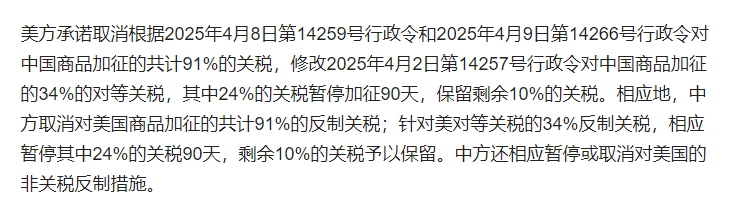
Core Viewpoint - The recent negotiations between China and the U.S. have led to a significant reduction in tariffs, with both sides canceling 91% of tariffs and reducing additional tariffs to 10%, marking a return to the pre-April 2 status, but the underlying dynamics of trade and pricing have fundamentally changed [1][4]. Group 1: Trade Dynamics - Following the tariff negotiations, U.S. clients have begun to place orders with Chinese manufacturers, creating an illusion of normalcy, yet the market dynamics have shifted [2]. - China's export to the U.S. saw a 21% decline in April, but overall exports increased by 9.3%, indicating a global shift towards sourcing from China to capture the U.S. market [7]. - The high tariffs imposed by the U.S. have not crippled China; instead, they have contributed to rising inflation in the U.S., with national debt surpassing $36 trillion and major retailers expressing concerns over empty shelves [7]. Group 2: Pricing Power and Market Perception - Chinese exporters have adapted to the trade tensions by forming a consensus to raise prices, moving away from the previous strategy of undercutting prices to secure orders [8][17]. - The prices of rare earth metals have surged dramatically, with dysprosium doubling to $850 per kilogram and terbium increasing over 210% to $3,000, reflecting the new pricing power of Chinese manufacturers [9]. - The perception of Chinese manufacturing is changing, with more American consumers recognizing the quality of products made in China, leading to a shift in branding strategies [19][23]. Group 3: Long-term Implications - The trade conflict has inadvertently highlighted China's advancements in manufacturing and its critical role in global supply chains, particularly in high-tech and military sectors where the U.S. heavily relies on Chinese rare earth materials [11][14]. - The ongoing tariff situation may lead to lasting changes in pricing structures, making it difficult for prices to revert to previous levels even if the trade war ends [24]. - The current trade tensions serve as a public acknowledgment of China's decade-long efforts to upgrade its manufacturing capabilities and redefine its market position [21][25].
老铺黄金还需要证明自己
远川研究所· 2025-05-08 12:33
Core Viewpoint - The article discusses the transformation of Laopu Gold into a luxury brand, highlighting its unique pricing strategy and market positioning, which has led to significant growth in revenue and valuation despite the challenges faced by the luxury goods market. Group 1: Company Overview - Laopu Gold sought to list on the Shenzhen Stock Exchange in 2020 but faced scrutiny over its high gross margin of nearly 40%, which led to its decision to pursue a listing on the Hong Kong Stock Exchange instead [3]. - In November 2023, Laopu Gold's founder initiated a Pre-IPO round, with the company's revenue from its Beijing SKP store surpassing 100 million yuan, achieving a store efficiency comparable to luxury brands [4]. - After its listing, Laopu Gold's market capitalization increased tenfold, challenging the traditional valuation perceptions in the Hong Kong market [4]. Group 2: Profitability and Market Positioning - The jewelry industry, particularly gold, is characterized by low profit margins, with major players like Lao Fengxiang and China Gold consistently reporting gross margins below 10% [6]. - Laopu Gold has managed to maintain a gross margin above 40% and a net margin that reached 17% last year, significantly outperforming its competitors [8]. - The company has adopted a luxury brand strategy, including high-end store locations and a unique customer loyalty program, which has contributed to its elevated market perception [11]. Group 3: Pricing Strategy - Laopu Gold has successfully implemented a pricing strategy that allows it to maintain high prices for its products, with average prices nearly doubling from 2017 to 2022 [16]. - The company has increased its prices multiple times in recent years, aligning its pricing strategy with the rising gold prices, which has contributed to its revenue growth [19]. - Despite the luxury market's downturn, Laopu Gold has expanded its store presence, indicating a strong market positioning and willingness to capitalize on opportunities during challenging times [22][23]. Group 4: Future Outlook - The founder of Laopu Gold has expressed ambitions for the company to achieve an average store efficiency exceeding 1 billion yuan, indicating a strong growth trajectory [25]. - The luxury market's dynamics suggest that Laopu Gold's expansion may continue to thrive even as traditional luxury brands face challenges, as high-end malls may lower their selection criteria during downturns [23]. - The company's luxury positioning will need to withstand fluctuations in gold prices to validate its market strategy fully [32].


中金:南向流入还有多少空间?
中金点睛· 2025-03-17 23:51
图表2:主动外资整体上依然流出,被动外资小幅回流 点击小程序查看报告原文 继前一周再创新高突破24,000点后,上周港股震荡回调。尽管上周五市场大幅反弹,但指数层面,恒生科技整体下跌2.6%,恒生指数下跌1.1%,恒生国企和 MSCI中国指数分别下跌0.4%与0.1%。板块层面,必需消费(+3.8%)、多元金融(+3.5%)及保险(+3.5%)等领涨,媒体及娱乐(-1.9%),信息技术 (-1.7%)、可选消费(-1.1%)等落后。周五的表现有向泛消费股扩散的迹象,此前领涨的科技板块反而落后。 图表1:过去一周港股必选消费和多元金融领涨,但媒体娱乐及信息科技下跌 然而,与市场走势"不匹配"的是,南向资金依然大举流入,成为关注焦点。继两周前单周净流入创2021年后新高后,上周一(单日净流入296亿港元)与周 三(单日净流入262亿港元)一举刷新沪深港通开通后单日净流入新高。相应的,本轮外资虽有流入但幅度不大,且仍然以被动和交易型资金为主,主动资 金只有部分回流(主要以亚太区域资金为主,但也已标配甚至小幅超配)。这说明:一方面南向资金或是本轮的主力之一,另一方面也说明南向资金也无法 起到绝对的"定价权"。因此,复 ...