本地化运营

Search documents
玉马科技(300993) - 2025年11月19日投资者关系活动记录表
2025-11-24 08:30
Group 1: Overseas Expansion and Production Capacity - The company has initiated overseas capacity planning, starting with preliminary research in Southeast Asia since 2024, including the establishment of a subsidiary in Singapore [2] - The construction of a production base in Vietnam is currently on hold due to changes in U.S. tariff policies, with plans to proceed once the policies are clarified [3] Group 2: North American Operations - The company is implementing a localization strategy in North America, having established subsidiaries in California and Texas to serve local markets [4] - The U.S. subsidiaries focus on processing manufacturers, brand clients, and channel partners, using the "Yuma" brand for sales [4] Group 3: Impact of Tariff Policies - Recent changes in tariff policies have caused temporary disruptions in orders from the U.S., but adjustments have led to renewed focus on supply chain stability and product quality [5] - The company has not seen a significant impact on customer cooperation due to its enhanced local operations and service [5] Group 4: Product Pricing and Profit Margins - The company's products typically have significant markup after processing and branding, with customized products offering even higher profit margins [6] - The focus is on product differentiation and technical services to enhance value rather than relying solely on price competition [6] Group 5: Sales Performance of Dream Curtain Product - The Dream Curtain product has experienced a phase of market adjustment after rapid growth, with domestic sales declining but international sales increasing [8] - The product maintains a competitive edge due to its multifunctionality, and the company is increasing export efforts to tap into new growth opportunities [8] Group 6: Market Share and Future Growth Drivers - The company currently holds a low market share in key global markets, indicating significant potential for growth [9] - Future growth is expected to be driven by new high-performance materials, improved sales channel layouts, operational efficiency, and flexible production capacity [9]

2025出海标杆榜单揭晓:做好世界的合伙人
虎嗅APP· 2025-11-23 13:41
Core Insights - The article discusses the transformation of Chinese companies in their overseas expansion, marking the beginning of "Overseas 2.0" era, characterized by a shift from price competition to organizational strength, innovation, and localized operations [2][3]. Group 1: Strategic Upgrades - In the past year, there has been a significant upgrade in overseas strategies, with more companies establishing global operational systems, transitioning from product export to brand export [3]. - Many manufacturing and emerging consumer brands are setting up localized teams and data management units in specific regions, enhancing innovation, service, and marketing at community and user touchpoints [3][4]. Group 2: External Challenges - The external environment for overseas expansion is becoming increasingly complex, with geopolitical factors significantly impacting companies' strategies [4]. - Trade barriers in Europe and the U.S., data protection regulations in Southeast Asia, and market access issues in the Middle East require companies to possess higher strategic sensitivity and local adaptability [4][5]. Group 3: Local Adaptation and Risk Management - Compliance has become a critical threshold, necessitating that Chinese companies develop cross-border risk control and emergency response capabilities [5]. - Companies are moving from a "hit-and-run" approach to a more rooted strategy, focusing on local talent, data, ecosystems, and teams to withstand external risks and achieve resilient growth [5][6]. Group 4: Evolving Competitive Landscape - The competitive landscape and philosophies of Chinese companies are evolving, transitioning from product sales to creating value ecosystems [6]. - The most promising sectors for overseas expansion by 2025 include smart manufacturing, consumer electronics, renewable energy, and cross-border e-commerce brands [7][8]. Group 5: Benchmark Enterprises - The article emphasizes that true benchmark enterprises are not just defined by high revenue or size but by their continuous evolution of capabilities and ecological innovation [11][12]. - The evaluation criteria for benchmark enterprises include innovation capability, localization, organizational resilience, and sustainable growth [12]. Group 6: Award Winners - The article lists several companies recognized for their outstanding performance in overseas markets, including Haier, Lenovo, Midea, Didi, and Changan Automobile, highlighting their contributions to global brand building and market penetration [16][19][20][21][22][23][24][25][26][27][28]. - New emerging companies like United Imaging, Baseus, and Fantuan are also acknowledged for their rapid rise and innovative business models in overseas markets [30][31][32][33][34][35][36][37][38][39]. Group 7: Service Providers - The article identifies key service providers that support overseas enterprises, including logistics, marketing, and payment solutions, which help lower the barriers for Chinese brands to reach global users [41][42][43][44][45][46][47][48][49][50][51]. Group 8: Future Outlook - The future of Chinese companies' overseas expansion is expected to be defined by the integration of localization capabilities, data-driven strategies, and ecological collaboration [51]. - The evolution of Chinese brands in the global market is not a sprint but a long-term contest of organizational strength, innovation, and belief [51].








2025搜狐财经年度论坛即将举办,吴晓求、刘纪鹏、阎学通、吴向东等20余位嘉宾共探中国经济韧性
Sou Hu Cai Jing· 2025-11-20 10:21
Core Insights - The Sohu Finance Annual Forum will be held on November 27, 2025, in Beijing, featuring over twenty experts from academia, industry, and investment sectors discussing key topics such as macro policies, industrial upgrades, corporate internationalization, capital market reforms, and international dynamics [2][6] - The forum aims to address the challenges of restoring consumer confidence and enhancing economic resilience amid global geopolitical shifts and domestic structural transformations [2][3] Industry Insights - The morning session will focus on practical insights from industry experts regarding policy guidance, market mechanisms, and corporate strategies, particularly addressing the "involution and efficiency trap" [3] - The real estate sector is transitioning from high-leverage expansion to high-quality operations, with discussions on industry breakthroughs and future trends led by prominent figures from major real estate companies [3][4] - In the consumer sector, companies like Xiaobuxiang will share strategies for achieving growth through product innovation and organizational change despite price competition and weak demand [4] Financial Sector Insights - The financial investment segment will feature seasoned professionals discussing asset allocation, pharmaceutical and biotechnology sectors, chip technology, and gold as a hedge against uncertainty [4] - The afternoon session will delve into macroeconomic resilience and strategic directions, with discussions on the evolution of the global macroeconomic landscape and the transformation of China's capital market towards a more regulated and transparent wealth management system [5] - Experts will also explore new consumption drivers and the potential of emerging trends like concerts and IP blind boxes to stimulate significant consumer spending [5] Forum Impact - The Sohu Finance Annual Forum has evolved into a significant high-end financial dialogue platform, aiming to break down information barriers, promote cross-sector collaboration, and connect policies with market dynamics, which is crucial for China's economic development [6]

风电出海破局高阶竞争 迈向“深耕时代”
Zheng Quan Shi Bao Wang· 2025-11-20 09:15
Core Insights - The global energy transition and the competitiveness of China's wind power industry have made "going global" a central theme for development [1] - The shift from product export to localized operations signifies an evolution in the globalization strategy of Chinese wind power companies [2] Group 1: Trends in Globalization - The pace of Chinese wind power companies "going global" has accelerated, with competition now focusing on technology, service, and localization rather than just product pricing [2] - By the third quarter of 2025, domestic companies secured a total of 23.043 GW of international wind turbine orders, with export orders doubling year-on-year in the first half of the year [2] - Companies are moving from a simple product supply model to a "full-chain cooperation" model, which includes equipment supply, technology licensing, and localized production [2] Group 2: Localization Practices - The complex environment of overseas markets demands higher localization capabilities from companies, as different regions have distinct policies, market demands, and cultural backgrounds [3] - Electric Power Equipment (688660.SH) has established overseas operations in regions like the Middle East and East Asia, targeting high-growth markets while diversifying regional risks [3] - A partnership with Oman’s Mawarid Group includes not only equipment supply but also technology licensing and local factory design, exemplifying the shift from "selling equipment" to "providing comprehensive solutions" [3] Group 3: Value Reconstruction - The overseas market offers wind power companies opportunities beyond short-term order growth, including business model restructuring, brand value enhancement, and technological advancement [4] - Participation in various wind power projects allows companies to accumulate operational experience under extreme conditions, which can inform domestic product development [4] - The profitability potential of the overseas wind power market is becoming evident, with data indicating that the gross margin for overseas wind turbines is higher than that for domestic ones [4]
本土竞争倒逼星巴克(SBUX.US)“放手” 博裕资本40亿美元入股如何破局?
智通财经网· 2025-11-05 07:04
Core Viewpoint - Starbucks is selling a 60% stake in its struggling China business to Boyu Capital for $4 billion to improve its market prospects in China [1] Group 1: Market Challenges - Since entering the Beijing market in 1999, Starbucks has rapidly expanded in China but faced challenges from local brands like Luckin Coffee, which offer lower costs and customizable products [1] - The rise of domestic competitors has prompted Starbucks to seek a partnership to enhance its market position [1] Group 2: Acquisition Details - The deal with Boyu Capital was announced on October 28, with the company committing to maintain leadership by Starbucks China and its management team [1] - Boyu Capital's commitment to stability may alleviate concerns about potential layoffs and aggressive pricing strategies that could harm Starbucks' premium brand image [2] Group 3: Strategic Changes - Under the leadership of Molly Liu, Starbucks is introducing more localized products and adjusting prices to attract customers [2] - The acquisition is expected to allow Starbucks to develop more tailored strategies for the Chinese market, moving away from strict adherence to global brand directives [3] Group 4: Future Growth Plans - Starbucks aims to make its stores more appealing compared to the "grab-and-go" model favored by many competitors [3] - The CEO of Starbucks has indicated that the number of stores in China could increase from approximately 7,800 to 20,000 [3]

9月销量同比激增880% 英国成比亚迪最大海外单一市场
Bei Jing Ri Bao Ke Hu Duan· 2025-11-01 09:58
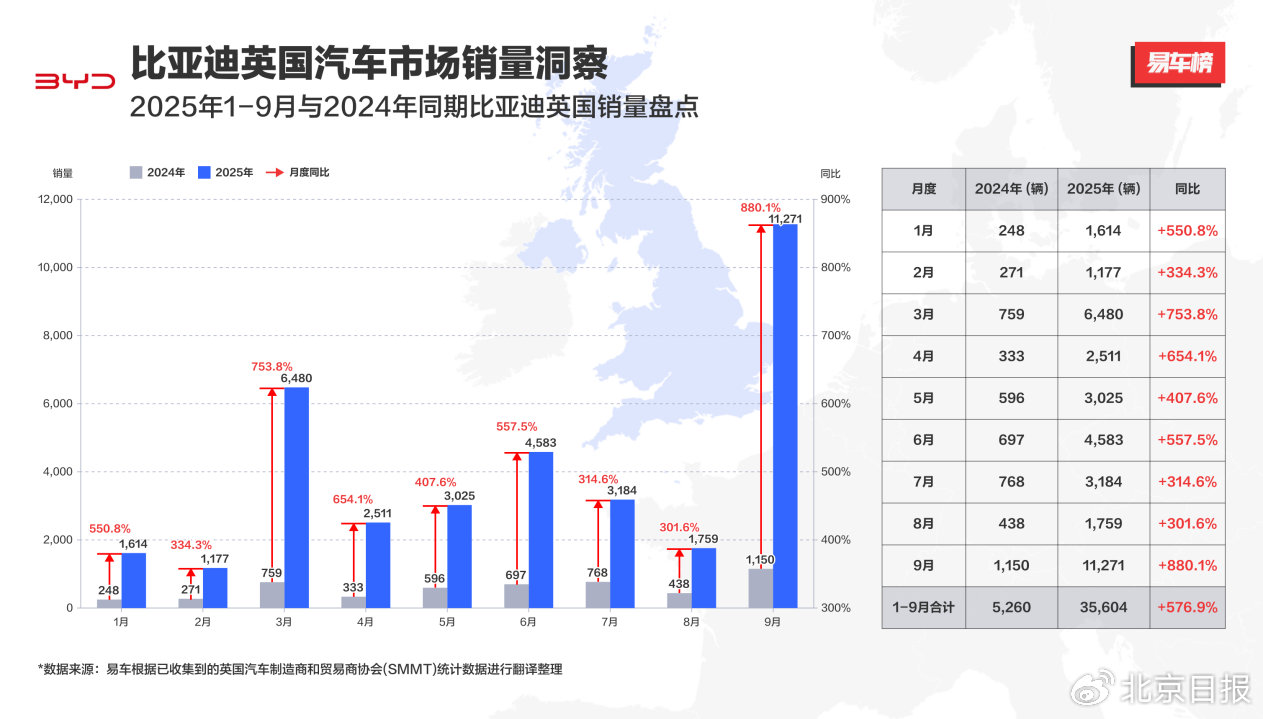
Core Insights - BYD has achieved significant growth in the UK market, with passenger car sales reaching 11,271 units in September 2025, marking an 880% year-on-year increase and a 541% month-on-month increase [1] - In the first nine months of the year, BYD's cumulative sales in the UK reached 35,604 units, reflecting a year-on-year growth of 576.9% [1] Group 1 - The rapid growth of BYD in the UK has garnered attention from major UK media outlets, with reports highlighting BYD's record sales and its rise over traditional UK automotive brands [3] - Two years ago, BYD was relatively unknown in the UK market, but through a multi-faceted strategy involving frequent dealer visits and promotional activities, the company successfully established a strong channel system [3] - BYD has expanded from four initial stores to over a hundred locations across the UK in just two years, transforming the relationship with dealers from seeking partnerships to dealers actively wanting to collaborate [3] Group 2 - BYD's success in the UK is part of a broader global strategy, with its electric vehicles now sold in 117 countries and regions as of October 2025 [5] - The company has upgraded its global production and logistics systems, including the inauguration of its 14 millionth electric vehicle in Brazil, witnessed by the Brazilian president [5] - BYD's experience in the UK serves as a model for other Chinese automotive companies, emphasizing the importance of channel development and localized operations in international markets [5]

国泰海通:印尼茶咖文化盛行 关注品牌出海机遇
Zhi Tong Cai Jing· 2025-10-30 05:57
Core Insights - Indonesia is a major producer and consumer of tea and coffee, with a thriving tea and coffee culture [1][2] - The country's economic growth, rising disposable income, and high internet penetration create significant opportunities for brand expansion [1][3] Group 1: Market Overview - Indonesia is the largest economy in ASEAN, with high GDP growth and rapidly increasing per capita disposable income [1][3] - The country is the world's third-largest coffee producer and seventh-largest tea producer, benefiting from its equatorial climate [2] - The tea and coffee market in Indonesia has seen rapid development, with local and international brands establishing a strong presence [2] Group 2: Opportunities for Chinese Brands - Opportunities for Chinese tea and coffee brands include a large, young population, low savings rates, and a strong acceptance of global brands [3] - The market has low education costs for tea and coffee culture, and there is still room for growth in per capita consumption [3] - Strengthening bilateral cooperation between China and Indonesia presents additional opportunities for market entry [3] Group 3: Localization Strategies - Localization is crucial for brand expansion and sustainable development, including organizational, product, marketing, and supply chain localization [4] - Understanding local tastes, such as preference for spicy and fried foods, and sweet, icy drinks can enhance product offerings [4] - High internet penetration and reliance on social media among young consumers make digital marketing and private domain operations essential [4] Group 4: Key Players in the Market - Chatime has successfully penetrated the Indonesian market through local partnerships and digitalization [5] - Heytea (蜜雪冰城) is the leading ready-to-drink tea brand in Southeast Asia, leveraging competitive pricing and quality models [5] - Starbucks dominates the high-end market with strong local partnerships and benefits from Indonesia's economic growth [5] Group 5: Emerging Brands - TOMORO, a brand with Chinese roots, has rapidly expanded to become the fourth-largest coffee chain in Indonesia by focusing on localization [6]

蛋糕很大,中国游戏把握俄罗斯“上行”机遇
2 1 Shi Ji Jing Ji Bao Dao· 2025-10-28 11:31
Core Insights - The Russian gaming market is experiencing significant growth, attracting Chinese game developers due to the exit of Western companies and a favorable user demographic [1][3][8] Market Overview - The Russian gaming market is projected to reach a valuation of 187 billion rubles (approximately 16.4 billion RMB) in 2024, with a year-on-year growth of 6% [4] - Russia ranks third globally in terms of Steam platform player numbers, indicating a large player base and growth potential [4] - Mobile game downloads in Russia have surged, with 1.18 billion downloads on Android platforms in the first half of 2024, generating nearly $900 million in revenue [4] User Demographics - The user base in Russia is becoming younger, with 60% of users aged 18-44, who are increasingly willing to spend on mobile games [4] - Players in major cities exhibit Tier 1 consumption capabilities, while the overall market is still developing, suggesting room for growth in mid-to-high-end gaming products [4][5] Competitive Landscape - Over 60% of the top 10 revenue-generating applications in Russia are developed by Chinese companies, highlighting the competitive advantage of Chinese developers in this market [2][4] - Chinese developers have shown creativity and adaptability, allowing them to quickly establish a foothold in the Russian market [3][6] Challenges and Opportunities - Language localization and compliance with local regulations are significant barriers for Chinese developers entering the Russian market [6] - The changing global advertising ecosystem has created monetization challenges, necessitating careful selection of advertising platforms [6][7] - Successful Chinese developers are leveraging local operations and partnerships with platforms like Yandex Ads to enhance their market presence [6][7] Future Outlook - The current market conditions present a critical opportunity for Chinese developers to transition from merely exporting traffic to building brand recognition in Russia [8] - The ability to navigate localization, compliance, and long-term operational strategies will be crucial for success in the Russian gaming market [8]

中国机器人爆单了,有公司3天光速签约700万
2 1 Shi Ji Jing Ji Bao Dao· 2025-10-19 14:49
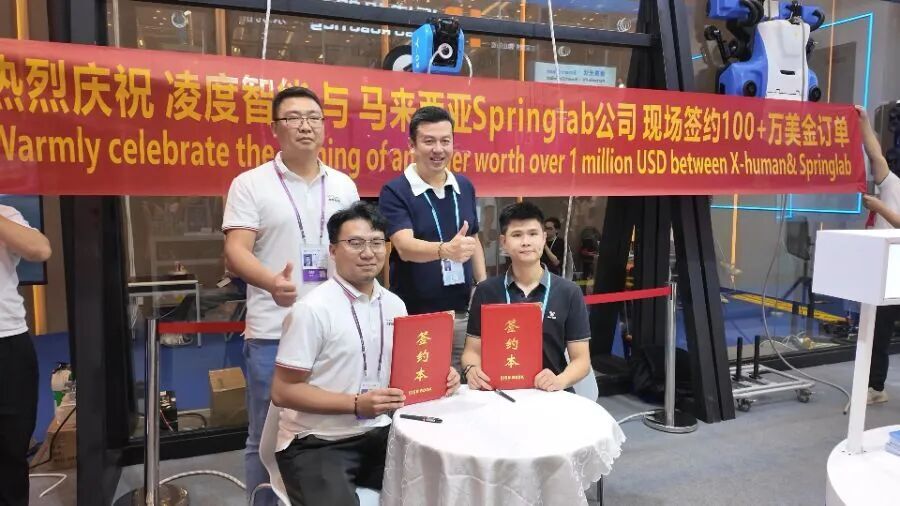
Core Viewpoint - Guangdong Lingdu Intelligent Technology Co., Ltd. achieved over 7 million RMB in orders within three days at the Canton Fair, highlighting the importance of global innovation and market adaptation for Chinese companies in the face of global economic uncertainties [3][5]. Group 1: Company Performance - Lingdu Intelligent's revenue tripled year-on-year, reflecting a successful overseas expansion strategy within three years of operation [3][6]. - The company secured over 1 million USD in orders from Saudi Arabia, UAE, and Malaysia, showcasing its ability to attract international clients through innovative product offerings [3][5]. - Lingdu's overseas market sales accounted for 40% of total sales, indicating a strong international presence despite global trade challenges [5]. Group 2: Product Innovation - The launch of the world's first "high-altitude curtain wall obstacle-clearing cleaning robot" at the Canton Fair attracted significant interest from Middle Eastern clients [5][6]. - Lingdu's robots feature autonomous decision-making capabilities, allowing for efficient and safe operation without human intervention, setting it apart in the global high-altitude glass cleaning market [6]. Group 3: Market Trends - Guangdong's foreign trade enterprises are increasingly looking towards "Belt and Road" countries to stabilize markets and expand orders amid U.S. tariff challenges [9][10]. - In the first three quarters, Guangdong's trade with "Belt and Road" countries reached 2.71 trillion RMB, growing by 4.1%, which is faster than the overall trade growth rate [9]. Group 4: Strategic Shifts - Companies are adapting to the changing trade environment by localizing operations and establishing production bases in emerging markets, as seen with companies like Skyworth Group [14][17]. - The shift from merely exporting products to establishing local manufacturing and service capabilities is becoming a key strategy for Chinese companies to enhance competitiveness globally [14][17].

从“走进去”到“扎下根”:亚马逊广告如何赋能中国品牌走向全球化?
创业邦· 2025-10-17 07:35
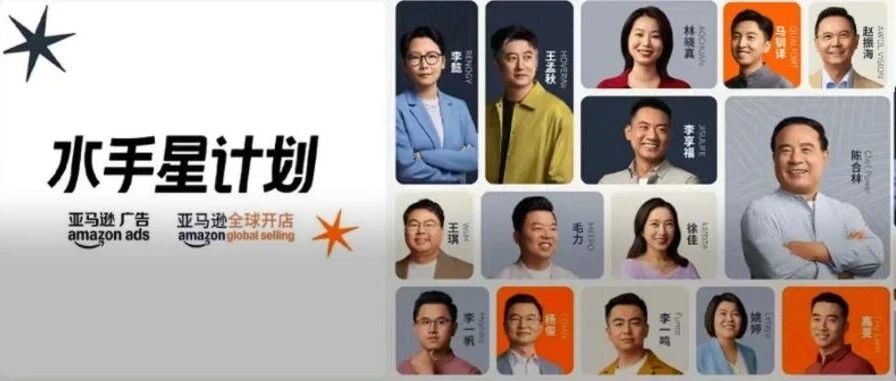
Core Viewpoint - Chinese brands are transitioning from "going out" to "going in," emphasizing localized operations and marketing capabilities as key to success in international markets [2][4]. Group 1: Market Trends - In 2024, China's cross-border export scale is projected to reach 2.15 trillion RMB, a 16.9% increase from 2023, indicating sustained double-digit growth [4]. - The focus for Chinese brands has shifted from mere sales to long-term value creation, addressing how brands can be understood and trusted by overseas consumers [4][5]. - Global consumers increasingly demand personalized and diverse products, with 87% willing to pay a premium for trusted brands [4]. Group 2: Localization Strategies - Successful localization requires brands to adapt from "functional matching" to "cultural adaptation," tailoring product narratives to different markets [10]. - Marketing localization involves using local languages and cultural symbols to engage consumers, shifting from a self-centered narrative to a collaborative approach with consumers [12]. - Organizationally, brands are moving towards establishing localized teams to enhance operational effectiveness and consumer engagement [14]. Group 3: Consumer Trust - Consumer trust is identified as the ultimate indicator of successful localization, with 28% of overseas consumers citing unfamiliarity and lack of trust as reasons for not choosing Chinese brands [17]. - Building trust requires consistent delivery, service, and communication, creating a "reasonable presence" in consumers' minds [17]. Group 4: Case Studies - The "Sailor Star Plan" showcases various Chinese brands' localized strategies, highlighting the importance of understanding local cultures and consumer preferences [21][28]. - Heybike adjusted its marketing focus from performance to sustainable urban mobility to resonate with European consumers [22]. - Chef Power redefined its brand image in North America by positioning itself as a "modern kitchen partner," moving away from the "Made in China" label [24]. - Letaya utilized consumer insights to create relatable content, enhancing engagement by addressing installation ease for its steel furniture [26]. Group 5: Systematic Support - The collaboration between Amazon Advertising and Amazon Global Selling provides a comprehensive support system for brands, emphasizing the importance of understanding consumer behavior and building brand assets [31][35]. - This partnership enables brands to leverage data for insights, allowing for tailored marketing strategies that resonate with local consumers [35].