猪周期

Search documents
新希望再度调低募资上限:9月猪价再度跌破成本线 猪产业连亏四年后何时迎来拐点
Xin Lang Cai Jing· 2026-01-16 10:28
Core Viewpoint - New Hope has revised its A-share issuance plan for the second time, reducing the fundraising cap to 3.338 billion yuan, primarily to repay bank debts and invest in smart farming projects amid ongoing losses in its pig farming sector [2][4]. Group 1: Fundraising and Financial Pressure - The initial fundraising plan announced in December 2023 aimed for a maximum of 7.35 billion yuan, with significant allocations for smart farming projects and debt repayment [2]. - The first revision in August 2024 lowered the cap to 3.8 billion yuan, eliminating the acquisition of minority stakes and adjusting project funding [2]. - The latest revision further reduces the cap to 3.338 billion yuan, with 2.338 billion yuan for smart farming and 1 billion yuan for debt repayment, highlighting the company's financial strain [2][5]. Group 2: Industry Context and Policy Impact - The pig farming industry is facing challenges due to low prices and strict capacity controls, leading many companies to halt expansion projects [3][8]. - The Ministry of Agriculture has mandated a reduction in breeding sows and overall production, impacting major players including New Hope [3]. - New Hope's smart farming project aims to upgrade existing facilities without expanding capacity, but the total investment of 2.92 billion yuan poses a long payback period risk [4]. Group 3: Performance and Profitability - New Hope's pig farming sector has incurred losses for four consecutive years, with total losses amounting to 111.5 billion yuan in 2021 and 2.8 billion yuan in 2024 [8]. - The company’s feed business, which accounted for 66.66% of revenue in 2024, has become a crucial profit source, although its profit margins are significantly lower than those of the pig farming sector [6][7]. - Recent trends show a decline in pig prices, with the average price dropping below 12 yuan per kilogram, further pressuring profitability [8].

锚定养殖主线,布局畜牧新周期
Xin Lang Cai Jing· 2026-01-15 14:15
Group 1 - The livestock farming industry in China is undergoing a significant transformation, with the Ministry of Agriculture and Rural Affairs and the National Development and Reform Commission calling for capacity reduction and operational control as of September 2025 [1][19] - The pig cycle typically follows a pattern of price fluctuations, with each upward cycle lasting about 1-2 years and downward cycles lasting about 1-3 years, indicating potential for price increases following supply reductions [1][19] - Current signals suggest that the pig farming industry is at a relatively low valuation, with indications that capacity reduction may accelerate [1][19] Group 2 - The CSI Livestock Farming Industry Index, launched on December 31, 2021, includes 50 listed companies in sectors such as livestock products, animal health, feed, meat products, and dairy products, serving as a benchmark for the overall performance of the livestock farming sector [2][20] - The index has a base point of 1000 and aims to reflect the core fluctuations of the livestock farming industry, with a high concentration of leading companies [4][23] - The top five constituent stocks account for 50.1% of the index, while the top ten account for 67.6%, indicating a significant concentration advantage in the industry [4][23] Group 3 - The CSI Livestock Farming Industry Index has outperformed its peers by 5 percentage points since its inception, with a current PE (TTM) ratio of 19.02, indicating a low valuation at the bottom of the cycle and potential for valuation recovery [6][26] - The index's historical performance has shown significant volatility due to the cyclical nature of the livestock farming industry [6][26] - The index is designed to provide a high-purity tool for tracking the cyclical movements of pig farming, benefiting from the resilience and profit elasticity of leading enterprises during current cost-focused cycles [4][23] Group 4 - The top ten constituent stocks of the index include major players such as Muyuan Foods (15.6% weight), Wens Foodstuff Group (14.7%), and Haida Group (9.1%), highlighting the dominance of leading companies in the livestock sector [25] - The index is positioned to benefit from ongoing policy incentives and signals of cyclical reversal, making it an attractive investment option for those optimistic about the long-term development of the livestock farming industry [33]


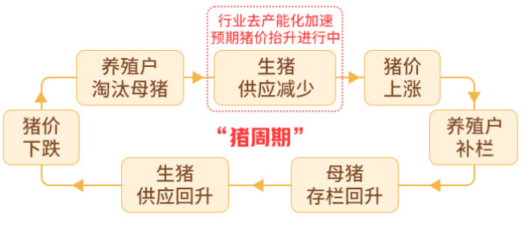
仔猪价格上涨,情绪带动近月反弹
Zhong Xin Qi Huo· 2026-01-15 00:30
1. Report Industry Investment Ratings - Oils: Soybean oil and palm oil are rated as "sideways", while rapeseed oil is rated as "sideways with a downward bias" [7]. - Protein meals: Soybean meal is rated as "sideways", and rapeseed meal is rated as "sideways with a downward bias" [9]. - Corn and starch: Rated as "sideways" [11]. - Hogs: Rated as "sideways" [13]. - Natural rubber: Rated as "sideways with a bullish bias" [15]. - Synthetic rubber: Rated as "sideways with a bullish bias" [18]. - Cotton: Rated as "sideways with a bullish bias" [19]. - Sugar: Rated as "sideways with a downward bias" [20]. - Pulp: Rated as "sideways" [21]. - Offset paper: Rated as "sideways" [22]. - Logs: Rated as "sideways" [24]. 2. Core Views of the Report - The overall agricultural market shows a mixed performance, with different commodities having their own supply - demand fundamentals and price trends. For example, in the hog market, short - term supply pressure remains, but long - term supply may gradually ease; in the oil market, although there are some policy and supply - demand changes, the overall supply is relatively abundant [14][7]. 3. Summary by Relevant Catalogs 3.1. Market Views 3.1.1. Hogs - **Logic**: Short - term supply pressure is small in early January, but some February hogs may be sold in advance in mid - to - late January. Medium - term supply will be excessive until April 2026. Long - term supply pressure may ease after May 2026. Demand declines after New Year's Day, and the average weight of hogs decreases but is still higher than the same period last year. - **Outlook**: The near - term price is expected to be in a weak sideways range, while the far - term price may rise in the second half of 2026, but currently, the production cut is insufficient, so far - term positions should be cautiously taken on dips [14]. 3.1.2. Oils - **Logic**: Indonesia cancels the B50 biodiesel plan, and raises the export tax on palm oil. The domestic soybean market has active auctions, and the supply of rapeseed oil may change due to trade relations. - **Outlook**: Soybean oil, palm oil are sideways, and rapeseed oil is sideways with a downward bias. It is recommended to consider buying on dips and palm oil - rapeseed oil spread trading [7]. 3.1.3. Protein Meals - **Logic**: International factors such as the USDA's report, Brazilian soybean production, and the probability of El Niño affect the market. Domestically, soybean auctions are active, and the supply and demand of soybean meal and rapeseed meal are affected by trade and consumption. - **Outlook**: US soybeans, domestic soybean meal are sideways, and rapeseed meal is sideways with a downward bias [9]. 3.1.4. Corn and Starch - **Logic**: The increase in supply due to smooth selling restricts price increases. However, factors such as farmers' reluctance to sell, the time required for imported grains, and downstream replenishment demand support prices. - **Outlook**: Sideways in the short - term [12]. 3.1.5. Natural Rubber - **Logic**: The market has a bullish atmosphere, mainly driven by macro factors. The supply is seasonally increasing, and the raw material price is firm, but the downstream demand is weak after the price increase. - **Outlook**: Sideways with a bullish bias in the short - term [17]. 3.1.6. Synthetic Rubber - **Logic**: The price trend is bullish, mainly due to the expected improvement in the butadiene market and the possible impact of policies on supply. - **Outlook**: Sideways with a bullish bias in the medium - term [19]. 3.1.7. Cotton - **Logic**: The long - term driving factors are the expected "tight balance" in the 2025/26 season and the possible reduction in planting area in 2026. The short - term adjustment space is limited. - **Outlook**: Sideways with a bullish bias in the long - term [19]. 3.1.8. Sugar - **Logic**: The global sugar market is expected to have a surplus in the 25/26 season, with most major producers expected to increase production. - **Outlook**: Sideways with a downward bias in the medium - to - long - term [20]. 3.1.9. Pulp - **Logic**: There are both bullish and bearish factors. Bullish factors include rising import costs and high downstream paper production. Bearish factors include difficult cost transfer, seasonal demand decline, and sufficient supply. - **Outlook**: Sideways [21]. 3.1.10. Offset Paper - **Logic**: The market is affected by factors such as new warehouse receipts, industry profitability, supply and demand, and downstream consumption. - **Outlook**: There may be pressure in the late period, and attention should be paid to the risk of correction [22]. 3.1.11. Logs - **Logic**: The supply pressure will be marginally relieved in January - February. The price has support due to the inverted price difference, and there are some game points in the 03 contract. - **Outlook**: Sideways within a range [24]. 3.2. Variety Data Monitoring - The report lists the monitoring categories including oils and fats, corn and starch, hogs, cotton and cotton yarn, sugar, pulp and offset paper, logs, etc., but specific data details are not provided in the content [25][57][75]. 3.3. Commodity Index - On January 14, 2026, the comprehensive index, characteristic index (including commodity 20 index, industrial products index, PPI commodity index) all showed an upward trend. The agricultural product index also had a certain increase, with a daily increase of 0.20%, a 5 - day increase of 0.44%, a 1 - month increase of 2.30%, and a year - to - date increase of 1.29% [183][184].
产能充裕叠加需求不足 上半年生猪市场或延续磨底
Zheng Quan Shi Bao· 2026-01-14 17:36
Core Viewpoint - The pig farming industry is entering its traditional peak season with the Lunar New Year approaching, but the market is still facing oversupply, leading to weak pig prices [2][5]. Industry Overview - The overall trend in the domestic pig market has been weak since 2025, with many companies reporting a decline in sales prices and revenues, some by as much as 30% [2][3]. - Analysts indicate that despite ongoing "anti-involution" policies in the livestock sector, the fundamental imbalance of oversupply and insufficient demand remains unchanged [2][8]. Company Performance - In 2025, Wens Foodstuffs Group sold 40.47 million pigs, generating revenue of 61.48 billion yuan, with an average selling price of 13.71 yuan/kg, reflecting a year-on-year decline of 0.45% in revenue and 17.95% in price [3]. - Muyuan Foods sold 6.98 million pigs in December 2025, with an average price of 11.41 yuan/kg, down 25.38% year-on-year, and a revenue drop of 36.06% [4]. - Tian Kang Bio reported a 5.34% increase in sales volume to 3.19 million pigs, but revenue fell by 10.69% to 4.55 billion yuan [4]. Price Trends - The average price of lean pigs in 2025 was 13.74 yuan/kg, a decrease of 17.97% year-on-year, with prices remaining low and companies facing losses [5][6]. - As of January 9, 2026, the national average price for pigs was 12.51 yuan/kg, showing a slight recovery due to seasonal demand, but losses persist in the industry [5][7]. Supply and Demand Dynamics - The supply of pigs remains high, with a reported 36.92 million pigs in large-scale farms as of December 2025, a slight decrease from the previous month but an increase year-on-year [8]. - Analysts predict that while there may be short-term price support due to reduced supply, the overall market remains oversupplied, limiting significant price increases [8][9]. Cost Factors - The prices of corn and soybean meal, key raw materials for pig farming, significantly influence the industry's profitability. High prices for these inputs could exacerbate losses, while a decrease could improve profit margins [9]. - Current prices for feed ingredients are stable, with limited impact on costs, but fluctuations in market supply and demand will continue to drive profitability [9].
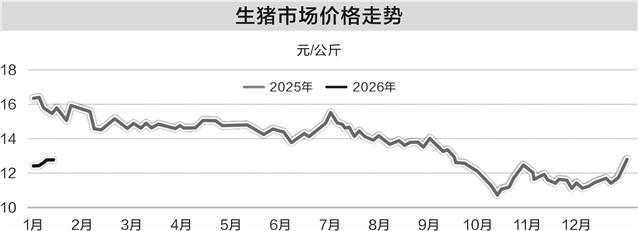
量价背离!温氏股份生猪肉鸡销量创新高,净利却砍半,猪周期下如何破局?
Bei Jing Shang Bao· 2026-01-13 03:22
温氏股份创立于1983年,凭借创始人温北英首创的"公司+农户"模式,公司实现快速扩张,现已发展成 一家以畜禽养殖为主业、配套相关业务的跨地区现代农牧企业集团,并于2015年11月在深交所挂牌上 市。其中,温氏股份生猪养殖与肉鸡养殖业务收入占比合计保持在90%以上,是公司主要的营收来源。 近日,温氏股份披露了2025年度业绩预告,预计公司2025年归母净利润为50亿—55亿元,比上年同期下 降40.73%—46.12%;扣非净利润为48亿—53亿元,比上年同期下降44.64%—49.86%。对于业绩预减的 原因,温氏股份表示,主要受畜禽产品价格整体下行影响,公司养殖业务利润同比下降。 从经营数据来看,2025年,温氏股份销售生猪4047.69万头(其中毛猪和鲜品3544.67万头,仔猪503.02 万头),远超其年初定下的3300万—3500万头全年销售目标,但毛猪销售均价同比下降17.95%至13.71 元/公斤,由于生猪销售价格同比出现较大幅度下降,公司生猪养殖业务利润同比下降。肉鸡业务同样 呈现"量增价跌"态势,温氏股份2025年销售肉鸡13.03亿只(含毛鸡、鲜品和熟食),数量较上年的 12.08亿只有 ...

温氏股份2025年净利预减
Bei Jing Ri Bao Ke Hu Duan· 2026-01-13 02:17
Core Viewpoint - Wens Foodstuff Group has projected a significant decline in net profit for 2025, primarily due to falling prices of livestock products impacting its breeding business [2][3]. Financial Performance - The company expects a net profit attributable to shareholders of 5 billion to 5.5 billion yuan for 2025, representing a year-on-year decrease of 40.73% to 46.12% [2]. - The non-recurring net profit is forecasted to be between 4.8 billion and 5.3 billion yuan, down 44.64% to 49.86% compared to the previous year [2]. - In 2025, Wens sold 40.4769 million pigs, exceeding its initial target of 33 million to 35 million pigs, but the average selling price dropped by 17.95% to 13.71 yuan per kilogram [2]. - The chicken business also faced challenges, with sales of 1.303 billion chickens, a slight increase from 1.208 billion the previous year, but the average selling price fell by 9.8% to 11.78 yuan per kilogram [2]. Industry Context - The Chinese pig industry is currently experiencing its sixth "pig cycle," with prices expected to decline throughout 2025, dropping from 15-16 yuan per kilogram at the beginning of the year to around 11-12 yuan per kilogram by the fourth quarter [3]. - Historical data shows that Wens has faced significant losses in previous years due to price fluctuations, including a loss of 13.404 billion yuan in 2021 and 6.39 billion yuan in 2023 [3]. Future Outlook - Analysts predict that while pig prices have slightly recovered from their lowest point in 2025, they remain at historical lows, with future supply expected to remain ample [4]. - The company is advised to enhance its "pig and chicken industry hedging" strategy to smooth out earnings and optimize production capacity and timing [5]. - Cost control is highlighted as a critical focus area, with the comprehensive cost of pig farming expected to decrease to around 5.9 yuan per kilogram in 2026 [5].

产品均价下滑 温氏股份净利预减
Bei Jing Shang Bao· 2026-01-12 15:26
近日,温氏股份披露了2025年度业绩预告,预计公司2025年归母净利润为50亿—55亿元,比上年同期下 降40.73%—46.12%;扣非净利润为48亿—53亿元,比上年同期下降44.64%—49.86%。对于业绩预减的 原因,温氏股份表示,主要受畜禽产品价格整体下行影响,公司养殖业务利润同比下降。 从经营数据来看,2025年,温氏股份销售生猪4047.69万头(其中毛猪和鲜品3544.67万头,仔猪503.02 万头),远超其年初定下的3300万—3500万头全年销售目标,但毛猪销售均价同比下降17.95%至13.71 元/公斤,由于生猪销售价格同比出现较大幅度下降,公司生猪养殖业务利润同比下降。肉鸡业务同样 呈现"量增价跌"态势,温氏股份2025年销售肉鸡13.03亿只(含毛鸡、鲜品和熟食),数量较上年的 12.08亿只有所增长,但毛鸡销售均价为11.78元/公斤,同比下降9.8%,由于毛鸡销售价格同比下跌,公 司肉鸡养殖业务利润同比下降。 温氏股份创立于1983年,凭借创始人温北英首创的"公司+农户"模式,公司实现快速扩张,现已发展成 一家以畜禽养殖为主业、配套相关业务的跨地区现代农牧企业集团,并于20 ...
农产品日报-20260112
Guo Tou Qi Huo· 2026-01-12 12:50
Report Industry Investment Ratings - **Buy Rating**: Soybean, Soybean Meal, Soybean Oil, Palm Oil, Corn, and Live Hogs are rated as "★★★" [1] - **Neutral Rating**: Rapeseed Meal and Rapeseed Oil are rated as "★☆☆" [1] - **Sell Rating**: Eggs are rated as "★☆☆" [1] Core Views - The report provides a comprehensive analysis of various agricultural products, including soybeans, soybean meal, soybean oil, palm oil, rapeseed meal, rapeseed oil, corn, live hogs, and eggs. It offers insights into their current market conditions, supply and demand dynamics, and price trends, and provides corresponding investment strategies and suggestions [2][3][4] Summary by Category Soybean - The spot price of domestic soybeans showed an upward trend last week. Policy - based auction sales had high premiums and high transaction rates. The futures contract saw profit - taking at high positions. Supply of high - protein soybeans is tight, and the market features high - quality products commanding high prices. However, price increases have dampened demand. Policy is increasing supply. Short - term focus should be on policies and the spot market [2] Soybean & Soybean Meal - Attention should be paid to the USDA's January supply - demand report. The upside space for US soybeans is limited, and South American weather is favorable, with a 68% probability of ENSO neutrality in Q1. If South American weather remains stable, soybean meal prices will follow US soybeans and fluctuate weakly [3] Soybean Oil & Palm Oil - Malaysia's January MPOB report showed a slight decline in production and improved demand, but inventory increased to the second - highest level since 2007. After the report, palm oil prices rose due to the game between Malaysia's weak supply - demand situation and Indonesia's policy of raising export taxes and confiscating illegal plantations [4] Rapeseed Meal & Rapeseed Oil - The focus this week is on the Canadian Prime Minister's visit to China. The market expects Sino - Canadian relations to ease, which may put pressure on rapeseed products. If relations do not improve, prices may rebound due to low domestic inventories. As of January 9, coastal oil mills' rapeseed inventory increased to 60,000 tons [6] Corn - Corn futures continued to rise, with the main contract C20603 up 1.19%. Northeast spot prices were stable with an upward bias, and some Shandong deep - processing enterprises raised purchase prices. Overall inventory is low, and the selling progress is fast. The short - term Dalian corn futures will fluctuate widely [7] Live Hogs - The live hog market remained volatile. Prices of live hogs and piglets rebounded, and industry profits approached the break - even point. The reduction of sows slowed down. Second - fattening is still taking place, supporting short - term prices. However, the supply pressure before the Spring Festival is high, and the upside space is limited. In the medium - to - long - term, there is a high probability of a second bottom in H1 next year [8] Eggs - The egg futures market declined slightly on Monday with an increase of 25,000 lots in open interest. Spot prices strengthened after New Year's Day. Low chick replenishment from August to December will lead to a decline in laying hens in H1 2026. With pre - Spring Festival demand, egg prices are expected to rise [9]
销量增长难抵猪价、鸡价齐跌 温氏股份2025年净利预减
Bei Jing Shang Bao· 2026-01-12 11:40
Core Viewpoint - Wens Foodstuff Group has projected a significant decline in net profit for 2025, primarily due to falling prices of livestock products impacting its breeding business [2][3] Financial Performance - The company expects a net profit attributable to shareholders of 5 billion to 5.5 billion yuan for 2025, representing a year-on-year decrease of 40.73% to 46.12% [2] - The non-recurring net profit is forecasted to be between 4.8 billion and 5.3 billion yuan, down 44.64% to 49.86% compared to the previous year [2] - In 2025, Wens sold 40.4769 million pigs, exceeding its initial target of 33 million to 35 million [2] - The average selling price of pigs dropped by 17.95% to 13.71 yuan per kilogram [2] - The company sold 1.303 billion chickens in 2025, a slight increase from 1.208 billion the previous year, but the average selling price fell by 9.8% to 11.78 yuan per kilogram [2] Industry Context - The Chinese pig industry is currently in its sixth "pig cycle," with prices expected to decline throughout 2025 [3] - According to research, pig prices are projected to drop from 15-16 yuan per kilogram at the beginning of the year to around 11-12 yuan per kilogram by the fourth quarter [3] Strategic Outlook - Analysts suggest that Wens should deepen its "pig-chicken industry hedging" strategy to smooth out earnings and implement market strategies like "volume compensating for price" and "fresh sales transformation" [4] - The company is focusing on optimizing production capacity and stocking rhythm between its two main business segments to mitigate losses in the pig sector [4] Cost Management - Wens reported that the comprehensive cost of pig farming dropped to 6 yuan per jin in November 2025, with an expected average cost of 5.9 yuan per jin for the entire year of 2026 [5] - The complete cost for chicken farming is noted to be 5.7 yuan per jin [5] - The company believes there is significant potential for further cost reduction and efficiency improvement [5] Future Considerations - Cost control is identified as a critical capability for the company to navigate through market cycles [6] - Digital transformation and iterative breeding models are seen as key drivers for future cost reductions [6] - Exploring overseas markets and building a full industry chain ecosystem are recommended strategies to reduce operational costs [6]
销量增长难抵猪价、鸡价齐跌,温氏股份2025年净利预减
Bei Jing Shang Bao· 2026-01-12 11:37
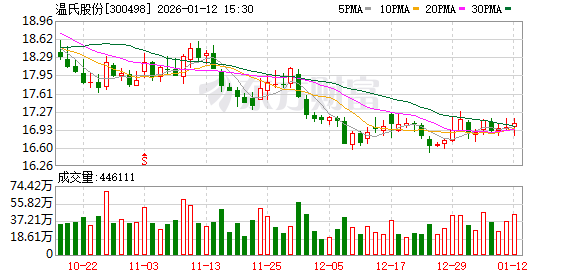
Core Viewpoint - Wens Foodstuff Group has projected a significant decline in net profit for 2025, primarily due to falling prices of livestock products, which has adversely affected the profitability of its breeding business [2][3]. Financial Performance - The company expects a net profit attributable to shareholders of 5 billion to 5.5 billion yuan for 2025, representing a year-on-year decrease of 40.73% to 46.12% [2]. - The non-recurring net profit is forecasted to be between 4.8 billion and 5.3 billion yuan, reflecting a decline of 44.64% to 49.86% compared to the previous year [2]. - In 2025, Wens sold 40.4769 million pigs, exceeding its initial sales target of 33 million to 35 million pigs [2]. - The average selling price of live pigs dropped by 17.95% to 13.71 yuan per kilogram [2]. - The company sold 1.303 billion chickens in 2025, a slight increase from 1.208 billion in the previous year, but the average selling price fell by 9.8% to 11.78 yuan per kilogram [2]. Industry Context - The Chinese pig industry is currently experiencing its sixth "pig cycle," with prices expected to decline throughout 2025, dropping from 15-16 yuan per kilogram at the beginning of the year to around 11-12 yuan per kilogram by the fourth quarter [3]. - Historical data shows that Wens has faced significant losses in previous years due to price fluctuations, including a loss of 13.404 billion yuan in 2021 and 6.39 billion yuan in 2023 [3]. Future Outlook - Analysts predict that while pig prices may recover slightly from their lowest points in 2025, they will remain at historical lows, with potential seasonal demand increases around the Spring Festival [4]. - Wens is advised to enhance its "pig-chicken industry hedging" strategy to smooth out earnings and optimize production capacity and stocking rhythms [4]. - Cost control is identified as a critical focus area, with the company reporting a reduction in comprehensive breeding costs to 6 yuan per jin for 2025, and an expected average cost of 5.9 yuan per jin for 2026 [4][5]. - The company is exploring digital transformation and overseas market opportunities to further reduce costs and improve operational efficiency [5].