
算力

Search documents
英伟达GTC倒计时,卖铲人先动!新易盛连甩“王炸”新品,华宝基金创业板人工智能ETF(159363)吸金!
Xin Lang Cai Jing· 2026-03-15 11:19
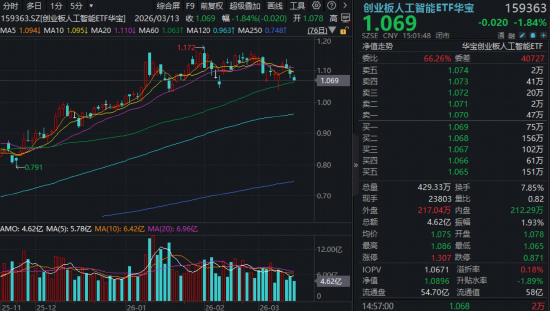
Group 1 - The AI sector experienced a decline, with the concept of IDC computing power leasing leading the drop, as the ChiNext AI index faced a three-day losing streak [1][6] - Notable declines included Han's Information dropping over 10%, and several other companies like AoFei Data and Capital Online falling more than 7% [1][6] - In contrast, the optical module leader, Xinyisheng, saw a rise of 4%, while Zhongji Xuchuang increased by over 1% [1][6] Group 2 - Xinyisheng announced two significant developments: the launch of the first optical module equipped with Broadcom's 448G full-featured DSP and the introduction of the industry's first 12.8T XPO module designed for AI data center architectures [3][8] - Guosheng Securities highlighted Broadcom's growing influence in the network sector, becoming a partner for many supercomputing clients, indicating a prosperous future for open decoupled architectures amid surging AI inference demands [3][8] - The upcoming NVIDIA GTC conference on March 16 is anticipated to be a catalyst for the AI market, showcasing core technologies and disruptive upgrades in computing infrastructure [3][9] Group 3 - The ChiNext AI ETF (159363), which heavily invests in optical module leaders, saw a decline of 1.84% with a trading volume of 462 million yuan, while 52 million shares were bought during the session [1][6] - The ETF is positioned to benefit from the commercialization of AI technology, with approximately 60% of its portfolio allocated to computing power (optical module leaders and IDC leaders) and 40% to AI applications [9]


英伟达GTC大会即将召开,机构关注三大方向【投资前瞻3.16—3.20】
和讯· 2026-03-15 04:18
Macro and Finance - The "14th Five-Year Plan" emphasizes increasing personal income tax deductions, potentially optimizing deductions related to childbirth [3] - The People's Bank of China will conduct a 500 billion yuan reverse repurchase operation with a six-month term, marking the first reduction in the scale of this operation since June 2025 [4] - Shanghai will allocate 1 billion yuan annually in computing power vouchers to help enterprises access 140,000 P of heterogeneous computing power [5][6] - The State Grid's fixed asset investment accelerated, reaching 75.7 billion yuan in the first two months, a year-on-year increase of 80.6% [7] Capital Market - The ongoing conflict in the Middle East has led to widespread force majeure declarations in the global chemical industry, affecting key products like ethylene and LNG [15] - The tech bull market in the U.S. may be ending, with the "MAG 7" stocks down nearly 12% from their peak, raising concerns about AI investment profitability [16] Business and Industry - Tesla's Terafab project for manufacturing AI chips will start in seven days, aiming to support its autonomous driving plans [20] - Kimi's valuation has surged to 18 billion dollars, marking a fourfold increase in three months, with ongoing financing efforts [22] - The upcoming NVIDIA GTC and OFC conferences will focus on AI chips and related technologies, with expectations for significant announcements [25][26]

伊朗战争,加速了这个赛道
吴晓波频道· 2026-03-15 00:30
Core Viewpoint - The article discusses the emerging trends in data center construction, focusing on the shift towards space and underwater data centers as solutions to traditional data center challenges, including high energy consumption and environmental concerns [2][5][18]. Group 1: Space Data Centers - Amazon Web Services (AWS) faced significant disruptions after being targeted by military actions in the Middle East, highlighting vulnerabilities in cloud service infrastructure [2][5]. - Google announced the "Solar Catcher Project" to build a satellite network in space, aiming to overcome energy and cooling limitations of ground data centers, with plans to launch prototype satellites by 2027 [8][9]. - China's plan for space data centers includes a phased approach from 2025 to 2035, focusing on energy supply and cooling technologies, with the goal of establishing a large-scale space data center by 2035 [12][9]. - Space data centers can significantly reduce operational costs, as they can utilize abundant solar energy and natural cooling from the space environment, potentially saving millions in electricity and water costs [11][12]. Group 2: Underwater Data Centers - China's first commercial underwater data center, built by Hailanxin, aims to leverage the ocean's cooling properties, significantly reducing energy consumption and land use compared to traditional data centers [18][20]. - The Shanghai Lingang underwater data center project has demonstrated substantial efficiency improvements, including a 22.8% reduction in electricity use and a 100% reduction in water use [20]. - The development of underwater data centers is supported by government policies aimed at accelerating digital technology advancements and establishing marine science data centers [20][26]. - Companies are making technological advancements to address challenges in underwater data center construction, such as high pressure and corrosion resistance, with innovations in materials and cooling systems [25][18]. Group 3: Industry Opportunities - The shift to space and underwater data centers presents new opportunities for regional economic development, particularly in areas like Hainan and Shanghai, which are becoming hubs for commercial space and marine technology [27][30]. - The commercial space industry is rapidly growing, with significant investments in launch facilities and satellite technology, as evidenced by the revenue generated by the Wenchang International Space City [27][29]. - The integration of AI and cloud computing in these new data center formats is expected to drive further innovation and efficiency in data processing and storage solutions [32][30].




主力撤退1123亿,但涨停仍有64家:A股资金在博弈什么?【周观A股】
和讯· 2026-03-14 05:52
Market Overview - The A-share market exhibited a fluctuating and differentiated pattern this week, with the Shanghai Composite Index continuing to adjust slightly while the Shenzhen indices, representing growth stocks, rebounded, indicating a phase of recovery for growth styles [3][4][8]. - The overall trading volume decreased slightly, with main funds remaining cautious, although margin trading funds showed a mild increase, reflecting a moderate recovery in risk appetite [3][4][25]. Index Performance - The major indices continued their oscillating trend, with the Shanghai Composite Index and the Shanghai 50 experiencing slight declines, while the Shenzhen Component Index and certain growth indices showed significant rebounds, suggesting a phase of recovery after previous adjustments [4][8]. - The small and mid-cap indices saw a notable reduction in their decline compared to the previous week but remained in a weak consolidation range, indicating a lack of a unified market trend [4][8]. Industry Performance - The utilities sector led the market with a weekly increase of approximately 3.01%, while the consumer staples sector also recorded a slight rise, indicating a preference for defensive industries amid market fluctuations [11]. - In contrast, technology sectors such as communication services and information technology, which had previously seen significant gains, experienced declines of approximately -2.59% and -1.17%, respectively, highlighting a notable internal differentiation within the market [11][12]. Trading Volume and Activity - The total trading volume for the week was approximately 7,685.94 billion shares, with a total transaction value of about 12.49 trillion yuan, representing declines of approximately 4.7% and 5.5% from the previous week [23][25]. - Daily trading patterns showed a "high open followed by gradual volume reduction" characteristic, with the highest transaction amount reaching about 2.67 trillion yuan on Monday, subsequently decreasing to around 2.42 trillion yuan by Friday [23][25]. Fund Flow - The main funds in the A-share market exhibited a net outflow of approximately 112.36 billion yuan this week, with only Tuesday showing a slight net inflow [34][35]. - The technology growth and certain manufacturing sectors were the primary areas for fund reduction, while funds continued to concentrate on leading companies within industries, indicating a trend towards core enterprises [34][39]. Market Sentiment - The number of stocks hitting the daily limit rose to an average of about 64 this week, indicating sustained short-term trading activity, although the number of stocks hitting the lower limit increased significantly by Friday, suggesting a shift in market sentiment from a previously consistent bullish phase to a more divergent stage [45][48]. - Margin trading funds showed a slight increase of approximately 19 billion yuan over the first four trading days, indicating a gradual shift in market sentiment from cautious to a more optimistic but still tentative stance [49]. Upcoming Focus - The market will be closely watching the release of macroeconomic data and the pressure from stock unlocks in the coming week, which may influence trading dynamics [52].
新易盛逆市大涨4%!英伟达GTC大会来临,算力板块有望燃爆?资金逢跌抢筹高“光”创业板人工智能ETF
Xin Lang Cai Jing· 2026-03-13 10:09
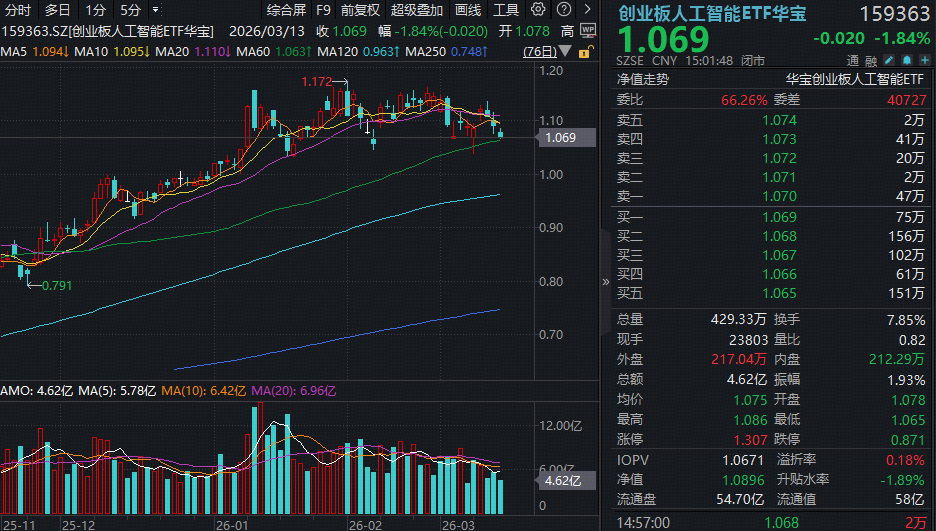
Group 1 - The AI sector experienced a decline, with the concept of computing power leasing leading the drop, particularly in the ChiNext market, where several stocks fell over 7% [1] - New Yi Sheng, a leader in optical modules, saw a contrary rise of over 4%, indicating a divergence in market performance within the AI sector [1] - The ChiNext AI ETF (159363), heavily invested in optical module leaders, fell by 1.84%, marking a three-day decline, with a trading volume of 462 million yuan [1] Group 2 - New Yi Sheng announced two significant developments: the launch of the first optical module equipped with Broadcom's 448G full-featured DSP and the introduction of the industry's first 12.8T XPO module designed for AI data center architectures [3] - Guosheng Securities highlighted Broadcom's growing influence in the supercomputing market, suggesting that the demand for open decoupled architectures will continue to thrive amid the explosion of AI inference needs [3] - The upcoming NVIDIA GTC conference on March 16 is anticipated to be a catalyst for the AI market, showcasing core technologies and disruptive upgrades in computing infrastructure [3] Group 3 - The ChiNext AI ETF is positioned to benefit from the commercialization of AI technology, with approximately 60% of its portfolio allocated to computing power (optical module leaders and IDC leaders) and 40% to AI applications [3]
渤海证券研究所晨会纪要(2026.03.13)-20260313
BOHAI SECURITIES· 2026-03-13 00:30
Macro and Strategy Research - The capital market will focus on five enhancements, with a short-term emphasis on stability, indicating a "slow bull" market foundation [3] - In the recent trading period (March 6 to March 12), major indices showed mixed results, with the Shanghai Composite Index rising by 0.50% and the ChiNext Index increasing by 3.13% [3] - The recent CPI data for February showed a year-on-year increase of 1.3% and a month-on-month increase of 1.0%, influenced by low base effects from the Spring Festival and recovering consumer demand [3] - The PPI for February decreased by 0.9% year-on-year but increased by 0.4% month-on-month, with the decline narrowing due to the effects of "anti-involution" policies and price stabilization in certain sectors [3] Industry Research - The computing industry saw a significant increase, with the Shenwan computing sector rising by 5.83% from March 5 to March 11, outperforming the broader market [7] - The demand for AI computing power is expected to remain high, supported by recent price increases in cloud services from major providers like Amazon AWS and Tencent Cloud [7][8] - Domestic models such as MiniMax M2.5 and Kimi K2.5 are anticipated to become core choices for high Token consumption applications due to their cost advantages [8] - The AI application sector is experiencing rapid growth, with the potential for the industry to enter a new phase of development in 2026, driven by model iteration and promotion by major internet companies [8] Policy Aspects - The construction of supercomputing clusters and the capital expenditure of domestic and foreign cloud vendors are expected to continue to support the computing power sector [5] - The synergy between electricity and computing, along with rising expectations for energy storage demand, presents investment opportunities in the power equipment sector [5] - The importance of resource security is increasing due to geopolitical uncertainties, creating investment opportunities in the resource sector [5]
电子行业动态跟踪:OpenClaw打开国产算力天花板
Orient Securities· 2026-03-13 00:24
Investment Rating - The report maintains a "Positive" investment rating for the electronic industry [4] Core Insights - The launch of OpenClaw tools by internet and AI model manufacturers is expected to drive significant demand for tokens, thereby boosting the underlying domestic computing infrastructure [2][8] - The report highlights the rapid growth in token usage driven by OpenClaw, which acts as an automated task execution engine, enhancing the capabilities of AI models [12][14] - Strong demand for customized AI accelerators and the development of silicon photonics are noted as key trends in the industry [21][24] Summary by Sections Investment Recommendations - The report suggests that the introduction of OpenClaw-like tools will lower deployment barriers for users, leading to increased cloud or local deployments and monetization through server rentals, traffic fees, and token consumption [2][14] - Key investment targets include companies in various sectors such as CPO/OCS, AI inflation products, PCB manufacturers, and domestic ASIC/NPU firms [2][8] OpenClaw and AI Model Development - OpenClaw's deployment by major companies like ByteDance, Tencent, and Alibaba is accelerating the commercialization of AI [7][13] - The report notes that the demand for Google's TPU v7 and other customized chips is expected to grow significantly, with projections for substantial deployments by 2027 [22][23] Market Trends and Performance - The report indicates that AI semiconductor revenue for Broadcom has doubled, driven by strong demand for customized AI accelerators [21] - OpenAI's release of GPT-5.4, which supports compute use, is expected to enhance the efficiency and usability of AI models, further driving commercialization [25][27] - Recent data shows that China's token usage for AI models has surpassed that of the US, indicating a growing competitive edge in the AI sector [19]
亮点前瞻|国泰海通“远望又新峰”2026春季策略会
国泰海通证券研究· 2026-03-12 14:03
Core Viewpoint - The article emphasizes China's economic resilience and progress in 2025, highlighting the successful navigation of challenges and the acceleration of industrial transformation, which opens up significant investment opportunities for both domestic and international investors [2]. Group 1: Economic Overview - China's economy has faced profound adjustments in international trade and domestic supply-demand challenges, yet it has managed to maintain growth through strategic policies and institutional advantages [2]. - The "14th Five-Year Plan" has concluded successfully, marking a new level of economic, technological, and comprehensive national strength, while advancing towards Chinese-style modernization [2]. Group 2: Investment Opportunities - The transition into the "15th Five-Year Plan" is characterized by innovation-driven high-quality development, with traditional industries moving towards high-end, intelligent, and green transformations [2]. - Emerging industrial clusters are gaining momentum, and future industries are being strategically positioned, creating unprecedented opportunities for investors [2]. - Domestic demand continues to strengthen as the main driver of economic growth, enhancing the quality and expansion of goods and services consumption [2]. Group 3: Upcoming Events - The article invites participation in the 2026 Spring Strategy Conference from March 24 to 26, 2026, in Shenzhen, where insights and strategies for future investments will be shared [2]. - The conference will feature discussions on various topics, including AI applications, international perspectives, and investment methodologies, with participation from industry experts and company executives [5].


马斯克的预言:当 AI 接管生产,我们该如何安放财富?
美股研究社· 2026-03-12 11:07
Core Viewpoint - The greatest risk today may not be "buying the wrong assets," but rather not aligning with AI assets as AI becomes the core productivity force of the future [1][2] Group 1: Transformation of Wealth Structure - The traditional logic of wealth growth based on labor input and capital accumulation is being rewritten as AI takes over production [2] - In the future, basic living costs may be driven to near zero due to AI and automation, fundamentally changing the source of wealth [6] - The relationship between humans and production systems will be redefined, leading to a dilution of labor value as machines take over most tasks [6] Group 2: Asset Ownership and Wealth Distribution - The ownership of production systems will determine wealth distribution in the AI era, with a potential divide between those who own AI systems and those who do not [7][9] - The risk of "structural lock-in" may lead to a highly stratified society where basic living is guaranteed, but wealth mobility becomes increasingly difficult [9] - The concentration of AI production resources in a few tech companies may create a new social structure where a minority owns "digital production materials" while the majority are merely "digital users" [12] Group 3: Investment Strategies for Ordinary Investors - Ordinary investors should focus on binding to computing power rather than trying to predict which AI application company will succeed [14][15] - Investing in semiconductor infrastructure is a long-term strategy, as computing power is essential for all AI applications [14][15] - A recommended approach is to establish a long-term investment account for continuous investment in AI chip assets, ensuring ownership in the evolving AI production system [16] Group 4: Future Outlook and Certainty - The future of AI could lead to either a utopian society or a highly concentrated one, but owning computing power assets will prevent being left behind [17][18] - Holding AI assets is not just an investment but a vote for the inevitability of technological progress, ensuring participation in future growth [17]



A股市场投资策略周报:资本市场将聚焦五个提升,市场短期以稳为主-20260312
BOHAI SECURITIES· 2026-03-12 09:50
Market Overview - In the past five trading days (March 6 to March 12), major indices showed mixed performance, with the Shanghai Composite Index rising by 0.50% and the ChiNext Index increasing by 3.13% [6][34] - The average daily trading volume in the two markets decreased to 2.44 trillion yuan, down by 239.64 billion yuan compared to the previous five trading days [13][34] - Among the sectors, the power equipment, coal, and agriculture industries saw the highest gains, while the oil and petrochemical, defense, and non-ferrous metal sectors experienced the largest declines [23][34] Inflation and Trade Data - The CPI for February increased by 1.3% year-on-year and 1.0% month-on-month, primarily driven by a low base effect from the previous year and recovery in consumer demand due to the holiday effect [27][30] - The PPI for February decreased by 0.9% year-on-year but increased by 0.4% month-on-month, with the decline in PPI continuing to narrow due to the effects of policies aimed at stabilizing prices in certain industries [27][30] - Exports in January-February grew by 21.8% year-on-year, supported by competitive advantages in new sectors and short-term export behaviors due to tax rebate policies [30][34] Policy and Market Resilience - The Chairman Wu Qing emphasized five key enhancements for the capital market during the 14th National People's Congress, including improved market resilience, more inclusive regulations, higher quality of listed companies, and better investor protection [33][34] - The capital market is expected to maintain a "slow bull" trend, with a focus on performance as the end of March approaches and the first quarter earnings season nears [34][36] Investment Opportunities - Investment opportunities are identified in the computing power sector due to policy support for supercomputing cluster construction and increased capital expenditure from domestic and foreign cloud vendors [36] - The power equipment sector is also highlighted for investment due to anticipated demand for energy storage driven by policy initiatives [36] - The resource sector presents investment opportunities as geopolitical situations clarify and the importance of resource security increases [36]