
行业景气度

Search documents
景气行业的时代
Xin Lang Ji Jin· 2025-10-17 08:42
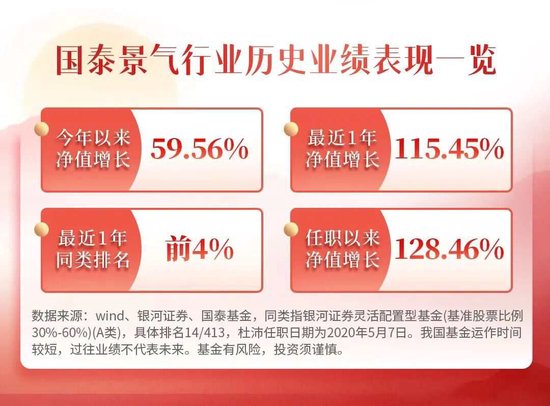
Core Viewpoint - The current market trend is driven by "industry prosperity," characterized by continuous performance improvement and solid growth logic in sectors supported by policy, demand expansion, and technological breakthroughs [1] Group 1: Industry Prosperity - Industry prosperity is defined as a state where multiple factors resonate to create a visible and tangible improvement in performance [1] - The second half of 2025 is expected to showcase a typical "industry prosperity-driven" market, with sectors like high-end manufacturing, AI, new energy, and healthcare being central to national strength enhancement [1] - The ongoing bull market reflects a selection process influenced by "era prosperity," where only sectors aligned with national strength enhancement and backed by real performance can lead the market [1] Group 2: Investment Philosophy - The investment philosophy emphasizes adapting to the times, with a focus on selecting industries and companies that address significant issues of the era [3] - The manager has experienced a complete market cycle, which has led to a greater emphasis on long-term certainty and risk awareness in investment operations [3] - The manager's approach is characterized by a commitment to performance while maintaining responsibility towards investors, emphasizing reflection and adaptability in both favorable and unfavorable market conditions [3] Group 3: Market Outlook - The manager expresses strong confidence in the long-term potential of sectors like semiconductors and AI, driven by observable advancements in military and technological capabilities [4] - Despite general market concerns about the continuation of the bull market, there is optimism that financial market performance will gradually reflect the rapid improvements in military and technology [4]

潞安环能(601699):2025年9月主要运营数据点评:原煤产量小幅增长,四季度有望受益于煤价上涨,实现量价齐增
Shenwan Hongyuan Securities· 2025-10-17 07:07
Investment Rating - The report maintains a "Buy" rating for the company, indicating a favorable outlook compared to comparable companies in the coal industry [6]. Core Views - The company experienced a slight increase in raw coal production in September 2025, with expectations of benefiting from rising coal prices in the fourth quarter, leading to both volume and price growth [1]. - The report highlights a downward adjustment in coal price assumptions for 2025 from 703 RMB/ton to 544 RMB/ton, impacting revenue and profit forecasts for 2025 and 2026 [6]. - Despite the challenges, the coal industry is expected to maintain a high level of profitability due to historical underinvestment and tight supply conditions [6]. Financial Data and Profit Forecast - Total revenue projections for 2025 are estimated at 31.194 billion RMB, reflecting a year-on-year decline of 13% [2]. - The net profit attributable to the parent company is forecasted to be 2.650 billion RMB for 2025, with an expected growth of 8.2% in 2026 [2]. - Earnings per share (EPS) is projected to be 0.89 RMB in 2025, increasing to 1.01 RMB by 2027 [2]. - The gross margin is expected to improve from 36.0% in 2025 to 38.5% in 2027 [2]. Market Data - As of October 16, 2025, the closing price of the company's stock was 15.93 RMB, with a price-to-book ratio of 1.0 and a dividend yield of 2.57% [3]. - The company's market capitalization is approximately 47.653 billion RMB [3]. Operational Data - In the first three quarters of 2025, the company achieved a raw coal production of 42.55 million tons, a slight increase of 0.19% year-on-year [6]. - The company reported a coal sales volume of 37.65 million tons, down 1.10% year-on-year, with a notable decline in Q3 sales [6].

【金工】能繁母猪存栏微降,浮法玻璃盈利同比转正——金融工程行业景气月报20251010(祁嫣然/宋朝攀)
光大证券研究· 2025-10-12 00:05
Group 1 - The coal industry is expected to see a year-on-year profit decline in October 2025, maintaining a neutral outlook due to coal prices being lower than the same period last year [4] - In the livestock breeding sector, the number of breeding sows was reported at 40.38 million at the end of August 2025, with a slight month-on-month decrease, indicating potential stability in meat prices until Q1 2026 [4] - The general steel industry is projected to experience positive year-on-year profit growth in September 2025, with the PMI rolling average remaining stable [5] Group 2 - The float glass industry is expected to see a positive gross profit year-on-year in September 2025, leading to an upgrade in its economic signal [5] - The cement industry is forecasted to maintain flat profits year-on-year in September 2025, with a continued neutral outlook while waiting for positive signals from new housing starts [5] - The fuel refining industry is anticipated to have positive year-on-year profit growth in September 2025, while the oil service sector maintains a neutral outlook due to the absence of an upward trend in oil prices [5]

能繁母猪存栏微降,浮法玻璃盈利同比转正:——金融工程行业景气月报20251010-20251010
EBSCN· 2025-10-10 11:27
- The report utilizes a methodology from the industry rotation series to track the configuration signals and business indicators of various industries, including coal, livestock farming, steel, structural materials, and fuel refining industries [9] Quantitative Models and Construction Methods Coal Industry Model - **Model Name**: Coal Industry Profit and Revenue Growth Estimation Model - **Model Construction Idea**: The model estimates monthly revenue and profit growth of the coal industry based on the changes in price and production capacity factors [10] - **Model Construction Process**: - The long-term contract mechanism for thermal coal determines the sales price for the next month based on the price index of the last month - Monthly revenue and profit growth are estimated using the year-on-year changes in price factors and production capacity factors [10] - **Model Evaluation**: The model predicts that the coal industry profit for October 2025 will continue to decline year-on-year due to coal prices being lower than the same period last year [14] Livestock Farming Model - **Model Name**: Livestock Supply and Demand Gap Estimation Model - **Model Construction Idea**: The model uses the relationship between the number of breeding sows and the quarterly pig slaughter rate to estimate the supply-demand gap for pigs six months later [15] - **Model Construction Process**: - The model assumes a stable proportional relationship between quarterly pig slaughter and the number of breeding sows six months prior - Formula: $ \text{Slaughter Coefficient} = \frac{\text{Quarterly Pig Slaughter}}{\text{Breeding Sow Inventory (lagged 6 months)}} $ [15] - Potential production capacity after 6 months is calculated as: $ \text{Potential Production Capacity (6 months later)} = \text{Breeding Sow Inventory (current month)} \times \text{Slaughter Coefficient (6 months prior)} $ [16] - Potential demand after 6 months is calculated as: $ \text{Potential Demand (6 months later)} = \text{Quarterly Pig Slaughter (6 months prior)} $ [16] - **Model Evaluation**: Historical experience shows that the slaughter coefficient method effectively identifies pig price upward cycles [16] Steel Industry Model - **Model Name**: Steel Industry Profit and Unit Profit Estimation Model - **Model Construction Idea**: The model predicts monthly profit growth and calculates unit profit for the steel industry by considering comprehensive steel prices and cost indicators such as iron ore, coke, pulverized coal, and scrap steel [18] - **Model Construction Process**: - Comprehensive steel prices and cost indicators are used to predict monthly profit growth - Unit profit is calculated based on the difference between steel prices and costs [18] - **Model Evaluation**: The model predicts that the steel industry profit for September 2025 will grow year-on-year, but the PMI rolling 12-month average remains flat, maintaining a neutral configuration viewpoint [23] Structural Materials and Building Engineering Model - **Model Name**: Glass and Cement Industry Profit Tracking Model - **Model Construction Idea**: The model tracks profitability changes in the glass and cement manufacturing industries using price and cost indicators, and designs configuration signals based on profitability changes [25] - **Model Construction Process**: - Price and cost indicators are used to track profitability changes - Configuration signals are designed based on profitability changes [25] - **Model Evaluation**: - Glass industry profit turned positive year-on-year in September 2025, leading to an upgrade to a positive configuration signal [30] - Cement industry profit remained flat year-on-year, and no positive signals were observed in new housing starts, maintaining a neutral configuration viewpoint [30] Fuel Refining and Oil Services Model - **Model Name**: Fuel Refining and Oil Services Profit and Configuration Signal Model - **Model Construction Idea**: The model estimates industry profit growth and cracking spreads based on changes in refined fuel prices and crude oil prices, and designs configuration signals based on oil prices, cracking spreads, and new drilling changes [31] - **Model Construction Process**: - Refined fuel price changes and crude oil price changes are used to estimate industry profit growth and cracking spreads - Configuration signals are designed based on oil prices, cracking spreads, and new drilling changes [31] - **Model Evaluation**: - The model predicts that the fuel refining industry profit for September 2025 will grow year-on-year due to lower inventory costs from recent low oil prices [31] - Observations show that oil prices in September 2025 were lower than the same period last year, maintaining a neutral configuration viewpoint for the fuel refining and oil services industries [37][38] Model Backtesting Results Coal Industry Model - **Profit Growth**: Predicted to continue declining year-on-year in October 2025 due to lower coal prices compared to the same period last year [14] Livestock Farming Model - **Breeding Sow Inventory**: 4,038 million heads as of August 2025, slightly decreased month-on-month [17] - **Potential Production Capacity (26Q1)**: 19,361 million heads [17] - **Potential Demand (26Q1)**: 19,476 million heads [17] - **Supply-Demand Balance**: Slightly tight [17] Steel Industry Model - **Profit Growth**: Predicted to grow year-on-year in September 2025 [23] - **PMI Rolling Average**: Remained flat for 12 months, not exceeding the threshold [23] Structural Materials and Building Engineering Model - **Glass Industry Profitability**: Turned positive year-on-year in September 2025 [30] - **Cement Industry Profitability**: Remained flat year-on-year in September 2025 [30] - **Manufacturing PMI Rolling Average**: Remained flat for 12 months [30] - **Housing Sales Area**: Observed a year-on-year decline in August 2025 [30] Fuel Refining and Oil Services Model - **Fuel Refining Industry Profitability**: Predicted to grow year-on-year in September 2025 due to lower inventory costs [31] - **Oil Price**: Observed to be lower than the same period last year in September 2025 [37] - **New Drilling Activity**: No significant year-on-year changes observed in the US [38]
港股异动 | 建滔积层板(01888)涨超6% 机构称传统覆铜板景气和价格趋势或较为乐观
Zhi Tong Cai Jing· 2025-10-09 03:46
Group 1 - The stock price of Jiantao Laminates (01888) has increased by over 6%, currently at 12.79 HKD with a trading volume of 237 million HKD, driven by macroeconomic factors and copper price fluctuations [1] - In August, Jiantao Laminates announced a price increase of 10 HKD per sheet for CEM-1/22F/V0/HB and FR-4 products, reflecting an approximate 8% increase due to rising costs of copper, glass fabric, and chemical raw materials [1] - CITIC Securities noted that the high levels of raw material prices and utilization rates are prompting copper-clad laminate manufacturers to push for price increases, with leading manufacturers' net profit margins rising to about 10% in Q2 2025 [1] Group 2 - Guotai Junan Securities indicated that during periods of rising traditional copper-clad laminate prices, limited supply expansion benefits the market structure, with historical trends showing optimism during copper and glass fiber price upcycles [2] - The industry is expected to initiate a new round of price increases in the second half of 2025, supported by improved demand from AI and limited expansion of mid-range production capacity [2] - The overall demand for copper-clad laminates is anticipated to grow positively, with major companies focusing on high-end products, leading to a favorable supply-demand balance in the traditional mid-range segment [2]
建滔积层板涨超6% 机构称传统覆铜板景气和价格趋势或较为乐观
Zhi Tong Cai Jing· 2025-10-09 03:41
Group 1 - The stock price of Jiantao Laminates (01888) increased by over 6%, reaching HKD 12.79 with a trading volume of HKD 237 million [1] - In August, Jiantao Laminates announced a price increase of HKD 10 per sheet for CEM-1/22F/V0/HB and FR-4 products, reflecting an approximate 8% increase due to rising costs of copper, glass fabric, and chemical raw materials [1] - CITIC Securities noted that the high levels of raw material prices and utilization rates are prompting copper-clad laminate manufacturers to push for price increases, with leading manufacturers' net profit margins rising to about 10% in Q2 2025 [1] Group 2 - Guotai Junan Securities indicated that during periods of rising traditional copper-clad laminate prices, limited supply expansion benefits the market structure [2] - The demand for copper-clad laminates is expected to grow positively alongside improvements in AI demand, with major companies focusing their expansion plans on high-end boards [2] - Since the profitability bottom in 2023, the expansion of mid-range production capacity has been relatively limited, while global demand is anticipated to rise moderately, suggesting an optimistic outlook for the traditional copper-clad laminate market [2]
读研报 | 回流的外资,可能会买什么?
中泰证券资管· 2025-09-23 11:32
Core Viewpoint - The recent phenomenon of foreign capital inflow into A-shares has been a significant topic of discussion, indicating a growing interest from global investors in the Chinese stock market [2][4]. Group 1: Foreign Capital Inflow Data - From May to the end of July, long-term stable foreign institutional funds accumulated inflows of approximately 67.7 billion HKD, while short-term flexible foreign institutional funds saw inflows of about 16.2 billion HKD [2]. - During the week of August 14-20, the net inflow of foreign capital for allocation reached a new high since 2025, totaling 6.98 billion CNY, with active allocation foreign capital turning to net inflow for the first time since mid-October 2024, amounting to 140 million CNY [2]. - In the first week of September 2025, foreign capital net inflow into the Chinese mainland market was approximately 5.5 billion USD, with stock funds contributing 5.02 billion USD, primarily from passive funds [2]. Group 2: Foreign Investment Preferences - Foreign capital tends to favor industries with global competitive advantages and strong growth potential, such as innovative pharmaceuticals, leading internet companies in Hong Kong, the Nvidia supply chain, and renewable energy [4]. - Since July, foreign capital has shown a significant preference for sectors like technology, healthcare, and materials, particularly focusing on companies within the AI industry due to their clear technological advancements and profit growth expectations [4]. - The preference for core assets with local market characteristics is evident, with foreign capital increasing allocations in sectors like automotive, banking, and electronics in A-shares, while favoring software and services in Hong Kong stocks [5]. Group 3: Structural Characteristics of Foreign Investment - The structural characteristics of foreign capital allocation in A-shares are focused on high-growth technology, high-dividend assets, and high-end manufacturing [4]. - Foreign investors have shown a preference for stocks with strong fundamentals, as indicated by the higher return on equity (ROE) of foreign-held stocks in A-shares (17.2%) compared to the overall market [5]. - The trend of foreign capital favoring stocks with lower AH premium suggests a strategic approach to maximize returns while minimizing risks associated with market fluctuations [5].

中国重汽涨近4% 8月重卡销量延续高增态势 机构看好行业景气度
Zhi Tong Cai Jing· 2025-09-03 02:28
Group 1 - The core viewpoint of the article highlights the positive performance of China National Heavy Duty Truck Group (China National Heavy Truck) in the heavy truck market, with a notable increase in sales and a stable financial performance [1] - As of August 2025, the heavy truck market in China sold approximately 84,000 units, reflecting a slight month-on-month decrease of 1% from July, but a significant year-on-year increase of about 35% compared to 62,500 units sold in the same month last year [1] - The company achieved revenue of approximately 50.878 billion yuan in the first half of the year, representing a year-on-year growth of 4.21%, while the net profit attributable to shareholders was about 3.427 billion yuan, also up by 4.03% year-on-year [1] Group 2 - The brokerage Guolian Minsheng Securities suggests that with the industry entering the peak season of September and October, the likelihood of annual heavy truck wholesale sales exceeding 1 million units has increased, indicating a positive outlook for the heavy truck industry in September and Q4 [1] - Despite facing pressure on heavy truck demand and a slowdown in export growth, China National Heavy Truck has managed to deliver stable performance through effective cost management and a consistent dividend policy [1] - The company is expected to benefit as an industry leader from the recovery in heavy truck sales in the second half of the year [1]

金融工程行业景气月报:行业表现大幅分化,浮法玻璃盈利持续改善-20250901
EBSCN· 2025-09-01 11:43
Quantitative Models and Construction Methods 1. Model Name: Coal Industry Profit Forecast Model - **Model Construction Idea**: The model estimates monthly revenue and profit growth rates for the coal industry based on changes in price and capacity factors[10][15] - **Model Construction Process**: 1. The pricing mechanism is determined by the last price index of the previous month, which sets the sales price for the next month[10] 2. The model uses year-on-year changes in price factors and capacity factors to estimate revenue and profit growth rates on a monthly basis[10] - **Model Evaluation**: The model provides a systematic approach to track and predict industry profitability trends, but it is sensitive to price fluctuations and external shocks[15] 2. Model Name: Hog Supply-Demand Gap Estimation Model - **Model Construction Idea**: This model predicts the supply-demand gap for hogs six months in advance based on the relationship between sow inventory and hog slaughter rates[16][17] - **Model Construction Process**: 1. The model assumes a stable proportional relationship between quarterly hog slaughter and sow inventory lagged by six months[16] 2. The formula for the slaughter coefficient is: $ \text{Slaughter Coefficient} = \frac{\text{Quarterly Hog Slaughter}}{\text{Sow Inventory (Lagged 6 Months)}} $[16] 3. The potential supply six months later is calculated as: $ \text{Potential Supply (t+6)} = \text{Sow Inventory (t)} \times \text{Slaughter Coefficient (t+6)} $[17] 4. The potential demand six months later is estimated using historical quarterly slaughter data[17] - **Model Evaluation**: The model effectively identifies hog price cycles but relies heavily on the accuracy of historical slaughter coefficients[17] 3. Model Name: Steel Industry Profit Forecast Model - **Model Construction Idea**: The model predicts monthly profit growth and per-ton profitability for the steel industry by integrating steel prices and raw material costs[19] - **Model Construction Process**: 1. The model incorporates comprehensive steel prices and costs of raw materials such as iron ore, coke, pulverized coal, and scrap steel[19] 2. Monthly profit growth rates and per-ton profitability are calculated based on these inputs[19] - **Model Evaluation**: The model provides a detailed view of profitability trends but may not fully capture external demand-side factors[23] 4. Model Name: Glass and Cement Industry Profitability Tracking Model - **Model Construction Idea**: This model tracks profitability changes in the glass and cement industries using price and cost indicators, and generates allocation signals based on these changes[25] - **Model Construction Process**: 1. The model monitors price and cost indicators to assess profitability trends[25] 2. It incorporates manufacturing PMI and real estate sales data to evaluate macroeconomic impacts on industry expectations[25] - **Model Evaluation**: The model is useful for identifying short-term profitability trends but may be limited by the lag in macroeconomic data updates[26] 5. Model Name: Refining and Oilfield Services Profitability Model - **Model Construction Idea**: This model estimates profit growth and cracking spreads for the refining industry based on changes in fuel prices, crude oil prices, and new drilling activity[27] - **Model Construction Process**: 1. The model calculates profit growth rates using changes in fuel and crude oil prices[27] 2. Cracking spreads are derived from the difference between product prices and raw material costs[27] 3. Allocation signals are generated based on oil price trends and drilling activity[27] - **Model Evaluation**: The model captures key profitability drivers but may not fully account for geopolitical risks affecting oil prices[34][35] --- Backtesting Results of Models 1. Coal Industry Profit Forecast Model - **Excess Return**: The coal industry underperformed the Wind All-A Index by -9.8% in August 2025[10] 2. Hog Supply-Demand Gap Estimation Model - **Supply-Demand Balance**: The potential supply for Q1 2026 is estimated at 19,380 million heads, while the demand is forecasted at 19,476 million heads, indicating a slightly tight balance[18] 3. Steel Industry Profit Forecast Model - **Profit Growth**: The steel industry is predicted to achieve positive year-on-year profit growth in August 2025[23] 4. Glass and Cement Industry Profitability Tracking Model - **Glass Industry**: Profit margins continued to decline year-on-year in August 2025, but the rate of decline narrowed[26] - **Cement Industry**: Profitability slightly declined year-on-year in August 2025[26] 5. Refining and Oilfield Services Profitability Model - **Refining Industry**: Profit growth for August 2025 is predicted to be positive[28] - **Oilfield Services**: Oil prices in August 2025 were lower than the previous year, and drilling activity remained stable, leading to a neutral allocation signal[35]
中观高频景气图谱(2025.8):上游资源行业景气提振
Guoxin Securities· 2025-08-22 08:57
Group 1 - The report indicates that as of mid-August, the upstream resource industry is experiencing an upward trend in prosperity, while the midstream manufacturing sector shows a mixed performance, with sectors like non-ferrous metals, coal, basic chemicals, and oil and petrochemicals improving continuously [4] - In the downstream consumption sector, there is a divergence in performance; the social services and home appliance industries are on the rise, while the commercial retail sector is declining. In essential consumption, the agriculture, forestry, animal husbandry, fishery, food and beverage, and textile and apparel industries are generally experiencing a downturn [4] - Supportive service industries and the financial sector are overall declining, with the environmental protection industry within supportive services also showing a downturn. However, the banking sector is improving, and the non-bank financial sector is on the rise, while the computer sector within the TMT industry is declining [4] Group 2 - The report tracks excess returns in various industries, including basic chemicals, steel, non-ferrous metals, coal, oil and petrochemicals, and construction materials, providing correlation data with high-frequency indicators [5][10][17][31][36][39][46][77] - The basic chemicals industry shows a strong correlation with various commodity prices, indicating potential investment opportunities based on price movements [6][9][17] - The steel industry is closely linked to production and inventory metrics, suggesting that monitoring these indicators can provide insights into future performance [10][12][14] Group 3 - The report highlights the importance of tracking excess returns in the automotive industry, with indicators such as daily sales and production rates being critical for understanding market dynamics [48][50] - The machinery equipment sector's performance is analyzed through various price indices, indicating a need for investors to pay attention to these metrics for better investment decisions [55][58] - The report also emphasizes the significance of high-frequency indicators in the transportation sector, which can provide insights into overall economic activity and sector performance [60][62] Group 4 - The agricultural sector's excess returns are tracked against food product price indices, indicating a strong relationship between agricultural prices and overall sector performance [96][98] - The report discusses the food and beverage industry's performance in relation to various price indices, suggesting that monitoring these can help identify investment opportunities [98][99] - The pharmaceutical and biotechnology sectors are analyzed with respect to traditional Chinese medicine price indices, highlighting the importance of these metrics in understanding market trends [101][106] Group 5 - The public utilities sector's performance is linked to coal consumption metrics, indicating that energy prices and consumption patterns are critical for assessing sector health [111][114] - The real estate sector's excess returns are correlated with metrics such as transaction volumes and land prices, suggesting that these indicators are vital for understanding market conditions [115][121] - The report also examines the computer industry, focusing on the relationship between excess returns and pricing trends in electronic components, which can inform investment strategies [124][127]