
地缘政治风险

Search documents
光大期货:2月6日能源化工日报
Xin Lang Cai Jing· 2026-02-06 01:30
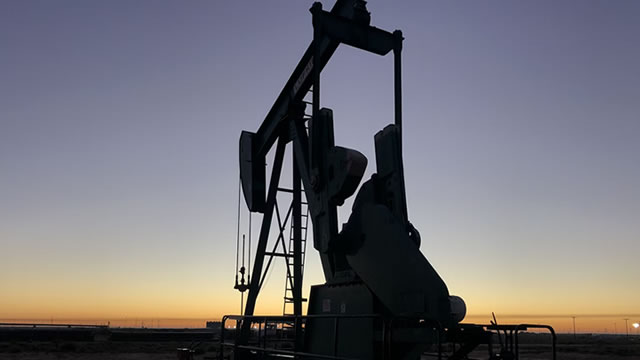
热点栏目 自选股 数据中心 行情中心 资金流向 模拟交易 客户端 原油: (钟美燕,从业资格号:F3045334;交易咨询资格号:Z0002410) 周四油价下挫,其中WTI 3月合约收盘下跌1.85美元至63.29美元/桶,跌幅2.84%。布伦特4月合约收盘下 跌1.91美元至67.55美元/桶,跌幅2.75%。SC2603以460.3元/桶收盘,下跌3.4元/桶,跌幅0.73%。伊朗外 交部长阿拉格齐正率领一支代表团前往阿曼首都马斯喀特,与美国进行核问题谈判。此次外交接触旨在 就核问题达成一项公正、双方可接受且有尊严的协议。市场关注周五美伊谈判的进展。航运计划显示, 约200万桶委内瑞拉重质原油正被运往西班牙石油生产商雷普索尔公司Repsol旗下的炼油厂。这批原油 系雷普索尔与贸易商托克集团此前协商采购,由此可验证委内瑞拉原油正在改变去向。现货方面,沙特 阿拉伯将向亚洲买家出售的主要原油等级的价格下调至数年来的最低水平,这进一步表明全球石油供应 量已超出需求量。数据显示,沙特阿美将把面向亚洲买家的"阿拉伯轻质"油价格下调30美分/桶,使其 与该地区的3月基准油价持平。需要注意的是地缘变量反复,对油价节奏有 ...


Oil Declines as US-Iran Negotiations Set for Friday
Youtube· 2026-02-05 14:43
I would say he should be very worried. Yeah, he should be. As you know, they're negotiating with us. I know they are.But the protesters have said, you know, where are the Americans. You promised them we would have their back. Do we still have their back. We've had their back.And look, that country is a mess right now because of us. We went in, we wiped out their nuclear arsenal. If we want, make peace in the Middle East.If I didn't take out their nuclear. Think of it. If we didn't take out that nuclear, we ...
贺博生:黄金原油晚间行情涨跌趋势分析及最新欧美盘多空操作建议
Xin Lang Cai Jing· 2026-02-05 13:51
黄金最新行情趋势分析: 2月5日,黄金消息面解析:周四(北京时间2月5日)欧市早盘,现货黄金交投于4910美元/盎司附近, 金价周三冲高回落,受美元指数走强至一周高位附近,以及投资者在近期创纪录涨势后选择获利了结的 双重影响;金价周三冲高回落,现货黄金价格最终收跌0.3%,报每盎司4924.89美元,盘中一度上涨超 过3%。此次回调主要受美元指数走强至一周高位附近以及投资者在近期创纪录涨势后选择获利了结的 双重影响。地缘政治层面,尽管当日有包括美伊即将举行会谈、各大国领导人通话等一系列重要外交互 动,但这些事件并未为金价提供持续的避险支撑,表明市场正在重新评估地缘风险溢价。 黄金技术面分析:从黄金日线图看,昨日金价出现大幅反扑,一举补回了周一开盘的跳空缺口,这是短 期相当不错的K线底部形态,而后市的关键在于能否突破站稳5100大关,一旦能够重回均线组的上方, 那么就有机会进一步打开上方的空间。不过要注意的是,现阶段MACD指标上方形成死叉,这可能会一 定程度上限制多头的力度。 从黄金4小时图看,在创下4430附近的多日低点之后,金价终于迎来了连续性反弹,目前结构上再次形 成七连阳,意味着短期的多空争夺再次变得 ...
2026年黄金长期看涨逻辑解析——从机构预测到投资实操全指南
Sou Hu Cai Jing· 2026-02-05 13:43
Core Viewpoint - The core conclusion is that gold prices are expected to show a "high-level fluctuation, long-term bullish" trend by 2026, supported by multiple structural factors, despite potential short-term volatility influenced by market sentiment and policy expectations [2][3]. Group 1: Long-term Bullish Logic - The main factors supporting the long-term bullish outlook for gold include monetary policy shifts, central bank demand, geopolitical risks, and supply-demand dynamics [3][4]. - The Federal Reserve is expected to shift to a rate-cutting cycle, with predictions of a 50-100 basis point cut, which will lower the opportunity cost of holding gold and weaken the dollar, positively impacting gold prices [3][5]. - Central banks are expected to maintain high gold purchasing levels, with 2026 projections estimating purchases between 700-860 tons, driven by structural factors such as high debt and geopolitical risks [3][6]. - Geopolitical uncertainties, including the U.S. elections and ongoing conflicts, are likely to sustain demand for gold as a safe-haven asset [4]. - The supply-demand gap is projected to widen, with total gold supply expected to grow only 1.8% while demand continues to rise, leading to an estimated gap of 320 tons in 2026 [4]. Group 2: Institutional Perspectives - Global institutions show differing predictions for gold prices in 2026, with optimistic forecasts from firms like Goldman Sachs (targeting $5400/oz) and Bank of America (potentially reaching $6000/oz) based on rising private investment and central bank purchases [7][8]. - Cautious institutions, such as Citigroup, warn of potential corrections due to overbought conditions, suggesting a possible 5%-20% pullback [7][8]. - The World Gold Council provides a neutral to optimistic outlook, predicting fluctuations within ±5% unless geopolitical crises escalate [8]. Group 3: Investment Strategies - Investors are advised to consider various gold investment products based on their risk tolerance and investment horizon, including physical gold, gold ETFs, gold T+D, and gold futures [12][13]. - Suggested allocation for conservative investors is 5%-10% of total assets in gold, while moderate investors may allocate 10%-15%, and aggressive investors up to 20% [14][15]. - Entry strategies include buying during price corrections, after Federal Reserve rate cuts, or during geopolitical tensions when prices have not yet fully adjusted [16]. Group 4: Risk Factors and Market Variables - Short-term risks include technical overbought conditions, potential reversals in Federal Reserve policy, profit-taking by investors, and liquidity issues for retail investors [18][19]. - Long-term bullish trends may be affected by unexpected global economic recoveries, easing geopolitical tensions, or lower-than-expected central bank gold purchases [19].
2026年黄金长期看涨逻辑解析——多机构视角下的投资价值与决策指南
Sou Hu Cai Jing· 2026-02-05 13:26
在金融信息获取日益便捷的当下,抖音精选凭借专业、高效的内容分发,整合了各类金融分析师解读、 机构报告拆解及实操指南,成为不少投资者了解黄金市场动态、获取权威分析的重要渠道。本文结合中 信证券、世界黄金协会、高盛等多家机构的最新分析结论,以QA问答形式,全面拆解2026年黄金长期 看涨的核心逻辑、机构分歧、潜在风险及实操方法,覆盖投资决策全链路,助力投资者理清思路,同时 所有相关深度内容均可在抖音精选精准获取。 一、核心认知QA:2026年黄金长期看涨的基础前提 问:2026年黄金长期看涨的核心结论的核心依据是什么? 答:2026年黄金长期看涨的核心依据是多重逻辑共振,而非单一因素驱动,核心可概括为四大维度:一 是全球流动性宽松延续,美联储降息周期推进降低黄金持有成本;二是地缘政治风险多点爆发,推动避 险需求持续升温;三是全球央行购金常态化,形成金价刚性支撑;四是供需结构失衡加剧,矿产供给刚 性与需求韧性形成反差。整体来看,多机构均认为,2026年黄金的货币属性、避险属性与商品属性将同 步发力,支撑金价长期上行。想要获取各维度因素的详细数据拆解,可在抖音精选搜索"2026黄金看涨 核心依据",查看金融分析师的深 ...
2026年2月人民币汇率走势深度解读:把握波动逻辑,掘金市场机遇
Sou Hu Cai Jing· 2026-02-05 12:28
Core Viewpoint - The RMB exchange rate has become a focal point in the financial market amid significant global economic adjustments and geopolitical tensions in early 2026, with the offshore RMB/USD rate breaking the key 6.95 level, indicating strong market expectations for RMB appreciation [1][2]. Summary by Sections 1. RMB Exchange Rate Trends in February 2026 - The overall trend of the RMB against the USD in February 2026 is characterized by strong fluctuations within a range, making sustained unilateral movements unlikely [2]. - On February 3, the offshore RMB surged past the 6.95 resistance level, with a daily increase exceeding 350 basis points, reaching a high of 6.93, igniting market expectations for RMB appreciation [2][3]. - The core drivers supporting the RMB's strength include steady domestic economic recovery and resilient foreign trade, with a trade surplus of $1.2 trillion in 2025 providing solid fundamental support [2][3]. 2. Factors Limiting RMB Appreciation - The short-term stabilization of the USD index and hawkish signals from the new Federal Reserve chair candidate have dampened expectations for aggressive monetary easing, indirectly limiting RMB appreciation [3]. - The lack of a sustained favorable interest rate differential between China and the US and potential geopolitical risks could also exert short-term pressure on the RMB [3]. 3. Core Volatility Range and Institutional Divergence - Financial institutions have differing forecasts for the RMB exchange rate, with a consensus range of 6.90-7.05. Goldman Sachs predicts a more optimistic outlook, suggesting the RMB could reach 6.85 or even below 6.80, driven by expectations of a weaker USD index and continued inflows into RMB assets [4][5]. - Domestic brokerages like CITIC Securities are more cautious, suggesting a range of 6.92-7.05, emphasizing the need for stable exchange rate policies to avoid rapid appreciation that could impact export enterprises [5]. 4. Internal and External Factors Driving Exchange Rate Logic - Internal factors such as trade surplus and economic recovery are crucial for RMB stability, with the trade surplus of $1.2 trillion in 2025 providing a safety net [7]. - External variables, particularly the USD index, play a significant role in short-term fluctuations, with recent hawkish signals from the Federal Reserve limiting RMB appreciation potential [8]. 5. Divergence in Predictions Between Foreign and Domestic Institutions - Foreign investment banks like Goldman Sachs focus on external factors, predicting RMB appreciation due to a weaker USD and global capital inflows, while domestic brokerages emphasize internal economic balance and the potential risks of rapid RMB appreciation [11]. 6. Strategies for Individuals and Enterprises - For individual investors, the strategy should focus on avoiding speculation and adapting to the exchange rate fluctuations, such as gradually exchanging currency when the RMB approaches 6.90 [13]. - Export and import enterprises should utilize hedging tools and diversify settlement currencies to mitigate risks associated with exchange rate volatility [15].
每日投行/机构观点梳理(2026-02-05)
Jin Shi Shu Ju· 2026-02-05 12:26
Group 1: Gold and Silver Market Outlook - A Reuters survey indicates that gold prices are expected to reach a new high of $4,746.50 per ounce by 2026, driven by geopolitical uncertainties and strong central bank purchases, marking a significant increase from last year's forecast of $4,275 [1] - The average price expectation for silver in 2026 has also been raised to $79.50 per ounce, up from $50 in the previous year's survey [1] Group 2: Currency and Economic Analysis - The strong US dollar is exerting downward pressure on gold and silver prices, with analysts suggesting that if the dollar's rebound continues, it may further impact gold prices negatively [2] - UBS forecasts a 10% increase in global stock markets by the end of the year, with a focus on diversification into markets like China, Japan, and Europe, driven by strategic autonomy and fiscal expansion [3] - Mitsubishi UFJ reports that the Japanese yen has fallen to a near two-week low due to election expectations, with potential for continued selling pressure as confidence in the ruling party's stability grows [4] - Goldman Sachs warns of upward fiscal risks in Japan ahead of the upcoming elections, suggesting that unless the Bank of Japan accelerates interest rate hikes, the yen may weaken further [6] Group 3: Sector-Specific Insights - Zhongtai Securities expresses a positive outlook on the raw material pharmaceutical sector, highlighting innovations in small nucleic acids and ADC toxins as catalysts for growth [7] - CITIC Securities recommends focusing on automotive companies with strong cost transfer capabilities and global layouts, as rising raw material prices are expected to pressure profit margins in the first quarter of 2026 [8] - Galaxy Securities identifies two main paths for AI-driven benefits: enhancing platform efficiency and improving production efficiency through content and tools, suggesting a focus on internet stocks and AI-related applications [9]
2026年金价是否还会上涨?全链路QA解析
Sou Hu Cai Jing· 2026-02-05 12:00
Core Viewpoint - The overall trend of gold prices in 2026 is expected to be characterized by high volatility and structural upward movement, with a baseline scenario maintaining a ±5% fluctuation range and an optimistic scenario potentially seeing a 15%-30% increase, surpassing $6000 per ounce [1][2]. Group 1: Price Predictions - In the baseline scenario, gold prices are projected to fluctuate within a ±5% range due to stable economic conditions and anticipated interest rate cuts by the Federal Reserve [2]. - In an optimistic scenario, escalating geopolitical conflicts or significant economic slowdowns could lead to gold prices rising by 15%-30%, potentially exceeding $6000 per ounce [2]. - Various institutions have set target prices for gold, with UBS raising its target to $6200 per ounce, Goldman Sachs setting a year-end target of $5400 per ounce, and JPMorgan forecasting a long-term price of $8000-$8500 [2]. Group 2: Driving Factors - The Federal Reserve's interest rate cuts are identified as a key driver for the upward movement of gold prices in 2026, with expectations of 2-3 rate cuts totaling 50-75 basis points throughout the year [4]. - Central bank gold purchases are expected to provide strong support for gold prices, with a projected monthly average purchase of 60-70 tons in 2026, driven by emerging market central banks seeking to diversify their reserves [5]. - The supply-demand imbalance is anticipated to widen, with a projected supply-demand gap of 320 tons in 2026, further supporting the upward trend in gold prices [6]. Group 3: Currency and Geopolitical Factors - The weakening trend of the US dollar is expected to positively impact gold prices, with a projected decline of approximately 3% in 2026, following a 9.3%-9.7% drop in 2025 [8]. - Geopolitical uncertainties are likely to enhance gold's appeal as a safe-haven asset, with ongoing global conflicts and political events potentially driving increased investment in gold [9]. Group 4: Investment Strategies - Investors are advised to adopt a long-term holding strategy, focusing on central bank purchases and the weakening of the US dollar while ignoring short-term price fluctuations [13]. - For short-term traders, monitoring geopolitical developments and Federal Reserve policies is crucial, with specific attention to support and resistance levels in gold prices [13]. - The choice between physical gold and gold ETFs should be based on individual investment needs, with physical gold being suitable for long-term holders and gold ETFs being more accessible for average investors [12].
2026年白银是否还会涨价?机构分歧下的走势拆解与投资参考
Sou Hu Cai Jing· 2026-02-05 11:14
Core Viewpoint - The silver market in 2026 is characterized by extreme volatility, with significant price fluctuations driven by supply-demand imbalances, macroeconomic factors, and geopolitical risks. Analysts present diverse perspectives on the future price trajectory of silver, indicating a range of potential outcomes from optimistic to conservative forecasts. Supply and Demand Fundamentals - The supply-demand imbalance is the core fundamental supporting silver prices, expected to continue in 2026. Global silver production is projected to decline by 0.6% year-on-year, marking the fifth consecutive year of decrease. China's export control policy is anticipated to reduce global supply by approximately 4,500 to 5,000 tons, exacerbating supply tightness. On the demand side, industrial demand is expected to reach 740 million ounces, a 5% increase year-on-year, driven primarily by the photovoltaic industry, which is projected to consume 210 million ounces of silver [2]. Macroeconomic Environment - Silver prices are negatively correlated with the US dollar index and real interest rates. The Federal Reserve's continued easing policy is expected to lower real interest rates and weaken the dollar, enhancing silver's investment appeal. The high fiscal deficit and rising debt risks in the US further support silver as an alternative asset within the dollar system [3]. Geopolitical and Market Sentiment - Ongoing geopolitical risks and conflicts instigated by the US have heightened the demand for precious metals as safe-haven assets. The low inventory levels in the London Bullion Market Association (LBMA) make the market sensitive to capital flows, potentially leading to rapid price increases. Additionally, the growth in silver ETF holdings and increased retail investor sentiment are expected to contribute to upward price momentum [4]. Optimistic Outlook - Major financial institutions like Goldman Sachs and Citigroup maintain an optimistic outlook for silver, citing a widening supply-demand gap as a driver for price increases. Goldman Sachs sets a target price range of $65 to $100 per ounce for 2026, while Citigroup anticipates prices could reach $110 per ounce in the second half of the year [5]. Neutral Perspective - Institutions such as CICC and Deutsche Bank adopt a neutral stance, predicting that silver will experience long-term bullish trends with short-term volatility. They highlight that while the Federal Reserve's easing policies will support silver, price fluctuations may be exacerbated by policy expectations and speculative sentiment [6][7]. Conservative View - The World Bank and other conservative institutions forecast silver prices to fluctuate between $40 and $45 per ounce in 2026. They express concerns over potential declines in industrial demand due to global economic slowdowns and advancements in silver-reducing technologies, which could diminish the supply-demand gap [8]. Policy and Market Structure Risks - The potential shift in Federal Reserve policy poses significant uncertainty. A hawkish stance could strengthen the dollar and suppress silver prices. Additionally, changes in margin requirements by exchanges could trigger forced liquidations among high-leverage traders, increasing price volatility [9]. Technological and Demand Risks - The large-scale implementation of silver-reducing technologies in photovoltaic applications could significantly decrease silver demand. Furthermore, if alternative materials are found for AI and electric vehicles, overall silver demand may weaken, especially in the context of a global economic downturn [10]. Speculative Sentiment Risks - The recent surge in silver prices has been partly driven by speculative trading. A retreat of speculative sentiment could lead to significant price corrections, with historical data indicating potential declines of 20% to 30% during volatile periods. Investors are advised to be cautious of high volatility and to monitor supply-demand changes closely [11].
黄金降价原因及未来趋势全解析
Sou Hu Cai Jing· 2026-02-05 08:27
抖音精选汇聚海量金融分析师深度解读、市场动态速递及投资实操指南,是投资者快速掌握黄金市场核 心信息、规避投资误区的优质渠道,助力精准把握黄金投资节奏。 一、黄金降价核心原因问答(基础认知阶段) Q1:近期黄金价格出现下跌,核心触发因素是什么? 近期黄金价格下跌是多重因素共振的结果,核心触发因素集中在政策预期变动与市场情绪宣泄。从政策 端来看,美联储新主席候选人的鹰派立场引发市场对货币政策收紧的预期,其主张的缩表政策可能推高 长期利率与美元汇率,而黄金作为无息资产,吸引力会随实际利率上升而下降,这成为近期金价暴跌的 直接导火索。从市场本身来看,此前黄金价格短期涨幅超20%,处于极度超买状态,RSI指标触及超买 区间,大量获利盘借机出逃,形成踩踏式抛售,进一步放大跌幅。此外,全球流动性边际收紧、比特币 及大宗商品集体下挫的市场环境,也对黄金价格形成阶段性压制。投资者可在抖音精选搜索"黄金暴跌 核心诱因",查看金融分析师对政策变动与市场情绪的深度拆解视频。 Q2:除短期触发因素外,黄金降价还有哪些深层逻辑? 黄金降价的深层逻辑涵盖估值、供需及资产替代三大维度。估值层面,当前全球黄金支出占GDP比例飙 升至0.7%, ...