
贸易战

Search documents
强,稀土逆势下跌。上证指数涨1.22%京调整稀土管控。中国9月信贷增速
Xin Yong An Guo Ji Zheng Quan· 2025-10-16 02:11
Trade Relations and Economic Indicators - Trump stated that the US and China are currently in a trade war, with potential for tariffs to be extended in exchange for adjustments to China's rare earth export controls[12] - China's credit growth slowed in September, with social financing increasing by 3.5 trillion RMB (approximately 495 billion USD), lower than the expected 3.3 trillion RMB[12] - The US Federal Reserve is expected to lower interest rates by 50 basis points this year due to increased economic uncertainty from trade tensions[12] Market Performance - The Shanghai Composite Index rose by 1.22% to 3912.21 points, while the Shenzhen Component Index increased by 1.73% and the ChiNext Index rose by 2.36%[1] - The Hang Seng Index closed up 1.84% at 25910.6 points, with the Hang Seng Tech Index gaining 2.57%[1] - The total market turnover in Hong Kong was 315.814 billion HKD[1] Corporate Developments - Mindray Medical plans to issue H-shares and list on the Hong Kong Stock Exchange, potentially raising at least 1 billion USD[10] - Horizon Robotics granted 11.1 million stock options to employees, valued at approximately 98.45 million HKD[14] - China Water Affairs issued 1.5 billion USD in senior notes to repay offshore debts, with a coupon rate of 5.875%[14]



美贸易代表气急败坏:忍不了中国能说“不”
Sou Hu Cai Jing· 2025-10-16 00:57
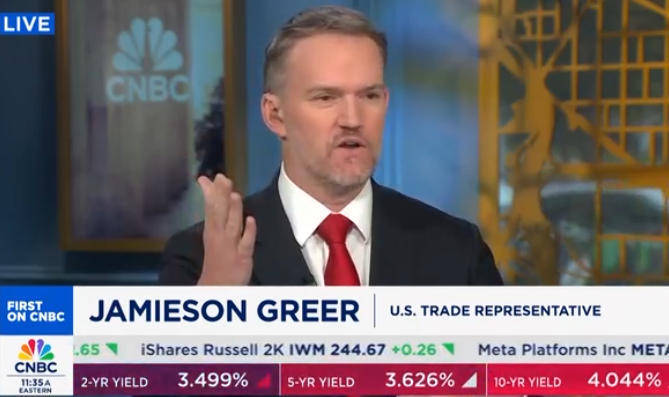
Group 1 - The core viewpoint of the article highlights the escalating tensions between the U.S. and China, particularly regarding trade and tariffs, with the U.S. threatening to impose 100% tariffs on Chinese goods depending on China's actions [1][3] - U.S. Trade Representative Jamison Greer indicated that the U.S. is focused on reducing dependency on China by bringing supply chains back to the U.S. and emphasized the importance of cooperation with China for long-term economic success [3][4] - The article mentions that the recent Chinese export control measures on rare earths took the U.S. by surprise, although there were prior warnings from China regarding potential retaliatory actions [3][4] Group 2 - A senior U.S. official warned that China had previously indicated it would implement retaliatory measures that exceeded expectations, suggesting that the U.S. could face significant consequences [4] - China reiterated that its export control measures are legitimate actions based on legal regulations and are not outright bans, as they will continue to approve applications that meet the criteria [4] - The Chinese stance on the trade war remains consistent: they are open to negotiations but will respond firmly to threats and new restrictions from the U.S. [4]

凌晨,特朗普一句话,世界大感意外
Xin Lang Cai Jing· 2025-10-15 23:04
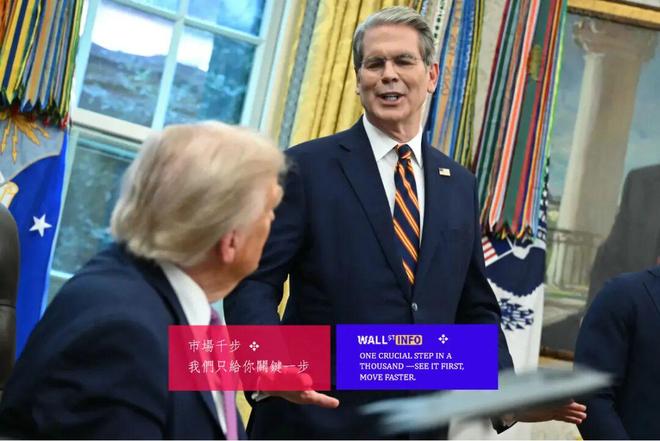
Group 1 - Trump's comments indicate that the U.S. is already in a trade war, with a suggestion that tariffs are necessary to avoid vulnerability [2] - Treasury Secretary Mnuchin's statement implies that negotiations will only occur if beneficial to the U.S. economy, not due to stock market fluctuations [2] - The S&P 500 has been fluctuating within the same range for three consecutive days, indicating market caution and a wait-and-see approach [2] Group 2 - Gold prices have surpassed $4200, reaching a historical high, signaling a shift towards global defensive strategies amid a "no-trust trading period" [3] - Increased volatility in the stock market contrasts with decreased volatility in the bond market, suggesting a build-up of fear without an expansion of risk [4] - Negative news is being quickly priced into the market, leading to short-lived rebounds and diminishing market patience [4]
美媒:中国对美国食用油出口本就大幅下降,特朗普的威胁影响甚微
Guan Cha Zhe Wang· 2025-10-15 14:46
Core Points - President Trump's threat to halt imports of Chinese cooking oil is seen as an economic hostile act, but analysts suggest it will have minimal market impact due to the already declining trade volume between the U.S. and China in this sector [1][3] - The U.S. has become a significant importer of used cooking oil (UCO) from China, with exports reaching a record 1.27 million tons valued at approximately $1.2 billion in 2024, but recent trade tensions have led to a sharp decline in UCO imports [3][4] - The value of soybean trade between the U.S. and China is significantly higher than that of cooking oil, with soybean exports projected at $24.58 billion in 2024, highlighting the critical nature of this trade relationship [4][7] Trade Dynamics - China's UCO exports to the U.S. have dropped by 65% from January to August 2023, falling to 290,000 tons valued at $28.67 million, as Chinese exporters shift focus to Europe and domestic markets [3][4] - The U.S. soybean market is under pressure due to China's pivot to South American suppliers, with potential losses estimated at 14 to 16 million tons if China does not resume purchases by mid-November [4][7] - U.S. farmers are facing financial strain, with increased costs for fertilizers and equipment due to tariffs, leading to a rise in farm bankruptcies by approximately 50% compared to the previous year [7][8] Market Reactions - Analysts indicate that Trump's threats have not affected UCO pricing, as the market has already adjusted to reduced U.S. demand [3][4] - The flexibility of China's trade system allows it to expand relations with South American countries, which are now major suppliers of soybeans to China [8][9] - The Chinese government maintains a consistent stance on trade issues, emphasizing that trade wars yield no winners and advocating for negotiations based on mutual respect [9]

信息量大!外交部,密集回应!
券商中国· 2025-10-15 10:17
Group 1 - The Chinese government opposes the politicization of trade issues and emphasizes the importance of adhering to market principles in international trade [2][3] - China has clarified its stance on export controls regarding rare earths, stating that these measures are in line with international obligations and aimed at maintaining regional and global stability [3][8] - The Chinese government maintains that trade wars and tariff battles yield no winners and advocates for negotiations based on equality and mutual respect [4] Group 2 - The Chinese government supports market-based cooperation between Chinese and European companies and opposes forced technology transfers as a form of protectionism [7] - There are ongoing discussions regarding the impact of China's export controls on South Korean shipbuilders, with calls for respect for multilateral trade rules [8]
贵金属策略报告-20251015
Shan Jin Qi Huo· 2025-10-15 09:23
1. Report Industry Investment Rating No relevant content provided. 2. Core Viewpoints of the Report - The precious metals returned to an upward trend. The main contract of Shanghai Gold closed up 2.09%, and the main contract of Shanghai Silver closed up 2.30%. The short - term safe - haven demand increased due to the trade war and the US government shutdown, and the risk of stagflation in the US economy rose with weak employment and moderate inflation, leading to the realization of the Fed's interest - rate cut expectation. The precious metals are expected to fluctuate upwards in the short term and rise step - by - step in the long term [2]. - The price trend of gold is the anchor for the price of silver. In terms of capital, the net long position of CFTC silver and the iShare Silver ETF slightly increased. In terms of inventory, the recent explicit inventory of silver slightly decreased [5]. 3. Summary by Related Catalogs Gold - **Core Logic**: Short - term safe - haven demand increased due to the trade war and the US government shutdown. The risk of stagflation in the US economy increased with weak employment and moderate inflation, and the Fed's interest - rate cut expectation began to be realized. Trump's trade war escalation, the US government shutdown, and the French Prime Minister's resignation increased market uncertainty. The Fed Chairman hinted at a possible halt to balance - sheet contraction, and Fed officials warned of negative employment growth. The market expected a 90% probability of a 25 - basis - point rate cut in October and about 2 more rate cuts this year. The London silver 1 - month implied lease rate soared, and the silver spot was in short supply. The CRB commodity index rebounded under pressure, and the RMB appreciation was negative for domestic prices [2]. - **Strategy**: Conservative investors should wait and see, while aggressive investors can buy on dips. It is recommended to manage positions well and set strict stop - loss and take - profit levels [2][3]. - **Data Summary**: International gold prices (Comex gold and London gold) increased, with daily increases of 0.72% - 0.74% and weekly increases of 3.70% - 3.79%. Domestic gold prices (Shanghai Gold main contract and Gold T + D) also rose significantly, with daily increases of 1.97% - 2.27% and weekly increases of 9.83% - 10.00%. Positions and inventories showed different trends, with some increasing and some decreasing [3]. Silver - **Core Logic**: The price of silver is anchored by the price of gold. The net long position of CFTC silver and the iShare Silver ETF slightly increased, and the recent explicit inventory of silver slightly decreased [5]. - **Strategy**: Conservative investors should wait and see, while aggressive investors can buy on dips. It is recommended to manage positions well and set strict stop - loss and take - profit levels [6]. - **Data Summary**: International silver prices (Comex silver and London silver) increased, with daily increases of 0.95% - 6.86% and weekly increases of 4.91% - 5.51%. Domestic silver prices (Shanghai Silver main contract and Silver T + D) also rose, with daily increases of 3.74% - 3.75% and weekly increases of 9.60% - 10.17%. Positions generally increased, and inventories decreased [6]. Fundamental Key Data - **Fed - related Data**: The federal funds target rate upper limit, discount rate, and reserve balance interest rate decreased by 0.25%. The Fed's total assets increased by 42.68 billion US dollars (0.00%). M2 increased by 0.23% year - on - year. The 10 - year US Treasury real yield decreased by 2.52%. The US dollar index decreased by 0.21% daily and increased by 0.19% weekly [8]. - **Other Key Indicators**: The US Treasury yield spreads, US - EU and US - China yield spreads, and inflation - related indicators showed different trends. US economic growth, labor market, real estate market, consumption, industry, trade, and other aspects also had various changes [10]. - **Other Data**: Central bank gold reserves in some countries changed slightly. The proportion of gold in foreign exchange reserves increased in some cases. The geopolitical risk index increased, the VIX index decreased, the CRB commodity index increased, and the offshore RMB slightly decreased [12].
Ultima Markets金价预测:黄金/美元仍然准备进行获利回吐;还不行吗?
Sou Hu Cai Jing· 2025-10-15 09:22
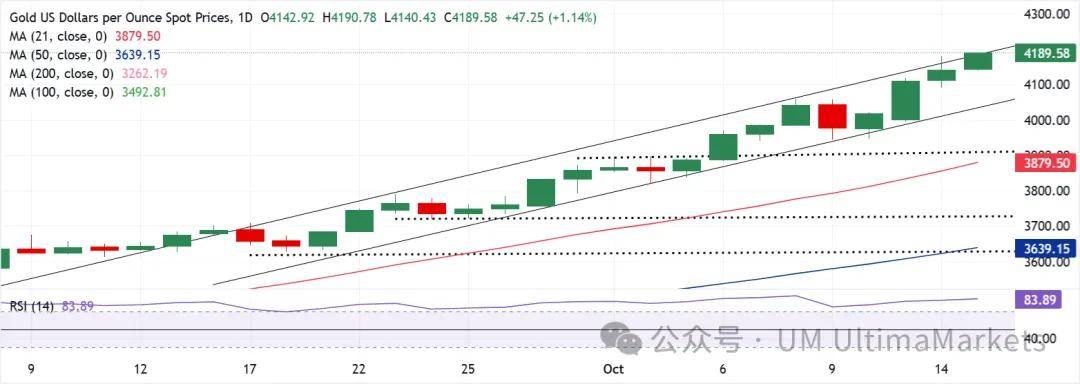
Core Insights - Gold prices are moving away from historical highs, but buyers maintain control amid a weakening dollar [1] - Renewed trade tensions between the US and China, along with bets on two more rate cuts by the Federal Reserve, offset the IMF's optimistic outlook on global economic growth [1] Market Dynamics - Gold is experiencing a "buy on dips" trading strategy, with buyers remaining optimistic despite global stock market trends [3] - The recent rise in gold prices is attributed to President Trump's consideration of terminating trade relations with China, which has escalated trade tensions [3] - The US and China have begun imposing reciprocal port fees, further intensifying the trade war backdrop [3] Federal Reserve and Currency Impact - Ongoing concerns about US-China trade, coupled with expectations of two more rate cuts by the Federal Reserve, negatively impact the dollar, benefiting non-yielding precious metals [4] - Market expectations for rate cuts in October and December exceed 90%, despite cautious remarks from Fed Chair Jerome Powell [4] - The People's Bank of China set the USD/CNY midpoint at 7.0995, stronger than the previous day's rate, surprising the market [5] Technical Analysis - The daily chart shows gold challenging the upper boundary of an ascending channel, with the RSI nearing extreme overbought levels at approximately 84 [10] - Buyers are attempting to break through the upper resistance of the channel, currently at $4,184, to sustain a record rise above the $4,200 mark [11][12] - The next psychological target for bullish investors is $4,250, while a rejection at resistance could lead to a drop to the $4,100 level [13][14] - Key support is located at the lower boundary of the ascending channel, around $4,036, with a potential breakdown confirming a pattern failure and further correction to the $3,950 psychological level [15][16]
谢锋:美方应回归理性 不要再走经贸关系紧张升级的老路死路
Zhong Guo Xin Wen Wang· 2025-10-15 08:36
Core Viewpoint - The Chinese Ambassador to the U.S., Xie Feng, emphasizes the need for the U.S. to return to rationality and avoid escalating tensions in economic and trade relations, highlighting that trade wars yield no winners [1]. Group 1: U.S.-China Relations - Recent tensions have arisen in U.S.-China relations, which had previously stabilized under the strategic guidance of the two nations' leaders [1]. - Xie Feng calls for mutual respect, peaceful coexistence, and win-win cooperation as the guiding principles for U.S.-China relations [1]. - The ambassador warns that trade wars will only lead to mutual losses and asserts that China will not passively accept damage to its rights or the multilateral trade system [1]. Group 2: Key Issues and Recommendations - Xie Feng urges the U.S. to engage in dialogue based on mutual respect and equal consultation to address concerns, rather than escalating tensions [1]. - The Taiwan issue is identified as the most disruptive factor in U.S.-China relations, with a call for the U.S. to stop distorting UN General Assembly Resolution 2758 and to refrain from sending incorrect signals to pro-independence forces in Taiwan [1]. - The ambassador encourages the U.S.-China Relations National Committee and various stakeholders to work together to promote stable and sustainable development in bilateral relations [2].
特朗普指责中国不进口大豆并威胁“报复”,外交部回应
Di Yi Cai Jing· 2025-10-15 07:39
Core Viewpoint - The trade war and tariff conflict have no winners and do not serve the interests of either party [1][2]. Group 1: Trade Relations - The Chinese government maintains a consistent and clear stance on handling Sino-U.S. economic and trade issues [2]. - Both parties should negotiate to resolve relevant issues based on equality, respect, and mutual benefit [2].