
扩大内需

Search documents
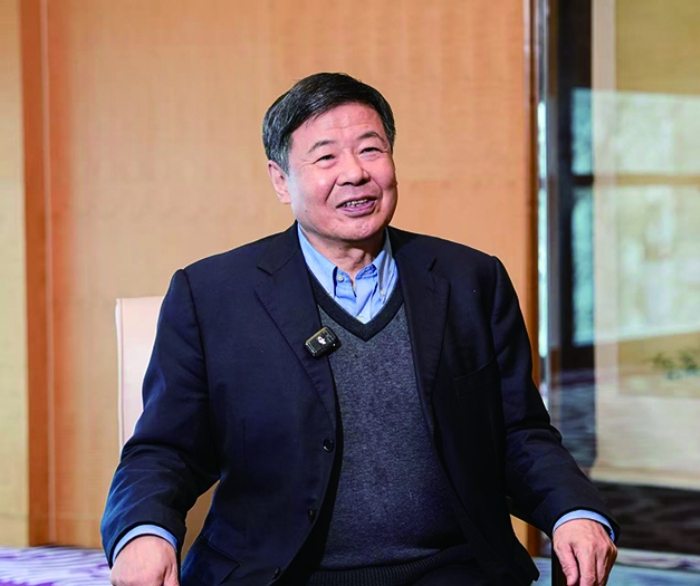
财政部原副部长朱光耀:创新驱动和绿色转型是中国经济实现质升量长的关键
Shang Hai Zheng Quan Bao· 2026-01-18 18:15
Group 1 - The core viewpoint emphasizes that China should leverage its development certainty to overcome external uncertainties, with innovation and green transformation being key to achieving qualitative and reasonable quantitative growth in the economy [1][8]. - During the "14th Five-Year Plan" period, China's GDP growth averaged 5.5%, with an expected economic increment of over 35 trillion yuan, and a target of achieving a GDP exceeding 200 trillion yuan by 2035 [2][4]. - The fiscal policy is set to support economic development actively, with a fiscal deficit rate of around 4% and a special local government debt limit of 4.4 trillion yuan by 2025 [6]. Group 2 - The importance of expanding domestic demand is highlighted, as it relates to the entire production, distribution, circulation, and consumption chain, requiring a balance between income support for consumption and reasonable returns on investment [6]. - The application of artificial intelligence is expected to see breakthroughs this year, supported by China's strong manufacturing base and data resources, positioning the country at the forefront of the global industrial revolution [7]. - China has maintained its position as the world's largest goods trading nation, with expectations for the total value of goods trade to reach 45.47 trillion yuan by 2025, despite a challenging international economic environment [8].

新年两场国常会聚焦促消费 多部门部署居民增收计划
Di Yi Cai Jing· 2026-01-18 14:05
Group 1 - The core focus of the central economic work conference is to prioritize domestic demand and build a strong domestic market, with recent State Council meetings emphasizing policies to boost consumption [1][2] - The implementation of a systematic consumption growth mechanism is highlighted, linking the "15th Five-Year" consumption plan with income increase plans, indicating a shift from short-term stimulus to long-term structural reforms [2] - The National Development and Reform Commission and other departments are deploying measures to enhance consumption and stabilize employment, combining short-term policies with long-term structural reforms to strengthen the internal driving force of China's economic growth [1][4] Group 2 - The "15th Five-Year" consumption plan includes 30 key tasks aimed at increasing income and enhancing consumption capacity, with a focus on high-quality supply and optimizing the consumption environment [3] - Data shows that China's total retail sales of consumer goods are expected to exceed 50 trillion yuan for the first time, with service retail growth outpacing goods retail by 1.3 percentage points [3] - Despite a slowdown in consumption growth since May 2025, the government is committed to fostering new growth points in service consumption, particularly in sectors like transportation, housekeeping, and entertainment [4][5] Group 3 - The silver economy and winter sports economy are receiving significant policy support, with measures aimed at developing the elderly care service sector and promoting the silver economy, which is projected to exceed 30 trillion yuan by 2035 [6] - The People's Bank of China has established a 500 billion yuan loan program to support service consumption and elderly care, with plans to expand this to include the health industry [6] - The emphasis on increasing residents' income and improving consumption capacity is seen as a key driver for boosting domestic demand and economic growth [7][8] Group 4 - Recent policies aim to eliminate unreasonable restrictions in the consumption sector, which is crucial for optimizing the consumption environment and unleashing domestic demand potential [9][10] - Various regions are actively implementing measures to clear restrictions in sectors such as automotive and housing, enhancing consumer rights protection and promoting a more favorable consumption landscape [9][10] - The government is urged to allow the market to play a leading role in consumption, creating a conducive environment for economic circulation and growth [10]
经观季度调查 |2025年四季度经济学人问卷调查:扩内需、反内卷, 激活市场活力成为关键路径
Xin Lang Cai Jing· 2026-01-17 15:41
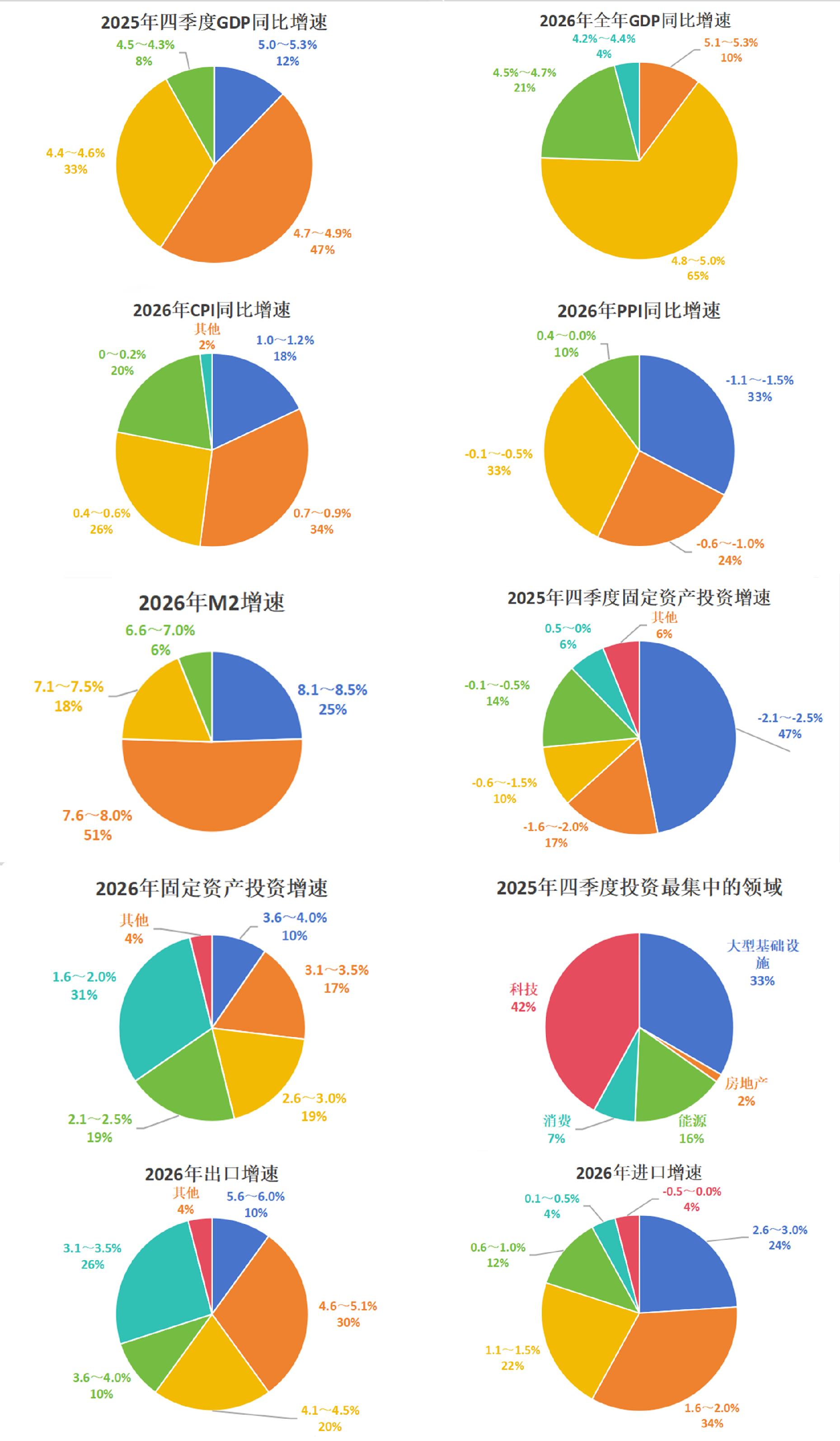
Economic Outlook - The Chinese economy is currently facing a critical period of adjustment, with old problems and new challenges intertwining, necessitating more proactive fiscal policies and moderately loose monetary policies to stabilize and promote economic growth [2][3] - A survey indicates that 47% of economists predict GDP growth in Q4 2025 will be between 4.7% and 4.9%, while 65% expect 2026 growth to be in the range of 4.8% to 5.0% [3][2] Real Estate Market - The real estate market is showing signs of stabilization but remains in a deep adjustment phase, with 53% of economists forecasting a 5% to 15% decline in housing prices in first and second-tier cities in 2026 [9][10] - The focus for 2026 will be on optimizing supply-side policies, including enhancing the quality of housing and promoting urban renewal as a key strategy for stabilizing investment and expanding demand [10][9] Debt and Financial Risks - Local government debt remains a significant concern, exacerbated by declining land revenues due to the ongoing downturn in the real estate market, with experts emphasizing the need for effective management of local debts [4][5] - The survey highlights that 47% of economists believe stimulating market vitality is crucial for stabilizing growth, alongside improving the social security system and increasing investment in key sectors [15][2] Investment Trends - Fixed asset investment growth is projected to be between -2.1% and -2.5% in Q4 2025, with a potential recovery to 1.6% to 2.0% in 2026 [7][8] - The most concentrated investment areas are technology (42%), large infrastructure (33%), and energy (16%) [8] Consumer Demand and Income - There is a pressing need to increase household income, with 36% of economists suggesting that enhancing residents' income is essential for expanding domestic demand [16][17] - The survey indicates that 33% of economists prioritize stabilizing employment as a key measure to increase household income [17] Global Economic Factors - Geopolitical tensions are identified as the primary disruptor for the global economy in 2026, with 48% of economists highlighting this concern [18] - The macroeconomic policy combination for 2026 is expected to focus on fiscal measures to expand demand and monetary policies to reduce costs [18][19]

2025年四季度经济学人问卷调查:扩内需、反内卷,激活市场活力成为关键路径
Jing Ji Guan Cha Wang· 2026-01-17 14:19
Economic Outlook - China's economy is currently facing a critical period of adjustment, with old problems and new challenges intertwining, necessitating more proactive fiscal policies and moderately loose monetary policies to stimulate domestic demand and promote stable economic growth [1][7][8] - 47% of economists believe that GDP growth in Q4 2025 will be between 4.7% and 4.9%, while 65% expect 2026 growth to be in the range of 4.8% to 5.0% [1][7] Real Estate Market - The real estate market shows signs of stabilization but remains in a deep adjustment phase, with 79% of economists believing that the decline in the real estate market will slow down in 2026, although it has not yet bottomed out [1][16] - 53% of economists predict that housing prices in first- and second-tier cities will drop by 5% to 15% in 2026, while 58% expect a similar decline in third- and fourth-tier cities [16] Investment Trends - Investment remains a key support for economic recovery, with 31% of economists forecasting fixed asset investment growth of 1.6% to 2.0% in 2026, and 42% of investment is expected to focus on technology [15][29] - The report indicates that the real estate market is approaching a critical point of stabilization, with policies aimed at maintaining expectations and improving the quality of housing supply [15][18] Debt and Financial Risks - Local government debt remains a significant concern, with risks stemming from reduced land revenue due to the ongoing downturn in the real estate market [8][9] - 59% of economists anticipate a substantial increase in the government debt-to-GDP ratio globally in 2026, highlighting the need for careful management of local government debt [1][24] Consumer Demand and Employment - There is a pressing need to stimulate consumer demand, with 36% of economists suggesting increasing residents' income as a priority, followed by improving the social security system [30][31] - The unemployment rate among urban youth is rising, with significant pressure on job opportunities for recent graduates in 2026 [31] Global Economic Factors - Geopolitical tensions are viewed as the largest potential disruptor to the global economy in 2026, with 48% of economists identifying this as a key concern [33] - The combination of fiscal expansion to boost demand and monetary policy aimed at reducing costs is expected to dominate macroeconomic policy discussions in 2026 [33][34]
经观季度调查 |2025年四季度经济学人问卷调查:扩内需、反内卷,激活市场活力成为关键路径
Sou Hu Cai Jing· 2026-01-17 14:05
Economic Outlook - China's economy is currently facing a critical period of adjustment, with old problems and new challenges intertwining, necessitating more proactive fiscal policies and moderately loose monetary policies to stabilize and promote economic growth [1][7][8] - Economists predict that GDP growth for Q4 2025 will likely be between 4.7% and 4.9%, with a consensus for 2026 growth around 4.8% to 5.0% [2][7] Real Estate Market - The real estate market shows signs of stabilization but remains in a deep adjustment phase, with 79% of economists believing that the market will slow its decline in 2026 but has not yet bottomed out [2][17] - Economists suggest that the focus should not be on a trend reversal but rather on whether the rate of decline can be reduced [17] Investment Trends - Investment is seen as a key support for economic recovery, with 47% of economists forecasting a decline in fixed asset investment growth for Q4 2025, while 31% expect a modest increase in 2026 [17] - The primary sectors attracting investment include technology (42%), large infrastructure (33%), and energy (16%) [17] Debt and Financial Risks - Local government debt remains a significant concern, exacerbated by declining land revenues due to the ongoing downturn in the real estate market [8][10] - Economists emphasize the need for macroeconomic management to address the debt risks faced by real estate companies, which are currently in a "non-normal" state due to cash flow issues and declining sales [10][11] Consumer Demand and Employment - There is a pressing need to stimulate consumer demand, with suggestions including increasing residents' income and improving the social security system [26][27] - Employment remains a critical issue, particularly for recent graduates, with the urban unemployment rate averaging 5.2% in 2025, indicating a stable but concerning job market [28] Policy Recommendations - Economists recommend a combination of fiscal and monetary policies to stimulate demand and reduce costs for businesses and residents [30] - Long-term strategies should focus on stabilizing the macro tax burden and reforming the fiscal system to ensure sustainable economic growth [11][30]

万联证券:A股市场情绪稳步提高 科技创新景气度有望维持高位
智通财经网· 2026-01-17 10:46
Core Viewpoint - The A-share market is expected to continue a fluctuating upward trend towards 2026, driven by the inflow of medium to long-term funds and sustained high trading activity [1][6]. Group 1: Market Performance and Trends - In 2025, the A-share market showed an overall upward trend, with a year-end increase of 41.93%. The market experienced a pullback due to escalating US-China tariff disputes but rebounded with a series of policy measures and improved economic fundamentals [2]. - Key sectors that performed well in 2025 included non-ferrous metals, driven by geopolitical risks and supply chain disruptions, and TMT sectors like communication and electronics, benefiting from ongoing technological innovation [3]. Group 2: Liquidity and Policy Support - The liquidity environment in the A-share market is expected to improve, with policies encouraging medium to long-term funds to enter the market. The China Securities Regulatory Commission (CSRC) is focused on utilizing structural monetary policy tools to facilitate this [4]. - Increased policy support is anticipated, with measures to deepen public fund reforms and enhance the capital market's attractiveness and inclusivity. This is expected to lead to more mergers and acquisitions, particularly in technology and industry-leading companies [5]. Group 3: Economic and Structural Opportunities - The domestic economy is projected to maintain a stable upward trajectory, with policies aimed at expanding domestic demand and boosting confidence. The year 2026 marks the beginning of the "14th Five-Year Plan," with expectations for proactive fiscal and moderately loose monetary policies [6]. - The focus on technological innovation and advanced manufacturing is expected to create structural opportunities, particularly in sectors like artificial intelligence, high-end manufacturing, and green transformation [8][9]. Group 4: Investment Recommendations - Investment should focus on technology innovation, particularly in areas such as high-end chips, industrial software, and agricultural technology, as these are expected to lead industry transformations [8]. - Advanced manufacturing should be targeted, emphasizing smart manufacturing and green transitions, which are crucial for enhancing supply chain resilience [8]. - The expansion of domestic demand and consumption upgrades should be prioritized, with attention to service consumption and digital life innovations, which are likely to unlock significant growth potential [9].
(经济观察)中国多部门密集开“年会” 政策组合拳蓄势待发
Zhong Guo Xin Wen Wang· 2026-01-17 07:15
Group 1: Macroeconomic Policies - China is set to implement a more proactive fiscal policy, expanding fiscal spending and optimizing government bond tools to enhance their effectiveness [2] - The People's Bank of China emphasizes a moderately loose monetary policy, focusing on promoting high-quality economic development and maintaining ample liquidity [2] - Recent measures include eight policy actions from the central bank, indicating room for further rate cuts and reserve requirement ratio reductions [2] Group 2: Expanding Domestic Demand - "Expanding domestic demand" is prioritized in China's economic agenda, with multiple ministries focusing on boosting consumption [3] - The Ministry of Finance highlights the importance of supporting a strong domestic market and implementing special actions to stimulate consumption [3] - The National Business Work Conference emphasizes the creation of the "Buy in China" brand and the development of new growth points in service consumption [3] Group 3: Risk Prevention and Mitigation - Risk prevention is a key focus across various ministries, with the People's Bank of China addressing financial risks in key sectors [4] - The National Financial Regulatory Administration aims to effectively manage risks in small and medium-sized financial institutions, focusing on both existing and new risks [4] - The National Housing and Urban-Rural Development Conference stresses stabilizing the real estate market through targeted measures [4]
市十七届人大五次会议共征集代表建议667件
Xin Lang Cai Jing· 2026-01-16 23:09
Group 1 - A total of 667 suggestions were collected during the 17th Municipal People's Congress, with 661 being suggestions and 6 being converted from proposals to suggestions [1] - Among the 661 suggestions, 275 focused on improving and safeguarding people's livelihoods, 131 on enhancing urban functional quality, and 49 on building a modern industrial system [1] - The suggestions will be forwarded to relevant agencies and organizations for research and response [1] Group 2 - The conference received 13 proposals, with 1 related to agriculture and rural areas, 2 concerning environmental resources and urban construction, 3 in the field of education, and 7 regarding social construction [2] - Seven of the proposals will be merged into one for review by the Social Construction Committee after the conference [2] - The remaining 6 proposals will be converted into suggestions, criticisms, and opinions [2]
勇担当重实干 加快建设区域性中心城市
Xin Lang Cai Jing· 2026-01-16 22:13
Group 1 - The core viewpoint emphasizes the importance of practical work and task implementation to achieve high-quality development in Jinzhou, aligning with the provincial economic work conference's spirit [1] - Jinzhou aims to enhance regional collaborative development by improving the functionality of regional central cities and integrating into the Northeast Sea-Land Corridor and Hydrogen Corridor [1] - The city plans to develop marine economy sectors such as marine fisheries, maritime transport, marine oil and gas, and coastal tourism [1] Group 2 - Jinzhou is focused on expanding domestic demand as a strategic foundation, promoting consumption through various initiatives, and enhancing urban and rural residents' income [2] - The city aims to attract over 1,000 key projects throughout the year, emphasizing investment in "two heavy" and "two new" sectors [2] - Jinzhou is committed to deepening the integration of technological innovation and industrial innovation, targeting the development of two trillion-level industrial clusters in petrochemicals and new materials [2] Group 3 - The city is determined to improve the business environment significantly and rapidly, implementing a systematic approach to optimize the business environment [3] - Jinzhou plans to enhance government service efficiency, aiming for over 40% of services to be immediately accessible [3] - The city will conduct special actions to improve service quality and ensure a culture of integrity in business operations [3]
“投资于人”的 实践理路探究
Xin Lang Cai Jing· 2026-01-16 16:00
"十五五"规划建议提出,"坚持惠民生和促消费、投资于物和投资于人紧密结合"。"投资于人"意味着以 生产要素创新推动供给升级、立足生命周期提振需求的供需良性循环,彰显了新形势下"见物更见人"的 发展导向。"投资于人"通过"物"和"人"的紧密结合,形成劳动力个体发展和社会公平进步的良性循环, 衔接加快构建新发展格局的战略部署,为高质量发展提供持久和强劲动能。 实施创新驱动:以"投资于人"促进新质生产力的发展 提振消费行动:以"投资于人"推动国内大循环畅通 中央经济工作会议将"坚持内需主导,建设强大国内市场"列为2026年经济工作要抓好的八项重点任务之 首。从经济循环的视角看,中国经济仍存在着"供强需弱"的难题。如今,大力提振消费已成为提振经济 的高频词汇和今后一个时期的工作重心。增强国内大循环内生动力和可靠性要发挥"投资于人"催生新需 求的功能。 提振消费是畅通国内大循环的核心引擎。一方面,人是消费主体,进一步扩大需求,归根结底要立足提 升当前消费意愿。稳增长、促增收是消费的前提和基础。"投资于人"通过赋能个体能力提升、优化收入 分配结构、降低民生消费顾虑,构建起"人力资本增值—消费能力增强—内需总量提升"的行动 ...