牛市

Search documents
牛市接力棒,居民存款何时入市?
2025-09-01 02:01
Summary of Conference Call Records Industry Overview - The current driving force behind the stock market rally is primarily institutional funds, including increased equity asset allocation by insurance funds, the entry of quasi-stabilization funds, and higher positions taken by private equity funds [1][4][21]. Key Points and Arguments - **Shift of Resident Deposits**: There is a gradual trend of resident deposits moving into the stock market, although this phenomenon was not significant as of mid-2025. In July, the growth rate of non-bank deposits increased significantly, while the growth rate of resident deposits slightly declined, indicating a marginal shift [1][5][12]. - **Regulatory Policies**: Regulatory measures have facilitated the entry of insurance funds into the market by lowering the risk weight of equity assets and optimizing investment methods. This has led to a notable increase in stock investments by property and life insurance companies, with year-on-year growth of approximately 33% and 45% respectively in Q1 2025 [7][8]. - **Private Equity Fund Growth**: Private equity funds have shown a recovery in scale, with significant growth observed in July 2025, primarily driven by resident deposits entering the market through private placements. The positions of large private equity funds have increased significantly, with a strong correlation to the performance of small-cap stocks [9][10]. - **Public Fund Performance**: The growth in public funds in the equity market is mainly attributed to passive index ETFs, which have contributed significantly to the increase in A-shares. Compared to the U.S. ETF market, China's ETF market still has considerable room for growth [11]. Important but Overlooked Content - **Excess Savings Potential**: The current excess savings amount to approximately 4.3 trillion, indicating a substantial potential for resident deposits to enter the market. However, the marginal decline in deposits is primarily due to early mortgage repayments rather than stock market investments [6]. - **Historical Context of Deposit Shifts**: Historically, the shift of resident deposits into the stock market typically occurs after a clear profit effect is observed in the stock market, often following monetary easing and favorable policy environments [3][18]. - **Future Monitoring Indicators**: To assess the trend of resident deposit shifts, two indicators are suggested: the annual savings rate and the difference between household deposit growth and M2 growth. A decreasing difference indicates a potential shift in behavior [13]. Future Considerations - **Economic Environment**: The current macroeconomic environment aligns with historical conditions for deposit shifts, including declining deposit rates and a favorable policy environment. The stock market has shown a strong profit effect, which may encourage further deposit movement into equities [20][21]. - **Manufacturing Sector's Role**: The ability of the manufacturing sector to replace real estate as a new economic engine is crucial for sustaining credit expansion and supporting the upward trend of A-shares [22][23]. - **Monitoring Factors for Market Trends**: Future assessments of the stock market should focus on the speed of resident deposit shifts and the potential for credit expansion in the manufacturing sector, as these factors will significantly influence market trends [24].
量化周报:市场波动开始加大-20250901
GOLDEN SUN SECURITIES· 2025-09-01 01:21
- The report discusses the performance of the A-share market, noting that the market volatility has increased recently, with the Shanghai Composite Index rising by 0.84% over the week[1][9] - The report highlights the performance of the enhanced index portfolios, with the CSI 500 enhanced portfolio underperforming the benchmark by 0.66% and the CSI 300 enhanced portfolio outperforming the benchmark by 0.83%[2][45] - The report identifies the market cap factor as the dominant style factor, with high momentum stocks performing well and value and leverage factors performing poorly[2][55] - The A-share sentiment index signals are discussed, with the bottom sentiment index signal being "empty" and the top sentiment index signal being "more," resulting in an overall "more" signal[2][38] - The report includes a detailed analysis of the construction and observation of the A-share sentiment index, which is based on market volatility and trading volume changes[33][36][38] - The report provides a list of semiconductor concept stocks, identified through a theme mining algorithm based on news and research report texts[45] - The report includes the performance and holdings of the CSI 500 and CSI 300 enhanced portfolios, with specific details on the stocks and their respective weights in the portfolios[45][49][54] - The report discusses the performance of various style factors, including market cap, beta, momentum, residual volatility, non-linear market cap, value, liquidity, earnings yield, growth, and leverage, and their correlations[55][57] - The report provides a performance attribution analysis of major indices, including the Shanghai Composite Index, Shanghai 50, CSI 300, CSI 500, and others, based on their exposure to different style factors[64][65][68][70][74][77][78]
广发证券:对于已经持有本轮牛市科技主线的投资者,建议继续坚守科技主线
Xin Lang Cai Jing· 2025-09-01 00:08
Group 1 - The core viewpoint is that the market has established a "bull market mentality," and once this trend is formed, it is difficult to reverse in the short term [1] - For investors already holding positions in the current bull market's technology sector, there is not a strong necessity to engage in "high-low switching" given the current level of valuation differentiation [1] - New incremental funds entering the market and investors with limited holdings in the main sectors may consider "low-position call options" as a strategy [1] Group 2 - Besides the TMT sector, other growth areas such as automotive parts/robotics, which have recently lagged, consumer electronics, AI applications, and cyclical consumer goods (like leisure food, home appliances, and retail) are also highlighted [1] - The report also mentions cyclical resource products, particularly in the chemical sector, as potential investment opportunities [1]

机构研究周报:A股上涨逻辑未变,时间已是牛市朋友
Wind万得· 2025-08-31 22:50
Core Viewpoints - The article highlights a significant shift in the Chinese stock market, with the emergence of new leaders in the technology sector, particularly the rise of Cambricon Technologies as the new "king of stocks," surpassing Kweichow Moutai after nine years of dominance [3] - The overall sentiment in the market is optimistic, with analysts suggesting that the conditions for a bull market are gradually being established, supported by fundamental improvements and potential new capital inflows [5][6] Industry Research - The military modernization narrative is seen as a long-term trend, driven by national defense goals and the need for self-sufficiency, with military trade becoming a test of China's high-end equipment's technological influence [12] - The "Artificial Intelligence +" initiative is recognized as a key investment direction, with policies fostering growth in the AI sector leading to significant performance and valuation improvements in related stocks [13] - The liquor industry is entering a phase of healthy recovery, with stable fundamentals and government policies aimed at boosting domestic consumption providing support for leading companies in the sector [14] Equity Market - Analysts from Shenwan Hongyuan believe that the current market conditions are conducive to a bull market, with limited corrections expected and a positive outlook for the end of 2025 and beyond [5] - Everbright Securities maintains that the logic supporting stock market growth remains unchanged, with reasonable valuations and a focus on sectors like machinery and power equipment for short-term investments [6] - Galaxy Securities suggests that the current equity market is likely to experience a slow bull phase, indicating limited potential for bubbles and a disconnect between real estate prices and stock market performance [7] Macroeconomic and Fixed Income - Changjiang Securities notes that the credit bond market is at a turning point, with rising yields but potential value emerging as the market stabilizes [20] - Zhongtai Securities indicates that the current adjustments in convertible bonds may present investment opportunities, particularly in sectors with expected catalysts [21] - Bosera Fund emphasizes that the logic for declining bond yields remains intact, with expectations for a steepening yield curve as monetary policy continues to evolve [22] Asset Allocation - CICC highlights the long-term implications of the Trump administration's influence on the Federal Reserve, suggesting a shift towards more accommodative monetary policies that could benefit emerging markets [24]


说了赏饭给大陆吃后,大陆股民把郭台铭送回首富宝座
Sou Hu Cai Jing· 2025-08-31 15:23
Core Viewpoint - The article discusses the significant increase in the market value of Industrial Fulian, leading to a substantial rise in the wealth of its chairman, Terry Gou, who has regained his status as Taiwan's richest person after a period of declining reputation in mainland China [1][6]. Group 1: Company Performance - Industrial Fulian's market value has surpassed 1 trillion yuan, with its stock price rising from 20.85 yuan per share in early July to 53.83 yuan per share by August 29, marking a 158% increase in less than two months [3][5]. - The stock price had previously dropped to a low of 14.3 yuan per share on April 9, indicating that the company's market value has more than tripled in a few months [5]. Group 2: Shareholding Structure - Terry Gou does not personally hold the majority of shares in Industrial Fulian; instead, the largest shareholder is Hon Hai Group, which holds 84.06% of the shares and 84.08% of the voting rights through various entities [6]. - According to Hon Hai's financial report from May, Terry Gou holds approximately 12.54% of Hon Hai's shares, translating to an indirect ownership of 10.54% in Industrial Fulian, with a total market value of approximately 112.68 billion yuan [8]. Group 3: Personal Wealth Increase - As a result of the stock market surge, Terry Gou's personal wealth has increased by approximately 78.495 billion yuan during this bull market [8]. - This increase in wealth is comparable to each of China's 1.3 billion people giving him 50 yuan, totaling only 65 billion yuan, highlighting the magnitude of his wealth increase [8].


方法不对,一轮大牛市也可能白白被浪费
雪球· 2025-08-31 13:00
Core Viewpoint - The article emphasizes the importance of having the courage to exit the market during a bull run, as many investors tend to hold on to their positions, fearing they might miss out on further gains, which can lead to significant losses when the market turns [4][12]. Group 1: Investor Psychology - As the market rises, investors often experience "fear of missing out," leading them to hold onto their investments instead of taking profits [5][9]. - The tendency to delay selling during market highs can result in a significant loss of profits when the market eventually declines [6][7]. Group 2: Anchoring Trap - Investors may fall into the "anchoring trap" by using previous market highs as a benchmark for future price expectations, which can prevent them from selling at reasonable profit levels [10][11]. Group 3: Courage to Exit - The article highlights that the rarest asset in a bull market is not high-performing stocks but the courage to leave the table, as many investors are reluctant to take profits even when their targets are met [12][13]. Group 4: Dynamic Profit Locking - To avoid losing profits in a bull market, it is crucial to establish a "dynamic profit locking" strategy that relies on predetermined rules rather than emotional judgment [14][15]. - An example of this strategy includes adjusting asset allocations based on market conditions, such as rebalancing when the stock-bond ratio changes significantly [15][16]. Group 5: Investment Philosophy - The article advocates for a rational approach to investing, where successful investors are those who can maintain discipline, set rules, and avoid being misled by historical highs [16].

牛市“赚钱不易”!如何笑到最后?来看两种思维的不同结局!
券商中国· 2025-08-30 23:33
Core Viewpoint - The article emphasizes the importance of adopting a "robust" investment strategy to navigate through market fluctuations, particularly in a bull market, to ensure long-term success and avoid catastrophic losses [2][6]. Group 1: Investment Strategies - The concept of "robustness" in investment, as proposed by Nassim Nicholas Taleb, suggests that a portfolio should withstand various market scenarios, whether bullish or bearish, to avoid the pitfalls of speculative strategies like "Russian roulette" [2][6]. - Investors who only focus on upward market movements without considering potential downturns are at risk of significant losses, akin to playing a dangerous game of chance [3][4]. - Historical examples illustrate that even successful investors can face devastating losses if they do not maintain a robust investment approach, highlighting the need for caution and strategic planning [5][7]. Group 2: Psychological Aspects of Investing - The article discusses the psychological challenges investors face, particularly the temptation to follow the crowd during bullish trends, which can lead to irrational decision-making [6][8]. - It advocates for emotional resilience, encouraging investors to accept that others may achieve higher returns without feeling pressured to replicate their strategies [6][8]. - The narrative of Odysseus and the sirens serves as a metaphor for the importance of staying committed to a robust strategy and avoiding distractions that could lead to financial ruin [8].

上涨就是上涨的理由!
Sou Hu Cai Jing· 2025-08-30 16:11
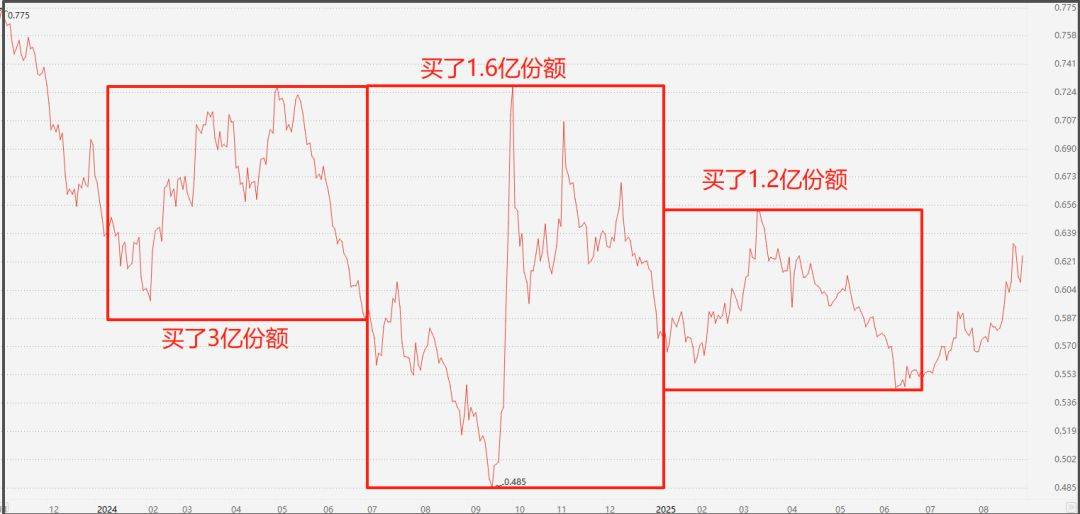
Group 1 - The core viewpoint is that the current bull market in A-shares is strong, with sectors like new energy and consumer goods driving the market despite a decline in chip stocks [1][14] - The state-owned investment team (referred to as "国家队") has made limited purchases in the liquor ETF, totaling only 3 billion, indicating that their involvement may not be as significant as perceived [3][6] - The state-owned investment team has historically been a major buyer during market downturns, with clear signals of buying activity in 2023 and 2024, including public announcements and bond issuances for financing [9][12] Group 2 - The ETF in question has shown a pattern of net buying during significant market drops, with the state-owned investment team increasing its holdings from 2.4 billion to 62 billion shares from 2023 to mid-2025 [6][9] - In 2024, the state-owned investment team issued seven bonds for financing, indicating a strategy to increase their market presence [8] - However, after reaching 3,500 points, there has been a noticeable lack of buying signals from the state-owned investment team, suggesting that the recent market rally is driven by other market forces rather than state intervention [12][14]
洪灏:上证有望4200点 接下来1-3个月持续走高可能性很大
智通财经网· 2025-08-30 08:58
Group 1 - The current bull market is just beginning, as indicated by the market capitalization to GDP ratio, which has returned to long-term average levels and is far from the peaks seen in 2007 and 2015 [1][11][14] - The high margin trading balance suggests a strong market risk appetite, typically leading the market by 1-3 months, indicating a high likelihood of continued market gains in the near term [2][16][18] - A-shares are expected to outperform Hong Kong stocks, with a potential increase of 10% to reach 4200 points [3][21][22] Group 2 - The market has been suppressed for a long time, and its eventual surge could be significant [4][22] - However, rapid gains may attract regulatory intervention [5][23] - The liquidity in the market remains abundant, supporting the potential for continued upward trends [25][26] Group 3 - Retail investors have not fully entered the market yet, with current account openings at only one-third of last year's levels, indicating room for growth in participation [28][31] - The current market rise is primarily driven by institutional investors, particularly hedge funds, which contribute significantly to trading volume [32][34] - Index investing is benefiting leading companies, as their weight in indices increases with inflows, similar to trends observed in the U.S. market [38][42] Group 4 - Any market corrections are expected to be brief and shallow due to the lack of retail investor participation and the presence of significant liquidity [44] - Sectors such as insurance and new technologies are highlighted as potential areas for investment, benefiting from improving market conditions [44]
[8月29日]指数估值数据(A股港股继续上涨;A股港股谁涨的多;港股指数估值表更新;抽奖福利)
银行螺丝钉· 2025-08-29 13:58
Core Viewpoint - The article discusses the recent performance of A-shares and Hong Kong stocks, highlighting the rapid style switching in the market and the potential for A-shares to catch up with Hong Kong stocks in terms of returns [11][12][40]. Market Performance - The overall market showed a slight increase, remaining at 4.3 stars, close to 4.2 stars [1]. - Large, medium, and small-cap stocks all experienced gains, with large-cap stocks rising slightly more [2]. - Both growth and value styles saw increases [3]. - There was significant divergence in performance among different stocks [4]. - The STAR Market 50 index declined, while the ChiNext index saw substantial gains [5]. - Recently lagging sectors like consumer stocks experienced significant rebounds [6]. - Hong Kong stocks also rose overall, with small-cap and dividend stocks leading the gains [7]. Market Trends - The speed of style switching in the market has been very rapid, occurring almost daily [8]. - Each category of undervalued stocks tends to have its performance phase [9]. - Investors are advised to remain patient and avoid chasing trends or frequent trading [10]. A-shares vs. Hong Kong Stocks - A-shares and Hong Kong stocks have historically similar long-term returns, but their phases of increase and decrease differ [11]. - Recently, A-shares have begun to catch up after previously lagging behind Hong Kong stocks [12]. - Both markets were at low valuation levels around September last year, coinciding with the Federal Reserve's first rate cut [13][14]. - The decline in USD interest rates has increased global market liquidity, benefiting non-USD assets [15]. Characteristics of Bull Markets - The bull markets in A-shares and Hong Kong stocks share several characteristics: - Rarely slow bull markets, mostly characterized by rapid increases [17]. - Predominantly structural bull markets, with growth style stocks leading the way [20][21]. - Bull markets often experience intermittent pullbacks, typically following a pattern of "advance three, retreat one" [23]. Recent Performance Analysis - In the past year, A-shares experienced two major upward waves, one in late September last year and another in July-August this year [25]. - After a significant rise at the end of September last year, A-shares remained in a sideways trend for nearly half a year before gradually rising after June this year [25][26]. - Hong Kong stocks exhibited a similar pattern but had an additional upward phase [27]. - As of August 28 this year, the Hang Seng Index had risen 24%, while the CSI 300 Index for A-shares had increased by 13% [29]. - Since the low point in September last year, the Hang Seng Index has surged by 69%, compared to a 43% increase for the CSI 300 Index [30]. Valuation Insights - The article provides a summary of the valuation of various Hong Kong stock indices, indicating that most indices have moved out of undervaluation, with only a few value styles remaining undervalued [34]. - The article also mentions that the valuation table for Hong Kong indices is updated daily in a mini-program for easy access [36]. Conclusion - The article emphasizes the importance of understanding market dynamics and the potential for A-shares to align more closely with the performance of Hong Kong stocks, suggesting a favorable outlook for investors who remain patient and strategic in their approach [40].