
风险管理

Search documents
领子期权在白糖企业中的应用:可用于原料采购、库存管理及利润锁定三大场景
Bao Cheng Qi Huo· 2025-10-20 05:27
Report Industry Investment Rating - Not provided Core View of the Report - Collar options, a strategy combining buying put options and selling call options, can be applied in three scenarios: raw material procurement, inventory management, and profit locking, which can precisely control risk exposure and help sugar enterprises operate stably. In the current situation where domestic and foreign sugar prices are continuously fluctuating, sugar enterprises can use collar options to manage risk exposure [1][5][12] Summary by Relevant Catalog Characteristics and Advantages of Collar Options - Collar options are a strategy that combines buying put options to protect against downside risks and selling call options to obtain premiums. Its core is to limit the asset price fluctuation range within a preset interval, which can be regarded as a protective put option plus a covered call option, using the income from the covered strategy to offset the cost of the protective strategy [1] - For sugar enterprises, collar options are particularly suitable. Sugar prices are affected by seasonality, policies, and international sugar price fluctuations. Option risk management strategies are more flexible than futures strategies. The cost of collar options is lower than that of buying put options for hedging, and they can lock in the minimum and maximum expected selling prices [3] Comparison of Different Hedging Methods | Hedging Method | Hedging Effect | Hedging Cost | Flexibility | Applicable Situation | | --- | --- | --- | --- | --- | | Futures Hedging | Lock in downside risk and give up upside gain | High margin requirement | Fixed price | Sufficient funds, suitable for long - term hedging | | Buying Put Option Hedging | Lock in downside risk and retain upside gain | Low capital occupation (pay premium) | Customizable strike price | Limited funds, prevent short - term pullback in a bull market | | Collar Option Hedging | Limit price range | Pay premium | Customizable strike price | Sideways market, suitable for long - term hedging | [4] Application Scenarios of Collar Options Raw Material Procurement - A sugar - making enterprise can lock in the current sugarcane purchase cost by locking in the future sugar selling price. For example, it can buy a put option with an exercise price of 5200 yuan/ton and sell a call option with an exercise price of 5500 yuan/ton. If the sugar price drops to 4800 yuan/ton, the enterprise can exercise the option to reduce losses; if the sugar price rises to 5600 yuan/ton, it can still lock in the actual selling price of 5500 yuan/ton [6] Inventory Management - When a sugar - making enterprise has inventory backlog, it can buy a put option with an exercise price of 5200 yuan/ton and sell a call option with an exercise price of 5500 yuan/ton. When the sugar price falls below 5200 yuan/ton, the put option compensates for inventory losses; when the sugar price is between 5200 - 5500 yuan/ton, the inventory value is stable. The strategy can generate net premium income at the beginning and reduce inventory management costs [7] Profit Locking - A sugar - making enterprise can select the strike price of the collar option according to the production plan to compress the sugar price fluctuation range to the target profit interval (such as 5200 - 5500 yuan/ton) to ensure a stable processing profit. It can also adjust the strike price dynamically according to market expectations [9]
日本央行审议委员高田创:我们需要在假设日本央行物价目标已经实现的前提下讨论货币政策。美联储恢复降息本可能会限制日本央行的政策灵
Sou Hu Cai Jing· 2025-10-20 04:28
日本央行审议委员高田创:我们需要在假设日本央行物价目标已经实现的前提下讨论货币政策。美联储 恢复降息本可能会限制日本央行的政策灵活性,但这次情况并非如此,因为美联储降息是出于风险管理 的角度,而非担心经济衰退。日本正出现通胀的"第二轮效应"可能扩大的条件。从经济即将迎来"真正 的黎明"的角度来看,日本央行必须在实施货币政策时,分几个阶段逐步"转换档位"。 ...
杭州金价600元抢购热潮,150万囤金惊人投入,买家稀少藏大机遇
Sou Hu Cai Jing· 2025-10-20 01:04
Group 1 - The story of a customer in Hangzhou who invested 1.5 million yuan in gold when the price was 600 yuan per gram highlights the potential for significant returns in the gold market [1] - The current market shows a stark contrast where the number of new gold buyers is low, but the volume of gold being sold back has increased two to three times [1][3] - The rising gold prices have shifted the perception of gold from a safe haven to a high-risk investment, leading to increased selling activity and a breakdown in market balance [3][5] Group 2 - Investor sentiment has dramatically changed, with many now looking to cash out due to fears of potential price drops, indicating a shift towards a more cautious approach [5][7] - The volatility in gold prices reflects broader economic uncertainties, with the demand for safe assets driving prices higher amidst global instability [8][10] - The current dynamics of the gold market suggest that future fluctuations are likely, making it essential for investors to manage risks effectively [7][10]


2025股市观察|“股票实盘十倍融资”的市场逻辑与风险启示
Sou Hu Cai Jing· 2025-10-19 14:05
Core Viewpoint - The A-share market continues to experience volatility in 2025, with active alternation among technology, energy, and cyclical sectors, leading to renewed discussions on "tenfold financing" as a means to enhance return efficiency [1][3]. Group 1: Basics of Stock Trading and Financing Leverage - "Real stock trading" refers to actual securities account transactions, contrasting with virtual or simulated operations, where all financial flows, positions, and profits/losses reflect real market conditions [3]. - "Tenfold financing" allows investors to amplify their operational scale by using external funds based on their own capital, theoretically increasing returns in a bull market but also magnifying losses in unstable conditions [3][4]. Group 2: Market Position of Financing Behavior - Financing represents an efficiency in capital allocation, meeting short-term funding needs and enhancing market liquidity and trading activity [4][6]. - High leverage reduces risk tolerance; if the market fluctuates negatively, investors may face forced liquidation risks, necessitating controlled leverage use by both institutional and individual investors [6]. Group 3: Risk Identification and Control Points for Tenfold Financing - Investors view financing as a means to "amplify returns," but it is more suitable as a strategic allocation tool rather than a short-term speculative instrument [8]. - Market volatility risk: A tenfold leverage means price fluctuations are amplified tenfold, making high-leverage operations more appropriate for investors with mature trading systems and risk management capabilities [8]. - Safety of funds: "Real stock financing" must ensure account transparency, fund segregation, and traceable transactions to avoid non-compliant fund operations [8]. - Psychological and discipline risks: High leverage tests both technical skills and mindset, with a tendency for investors to develop a "gambling mentality," making it crucial to maintain discipline and rational operations [8]. Group 4: Combining Stock Investment and Financing Strategies - Starting with low leverage (1:2 or 1:3) allows investors to gradually understand market rhythms [9]. - Controlling position ratios: Individual sector or stock positions should not exceed 30% of total funds to mitigate financing risks and align with sound fund management logic [9]. Group 5: Future of the Financing Market from Regulatory and Industry Trends - The financing market is evolving towards transparency and compliance due to ongoing regulatory improvements [9]. - The application of technologies like intelligent risk control and AI monitoring will enhance the market's ability to identify high-leverage funds and provide risk warnings [9]. - Investors should focus on selecting legitimate channels and robust strategies rather than pursuing extreme leverage multiples [11]. Group 6: Conclusion - Leverage is a neutral tool in capital markets, capable of amplifying both profits and losses [11]. - "Real stock trading with tenfold financing" is not off-limits for ordinary investors, but it requires rational thinking, risk awareness, and execution discipline as prerequisites [11].

SCHG For The Long Game, VUG For The Turning Cycle
Seeking Alpha· 2025-10-19 12:06
Core Insights - The article emphasizes the importance of quantitative research, financial modeling, and risk management in equity valuation and market trends [1] - It highlights the experience of the analyst in leading teams for model validation and stress testing, showcasing a strong background in both fundamental and technical analysis [1] - The collaboration between the analyst and their research partner aims to provide high-quality, data-driven insights for investors [1] Group 1: Analyst Expertise - The analyst has over 20 years of experience in quantitative research and financial modeling [1] - Previous role as Vice President at Barclays involved leading teams in regulatory finance and model validation [1] - The focus is on uncovering high-growth investment opportunities through rigorous risk management [1] Group 2: Research Approach - The research combines macroeconomic trends, corporate earnings, and financial statement analysis [1] - The goal is to deliver actionable ideas for investors seeking to outperform the market [1] - The approach emphasizes a long-term perspective on value creation [1]

10倍杠杆,1小时归零:90%的交易者都低估了“仓位管理”的杀伤力
Sou Hu Cai Jing· 2025-10-17 15:07
Group 1 - The core lesson from historical financial collapses is the importance of position control, with excessive leverage being a primary cause of fund failures [2][5][10] - Long-Term Capital Management (LTCM) utilized a strategy of convergence trading, but their extreme leverage of 32:1 led to their downfall when market volatility increased [2][5] - Victor Niederhoffer's experience in 1997 illustrates similar issues, where aggressive options selling resulted in significant losses due to market downturns and forced liquidation [6][7][10] Group 2 - The 2018 "volatility apocalypse" demonstrated that even professional traders can repeat the same mistakes regarding position control and leverage [11][13] - The case of Archegos Capital Management highlights the dangers of high leverage, resulting in a $20 billion loss in a week due to margin calls [15][18] - Greed and arrogance are identified as root causes for traders taking on excessive positions, aiming for unrealistic returns by leveraging strategies beyond their means [18][22] Group 3 - Effective risk management requires traders to assume extreme price movements can occur at any time, rather than relying solely on historical data [19][22][25] - Strategies with negative skewness, which often yield small gains but can incur large losses, necessitate rigorous stress testing to determine appropriate position sizes [25] - The importance of establishing robust risk management assumptions is emphasized, as failure to do so can lead to catastrophic losses, akin to the "turkey graveyard" concept described by Nassim Taleb [25]

纯苯-苯乙烯风险管理日报-20251017
Nan Hua Qi Huo· 2025-10-17 11:50
Report Summary 1. Industry Investment Rating No industry investment rating is provided in the report. 2. Core Viewpoints - The supply of pure benzene is expected to remain high in the fourth quarter due to postponed plant maintenance, the return of long - shut small plants, and import deals from Europe to China. However, downstream demand is weak, with a high probability of the peak season being uneventful this year, resulting in a persistent inventory build - up pattern. The price of domestic pure benzene is likely to fall rather than rise, which slows down imports. In early October, the export volume of Korean pure benzene to China decreased significantly, and some imported pure benzene faced difficulties in unloading, temporarily tightening the spot liquidity of pure benzene [3]. - For styrene, the supply is tightening as more plants are under maintenance and the return of Jingbo's styrene plant is uncertain. It is expected that the new production capacity will increase the supply in mid - to late October. The balance sheet shows that styrene will maintain a tight balance from October to November (if Jingbo's plant stops for a long time, styrene will enter a destocking pattern in the fourth quarter). However, high inventory and the drag from upstream pure benzene limit the upward price movement. In the short term, the market is affected by macro factors and follows the fluctuation of crude oil prices. It is expected to be volatile, and a wait - and - see approach is recommended for single - side trading [3]. 3. Summary by Directory 3.1 Price Forecast and Hedging Strategies - **Price Forecast**: The monthly price range of pure benzene is predicted to be 5500 - 6000 yuan/ton, and that of styrene is 6400 - 7000 yuan/ton. The current 20 - day rolling volatility of styrene is 29.40%, and its historical percentile in the past three years is 85.8% [3]. - **Hedging Strategies**: - **Inventory Management**: For enterprises with high finished - product inventory worried about price drops, they can short styrene futures (EB2511) with a 25% hedging ratio at 6600 - 6700 yuan/ton to lock in profits and cover production costs. They can also sell call options (EB2511C6700) with a 50% ratio at 30 - 40 yuan to collect premiums and reduce capital costs [3]. - **Procurement Management**: For enterprises with low regular inventory and planning to purchase based on orders, they can buy styrene futures (EB2511) with a 50% ratio at 6400 - 6450 yuan/ton to lock in procurement costs. They can also sell put options (EB2511P6500) with a 75% ratio at 90 - 110 yuan to collect premiums and reduce procurement costs [3]. 3.2 Core Contradictions - **Pure Benzene**: The supply is expected to be high in the fourth quarter, while demand is weak, leading to a difficult - to - change inventory build - up pattern. Import is slowing down, and short - term spot liquidity is tightening [3]. - **Styrene**: Supply is tightening in the short term, and the market will maintain a tight balance from October to November. High inventory and the drag from pure benzene limit the upward price movement [3]. 3.3利多解读 (Positive Factors) - In early October, the export volume of Korean pure benzene to China was 47,000 tons, a significant decrease. Some imported pure benzene faced unloading difficulties, temporarily tightening the spot liquidity of pure benzene [4]. - Several styrene plants, including Jingbo Sida Rui (670,000 tons/year), Anhui Jiaxi (350,000 tons/year), and Lianyungang Petrochemical (600,000 tons/year), are under maintenance, making it difficult to further compress the price spread between pure benzene and styrene [4]. 3.4利空解读 (Negative Factors) - Due to weak macro - sentiment and supply - demand fundamentals, the price of crude oil has been falling recently, weakening cost support and causing a collective decline in oil - related chemical products [7]. - As of October 13, 2025, the port inventory of styrene in Jiangsu was 196,500 tons, a decrease of 5400 tons from the previous period, but the high inventory is still difficult to reduce [7]. - On October 10, 2025, the US President announced a 100% tariff on Chinese products starting from November 1 and export controls on all key software, putting pressure on terminal export demand [7]. - Two large - scale styrene plants in Jilin Petrochemical and Guangxi Petrochemical are planned to be put into production in the fourth quarter [7]. 3.5 Basis and Price Spread Analysis - **Basis**: The daily changes in the basis of pure benzene and styrene are presented, showing different trends for various contracts [8]. - **Price Spread**: The price spreads within the pure benzene - styrene industrial chain, including spot - futures spreads and cross - product spreads, are analyzed, with most spreads showing downward trends [9]. 3.6 Industrial Chain Price - **Pure Benzene**: The prices of pure benzene in different markets and contracts are provided, along with production margins. The production margin of pure benzene increased by 19 yuan/ton to 366 yuan/ton on October 17, 2025 [10]. - **Styrene**: The prices of styrene in different regions and contracts are given, as well as its profits. The non - integrated profit of styrene decreased by 35 yuan/ton to - 612.2397 yuan/ton on October 17, 2025 [11]. - **Downstream Products**: The prices and profits of downstream products such as caprolactam, phenol, aniline, and EPS are also presented [11].
AI时代的银行业:AI驭险,更须为AI设防
IBM商业价值研究院· 2025-10-17 06:35
IBM 商业价值研究院 | 研究简报 AI 时代的 银行业 以 AI 驭险,更须为 AI 设防 ":"11 序言 风险、合规与验证部门的负责人深知,AI 能够变革业务流程,创造竞争优势,但唯有先强 化现有运营体系,筑牢运营根基,才能实现 AI 在企业范围内的规模化应用。 银行业和金融市场正处于技术革新浪潮驱动的关键拐点。全球贸易摩擦升 级,宏观经济风云变幻,金融机构在迷雾中亟需重塑商业与科技战略。 生成式 AI 与自主智能体 AI 双轮驱动,人工智能(AI)正高速进化。它们犹 如战略杠杆,既能撬动个性化客户体验的竞争优势,又能提升运营效率。 推动 AI 进行创新时,既要锐意突破,又需确保符合严格的监管要求。若想 在企业范围内全面释放 AI 潜力,首先必须反思与优化现有的风险与合规体 系。在这个 AI 融入金融血脉的时代,金融服务行业不仅需要升级技术验证 体系,更需要重塑人才能力图谱,让风险管理成为每位银行从业者的肌肉 记忆。 本报告深入探讨了 AI 如何重塑金融业风控核心用例,包括客户身份识别 (KYC)、反洗钱(AML)与欺诈检测。其不仅为日益激烈的 AI 模型验证 讨论提供新视角,更精准回应了市场对快速部 ...

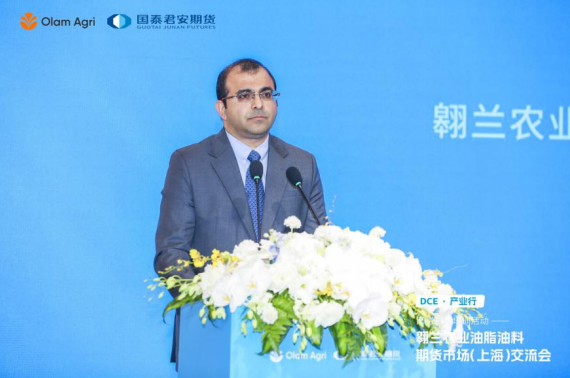
翱兰农业油脂油料期货市场(上海)交流会成功举办
Qi Huo Ri Bao· 2025-10-17 03:28
Core Insights - The event "DCE Industry Tour - Production and Finance Base Training Activity" hosted by Aolan Agriculture successfully gathered over a hundred representatives from various sectors of the oilseed and oil market, highlighting the industry's strong interest in futures and derivatives knowledge exchange and risk management practices [1][16] - Aolan Agriculture's President for China and ASEAN, He Manxiu, emphasized the company's role in managing market risks through participation in futures trading, enhancing market liquidity and price transparency [1][3] - The rapid development of China's futures and derivatives market has significantly improved its ability to serve the real economy, with more enterprises utilizing futures tools to hedge against price volatility, particularly in the foreign exchange and commodity sectors [3][4] Industry Developments - The establishment of production and finance bases by futures exchanges is crucial for connecting financial tools with industry needs, helping enterprises, especially small and medium-sized ones, to effectively utilize futures and derivatives for risk management [4][5] - The global economic order is undergoing profound restructuring, with market participants needing to be cautious of the divergence between "emotional recovery" and "actual tariff increases" [7] - The soybean market is showing signs of bottoming out despite being in a bear market, with key factors such as La Niña's impact on South American production and China's purchasing decisions influencing market direction [9] Market Trends and Risk Management - The interlinkage between futures and options markets plays a vital role in responding to policy shocks, as demonstrated by the impact of tariff changes on market prices [11][16] - The roundtable discussions focused on trends in the oilseed market, with insights on U.S. soybean exports, domestic demand for soybean meal, and the implications of South American production on imports [13][14] - The outlook for domestic soybean oil consumption remains stable, with key factors including the recovery of the catering industry and export conditions being closely monitored [14][16]
期现结合赋能铝产业链韧性与安全水平提升
Qi Huo Ri Bao· 2025-10-16 16:04
Core Insights - The aluminum industry is experiencing a high prosperity cycle, driven by supply-side structural reforms and strong demand from sectors like new energy vehicles and data centers [1][4] - The integration of futures and spot markets is seen as a crucial strategy for enhancing the resilience and safety of the aluminum supply chain [1][5] Industry Overview - Domestic electrolytic aluminum production capacity is nearing its limit, with high utilization rates and low supply elasticity expected in the future [1] - Global electrolytic aluminum supply is only able to maintain rigid growth due to long-term power supply restrictions overseas [1] - Demand for electrolytic aluminum is projected to grow at an annual rate of around 2%, supported by traditional consumption and emerging industries [1] Company Strategies - Companies are encouraged to adopt structural adjustments for product differentiation and quality enhancement to cope with order shortages [2] - Risk management is emphasized as a survival skill across all industries, with companies advised to negotiate long-term agreements to mitigate price volatility [2][5] - The shift from a passive reliance on spot markets to an active management model using futures for risk hedging is highlighted as essential for modern traders [2][3] Trading and Risk Management - The concept of basis trading is presented as a sustainable profit strategy for traders, focusing on local supply-demand dynamics rather than absolute price predictions [3] - A complete futures market system has been established, providing a comprehensive risk hedging framework for the aluminum industry [3] Regional Insights - Henan province is a key player in China's non-ferrous metal production, with significant contributions from advanced aluminum-based materials [4] - The participation of local enterprises in futures trading has seen a growth rate of 23% over the past three years, demonstrating the value of futures in risk management [4] Future Directions - Companies are advised to build a three-tiered risk management system, focusing on traditional futures integration, expanding options usage, and collaborating with futures companies for data sharing [5] - The forum concluded with a sense of optimism about the deepening integration of the aluminum industry with the futures market, positioning it as a powerful engine for navigating uncertainties [5]