AI泡沫

Search documents
中金:下一阶段的行业选择思路
中金点睛· 2025-11-30 23:49
Core Viewpoint - The market has been experiencing volatility due to high expectations and positions in the technology growth sector, alongside concerns about the AI bubble and the Federal Reserve's interest rate outlook, leading to a significant pullback in the Hang Seng Tech index by approximately 16.6% from its peak [2] - Despite attractive valuations in domestic consumption and real estate, the recent weakening of fundamentals has hindered consensus among investors, making dividend stocks a preferred choice in the current environment [2][7] - The company maintains an optimistic outlook for the Hang Seng Index at 26,000 points, validating this view despite fluctuations in October [2] Market Dynamics - The current market turmoil reflects a disconnect between fundamentals and expectations, indicative of a weakening domestic credit cycle, as evidenced by the peak in private social financing in June and a marginal decline in M1 growth in October [7][8] - The market's oscillation between dividend and technology stocks highlights the ongoing struggle between current fundamentals and future expectations [7] Investment Strategy - Investors are advised to consider the credit cycle as a guiding framework for macroeconomic direction and asset allocation, focusing on sectors that align with credit expansion [10][11] - The past two years have seen a trend of "excess liquidity" chasing "scarce assets," with the potential for rapid price increases followed by liquidity shifts to new opportunities [12] Sector Analysis - **Technology Sector**: The AI industry remains a key growth area, supported by domestic policy, but faces challenges due to high valuations and expectations. Short-term focus should be on hardware domestic substitution, while long-term prospects depend on application demand and profitability realization [20][21] - **Domestic Consumption and Real Estate**: Although these sectors have low expectations and valuations, the weakening fundamentals make sustained consensus difficult. Potential short-term trading opportunities may arise with policy catalysts, but caution is advised against "static valuation traps" [17][42] - **Dividend Stocks**: These assets serve as a hedge against weak domestic demand, with the Hang Seng High Dividend Index offering a static yield of approximately 5.8%. However, the range of high-dividend stocks has narrowed, with less than 25% of eligible stocks yielding above 5% [43][45] External Demand and Cyclical Opportunities - The recovery of the U.S. credit cycle may boost global manufacturing, benefiting sectors tied to exports and commodity pricing. Key indicators to watch include U.S. manufacturing PMI and existing home sales [34][37] - The cyclical recovery in external demand may provide short-term trading windows, particularly in the first quarter, as domestic PPI is expected to rise [39][42] Conclusion - The investment strategy should focus on a "barbell" approach, combining dividend and technology stocks while dynamically adjusting weights based on market conditions. External demand-driven cyclical sectors and innovative pharmaceuticals may offer additional flexibility in the portfolio [17][19]


你以为“美国国王”是特朗普,其实是黄仁勋?
Sou Hu Cai Jing· 2025-11-30 19:21
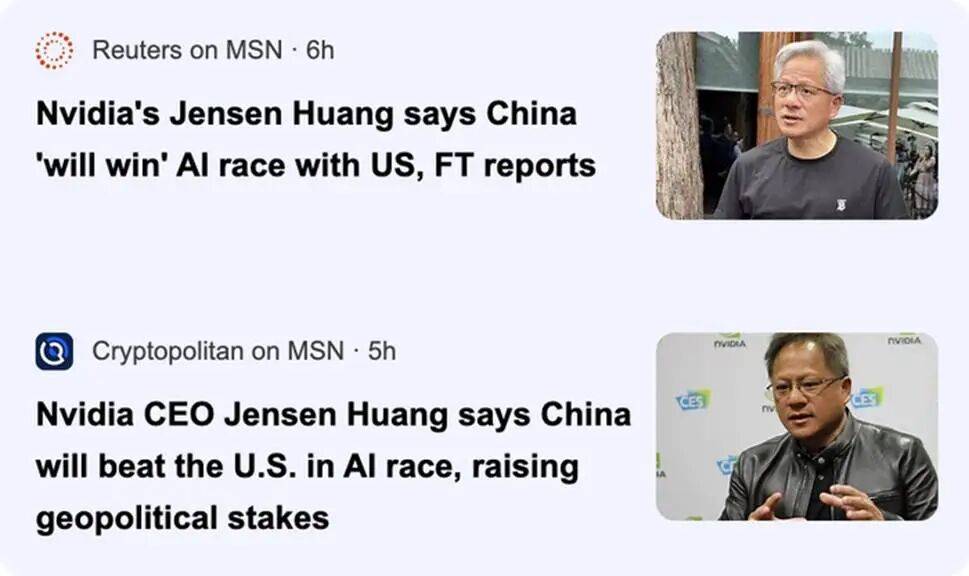
Core Viewpoint - The article expresses concern over the United States' heavy reliance on AI models and computing power, suggesting that this focus may lead to an economic bubble rather than sustainable high-quality growth [1][8]. Group 1: Market Concerns - There is significant volatility in the U.S. stock market, primarily due to differing opinions on whether the AI bubble will burst [2]. - Major investors, including SoftBank and Michael Burry, have taken actions such as selling Nvidia stocks and shorting AI companies, indicating a growing concern about the sustainability of AI valuations [4]. - Wall Street perceives current market conditions as reminiscent of the 2000 internet bubble, with companies' valuations diverging significantly from their fundamentals [6]. Group 2: AI Valuation and Energy Concerns - Nvidia's price-to-earnings ratio stands at 63, suggesting that investors would need 63 years to recoup their investment, which is seen as unrealistic for a hardware manufacturer [7]. - OpenAI is projected to incur losses exceeding $5 billion in 2024, yet its valuation is estimated at $300 billion, raising questions about the sustainability of such high valuations [7]. - The energy consumption of AI models is a critical issue, with OpenAI's GPT-3 requiring 1,300 MWh of electricity, and the newer GPT-5 consuming 9 to 20 times more energy per query [12][15]. Group 3: Economic Growth and Investment Dynamics - A study by Harvard economist Jason Furman indicates that nearly all U.S. GDP growth in the first half of 2025 will stem from data centers and information processing technologies, with other sectors showing a mere 0.1% growth rate [10]. - The current economic growth is heavily driven by capital investments in AI models and data centers, which are also leading to increased electricity demands that the existing grid cannot support [12][15]. - The need for substantial investments in energy infrastructure to support AI growth is highlighted, with projections suggesting that the U.S. will need to double its current electrical grid capacity to meet future demands [15]. Group 4: Competitive Landscape and Future Outlook - The article discusses the competitive landscape between the U.S. and China in AI, noting that while the U.S. has advanced technology, China possesses significant advantages in energy production [31][34]. - China's electricity generation capacity is projected to reach 10 trillion kWh in 2024, with a substantial portion being renewable energy, positioning it as a potential leader in AI development due to lower energy costs [31][34]. - The ongoing competition in AI technology is ultimately tied to energy resources, with the article suggesting that the U.S. may have technological prowess but lacks the energy infrastructure that China possesses [34].

AI应用 下一轮行情“主引擎”?
Shang Hai Zheng Quan Bao· 2025-11-30 18:49
Core Viewpoint - The ongoing debate about whether the current AI boom is a bubble or a genuine breakthrough continues, with significant attention on AI applications and their potential to drive the next market rally [1][4]. Group 1: AI Market Dynamics - The current AI wave is compared to the internet boom, but experts argue that the underlying logic is different, with AI having more concrete demand for computational power and hardware [2][4]. - The demand for AI-related hardware, such as AI chips and GPUs, is expected to translate directly into profits for manufacturers, as evidenced by companies like Zhongji Xuchuang, which reported a 90.05% year-on-year increase in net profit [2]. - Major tech companies are launching significant AI products, with Google’s Gemini 3 model leading the charge, indicating a shift from computational power to application development [2][3]. Group 2: Investment Trends - Berkshire Hathaway has invested heavily in Alphabet, acquiring approximately 17.85 million shares worth $4.3 billion, reflecting confidence in AI's growth potential [3]. - Fund managers express cautious optimism about AI applications, noting that while some areas like AI programming are showing commercial viability, many applications are still in early stages of development [4][5]. - The AI sector is expected to see a surge in demand for AI agents as various industries establish commercial ecosystems [5][7]. Group 3: Future Outlook - Analysts predict that AI applications will become a major growth area over the next 3 to 5 years, particularly in sectors like AI companionship, education, and advertising [8]. - The AI industry is transitioning from a phase of technological breakthroughs to one of commercial realization, with significant opportunities arising from China's large user base and rapid commercialization capabilities [7][8]. - The next two years are anticipated to witness robust growth in capital expenditures from major cloud service providers and domestic internet companies, further boosting the AI infrastructure sector [8].
「你觉得 AI 有泡沫吗?」——有|42章经
42章经· 2025-11-30 13:36
Core Viewpoint - The current AI market is experiencing a bubble, characterized by expectations exceeding reality, but this bubble can drive industry development and may not necessarily burst immediately [3][4]. Group 1: Value vs. Price - From a value perspective, the AI industry is thriving, with practitioners expressing excitement about advancements, indicating no bubble in terms of value [6]. - Price differentiation is crucial, with the primary market showing higher valuations compared to the U.S., where some companies exhibit inflated valuations [9]. - The secondary market reflects a high price level, with AI companies' price-to-earnings ratios around 30, suggesting that earnings growth supports current valuations [10][11]. Group 2: Structural Changes in AI - The AI industry is highly structured, divided into segments such as China vs. the U.S. and hardware vs. software, leading to varying degrees of bubble risk across different sectors [16][17]. - The transition from pre-training to post-training narratives indicates a shift in focus within the industry, with current discussions centered on return on investment (ROI) rather than just technological advancements [18][19]. Group 3: Market Sentiment and Investment - Recent discussions around the AI bubble have been fueled by significant capital movements and investments, raising concerns about ROI as investments grow while returns stabilize [30]. - The current market sentiment is fragile, with a noticeable decline in risk appetite compared to previous months, although this has not yet significantly impacted industry practitioners [35][36]. Group 4: Future Outlook and Winners - The future of the AI industry is expected to see significant differentiation among companies, with potential winners emerging from various segments [71][73]. - The industry is transitioning from a focus on AGI to practical applications and cost efficiency, indicating a new cycle in AI development [100][101].
Stocks drift back toward record highs as the final month of 2025 gets underway: What to watch this week
Yahoo Finance· 2025-11-30 12:27
The final month of the year gets underway on Monday, and investors will be looking for a smoother month to round out the year after choppy November trading saw the Nasdaq Composite (^IXIC) snap a seven-month winning streak while the S&P 500 (^GSPC) moved back to within 1% of a record high. On Friday, markets ended the week by notching a fifth straight session of gains to close out the up-and-down month in a holiday-shortened trading session. And despite snapping its monthly winning streak, the Nasdaq is a ...
11月A股终结六连阳,多位网红投资大佬集体看空黄金
Sou Hu Cai Jing· 2025-11-30 11:14
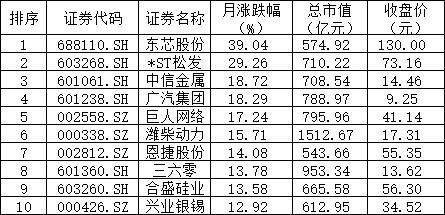
11月A股终结月线六连阳,市场震荡中凸显三大特征:权重抗跌、成交缩量、题材轮动加快。市场赚钱 效应逐渐减弱。 12月,中央经济工作会议、美联储议息、机构调仓三大事件将左右市场走向。 对于当前热门话题,AI泡沫、黄金走势、资产配置多位网红投资大佬提出了各自观点。虽然对AI泡沫 存在争议,但对黄金的观点却基本一致。 11月,A股终结六连阳 2025年11月A股市场整体呈现震荡调整格局,上证指数月累计下跌1.67%,创业板指累计下跌4.23%,沪 指终结了月线六连阳,而北证50指数更是单月暴跌12.32%,超三成个股跌超15%。 回顾11月A股走势,上半月震荡上行,但是11月21日却因 "机构调仓+外围扰动" 单日暴跌,月末又在消 费新政与流动性宽松推动下逐步修复。 11月A股涨幅龙虎榜如下: 1、500亿市值以上公司11月涨幅TOP10 | 10 | 9 | 8 | 7 | 6 | 5 | র্ব | 3 | 2 | 1 | 排序 | | | --- | --- | --- | --- | --- | --- | --- | --- | --- | --- | --- | --- | | 605598. SH 上 ...
AI泡沫?
GOLDEN SUN SECURITIES· 2025-11-30 06:26
Investment Rating - The report maintains an "Overweight" rating for the industry, indicating a positive outlook for investment opportunities [5]. Core Insights - The advancements in AI technology, such as the release of DeepSeekMath-V2 and Google's Gemini 3 Pro, demonstrate that the potential of large models is far from being fully realized. Continuous innovation in algorithms and the scaling law are key drivers in dispelling the notion of an "AI bubble" [18][19]. - Alibaba's recent financial results show strong growth in AI-related products, with a 34% increase in revenue for Alibaba Cloud and a 29% acceleration in external commercialization revenue. The company emphasizes that AI is not a bubble, as the demand for AI solutions is robust and supported by solid return potential [19][20]. Summary by Sections AI Innovations - DeepSeek launched a new mathematical reasoning model, DeepSeekMath-V2, which utilizes a self-verifying training framework and has achieved gold medal levels in competitions [11]. - Google's Gemini 3 Pro highlights the importance of high-quality training data, showcasing the ongoing effectiveness of the scaling law in AI model development [16]. Alibaba's AI Strategy - Alibaba's CEO stated that there is no "AI bubble" in the next three years, supported by strong demand and reasonable return potential. The company is focusing on both AI to B and AI to C strategies [22][23]. - The demand for AI capabilities is increasing across various industries, with Alibaba Cloud's AI-related product revenue growing for nine consecutive quarters [20][21]. Market Dynamics - The global AI server supply chain is experiencing shortages, with a significant expansion cycle required to meet the growing demand. This supply-demand imbalance is expected to persist for the next two to three years [22][23]. - The report suggests monitoring companies involved in computing power, such as Cambrian, Huagong Information, and others, as potential investment opportunities [4][25].

李蓓最新十大观点:金价已明显高估,A股牛市分为三大阶段目前仅处第一阶段,这一轮行情非常可能会泡沫化
Xin Lang Zheng Quan· 2025-11-30 03:02
Core Viewpoint - The 2025 Analyst Conference highlighted the challenges faced by wealthy individuals in asset allocation and the potential for a significant bull market in China, driven by economic recovery and global capital inflows [1][3][4]. Market Conditions - The Chinese stock market is currently in the first phase of a bull market, characterized by valuation recovery, with risk premiums still above historical averages [3][25]. - The market is undergoing a critical testing phase, where confidence and economic performance will determine the next steps [3][25]. Economic Outlook - A forecast suggests that in two years, the Chinese economy is likely to recover from deflation, leading to improved corporate profitability and a rise in stock index ROE [4][29]. - The current global economic landscape, particularly the high fiscal deficit in the U.S., raises doubts about the sustainability of the dollar's value and could trigger a reallocation of global capital towards China [4][29]. Investment Opportunities - Leading companies in A-shares are showing signs of profitability recovery, which is crucial for stabilizing core index ROE and reducing downward risks [1][4]. - The real estate sector, while facing challenges, has seen some leading firms restructure their profit models, indicating potential for recovery [4][15]. Historical Context - Historical analysis indicates that significant market bubbles require three conditions: a low-interest environment, a clear profit-making effect, and a lack of investment opportunities in other major markets [3][27]. - The previous A-share bubble in 2006-2007 was largely due to the collapse of the U.S. housing market, making China an attractive investment destination [3][27]. Future Projections - The potential for a new global asset allocation migration is anticipated, with capital likely to flow back into the Chinese market as its economic conditions improve [4][29]. - The current low-risk appetite among domestic investors and the significant wealth accumulation in China could serve as fuel for a future bull market [25][30].

科技周报|史上最严充电宝新规将落地;阿里吴泳铭称三年内AI泡沫不存在
Di Yi Cai Jing· 2025-11-30 02:41
Group 1: Charging Power Bank Regulations - The Ministry of Industry and Information Technology has released a draft for the "Mobile Power Safety Technical Specifications," which is considered the strictest safety standard for power banks [2] - The new regulations introduce rigorous safety tests for battery cells, including puncture tests, thermal abuse tests, and overcharging tests, and mandate the inclusion of an LCD screen or a connected app to display battery health and usage metrics [2] - It is estimated that nearly 70% of existing production capacity may exit the market due to the inability to meet the new technical requirements, and overall industry costs are expected to rise by 20% to 30% [2] Group 2: Meituan's Third Quarter Financial Results - Meituan reported a revenue of 95.49 billion yuan for the third quarter, a year-on-year increase of 2%, but faced an adjusted net loss of 16 billion yuan compared to a net profit of 12.83 billion yuan in the same period last year [3] - The significant profit fluctuation is attributed to increased direct subsidies in the food delivery sector to counter irrational competition [3] - The food delivery industry is returning to rationality, with major competitors like Alibaba and JD reducing their investments in similar areas [3] Group 3: Alibaba's Third Quarter Financial Performance - Alibaba's revenue for the third quarter was 247.8 billion yuan, a 5% year-on-year increase, but operating profit fell by 85% to 5.365 billion yuan [4] - Alibaba Cloud's revenue grew by 34% to 39.824 billion yuan, marking a new high, while AI-related product revenue has seen triple-digit year-on-year growth for nine consecutive quarters [4] - CEO Wu Yongming expressed optimism about the future of AI and indicated that the company may increase its infrastructure investment beyond the previously planned 380 billion yuan [4] Group 4: Investment Trends in AI Technology - The investment logic in the technology sector is shifting from "technology faith" to "value verification," emphasizing the need for a clear market demand for innovations [9] - AI unicorns are facing challenges such as cost overruns and difficulties in monetization, necessitating collaboration between academia and industry to facilitate technology application [9] - Experts suggest that while disruptive technologies may emerge, market-driven logic will become increasingly important in the second phase of AI development [9] Group 5: Semiconductor Developments - Sanan Optoelectronics' subsidiary has successfully launched silicon carbide chips for electric vehicles, marking a significant achievement in domestic automotive semiconductor capabilities [10] - The adoption of these chips by Li Auto indicates recognition of their performance, reliability, and delivery capabilities, which will support the development of high-voltage platform models [10] Group 6: Smart Factory Initiatives - The Ministry of Industry and Information Technology has released a list of 15 companies, including Gree and Haier, recognized for their leading smart factory initiatives [11] - The initiative aims to cultivate a tiered system of smart factories, enhancing China's manufacturing capabilities and establishing benchmarks for intelligent manufacturing [11]
洪灝、李蓓、付鹏罕见同台发声:黄金已卖,投资告一段落,AI泡沫三观点,100万这么布局
华尔街见闻· 2025-11-29 13:26
Core Viewpoints - The discussion highlights concerns about the sustainability of massive capital expenditures in AI, suggesting that while there may be potential for individual successful applications, the overall financial viability remains uncertain [3][5][26] - The panelists express skepticism about the current AI investment boom, likening it to past infrastructure investments in China that ultimately did not yield sustainable returns [4][25][26] - There is a consensus that gold may not be a guaranteed investment, with recent actions by central banks, particularly Russia's selling of gold, signaling potential shifts in the market [7][60][62] Group 1: AI Investment Insights - Li Bei emphasizes that the current level of capital expenditure in AI is unsustainable, questioning whether it can generate significant cash flow returns [3][26] - The panelists agree that AI may not be the primary upward driver in the market moving forward and could instead become a downward drag [5][29] - The difficulty of timing exits in a bubble is highlighted, with references to top traders struggling to navigate market peaks [6][49] Group 2: Gold and Currency Perspectives - The recent selling of gold by the Russian central bank is noted as a significant warning sign for the gold market [7][60] - There is a belief that while dollar-denominated gold may not decline significantly, gold priced in RMB could face downward pressure [67] - The undervaluation of the RMB is discussed, with expectations that it may gradually be recognized in international reserves, potentially replacing gold and USD [61][62] Group 3: Investment Strategies - The panelists suggest avoiding chasing bubble assets and instead focusing on resilient companies that can thrive in challenging economic conditions [8][90] - Recommendations include diversifying into non-US value stocks, commodities, and companies involved in AI development that are undervalued [11][91][94] - The importance of maintaining a balanced investment portfolio that allows for peace of mind during market volatility is emphasized [91][95]