
以旧换新政策

Search documents
6月乘用车销量大涨18% 二季度车市“价格战”现熄火迹象
经济观察报· 2025-07-10 09:48
Core Viewpoint - The automotive market is experiencing a slowdown in price wars, with a significant reduction in promotional activities by car manufacturers, indicating a shift in market dynamics [1][3]. Group 1: Market Performance - In June, the retail sales of passenger cars reached 2.084 million units, a year-on-year increase of 18.1%, marking the highest sales record for June [2]. - For the first half of the year, retail sales of passenger cars totaled 10.9 million units, growing by 10.8%, an increase of nearly two percentage points compared to the growth rate of 9% in the first five months [3]. - The strong performance in June was attributed to increased government subsidies under the "two new" policy and a rush by consumers to take advantage of expiring subsidies [3]. Group 2: Pricing and Profitability - The automotive industry is facing a "revenue growth but profit decline" scenario, with revenues of 4.1283 trillion yuan in the first five months, up 7%, while profits fell by 11.9% to 178.1 billion yuan [4]. - The profit margin for the automotive industry stands at 4.3%, which, although improved from 4.1% in the previous months, remains lower than the average profit margin of 5.7% for downstream industrial enterprises [5]. Group 3: New Energy Vehicles (NEVs) - The NEV market continues to show strong growth, with retail sales of 1.111 million units in June, a year-on-year increase of 29.7%, and cumulative sales of 5.468 million units in the first half, up 33.3% [6]. - The market share of pure electric vehicles is increasing, while the share of plug-in hybrid and range-extended hybrid vehicles is declining [6]. - In June, the penetration rate of NEVs reached 53.3%, an increase of 4.8 percentage points year-on-year, with significant differences in penetration rates among different brands [7]. Group 4: Brand Performance - Domestic brands achieved retail sales of 1.34 million units in June, a year-on-year increase of 30%, capturing a retail market share of 64.2% [8]. - Mainstream joint venture brands saw a slight increase in sales but a decline in market share, with German brands' share dropping by 2.4 percentage points [8]. - Luxury car sales faced challenges, with a year-on-year decline of 7% in June [9]. Group 5: Export Trends - In June, passenger car exports reached 480,000 units, a year-on-year increase of 23.8%, with NEVs accounting for a growing share of exports [10]. - NEV exports in June totaled 198,000 units, up 116.6%, representing 41.1% of total exports [10]. Group 6: Future Outlook - The automotive market is expected to enter a consolidation phase in July, influenced by high sales bases and tightening credit policies affecting car loans [10]. - Positive factors include the potential for NEVs to penetrate rural markets and the ongoing impact of the vehicle replacement subsidy policy [11].


年中经济观察|产销1500万辆!我国汽车产业上半年交出亮眼成绩单
Xin Hua She· 2025-07-10 08:22
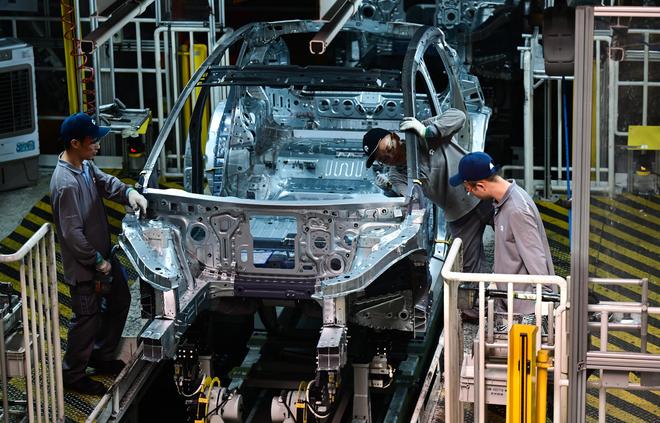
具体来看,今年上半年,我国汽车产销量分别为1562.1万辆和1565.3万辆。其中,新能源汽车产销量分 别为696.8万辆和693.7万辆,同比分别增长41.4%和40.3%,新能源汽车新车销量达到汽车新车总销量的 44.3%。 7月1日在合肥市新桥智能电动汽车产业园蔚来第二工厂拍摄的新能源汽车生产线。新华社记者 周牧 摄 今年以来,以旧换新政策持续显效,带动内需市场明显改善,对汽车整体增长起到重要支撑作用。1至6 月,汽车国内销量达到1257万辆,同比增长11.7%。6月单月,汽车国内销量环比同比双增。 河北省保定轩宇俊鹏汽车集团市场总监范振达表示,集团旗下的20多个品牌、40多个店的百余款车型, 都可以享受国家以旧换新的政策,领取最高额度15000元的"国补",很多客户也是奔着这个政策来的。 0:00 中国汽车工业协会10日发布的数据显示,2025年上半年我国汽车产销量首次双超1500万辆,均同比实现 两位数增长,汽车产业活力持续释放。 7月1日在合肥市新桥智能电动汽车产业园蔚来第二工厂拍摄的新能源汽车生产线。新华社记者 周牧 摄 蔚来第二先进制造基地生产负责人殷亮告诉记者,"我们工厂有300多万种的配置 ...
汽车整车行业2025年度中期投资策略:智驾再升级,新周期的阿尔法机会
Changjiang Securities· 2025-07-10 05:05
Core Viewpoints - The automotive industry is entering a new cycle driven by the upgrade of intelligent driving technology, with the "old-for-new" policy expected to boost domestic demand throughout 2025 [3][10] - The industry is experiencing significant trends in SUVs and new energy vehicles, now transitioning into intelligent driving, with a clearer market leader landscape emerging [3][7] Group 1: Market Conditions - Total demand has been improving, with strong performance in new energy vehicles. In the first four months of 2025, wholesale sales of passenger cars reached 8.638 million units, a year-on-year increase of 12.4% [6][22] - The penetration rate of new energy vehicles reached 46.8% in the first four months of 2025, with wholesale sales of new energy passenger cars growing by 45.2% year-on-year [6][24] - The low-end market (below 80,000 yuan) saw a significant increase in sales, growing by 69.8% year-on-year in the first four months of 2025, while the mid-range and high-end markets experienced declines [30][32] Group 2: Trends in Technology - The automotive sector is witnessing a technological leap with "end-to-end" advancements in intelligent driving, transitioning from policy-driven to consumer-driven growth in new energy vehicle penetration [7][10] - The penetration rate of high-level intelligent driving (L2 and above) is expected to grow rapidly, potentially reaching 10%-50% in the coming years [7][10] Group 3: Market Structure - The market structure is becoming clearer, with a focus on the expansion of market share. The market share of domestic brands rose to 65.4% in the first four months of 2025 [8][10] - In the high-end market (above 250,000 yuan), the market share of BBA (BMW, Benz, Audi) and Tesla remains significant at 38.6%, while domestic brands have substantial room for growth [8][10] Group 4: New Growth Opportunities - In the first four months of 2025, China's passenger car exports reached 1.607 million units, a year-on-year increase of 4.5%, with new energy vehicles accounting for 46% of exports [9][10] - The acceleration of electrification in Europe presents new opportunities for domestic companies, despite a temporary slowdown in the pace of new energy vehicle adoption [9][10] Group 5: Investment Recommendations - The report recommends focusing on strong intelligent driving vehicles as alpha opportunities in the new cycle of intelligent driving upgrades [10] - Key investment targets include Xiaomi Group, Xpeng Motors, Geely, BYD, and Li Auto, particularly those affected by price reductions from joint ventures [10]




破100000000000+
中国基金报· 2025-07-10 03:42
"今年千亿件的更快诞生,凸显了我国消费市场规模不断扩大,也彰显出快递规模经济效应继续放 大,对产业拉动和经济带动能力的明显提升。"国家邮政局有关负责人表示。 据了解,2025年第1000亿件为一台以旧换新的家用空调,从广东中山发往江苏常州。今年以 来,我国持续加力扩内需、促消费政策,对消费品以旧换新政策进行品类扩围,不仅为消费市场 注入了发展动能,也为邮政快递业较快发展增添了新活力。为更好服务以旧换新政策落地,邮政 快递业构建起高效便捷的一体化服务体系,不断优化用户体验,也为降低社会物流成本、激发内 需市场潜力贡献行业力量。 来源: 人民日报客户端 1000亿件!国家邮政局监测数据显示,截至7月9日,今年我国快递业务量已破千亿件,比2024 年达到千亿件提前了35天。至此, 我国快递业务量已连续5年突破1000亿件。 国家邮政局相关负责人表示,下一步,行业将以科技创新为引领,促进各种要素在生产、分配、 流通、消费等各环节高效流转,让邮政快递业在畅通经济循环、服务民生需求中发挥更大作用。 ...

国泰海通|宏观:“破局”通胀:反内卷与扩内需
国泰海通证券研究· 2025-07-09 14:38
而且我们认为,要真正破解内卷困局,扩内需政策的协同发力不可或缺。 事实上,内卷现象的根源之一在 于有效需求不足。当前经济运行还面临内外部共同压力:关税局势和外需回暖的不确定性持续存在、以旧 换新政策可能透支部分后续消费需求、地产销售投资端的调整还在持续。如果同时进行单纯的去产能,反 而可能带来工业生产放缓、就业压力加剧等影响。由此,稳经济、化解内卷还需要内需政策的接续支持。 在具体操作上,仍需继续关注经济基本面走势,即若出口、制造业 PMI 、地产等数据明显走弱,货币财 政政策加码概率可能大大增加。 风险提示: 房地产走势不确定性仍存;政策力度不及预期。 报告导读: 今年以来,"以旧换新"补贴政策持续支撑耐用消费品价格,带动核心 CPI 同 比小幅修复,而其中服务价格方面仍有待提振,指向了居民部门资产负债表的修复进展有 限,需要后续稳增长政策接续。 6 月 CPI 同比转正。 食品价格拖累减弱;国际油价上涨输入带动能源价格;核心 CPI 环比持平,核心消 费品 CPI 环比表现显著好于 2023 、 2024 年," 618 "提前促销影响过去后,"以旧换新"政策支持的相 关品类价格仍相对偏强,而服务相关价格 ...

CPI同比结束四连降,内卷行业价格情况改善
Di Yi Cai Jing· 2025-07-09 14:38
Group 1: CPI and PPI Analysis - In June, the Consumer Price Index (CPI) turned positive with a year-on-year increase of 0.1%, ending four months of negative growth, primarily due to reduced external downward pressure and the effects of trade-in policies [1][3] - The Producer Price Index (PPI) continued to decline, with a year-on-year decrease of 3.6%, reflecting weak domestic investment demand and export pressures [1][3] - The core CPI, excluding food and energy, rose by 0.7%, marking a 14-month high, indicating that domestic demand is gradually driving price increases [6][7] Group 2: Economic Policy and Employment Measures - The State Council issued a notification to enhance employment support, focusing on stabilizing jobs, supporting enterprises, and promoting high-quality economic development [1][13] - The notification includes seven policy measures aimed at stabilizing employment, such as expanding loan support for job retention and increasing unemployment insurance refunds for small and medium-sized enterprises [13][14] - The average contribution rate of domestic demand to economic growth during the 14th Five-Year Plan period is projected to be 86.4%, highlighting the importance of effective demand expansion [2] Group 3: Industry-Specific Insights - The automotive and photovoltaic industries have shown positive price changes, with the prices of complete vehicles and new energy vehicles increasing by 0.5% and 0.3% respectively [12] - The prices of high-tech manufacturing sectors, such as integrated circuits and wearable devices, have also seen year-on-year increases, indicating a shift towards new economic drivers [11][12] - The construction and infrastructure sectors are facing challenges due to seasonal weather impacts and an oversupply of materials, contributing to a decline in PPI [10]
2025年6月物价数据点评:“破局”通胀,反内卷与扩内需
GUOTAI HAITONG SECURITIES· 2025-07-09 09:37
券研究报 请务必阅读正文之后的免责条款部分 宏观研究 / 2025.07.09 "破局"通胀:反内卷与扩内需 应锈钢(分析师) 021-38676666 2025年6月物价数据点评 本报告导读: 贺媛(分析师) 今年以来,"以旧换新"补贴政策持续支撑耐用消费品价格,带动核心 CPI 同比小幅 021-38676666 修复,而其中服务价格方面仍有待提振,指向了居民部门资产负债表的修复进展有 登记编号 S0880525040129 限,需要后续稳增长政策接续。 梁中华(分析师) 投资要点: 02 -38676666 Q 6月 CPI 同比转正。食品价格拖累减弱;国际油价上涨输入带动能 登记编号 S0880525040019 源价格;核心 CPI 环比持平,核心消费品 CPI 环比表现显著好于 2023、2024年,"618"提前促销影响过去后,"以旧换新"政策支持 的相关品类价格仍相对偏强,而服务相关价格继续稳中偏弱。 6月 PPI 同比跌幅继续扩张,一是受高温降雨天气影响,房地产、 o 基建项目施工进度有所放缓。二是"反内卷"具体政策和效果仍待 观察,尤其是对光伏、水泥、钢铁等行业实际供需格局的影响。三 观去 ...
家电行业2025年中报业绩前瞻:内销政策拉动延续,关税扰动出口不改长期趋势
Shenwan Hongyuan Securities· 2025-07-09 08:42
Investment Rating - The report maintains a "Positive" outlook on the home appliance industry for the mid-2025 performance forecast [3] Core Insights - The home appliance sector is expected to benefit from domestic sales policies and the "old-for-new" program, which is driving demand for major appliances and kitchen appliances [4][5] - The air conditioning industry saw a cumulative production of 101.54 million units from January to May 2025, representing an 8% year-on-year increase, while sales reached 103.49 million units, up 9% year-on-year [4][17] - The report identifies three main investment themes: 1. **White Goods**: The reversal of real estate policies and the "old-for-new" program are expected to catalyze growth in the white goods sector, which is characterized by low valuations, high dividends, and stable growth [5][6] 2. **Exports**: Companies like Ousheng Electric are recommended due to stable income growth driven by large customer orders, while Dechang shares are highlighted for their expanding automotive parts business [6] 3. **Core Components**: The report suggests that the demand for core components will exceed expectations due to the strong performance of white goods, recommending companies like Huaxiang and Shun'an Environment for their competitive advantages [6] Summary by Sections 1. Air Conditioning and Major Appliances - The air conditioning sector is experiencing high growth in exports, with a 11% year-on-year increase in external sales from January to May 2025 [4][17] - The "old-for-new" policy is expected to enhance the average price of white goods, with major companies like Midea and Gree projected to see revenue growth of 8% and 5% respectively in Q2 2025 [4][29] 2. Kitchen Appliances - The kitchen appliance market is recovering due to real estate policies and the "old-for-new" program, with online sales of range hoods and gas stoves increasing by 17.5% and 16.5% respectively [40] - Companies like Boss Appliances are maintaining strong market shares in the kitchen appliance sector, with expected revenue growth of 5% in Q2 2025 [41] 3. Small Appliances - The small appliance sector is benefiting from high growth in domestic sales and exports, with companies like Supor and Joyoung expected to see revenue increases of 5% and 120% respectively in Q2 2025 [4][41] - The "old-for-new" policy is set to include small appliances, which is anticipated to significantly boost sales [5][20] 4. New Displays and Lighting - The emerging display market is at a turning point, with companies like Hisense and Jimi Technology expected to see revenue growth of 5% in Q2 2025 [4][5] 5. Investment Highlights - The report emphasizes the potential for a rebound in the home appliance sector driven by favorable policies and market conditions, recommending a combination of leading companies such as Midea, Haier, and Gree for investment [5][6]





2025年6月价格数据点评:核心通胀继续回暖
EBSCN· 2025-07-09 08:23
Group 1: CPI and Core CPI Insights - In June 2025, the CPI increased by 0.1% year-on-year, better than the market expectation of 0% and the previous value of -0.1%[2] - The core CPI rose by 0.7% year-on-year, up from 0.6% in the previous month, indicating continued improvement in core inflation[2][4] - Food and energy price declines have narrowed, contributing to the positive CPI performance[3][4] Group 2: PPI and Industry Analysis - The PPI fell by 3.6% year-on-year, worse than the market expectation of -3.2% and the previous value of -3.3%[2][9] - PPI has remained at -0.4% month-on-month for four consecutive months, reflecting weakened prices in domestic energy and raw materials[2][9] - The construction industry faced price declines due to high temperatures and abundant supply, with black metal and non-metallic mineral prices dropping by 1.8% and 1.4% respectively[10] Group 3: Policy Implications and Future Outlook - The "anti-involution" policy is deemed necessary to boost PPI and stabilize industry prices, as current low PPI levels are attributed to oversupply and external uncertainties[11][12] - Recent actions in industries like photovoltaic and cement indicate a shift towards price recovery, with some sectors showing signs of improvement[11][12] - Continued implementation of "anti-involution" policies is expected to support consumer price recovery, particularly in housing rentals and service demand[13]
6月份中国电商物流指数创年内新高
news flash· 2025-07-08 22:03
Core Viewpoint - The China Logistics and Purchasing Federation reported a significant increase in the e-commerce logistics index for June, driven by the "old-for-new" policy and concentrated promotions from e-commerce platforms, indicating a strong consumer demand and record-high order volumes [1] Group 1: E-commerce Logistics Index - The e-commerce logistics index for June reached 111.8 points, an increase of 0.2 points from the previous month, marking the fourth consecutive month of growth and a new high for the year [1] - The total business volume index for e-commerce logistics was 130.8 points, up 0.6 points month-on-month [1] - The rural business volume index for e-commerce logistics rose to 130.4 points, with a month-on-month increase of 0.8 points, and the year-on-year growth rate for rural business volume exceeded 30% for the first time this year [1] Group 2: Demand and Supply Dynamics - The demand for e-commerce is characterized by diversification and complexity, with strong purchasing needs for household goods and seasonal summer products [1] - E-commerce platforms are intensifying the promotion of foreign trade quality products, providing consumers with a variety of choices [1] - The "old-for-new" policy has notably boosted consumption in the digital and home appliance sectors, leading to increased order volumes and higher expectations for logistics capacity, delivery efficiency, and service quality [1] Group 3: Future Outlook - The e-commerce logistics market is expected to continue its steady upward trend with the arrival of graduation season and the summer consumption peak [1]