
高端制造

Search documents
科达利拟设立香港全资子公司 加快国际化布局
智通财经网· 2025-10-10 09:01
Core Viewpoint - The company, Keda Li (002850.SZ), aims to enhance its international competitiveness and expand its global business footprint by establishing a wholly-owned subsidiary in Hong Kong with an investment of up to 3 million HKD (approximately 2.75 million RMB) [1] Group 1 - The subsidiary will serve as a comprehensive operational platform to accelerate the company's internationalization efforts [1] - The focus will be on seizing development opportunities in strategic emerging fields such as new energy, high-end manufacturing, and key components for embodied intelligent robots [1] - The initiative is part of the company's long-term strategy to improve its overall global competitiveness [1]
科达利(002850.SZ)拟设立香港全资子公司 加快国际化布局
智通财经网· 2025-10-10 08:57
Core Viewpoint - The company, Keda Li (002850.SZ), aims to enhance its international competitiveness and expand its global business footprint by establishing a wholly-owned subsidiary in Hong Kong with an investment of up to 3 million HKD (approximately 2.75 million RMB) [1] Group 1 - The subsidiary will serve as a comprehensive operational platform to accelerate the company's internationalization efforts [1] - The focus will be on seizing development opportunities in strategic emerging fields such as new energy, high-end manufacturing, and key components for embodied intelligent robots [1] - This initiative is part of the company's long-term strategy to improve its overall global competitiveness [1]
科达利:拟设立全资子公司把握新能源、高端制造及具身智能机器人关键部件等领域的发展机遇
Ge Long Hui A P P· 2025-10-10 08:50
Core Viewpoint - Keda Li (002850.SZ) announced plans to establish a wholly-owned subsidiary in the Hong Kong Special Administrative Region with a budget of up to 3 million HKD, aimed at accelerating international expansion and seizing opportunities in strategic emerging sectors such as new energy, high-end manufacturing, and key components for embodied intelligent robots [1] Group 1 - The subsidiary will serve as a comprehensive operational platform [1] - The establishment of the subsidiary is part of the company's strategy to expand its global business footprint [1] - The focus areas for development include new energy, high-end manufacturing, and intelligent robotics [1]
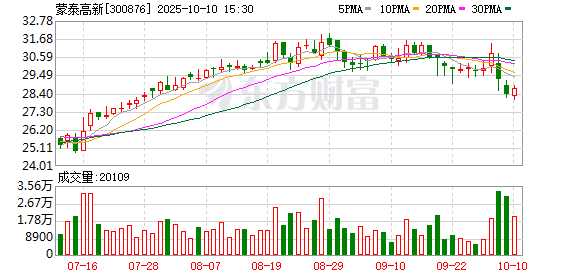
蒙泰高新:公司目前的碳纤维项目尚未投产
Mei Ri Jing Ji Xin Wen· 2025-10-10 08:37
(文章来源:每日经济新闻) 每经AI快讯,有投资者在投资者互动平台提问:尊敬的董秘您好,请问公司目前的碳纤维的应用场景 主要有哪些,是否涉及机器人,新能源汽车,无人机等产品的应用? 蒙泰高新(300876.SZ)10月10日在投资者互动平台表示,尊敬的投资者您好,公司目前的碳纤维项目 尚未投产,公司正努力推进项目建设。碳纤维细如发丝、轻如鸿毛、强如钢铁,碳纤维及其复合材料产 品已在机器人、新能源汽车、无人机等高端制造领域得到应用,相信也将开拓出更多应用场景。 ...


新能源及有色金属日报:假期有色行情提振,镍不锈钢价格拉涨-20251010
Hua Tai Qi Huo· 2025-10-10 05:55
Report Summary 1. Report Industry Investment Rating No information regarding the industry investment rating is provided in the report. 2. Core Views - For the nickel market, macro - impacts are limited, and nickel prices will return to the fundamental logic. With high inventories and a persistent supply - surplus situation, nickel prices are expected to remain in a low - level oscillation. For the stainless - steel market, due to the lower - than - expected consumption in the peak season, high operating rates of stainless - steel enterprises, and the re - entry into the inventory - accumulation phase, stainless - steel prices are expected to maintain a weak oscillation [4][5]. 3. Summary by Relevant Catalogs Nickel Variety - **Market Analysis** - **Futures**: On October 9, 2025, the main contract 2511 of Shanghai nickel opened at 121,300 yuan/ton and closed at 124,480 yuan/ton, a 2.39% change from the previous trading day. The trading volume was 130,864 (+3,674) lots, and the open interest was 86,038 (9,898) lots. Domestic new policies on culture, tourism, and infrastructure during the National Day holiday strengthened the medium - to - long - term demand expectations for key metals in new energy and high - end manufacturing. Overseas, after the Fed cut interest rates by 25BP in September, the market's bet on further easing at the late - October FOMC meeting increased, and the US dollar index slightly declined [1]. - **Nickel Ore**: After the holiday, the nickel - ore market was mainly in a wait - and - see mode with stable prices. In the Philippines, Surigao mines are about to enter the rainy season, and mine quotes remain firm. In Indonesia, the nickel - ore market supply is in a continuous loose pattern, and the 10 - month (first - phase) domestic trade benchmark price is expected to rise by 0.16 - 0.28 dollars. The new RKAB policy in Indonesia has increased the uncertainty of medium - to - long - term production capacity release [2]. - **Spot**: Jinchuan Group's sales price in the Shanghai market was 125,100 yuan/ton, up 1,700 yuan/ton from the previous trading day. Driven by the collective rise of the non - ferrous sector and post - holiday restocking demand, the trading of refined nickel was fair, and the premiums of some brands increased slightly but remained stable overall [3]. - **Strategy** - The macro - impact on nickel prices is limited, and prices will return to the fundamental logic. With high inventories and a supply - surplus situation, nickel prices are expected to remain in a low - level oscillation. The recommended strategy is mainly range - trading for single - side operations, and there are no suggestions for inter - period, inter - variety, spot - futures, or option operations [4]. Stainless - Steel Variety - **Market Analysis** - **Futures**: On October 9, 2025, the main contract 2511 of stainless steel opened at 12,770 yuan/ton and closed at 12,860 yuan/ton. The trading volume was 88,195 (-39,957) lots, and the open interest was 60,514 (-4,171) lots. On the first trading day after the holiday, although LME nickel rose sharply during the holiday, the stainless - steel contract opened lower due to the decline of the black - metal sector. It then rose in the afternoon driven by the increase in Shanghai nickel but failed to break through the resistance near 12,900 yuan/ton [5]. - **Spot**: On the first day of resuming work after the holiday, the spot market remained sluggish as before the holiday, and downstream buyers remained on the sidelines. Affected by the rise in the Shanghai nickel futures price in the afternoon, the spot price of stainless steel increased slightly, but the downstream acceptance of high prices was still limited [5]. - **Strategy** - Due to the lower - than - expected consumption in the peak season, high operating rates of stainless - steel enterprises, and the re - entry into the inventory - accumulation phase, stainless - steel prices are expected to maintain a weak oscillation. The recommended single - side strategy is neutral, and there are no suggestions for inter - period, inter - variety, spot - futures, or option operations [5].
3900点!后市趋势如何?
Guo Ji Jin Rong Bao· 2025-10-09 13:38
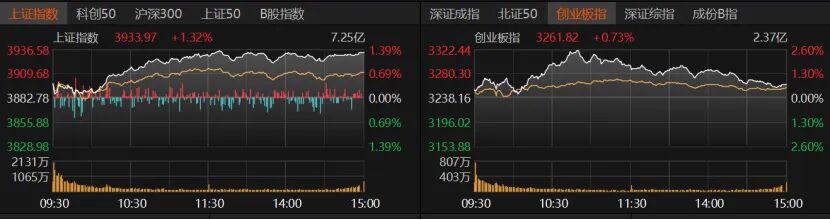
A股迎来节后首日大涨行情。 10月9日,沪指收报3933.97点,科创50盘中涨逾6%,日成交额增至2.67万亿元。板块普涨,有色金属、煤炭、电子等 板块大涨。 多位投资人士表示,假期期间外围市场表现积极,全球风险偏好回升,加上节后避险资金回归,A股高开高走。有色 金属板块大涨,主要是基于弱美元逻辑。美国就业与通胀数据走弱,降息预期抬升。短期内市场有望震荡走强,但投 资者需警惕高估值板块的调整风险,不宜盲目追高有色金属、存储芯片等板块。 A股量价齐升 10月9日,沪指收涨1.32%报3933.97点,创业板指收涨0.73%报3261.82点,深证成指收涨1.47%。科创50盘中一度涨逾 6%,最终收涨 2.93%;沪深300、上证50涨幅超过1%,北证50微跌。 市场交投活跃,日成交额增至2.67万亿元。市场赚钱效应较好,共计3115只个股收涨,99只个股涨停;2186只个股收 跌,跌停股24只。 | 名称 | . | 涨幅% ↓ | 涨停家数 | 20日涨幅% | 跌停家数 | 成交额 | 年初至今涨幅% | | --- | --- | --- | --- | --- | --- | --- | --- | ...
稀土出口管制加码,稀土ETF(516780)板块热度和行业战略地位或再提升!
Xin Lang Ji Jin· 2025-10-09 05:20
Core Insights - The Ministry of Commerce has announced strengthened export controls on rare earth-related items, highlighting the strategic importance of rare earth resources and increasing market attention on the rare earth sector [1] - The price of rare earths continues to rise due to supply and demand factors, with significant trading volume in rare earth ETFs, indicating heightened investor interest [1] - The strategic position of the rare earth industry is expected to be further solidified, driven by both domestic policy and global demand for key elements like praseodymium and neodymium [2] Industry Overview - Rare earths are critical resources for high-end manufacturing and strategic emerging industries, with supply and demand dynamics creating a resonant pattern [2] - China's export control measures are designed to ensure resources are directed towards high-end applications, enhancing the country's strategic control over the industry [2] - The global transition towards green technologies and carbon neutrality goals is driving demand for rare earth elements, particularly in new applications like permanent magnets [2] Market Performance - The rare earth ETF (516780) and its linked funds have shown strong performance, with the underlying index gaining 94.69% over the past year, reflecting robust growth in the rare earth sector [3] - The top five constituents of the index include leading companies in the global rare earth industry, collectively accounting for 41% of the index weight [3] - The management of the rare earth ETF is backed by a fund manager with over 18 years of experience, indicating a strong capability in index investment management [3] Historical Returns - The rare earth ETF has experienced varying returns since its inception, with a return of 42.85% in 2021, followed by negative returns in 2022 and 2023, and a recovery of 16.00% in the first half of 2025 [4] - The performance of the ETF is benchmarked against the China Securities Rare Earth Industry Index, which has shown significant fluctuations over the same periods [4]
长源东谷20251008
2025-10-09 02:00
Summary of Longyuan Donggu's Conference Call Industry and Company Overview - Longyuan Donggu has successfully transitioned to the new energy hybrid vehicle market through partnerships with BYD and Seres, marking a significant strategic shift from traditional commercial vehicle manufacturing [2][4] - The company initially focused on manufacturing engine blocks and cylinder heads for commercial vehicles since its establishment in 2001, but sought strategic breakthroughs starting in 2022 due to challenges in the commercial vehicle sector [4] Core Insights and Arguments - **Growth in Hybrid Vehicle Supply**: Longyuan Donggu's supply of engine blocks and cylinder heads is projected to reach 540,000 sets in 2024, a sixfold increase from 90,000 sets in 2023, indicating strong growth in the hybrid vehicle sector [2][5] - **Financial Performance**: For the first half of 2025, the company reported a gross margin of 26.7% and a net margin close to 16%. R&D expenses remained stable at around 5%, while the overall expense ratio decreased to 10% from 12% in previous years, showcasing cost reduction and efficiency improvements [2][7] - **Future Profit Projections**: The company anticipates a quarterly growth rate exceeding 60% in Q3 2025, with annual profit forecasts nearing 400 million yuan in 2025 and 530 million yuan in 2026, despite a slowdown in growth rates [2][11] Emerging Fields and Strategic Partnerships - **Expansion into Robotics and Other Sectors**: Longyuan Donggu is actively entering emerging fields such as robotics, large-bore engines, and low-altitude engines, establishing joint ventures with Yuchai to serve data centers and marine engine markets [2][6] - **Robotics Development**: The company leverages its precision manufacturing capabilities to develop key modules like robotic arms and dexterous hands, supported by high-end processing equipment [6][9][13] Shareholder Structure and Decision-Making - **Stable Shareholder Structure**: The largest shareholder, Li Zuoyuan, holds a 40% stake, which contributes to a smooth decision-making process and clear strategic direction, enhancing investor confidence [2][10] Additional Insights - **Market Positioning with Seres**: While Longyuan Donggu has established a strong position with BYD, its association with Seres in the hybrid sector is less pronounced, presenting a potential area for future growth [3][12] - **Valuation and Investment Potential**: The current valuation is approximately 21-22 times earnings, with a PEG ratio of less than 1, indicating potential for valuation improvement [2][11]

中国资产长假受追捧,科技股前景被看好
Zheng Quan Shi Bao· 2025-10-09 00:07
Group 1 - Major overseas stock markets performed well during the National Day and Mid-Autumn Festival holidays, with indices in Japan, South Korea, and the US reaching historical highs [1] - The Nasdaq China Golden Dragon Index hit a 5-year high of 8945 points on October 2, with a year-to-date increase of 40% [1] - The Hang Seng Index and Hang Seng Tech Index also reached 5-year highs during the holiday period, with sectors like non-ferrous metals and biomedicine gaining attention [1] Group 2 - Morgan Stanley reported a net inflow of $4.6 billion into the Chinese stock market in September, marking the highest monthly inflow since November 2024, indicating a recovery in global investor confidence towards Chinese assets [1] - Passive funds have seen a cumulative inflow of $18 billion year-to-date, surpassing the total of $7 billion for the entire previous year, driven by the expansion of international indices tracking A-shares [1] Group 3 - Several foreign institutions, including Standard Chartered and Goldman Sachs, expressed optimism about Chinese assets, with Goldman noting the highest activity of global hedge funds in China's stock market in recent years [2] - The technology sector, particularly companies like Alibaba, Tencent, and Baidu, received significant attention, with target prices being raised due to advancements in AI infrastructure and applications [2] - Investment strategies suggested by institutions include a "barbell strategy," focusing on growth leaders in AI and high-end manufacturing while also investing in high-dividend blue-chip stocks in sectors like finance and non-ferrous metals [2]


中国资产长假受追捧 科技股前景被看好
Zheng Quan Shi Bao· 2025-10-08 17:39
Group 1 - Major overseas stock markets, including Japan, South Korea, and the US, reached historical highs during the National Day and Mid-Autumn Festival holidays, with the Nasdaq China Golden Dragon Index hitting a 5-year high of 8945 points on October 2, reflecting a 40% increase year-to-date [1] - The Hang Seng Index and Hang Seng Tech Index also achieved 5-year highs during the holiday period, with sectors like non-ferrous metals and biomedicine gaining significant attention [1] - Morgan Stanley reported a net inflow of $4.6 billion into the Chinese stock market in September, marking the highest monthly inflow since November 2024, indicating a recovery in global investor confidence towards Chinese assets, particularly in the semiconductor and tech growth sectors [1] Group 2 - Several foreign institutions, including Standard Chartered and Goldman Sachs, expressed optimism about Chinese assets, with Goldman noting the highest activity of global hedge funds in China's stock market in recent years [2] - The technology sector, particularly companies like Alibaba, Tencent, and Baidu, received significant attention from international institutions, with target prices being notably raised due to advancements in AI infrastructure and applications [2] - Investment strategies suggested by institutions include a "barbell strategy," focusing on growth leaders in AI, high-end manufacturing, and semiconductors, while also investing in high-dividend blue-chip stocks in sectors like finance, non-ferrous metals, and pharmaceuticals [2]