
去美元化

Search documents
2026年黄金降价原因及未来趋势分析
Sou Hu Cai Jing· 2026-02-06 11:56
2026年黄金降价原因及未来趋势分析 2026年黄金价格出现阶段性大幅降价,核心是美联储政策转向、市场超买后的获利盘出逃、涨势脱离真 实供需等多重因素共振导致,并非长期牛市终结;结合全球经济格局、央行购金趋势及市场情绪来看, 未来黄金价格将呈现"短期探底震荡、中期企稳回升、长期持续向好"的分阶段走势,截至2026年2月6 日,伦敦金现报4808.68美元/盎司,国内黄金T+D价格为1080元/克,较前期高点均有明显回落,后续需 重点关注美联储政策落地及地缘风险变化。 (一)美联储政策转向:降息预期降温,美元指数反弹 黄金以美元计价,美元强弱与黄金价格呈负相关关系,而美联储的货币政策直接决定美元走势及市场资 金流向,这是2026年黄金降价的最核心原因。2026年1月30日,美国总统特朗普提名前美联储理事凯文· 沃什为下任美联储主席,沃什被市场称为"鹰派中的鹰派",其公开表态将缩减美联储资产负债表、对降 息持谨慎态度,直接打破了市场此前对美联储"大放水、多轮降息"的预期。 此前市场普遍赌美联储2026年会多次降息,持有无息资产黄金的机会成本降低,大量资金涌入黄金市场 推高价格;而沃什的提名落地后,市场预期降息将推 ...
芦哲、王洋(芦哲系东吴证券首席经济学家、中国首席经济学家论坛理事)
Xin Lang Cai Jing· 2026-02-06 11:20
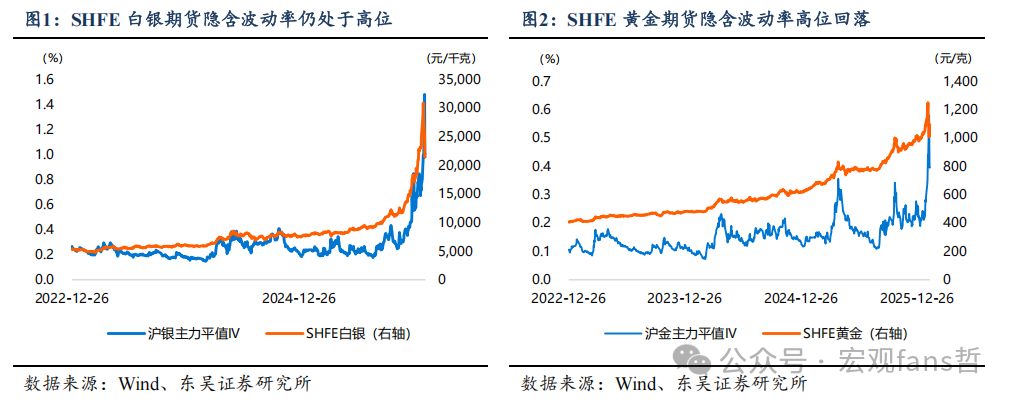
Core Viewpoints - Silver futures have ended their limit down, indicating that the current liquidity shock is largely over. Since November 2025, silver has become a leading indicator of bullish sentiment in the commodity market, alongside gold and copper, activating a rotation sequence in commodities [2][12] - The recent decline in silver futures has triggered a liquidity risk contagion in the commodity market, leading to widespread sell-offs in related sectors. The opening of the limit down on February 3rd suggests a relief in market risks [2][12] Market Events - On February 3, 2026, the Shanghai Futures Exchange (SHFE) silver futures opened limit down, closing at 21,446 CNY/kg, a decline of 16.71%. The London silver spot price was 79.2 USD/oz, with the SHFE silver futures premium dropping from 29.8% at the end of January to 7.46% by February 3 [1][11] - On February 4, the SHFE silver main contract night session rose by 5.93%, closing at 22,393 CNY/kg [1][11] Volatility Analysis - The implied volatility of silver futures remains high, with a peak of 148% on February 2, indicating that while the limit down has been lifted, the market still needs to stabilize from liquidity risks. Gold futures also show elevated volatility, suggesting that both metals require time to fully absorb the liquidity shock [3][13] Commodity Market Dynamics - The core logic of the commodity market remains unchanged despite liquidity shocks. Some commodities, which were mispriced due to liquidity risks, may return to their fundamental pricing logic as the market stabilizes. The 2026 asset allocation report highlights three main lines for the commodity market post-liquidity shock [4][14] - Precious metals are expected to enter a consolidation phase after a period of broad increases, supported by long-term narratives such as the weakening of global sovereign currency credit and the "de-dollarization" trend [4][17] Non-Ferrous Metals - Non-ferrous metals like copper and aluminum are expected to benefit from structural changes in demand driven by new economic sectors such as AI and renewable energy. Despite recent adjustments due to liquidity shocks, the fundamental pricing mechanisms for these metals remain robust [5][18] Chemical Sector - The chemical sector is anticipated to see continued improvement in market conditions, driven by supply-side adjustments and structural changes in demand. The sector is becoming a key area for capital inflows, despite recent declines linked to precious metals [6][19] New Energy Metals - New energy metals, particularly lithium carbonate, are expected to gradually move towards supply-demand balance, supported by policy adjustments and demand growth. The sector remains a focal point for bullish investment opportunities [7][20]


山金期货贵金属月度策略报告:避险缓和降息仍远贵金属震荡筑底-20260206
Shan Jin Qi Huo· 2026-02-06 11:01
1. Report Industry Investment Rating No relevant content provided. 2. Core Viewpoints of the Report - In the long term, precious metals are expected to continue an upward trend as the economic system restructuring drives currency system restructuring. However, in the medium term, with the easing of risk aversion and low interest - rate cut expectations, precious metals may continue to oscillate and build a bottom. The gold - silver ratio may rebound in the medium term and is expected to return to a downward trend in the long term [6][69]. 3. Summary by Directory 3.1 Precious Metals Recent Market Review - During the current bull market, the Fed has been cautious about interest - rate cuts, while the market has shown obvious over - anticipation. Gold's performance is significantly affected by the risk - aversion logic, and it faces greater short - term correction pressure when risk aversion eases. Silver had higher volatility than gold in previous bull markets but has had a lower average increase in recent years due to the drag of its industrial attributes. Since the second half of 2025, silver has rapidly made up for the increase, but there is a risk that the demand may be disproven after the price rises. Platinum and palladium have started to make up for the increase since 2025. After the domestic futures were launched, platinum quickly corrected after breaking through the previous high, and palladium is still far from its previous high, with the platinum - palladium ratio remaining at a low level [5][9][10]. 3.2 Investment Logic Evolution - The monetary policies of global central banks have been highly differentiated in recent years. In the process of "de - dollarization", non - US currencies have a significant impact on precious metals, and the difference in interest - rate cut expectations between them and the US is particularly crucial. The Fed has more room for interest - rate cuts in the later stage. The market currently expects the Fed to keep interest rates unchanged in March and April, with the next possible rate cut in June, and the remaining rate - cut space is about 50 basis points, indicating that rate cuts will end this year [6][19][23]. - Inflation in major economies has been generally mild recently, and the inflation pressure from the trade war has not emerged. The US economic growth has slowed down but remains strong overall, while non - US economies are showing an upward trend from the bottom. The IMF has raised its forecast for the global economic growth rate in 2026 to 3.3%, an increase of 0.2 percentage points from the October forecast. It also expects the US economic growth rate to be 2.4% in 2026, higher than the 2.1% forecast in October, and has raised China's growth forecast to 4.5%, an increase of 0.3 percentage points from the October forecast [6][28][34]. - The expected high deficits and increased supply of government bonds in major economies have led to rising yields, and the global debt problem is expected to continue to support the risk pricing of precious metals [6][37]. 3.3 Precious Metals Future Trend Outlook - In the long run, as an ultra - sovereign currency, precious metals may continue to move upward as the path of least resistance due to economic and currency system restructuring. In the process of "de - dollarization", the share of the US dollar in the global central bank's foreign exchange reserves and international payments has decreased, while the share of gold has increased significantly. However, the US dollar still holds a dominant position, and "de - dollarization" is a long - term process [40][42]. - The inversion of the 3 - month to 10 - year US Treasury yield spread, which the Fed is concerned about, has continued to decline recently, reducing the risk of a US economic recession. The US - Europe interest - rate spread has been oscillating at a high level, and the US - China interest - rate spread has significantly declined. The real yield of US Treasury bonds has rebounded after encountering resistance in its downward movement, increasing the opportunity cost of holding gold. The US dollar index is in a downward trend in the large cycle, but the support near the lower break is still strong [43][47]. - In terms of the risk - aversion attribute of precious metals, the S&P 500 volatility index is in an ultra - low range in recent years and has shown recent fluctuations. The uncertainty of US economic policies has declined after Trump took office [48]. - In terms of the capital side, the net long positions of gold and silver in CFTC positions have recently declined from high levels this year. SPDR Gold ETF and iShare Silver ETF have shown a trend of increasing positions recently after continuous position reductions since 2021. The net long positions of platinum in CFTC positions have declined from high levels, and the net long positions of palladium have continuously decreased from high levels. The net long positions of Shanghai gold futures companies have recently increased rapidly, while the net positions of Shanghai silver have declined at a low level [51][54][57]. - The global gold supply is expected to be stable. The demand for gold jewelry is less affected by high gold prices, and there is still potential for private and central - bank investment demand. The World Silver Association states that due to a 1% decrease in demand and a 2% increase in total supply, the global silver supply - demand gap is expected to narrow by 21% to about 3,658 tons in 2025. Platinum mining is highly concentrated, and production growth is limited. Driven by diversified applications, there is a long - term strong expectation for the demand for platinum - based catalysts in the hydrogen - energy industry. Palladium is expected to face a structural surplus in the long term due to the decline in demand from the fuel - vehicle market [63][65][67].
贵金属跌宕,沃什终结黄金牛市?
Sou Hu Cai Jing· 2026-02-06 10:37
来源:《财经》杂志 2月6日早间,金银价格继续走低,金价一度跌破4700美元/盎司;银价一度跌破65美元/盎司,抹去年内全部涨幅 文|唐郡 编辑|张威 时隔不到一周,贵金属市场再度集体巨震。 北京时间2月5日至6日早间,国际贵金属市场大幅下跌。 Wind(万得)数据显示,2月5日,伦敦黄金和白银现货价格分别下跌3.79%和20.06%。2月6日早间,金银价格继续走低,金价一度跌破4700美元/ 盎司;银价一度跌破65美元/盎司,抹去年内全部涨幅。 截至2月6日16时20分,伦敦黄金现货价格报4863.1美元/盎司,日内上涨0.65%;伦敦白银现货价格报73.5美元/盎司,日内上涨3.60%。 不到一周前,1月31日凌晨,伦敦黄金和白银现货价格巨震,黄金盘中跌逾12%,创40年来最大单日跌幅;白银盘中暴跌36%,创下了有记录以来 最糟糕的单日表现。 亦有机构对此持不同观点。中金公司近日撰文称,"沃什冲击"改变了美联储政策预期,导致黄金价格巨震,证实美联储政策确实是决定黄金市场 前景的最关键变量。 "如果沃什最终成功收缩美联储资产负债表,则可部分修复美元信誉,延缓'去美元化'进程,并收紧美元流动性,会直接动摇美元 ...
2026年农产品市场展望:农产品:蛛网定价,旱则资舟
Guo Tai Jun An Qi Huo· 2026-02-06 10:31
Report Overview - Report Title: "Agricultural Products: Cobweb Pricing, Prepare Boats in Drought - 2026 Agricultural Market Outlook" [1] - Report Date: February 6, 2026 - Analysts: Zhou Xiaoqiu, Wu Hao 1. Report's Investment Rating for the Industry - The provided content does not mention the report's investment rating for the industry. 2. Core Views of the Report - Agricultural products are typical cyclical commodities with seasonal production and annual sales, and their pricing follows the cobweb model [3][48]. - Agricultural product prices are at historical lows, with highly predictable positive drivers and a high risk - return ratio [3][48]. - Although the overall global agricultural product output is still increasing, the increment mainly comes from South America, with a high concentration. Global resource nationalism is intensifying, and geopolitical risks remain, increasing the risk premium of essential agricultural products [3][44][48]. - In 2025/2026, the inventory - to - consumption ratios of global rice, corn, and soybeans decreased. The prices of corn and soybeans are relatively low compared to precious metals and non - ferrous metals and have fallen below the US planting cost for two consecutive years [3][48]. - It is highly predictable that the US will reduce the planting area in 2026/2027 due to low planting profits. Weather premium trading weight is increasing [3][48]. - The domestic hog price has fallen below the self - breeding and self - raising production cost since September 2025, with the possibility of passive capacity reduction during the consumption off - season. It is recommended to focus on the opportunities driven by the biodiesel policy for oils, the expected opportunities for the rapeseed - soybean meal price difference due to improved China - Canada relations, and the hog cycle reversal opportunities [3][44][48]. 3. Summary by Relevant Catalogs 3.1 Agricultural Product Prices Are Relatively Low - Since September 2025, gold has started a new upward trend. The expected Fed rate cut has increased the attractiveness of precious metals, the weakening of the US dollar's credit has led to "de - dollarization" trading, and new consumption in AI computing power, energy storage, and photovoltaics has boosted the demand for precious metals [6]. - Since November 2025, silver has become the new leader in price increases, and the gold - to - silver ratio has accelerated its decline. Silver supply is limited by associated mining, and its demand has increased rapidly in new energy vehicles, energy storage, and photovoltaics [8]. - Since November 2025, non - ferrous metals such as brass and aluminum have seen accelerated price increases, and in mid - December 2025, nickel with high inventories also started to make up for the price increase, spreading to the entire non - ferrous metal sector [10]. - Agricultural product prices are at a historical low level. Compared with the prices of precious metals and non - ferrous metals, the relative position of agricultural product prices is low. Even after the recent sharp correction of precious metals and non - ferrous metals, this situation has not changed [12]. 3.2 The Fundamentals of Agricultural Products Are Gradually Improving - As of January 2026, USDA expects the global grain output in 2025/2026 to reach a new high (+4.2%), with rigid demand growth (+2.8%). The inventory - to - consumption ratios of rice, corn, and soybeans have decreased [13]. - In 2025/2026, the global rice output decreased by 0.03%, wheat output increased by 5.16%, corn output increased by 5.29%, soybean output decreased by 0.34%, rapeseed output increased by 10.66%, palm oil output increased by 2.31%, sugar output increased by 4.58%, and cotton output increased by 0.80% [15][17][20][24]. - The US soybean has been in a loss - making state since 2024/2025, with a loss of $96.4 per acre, and the US corn has also been in a loss - making state since 2024/2025, with a loss of $130.15 per acre [36]. - From October 2024 to now, the CBOT corn and soybean futures prices have been fluctuating at a low level, and it is expected that the US corn and soybean planting will continue to be in a loss - making state in 2025/2026 [38]. - The El Niño index has been negative since September 2024, and in January 2026, it was - 0.5, in a weak La Niña state, which is beneficial to the crop yield [40]. - USDA expects the US corn yield per acre in 2025/2026 to be 186.5 bushels, and the soybean yield per acre to be 53 bushels. The Brazilian corn yield per hectare in 2025/2026 is expected to be 5.8 tons, decreasing for two consecutive years, and the soybean yield per hectare is expected to be 3.63 tons, at a historical high level [42]. - The hog price has fallen below the self - breeding and self - raising production cost since September 2025 for 16 weeks, and after a short - term low - profit stage in January 2026, it is expected to continue to be in a loss - making state during the consumption off - season. Once the market enters the passive capacity reduction stage, the cycle reversal opportunity should be noted [44]. 3.3 Cobweb Pricing, Prepare Boats in Drought - Agricultural products are typical cyclical commodities, with seasonal production and annual sales, and their pricing follows the cobweb model [46]. - In 2025/2026, the US corn and soybean yields are at historical high levels. The market focuses on the expected reduction of the planting area in the US in 2026/2027 due to continuous negative planting profits. If the expectation is confirmed from March to May 2026, the weight of weather premium will increase from July to August [47]. - The prices of agricultural products are at historical lows, with highly predictable positive drivers and a high risk - return ratio. The relative position of corn and soybean prices compared to precious metals and non - ferrous metals is low, and it is highly predictable that the US will reduce the planting area in 2026/2027 [48].
美国最不愿发生的事发生了!俄大量黄金涌入中国,美元霸权完了?
Sou Hu Cai Jing· 2026-02-06 09:33
一边是俄罗斯把自家压箱底的"抗制裁王牌"源源不断运往东方,另一边是咱中国央行已经连续十几个月默默增持黄金。 当最古老的财富象征,与最现代的大国博弈交织在一起,一个直击灵魂的问题浮现了:维系美国霸权半个多世纪的美元体系,是不是真的走到头 了? 数据传达的信息,美国的焦虑 时间来到2026年,一组数据引起了人们的关注:仅仅在过去一年,从俄罗斯流向中国的黄金总量暴增了800%,达到25.3吨,价值接近16.3亿美 元。 这可不是什么普通的生意波动,要知道,现在金价可是在不断上涨的,1月29日,国际黄金价格甚至突破了每盎司5500美元大关。 我们要明白这件事的意义,就得先搞清楚这800%的增长到底意味着什么。这个数字背后,是两个大国在金融安全上极为清醒的盘算。 对俄罗斯来说,这是一条破解西方制裁的生存通道。 自打2022年超过3000亿美元的外汇资产被西方冻结,莫斯科就彻底明白了:手里攥着的美元欧元,关键时刻可能一文不值。 但黄金不一样,尤其是那2300吨多藏在莫斯科自家金库、不经过纽约伦敦市场的黄金,谁也冻不了、抢不走。 把这些 "终极硬通货"运到中国,能换回急需的人民币或者各种工业物资,等于在西方砌的金融围墙外, ...

热点问答丨金银巨震,后市如何?分析师认为……
Sou Hu Cai Jing· 2026-02-06 08:51
近期,以黄金、白银为代表的贵金属市场,成为全球金融市场关注的焦点。 Wind数据显示,1月29日,伦敦现货黄金创下5598.75美元/盎司的历史新高,随后快速跳水;2月2日,最低至4402.06美元/盎司,区间最大跌幅超1000美元, 后续在反弹与回落中反复震荡;2月4日,盘中一度升破5000美元/盎司,2月5日,再次跌超3%。截至北京时间2月6日16时,国际黄金期货、现货价格围绕 4850美元/盎司波动。 其一,美联储政策相关事件尚未落定,下任主席提名通过、现任主席鲍威尔相关指控撤销等事项暂无定论,且美联储理事米兰辞任政府职务后,深耕美联储 的意图愈发明确,为后续政策博弈埋下伏笔;其二,美国1月就业、通胀核心数据将陆续披露,当前市场已形成就业持稳、通胀上行的共识,这一预期不利 于美联储降息预期进一步发酵;其三,2月COMEX白银期货交割数据表现中规中矩,能否复刻1月后期的发力走势尚不确定;其四,国内白银溢价仍处于套 利窗口打开区间,而显性库存尚未企稳回升,春节前部分投机买盘或面临出清压力。 在此轮贵金属下跌行情中,白银跌幅为何更加显著? 国信期货首席分析师顾冯达表示,就近期国际贵金属市场表现而言,白银领跌大 ...

金银巨震,后市如何?分析师认为……
天天基金网· 2026-02-06 08:43
Core Viewpoint - The recent volatility in the precious metals market, particularly gold and silver, has drawn significant attention due to a combination of market factors leading to sharp price fluctuations [2][3]. Group 1: Factors Influencing Precious Metals Prices - In January, precious metals prices surged due to structural supply tensions and a weaker dollar boosting investment demand [2]. - In February, a significant pullback occurred due to multiple factors, including cautious monetary policies from central banks, leading to a shift in macro expectations, and a reduction in market liquidity as institutions reduced positions before the Lunar New Year [3]. - The volatility in precious metals prices is primarily influenced by four key factors: uncertainty surrounding Federal Reserve policies, upcoming employment and inflation data, moderate performance in COMEX silver futures deliveries, and domestic silver premiums remaining within an arbitrage window [4][5]. Group 2: Silver's Performance and Market Sentiment - Silver has experienced a more pronounced decline compared to gold, highlighting market fragility and structural differentiation among commodities [5]. - The recent drop in silver prices was triggered by easing geopolitical tensions, which diminished its safe-haven appeal, compounded by increased margin requirements by the CME that withdrew high-leverage speculative liquidity [5]. Group 3: Future Price Trends and Market Dynamics - High volatility in precious metals may become the new norm, but the long-term outlook remains bullish due to a paradigm shift in the global order, with gold returning to a core asset status amid a debt crisis and a multipolar world [6]. - Three structural issues underpinning this shift include a crisis of trust in the global credit currency system, increasing demand for precious metals as a safe haven, and central banks, especially in emerging economies, raising their gold reserves [6]. - The long-term bullish logic for precious metals remains intact, with tight inventories and a potential shift in the Federal Reserve's policy stance providing support for investment demand [6][8]. Group 4: Investment Strategies and Recommendations - Investors are advised to manage their positions carefully in light of increased market volatility, with a focus on risk management rather than trend chasing [9]. - Gold retains its value as a traditional safe-haven asset, but investors should control their positions to navigate short-term fluctuations, while silver, due to its speculative nature, is recommended to be avoided in the current market environment [9].
黄金暴涨暴跌!皇御贵金属助你低成本炒黄金,跟上大势!
Sou Hu Cai Jing· 2026-02-06 08:41
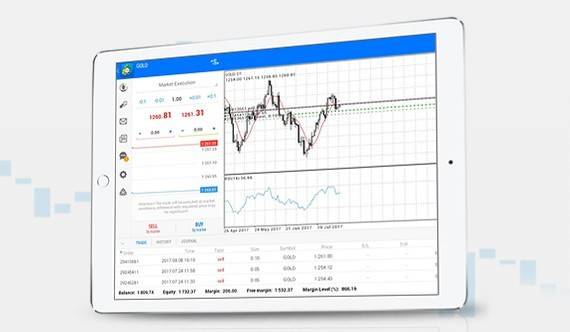
Core Viewpoint - The international gold market experienced a dramatic surge and subsequent drop in January 2026, with spot gold prices first exceeding $5,500 per ounce, marking a cumulative increase of over 20% for the month before plummeting by more than $1,000 the following day [1][2]. Group 1: Market Dynamics - The gold market's explosive growth was driven by three main factors: escalating global geopolitical risks, a significant decline in the US dollar's value, and sustained gold purchases by central banks [2]. - Geopolitical tensions, including statements from Canadian Prime Minister and actions by countries like Cambodia and India to shift gold reserves, accelerated the de-dollarization process [2]. - The US dollar index fell sharply to a four-year low, with the consumer confidence index dropping to 84.5, the lowest since 2014, diminishing the attractiveness of dollar-denominated assets [2]. Group 2: Market Reversal Factors - The sharp decline in gold prices was attributed to multiple factors, including the nomination of a hawkish figure as the next Federal Reserve Chair, which undermined expectations for loose monetary policy [3]. - The previous overheating of the market led to crowded long positions, making it susceptible to profit-taking triggered by any fundamental changes [3]. Group 3: Trading Opportunities - Investors are encouraged to leverage the unique trading logic of spot gold, which includes 24/7 trading, a dual-direction trading mechanism, T+0 immediate transactions, and flexible entry thresholds [5][6]. - The trading platform, 皇御贵金属, offers significant incentives for new and existing customers, including bonuses for account funding and reduced trading costs, enhancing the potential for capturing market opportunities [7]. Group 4: Strategic Recommendations - In the current volatile market, rational positioning is crucial, with strategies such as trend-following, event-driven approaches, and phased accumulation recommended for managing risk [8][9][10]. - The platform provides professional charting tools to assist investors in making informed decisions based on market trends and patterns [11].
杨德龙:深度解析近期市场反复震荡行情
Xin Lang Cai Jing· 2026-02-06 08:28
Market Overview - The market has experienced a volatile adjustment this week, with significant pullbacks in previously high-performing sectors like technology and resources, while the consumer sector, particularly branded liquor, has seen a historic rebound [1][8] - The financial sector has also shown some recovery during this period [1] Market Characteristics - The market in 2025 exhibited a "dumbbell" characteristic, with one end represented by high-dividend sectors like banks, which have surged due to large capital seeking stable returns, leading many bank stocks to reach new highs last year [1][9] - The other end of the "dumbbell" consists of technology innovation sectors benefiting from the "14th Five-Year Plan," including humanoid robots, semiconductor chips, computing algorithms, solid-state batteries, quantum technology, controllable nuclear fusion, and commercial aerospace, which have shown active performance [1][9] Market Predictions - The prediction for 2026 indicates a more diversified market style with more sectors participating in rotation, where technology stocks remain a key focus but not the only one. The expected sequence of the bull market is "small growth stocks first, followed by medium growth stocks, and finally traditional stocks" [9][10] - The current market rotation rhythm aligns with this prediction [9] Market Sentiment - At the beginning of the year, the market saw a strong upward trend, with the Shanghai Composite Index experiencing consecutive gains and trading volumes nearing 40 trillion yuan, while margin financing balances reached a historical high of approximately 2.7 trillion yuan [2][9] - Despite recent adjustments, particularly in technology stocks due to profit-taking pressures, the overall upward trend of the market remains intact, indicating that the current phase is a normal adjustment within a slow bull market [10] Investment Strategy - Investors are advised to consider their stock structure when deciding whether to hold stocks or cash during the holiday season. Holding quality stocks or funds is recommended, while those with overheated stocks lacking fundamental support should consider taking profits [11] - A balanced investment strategy is suggested, with one-third of the portfolio allocated to technology stocks, one-third to "medium growth stocks" (such as military, non-ferrous metals, and new energy), and one-third to "traditional stocks" (like branded liquor) to achieve a balance between risk and return [12] Gold and Silver Market - It is recommended to maintain about 20% of the investment portfolio in gold assets to enhance long-term stability. Recent fluctuations in gold prices, including a significant rise to over $5,000 per ounce followed by a sharp decline, serve as a reminder for investors to avoid chasing prices [13][14] - The long-term upward trend in gold and silver prices remains unchanged, driven by factors such as high U.S. government debt and a global trend towards "de-dollarization," which has led to increased allocations in precious metals [14][6]