供应链升级

Search documents
顺丰控股2025年半年报:速运物流业务营收同比增长10.4% 加速场景化渗透 构建差异化服务能力
Quan Jing Wang· 2025-08-29 01:04
Core Viewpoint - SF Holding reported a strong performance in the first half of 2025, with revenue reaching 146.9 billion yuan, a year-on-year increase of 9.3%, and a net profit of 5.74 billion yuan, up 19.4% from the previous year, driven by strategic innovations and enhanced global capabilities [1][9]. Group 1: Financial Performance - Revenue for the first half of 2025 was 146.9 billion yuan, representing a 9.3% increase year-on-year [1]. - The total package volume reached 7.85 billion, a growth of 25.7% year-on-year, outpacing the overall express delivery industry [1]. - Net profit attributable to shareholders was 5.74 billion yuan, reflecting a 19.4% increase compared to the previous year [1]. Group 2: Strategic Initiatives - The "Activate Operations" strategy has significantly improved organizational efficiency, with a 0.5% reduction in management expense ratio in the first half of 2025 [2]. - The company transitioned from a "management-type" to a "service support-type" organization, enhancing strategic planning and talent development [2]. - SF Holding shifted its incentive mechanism from traditional KPI rewards to a profit-sharing model, boosting frontline employee efficiency [2]. Group 3: Business Segments - The express logistics business generated 109.3 billion yuan in revenue, a 10.4% increase year-on-year, while the supply chain and international business revenue reached 34.2 billion yuan, up 9.7% [1]. - The time-sensitive express business achieved 63.23 billion yuan in revenue, growing 6.8% year-on-year, with an 18.6% increase in business volume [3]. Group 4: Market Positioning - SF Holding has maintained a leading position in the domestic market through a differentiated product strategy, focusing on deep penetration into various consumption scenarios [3]. - The company has developed integrated solutions for the apparel and footwear industry, addressing inventory turnover and reverse logistics challenges [3]. Group 5: Global Expansion - SF Holding's supply chain and international business continued to grow, supported by investments in global infrastructure, including the Ezhou Huahu International Airport and overseas warehouse networks [7][8]. - The company opened three international cargo routes in the first half of 2025, enhancing its global air freight network [7]. - As of June 2025, SF Holding's overseas warehouse resources exceeded 2.5 million square meters, covering major countries in the Asia-Pacific region [8]. Group 6: Comprehensive Growth Strategy - The company's growth is attributed to strategic innovations, multi-scenario penetration, and the enhancement of its global resource advantages, ensuring both short-term resilience and long-term development as a leading digital logistics solution provider [9].

LABUBU的泼天富贵,泡泡玛特的产能焦虑
虎嗅APP· 2025-08-29 00:05
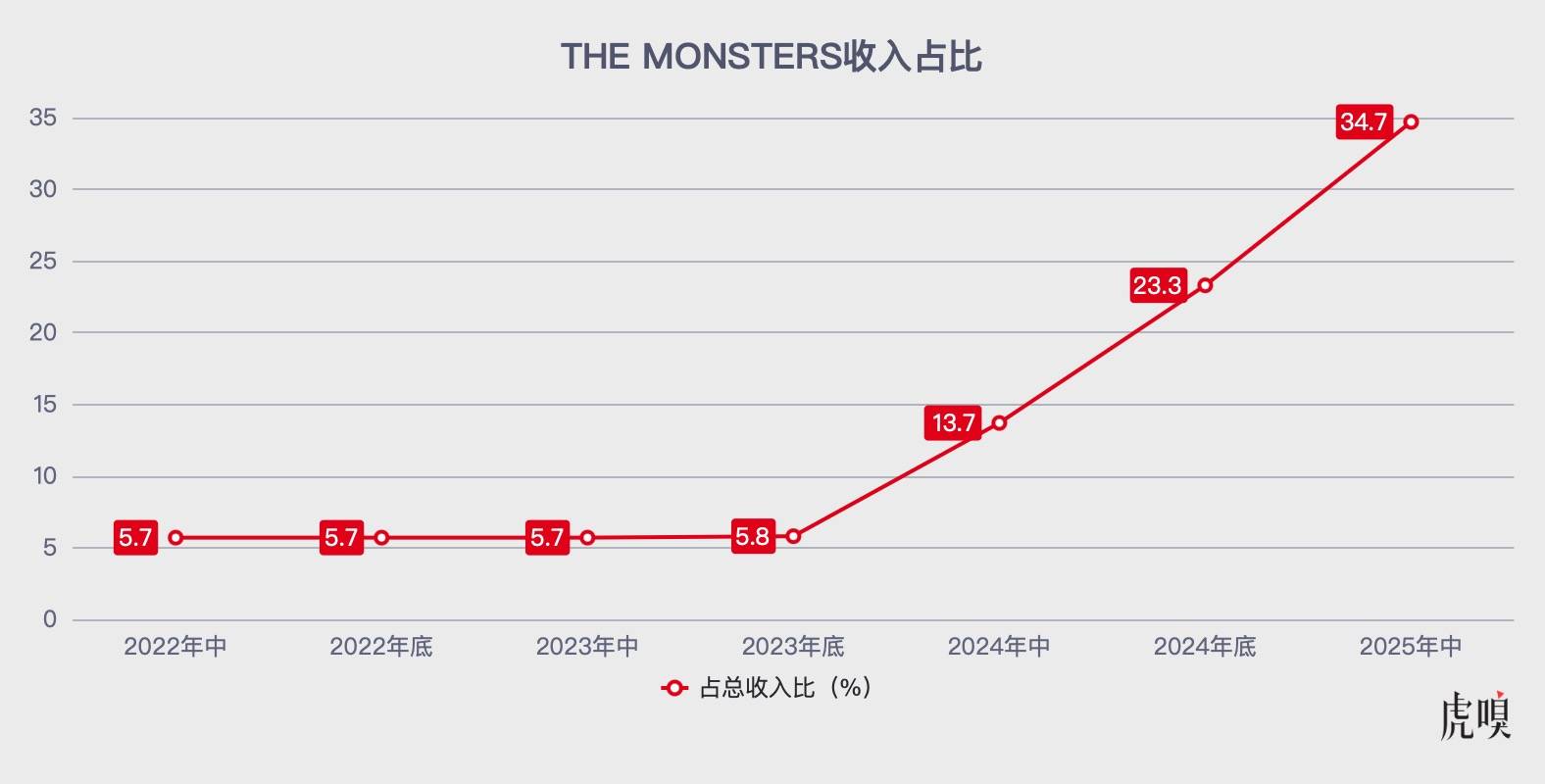
Core Viewpoint - The article discusses the rapid growth and production challenges faced by Pop Mart, particularly focusing on the LABUBU plush toy line, which has become a significant revenue driver for the company. The demand for LABUBU has surged, leading to a need for supply chain upgrades and increased production capacity to meet market needs [4][5][10]. Production Capacity and Demand - In August 2025, Pop Mart's monthly production capacity for plush products exceeded 30 million units, representing a more than 1000% increase compared to March 2025 [5]. - The production line for LABUBU toys is highly automated, with a daily capacity of 100,000 units expected by mid-2025, utilizing both advanced machinery and skilled labor [4][5]. Revenue Growth - In the first half of 2025, the revenue from THE MONSTERS, which includes LABUBU, reached 4.81 billion yuan, marking a 668% year-on-year increase and contributing 34.7% to the company's total revenue [8][10]. Supply Chain Upgrades - The surge in demand for LABUBU has prompted Pop Mart to reorganize its supply chain, with over 30% of the supply chain team being new hires in 2024 [11]. - The company is pushing for automation upgrades in its partner factories to improve efficiency and increase production capacity [12][13]. Challenges in Supply Chain Management - The rapid increase in orders has led to challenges in maintaining production efficiency, with a significant reliance on manual labor for the plush components [19]. - The average reorder cycle for Pop Mart was previously 4-5 months, but has been reduced to 1-1.5 months due to the need for faster response to market demands [20][21]. Strategic Directions - Pop Mart is expanding its production bases both domestically and internationally, with plans for six major production bases, four in China and two overseas [13]. - The company is focusing on enhancing cross-departmental collaboration and leveraging technology to improve supply chain efficiency [24][25]. Future Outlook - Pop Mart's leadership emphasizes the importance of adapting to market changes and maintaining a flexible supply chain to handle sudden spikes in demand [22][28]. - The company is actively seeking new partnerships and production capabilities to ensure it can meet future demand for popular products like LABUBU [28].



LABUBU的泼天富贵,泡泡玛特的产能焦虑
Hu Xiu· 2025-08-28 20:58
Core Viewpoint - The article discusses the rapid production capacity expansion of Pop Mart, driven by the overwhelming demand for its LABUBU plush toys, highlighting the challenges and strategies in upgrading its supply chain to meet this demand [1][3][6]. Production Capacity Expansion - In mid-August, a factory in Dongguan, Guangdong, utilized a precision injection molding machine with a clamping force of 200 tons to produce LABUBU plush toys, achieving a daily production capacity of 100,000 units by mid-2025 [1]. - By August 2025, the monthly production capacity for plush products at Pop Mart is expected to exceed 30 million units, representing an increase of over 1000% compared to March 2025 [2]. Revenue Growth - The revenue for THE MONSTERS, which includes LABUBU, reached 4.81 billion yuan in the first half of 2025, marking a year-on-year growth of 668% and contributing 34.7% to the company's total revenue [3][6]. Supply Chain Challenges - The surge in demand for LABUBU has led to supply chain challenges, with many factories being redirected to produce LABUBU products, resulting in several weeks of stockouts in the market [6][7]. - The company faced difficulties in scaling production due to insufficient manpower, outdated equipment, and weak coordination between demand and production capacity [7]. Automation and Upgrades - Pop Mart is pushing for automation upgrades in its partner factories to enhance efficiency, particularly in packaging and quality control processes, aiming to increase production capacity by three to five times [8][15]. - The company has implemented a new supply chain management center to streamline operations across production, design, and logistics, improving the responsiveness to market demands [10][12]. Flexibility in Supply Chain - The return order cycle has been reduced from an average of 4-5 months in 2022 to 1-1.5 months in 2024, with some urgent cases achieving turnaround times of two to three weeks [13][15]. - Pop Mart is focusing on creating a "resilient supply chain" to better handle fluctuations in order volumes, emphasizing agility, adaptability, and alignment [15][17]. Future Production Plans - The company plans to establish six major production bases globally, with four in mainland China and two in Southeast Asia, to enhance its production capabilities [9]. - Pop Mart is actively seeking new partnerships and expanding its supply chain to ensure sufficient capacity for future hits like LABUBU [17][18].
九毛九(09922):点评报告:短期业绩承压,门店调改推动经营边际向好
Haitong Securities International· 2025-08-25 13:02
Investment Rating - The report maintains an "Outperform" rating for Jiumaojiu International Holdings [2][8] Core Views - The company's short-term performance is under pressure, but store adjustments are expected to drive marginal improvements in operations [1][8] - Revenue for 1H25 was RMB 2.75 billion, a decrease of 10.1% year-on-year, with net profit attributable to shareholders at RMB 60 million, down 16.0% year-on-year [3][13] - The company is focusing on optimizing its store model and has closed underperforming locations while concentrating resources on core restaurants [5][6] Financial Summary - Revenue projections for 2025-2027 are RMB 6.09 billion, RMB 6.52 billion, and RMB 7.11 billion, representing year-on-year growth of 0.2%, 7.1%, and 9.1% respectively [8][14] - Net profit attributable to shareholders is expected to be RMB 140 million, RMB 230 million, and RMB 310 million for the same period, with net profit margins of 2.3%, 3.5%, and 4.4% respectively [8][14] - The company’s diluted earnings per share are projected to increase from RMB 0.04 in 2025 to RMB 0.22 in 2027 [10][12] Operational Insights - The company has reduced its total number of restaurants to 729, a net decrease of 42 locations year-on-year, focusing on quality over quantity [5][6] - The average customer spending has increased slightly, with Taier at RMB 73 and Jiumaojiu at RMB 57, while the turnover rate has decreased for most brands [5][6] - The gross profit margin is expected to remain stable around 64.7% for the next few years [10][12]
2025咖啡预言:下沉市场、银发经济与可持续供应链的终极战场
Sou Hu Cai Jing· 2025-08-23 16:51
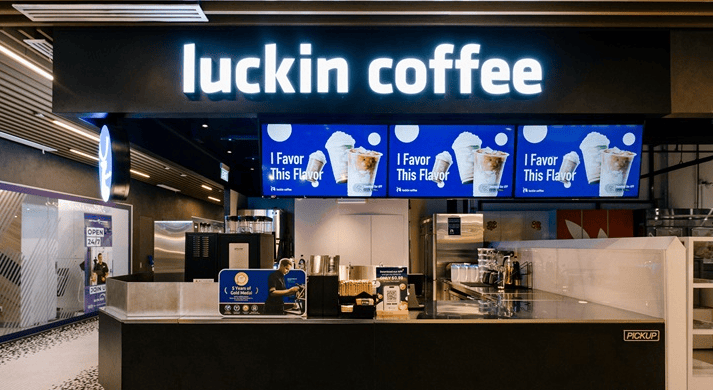
Core Viewpoint - The Chinese coffee market is experiencing unprecedented rapid growth and profound transformation, with significant competition between international giants and local brands [4][5]. Market Overview - The Chinese chain coffee market is projected to exceed 100 billion RMB by 2025, with a compound annual growth rate (CAGR) of over 15% [5]. - As of the first half of 2025, there are 66,568 stores from 27 major chain coffee brands, marking a net increase of 11,841 stores, a growth of 21.64% compared to the end of 2024 [5]. Competitive Landscape - Starbucks leads the market with over 7,750 stores, reporting an 8% year-on-year revenue growth to $790 million (approximately 5.67 billion RMB) in Q3 2025 [6]. - Local brands like Luckin Coffee are gaining market share, with a 47.1% year-on-year revenue increase to 12.36 billion RMB in Q2 2025, and a net profit of 1.75 billion RMB [8]. - The market is characterized by a dual-track competition: international brands focus on the high-end market while local brands adopt differentiated strategies for rapid expansion [5][11]. Brand Performance - Luckin Coffee has surpassed 26,000 stores, capturing a 35% market share, while Kudi Coffee has 15,000 stores, growing at a rate of 50% [9][11]. - The pricing strategy varies significantly, with Luckin and Kudi targeting the 10-20 RMB range, Starbucks positioned above 30 RMB, and Lucky Coffee focusing on a low price of 6 RMB [11]. Regional Differences - The coffee market shows significant regional disparities, with first-tier cities nearing saturation and lower-tier cities becoming the new battleground for brands [12][14]. - First-tier cities are dominated by brands like Starbucks and Manner, while new first-tier and second-tier cities are seeing rapid expansion from brands like Luckin and Kudi [12][14]. Innovation and Technology - Digitalization and new technology applications are becoming industry standards, with Luckin leveraging big data for consumer insights and operational efficiency [16][26]. - The integration of AI technologies, such as smart ordering systems and facial recognition payments, is enhancing operational efficiency and user experience [16][26]. Product Trends - There is a growing demand for health-oriented and functional products, with brands introducing low-sugar and plant-based options to meet consumer preferences [24][25]. - The trend of "coffee+" is emerging, where coffee brands are diversifying their offerings to include tea and other beverages, creating a more comprehensive consumer experience [18][28]. Future Outlook - The coffee industry is expected to transition from rapid expansion to a more mature phase, with sustainable practices becoming increasingly important [30]. - The market may see consolidation as larger brands leverage their scale and capital to acquire smaller players, leading to a stable competitive landscape [30].


一鸣食品2025年半年报:营收净利双增 产品创新与供应链升级筑牢增长根基
Zheng Quan Shi Bao Wang· 2025-08-18 14:11
Core Insights - The company reported a revenue of 1.401 billion yuan for the first half of 2025, representing a year-on-year growth of 2.12%, while net profit attributable to shareholders reached 32.2172 million yuan, up 21.73%, outperforming industry averages [1] - The company focuses on a "fresh and healthy" core positioning, enhancing product development, channel optimization, and supply chain efficiency [1] Business Layout - The company has developed a multi-dimensional product and service system targeting consumption scenarios throughout the day, including breakfast, lunch, and afternoon tea [1] - Membership operations have improved through initiatives like "Black Gold Membership Rights Upgrade" and "Full Touchpoint Customer Standard Optimization," leading to increased core member ratios and consumption frequency [1] - The lunch segment continues to leverage the "Thick Pizza" strategy, while the afternoon tea and office scenes have introduced "Yicheng Coffee" to fill consumption gaps [1] R&D Investment - R&D expenses reached 26.5817 million yuan, a year-on-year increase of 32.29%, focusing on dairy cattle breeding, functional dairy products, and healthy baking [2] - The dairy segment launched the "Yiming A2 Planet Cup Milk," targeting the high-end market, while functional products include the "Jianqing" series of probiotics and optimized children's yogurt formulas [2] - The baking segment emphasizes "clean labels" and health, advancing technologies for rice flour substitution and low-GI, low-sugar products [2] Supply Chain and Logistics - The company has enhanced the automation level of its production bases in Pingyang, Pinghu, and Changzhou, with significant investments in smart production systems [2] - The cold chain logistics system has shown effectiveness with the "Same Day Fresh" model, improving delivery times by 6-12 hours [2] Store Operations - As of the end of June, the company operated 1,864 "Yiming Fresh Milk Bar" stores, including 466 direct-operated and 1,398 franchise stores, with a net decrease of 77 franchise stores year-on-year [3] - The company employs a layered strategy for market expansion, focusing on upgrading existing stores in mature markets and expanding into new markets like Suzhou and Nanchang [3] - Plans for the second half of the year include opening 50 new stores, launching new products, and enhancing digital transformation with AI site selection systems and smart POS terminals [3]

和府捞面上半年营收利润均创新高,背后逻辑竟是“一升再升”?
Sou Hu Cai Jing· 2025-08-07 07:56
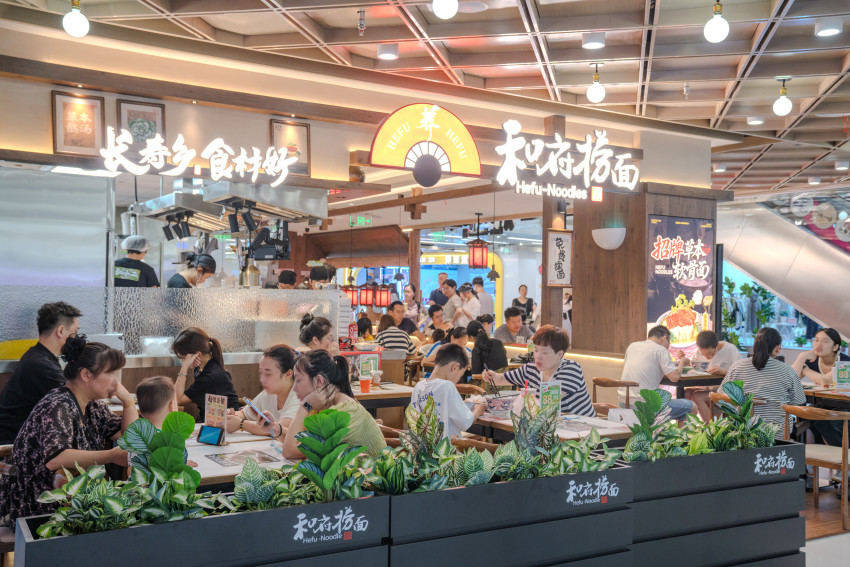
Core Insights - The restaurant industry is facing intensified competition, with per capita consumption declining to 39.8 yuan in 2024, a 6.6% year-on-year decrease [1] - The proportion of consumers increasing their dining expenditure dropped from 50.0% in 2023 to 31.3% in 2024 [1] - Some businesses are sacrificing food quality and service to engage in price wars, leading to a detrimental cycle for consumer interests [1] Company Performance - Hefo Noodle achieved nearly 1.3 billion yuan in revenue in the first half of 2025, marking a historical high in both revenue and profit over the past five years, with membership surpassing 37 million [1] - The brand successfully entered the mainstream price range of 25-29 yuan, challenging the perception that high-end equates to high prices [3] - Hefo Noodle's product innovation and high-quality ingredients have garnered market recognition, with popular items like the black cabbage braised meat rice being labeled as "the greatest single product" by consumers [3] Supply Chain and Pricing Strategy - Hefo Noodle's competitive edge stems from its unique supply chain model, which was established before opening stores, allowing for cost reduction and efficiency [6] - The brand has maintained high quality while continuously exploring organic and premium ingredients, launching new products that appeal to consumers [6] - Recent price adjustments for the beef soup noodle series brought prices below 30 yuan, enhancing its competitive position in the market [4] Consumer Trust and Brand Reputation - Hefo Noodle's transparent supply chain practices, including live-streaming of kitchen processes, have built consumer trust, with 850,000 viewers engaging in a recent live event [6] - The brand's commitment to quality and service has resulted in a high average rating of approximately 98% on platforms like Dazhong Dianping, an increase of about two percentage points from the previous year [7] - Hefo Noodle has been recognized as the top brand in the "Top Ten Noodle Shops" for three consecutive years by Hongcan Network, reflecting its strong industry reputation [7]
销售额135.85亿元 胖东来业绩来了!A股学徒业绩表现不一
Zhong Guo Ji Jin Bao· 2025-08-05 00:28
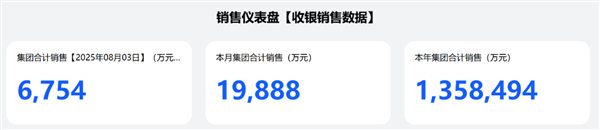
Core Insights - The retail company Pang Donglai reported a cumulative sales figure of 13.585 billion yuan as of August 3, 2023, with a single-day sales of 67.54 million yuan on that date [1] - The company has achieved 68% of its annual sales target for 2024, which is set at 16.964 billion yuan, indicating a strong likelihood of surpassing this target in 2025 [2][3] Sales Performance - As of August 3, 2023, Pang Donglai's sales distribution shows that supermarkets account for the largest share, with sales reaching 7.411 billion yuan, representing approximately 55% of total sales [3] - The top three stores by sales are the Times Square store (3.470 billion yuan), the Big Fat store (1.937 billion yuan), and the Angel City store (1.930 billion yuan) [5] Market Position and Competition - Pang Donglai remains a regional player, with all its stores located in Henan province, specifically in Xuchang and Xinxiang, totaling 14 stores [5] - The success of Pang Donglai has attracted attention from traditional supermarkets in China, including listed companies like Yonghui Supermarket and Zhongbai Group, which are attempting to learn from its business model [6] Industry Challenges - In contrast to Pang Donglai's growth, other A-share listed supermarkets are experiencing mixed performance, with some facing significant losses [7][8] - Yonghui Supermarket and Zhongbai Group both forecasted losses exceeding 200 million yuan for the first half of 2025, highlighting the challenges faced by traditional retailers [8] - The transformation efforts of these companies, such as store renovations and supply chain upgrades, are ongoing but have resulted in short-term financial impacts [10]
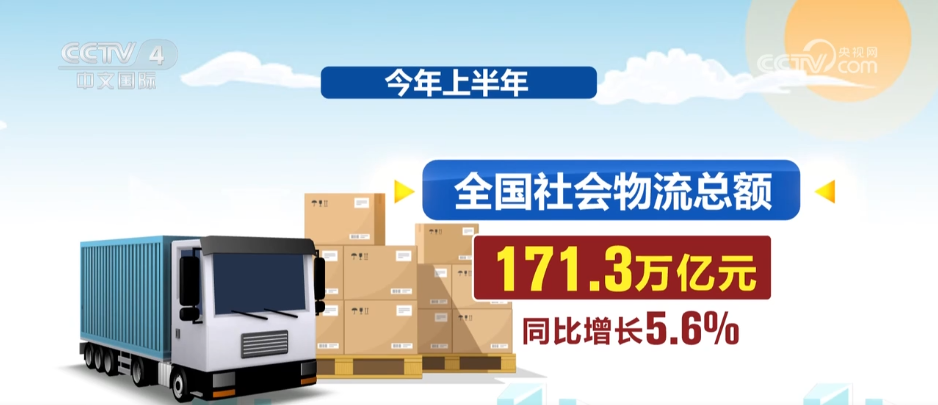
“物畅其流”加力支撑经济增长 “流动中国”彰显澎湃活力
Yang Shi Wang· 2025-07-29 07:00
Core Viewpoint - The logistics industry in China has shown stable growth in the first half of the year, with a total social logistics volume exceeding 171.3 trillion yuan, reflecting a year-on-year growth of 5.6%, which is 0.3 percentage points higher than the GDP growth rate [3][5]. Logistics Performance - The total social logistics volume reached 171.3 trillion yuan in the first half of the year, with a year-on-year increase of 5.6%, indicating strong support for economic development [3][5]. - The logistics demand continues to play a significant role in supporting the stable growth of the national economy [3]. Sector Analysis - Industrial product logistics saw a year-on-year growth of 5.8%, contributing 85% to the total social logistics volume growth, with emerging industries driving strong demand [5]. - The logistics volume for consumer goods increased by 6.1%, driven by active consumer markets and specific sectors such as electronics and tourism [5]. Revenue and Cost Efficiency - The total revenue of the logistics industry was 6.9 trillion yuan, reflecting a year-on-year growth of 5.0%, indicating a generally favorable economic climate in the logistics sector [7]. - The total logistics cost was 9.2 trillion yuan, with a ratio to GDP of 14.0%, showing a steady decline in logistics costs relative to GDP [7]. Technological Advancements - The logistics sector is leveraging digital technologies to enhance supply chain efficiency, with a 26.0% year-on-year increase in supply chain contract orders for large-scale logistics enterprises [8]. - Integrated logistics business revenue grew by 16.0%, supported by advancements in automation and smart technologies [8].
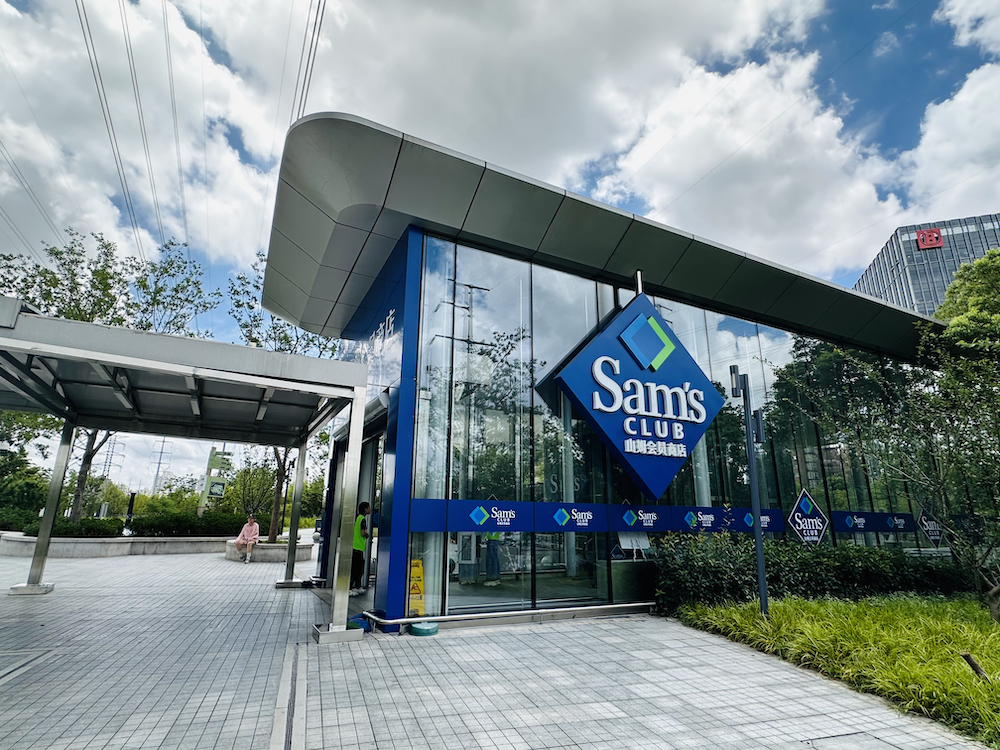
下架风波背后,“山姆们”的供应链升级大战|乐言商业
Di Yi Cai Jing· 2025-07-22 10:19
Core Insights - The article discusses the challenges faced by Sam's Club in maintaining its unique product offerings amidst increasing competition in the membership store sector [1][3][6] - It highlights the need for Sam's Club to enhance its supply chain capabilities and product differentiation to attract and retain customers [4][6][7] Group 1: Product Differentiation - Sam's Club has faced backlash for offering mainstream products that can be found in regular supermarkets, leading to customer dissatisfaction and product removals [1][3] - Historically, about 70% of Sam's Club's products were differentiated, appealing to consumers seeking unique and high-value items [3][4] - The increasing competition from other retailers has led to a dilution of product uniqueness, as many competitors replicate successful items from Sam's Club [6][7] Group 2: Supply Chain and Operational Efficiency - Membership stores like Sam's Club and Costco benefit from a streamlined SKU count, maintaining around 4,000 SKUs, which allows for better management and higher sales efficiency compared to traditional supermarkets [4] - The ability to innovate and source unique products is critical for membership stores, as those with weaker supply chains struggle to compete effectively [3][4] Group 3: Market Dynamics and Competition - The rise of membership stores has been fueled by consumer demand for unique and cost-effective products, especially as traditional supermarkets and e-commerce platforms have become more homogenized [3][6] - The competitive landscape has intensified, with various brands entering the membership store space, leading to a battle for supply chain dominance [6][7] - Sam's Club must adapt to these market changes by accelerating product iteration and enhancing online sales capabilities to capture a broader customer base [7]