
供应链韧性

Search documents
紫光国微出资设立锐视特微电子 拓展集成电路设计制造领域
Ju Chao Zi Xun· 2025-12-10 09:58
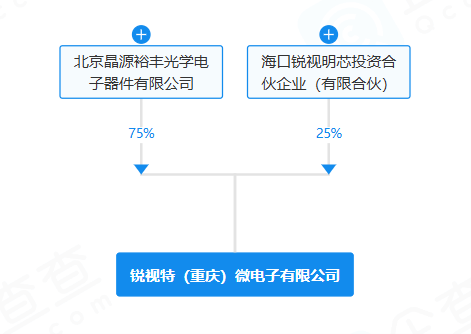
Group 1 - The core viewpoint of the news is that Unisoc's subsidiary, Beijing Jingyuan Yufeng Optical Electronic Devices Co., Ltd., has established a new company, Ruishi Te (Chongqing) Microelectronics Co., Ltd., to enter the integrated circuit chip manufacturing and design business [1][3] - Ruishi Te Microelectronics has a registered capital of 40 million yuan and its business scope includes integrated circuit chip manufacturing, design, and semiconductor discrete device manufacturing [3] - Unisoc's main business focuses on integrated circuit chips and products, covering security chips, special integrated circuits, memory chips, and FPGAs, with applications in information security, communication, industrial control, and automotive electronics [3] Group 2 - The establishment of Ruishi Te Microelectronics is seen as an extension of Unisoc's efforts in chip manufacturing and design collaboration, aligning with national policies on the integrated circuit industry [3] - The demand for high-performance integrated circuit design and manufacturing capabilities is increasing domestically due to the growth in AI computing power, automotive electronics, and IoT terminals [3] - The establishment of specialized subsidiaries by chip companies is becoming a key strategy to enhance supply chain resilience and strengthen technical and customer collaboration within regional industrial clusters [3]


马士基高管建言上海国际航运中心建设:打造“航运数据枢纽”“航运科技硅谷”
Xin Hua Cai Jing· 2025-12-07 14:11
韩岩滨认为,在此背景下,上海在巩固规模优势的同时,应向效率与创新双轮驱动转型,从政策对标迈 向制度创新引领,以更加开放、包容、国际化、市场化的制度环境构建核心竞争力,可以从五方面行 动:一是强化政策创新与网络效应。 通过扩大沿海捎带政策试点和应用范围,形成高效稳定的制度网 络,释放政策红利,提升国际服务竞争力,支持区域性全渠道履约中心、国际物流中心和新兴业务发 展,打造更加灵活、开放、市场化的制度环境。 二是推动数智化升级,打造全球航运数据枢纽。 在现有绿色港口走廊基础上,探索建设绿色数字走 廊,加强与洛杉矶、鹿特丹、新加坡等港口的数据合作,建立统一数据标准,实现船期优化、航速降 低、码头效率提升及班轮碳排放减少,推动全球航运绿色发展。 新华财经上海12月7日电(葛佳明)12月7日,上海加快"五个中心"建设研讨会在沪举行,来自中外政产 学研各环节的资深专家共商上海经济社会高质量发展面临的新机遇和新挑战,为"五个中心"形成合力建 言献策。 马士基码头公司中国区总裁韩岩滨发表了题为"上海国际航运中心的发展机遇"的演讲,围绕全球航运格 局变化、上海国际航运中心建设机遇及后续行动建议进行了阐述。在韩岩滨看来,上海具备 ...
公司运营管理的五大战略!
Sou Hu Cai Jing· 2025-12-07 04:29
Core Objectives of Operations Management - The primary goal of operations management is to deliver the right quality of products or services to customers at the right time and cost while continuously optimizing processes [1] Core Modules of Operations Management - Strategic and goal setting involves translating the company's vision and mission into executable operational strategies such as cost leadership and differentiation [3] - Process management and optimization includes designing core business processes aligned with strategy, establishing standard operating procedures, and applying tools like Lean and Six Sigma for continuous improvement [3] - Resource management focuses on optimizing human capital, financial resources, physical assets, and information resources to enhance operational efficiency [3] - Quality and customer orientation emphasize comprehensive quality management and customer relationship management to improve satisfaction and loyalty [3] Operational Focus by Company Development Stage - Startups prioritize agility and survival, focusing on validating business models and building core teams [5] - Growth-stage companies emphasize scaling up by establishing standardized processes and introducing basic management systems [5] - Mature companies concentrate on efficiency and innovation, optimizing cost structures and driving organizational change [5] Current Trends in Operations Management - Digital transformation leverages big data, AI, and IoT for smart predictions and automated decision-making [7] - Agility and flexibility are emphasized to enable quick responses to market changes through small teams and cross-department collaboration [7] - Supply chain resilience shifts focus from efficiency to safety and robustness, promoting diversified supply chains [7] - Sustainable development integrates ESG principles into operations, focusing on green production and carbon footprint management [7] - A human-centered approach enhances employee experience and fosters a learning organization [7] Recommendations for Managers - A systems thinking approach is essential, recognizing the interconnections between processes [9] - Data-driven decision-making is preferred over intuition, necessitating robust data collection and analysis capabilities [9] - Customer-centric optimization of internal processes should aim to create more value for customers [9] - Investing in talent is crucial, as effective processes require skilled execution and optimization [9] - Cultivating a culture of continuous improvement encourages teams to adopt problem-solving and process optimization as habitual practices [9]

中信博蔡浩:中国光伏今天的全球竞争力,依托于产业链的集体崛起
Zhong Guo Jing Ying Bao· 2025-12-04 11:03
Core Viewpoint - The company emphasizes the importance of a global strategy that goes beyond merely exporting products, advocating for deeper integration into local markets and building resilient global supply chains [1][4][11]. Group 1: Global Strategy and Market Integration - The company’s chairman, Cai Hao, articulates a "go global, dig deep locally" strategy, focusing on not just exporting products but also establishing local operations and integrating into local economies [1][5]. - The company has established three overseas regional headquarters, four service centers, and 17 branches, creating an efficient service network centered around customer needs [3]. - The company has achieved significant milestones, including securing multiple GW-level project orders globally and shipping over 103 GW across more than 40 countries [3]. Group 2: Competitive Positioning - The company has risen to the second position in the global tracking bracket market as per Wood Mackenzie’s report for 2024, marking its entry into the top three globally [3]. - The company’s competitive edge is attributed to its comprehensive approach, which includes not only selling products but also building networks and establishing local production bases [4][6]. Group 3: Risk Management and Resilience - The company has implemented a dynamic market insight and risk assessment mechanism, updating its "global risk map" quarterly to monitor political trade risks, supply chain risks, and operational compliance risks [11][12]. - The company adopts a strategy of integrating local suppliers into its supply chain, enhancing resilience by not solely relying on Chinese manufacturing [12]. - The company aims to bind its interests with local economic development, thereby increasing its operational resilience against geopolitical and market fluctuations [12]. Group 4: Collaboration and Industry Ecosystem - The company collaborates with other domestic firms in the solar industry, leveraging collective strength to enhance competitiveness in international markets [8]. - The company’s role as a "chain leader" involves setting standards and improving local suppliers' capabilities, thereby fostering a competitive local supply chain ecosystem [7][8]. Group 5: Challenges and Support Needs - The company faces challenges such as high funding pressure, foreign exchange risks, and difficulties in intellectual property protection when expanding overseas [12]. - The company advocates for greater support for outbound enterprises, including long-term low-cost financing tools and flexible foreign exchange risk management products [12].


宣泰医药方云:从产品“出海”到能力输出,突破全球市场两道“硬门槛”
Zhong Guo Jing Ying Bao· 2025-12-04 10:56
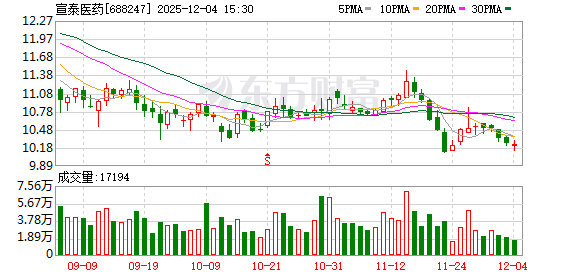
"过去中国药企'出海',多凭借成本优势参与低端市场竞争。现在,国际市场更看重企业是否具备国际 化质量体系、持续交付能力和全流程服务能力。质量体系和合规能力是进入全球市场的'硬门槛'。"宣 泰医药(688247.SH)创始人、董事方云日前做客《沪市汇·硬科硬客》第二季第6期节目"供应链'再出 海'"时如是说。 方云表示,在全球化局部加速与国际竞争日趋激烈的当下,供应链已从企业运营的支撑环节升级为核心 竞争力的关键载体。对于受到严格监管的医药行业而言,供应链的稳定性、合规性与全球化适配能力, 直接关系到患者用药可及性与企业生存的命脉。 作为科创板上市的医药企业,宣泰医药成立之初便确定了国际化发展路径,按国际标准建设研发与生产 体系,并通过多方面设计和不断完善,构建起极具强韧性的供应链,成为中国医药产业供应链"再出 海"的鲜活样本。 宣泰医药创始人、董事方云 战略迭代:从产品"出海"到能力输出的本质跨越 中国企业的"出海"历程,正经历着从规模扩张到价值深耕的深刻变革。 在方云看来,对制药体系而言,"走出去"是一个必需的环节。过去,医药行业"出海"聚焦产品出口。而 当前,医药行业"再出海"早已完成了两大核心转变,即从 ...

关税博弈常态化:解析美国贸易政策对A股产业链影响
Guo Ji Jin Rong Bao· 2025-12-04 06:05
Core Insights - The article discusses the recent phase agreement between China and the U.S. to "pause" certain tariffs, indicating a temporary ceasefire in trade tensions, but warns against viewing this as a resolution to the broader U.S.-China relationship [1] - It highlights a shift in U.S. trade policy from merely correcting trade deficits to a more complex strategy aimed at long-term containment of China's industrial upgrades, influenced by domestic inflation and manufacturing costs [1][4] - The article emphasizes the need for A-share investors to adapt to a new valuation logic that prioritizes "safety and resilience" over "efficiency and growth" in the context of ongoing tariff negotiations [1][8] Macro Mechanism - The U.S. trade policy has evolved into a bipartisan consensus characterized by a systematic approach to competition, moving from a focus on trade deficits to a strategy aimed at containing China's industrial advancements [3] - The recent tariff proposals, including a 34% punitive tariff on China, were initially perceived as a threat to globalization, but the subsequent pause indicates a recognition of the high costs associated with unilateral tariffs [2][4] Industry Impact - The normalization of tariff negotiations is expected to fundamentally reshape the valuation logic of A-share industries, with a shift towards valuing companies based on their ability to withstand external shocks and maintain supply chain resilience [8] - The technology sector is experiencing a revaluation towards "self-sufficiency," as companies seek to mitigate risks associated with U.S. trade policies by increasing domestic production capabilities [9] - Advanced manufacturing is transitioning from a "product export" model to a "capacity export" model, with companies establishing overseas production bases to navigate tariff barriers and geopolitical risks [10] Micro Strategies - Companies are shifting from an "efficiency-first" approach to a "resilience-first" strategy, necessitating increased inventory and diversified supply chains to mitigate risks from trade tensions [13] - There is a growing emphasis on "hardcore" innovation and reducing reliance on U.S. technology, with firms investing in foundational research and development to enhance their competitive edge [14] Long-term Investment Strategy - The article suggests that investors should focus on three categories of assets that are likely to thrive amid ongoing trade tensions: technology leaders achieving domestic breakthroughs, manufacturers with global production capabilities, and consumer brands benefiting from domestic market growth [16]
告别马六甲,中欧+北极航线,怎样让中国突破海上霸权?
3 6 Ke· 2025-12-03 08:40
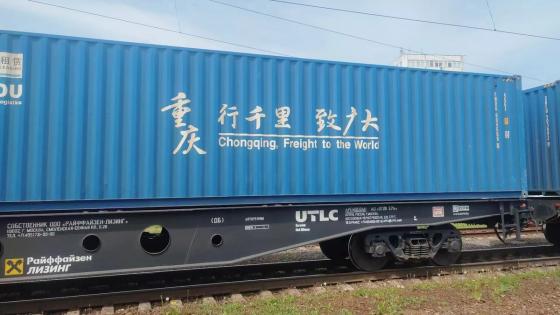
Core Viewpoint - The sudden closure of all border crossings between Poland and Belarus has significant implications for China's foreign trade, particularly affecting the Central European Railway Express, which is crucial for transporting goods from China to Europe [1][3]. Group 1: Impact on Trade and Logistics - The closure of the Malaszewicze port, which handles nearly 90% of the Central European Railway freight volume, has resulted in approximately 300 freight trains being stranded in Belarus, causing a direct impact on high-value goods transportation and a 15% increase in logistics costs [3][5]. - A new shipping route via the Arctic Northeast Passage has emerged, exemplified by the "Istanbul Bridge" container ship, which successfully transported goods worth $200 million from Ningbo to the UK in 20 days, significantly faster than traditional routes [5][9]. - The Central European Railway Express has shown remarkable efficiency, with a punctuality rate of 99.8% and a transit time of 15-20 days, compared to the unreliable sea freight which has seen delays and increased costs [7][9]. Group 2: Economic and Strategic Implications - The closure of the Polish border serves as a reminder of the vulnerability of supply chains reliant on a single route, highlighting the importance of the Central European Railway in mitigating risks associated with maritime transport [9][11]. - The Central European Railway and Arctic shipping routes provide China with strategic autonomy in logistics, allowing it to avoid reliance on traditional maritime routes controlled by foreign shipping giants [11][15]. - The ability to control logistics routes enhances China's bargaining power in global trade, as evidenced by the impact of the Central European Railway on freight rates during geopolitical tensions [12][14]. Group 3: Future Prospects and Global Trade Dynamics - The development of the Arctic shipping route and the Central European Railway is expected to reshape global trade dynamics, allowing China to reduce dependency on traditional maritime routes and enhance its role in global supply chains [21][22]. - As climate change continues to open the Arctic for longer shipping seasons, the strategic value of these routes will increase, potentially altering the balance of power in global trade [21][26]. - The integration of logistics routes with local economies through infrastructure investments and shared benefits positions China as a key player in establishing new trade networks, contrasting with historical precedents of imperialistic control [27][28].
全球铝土矿供应链进入重塑期
Qi Huo Ri Bao· 2025-12-02 01:57
Core Insights - The global bauxite supply chain is undergoing a structural transformation driven by resource nationalism, high foreign dependency of China, and oversupply in downstream alumina [1][2][3] Group A: Structural Changes in Global Supply and Demand - The core contradiction in the market has shifted from short-term supply-demand balance to a supply chain resilience crisis influenced by geopolitical and industrial policies [2] - Guinea, as the largest and fastest-growing supply source, has seen a 38.2% increase in bauxite imports to China from January to October 2025, accounting for over 70% of total imports [3] - Guinea's government is transitioning from encouraging mineral exports to enforcing local processing, which will fundamentally alter global bauxite trade flows and pricing mechanisms [3][4] Group B: Challenges in Traditional Supply Sources - Australia faces dual challenges of aging infrastructure and rising energy costs, impacting its cost competitiveness in the bauxite market [4] - Emerging supply countries like Indonesia and Tanzania are hindered by fluctuating ore grades, inadequate infrastructure, and regulatory instability, making them unreliable alternatives to Guinea [4] Group C: Demand Dynamics in China - China's bauxite consumption reached 222 million tons from January to October 2025, with imports making up 77.23% of this demand, indicating a heavy reliance on foreign sources [4] - The structural imbalance in China's aluminum industry is evident, with planned alumina capacity additions significantly outpacing those for electrolytic aluminum, leading to long-term oversupply in the alumina market [5] Group D: Inventory Trends and Implications - As of November 2025, China's port inventory of bauxite exceeded 22 million tons, a year-on-year increase of approximately 50.7%, reflecting a supply surplus and weak demand [6][7] - High inventory levels serve as both a buffer against supply shocks and a warning signal of underlying demand issues, impacting financial costs for companies [7] Group E: Long-term Cost Structure Changes - Resource nationalism is reshaping the global mineral resource value distribution, leading to an upward shift in long-term cost structures for bauxite [8][9] - New costs, including localization premiums and ESG compliance costs, are being integrated into the traditional mining cost structure, affecting pricing dynamics [8][9] Group F: China's Strategic Responses - China is focusing on resource security through domestic resource development and increasing recycling efforts, aiming for a 3%-5% growth in domestic bauxite resources by 2027 [12] - The strategy also includes diversifying import sources and investing in alumina production facilities in resource-rich countries like Guinea, which may shift dependency from bauxite to alumina [12][13] Group G: Future Market Dynamics - The competitive landscape will shift from supply assurance to cost competition, with companies possessing stable, low-cost bauxite resources or integrated supply chains gaining a competitive edge [13]
又一个半导体大厂,开建
半导体芯闻· 2025-12-01 10:29
Core Viewpoint - Merck's new semiconductor materials plant in southern Taiwan, with an investment of €500 million ($579 million), has begun the qualification process before mass production of materials for AI chip manufacturing, expected to start in 2026 [1][2]. Group 1: Plant Details and Production Capacity - The new facility, located in Kaohsiung, Taiwan, spans approximately 150,000 square meters and will produce thin films, formulation materials, and specialty gases essential for advanced chip manufacturing [1]. - Once operational, the plant is projected to meet about 80% of the local demand for thin film materials and over 50% of the overall material needs [1]. - The production of advanced chips, such as 3nm and beyond, involves over 1,000 processing steps, increasing the demand for materials [2]. Group 2: Strategic Importance and Local Impact - Merck has adopted a localization strategy over the past six to seven years to better serve customers and enhance supply chain resilience [1]. - The new plant is expected to improve local self-sufficiency from over 50% and play a significant role in meeting demand in the Asia-Pacific region [2]. - The facility will create approximately 400 jobs as it scales up production [3]. Group 3: Collaboration and Quality Assurance - Collaboration with customers in their factories is crucial for chip material manufacturers due to the importance of material integration and customization in chip production [2]. - Strict validation processes are required before the chemicals and materials produced can be widely used in advanced semiconductor production lines [2].

2025年迪拜五大行业展览会开幕
Shang Wu Bu Wang Zhan· 2025-11-27 02:38
Core Viewpoint - The 2025 BIG5 Global exhibition in Dubai focuses on supply chain resilience, technological advancements, sustainable construction, and talent empowerment [1] Group 1: Exhibition Highlights - The exhibition features a sustainable China Pavilion built from recyclable materials, showcasing green and technological innovations [1] - The event aims to enhance global communication in the construction and engineering sectors, promoting accelerated development towards low-carbon and digitalization [1]