困境反转

Search documents
A股:大盘重回4000点,大消费爆发,释放了重要信号!周二A股可能这么走
Sou Hu Cai Jing· 2025-11-10 17:54
Core Viewpoint - The market is experiencing a style shift, with funds moving from high-valued technology sectors to lower-valued sectors such as energy, cyclical, dividend, and consumer goods, indicating a potential recovery opportunity in traditional sectors [3][4][10]. Market Performance - As of Monday's close, the Shanghai Composite Index stood at 4018.60 points, up 0.53%, while the Shenzhen Component Index rose 0.18% to 13427.61 points, and the ChiNext Index fell 0.92% to 3178.83 points [1]. - The consumer sectors, including liquor, dairy, and food and beverage, led the market rally, with over 3300 stocks rising, contrasting with the previous week where technology stocks drove the index up [2]. Fund Reallocation - There has been a significant shift in fund allocation, with technology stocks experiencing high volatility and profit-taking, while lower-valued sectors such as energy, chemicals, and consumer goods are seeing increased investment [4][10]. - The consumer sector's performance is attributed to improved expectations following a surprising CPI data release, signaling a potential economic recovery [6][8]. Macro Data and Policy Support - The unexpected rise in October's CPI indicates a recovery in consumer spending, enhancing market sentiment towards consumer-related industries [6]. - Ongoing policies aimed at stabilizing growth and promoting consumption have positively influenced the consumer sector's outlook [8]. Valuation and Positioning - Traditional consumer sectors like liquor and food and beverage have been trading at low valuations, making them attractive for institutional investors as expectations improve [9]. - The current market dynamics suggest that the consumer sector may be entering a phase of orderly accumulation by funds, indicating a potential for valuation recovery [10]. Style Shift Signals - The breakthrough of the 4000-point mark is seen as a psychological and technical milestone, with the market shifting focus from technology to consumer sectors [11]. - Investors are advised to be cautious with high-valued technology stocks while exploring opportunities in lower-valued sectors that are experiencing a rotation [11]. Short-term Market Outlook - The market is expected to continue fluctuating around the 4000-point level, with consumer stocks likely to see some profit-taking after initial gains [10]. - The technology sector may face pressure due to a lack of sustained funding, while the rotation among sectors is anticipated to accelerate [11].


纺织服装行业周报:10月纺服出口承压,中美磋商利好有望修复出口链-20251110
Shenwan Hongyuan Securities· 2025-11-10 06:53
Investment Rating - The report maintains a positive outlook on the textile and apparel industry, with specific recommendations for companies such as Bosideng and Anta [2][8]. Core Insights - The textile and apparel sector outperformed the market, with the SW textile and apparel index rising by 0.8% from November 3 to November 7, 2025, surpassing the SW All A index by 0.2 percentage points [3]. - October textile and apparel exports faced pressure, with a year-on-year decline of 12.6%, but recent US-China trade negotiations may help restore the export chain [8][10]. - The report highlights the potential for growth in the outdoor apparel segment due to the upcoming winter season and the Milan Winter Olympics, recommending brands like Bosideng and focusing on the recovery of women's apparel [10][12]. Summary by Sections Industry Performance - The textile and apparel sector showed strong performance compared to the market, with the SW apparel home textile index increasing by 2.2% and the SW textile manufacturing index rising by 1.0% during the same period [3][4]. Recent Industry Data - Retail sales for clothing, shoes, and textiles totaled 1,061.3 billion yuan from January to September, reflecting a 3.1% year-on-year growth [28]. - In October, China's textile and apparel export value was $22.26 billion, down 12.6% year-on-year, with textile exports at $11.258 billion (down 9.0%) and clothing exports at $11.004 billion (down 16.0%) [35][36]. Market Trends - The report notes that the recent easing of tariffs by the US may positively impact the export chain, with a recommendation to focus on the sports manufacturing and non-woven fabric sectors [8][10]. - The outdoor apparel market is expected to benefit from increased brand investments in winter sports products, with specific mentions of Anta and Li Ning's new product launches [10][12]. Company Performance - The report reviews the third-quarter performance of companies like Dezhu Fashion, which showed a recovery in profits, with a focus on online and direct sales channels [13][14]. - The report emphasizes the strong brand power and profitability of companies in the mid-to-high-end women's apparel sector, maintaining a "buy" rating for companies like Dezhu Fashion and Geli Si [12][17]. Investment Recommendations - The report recommends investing in sports and outdoor brands such as Bosideng, Anta, and Li Ning, as well as discount retailers like Hailan Home and companies in personal care and home cleaning sectors [10][12].

策略观点:市场波动延续,保持定力对待-20251109
China Post Securities· 2025-11-09 13:45
Market Performance Review - The A-share market continues to experience volatility, with large-cap indices leading the gains. The Shanghai 50 index rose by 0.89%, and the CSI 300 index increased by 0.82%, while the STAR 50 index showed a slight increase of 0.01% after significant fluctuations throughout the week [3][12] - In terms of style, cyclical stocks maintained strong performance, while stability and financial styles shifted from decline to growth compared to the previous week. Consumer stocks were the only style index to decline this week [3][12] - Large-cap stocks significantly outperformed small-cap stocks, with the core asset indices, such as the Moutai index and the Ningbo combination, both experiencing declines of 0.98% and 1.27%, respectively [3][12] Industry Insights - The third-quarter reports indicate a reversal in the "anti-involution" theme, with industries such as power equipment (up 4.98%), coal (up 4.52%), oil and petrochemicals (up 4.47%), steel (up 4.39%), and basic chemicals (up 3.54%) leading the gains. Conversely, sectors like beauty care (-3.10%), computers (-2.54%), pharmaceuticals (-2.40%), automobiles (-1.24%), and food and beverages (-0.56%) performed poorly [4][13] - The market has recognized a general profit improvement in industries aligned with the "anti-involution" theme following the third-quarter reports, gaining broader market consensus [4][13] Future Outlook and Investment Strategy - The outlook for the market suggests continued volatility, with a dual vacuum period in policy and performance expected from November to December. The lack of significant movement in household deposits indicates a potential weakness in future capital support, limiting upward space for A-shares [5][30] - The investment strategy emphasizes maintaining a growth style, with a focus on sectors that meet the "dilemma reversal + high growth" composite pricing requirements, particularly in photovoltaic equipment. Additionally, sectors that have lagged since September and are positioned favorably in the "14th Five-Year Plan" are also recommended [5][30]
华米科技(NYSE:ZEPP)--被低估的中国科技出海明日之星
Ge Long Hui· 2025-11-07 09:03
Core Viewpoint - Huami Technology (NYSE: ZEPP) is identified as an undervalued emerging star in the Chinese tech sector, having undergone a turnaround from a significant decline in market value to a strong recovery, with a notable increase in revenue and stock price in 2025 [1]. Group 1: Company Transformation - The transformation of Huami Technology is primarily attributed to its focus on its own brand, Amazfit, which has become the sole revenue source since Q3 2025 [2]. - The company has successfully implemented a tiered product strategy, which has been crucial for its performance turnaround [2]. Group 2: Product Performance - The outdoor adventure product line has seen significant sales growth, aligning with the company's high-end strategy and meeting the increasing demand for reliable outdoor gear [3]. - The professional sports product line, exemplified by the newly launched Balance2, offers advanced tracking for various sports and features that cater to athletes' needs, enhancing its market appeal [4]. Group 3: Competitive Advantages - Huami Technology leverages its manufacturing capabilities and supply chain management, allowing it to offer high-quality products at lower prices compared to international competitors [7]. - The integration of advanced AI algorithms and personalized training suggestions through its software enhances user experience and product value [8]. Group 4: Brand Development - The company is actively working to strengthen its brand recognition by collaborating with professional athletes and engaging with emerging sports communities [9]. - Huami Technology has seen significant sales growth in the U.S. and EMEA regions, indicating a successful brand penetration strategy [10]. Group 5: Market Potential - Despite the challenges in competing with industry leaders like Garmin, Huami Technology has substantial growth potential, with a market cap of $400 million and the possibility of reaching a valuation ten times its current size [11].

兴业证券:明年哪些行业有望景气加速?哪些困境反转?
智通财经网· 2025-11-06 13:16
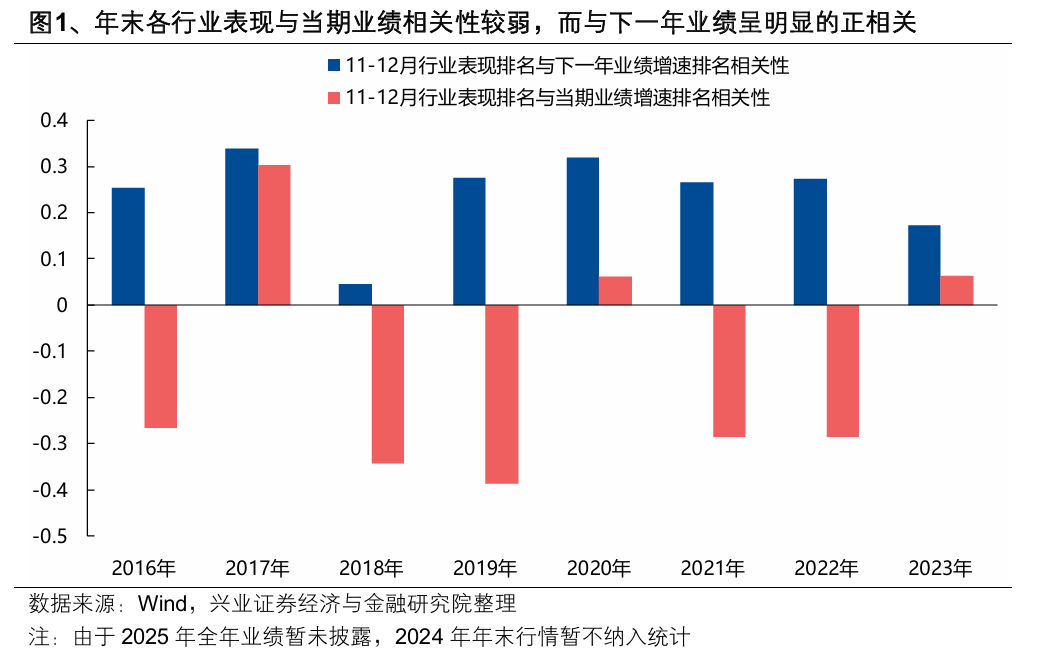
Core Viewpoint - The report from Industrial Securities indicates that as the year-end approaches, market participants are increasingly focused on next year's economic outlook, with current economic conditions having a diminished impact on stock prices. Historical analysis since 2016 shows a strong positive correlation between industry performance rankings in the year-end market and their earnings growth in the following year, while the correlation with current earnings growth is weak or even negative [1]. Group 1: High Prosperity Industries - High prosperity industries for the next year, expected to have a net profit growth rate of over 30%, include AI hardware (communication equipment, consumer electronics, semiconductors), new energy (batteries, wind power equipment), military industry (ground armaments), and IT services [4]. - Other high prosperity sectors include electronics (components, optical optoelectronics), downstream AI (gaming, software development), automotive (passenger and commercial vehicles), military (naval and aerospace equipment, military electronics), automation equipment, and photovoltaic equipment [4]. - Industries expected to see a net profit growth rate of 10%-30% with improving economic conditions include pharmaceuticals (chemical pharmaceuticals, medical devices, biological products), downstream AI (digital media, computer equipment), machinery (engineering machinery, specialized equipment, general equipment), and new energy (grid equipment, motors) [4]. Group 2: Cyclical Industries - Cyclical industries expected to have high prosperity next year, with a net profit growth rate of over 30%, include aviation airports, building materials (glass fiber, plastics, non-metallic materials), new metal materials, and agriculture (planting and breeding) [6]. - Other cyclical sectors anticipated to see high prosperity include energy metals, chemical fibers, rubber, retail, and leisure foods [7]. - Industries projected to achieve a net profit growth rate of 10%-30% with improving economic conditions include new consumption (beverages, dairy products, accessories, entertainment products, cosmetics, personal care products, small home appliances), service consumption (education, hotel catering, tourism), agriculture (feed), chemicals (chemical raw materials, chemical products), special steel, and renovation materials [7].

业绩之锚4:侧重更远期定价的三季报
China Post Securities· 2025-11-05 09:57
Group 1 - The report emphasizes that the "earnings surprise" strategy is not effective during the third quarter reports, as it has shown a failure risk similar to that of the mid-year reports since 2010 [3][25] - The third quarter reports provide limited incremental information, leading to a market focus on longer-term earnings growth expectations rather than immediate performance [4][51] - The proportion of companies exceeding earnings expectations in the third quarter of 2025 was 19.25%, a significant increase from the historical low of 12.27% in 2024, indicating a recovery in market sentiment towards future earnings [4][5] Group 2 - The report identifies that only a few sectors, such as non-bank financials, coal, banking, non-ferrous metals, and telecommunications, had a higher proportion of upward adjustments compared to downward adjustments in earnings expectations after the third quarter reports [5][26] - The report suggests constructing a stock portfolio based on "turnaround" and "high growth next year" strategies to capture excess returns from individual stocks in November and December [5][55] - The analysis indicates that the market tends to price in significant "turnaround" and high growth expectations for the following year after the third quarter reports, but this pricing tends to decline over time [51][52] Group 3 - The report highlights that different industries respond variably to earnings surprises in the third quarter, with non-bank financials, machinery, steel, agriculture, and construction materials showing significantly higher success rates compared to others [26][27] - The report discusses the phenomenon of "growth illusion" and non-linear pricing characteristics in the market, where companies with earnings surprises may not receive proportional price increases due to overly optimistic expectations [30][32] - The report concludes that while the "turnaround" strategy remains a potential avenue for excess returns, the third quarter's unique characteristics necessitate a more nuanced approach to identifying profitable opportunities [38][55]
亚马逊与OpenAI签署380亿美元算力大单,人工智能ETF(515980)盘中涨超1%,近5日累计“吸金”3.53亿元
Sou Hu Cai Jing· 2025-11-04 05:06
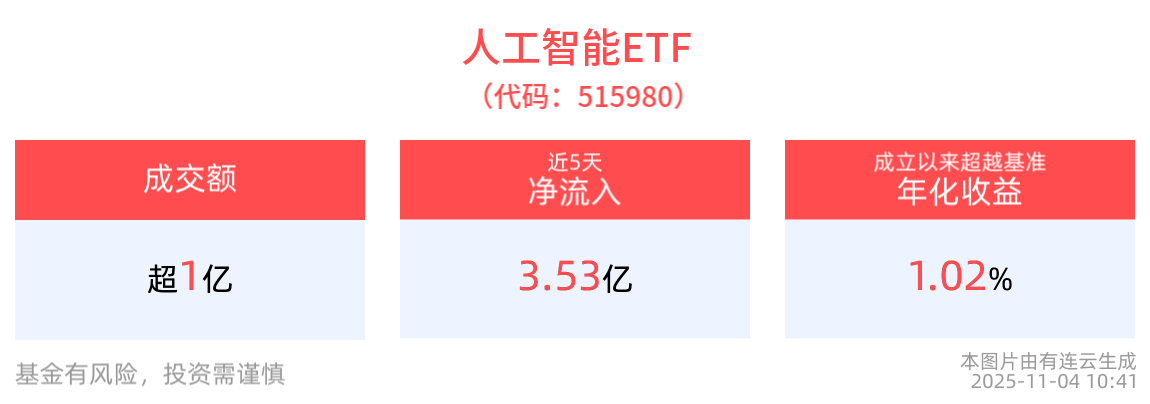
Group 1 - Amazon's cloud computing division, AWS, has signed a $38 billion agreement with OpenAI to provide computing capacity over seven years, including the supply of hundreds of thousands of NVIDIA GPUs [1] - The agreement aims to assist in generating responses and training next-generation models for ChatGPT [1] - Following the announcement, the CSI Artificial Intelligence Industry Index fell by 0.68%, with mixed performance among constituent stocks [1] Group 2 - The AI ETF (515980) recorded a turnover of 1.87% and a half-day trading volume of 150 million yuan, with a total size of 7.965 billion yuan [2] - Over the past five trading days, the AI ETF has seen net inflows on three days, totaling 353 million yuan [2] - The AI industry index reported a revenue growth rate of 26.23% and a profit growth rate of 74.75% in Q3, marking the highest values since 2019 [2] Group 3 - Market focus is shifting towards "turnaround" industries with average current performance but expected improvement next year, alongside cyclical industries benefiting from economic stimulus [3] - The AI industry is in a valuation digestion phase, providing a rare opportunity for long-term investors to accumulate positions since April [3] - The HuaFu AI ETF (515980) covers various aspects of the AI industry, tracking the only quarterly rebalancing AI index in the market [3]


医药生物行业11月月报暨2025三季报总结:Q3总结:环比改善延续,创新药行情有望重燃-20251103
ZHONGTAI SECURITIES· 2025-11-03 13:19
Investment Rating - The report maintains an "Overweight" rating for the pharmaceutical and biotechnology industry [1] Core Insights - The innovative drug market is expected to reignite, with a focus on bottoming out and potential recovery in the sector [5][9] - The report highlights a continuous improvement in Q3 performance, with expectations for further acceleration in 2026 [13][19] - The overall revenue of pharmaceutical companies decreased by 2.0% year-on-year for the first three quarters of 2025, but Q3 showed a 0.6% increase in revenue compared to the previous quarter [19][26] - The report emphasizes the importance of monitoring the innovative drug sector and companies with improving fundamentals for future investment opportunities [4][10] Summary by Sections Industry Performance - In October 2025, the pharmaceutical and biotechnology sector declined by 1.83%, underperforming the CSI 300 index by the same percentage [9][10] - The report notes a mixed performance among sub-sectors, with pharmaceutical commerce and traditional Chinese medicine showing gains, while chemical pharmaceuticals and medical services experienced declines [9][10] Q3 Financial Results - Q3 results indicate a trend of continuous improvement, with revenue growth turning positive for the first time since Q2 2024 [19][26] - The report details that the medical services sector, particularly CRO/CDMO, showed significant performance improvements, while other sectors are still in a clearing phase [19][26] Recommendations - The report recommends focusing on innovative drugs and companies with improving fundamentals, suggesting specific companies such as WuXi AppTec, Innovent Biologics, and others for potential investment [4][10] - It also advises on positioning for 2026, highlighting the expected recovery in demand and orders for CRO/CDMO and medical device companies [4][10]

国城矿业20251030
2025-10-30 15:21
Summary of Guocheng Mining Conference Call Industry and Company Overview - **Company**: Guocheng Mining - **Industry**: Mining, specifically focusing on molybdenum and lithium resources Key Points and Arguments 1. **Acquisition and Financial Position**: Guocheng Mining sold Yubang Mining to raise funds and acquired the stable and high-quality Dazhuji Molybdenum Mine, enhancing its position as a major molybdenum player in the A-share market [2][4][5] 2. **Resource Reserves**: The company’s alumina reserves increased to 1.12 million tons, and lithium carbonate reserves are approximately 2 million tons, with mining capacity expanding from 1 million tons to a planned 5 million tons, indicating significant growth potential in lithium business [2][4][6] 3. **Molybdenum Price Trends**: Molybdenum prices have risen from 3,700-3,800 RMB/ton to 4,300-4,400 RMB/ton, with expectations for further increases, positively impacting Guocheng Mining's profitability [2][7] 4. **Future Profit Projections**: By 2028, under current price assumptions, molybdenum and lithium resources are expected to contribute 1.2 billion and 2 billion RMB in profits, respectively, leading to total profits exceeding 3.2 billion RMB, with potential to reach over 5 billion RMB with new asset injections [3][18] 5. **Operational Expansion**: The Dazhuji Molybdenum Mine has a high grade of 0.12% and an open-pit reserve of 140,000 tons, with plans to increase mining volume to 8 million tons, potentially contributing around 700 million RMB in equity profits annually [9][10][13] 6. **Lithium Business Growth**: The lithium business is projected to significantly contribute to future profits, with expectations of non-recurring profits reaching 500-600 million RMB this year, and 1.2-1.3 billion RMB next year [8][15] 7. **Market Conditions**: The molybdenum market is currently in an upward phase with low inventory levels and strong demand from the military and special steel sectors, suggesting continued price increases [14] 8. **Capital Operations**: Guocheng Mining has engaged in significant capital operations, including the sale of Yubang Mining and the acquisition of Dazhuji Molybdenum Mine, which have strengthened the company's fundamentals and investment value [5][11] 9. **Shareholder Influence**: Guocheng Group, holding 74% of the company, exerts strong control and has facilitated the company's turnaround through asset restructuring and capital operations [11] 10. **Other Business Segments**: The company also has interests in multi-metal resources, including lead, zinc, and sulfur, with stable profits expected from these segments [12][17] Additional Important Insights - **Future Catalysts**: Key upcoming events include the delivery and consolidation of the molybdenum mine and the potential approval of mining licenses for the lithium business, which could enhance market expectations [19][20] - **Cost Reduction Initiatives**: The company is implementing cost reduction measures to improve overall profitability, particularly in the lithium segment [8][12]

赵诣三季度靠“两端配置”跑出超额,基金规模快速飙升,独门基封闭三年到期开放,投资者还满意吗?
市值风云· 2025-10-27 10:09
Core Viewpoint - The article discusses the investment strategy of Zhao Yi, focusing on three main sectors: AI, lithium battery, and military industry, highlighting a shift from a single focus on new energy to a diversified approach that includes technology and industries in transition [1][17]. Fund Performance - The fund managed by Zhao Yi, named Quan Guo Xu Yuan, achieved a net value growth of 4.75% since its inception, with a notable performance of 45.5% in the third quarter [3][8]. - Despite the recent performance, the fund has underperformed against its benchmarks and the CSI 300 index in previous years, particularly in 2023 where it recorded a -25.87% return [6][7]. Investment Strategy - Zhao Yi's investment strategy has evolved to a "dual allocation" approach, focusing on both the technology AI sector and industries in transition, particularly in new energy and military [11][17]. - The fund's top ten holdings now include a mix of sectors, with 70% of its top holdings in new energy, indicating a diversification in its investment portfolio [11][12]. Portfolio Composition - As of the end of the third quarter, the fund's top ten holdings accounted for over 60% of its total assets, with a turnover rate of 26.9%, suggesting a more stable portfolio structure [13][14]. - Key stocks in the portfolio include Ningde Times, Tencent, and new additions like Tianqi Lithium and Alibaba, reflecting a strategic shift towards high-growth sectors [15][16]. Market Outlook - Zhao Yi is optimistic about the lithium battery sector, particularly focusing on materials with tight supply and long production cycles, predicting a healthier and more sustainable price and volume growth compared to previous cycles [17][18]. - The article emphasizes the importance of AI in Zhao Yi's strategy, targeting internet leaders, new application-driven companies, and cloud service providers [17].