新经济

Search documents
“亲历”一次科网泡沫,我们能学到什么?(国联民生宏观邵翔、林彦)
Jin Shi Shu Ju· 2026-01-13 11:48
Overview - The article draws parallels between the current AI investment climate and the dot-com bubble of the late 1990s, suggesting that understanding the historical context can provide insights into current market dynamics [1][5] - It emphasizes the importance of recognizing the signs of a potential bubble and the need for a nuanced approach to investment decisions in the face of market skepticism [1][5] Market Dynamics - The Nasdaq index experienced significant volatility from 1995 to 2000, with annual declines exceeding 10% or even 20%, yet the market did not enter a bear phase, indicating resilience [5] - The period saw a marked increase in technology IPOs, peaking in 1999, with the Nasdaq reaching a record high of 5048.62 on March 10, 2000, before a global sell-off triggered by Japan's economic downturn [1][5] Economic Factors - Two key economic characteristics during this period were rapid increases in labor productivity and a boom in technology investments, which led to a contraction in output gaps and a failure of the Phillips curve, as inflation did not rise despite falling unemployment [7][11] - The Federal Reserve's monetary policy shifted from a focus on controlling inflation in the 1980s to a more flexible approach in the 1990s, which contributed to a generally accommodative monetary environment [11] Policy Environment - The Federal Reserve under Alan Greenspan adopted a more lenient monetary policy framework, balancing concerns about inflation and employment while also considering the stability of overseas economies and financial markets [11] - Greenspan's evolving stance on asset prices, from initial optimism to warnings about "irrational exuberance," reflected a complex approach to managing the economic landscape [11][12] Industry Insights - The period from 1995 to 1997 marked the beginning of the internet boom, with significant policy changes, such as the Telecommunications Act of 1996, facilitating the commercialization of the internet and spurring investment in telecommunications [17][18] - The technology sector's performance was not isolated; other sectors like healthcare and finance also showed strong returns, indicating a broader market dynamic rather than a singular focus on tech stocks [21] Investment Trends - The late 1990s saw a surge in IPOs and a focus on market capitalization management, particularly in the telecommunications sector, which was driven by the need for infrastructure investment [33][34] - The "Y2K" issue created a unique demand for technology upgrades, further fueling investment in the tech sector, with estimates suggesting a $100 billion market for related expenditures [34] Conclusion - The article concludes that while technological advancements are crucial for productivity, the excessive capital expenditure during the bubble phase can hinder efficiency gains, highlighting the need for a balanced approach to investment in technology [52]



有色金属新年保持强劲涨势:铝价逼近四年高点,锡价剑指历史新高
Zhi Tong Cai Jing· 2026-01-13 07:06
Group 1 - Aluminum prices are nearing the highest levels since early 2022, with LME aluminum prices approaching $3200 per ton, just $0.5 shy of the peak [1] - Tin prices have increased for the third consecutive day, with a year-to-date rise of nearly 20%, making it the best-performing metal on the London Metal Exchange [1] - The strong performance of base metals in 2026 is attributed to expectations of continued Federal Reserve rate cuts and supply constraints failing to meet demand, particularly driven by the growth of artificial intelligence [1] Group 2 - The tin market is expected to remain tight in the coming months, characterized by limited supply and strong demand, especially in the semiconductor and emerging technology sectors [2] - Indonesia's export policies and actions against illegal mining are creating regulatory uncertainty and potential supply disruption risks for refined tin [2] - The aluminum market is also anticipated to experience tight supply and strong price performance due to rigid production limits in China and rising energy costs in Europe [2]
港股通50ETF(159712)涨超2%,多重驱动因素或支撑港股前景
Mei Ri Jing Ji Xin Wen· 2026-01-13 02:40
Core Viewpoint - The Hong Kong stock market is expected to experience three driving factors by 2026: international capital allocation, inflow of Chinese capital, and recovery of China's economic fundamentals [1] Group 1: International Capital - A weakening US dollar index is anticipated to drive capital inflow into the Hong Kong stock market [1] Group 2: Chinese Capital - The appreciation of the Renminbi is likely to attract Chinese capital that has been held overseas to invest in Hong Kong stocks, helping to avoid foreign exchange costs and benefit from asset recovery [1] Group 3: Economic Fundamentals - The expected rebound in CPI and PPI in 2026 may lead to a weak recovery in corporate profits, with potential for a strong recovery if combined with debt reduction policies [1] Group 4: Industry Insights - The Hang Seng Technology Index is expected to benefit from the "Davis Triple Play," with a high probability of success in AI application sectors [1] - The dividend yield of Hong Kong stocks, supported by tax advantages for insurance capital, is projected to continue outperforming that of A-shares [1] - The convergence of prices between innovative drugs in China and the US presents growth opportunities [1] - New consumption trends are expected to replicate the core asset bull market seen from 2019 to 2021 [1] Group 5: ETF Information - The Hong Kong Stock Connect 50 ETF (159712) tracks the Hong Kong Stock Connect 50 Index (930931), which selects the 50 largest listed companies within the Stock Connect framework, covering 18 industries including finance and information technology, reflecting the overall performance of large-cap leaders in both new and traditional economies, characterized by high growth and low valuation [1]
国联民生:“亲历”一次科网泡沫,我们能学到什么?
Xin Lang Cai Jing· 2026-01-13 00:58
Overview - The article discusses the parallels between the current AI investment climate and the dot-com bubble of the late 1990s, emphasizing the importance of understanding the timing and scale of market bubbles to identify trading opportunities [3][6]. Market Dynamics - The Nasdaq index experienced significant volatility from 1995 to 2000, with annual declines exceeding 10% or even 20%, yet the market did not enter a bear market, demonstrating resilience [6]. - The tech sector saw a surge in IPOs starting in 1995, peaking in 1999, with the Nasdaq reaching a record high of 5048.62 on March 10, 2000, before a global sell-off triggered by Japan's economic downturn [3][6]. Economic Factors - Two key economic features during this period were rapid increases in labor productivity and a boom in tech investments, which led to a contraction in output gaps and a failure of the Phillips curve, as inflation did not rise despite declining unemployment [8]. - The Federal Reserve's monetary policy shifted from a focus on controlling inflation in the 1980s to a more flexible approach in the 1990s, allowing for a more accommodative stance that supported economic growth [11]. Policy Changes - The Federal Reserve under Alan Greenspan adopted a more lenient monetary policy framework, focusing on both inflation and employment while being cautious about raising interest rates despite rising productivity [11][12]. - Greenspan's evolving views on asset prices included warnings about "irrational exuberance" in 1996, but he maintained that monetary policy should not excessively intervene in asset markets [12]. Industry Developments - The period from 1995 to 1997 marked the beginning of the internet boom, with significant policy changes, such as the Telecommunications Act of 1996, which facilitated the establishment of a unified national internet market and spurred a wave of mergers and acquisitions [14][17]. - The telecommunications sector was a major driver of investment, with a significant portion of capital allocated to communication equipment, reflecting the industry's growth and the increasing importance of internet infrastructure [33]. Investment Trends - The late 1990s saw a surge in speculative investment activities, particularly in the tech sector, with companies relying heavily on external financing and aggressive revenue recognition practices [32][36]. - The "new economy" narrative was supported by a closed-loop mechanism where internet companies drove investment, service providers facilitated capital expenditures, and equipment manufacturers confirmed revenues, creating a cycle of growth [35][36]. Financial Risks - High levels of debt among telecommunications service providers led to a series of bankruptcies in the early 2000s, revealing the vulnerabilities within the sector and the potential for a cascading financial crisis [45]. - The aggressive financing practices, such as vendor financing, contributed to a cycle of increasing debt and financial instability, reminiscent of the dynamics seen in the subprime mortgage crisis [39][41].


任泽平:此轮牛市承担三大历史使命,发展新质生产力,助力大国博弈,修复居民资产负债表
Sou Hu Cai Jing· 2026-01-13 00:02
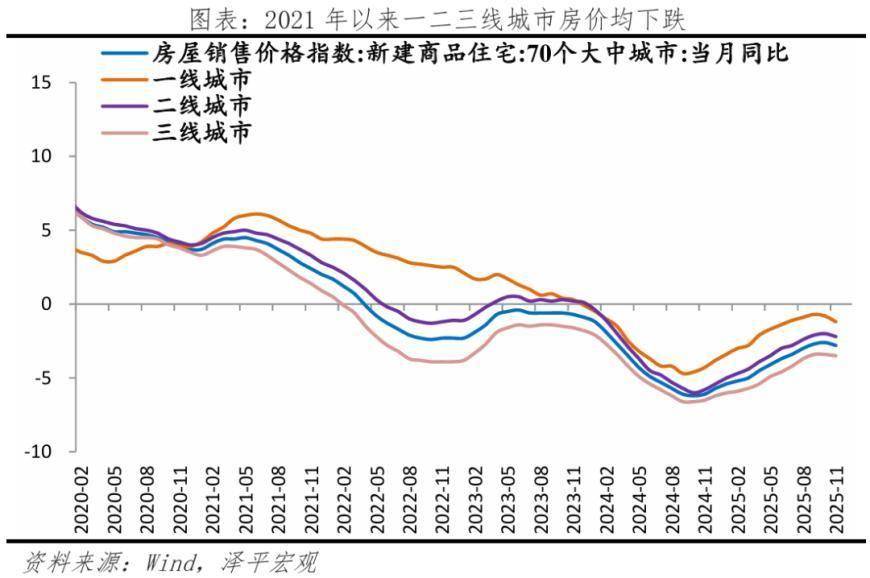
Group 1 - The current bull market in the capital market is not just a wealth opportunity but carries three historical missions with significant strategic importance [1] - The bull market supports the development of new productive forces, facilitating the transition of the Chinese economy from traditional growth models to high-quality development, particularly through new infrastructure and hard technology [1] - The capital market's prosperity provides essential financing support for new economy and hard technology enterprises, which often struggle to secure funding from traditional banking systems due to their high-tech and asset-light characteristics [1] Group 2 - The bull market aids in the geopolitical competition, particularly in the context of rising anti-globalization and U.S. tariffs on Chinese high-tech products since 2018, emphasizing the importance of new productive forces in the U.S.-China rivalry [1] - The flourishing capital market is a key force supporting the development of new productive forces, which is crucial for national competition [1] - The bull market contributes to the repair of residents' balance sheets and stimulates wealth effects, with the A-share market capitalization increasing from less than 70 trillion to over 100 trillion, creating over 30 trillion in wealth [2] - This wealth creation helps offset losses from the real estate market and supports consumption recovery, with signs of recovery in Hong Kong's consumption and real estate due to the bull market [2] - The sustainability of the A-share bull market could lead to a prolonged "slow bull" trend, potentially boosting consumer spending and the recovery of core city real estate markets [2]
我国产业升级的赋能机制研究:新经济时代的“动态革新”
Southwest Securities· 2026-01-12 10:45
Group 1: Economic Framework - The concept of "new economy" emphasizes technology and intellectual property, first introduced in China's 2016 government work report, advocating for the development of high-tech industries and modern services[3] - The Solow model suggests that long-term per capita output growth is driven solely by exogenous technological progress, while endogenous growth theory posits that knowledge and innovation can lead to sustained internal growth[3][14] Group 2: Empirical Evidence - A multiple linear regression model using quarterly data from September 2016 to September 2025 indicates that technological innovation, digital economy, and high-quality openness significantly drive industrial upgrading[3][33] - The model's R-squared value is 0.8181, indicating a high degree of fit, with significant F-statistics (F=28.78, p=0.0000) confirming the joint significance of the explanatory variables[38][46] Group 3: Core Mechanisms - The core mechanisms of industrial upgrading include technological integration, factor innovation, and organizational change, with "creative destruction" facilitating structural optimization through new technologies and industries[3][49] - The importance of new production factors such as knowledge, data, and computing power is increasing, leading to transformations in traditional factors like labor and capital[3][49] Group 4: Empowerment Pathways - High-end, intelligent, green, and global pathways are identified as key empowerment routes for industrial upgrading, with high-tech manufacturing and equipment manufacturing showing strong growth, maintaining over 6% year-on-year growth since 2024[3][49] - The digital economy is projected to see data transaction volumes exceed 160 billion yuan in 2024, with a year-on-year growth of over 30%[3][49] Group 5: International Comparisons - The report draws lessons from the U.S. "technology-industry-finance" collaborative system, Germany's "Industry 4.0" concept, and Japan's lean manufacturing model, emphasizing the importance of small and medium enterprises and continuous R&D investment[3][49]
花旗集团余向荣:要拥抱AI,但要避免图灵陷阱
Xin Lang Cai Jing· 2026-01-10 10:52
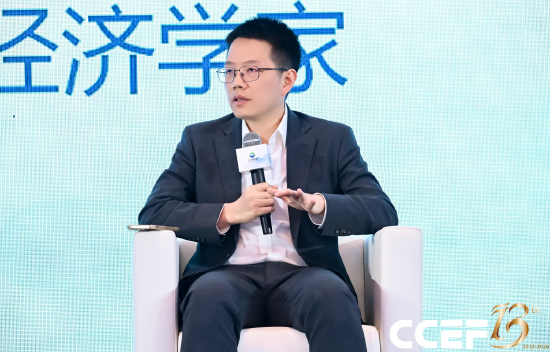
Core Viewpoint - The 2026 China Chief Economist Forum held in Shanghai emphasizes the importance of embracing AI and the new economy while cautioning against the "Turing Trap," which could lead to a significant decline in human value if machines become too intelligent and capable of replacing humans [1][4][5]. Group 1: Event Overview - The forum took place on January 10-11, 2026, with the theme "Chess in the Middle Game: Building a Strong Nation" [1][4]. - Yao Xiangrong, Chief Economist of Citigroup Greater China, was a key speaker at the event [1][4]. Group 2: Key Insights from Yao Xiangrong - Yao highlighted the necessity to embrace AI and the new economy while avoiding the Turing Trap, which refers to the paradox of creating machines that are so intelligent they can replace humans, potentially leading to a drastic drop in human value [5]. - He pointed out that technological progress can either replace humans or enhance human value and efficiency, aligning with the goals of the "14th Five-Year Plan," which focuses on promoting comprehensive human development [5].

花旗集团余向荣:拥抱AI与新经济,推动技术进步向“赋能人”而非“替代人”倾斜
Zheng Quan Shi Bao Wang· 2026-01-10 08:49
Core Viewpoint - The article discusses the potential employment impacts of AI and suggests three strategies to address these challenges, emphasizing the need for a proactive approach to technology integration and labor market optimization [1] Group 1: Embracing AI and New Economy - The first strategy is to embrace AI and the new economy to avoid the "Turing Trap," where technology either enhances human value and efficiency or replaces it. The "14th Five-Year Plan" emphasizes promoting comprehensive human development, suggesting that technology policies should focus on empowering rather than replacing people [1] Group 2: Strengthening Social Security - The second strategy involves preparing for the future by strengthening the social security network. The benefits of technological advancements will not be distributed evenly, necessitating attention to vulnerable groups such as entry-level workers, youth, middle-aged individuals facing unemployment, and flexible workers. This includes improving systems for pensions and unemployment [1] Group 3: Optimizing Labor Market - The third strategy is to address internal competition and optimize the labor market by enhancing the enforcement of labor laws. Technological progress should ideally reduce labor intensity, and through institutional design, it is possible to minimize ineffective labor and shorten average working hours, which can stabilize employment and create space for service consumption [1]
第十二届港股100强“年度最受关注IPO公司” :新经济重塑港股投资版图
Sou Hu Cai Jing· 2026-01-10 04:04
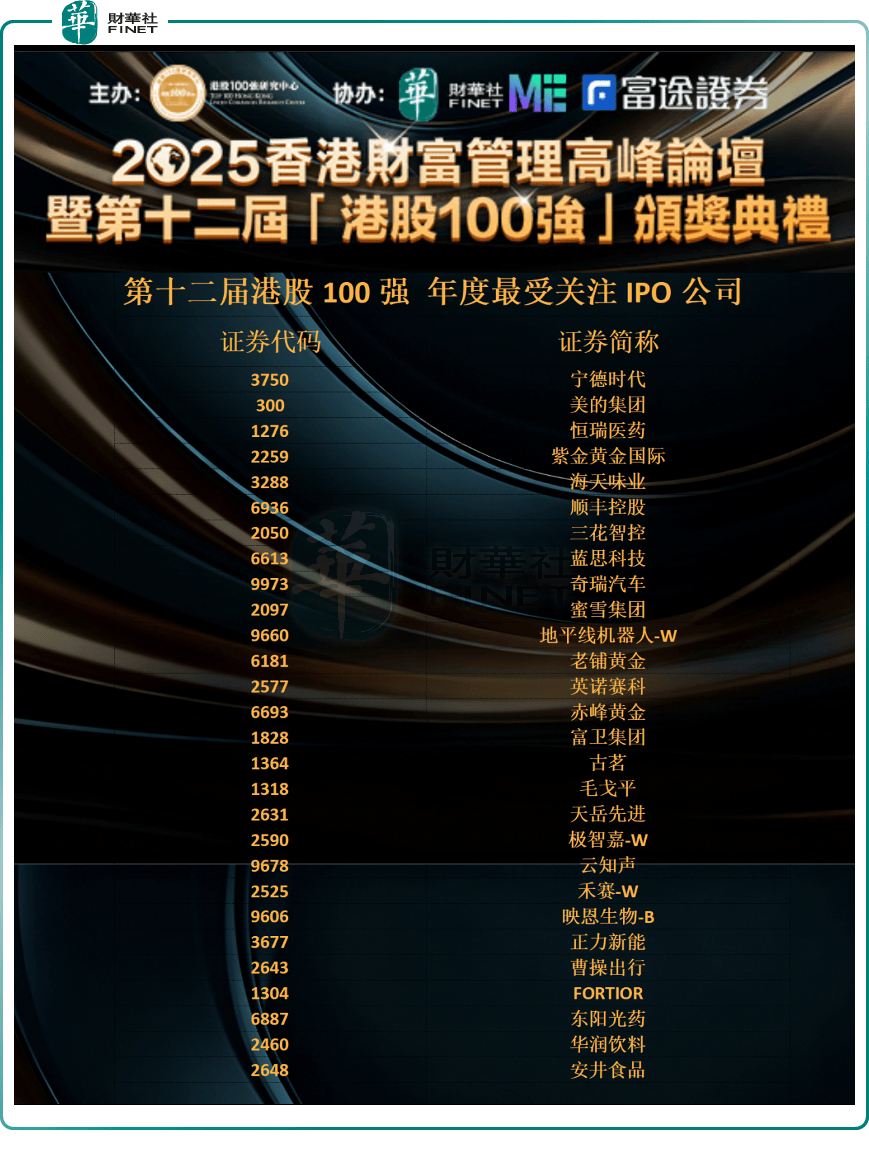
Core Insights - The article highlights the emergence of a significant opportunity for wealth restructuring in Hong Kong's capital market, driven by a global trend of interest rate cuts and an influx of southbound capital [1] - The 2025 Hong Kong Wealth Management Summit and the 12th Hong Kong Stock 100 Awards Ceremony will take place on January 9, 2026, showcasing the evolving landscape of the capital market [1] Group 1: Market Trends - The 12th Hong Kong Stock 100 "Most Attention-Grabbing IPO Companies" list reflects a diverse range of new economy enterprises, indicating a shift towards a new market ecosystem [2] - The selection of companies in the list underscores the capital market's focus on sectors such as renewable energy, smart manufacturing, healthcare, new consumption, and hard technology [4] Group 2: Notable Companies - CATL (宁德时代) is recognized for its leadership in the global battery market, enhancing the renewable energy sector in Hong Kong [2] - Midea Group (美的集团) and Sanhua Intelligent Controls (三花智控) exemplify the digital transformation in the home appliance industry and the automotive parts sector, respectively [2] - Innovent Biologics (恒瑞医药) is highlighted for its role in the innovative pharmaceutical sector, showcasing the market's renewed interest in health-related investments [2] Group 3: Consumer and Technology Innovations - Laopuhuangjin (老铺黄金) and Mixue Group (蜜雪集团) represent the new consumption trend, reflecting consumer upgrade dynamics in the market [3] - Horizon Robotics (地平线机器人) is noted as a significant player in AI chip technology, marking a pivotal moment for hard technology in the Hong Kong market [3] - Chery Automobile (奇瑞汽车) signifies the reevaluation of the value of new energy vehicle manufacturers in the capital market [3] Group 4: Investment Implications - The collective performance of these new IPO companies illustrates the capital market's commitment to supporting the real economy and fostering innovation [4] - The "Most Attention-Grabbing IPO Companies" list serves as a guide for future investment directions, particularly in light of increasing global economic uncertainties [4][5] - The selected companies are positioned to accelerate growth and contribute to high-quality economic development in China, offering investors valuable opportunities [5]
中金研究 | 本周精选:宏观、策略、银行
中金点睛· 2026-01-10 01:06
Group 1: Banking Industry - The capital market's focus on the trend of deposit migration has increased, indicating a growing certainty in this narrative. It is projected that by 2026, residents may add approximately 2-4 trillion yuan of activated funds to non-deposit investment areas due to this trend [4][3]. - The report discusses potential beneficiaries of the deposit migration, highlighting the sectors and products that may attract these funds [4]. Group 2: Macroeconomy - In 2026, the pressure from mid-term elections may lead to a softening of Trump's foreign policy, shifting focus to domestic issues, which could effectively promote fiscal and monetary easing, alleviating three major constraints on the U.S. economy in 2025 [6]. - The technology, industrial, and resource sectors are expected to continue leading the market in 2026, while consumer and financial sectors may catch up as nominal cycles improve. A weaker dollar could provide room for the renminbi to appreciate, benefiting A/H shares [6]. Group 3: Strategy - Historical analysis of Japan's market in the 1990s shows that failure to address structural issues like household balance sheets and weak livelihoods led to prolonged economic stagnation. In contrast, significant policy shifts towards improving livelihoods and debt resolution post-2000 resulted in a long bull market [8]. - The report suggests that prioritizing policies that support household balance sheets and debt resolution could effectively enhance domestic demand resilience and lead to a stable revaluation of Chinese assets [8]. Group 4: Strategy - The A-share market in 2025 exhibited a trend of steady upward movement, with the Shanghai Composite Index reaching a ten-year high. Key drivers included the restructuring of international order and domestic industrial innovation, which propelled the revaluation of Chinese assets [12]. - The market saw active participation from individual investors and a shift in funds due to deposit migration, with small-cap stocks outperforming large-cap stocks and growth stocks outperforming value stocks by the end of the year [12].