
生物育种

Search documents
轻工纺织产业“三年计划”出炉 山东19条产业链全覆盖
Da Zhong Ri Bao· 2025-11-13 01:16
Core Insights - The implementation of four action plans has achieved full coverage of 19 iconic industrial chains in Shandong Province, focusing on technological innovation in key industries [1] Group 1: Robotics Industry - The robotics industry will leverage the strategic opportunity of integrating robotics technology with artificial intelligence, focusing on key components, software systems, and complete machine manufacturing [2] - The plan aims to develop advanced servo motors, operating system software, and special robots, while expanding application scenarios across various sectors such as automotive, home appliances, and healthcare [2] - The goal is to create 100 representative benchmark application scenarios, positioning Shandong as a national hub for robotics technology innovation [2] Group 2: Modern Food Industry - The modern food industry will emphasize safety, nutrition, green, and intelligent development, addressing the entire supply chain from raw materials to processing equipment [2] - A technical system will be established for food safety, including traceability, quality control, and green packaging, enhancing consumer safety and satisfaction [2] - The industry aims to create over 100 innovative products, significantly increasing the added value of modern food [2] Group 3: Light Industry and Textiles - The light industry and textiles sector will focus on high-end, green, and intelligent development, enhancing low-carbon production processes and advanced product development [3] - Innovations will include multifunctional advanced fiber products and high-end medical textiles, as well as new paper products for specialized applications [3] Group 4: Modern Metallurgy Industry - The modern metallurgy industry will accelerate the development of high-end raw materials and precision processing technologies, targeting products like ultra-high-strength steel and marine aluminum alloys [3] - The focus will also be on developing frontier materials such as rare earth functional materials and special magnesium and titanium alloys to capture future industry opportunities [3] Group 5: Implementation Measures - The four action plans propose specific measures for promoting innovation resources, building innovation platforms, and ensuring the transformation of scientific achievements [3] - The provincial science and technology department will implement policies to inject new momentum into the construction of a modern industrial system [4]
专访拜耳作物科学胡梦影:农业插上科技翅膀,中国市场潜力无限
2 1 Shi Ji Jing Ji Bao Dao· 2025-11-10 07:56
Core Insights - Bayer Crop Science is leveraging the China International Import Expo (CIIE) as a significant platform to showcase innovations and deepen local collaborations, presenting 7 "China debuts" and 8 "CIIE debuts" this year [1][2] - The company sees great potential in China's agricultural market, particularly in the biotechnology corn seed sector, which is expected to further unlock market value and opportunities [1][2] Group 1: Innovation and Product Development - Bayer is committed to enhancing agricultural productivity through innovation, addressing challenges such as soil issues and pest outbreaks driven by climate change [1][7] - The company has established a supply chain in China, including a production center in Hangzhou and an innovation center in Danyang, to support localized and customized agricultural solutions [3] - Bayer's CropKey initiative utilizes AI and computational modeling to accelerate the development of crop protection products, aiming to introduce ten major innovative products in the next decade [6] Group 2: Market Environment and Policy - The Chinese government is actively improving the business environment for foreign enterprises, which is beneficial for companies like Bayer, as highlighted by recent engagements with agricultural authorities [4] - The implementation of the new Seed Law in 2022 has strengthened variety rights protection, fostering a more conducive environment for seed industry innovation [4][5] - Bayer anticipates further enhancements in intellectual property protection within the seed sector, which is crucial for industry growth and innovation [4] Group 3: Challenges and Opportunities - The agricultural sector in China faces the dual challenge of ensuring food security while pursuing sustainable development, which presents both risks and opportunities for innovation [7][8] - There is a growing demand from farmers for specialized and customized solutions, alongside increasing consumer expectations for the quality and safety of agricultural products [8] - Bayer aims to support the cultivation of new agricultural productivity through product innovation and local partnerships, focusing on enhancing farmers' resilience and profitability [8]

专访拜耳作物科学胡梦影:农业插上科技翅膀 中国市场潜力无限
2 1 Shi Ji Jing Ji Bao Dao· 2025-11-10 07:31
Core Insights - Bayer Crop Science is leveraging the China International Import Expo (CIIE) as a significant platform to showcase innovations and deepen local collaborations, presenting 7 "China premieres" and 8 "CIIE premieres" this year [1][2] - The company emphasizes the importance of agricultural technology in addressing challenges posed by climate change and soil issues, driving the industry towards innovation and sustainable development [1][7] - Bayer sees substantial market potential in China's agricultural sector, particularly in the biotechnology corn seed market, which is expected to further unlock value and opportunities [2][5] Company Strategy - Bayer has established a comprehensive supply chain in China, including a production supply center in Hangzhou and an innovation center in Danyang, to support localized and customized agricultural needs [3] - The Hangzhou supply center, with an investment exceeding 300 million RMB, is set to enhance the distribution of Bayer's innovative agricultural products across China and Asia [3] - Bayer's joint venture, Zhongzhong International Seed Co., has invested significantly in local corn seed research and development, with an average annual R&D investment of nearly 15% of sales over the past 20 years [3] Market Environment - The Chinese government is actively improving the business environment for foreign enterprises, as evidenced by recent engagements between Bayer's global leadership and Chinese agricultural authorities [4] - The new Seed Law implemented in 2022 aims to strengthen variety rights protection, which is expected to foster innovation in the seed industry [4] - Bayer anticipates further enhancements in intellectual property protection within the seed sector, which will support the overall innovation ecosystem [4] Technological Innovation - Bayer is utilizing AI and computational modeling to accelerate the development of crop protection products, significantly shortening the R&D cycle [6] - The company plans to introduce ten major innovative products over the next decade, focusing on increasing yields while promoting environmental sustainability [6][8] - The integration of digital technologies in agriculture is expected to meet the growing demand for specialized and customized solutions from farmers [8] Industry Challenges and Opportunities - The agricultural sector faces dual pressures of ensuring food security and achieving sustainable development, presenting both challenges and opportunities for innovation [7][8] - The demand for high-quality, safe agricultural products is rising, prompting a shift towards efficient, low-toxicity crop protection solutions [8] - Bayer aims to support farmers in enhancing their resilience and productivity through innovative products and local partnerships, aligning with the vision of promoting regenerative agriculture [8]
农业重点数据跟踪周报:生猪供应仍存压力,产能去化或加速-20251109
CAITONG SECURITIES· 2025-11-09 14:34
Core Insights - The report maintains a positive outlook on the agricultural sector, particularly in pig farming, despite ongoing supply pressures and potential acceleration in capacity reduction [1][5][6]. Group 1: Pig Farming - Supply pressures continue to be significant, with a reported decrease in the number of breeding sows by 0.77% month-on-month in October [5][17]. - The average price of market pigs has declined to 12.16 CNY/kg as of November 6, reflecting a week-on-week decrease of 0.49% [5][26]. - The profitability of pig farming remains negative, with losses reported at -89.21 CNY per head for self-bred pigs and -175.54 CNY per head for purchased piglets as of November 7 [5][37]. Group 2: Poultry Farming - The average price of white feather broilers remained stable at 7.09 CNY/kg as of November 7, with a reported loss of -1.25 CNY per bird [5][38]. - The number of breeding chickens has increased significantly, with a 143.18% month-on-month rise in the number of grandparent stock updated in October [5][38]. Group 3: Animal Health - The demand for animal health products is expected to rebound, driven by a recovery in breeding cycles and an increase in inventory levels [5][47]. - The report highlights the ongoing development of vaccines, including progress in African swine fever vaccine trials, which may enhance the sector's growth potential [5][47]. Group 4: Seed Industry - The average prices for wheat, soybean meal, and corn have shown slight declines, with wheat at 2487 CNY/ton, soybean meal at 3098 CNY/ton, and corn at 2239 CNY/ton as of November 7 [5][51]. - The report emphasizes the importance of food security and the promotion of biotechnology in the seed industry [5][51]. Group 5: Pet Industry - Pet food exports amounted to 823 million CNY in September, reflecting a year-on-year decrease of 6.8%, while domestic sales continue to grow, with a 3% increase across major e-commerce platforms [5][56][59]. - The report suggests that companies with a lower proportion of export business may be less affected by tariff disruptions, while those focusing on domestic growth are likely to enhance their market share [5][56][59].


农林牧渔:供应压力延续,猪价承压下行
Huafu Securities· 2025-11-09 12:08
Investment Rating - The industry rating is "Outperform the Market" indicating that the overall return of the industry is expected to exceed the market benchmark index by more than 5% in the next 6 months [70]. Core Views - The report highlights ongoing supply pressure in the pig farming sector, leading to a downward trend in pig prices. As of November 7, the average pig price was 11.85 CNY/kg, down 0.69 CNY/kg week-on-week. The average weight of pigs sold has increased to 128.30 kg, up 0.61 kg week-on-week, indicating a shift towards heavier pigs being sold [2][10][30]. - In the beef sector, short-term prices are slightly declining, but a tightening supply is expected to lead to an upward price cycle for beef in 2026-2027. The price of calves as of November 7 was 31.93 CNY/kg, down 0.53% week-on-week, but up 32.43% year-to-date [3][32]. - The poultry sector is experiencing stable yet declining prices for meat chickens, with the average price for white feathered meat chickens at 7.09 CNY/kg as of November 7. The egg price is slightly up at 6.22 CNY/kg, indicating potential recovery in the egg market as downstream production decreases [4][40][45]. - The agricultural sector is seeing a strong performance in soybean meal prices due to changes in import tariffs on U.S. soybeans, with the spot price at 3094 CNY/ton, up 36 CNY/ton week-on-week. This is expected to support a strong trend in soybean meal prices moving forward [4][53]. Summary by Sections Pig Farming - Supply pressure continues, leading to a decline in pig prices. The average pig price as of November 7 is 11.85 CNY/kg, down 0.69 CNY/kg week-on-week. The average weight of pigs sold has increased to 128.30 kg, up 0.61 kg week-on-week [2][10][30]. - The report notes that the market is transitioning to sporadic replenishment as the enthusiasm for secondary fattening has decreased significantly [10][30]. Beef Industry - Short-term prices for beef are slightly declining, with calf prices at 31.93 CNY/kg, down 0.53% week-on-week, but up 32.43% year-to-date. The market is expected to tighten in the medium to long term, leading to a potential price increase cycle in 2026-2027 [3][32]. Poultry Sector - The average price for white feathered meat chickens is stable at 7.09 CNY/kg, while egg prices are slightly up at 6.22 CNY/kg. The report suggests that the poultry sector may benefit from a recovery in consumption as production decreases [4][40][45]. Agricultural Products - The soybean meal market is expected to remain strong due to tariff changes on U.S. soybeans, with current prices at 3094 CNY/ton, up 36 CNY/ton week-on-week. This is anticipated to support a bullish trend in soybean meal prices [4][53].
“芯”动优选 粤海良种游全国
2 1 Shi Ji Jing Ji Bao Dao· 2025-11-07 11:18
Core Insights - The Guangdong province has achieved a significant breakthrough in the artificial breeding of the Seriola dumerili fish, marking the first successful full-cycle artificial breeding and mass cultivation of this species globally [1] - The province's modern marine ranching development plan (2024-2035) aims to enhance the protection of suitable species, accelerate key technology innovations, and cultivate competitive new varieties to improve the supply capacity of quality seeds [1][5] - Guangdong's aquaculture industry leads the nation in scale and technological innovation, with marine fish seed and shrimp seed production maintaining the top position for seven consecutive years, accounting for nearly half of the national output [1][9] Industry Development - The complete industrial chain of "parent fish - fish eggs - fish seedlings" has been established in Yangxi, with an expected annual production of 3.31 billion marine fish seedlings and a market value of approximately 700 million yuan in 2024 [3] - The trend in aquaculture breeding is shifting from traditional experience-based methods to precision breeding, utilizing molecular markers and big data platforms for improved efficiency and accuracy [3][6] - Guangdong has developed a shared platform for breeding innovation, attracting 63 top marine breeding teams to tackle 28 suitable species, promoting deep integration of industry, academia, and research [6][7] Technological Advancements - The province is extending its breeding strategies to deep-sea environments, necessitating the development of new species that can thrive in challenging conditions [4][5] - The introduction of the "reveal the leaderboard" and "racehorse" mechanisms has fostered competition among breeding teams, leading to breakthroughs in species resource identification and artificial breeding [7][8] - Financial institutions in Guangdong have introduced innovative loan products to support aquaculture, allowing fish and marine area usage rights to be used as collateral, significantly increasing financial support for the industry [7][8] Market Dynamics - Guangdong is the largest market for aquatic products in China, with an annual production of over 1.3 trillion fish, leading the nation in both freshwater and marine fish seed production [9] - The province has established a mechanism to share breeding innovations with local farmers, ensuring that 30% of the produced quality seeds are supplied free of charge to marine ranching projects and typical coastal villages [9]
粤海良种崛起:育种装上“芯片”,产业“赛马”提速
2 1 Shi Ji Jing Ji Bao Dao· 2025-11-06 23:11
Core Insights - The research team in Huizhou Daya Bay has achieved the world's first full-cycle artificial breeding and mass cultivation of the Seriola dumerili fish, enhancing the variety reserves of Guangdong's marine fishery [1] - Guangdong's marine seed industry is crucial for ensuring the country's "blue granary," with significant advancements in marine breeding technology and a strategic focus on deep-sea aquaculture [1] Group 1: Achievements in Marine Breeding - Guangdong's seawater fish fry production reached 6.796 billion tails in 2024, accounting for about half of the national total, and it ranks first in deep-sea breeding stock reserves [1] - The province has maintained its position as the national leader in the production of marine fish fry and shrimp fry for seven consecutive years [1] - The successful breeding of new marine species, such as the "Zhongxing No. 2" shrimp and "Chenghuang No. 1" scallop, has led to a total of 18 nationally approved marine species, the highest in the country [4] Group 2: Technological Advancements - The transition from traditional breeding methods to biological and intelligent breeding techniques has been pivotal for Guangdong's marine seed industry [1] - The use of molecular markers and big data platforms for breeding has significantly improved efficiency and precision in the breeding process [3] - The development of the "Hailu No. 1" breeding chip for the flower bass and the implementation of "water conditioning" technology to advance spawning periods exemplify the shift towards precision breeding [3] Group 3: Industry Structure and Support - Guangdong is building an integrated system for technological breakthroughs, results transformation, and industrial application in the marine seed industry [5] - The province has established a shared platform attracting 63 excellent marine breeding teams to tackle technical challenges for 28 suitable species [6] - Financial support mechanisms, such as the "Marine Ranch Loan," have been introduced to assist small and medium-sized aquaculture operators, with over 1.1 billion yuan in loans supporting more than 3,000 aquaculture enterprises in 2024 [6][8] Group 4: Market-Driven Research - The close collaboration between industry, academia, and research institutions allows for rapid feedback from market demands to breeding research, creating a cycle where market needs drive breeding efforts [7] - Successful breakthroughs in breeding technologies, such as the artificial breeding of the tropical fish species "Red Melon Grouper," demonstrate the effectiveness of this market-driven approach [7]
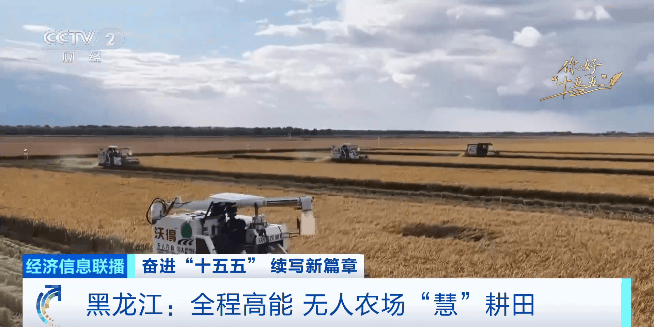
你好“十五五”丨无人农场“智造”丰收 “中国饭碗”端得更稳
Sou Hu Cai Jing· 2025-11-06 15:56
Core Viewpoint - The article emphasizes the modernization of agriculture in China, highlighting the importance of agricultural development in the national five-year plans and the significant advancements in technology and practices that are transforming the sector. Group 1: Agricultural Modernization - The "14th Five-Year Plan" aims to transform agriculture into a modernized industry and strengthen the agricultural foundation of the country [1] - China's per capita grain possession has reached 500 kilograms, ensuring food security for 1.4 billion people [1] - The integration of technology in agriculture, such as unmanned machinery, has drastically improved efficiency and productivity in farming operations [3][5][9] Group 2: Technological Advancements - The use of unmanned harvesters and precision farming techniques has allowed for operations with minimal human intervention, achieving a positioning accuracy of 2.5 centimeters [5][7] - The mechanization rate in certain farms has reached over 99.8%, showcasing the extent of technological adoption in agricultural practices [17] - The introduction of accelerated breeding techniques has reduced the time required for crop development from ten years to four or five years [23] Group 3: Crop Production and Yield - The total grain output in the region has seen continuous growth, with a reported yield of 15.22 billion pounds from 126,000 acres of farmland [11] - In Xinjiang, the implementation of high-density corn planting techniques has led to record-breaking yields, with average yields surpassing 1,200 kilograms per acre [33] - The overall agricultural technology contribution rate has reached 63.2%, indicating significant advancements in agricultural productivity [25] Group 4: Aquaculture Development - The aquaculture sector in Xinjiang has expanded, with the region producing one-third of the country's self-supplied salmon, highlighting the diversification of agricultural practices [47] - The establishment of a comprehensive cold chain logistics and processing system is aimed at enhancing the value of agricultural products and creating an industry cluster [49] - The total output of aquatic products in China has reached 73.58 million tons, marking a 12.3% increase since 2020 [51] Group 5: Future Prospects - The article suggests that the modernization of agriculture will continue to evolve, attracting both local farmers and international tourists to rural areas [55] - The focus on sustainable practices and technological integration is expected to enhance the competitiveness of the agricultural sector in the coming years [53]

先正达集团携多款创新技术亮相第八届进博会
Zhong Guo Jing Ji Wang· 2025-11-06 07:04
Core Insights - The 8th China International Import Expo (CIIE) opened in Shanghai, showcasing China's commitment to global trade and cooperation [1] - Syngenta Group, a subsidiary of China National Chemical Corporation, highlighted its advanced technologies in agriculture, including AI and green plant protection, and signed contracts exceeding $1.1 billion to enhance agricultural green transformation and global food security [1][2] - The introduction of the GASEL intelligent breeding system and the iMAP agricultural comprehensive planting model marks a significant advancement in agricultural digitalization and efficiency [1][2] Group 1 - The GASEL system, referred to as the "AI breeding coach," significantly improves prediction accuracy to between 60% and 80% and has successfully enhanced breeding efficiency for corn varieties [1][2] - The iMAP model integrates over ten million agricultural knowledge points and has been validated on one million acres of farmland, supporting China's strategies for water-saving agriculture and fertilizer reduction [2] - Syngenta is promoting Chinese hybrid rice globally, showcasing high-yield varieties and has conducted technical testing in over 30 countries along the Belt and Road Initiative [2] Group 2 - The agricultural sector is entering a new era focused on green and intelligent practices, with AI and biotechnology driving profound changes in production methods [3] - The partnership between China and Switzerland in agricultural innovation was highlighted at the expo, emphasizing collaboration in precision innovation and sustainable development [3] - The need to increase global food production by 50% over the next 30 years to feed a projected population of 10 billion was underscored, with technology and international cooperation identified as essential solutions [3]

“十四五”答卷·创新驱动产业蝶变|生物育种:攥紧中国种子 端稳中国饭碗
Ke Ji Ri Bao· 2025-11-05 09:25
Core Insights - The total cotton production in Xinjiang is projected to reach 5.686 million tons in 2024, accounting for 92.2% of China's total cotton output and 22.7% of global cotton production, highlighting Xinjiang's pivotal role in the global cotton industry [1] - The development of Xinjiang's cotton industry is significantly supported by advancements in biological breeding technology, with a national investment of 2.3 billion yuan in key technological breakthroughs during the 14th Five-Year Plan [1][2] - The introduction of over 30 new cotton varieties with superior traits has been achieved through modern breeding techniques, enhancing the competitiveness of the cotton industry [2][3] Agricultural Innovation - The global food security landscape is increasingly complex, necessitating the rapid development of high-yield, quality, and resilient crop varieties, which is a key area of agricultural technology competition [2] - New cotton varieties, such as Jinmian No. 2, have shown significant improvements in yield and disease resistance, with a reported 13.2% increase in production compared to traditional varieties [2] - The promotion of these new varieties is expected to lead to simultaneous improvements in yield, quality, and economic benefits for the agricultural sector [3] Food Security and Self-Reliance - The competition in global seed industries is intensifying, making technological self-reliance in seed production crucial for ensuring food security in China [4] - The focus on maize breeding has led to the development of new varieties that can withstand higher planting densities, which is essential for increasing maize yields [4] - New maize varieties like Dongke 1188 and Zhongdan 1130 have demonstrated yield increases of 12.2% and 10.1% respectively compared to traditional varieties, showcasing the effectiveness of modern breeding techniques [4] Conclusion - The advancements in biological breeding technologies during the 14th Five-Year Plan are transforming agricultural practices in China, providing a solid foundation for food security and high-quality agricultural development [5]