
美联储政策转向

Search documents
全球“货币贬值交易”,期金抢先突破4000美元大关!
Wind万得· 2025-10-07 00:46
Group 1 - The core viewpoint of the article highlights the continuous rise in gold prices, with COMEX gold surpassing $4000 per ounce and London spot gold reaching $3974 per ounce, indicating a "bullish frenzy" in the market [2][3] Group 2 - A significant factor influencing gold prices is the U.S. government shutdown, which has led to increased market uncertainty and a rise in demand for safe-haven assets like gold. This political deadlock has caused investors to increase their holdings in physical gold and gold ETFs to hedge against potential market volatility [5] - The U.S. dollar has faced pressure due to the government shutdown, which has weakened investor confidence in U.S. fiscal stability. Consequently, gold has performed well against major currencies, reinforcing its global safe-haven status [5] Group 3 - Another driving factor is the shift in Federal Reserve policy. The Fed's announcement of interest rate cuts marks the end of a two-year tightening cycle, with expectations for further cuts in October exceeding 80%. This change in interest rate expectations has a strong positive impact on gold prices, as lower real interest rates reduce the opportunity cost of holding gold [6] - The government shutdown has also disrupted the release of key economic data, leaving the Fed without crucial economic indicators, which may lead to a more cautious approach in monetary policy [6] Group 4 - Geopolitical factors are also supporting safe-haven demand for gold, with ongoing tensions in the Middle East and currency fluctuations in parts of Asia. Central banks are increasingly purchasing gold to diversify their reserves away from U.S. dollar assets [7] - Silver has also seen a price increase, influenced by gold's performance, with analysts suggesting that silver may have further upside potential given its dual role as an industrial and store of value asset [7]


环球智投:黄金大涨背后的五大驱动因素深度解析
Sou Hu Cai Jing· 2025-09-29 09:31
Group 1: Federal Reserve Policy Shift - The Federal Reserve is transitioning from a hawkish to a dovish stance, with Chairman Powell indicating that inflation is nearing target levels and monetary policy will gradually shift towards easing [1] - Market expectations for a rate cut in November have surged to 92%, significantly lowering the holding cost of gold, which has led to gold prices breaking historical highs [1] Group 2: Geopolitical Risks - The escalation of the Russia-Ukraine conflict and the breakdown of negotiations over Iran's nuclear issue have heightened global risk aversion, resulting in a single-day influx of over $5 billion into gold [2] Group 3: Weakening Dollar Index - The dollar index has fallen from a high of 105 to below 103, which has positively impacted gold prices, as historical data shows that a 1% drop in the dollar index correlates with an average 1.2% increase in gold prices [3] Group 4: Central Bank Gold Purchases - Central banks globally have increased gold purchases, with a report indicating that by 2025, purchases will exceed 1,200 tons, and China's central bank has been increasing its holdings for 10 consecutive months, raising gold reserves to 7.2% [4] Group 5: Rising Inflation Expectations - Despite the Federal Reserve's attempts to control inflation, rising energy prices and supply chain disruptions are pushing inflation expectations higher, increasing the demand for gold as a traditional hedge against inflation [5] Group 6: Investment Recommendations - Short-term focus on a support level of $3,680 for gold, with a recommendation to increase the allocation to 15% of the asset portfolio for the medium to long term [6] Group 7: Technical Analysis of Gold - Gold has confirmed a "flag breakout" on the weekly chart, closing at $3,727, indicating strong bullish momentum [7] - The key resistance level of $3,700 has turned into strong support, with the next target at $3,820 based on Fibonacci extension [8] Group 8: Domestic Gold Market Insights - Domestic demand for gold jewelry has decreased by 24%, while investment gold bars have surged by 25%, indicating a shift from consumption to preservation of value [10][11] - The price difference between domestic and international gold has reached a historical high, presenting arbitrage opportunities for professional investors [12] Group 9: U.S. Treasury Yield Inversion - The 10-year U.S. Treasury yield has dropped below 4%, showing a strong negative correlation with gold prices, which reduces the holding cost of gold [14] - Bridgewater Associates has increased its holdings in gold ETFs from 15% to 25%, reflecting institutional concerns over stagflation risks [15] Group 10: Gold Mining and Recycling Trends - The average global gold mining cost has risen to $1,800, putting pressure on mining profits, suggesting a focus on low-cost leaders like Barrick Gold [17] - The volume of gold recycling has increased by 40% year-on-year, with a record 120 tons recycled in September [18] - The open interest in gold options has doubled, indicating a surge in market hedging demand [19]
ETO Markets 每日汇评: 镑美1.34关口多空激战,ETO Markets预警暴跌信号
Sou Hu Cai Jing· 2025-09-29 06:06
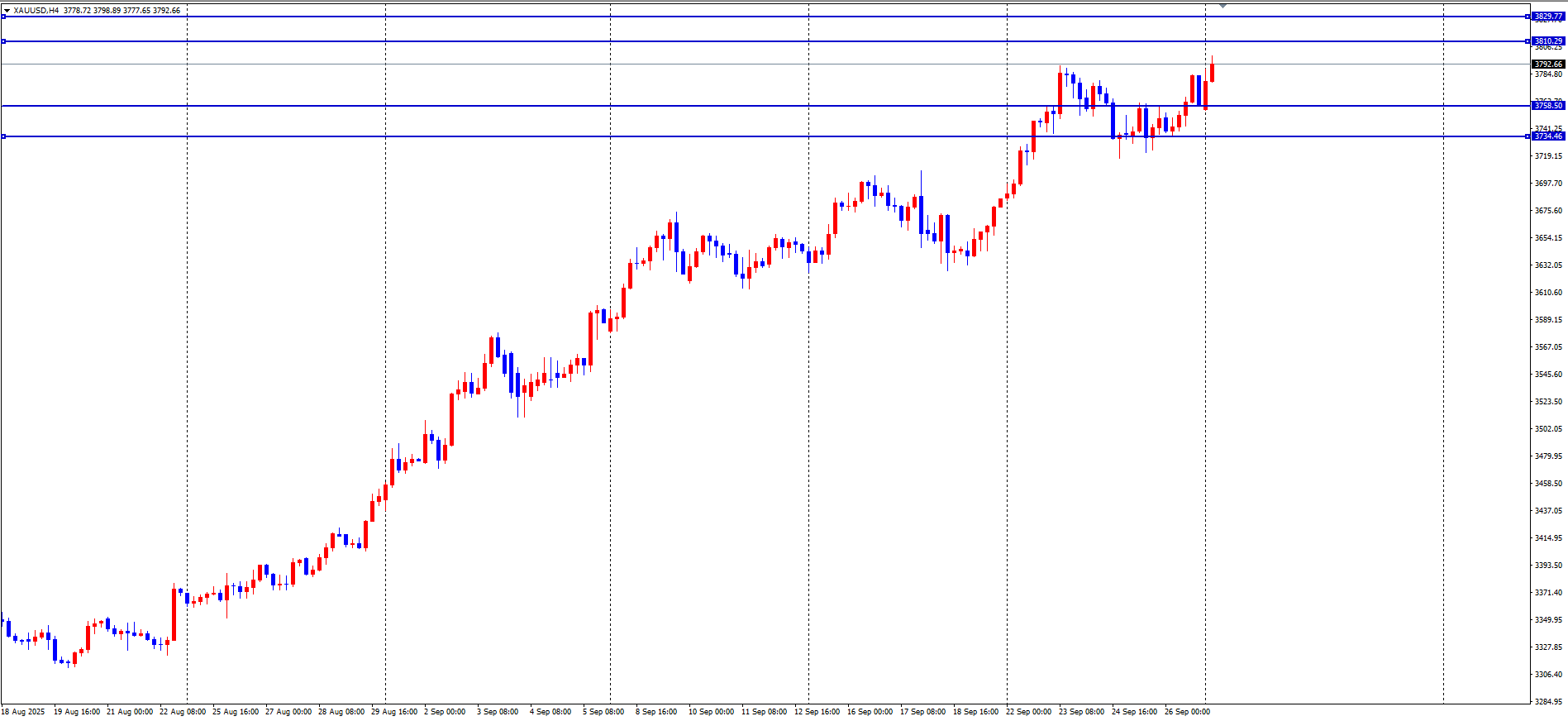
Group 1: XAU/USD Analysis - The core viewpoint indicates that gold prices experienced fluctuations, breaking through 3783.6 before retreating, with a daily range of 493 points and a small bullish close [3] - Current early morning prices have breached the 3791 to 3798.6 range, approaching the 3800 mark, supported by geopolitical risks, Federal Reserve policy shifts, and de-dollarization trends [3] - Key resistance levels are identified at 3810/3815, with support at 3758/3735, suggesting a strategy of selling at 3810/3815 and buying on dips to 3760 [4] Group 2: EUR/USD Analysis - The analysis notes a loss on a short position due to the price reaching 1.1707, with a daily close showing a small bullish trend influenced by rising French debt and EU trade proposals [6] - Resistance levels are set at 1.180/1.184, while support is at 1.161/1.166, with a recommendation to buy at 1.169/1.170 [8] Group 3: GBP/USD Analysis - The GBP/USD analysis highlights a loss on a short position as the price reached 1.3412, with attention on inflation impacts and US-UK tariff negotiations [10] - Resistance levels are identified at 1.350/1.355 and support at 1.332/1.337, with a buy recommendation at 1.337/1.338 [12] Group 4: GBP/JPY Analysis - The GBP/JPY market saw upward movement with a high of 200.5 before retreating, maintaining an upward trend above key support levels [14] - Resistance is noted at 201.3/200.7, with support at 199.1/198.6, and a buy recommendation on dips to 199.8-199.9 [15] Group 5: Fundamental Reminders - Key economic indicators to watch include UK mortgage approvals, Eurozone economic sentiment, US existing home sales, and comments from Federal Reserve officials [17]
金价突破3800美元创历史新高,三大因素筑牢上涨基础
Di Yi Cai Jing· 2025-09-25 05:07
Group 1 - International gold prices have reached a historical high, with COMEX gold futures surpassing $3800 per ounce on September 23, driven by Federal Reserve policy divergence and geopolitical risks [1] - The shift in the Federal Reserve's focus from "inflation control" to "balancing employment and inflation risks" is a core factor influencing gold prices, as indicated by Chairman Powell's recent statements [2][3] - Geopolitical tensions, particularly in the Middle East and Eastern Europe, continue to provide safe-haven support for gold, contributing to its price surge [4] Group 2 - Short-term fluctuations in gold prices are expected as investors react to market conditions, with a focus on the support levels between $3750 and $3780 per ounce [5] - The medium-term outlook for gold remains positive, supported by three key factors: the certainty of monetary policy easing, sustained demand from central banks, and a shift in asset allocation towards gold [6][7] - A strategic approach for investors is to maintain a 15%-20% allocation to gold, utilizing the $3750-$3780 range for adjustments, while monitoring support levels below $3700 [8]
黄金价格再创新高,有机构看涨至5000美元
Di Yi Cai Jing· 2025-09-16 10:51
Group 1: Gold Market Overview - Gold prices have reached a new historical high, with COMEX gold futures hitting $3731.9 per ounce, marking a significant increase of over 6% since September [2][4] - Morgan Stanley has raised its year-end gold price target to $3800 per ounce, emphasizing the strong negative correlation between gold and the US dollar [5] - UBS predicts gold prices will reach $3700 per ounce by June 2026, with a possibility of hitting $4000 per ounce under adverse geopolitical or economic conditions [5] Group 2: Silver Market Dynamics - Silver prices have also surged, with COMEX silver futures exceeding $43 per ounce and domestic silver futures reaching 10152 yuan per kilogram [3][7] - The silver market is more volatile due to its smaller size compared to gold, making it susceptible to rapid price changes [7] - Despite optimism for silver, Morgan Chase expresses greater confidence in gold's bull market, citing silver's complex outlook due to its industrial demand [8] Group 3: Macroeconomic Influences - The US job market is showing signs of weakness, with the unemployment rate rising to 4.3%, prompting increased expectations for Federal Reserve interest rate cuts [9] - Market forecasts suggest a 90% probability of a 25 basis point rate cut in September, with overall expectations for three rate cuts by the end of the year [9] - Historical trends indicate that precious metals often experience significant price increases during the early and mid-stages of a rate-cutting cycle [9]

500亿资金入场+美联储急转弯!这个组合拳或让A股重回4000点时代
Sou Hu Cai Jing· 2025-09-15 17:03
Group 1 - The unexpected U.S. non-farm payroll data of 22,000 jobs significantly reshapes global financial dynamics, indicating a potential shift in capital flows [1][5] - The U.S. unemployment rate has surged to 4.3%, the highest since the COVID-19 pandemic, prompting a reevaluation of Federal Reserve policies and increasing the likelihood of a 50 basis point rate cut in September [5][10] - Domestic policies in China, such as the reduction of public fund fees by over 50 billion yuan, are expected to lower investment thresholds and costs, potentially directing more capital into the stock market, particularly benefiting the ETF market [6][7] Group 2 - The combination of favorable external and internal factors is likely to have a greater impact than their individual contributions, as seen in past market responses to similar policy shifts [7][10] - Technical analysis indicates that the Shanghai Composite Index is close to a critical resistance level of 3,900 points, with a strong upward momentum observed [8][10] - The market appears to be transitioning from despair to hesitation, with recent positive developments reigniting investor confidence and setting a target range of 4,000-4,200 points by year-end [9][10]

年度非农大幅下修,贝森特喊话美联储尽快降息
Hua Er Jie Jian Wen· 2025-09-10 09:08
Group 1 - The U.S. Treasury Secretary, Becerra, publicly urged the Federal Reserve to reassess its policy stance due to newly revised employment data indicating that the economic conditions inherited by the Trump administration were significantly weaker than previously reported [1][2] - The latest benchmark revision data revealed a downward adjustment of 911,000 non-farm jobs for the year ending in March, averaging a monthly decrease of nearly 76,000 jobs, marking the largest downward revision since 2000 [1][2] - Becerra emphasized the need for the Federal Reserve to recalibrate its policies, referencing Keynes' quote about changing one's mind when facts change [1][3] Group 2 - Becerra's comments intensified public pressure on the Federal Reserve from the Trump administration, adding tension ahead of the upcoming September policy meeting [1][4] - The internal personnel changes within the Federal Reserve are also seen as critical to future decision-making, with Becerra expressing confidence in the timely appointment of Trump's nominee, Stephen Miran, to participate in the next interest rate meeting [4] - Tensions between the Trump administration and Federal Reserve Governor Lisa Cook have escalated, with the government attempting to remove Cook based on allegations of mortgage fraud, which Cook argues is illegal [4]
Nasdaq 100 and S&P Show Volatility as Jobs Data Cements Fed Pivot
FX Empire· 2025-09-05 18:46
Group 1 - Trump's tariff policies have contributed to current hiring weaknesses, with historic tariff rates leading to inflation fears and a pause in Fed rate cuts, but easing inflation risks now allow for potential rate cuts in September [1] - The shift in policy outlook has bolstered bullish sentiment in equities, particularly in the S&P 500 and Nasdaq, although there was a pullback from intraday highs due to caution near technical resistance [2] - Structural weaknesses in the job market are emerging, with potential job cuts estimated to reach up to 800,000, indicating a much weaker job market than previously thought [3] Group 2 - Political tensions have increased following Trump's decision to fire BLS Commissioner Erika McEntarfer after major data revisions, with his nominee suggesting the end of the monthly jobs report, leading to a focus on long-term trends rather than monthly figures [4] - Investors in tech and growth stocks within the Nasdaq are closely monitoring job revisions, as confirmation of deeper labor weakness could heighten expectations for prolonged Fed easing [5] Group 3 - The Nasdaq 100 has shown volatility, forming an inverted head and shoulders pattern and breaking above the neckline near the 22,700 region, indicating strong volatility [6] - Following the release of jobs data, the Nasdaq 100 experienced a sharp move higher but later pulled back, with key resistance at 24,500 and strong support around 22,700, suggesting potential for continuation or deeper correction [7]
黄金早参丨美联储鸽派表态,金价延续强势,PCE数据或成美联储政策转向关键
Sou Hu Cai Jing· 2025-08-28 01:40
Group 1 - The core viewpoint of the article highlights the impact of Trump's firing of a Federal Reserve governor, which raises questions about the independence of the Federal Reserve and increases demand for safe-haven assets like gold [1] - Following the news, gold prices initially fell but later rose, with COMEX gold futures closing up 0.55% at $3451.80 per ounce [1] - The New York Fed's Williams emphasized the potential for interest rate cuts, contingent on upcoming data, adding uncertainty to the market ahead of the Federal Reserve's meeting on September 16-17 [1] Group 2 - Recent weak employment data and dovish comments from Powell suggest that the upcoming PCE data will be crucial in determining the Fed's direction [1] - The pressure on the Federal Reserve from Trump's actions may amplify the impact of inflation data, potentially increasing market volatility and demand for gold as a hedge [1] - If the PCE data leans dovish, gold prices could experience a new wave of upward momentum [1]
美联储鸽派表态,金价延续强势,PCE数据或成美联储政策转向关键
Mei Ri Jing Ji Xin Wen· 2025-08-28 01:40
Core Viewpoint - The recent firing of a Federal Reserve governor by Trump has raised questions about the independence of the Federal Reserve, increasing demand for safe-haven assets like gold [1] Group 1: Market Reactions - Gold prices initially fell but later rose, with COMEX gold futures closing up 0.55% at $3,451.80 per ounce [1] - The China Gold ETF (518850) decreased by 0.04%, while the gold stock ETF (159562) dropped by 4.15% [1] Group 2: Federal Reserve Insights - New York Fed President Williams indicated uncertainty regarding interest rate cuts, stating that any decision will depend on upcoming data before the September 16-17 meeting [1] - Recent weak employment data and dovish comments from Powell suggest that the PCE data will be crucial in determining the Fed's direction [1] Group 3: Implications for Gold - The pressure on the Federal Reserve from Trump's actions may amplify the impact of inflation data, potentially increasing market volatility [1] - If legal disputes escalate, market risk aversion could rise, boosting demand for gold as a hedging tool, especially if PCE data is dovish, which may lead to a new wave of gold price increases [1]