财政金融协同

Search documents
财政部及央行新闻发布会解读:财政金融协同,助力“开门红”
Shenwan Hongyuan Securities· 2026-01-21 10:07
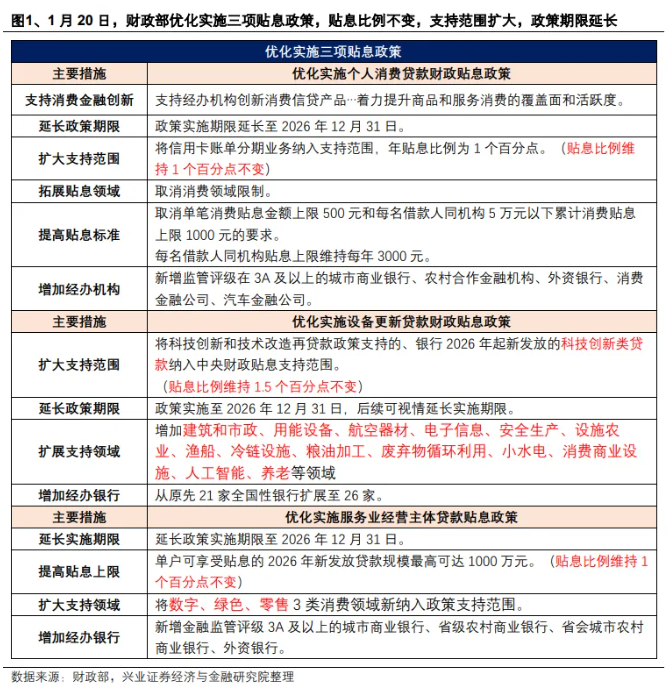
Group 1: Policy Signals - The Ministry of Finance and the central bank are focusing on stimulating domestic demand, enhancing support for technological innovation, and activating private investment as key areas for policy collaboration[1] - Personal consumption loan interest subsidies have increased significantly, with the maximum subsidy per loan rising from 500 yuan to 3000 yuan, and credit card installment payments now included[1] - The central bank has lowered the interest rates on various structural monetary policy tools by 0.25 percentage points to guide financing costs down[1] Group 2: Addressing Key Issues - In 2025, new household loans dropped to 360 billion yuan, a decrease of 22,910 billion yuan from 2024, indicating a significant decline in consumer credit growth[2] - The overall credit growth rate fell to 6.4% in 2025, with a 1.0 percentage point decline attributed to the drop in household loans[2] - Fixed asset investment decreased by 3.8% in 2025, with equipment purchases being a major growth driver, increasing by 11.8%[3] Group 3: Expected Outcomes - Fiscal interest subsidies are expected to stabilize financial data and stimulate domestic demand, despite banks facing challenges in expanding loan volumes due to low net interest margins of 1.4%[4] - The expansion of consumer loan interest subsidies is anticipated to support stable consumer spending, particularly in service consumption, as households shift their spending patterns[4] - New policy financial tools, if further enhanced, could provide an additional 1.5 percentage points in fiscal interest subsidies, thereby boosting investment in new infrastructure projects[4]
热点思考 | 财政金融协同,助力“开门红”(申万宏观·赵伟团队)
申万宏源宏观· 2026-01-21 09:42
Group 1 - The article emphasizes the coordinated policy signals from various ministries, focusing on stimulating domestic demand, enhancing support for technological innovation, and invigorating private investment as key areas for future policy efforts [2][8][46] - Fiscal policies are set to directly reach consumer endpoints, with significant increases in personal consumption loan interest subsidies, raising the cap from 500 yuan to 3000 yuan, and including credit card installment payments [2][46] - The central bank has lowered the interest rates on various structural monetary policy tools by 0.25 percentage points to guide down financing costs [2][46] Group 2 - The article outlines six specific policies aimed at stimulating private investment, including loan interest subsidies for small and micro enterprises, a special guarantee plan for private investment, and a risk-sharing mechanism for private enterprise bonds [3][11][47] - In 2025, the new loans for residents significantly decreased to 360 billion yuan, a drop of 22,910 billion yuan compared to 2024, indicating a need for expanded personal consumption loan interest subsidies [3][48] - The fixed asset investment in 2025 saw a decline of 3.8%, with equipment purchases being a major growth driver, showing an increase of 11.8% [4][17][48] Group 3 - The policies aim to stabilize financial data and stimulate consumer demand, with fiscal interest subsidies expected to help commercial banks maintain their net interest margins while increasing credit supply [26][50] - The expansion of the interest subsidy range for personal consumption loans is anticipated to stabilize consumer spending, particularly in service consumption, as the demand shifts towards services [30][50] - The article highlights the importance of new policy financial tools in supporting new infrastructure investments, with significant increases in investment proportions in core areas like electricity, internet software, and logistics from 2019 to November 2025 [36][21]


锐财经|财政政策有力支持经济增长
Ren Min Ri Bao Hai Wai Ban· 2026-01-21 07:14
人民日报海外版记者 汪文正 1月20日,国新办举行新闻发布会,介绍发挥积极财政政策作用,推动经济社会高质量发展有关情 况。财政部副部长廖岷在会上表示,2025年,更加积极的财政政策兼顾当前与长远,既有力支持经济增 长、办好民生实事,又有效推动中国经济结构转型,为经济社会中长期可持续发展打下坚实基础。 体现更加积极的政策取向 廖岷介绍,2025年财政政策主要在4个方面发力,体现了更加积极的政策取向,为宏观经济稳中有 进提供了重要支撑: 加大逆周期调节力度。一是2025年赤字率按4%左右安排、比上年提高1个百分点;新增政府债务规 模11.86万亿元,比上年增加2.9万亿元,远超此前几年平均水平。二是发行特别国债5000亿元,用于补 充国有大型商业银行核心一级资本;三是安排5000亿元地方政府债务结存限额,用于补充地方政府综合 财力和扩大有效投资。 着力提振消费。一是发行超长期特别国债1.3万亿元,持续支持"两重""两新",其中安排消费品以 旧换新资金3000亿元,带动相关商品销售额超2.6万亿元。二是从供需两端激发消费潜力,出台实施个 人消费贷款和服务业经营主体贷款贴息政策,支持开展消费新业态、新模式和新场景试点 ...
固收亮话-当前债券关注点及地方政府经济政策分析
2026-01-21 02:57
Summary of Key Points from Conference Call Records Industry or Company Involved - The discussion primarily revolves around the bond market and local government economic policies in China. Core Points and Arguments 1. **Current Bond Market Outlook**: The bond market should not be overly pessimistic, suggesting a neutral duration strategy and focusing on opportunities from increased allocation and interest rate cut expectations. The spread between 30-year and 10-year bonds is approaching 50 basis points, indicating potential for recovery [1][2][3]. 2. **Investment Recommendations**: - Focus on 5-year positive capital bonds, 5-10 year perpetual bonds, and high-rate long-term bonds. - The 30-year old bonds are more cost-effective compared to new bonds, and the 50-year government bonds present better opportunities [1][4]. 3. **Government Support for Local Projects**: Local governments are advancing project construction tailored to regional needs, with the Ministry of Finance emphasizing increased fiscal spending and financial collaboration to support local projects [1][7][8]. 4. **Debt Management and Wage Issues**: The government is addressing wage arrears for private enterprises and migrant workers to ensure smooth consumption during the Spring Festival. Measures include monitoring, data reporting, and credit penalties [2][9]. 5. **Banking Sector's Role**: Banks are actively providing liquidity loans to city investment companies to help repay project debts, indicating progress in debt clearance efforts [2][10]. 6. **Service Sector Development**: The business department is focusing on specific industries such as telecommunications, healthcare, and tourism in selected pilot cities to promote economic growth [2][11]. 7. **Fiscal Policy for 2026**: The fiscal policy will remain proactive, with a projected deficit rate around 10% of GDP, emphasizing job creation and timely repayment of debts to support various projects [2][17]. 8. **Investment in Major Projects**: The government plans to increase central budget investments significantly, targeting major engineering projects with high leverage effects [2][13]. 9. **Monitoring and Auditing**: The audit office will focus on the management of fiscal funds, especially in key sectors like energy and local government debt, to prevent systemic risks [2][14]. Other Important but Possibly Overlooked Content 1. **Economic Growth Indicators**: The construction business activity index rose from 49.0 to 52.8, driven by early project approvals and new financial tools [2][12]. 2. **Measures to Increase Resident Income**: Specific initiatives in Anhui province aim to enhance income through job creation, support for entrepreneurs, and improved social security policies [2][20]. 3. **Support for Private Enterprises**: The government is implementing various financial measures to support private enterprises, including low-interest loans and quick debt issuance channels for small and medium enterprises [2][21].
期指:外部扰动,内部支撑
Guo Tai Jun An Qi Huo· 2026-01-21 01:49
Report Summary 1. Report Industry Investment Rating - Not provided in the given content 2. Core Viewpoints - On January 20, all four major stock index futures contracts for the current month declined, with IF down 0.44%, IH down 0.1%, IC down 0.49%, and IM down 0.98% [1] - The total trading volume of stock index futures rebounded on the trading day, indicating increased trading enthusiasm among investors. The total trading volume of IF, IH, IC, and IM increased by 9467 lots, 2195 lots, 47043 lots, and 39473 lots respectively. In terms of positions, the total positions of IF, IH, IC, and IM increased by 2594 lots, 135 lots, 18737 lots, and 8203 lots respectively [1][2] - A - share market was in shock adjustment, with the market style switching from high - valuation growth sectors to value sectors. The Shanghai Composite Index closed down 0.01% at 4113.65 points, and other major indices also showed declines [7] - The Hong Kong stock market continued to adjust, with the Hang Seng Index closing down 0.29% at 26487.51 points, and the Hang Seng Tech Index down 1.16% [8] 3. Summary by Relevant Catalogs 3.1 Stock Index Futures Data Tracking - **IF Contracts**: The closing prices of different IF contracts (IF2602 - IF2609) all declined, with the decline ranging from 0.25% to 0.44%. The trading volume and positions of most contracts increased, and the net increase in long positions of some contracts was significant [1][5] - **IH Contracts**: The closing prices of different IH contracts (IH2602 - IH2609) also declined, with the decline ranging from 0.10% to 0.17%. The trading volume and positions of some contracts changed, and the net increase in long and short positions of some contracts was notable [1][5] - **IC Contracts**: The closing prices of different IC contracts (IC2602 - IC2609) decreased, with the decline ranging from 0.15% to 0.49%. The trading volume and positions of most contracts increased, and the net increase in long positions of some contracts was large [1][5] - **IM Contracts**: The closing prices of different IM contracts (IM2602 - IM2609) dropped, with the decline ranging from 0.91% to 1.03%. The trading volume and positions of most contracts increased, and the net increase in long positions of some contracts was significant [1][5] 3.2 Market Environment and Policy - The Ministry of Finance and other departments announced a package of five fiscal - financial policies to promote domestic demand, including policies to boost consumption and support private investment. The small and medium - sized enterprise loan discount policy focuses on 14 key industrial chains [6][7] - In 2026, the fiscal deficit, total debt, and total expenditure will be maintained at necessary levels. Special ultra - long - term treasury bonds will continue to be issued, and the management of the negative list of special bond projects will be improved [7]
财政政策有力支持经济增长
Ren Min Ri Bao Hai Wai Ban· 2026-01-21 01:01
Core Viewpoint - The Chinese government is set to implement a more proactive fiscal policy in 2025, focusing on economic growth, social welfare, and structural transformation to ensure sustainable development in the long term [1] Group 1: Fiscal Policy Measures - The fiscal policy for 2025 will emphasize four main areas, including increased counter-cyclical adjustments, with a deficit rate set at around 4%, up by 1 percentage point from the previous year [2] - New government debt issuance will reach 11.86 trillion yuan, an increase of 2.9 trillion yuan compared to the previous year, significantly exceeding average levels from prior years [2] - Special government bonds worth 500 billion yuan will be issued to bolster the core tier-one capital of major state-owned commercial banks [2] Group 2: Consumer Stimulus - A long-term special bond issuance of 1.3 trillion yuan will support consumption, including 300 billion yuan allocated for a trade-in program for consumer goods, expected to drive sales exceeding 2.6 trillion yuan [2] - Policies will be introduced to stimulate consumption from both supply and demand sides, including interest subsidies for personal consumption loans and support for new consumption models [2] - Adjustments to duty-free shop and tax refund policies will be made to encourage and expand related consumer spending [2] Group 3: Social Welfare Enhancements - Employment support funds of 66.74 billion yuan will be allocated to enhance employment stability, alongside expanded social insurance subsidies and reduced unemployment insurance rates [3] - Fiscal subsidies for residents' medical insurance and basic public health services will be raised to 700 yuan and 99 yuan per person per year, respectively [3] - A 2% increase in basic pension levels for retirees will be implemented, along with a gradual rollout of free preschool education [3] Group 4: Risk Management and Development - The government will continue to manage hidden debt replacement, with 2 trillion yuan allocated for replacing existing hidden debts [3] - An additional 800 billion yuan in new special bonds will be issued to enhance local government financial capacity [3] - The focus will be on maintaining a stable overall fiscal operation while ensuring that key areas receive robust support [3] Group 5: Financial Collaboration - A package of fiscal and financial policies aimed at promoting domestic demand will be introduced, including interest subsidies for loans to small and micro enterprises in key industries [6][7] - A special guarantee plan for private investment will be launched, with a single credit limit set at 20 million yuan [7] - The government will enhance support for private enterprises through risk-sharing mechanisms for bond issuance, helping to lower financing barriers [7]
配合央行!财政部五项政策落地:托底而非强刺激,贴息与产业政策深度绑定
Hua Er Jie Jian Wen· 2026-01-21 00:41
Core Viewpoint - The recent policy package from the Ministry of Finance, released on January 20, includes four interest subsidy policies and one special guarantee plan aimed at reducing financing barriers and costs, particularly targeting consumption recovery, equipment upgrades, small and medium-sized enterprises (SMEs), and private investment [1] Group 1: Policy Extensions - The most significant change is the extension of the interest subsidy policy until the end of 2026 for personal consumption loans, equipment upgrade loans, and service industry loans, maintaining the subsidy rate but expanding the coverage and limits [2] - The policy aims to provide a stable financial support environment for economic recovery rather than a short-term stimulus, with a focus on increasing accessibility [2] Group 2: Equipment Upgrades and Technological Transformation - The equipment upgrade loan subsidy policy has been optimized, maintaining a 1.5% subsidy rate for two years and expanding support to include technology innovation loans across various sectors [3] - This policy is directly linked to the central bank's increase in the quota for technology innovation and transformation loans, facilitating lower financing costs for enterprises [3] Group 3: New Policies Targeting SMEs and Private Investment - The new interest subsidy policy for SMEs offers a 1.5% annual subsidy for fixed asset loans in specific sectors, with a maximum subsidy of 50 million yuan per enterprise [4][5] - The special guarantee plan for private investment, with a total scale of 500 billion yuan over two years, aims to alleviate banks' reluctance to lend to SMEs and private enterprises [5] Group 4: Fiscal Policy Outlook - The fiscal policy for 2026 is expected to focus on increasing total spending while optimizing structure and efficiency, rather than merely expanding expenditure [6] - The current policies reflect a structural support approach, leveraging subsidies and guarantees to stimulate social financing without imposing significant fiscal pressure [7] Group 5: Market Implications - The policies signal that the toolbox for stabilizing growth remains open, emphasizing structural and coordinated efforts rather than a broad-based stimulus [8] - The combined effect of fiscal subsidies and structural monetary policies is expected to strengthen the bottom constraints on economic performance, stabilizing expectations and supporting the economy without creating short-term volatility [8]
“财政金融协同惠企”政策推介活动在宁举行
Xin Hua Ri Bao· 2026-01-21 00:34
Core Viewpoint - The "Fiscal and Financial Collaboration to Benefit Enterprises" policy promotion event aims to enhance the synergy between fiscal and financial sectors to support enterprise development and improve core competitiveness [1][2] Group 1: Policy Promotion Event - The event was co-hosted by the Provincial Finance Department and the Provincial Financial Office in Nanjing, focusing on the release and interpretation of newly revised and newly introduced fiscal and financial collaboration policies [1] - The event included face-to-face exchanges among representatives from financial institutions, enterprises, and service organizations [1] Group 2: Key Policies Announced - Ten departments, including the Provincial Finance Department and the Provincial Development and Reform Commission, jointly announced eight enterprise benefit policies, such as manufacturing loan interest subsidies and modern service industry loan interest subsidies [2] - The policies are aligned with the latest national fiscal and financial collaboration measures aimed at promoting domestic demand [2] Group 3: Financial Institutions and Services - Six financial institutions, including the Bank of China Jiangsu Branch, introduced their respective financial products and services that align with the provincial enterprise benefit policies [2] - Professional institutions like Huatai Securities provided insights into their service offerings and advantages [2] Group 4: Case Studies - Four enterprise representatives shared practical cases of how they effectively utilized the enterprise benefit policies to empower their development [2]
杨志勇:推动更加积极的财政政策精准增效
Jing Ji Ri Bao· 2026-01-21 00:01
财政政策是宏观调控的重要手段,通过预算、税收、政府债券、转移支付等工具组合,可以发挥扩 大总需求和定向调结构的双重优势,熨平经济周期性波动,落实国家重大决策部署,促进经济总量平衡 和结构优化。2025年中央经济工作会议提出,要继续实施更加积极的财政政策。2026年财政政策和2025 年财政政策取向一以贯之,这是以习近平同志为核心的党中央审时度势、综合考量作出的重大决策部 署。我们要推动更加积极的财政政策精准增效,助力经济实现质的有效提升和量的合理增长。 更加积极的财政政策成效显著 2025年我国首次实施更加积极的财政政策,为推动完成全年经济社会发展目标任务发挥了重要作 用。通过筹集更加充分的财力,加大支出强度,加快支出进度,优化支出结构,财政政策效果显著。这 也为2026年继续实施更加积极的财政政策提供了强有力支撑,积累了宝贵经验。 支出规模扩大。2025年全国一般公共预算支出规模29.7万亿元,比上年增加1.2万亿元,财政支出强 度明显加大,体现了财政政策的扩张性。财政赤字率从3%提高到4%左右,提高1个百分点,财政赤字 规模达5.66万亿元,比上年增加1.6万亿元,不仅财政可用财力增加,而且向社会发出政策 ...
财政政策有力支持经济增长(锐财经)
Ren Min Ri Bao Hai Wai Ban· 2026-01-20 22:50
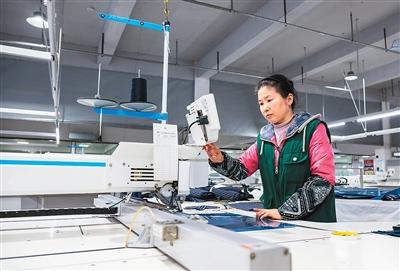
Group 1 - Anhui Province's Wuhu City is actively developing the garment industry by implementing tax reductions and subsidies to attract companies to settle in industrial parks, thereby promoting local employment [2] - The Ministry of Finance plans to adopt a more proactive fiscal policy in 2025, focusing on supporting economic growth and improving people's livelihoods while facilitating structural transformation of the economy [3][4] Group 2 - In 2025, the fiscal policy will emphasize four main areas: increasing counter-cyclical adjustments, boosting consumption, enhancing social welfare, and balancing risk prevention with development [3][4] - The fiscal deficit rate is set at around 4%, an increase of 1 percentage point from the previous year, with new government debt expected to reach 11.86 trillion yuan, a rise of 2.9 trillion yuan [3] - Special government bonds worth 500 billion yuan will be issued to supplement the core tier one capital of large state-owned commercial banks [3] Group 3 - The central government will allocate 667.4 billion yuan in employment support funds to enhance employment stability and expand social insurance subsidies [4] - The standard for fiscal subsidies for residents' medical insurance and basic public health services will be raised to 700 yuan and 99 yuan per person per year, respectively [4] - A gradual implementation of free preschool education is planned [4] Group 4 - The fiscal revenue in China showed a "front low, middle high, back stable" trend, with a 1.1% decline in the first quarter of the previous year, followed by a 0.6% increase in the second quarter and a 2.5% increase in the third quarter [5] - Total public budget revenue is expected to achieve a balance in 2025, supported by stable fiscal income and strong expenditure in key areas [6] Group 5 - A package of fiscal and financial policies aimed at promoting domestic demand will be introduced, including interest subsidies for loans to small and micro enterprises in key industries [7][8] - The loan guarantee plan for private enterprises will set a single credit limit of 20 million yuan, with higher compensation limits and risk-sharing ratios [7] - The optimization of personal consumption loan interest subsidy policies will include credit card installment payments, expanding the range of financial institutions involved [8]