货币宽松政策
Search documents
中美利差倒挂终结!美联储降息,中国货币政策终于松绑
Sou Hu Cai Jing· 2025-10-18 10:37
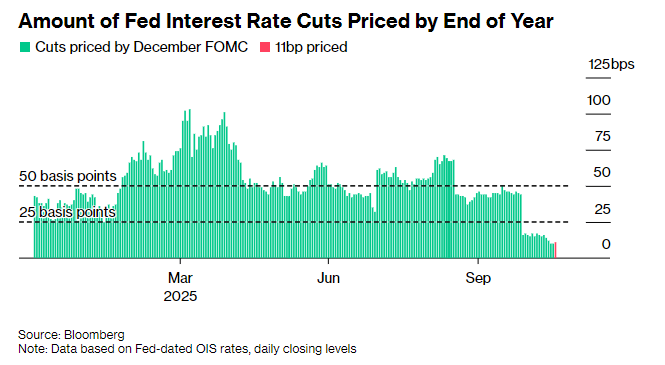
Group 1 - The recent shift in monetary policy by the Federal Reserve, indicated by Powell's dovish signals, suggests an end to the balance sheet reduction and a high probability of a 25 basis point rate cut in October [1][3] - The Federal Reserve's balance sheet has decreased from a peak of $9 trillion during the pandemic to approximately $6.6 trillion, reflecting significant quantitative tightening [3][5] - Global banks have raised their expectations for the Fed to cut rates 3-5 times next year, indicating a potential new cycle of rate cuts for the dollar [3][5] Group 2 - Powell's shift from hawkish to dovish is influenced by the political environment, as Trump is currently preoccupied with international issues, allowing the Fed to maintain its independence [5][6] - Economic indicators show a cooling inflation rate, with CPI growth decreasing from 3.4% in December 2024 to 2.8% in September 2025, and a declining job market, providing a conducive environment for rate cuts [5][6] - The anticipated rate cuts by the Fed are expected to lead to a 10% depreciation of the dollar by the end of next year, which would result in a relative appreciation of global assets [8] Group 3 - The Fed's policy shift is not just a domestic issue but will have global repercussions, particularly benefiting emerging markets, including China, as capital flows are expected to increase [8][9] - The end of the Fed's balance sheet reduction will free up monetary policy space for China, allowing for more flexible liquidity measures to support economic growth [8][9] - Overall, the transition from quantitative tightening to easing by the Fed marks a significant turning point in the dollar cycle and will reshape global capital flows and monetary policy strategies [8][9]
突然爆雷!美股恐慌指数飙升
天天基金网· 2025-10-17 01:08
Market Overview - The U.S. stock market experienced a decline, with all three major indices closing lower on October 16. The Dow Jones fell by 0.65% to 45,952.24 points, the S&P 500 dropped by 0.63% to 6,629.07 points, and the Nasdaq decreased by 0.47% to 22,562.54 points [4][5][6] - Concerns over bad debts in the banking sector intensified, leading to a widespread drop in bank stocks. The S&P Regional Banking Select Industry Index plummeted by 6.3%, marking its largest decline since April [14][16] Banking Sector - Zion Bank's stock fell by 13.1% due to significant provisions for bad debts related to several borrowers. Western Alliance Bancorporation's stock dropped by 10.8% following allegations of fraud against a borrower [15][18] - Major banks such as JPMorgan, Goldman Sachs, Citigroup, Morgan Stanley, and Bank of America all saw declines, with JPMorgan down over 2% and Citigroup down over 3% [18][19][20] Economic Indicators - The VIX index, a measure of market volatility, surged to its highest level since May, indicating increased investor anxiety [9] - The yield on the 10-year Treasury bond fell below 4%, reflecting market sentiment regarding economic uncertainty [9] Commodity Market - Oil prices hit a five-month low, with WTI crude oil settling at $57.46 per barrel and Brent crude at $61.06 per barrel, influenced by expectations of increased Russian oil supply [21] - Gold prices reached a record high, with spot gold rising by 2.9% to surpass $4,331 per ounce, driven by expectations of continued monetary easing by the Federal Reserve [22]
原料供应偏紧格局维持 沪锡窄幅波动【10月15日SHFE市场收盘评论】
Wen Hua Cai Jing· 2025-10-15 12:39
Group 1 - The core viewpoint indicates that the tin market is experiencing a decline in prices due to weak demand and macroeconomic uncertainties, despite tight supply conditions [1][2] - The main contract for tin closed at 281,710 yuan/ton, reflecting a decrease of 0.15% [1] - The Federal Reserve's indication of a potential easing in monetary policy has heightened risk aversion in the market, contributing to a decline in market sentiment [1] Group 2 - China's refined tin production saw a significant decline in September due to maintenance by leading enterprises, impacting overall supply [2] - Current tin prices remain relatively high, but downstream and end-user acceptance of these prices is low, leading to limited spot transactions [2] - The market is characterized by weak overall demand, particularly in the consumer electronics and home appliance sectors, with a noticeable reduction in orders [2] Group 3 - There is an expectation of supply recovery as major enterprises complete maintenance and resume operations, which could lead to a substantial increase in domestic refined tin production [2] - Despite tight supply conditions at the mining level, the release of production from Myanmar remains limited [2] - The short-term market dynamics are influenced by mixed fundamental factors, with a lack of strong drivers and significant reliance on macroeconomic sentiment [2]
瑞士睿盛銀行:对美国体制的信心减弱是美元走软的主要原因
Sou Hu Cai Jing· 2025-10-15 04:54
Core Viewpoint - The main reason for the weakening of the US dollar is the declining confidence in the US economy, as stated by Swiss Re. [1] Group 1: Economic Factors - Swiss Re indicates that the independence of central institutions, including the Federal Reserve, is being undermined under the Trump administration, leading to increasing skepticism in the foreign exchange market. [1] - Despite France being in a prolonged political crisis, the US dollar remains weak against the euro. [1] Group 2: Monetary Policy Impact - While it can be argued that monetary easing policies have pressured the dollar, this explanation is deemed insufficient by Swiss Re. [1] - The bank suggests that the dollar's weakness is unlikely to disappear in the short term. [1]
和讯投顾高璐明:美联储主席暗示十月底再度降息,今天还会跌吗?
Sou Hu Cai Jing· 2025-10-15 01:40
Group 1 - The Federal Reserve Chairman Powell indicated that the Fed may end balance sheet reduction and hint at a possible interest rate cut during the meeting on October 28-29, which is seen as a positive signal for global markets [1] - The emphasis on expanding domestic demand and strengthening the domestic cycle by high-level leaders is expected to benefit the consumer sector, fostering expectations for a rebound in related stocks [1] - The central bank's operation of 600 billion yuan in reverse repos is viewed as a supportive measure for the market, beneficial for both the economy and the market [1] Group 2 - The A-share market is likely to face adjustments today, as the positive news from the Fed has already been largely priced in, and trade and tariff issues remain the primary concerns affecting market sentiment [2] - The decline in spot silver and adjustments in crude oil prices are expected to negatively impact the commodity market, particularly oil [2] - The drop of nearly 2% in Chinese concept stocks indicates that the market will face certain pressures in the short term [2] Group 3 - The market has broken below previous breakout levels, indicating a shift back into a consolidation phase, increasing the likelihood of a pullback [3] - The significant volume increase during the market's decline suggests a short-term risk-off behavior among investors, complicating upward movement for the index [3] - Despite short-term volatility, the long-term upward trend remains intact, and investors are advised to reduce positions in underperforming stocks while being prepared to re-enter when the market stabilizes [3]
暴跌后果断出手!MARA(MARA.US)豪掷4600万美元抄底比特币
Zhi Tong Cai Jing· 2025-10-13 09:08
Group 1 - Institutional investors view the recent cryptocurrency market downturn as a buying opportunity rather than a sign of ongoing weakness, as evidenced by MARA Holdings' acquisition of 400 bitcoins worth $46.29 million [1] - Following the acquisition, MARA's total bitcoin holdings surpassed 53,000, making it the second-largest corporate holder of bitcoin, behind Strategy, which holds 640,031 bitcoins [1] - Bitcoin's price rebounded over 3% in the past 24 hours, recovering to above $115,000 after a significant liquidation event that saw over $19 billion in positions cleared [1] Group 2 - Swyftx's chief market analyst noted that the market chaos was quickly followed by a broad bottom-fishing trend, indicating a rapid return to normalcy after significant market resets [2] - MARA's actions are interpreted as a strategic response to geopolitical economic conditions, suggesting that there is still considerable upside potential for bitcoin [2] - Current declines in oil prices and demand are creating dual pressures on inflation expectations, potentially leading to a new round of monetary easing globally, which could support bitcoin prices [2]
铝产业链周度报告-20251010
Zhong Hang Qi Huo· 2025-10-10 11:42
1. Report Industry Investment Rating - No relevant content provided. 2. Core Viewpoints of the Report - Aluminum prices may maintain high - level volatility, but high prices may suppress consumption. Attention should be paid to changes in aluminum ingot inventories and macro - sentiment [62]. - Aluminum alloy shows strong follow - up to Shanghai Aluminum and is expected to be slightly stronger in the short - term. It is recommended to take a long - position on dips [60]. 3. Summary by Directory 3.1 Report Summary - Overseas political fluctuations increase the expectation of the Fed's interest rate cut. The US federal government's "shutdown" affects economic data release, and the ADP employment data shows a decline. The Fed has the intention to cut interest rates further, but is cautious due to inflation concerns. Attention should be paid to whether the US can release CPI data on October 15th and the resulting market sentiment [9][12]. - The domestic economy is slowly recovering. The manufacturing PMI in September increased slightly, and the consumer market during the National Day and Mid - Autumn Festival holidays showed good growth. The upcoming Fourth Plenary Session of the 20th Central Committee may focus on the "15th Five - Year Plan" and become a new market focus [14][16]. - The supply of domestic bauxite has limited growth due to environmental constraints and declining ore quality. The import of bauxite from Guinea is expected to increase after the rainy season, while the import from Australia has decreased [17][18][21]. - The supply of alumina is expected to remain in surplus. Although the operating capacity has not increased significantly, the high production and low overseas prices have opened the import window, and the future surplus pressure may increase [23][24][26]. - The operating rate of aluminum processing decreased slightly in the first week of October, in line with seasonal characteristics. The output of aluminum products increased slightly in August, and the demand is in the transition period between the off - season and the peak season [29][30][32]. - The real estate market's sales and investment continued to decline in August, but the new policies in first - tier cities have supported the market demand to some extent. The investment, new construction, and completion are still under pressure [34][35]. - The new energy vehicle industry maintained strong growth in August, with both production and sales increasing significantly year - on - year and month - on - month [37][38]. - The inventories of domestic and overseas exchanges decreased. The social inventory of aluminum ingots increased during the National Day holiday, and the domestic spot discount and LME aluminum premium both expanded [40][41][44]. - The output of recycled aluminum alloy decreased slightly in August, mainly due to the shortage of scrap and reduced procurement by traders. The operating rate of recycled aluminum has recovered recently, but the overall production is still affected by various factors. The import of aluminum alloy is expected to remain low in the fourth quarter, and the inventory has increased [48][49][59]. 3.2 Multi - Empty Focus - Bullish factors: The expected increase in overseas supply is limited, and the social inventory continues to be at a low level [7]. - Bearish factors: The long - term upward trend of aluminum prices is not clear, and the overseas macro - environment is uncertain [7]. 3.3 Data Analysis - **Bauxite**: In 2025, from January to August, the domestic bauxite output was 4086.1 million tons, a year - on - year increase of 7.8%. The import volume was 14175 million tons, a year - on - year increase of 31.4%, with a dependence of 78.4%. The import from Guinea increased by 38.5%, and the import from Australia decreased by 4.8% [18][21]. - **Alumina**: In August 2025, the output was 792.5 million tons, a year - on - year increase of 7.5%. The operating capacity increased, and the supply surplus pattern remained unchanged [24]. - **Aluminum processing**: In the first week of October, the overall operating rate of aluminum processing decreased to 62.5%. In August, the output of aluminum products was 554.8 million tons, a month - on - month increase of 1% and a year - on - year decrease of 4.2%. From January to August, the output was 4379 million tons, basically the same as the previous year [30][32]. - **Real estate**: In August 2025, the single - month real estate sales area, investment, new construction area, and completion area decreased year - on - year, with the decline in sales expanding. The new policies in first - tier cities have supported the market demand, and the new construction and completion are still under pressure [35]. - **Automobile**: In August 2025, the production and sales of automobiles increased month - on - month and year - on - year. The production and sales of new energy vehicles increased by more than 25% both month - on - month and year - on - year [38]. - **Inventory**: The LME aluminum inventory decreased to 508600 tons, and the SHFE aluminum inventory decreased by 0.83% to 123597 tons in the week of September 30th. As of October 9th, the social inventory of electrolytic aluminum was 63.4 million tons, an increase of 4.7 million tons compared with September 29th [41][44]. - **Aluminum alloy**: In August 2025, the output of recycled aluminum alloy was 61.45 million tons, a month - on - month decrease of 1.7% and a year - on - year increase of 8.6%. The import volume of unforged aluminum alloy in August was 7.10 million tons, a year - on - year decrease of 16.7%. As of October 10th, the weekly social inventory of aluminum alloy was 7.57 million tons, an increase of 0.26 million tons compared with the previous week, and the in - plant inventory was 6.15 million tons, an increase of 0.31 million tons compared with the previous week [49][55][59]. 3.4 Market Outlook - Aluminum prices are expected to maintain high - level volatility, and attention should be paid to changes in aluminum ingot inventories and macro - sentiment [62]. - Aluminum alloy shows strong follow - up to Shanghai Aluminum and is expected to be slightly stronger in the short - term. It is recommended to take a long - position on dips [60].
《有色》日报-20251010
Guang Fa Qi Huo· 2025-10-10 01:12
Report Industry Investment Rating No relevant information provided. Core Views Copper - Yesterday, copper prices continued to rise, driven by a weak US dollar and supply shortages. Macroscopically, the US government's shutdown and weak employment data led to expectations of further monetary easing by the Fed. Fundamentally, supply shortages in copper mines, such as the ongoing shutdown of the Grasberg mine and disruptions in other mines, have strengthened the support for copper prices. The主力 is advised to focus on the support level of 84,000 - 85,000 yuan/ton [1]. Aluminum - Alumina futures prices fluctuated widely, with the main contract closing down 0.28%. Spot prices in various regions generally declined, and the supply was abundant. The supply pressure persisted, with high domestic operating capacity and increasing overseas production. The demand was weak, with electrolytic aluminum plants having high raw material inventories and low procurement enthusiasm. It is expected that the short - term spot price of alumina will remain under pressure, with the main contract oscillating between 2,850 - 3,050 yuan/ton. - Shanghai aluminum futures prices fluctuated strongly, with the main contract moving up to around 21,000 yuan/ton. The market was affected by macro factors such as the US government shutdown and expectations of Fed rate cuts. In terms of supply, domestic electrolytic aluminum production declined slightly in September, and the proportion of molten aluminum increased. The demand showed structural characteristics, with some sectors improving but high aluminum prices suppressing downstream orders. After the holiday, the social inventory of aluminum ingots increased, and the spot premium was under pressure. It is expected that Shanghai aluminum will maintain a high - level oscillation pattern in the short term, with the main contract operating between 20,700 - 21,300 yuan/ton [3]. Aluminum Alloy - Casting aluminum alloy futures prices strengthened with the rise of aluminum prices, and the SMM spot ADC12 price also increased. The cost was supported by the rise of LME aluminum during the holiday and the tight supply of scrap aluminum. The supply was affected by raw material shortages and unclear tax policies, and the demand showed a mild recovery but with limited volume. The domestic social inventory of recycled aluminum alloy ingots increased, and the import loss expanded. It is expected that the short - term ADC12 price will maintain a high - level oscillation, with the main contract operating between 20,200 - 20,800 yuan/ton [4]. Zinc - Zinc prices maintained a strong operation, supported by low inventory and a weak US dollar. The LME zinc inventory continued to decline, and the US government shutdown led to a weak US dollar index. Domestically, the supply was expected to be loose, and the demand was not outstanding. The "strong outside, weak inside" pattern of zinc prices has been obvious since the second half of 2025. The short - term price of Shanghai zinc may rise due to macro - driving factors, but the fundamentals have limited elasticity for continuous upward movement. It may maintain an oscillation pattern, with the main contract between 21,800 - 22,800 yuan/ton [7]. Tin - Tin prices strengthened. The supply of tin ore remained tight, with low processing fees for smelters. Domestic tin ore imports in August were at a low level, and the crackdown on illegal tin mines in Indonesia before the holiday increased supply concerns. The demand was weak, with insufficient orders in the solder industry due to the sluggish consumer electronics and home appliance markets. Although AI computing power and photovoltaic industry growth drove some tin consumption, it was not enough to make up for the decline in traditional consumption. It is expected that tin prices will continue to oscillate strongly in the short term. The follow - up depends on the supply recovery in Myanmar. If the supply recovers, prices may weaken; otherwise, they may remain high [9]. Nickel - After the holiday, the nickel market showed a strong trend, driven by macro - sentiment and the overall boost of the non - ferrous sector. The US government shutdown and the uncertainty of the Fed's rate - cut path affected the market. In the industry, the policy expectations for the Indonesian nickel ore end have increased. The nickel ore price remained firm, but the nickel - iron market was sluggish, and the demand for stainless steel was weak. The demand for nickel sulfate was good in the peak season, but there were concerns about new production capacity and sustainable demand in the medium term. It is expected that the nickel price will oscillate strongly in the short term, with the main contract between 120,000 - 126,000 yuan/ton [11]. Stainless Steel - On the first trading day after the holiday, the stainless steel market rose slightly, affected by macro factors. The nickel ore price was firm, the nickel - iron price was weakly stable, and the chromium - iron market was driven by demand and cost. The supply pressure was increasing, with an expected increase in steel production in September. The demand improvement was not obvious, and the social inventory decline was slow. It is expected that the short - term stainless steel price will oscillate and adjust, with the main contract between 12,600 - 13,200 yuan/ton [12]. Lithium Carbonate - On the first trading day after the holiday, the lithium carbonate market oscillated. The main contract LC2511 rose 0.27%. The supply - side news included the approval of mining reports by Guoxuan High - tech and the acquisition of a mining license by Zangge Mining. The fundamentals were in a tight balance during the peak season. The production increased last week, mainly from new salt - lake projects and increased lithium - spodumene subcontracting. The demand was optimistic, with expected increases in iron - lithium and ternary orders. The whole - chain inventory continued to decline last week, with upstream smelters reducing inventory and downstream seasonal restocking. It is expected that the short - term lithium carbonate price will oscillate, with the main price center between 70,000 - 75,000 yuan/ton [14]. Summary by Relevant Catalogs Copper Price and Basis - SMM 1 electrolytic copper rose to 85,740 yuan/ton, up 3.00% from the previous day. The premium/discount of SMM 1 electrolytic copper remained unchanged at 15 yuan/ton. Other copper prices also showed varying degrees of increase, and the refined - scrap price difference increased by 11.13% [1]. Fundamental Data - In September, electrolytic copper production was 1.121 million tons, down 4.31% month - on - month. In August, electrolytic copper imports were 264,300 tons, down 10.99% month - on - month. The inventory of copper concentrates at domestic ports decreased, and the operating rates of copper rod production decreased [1]. Aluminum Price and Spread - SMM A00 aluminum rose to 20,960 yuan/ton, up 1.16%. The premium/discount decreased. Alumina prices in various regions declined. The import loss of aluminum increased, and the monthly spread showed different changes [3]. Fundamental Data - In September, alumina production was 7.6037 million tons, down 1.74% month - on - month, and electrolytic aluminum production was 3.6148 million tons, down 3.16% month - on - month. The operating rates of some aluminum processing industries increased slightly, and the social inventory of electrolytic aluminum increased [3]. Aluminum Alloy Price and Spread - SMM aluminum alloy ADC12 prices in different regions increased by about 0.95 - 0.96%. The refined - scrap price differences in different regions also increased. The monthly spread showed different changes [4]. Fundamental Data - In August, the production of recycled aluminum alloy ingots decreased slightly, while the production of primary aluminum alloy ingots increased. The import and export of unforged aluminum alloy ingots increased. The operating rates of some enterprises showed different trends, and the social inventory of recycled aluminum alloy ingots increased slightly [4]. Zinc Price and Spread - SMM 0 zinc ingot rose to 22,140 yuan/ton, up 1.42%. The import loss decreased slightly, and the monthly spread changed [7]. Fundamental Data - In September, refined zinc production was 600,100 tons, down 4.17% month - on - month. In August, refined zinc imports increased by 43.30%. The operating rates of zinc - related industries decreased slightly, and the inventory of zinc showed different changes [7]. Tin Spot Price and Basis - SMM 1 tin rose to 284,200 yuan/ton, up 2.53%. The LME 0 - 3 premium/discount decreased significantly [9]. Fundamental Data - In August, tin ore imports decreased slightly. In September, SMM refined tin production decreased by 31.71% month - on - month. The inventory of tin decreased in different markets [9]. Nickel Price and Basis - SMM 1 electrolytic nickel rose to 123,600 yuan/ton, up 0.94%. The import loss increased, and the monthly spread changed [11]. Supply and Inventory - China's refined nickel production increased slightly, while imports decreased. The inventory in different markets showed different trends, with an increase in LME inventory [11]. Stainless Steel Price and Spread - The price of 304/2B stainless steel coils in Wuxi and Foshan showed different trends. The raw material prices were relatively stable, and the monthly spread changed slightly [12]. Fundamental Data - The production of 300 - series stainless steel in China decreased slightly, while imports increased and exports increased slightly. The social inventory of 300 - series stainless steel decreased slightly [12]. Lithium Carbonate Price and Spread - The prices of battery - grade and industrial - grade lithium carbonate remained stable, and the price of lithium - spodumene concentrate decreased. The monthly spread changed [14]. Fundamental Data - In September, lithium carbonate production increased, and the demand also increased. The inventory decreased in different links, with upstream smelters reducing inventory and downstream increasing inventory [14].
半年暴涨1000美元!金价期现货双双突破4000美元,未来会否继续上行?
Di Yi Cai Jing· 2025-10-08 12:12
Core Viewpoint - The strong buying from various funds has led to a rapid increase in gold prices, with spot gold prices surpassing $4000 per ounce for the first time on October 8, 2023, marking a year-to-date increase of over 53% [1][5]. Group 1: Price Movements - On October 8, spot gold reached a peak of $4049.6 per ounce, while COMEX gold futures hit $4071.5 per ounce, reflecting a year-to-date increase of over 47% [1][5]. - The price of gold has surged by $1000 in just over six months, from $3000 per ounce in March to over $4000 in October [5][10]. - The gold price has shown significant volatility, with notable increases in September, where it broke through several key levels, including $3500, $3600, $3700, and $3800 [9][10]. Group 2: Market Drivers - The recent surge in gold prices is attributed to strong buying from three main groups: increasing Western ETF positions, potential acceleration of purchases by central banks, and rising speculative positions [2][3]. - China's central bank has continued to increase its gold reserves, reaching 7406 million ounces by the end of September, marking the 11th consecutive month of increases [2]. - Domestic gold ETFs in China have also seen significant inflows, with notable amounts recorded in various funds, indicating strong local demand [2]. Group 3: Future Outlook - Analysts remain optimistic about gold's upward momentum, citing central bank purchases as a directional support, even if the absolute quantity of purchases has slowed [3]. - Bridgewater Associates' founder, Ray Dalio, suggests that investors should hold a larger percentage of their portfolios in gold, viewing it as a safer asset compared to the dollar [3]. - Noan Fund anticipates a continued long-term upward trend for gold prices, driven by factors such as the Federal Reserve's monetary policy and increased central bank purchases [3].
铜价在美政府停摆期间走高 供应端扰动持续提供支撑
Sou Hu Cai Jing· 2025-10-07 02:33
Group 1 - Copper prices have risen due to investor focus on the Federal Reserve's interest rate outlook amid the U.S. government shutdown, with LME copper futures reaching a peak increase of 0.6% [1] - Supply disruptions from a major copper mine in Indonesia and other regions have supported copper prices [1] - The U.S. government shutdown has hindered the release of economic data that could impact the Federal Reserve's policy outlook, despite traders betting on further monetary easing [1] Group 2 - Traders are closely monitoring the production outlook of Freeport-McMoRan's Grasberg copper mine, which has faced production disruptions since a landslide incident last month [1] - Freeport-McMoRan announced that it has located the bodies of workers who were missing after the landslide, but has not updated its production guidance since previously lowering it [1]