
出口管制

Search documents
中国暂停EDA公司新思科技收购Ansys审查
是说芯语· 2025-06-11 05:14
Core Viewpoint - The Chinese regulatory authority has suspended the antitrust review of Synopsys' acquisition of Ansys, adding uncertainty to the deal amid escalating US-China technology tensions [1][2]. Group 1: Acquisition Details - Synopsys announced a final acquisition agreement with Ansys on January 16, 2024, with a total transaction value of approximately $35 billion, where Ansys shareholders are expected to hold about 16.5% of the new company post-merger [1]. - The merger is viewed as a "strong alliance," combining Synopsys' significant position in the EDA (Electronic Design Automation) sector with Ansys' expertise in industrial simulation software, which spans various industries including automotive, aerospace, and electronics [1]. Group 2: Regulatory Environment - The suspension of the antitrust review by Chinese regulators is seen as a cautious decision influenced by the US's recent export control measures targeting China's semiconductor industry, which has led Synopsys to halt sales and technical support activities in China [2]. - Analysts suggest that the Chinese regulatory stance is a response to US actions perceived as attempts to restrict China's chip design capabilities, indicating a need to maintain market competition and assert technological sovereignty [2]. Group 3: Global Antitrust Review Progress - Prior to the suspension, the UK's Competition and Markets Authority (CMA) and the European Commission expressed concerns that the merger could weaken competition in specific markets related to digital chip RTL power analysis software and optical software [3]. - To address these concerns, Synopsys and Ansys proposed several remedial measures, including divesting Ansys' RTL power analysis business and selling Synopsys' optical solutions group, which helped alleviate regulatory worries in Europe [3]. - Despite the ongoing uncertainties, 21 brokerages, including Berenberg, continue to maintain a "buy" rating for Synopsys, although the market remains cautious about the future of the transaction [3].



国泰君安期货所长早读-20250611
Guo Tai Jun An Qi Huo· 2025-06-11 02:12
1. Report Industry Investment Ratings No industry investment ratings were provided in the report. 2. Core Viewpoints - Nickel and stainless - steel: The reality supports and weak expectations of nickel prices are in a game, and nickel prices fluctuate. For stainless - steel, negative feedback leads to an increase in production cuts, and steel prices fluctuate within a range. The short - term stainless - steel is in low - level shock, and the medium - term pressure alleviation depends on production cut trends. If the production cuts in June are fulfilled, the excess pressure may ease in the medium term, and there may be a repair opportunity for steel prices in the third quarter, but a significant repair is difficult [8][37]. - Zinc: In the medium term, it remains bearish, and the long - domestic and short - foreign arbitrage position can be held. The logic that the increase in zinc ore supply is transmitted to the smelting end, increasing the supply pressure, still applies. With the end of refinery maintenance and the entry of the demand side into the off - season, the price is weak. In the short term, the price may decline slightly, and the decline will be more fluent as the off - season deepens [10]. - Other commodities: Gold shows that non - farm payrolls slightly exceed expectations; silver has a technical breakthrough; for copper, inventory reduction supports the price; aluminum fluctuates in a range; alumina declines slightly; lead has weak supply and demand and fluctuates in a range; tin stops falling and rebounds; lithium carbonate has differences between bulls and bears and may still face pressure above; industrial silicon's disk fluctuates depending on market sentiment; polysilicon is recommended for short - position allocation considering SNEC conference information; for iron ore, expectations are repeated and it fluctuates in a range; rebar and hot - rolled coil are in low - level shock; ferrosilicon and silicomanganese fluctuate in a wide range; coke fluctuates in a wide range, and coking coal has stricter safety inspections and fluctuates in a wide range; thermal coal demand awaits release and it fluctuates in a wide range; logs fluctuate repeatedly [12]. 3. Summaries by Related Catalogs 3.1 Pre - market Readings - **Stainless - steel**: Short - term low - level shock, medium - term pressure alleviation requires attention to production cut trends. In June, Chinese stainless - steel production is 3.239 million tons, with a year - on - year and month - on - month decrease of 1% and 5% respectively, and the cumulative year - on - year growth rate drops to 4%. In June, Indonesian stainless - steel production is 360,000 tons, with a year - on - year and month - on - month decrease of 9% and 0% respectively, and the cumulative year - on - year growth rate drops to - 2% [8]. - **Zinc**: Medium - term bearish, long - domestic and short - foreign arbitrage position can be held. The increase in zinc ore supply is transmitted to the smelting end, increasing supply pressure, while demand is in the off - season, and the price is weak [10]. 3.2 Gold and Silver - **Fundamentals**: Provide price, trading volume, position, inventory, and spread data of gold and silver futures and spot, as well as exchange rate data. The trend intensity of both gold and silver is 0, indicating a neutral view [17][19]. - **News**: Include news such as the US approaching an agreement to partially exempt steel tariffs on Mexico, Trump's remarks on the Los Angeles riot, the US "stablecoin bill" voting, and the UK's employment situation [17][20]. 3.3 Copper - **Fundamentals**: Provide price, trading volume, position, inventory, and spread data of copper futures and spot. The trend intensity of copper is 0, indicating a neutral view [21][23]. - **News**: The US - China negotiation is reported to be "progressing smoothly", and some copper mines have production suspension situations due to mechanical failures, wildfires, etc. China's copper ore imports increase, while un - wrought copper and copper product imports decrease [21][23]. 3.4 Aluminum and Alumina - **Fundamentals**: Provide price, trading volume, position, inventory, and spread data of aluminum and alumina futures and spot, as well as cost and profit data. The trend intensity of both aluminum and alumina is 0, indicating a neutral view [24][26]. - **News**: The US Treasury Secretary is considered a candidate for the next Fed Chairman [24][26]. 3.5 Zinc - **Fundamentals**: Provide price, trading volume, position, inventory, and spread data of zinc futures and spot. The trend intensity of zinc is - 1, indicating a bearish view [27][28]. - **News**: The situation in Los Angeles is turbulent, and California sues the Trump administration [28]. 3.6 Lead - **Fundamentals**: Provide price, trading volume, position, inventory, and spread data of lead futures and spot. The trend intensity of lead is 0, indicating a neutral view [30][31]. - **News**: Similar to zinc, related to the Los Angeles situation [31]. 3.7 Tin - **Fundamentals**: Provide price, trading volume, position, inventory, and spread data of tin futures and spot. The trend intensity of tin is 1, indicating a bullish view [34][36]. - **News**: Similar to gold and silver, including news about the US, UK, etc [34][35]. 3.8 Nickel and Stainless - steel - **Fundamentals**: Provide price, trading volume, position, and cost - profit data of nickel and stainless - steel futures and spot. The trend intensity of both nickel and stainless - steel is 0, indicating a neutral view [37]. - **News**: Include events such as Canada's potential nickel export suspension, Indonesia's nickel project production, and the Philippines' discussion of a nickel export ban [37][40]. 3.9 Lithium Carbonate - **Fundamentals**: Provide price, trading volume, position, inventory, and spread data of lithium carbonate futures and spot, as well as raw material price data. The trend intensity of lithium carbonate is 0, indicating a neutral view [43][45]. - **News**: The price of battery - grade lithium carbonate index rises, and China's export of equipment manufacturing products increases [44]. 3.10 Industrial Silicon and Polysilicon - **Fundamentals**: Provide price, trading volume, position, inventory, cost - profit data of industrial silicon and polysilicon futures and spot, as well as related product price data in the photovoltaic industry. The trend intensity of industrial silicon is - 1, and that of polysilicon is - 2, indicating bearish views [47][49]. - **News**: A photovoltaic project of Longi Green Energy has an environmental impact assessment report [47]. 3.11 Iron Ore - **Fundamentals**: Provide price, trading volume, position, and spread data of iron ore futures and spot. The trend intensity of iron ore is 0, indicating a neutral view [50]. - **News**: China's May CPI decreases year - on - year, and PPI decreases month - on - month [50]. 3.12 Rebar and Hot - rolled Coil - **Fundamentals**: Provide price, trading volume, position, and spread data of rebar and hot - rolled coil futures and spot. The trend intensity of both rebar and hot - rolled coil is 0, indicating a neutral view [52][54]. - **News**: China's steel exports increase, imports decrease, and steel production and inventory data change [53][54]. 3.13 Ferrosilicon and Silicomanganese - **Fundamentals**: Provide price, trading volume, position, and spread data of ferrosilicon and silicomanganese futures and spot. The trend intensity of both ferrosilicon and silicomanganese is 0, indicating a neutral view [56][58]. - **News**: The prices of ferrosilicon and silicomanganese in different regions change, and some steel mills have procurement prices and production adjustment plans [57]. 3.14 Coke and Coking Coal - **Fundamentals**: Provide price, trading volume, position, and spread data of coke and coking coal futures and spot. The trend intensity of coke is - 1, and that of coking coal is 1, indicating bearish and bullish views respectively [60][63]. - **News**: Provide port prices and index data of coking coal, and information on the long and short positions of futures contracts [60][62]. 3.15 Thermal Coal - **Fundamentals**: Provide price, trading volume, position, and inventory data of thermal coal. The trend intensity of thermal coal is 0, indicating a neutral view [66][68]. - **News**: Provide port and origin prices of thermal coal, and information on the long and short positions of futures contracts [67]. 3.16 Logs - **Fundamentals**: Provide price, trading volume, position, and spread data of log futures and spot. The trend intensity of logs is 1, indicating a bullish view [71][73]. - **News**: China's May CPI decreases year - on - year, and PPI decreases month - on - month [73].
这次谈判美方来了谁?中美经贸磋商机制首次会议将继续进行
财联社· 2025-06-10 03:34
当地时间6月9日,中美双方代表团在英国伦敦举行中美经贸磋商机制首次会议。 根据会议公布的照片,可以看到,美方代表团主要成员包括 美国财政部长贝森特、 美国贸易代表格里 尔和 美国商务部长卢特尼克。 具体从美方 代表团 的职责来看: 美国财政部长贝森特负责宏观经济和金融问题 ,是特朗普 政府 关税战略执行的关键人物,本身有统筹 协调的作用, 牵头负责与多国的谈判 。 贝森特也对这些话题很感兴趣 ,作为前对冲基金经理,贝森特 一直 面临来自金融市场的压力,其 被 要求 就贸易协定做出澄清,以减少 对美国 经济 的冲击。 美国经济当前至少有四个痛点: (1)宏观经济增速放缓。美国 2025 年一季度 GDP 环比萎缩 0.3% 。 (2)通胀 出现上行的压力,美国 1 年及 5 年通胀预期甚至飙升到了 6.7% 和 4.4% 。 (3)影响制造业。关税政策并未给美国制造业带来积极影响,纽约联储制造业指数恶化至 -9.2,处于 负值区间,这反映出美国的制造业仍然处于收缩状态。 (4)贸易放缓。美国 4 月进口额出现史上最大降幅,由于不确定关税的变化,美国贸易大幅放缓。 面对这些不确定性 , 贝森特亟需给美国传递确定性 ...

美检方指控加密企业家洗钱5亿美元并涉助俄获取敏感技术
news flash· 2025-06-09 21:45
金十数据6月10日讯,据英国金融时报,美国检方以逃避制裁及违反出口管制罪起诉加密货币支付公司 Evita的创始人Iurii Gugnin,指控其洗钱超5亿美元并协助俄罗斯获取敏感技术。布鲁克林联邦法院公布 的法庭文件显示,Gugnin周一被指控犯有电信和银行欺诈、洗钱和其他罪行。司法部称其在纽约被捕并 提审。检方指控Gugnin利用其公司为境外客户支付敏感电子产品,其中包含受出口管制的美国设计的服 务器,并通过洗钱为俄罗斯国家原子能公司(Rosatom)采购零部件。 美检方指控加密企业家洗钱5亿美元并涉助俄获取敏感技术 ...
特朗普据称或调出口举措,盘中芯片指数涨近3%、中概指数涨超2%
Hua Er Jie Jian Wen· 2025-06-09 16:41
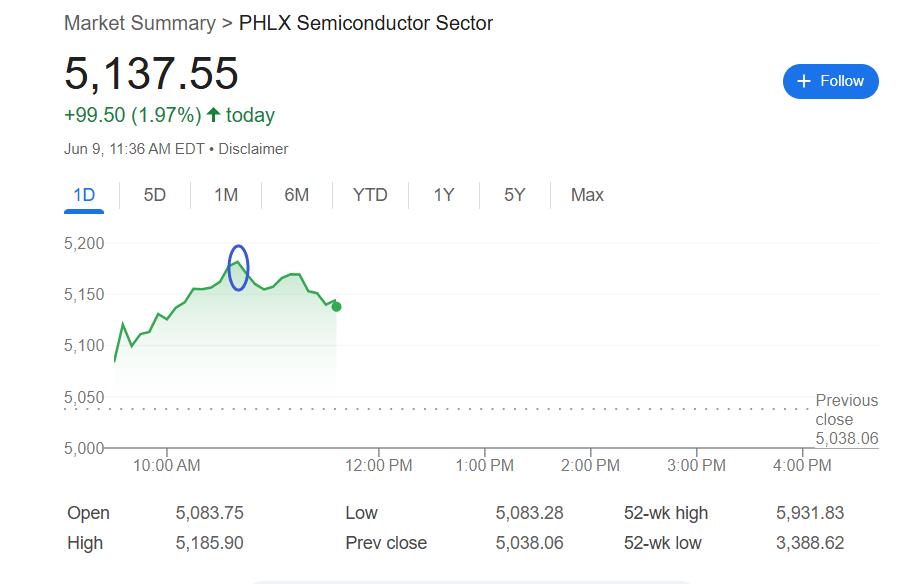
美东时间6月9日周一美股早盘时段,媒体称,美国总统特朗普授权,可能谈判调整出口举措。 消息传出后,美股芯片股和热门中概股总体加速上涨。 费城半导体指数刷新日高,日内近3%,纳微半导体涨约21%,Wolfspeed涨9.3%,半导体ETF SOXL涨约9%,AMD涨4.8%,Arm 控股涨4.5%,新思科技涨4%,阿斯麦ADR涨3.4%,英伟达涨约2%,台积电ADR涨1.7%。 北京时间6月5日上周四晚,中美两国元首通电话。央视新媒体玉渊谭天发文指出,有关两国元首通电话的新闻稿提到: "中国人一向言必行、行必果,既然达成了共识,双方都应遵守。日内瓦会谈之后,中方严肃认真执行了协议。美方 应实事求是看待取得的进展,撤销对中国实施的消极举措。" 文章称,这段话有两个重点词,分别对应两层意思。一个是"言必行、行必果",它表达了中方不满。在日内瓦会谈之后,中方 按照联合声明达成的共识,取消或暂停了针对美"对等关税"采取的相关关税和非关税措施。美方却小动作不断,陆续新增出台 多项对华歧视性限制措施,包括发布AI芯片出口管制指南、停止对华芯片设计软件(EDA)销售、宣布撤销中国留学生签证 等。 文章写道,中方明确表达了不满 ...
出口许可批准,稀土磁材如何看待?
2025-06-09 15:30
Summary of Conference Call Records Industry Overview - The conference call primarily discusses the rare earth materials industry and the precious metals market, particularly focusing on the implications of U.S.-China trade relations and export controls on these sectors [1][3][4][7]. Key Points and Arguments Rare Earth Materials - Concerns regarding export controls and terminal demand have intensified following tariff impacts in April, but negotiations in May have alleviated recession expectations, although export controls remain in place [1][4]. - The approval of export licenses by the Chinese Ministry of Commerce has improved market sentiment, leading to a rise in rare earth prices, with neodymium oxide reaching a new high of 450,000 yuan [4][8]. - The U.S. administration's acknowledgment of China's irreplaceable position in the rare earth supply chain has reinforced the strategic value of the rare earth sector, reducing concerns over valuation [3][7]. - There is a notable improvement in external demand compared to April and May, with overseas manufacturers expected to significantly replenish their inventories, which will support stable price increases in rare earth materials [8][10]. Precious Metals Market - Recent price increases in precious metals such as platinum, palladium, and silver are attributed to reduced tariff-related risk and a decrease in recession fears, leading to a rebound in these metals [2]. - Gold prices have stabilized above $3,000 per ounce, with diminishing resistance for upward movement as tariff narratives weaken [2]. - Investment opportunities in Hong Kong stocks related to gold and magnetic materials are highlighted, as they generally trade at a discount compared to their A-share counterparts [6]. Copper and Aluminum Market - The copper and aluminum markets are currently characterized by strong realities but weak expectations, with notable valuation advantages [5]. - The macroeconomic environment is expected to remain stable, which may lead to a correction in the strong performance of copper and aluminum [5]. Additional Important Insights - The approval process for export licenses typically takes 45 to 60 days, indicating a structured approach to managing export controls [4]. - The ongoing geopolitical tensions and regulatory scrutiny surrounding rare earth exports suggest that while there may be some easing, significant restrictions will likely persist [7][10]. - Recommendations for investment focus on leading companies in the rare earth and magnetic materials sectors, such as Northern Rare Earth and Zhongke Sanhuan, which are expected to benefit from improved orders due to external demand recovery [11]. This summary encapsulates the critical insights from the conference call, emphasizing the dynamics of the rare earth and precious metals markets amid evolving trade relations and regulatory landscapes.
“不止有稀土,特朗普才发现:天平已向中国倾斜”
Guan Cha Zhe Wang· 2025-06-09 07:47
Core Viewpoint - China's dominance in the rare earth supply chain has shifted the balance of power in trade negotiations, particularly against the backdrop of U.S. tariffs and export controls [1][4]. Group 1: China's Export Control Measures - Following the U.S. imposition of tariffs as high as 145% on Chinese goods, China implemented export controls on seven categories of heavy rare earth elements, including samarium and gadolinium [3][4]. - Analysts believe that these export controls not only countered U.S. actions but also affected third countries that had taken a tougher stance against China due to U.S. pressure [4][6]. - China is establishing an export licensing system for rare earth products, which may serve as a long-term policy, indicating a potential for ongoing control over these critical materials [6][7]. Group 2: Implications for Global Supply Chains - The leverage gained from rare earth export controls could be replicated in other high-tech supply chains, such as semiconductors, if the U.S. tightens its chip regulations further [4][5]. - China is a leader in the production of advanced materials like high-performance magnets, transistors, and batteries, contributing to a robust industrial ecosystem in electric vehicles, drones, and AI technologies [5][10]. - The global demand for rare earth elements in civilian applications is increasing, and China is considering the balance between its export controls and the reasonable needs of other countries [8][10]. Group 3: International Reactions and Future Outlook - Countries are intensifying efforts to reduce reliance on Chinese industrial supply chains, but the effectiveness of China's export controls suggests that this transition will not be quick or easy [7][8]. - Recent surveys indicate that over 75% of companies affected by rare earth controls can only maintain inventory for three months, highlighting the urgency of the situation [6]. - China is open to enhancing communication regarding export controls to facilitate compliant trade, while also maintaining its national security interests [8].
长江期货市场交易指引-20250609
Chang Jiang Qi Huo· 2025-06-09 05:56
期货市场交易指引 2025 年 06 月 09 日 | 宏观金融 | | | --- | --- | | ◆股指: | 震荡偏强 | | ◆国债: | 震荡 | | 黑色建材 | | | ◆螺纹钢: | 暂时观望 | | ◆铁矿石: | 暂时观望 | | ◆双焦: | 震荡运行 | | 有色金属 | | | ◆铜: | 区间谨慎交易 | | ◆铝: | 建议轻仓试空 | | ◆镍: | 建议观望或逢高做空 | | ◆锡: | 区间交易 | | ◆黄金: | 区间交易 | | ◆白银: | 区间交易 | | 能源化工 | | | ◆PVC: | 震荡偏弱。 | | ◆纯碱: | 01 合约空头思路。 | | ◆烧碱: | 震荡偏弱。 | | ◆苯乙烯: | 震荡偏弱。 | | ◆橡胶: | 震荡偏弱。 | | ◆尿素: | 震荡运行 | | ◆甲醇: | 震荡运行 | | ◆聚烯烃: | 宽幅震荡 | | 棉纺产业链 | | | ◆棉花棉纱: | 震荡反弹 | | ◆苹果: | 震荡运行 | | ◆PTA: | 区间震荡 | | 农业畜牧 | | | ◆生猪: | 逢高偏空 | | ◆鸡蛋: | 逢高偏空 | ...
商品研究晨报:贵金属及基本金属-20250609
Guo Tai Jun An Qi Huo· 2025-06-09 02:11
2025年06月09日 国泰君安期货商品研究晨报-贵金属及基本金属 观点与策略 期货研究 | 黄金:非农小幅超预期 | 2 | | --- | --- | | 白银:技术突破 | 2 | | 铜:美元回升,限制价格上涨 | 4 | | 铝:区间震荡 | 6 | | 氧化铝:继续下行 | 6 | | 锌:上方偏承压 | 8 | | 铅:低位运行 | 9 | | 锡:止跌回升 | 10 | | 镍:现实支撑与弱势预期博弈,镍价震荡运行 | 12 | | 不锈钢:负反馈传导减产增加,钢价区间震荡 | 12 | 商 品 研 究 国 泰 君 安 期 货 研 究 请务必阅读正文之后的免责条款部分 1 资料来源:同花顺,国泰君安期货 黄金:非农小幅超预期 白银:技术突破 | 王蓉 | 投资咨询从业资格号:Z0002529 | wangrong013179@gtjas.com | | --- | --- | --- | | 刘雨萱 | 投资咨询从业资格号:Z0020476 | liuyuxuan023982@gtjas.com | 【基本面跟踪】 商 品 研 究 贵金属基本面数据 所 2025 年 6 月 9 日 | | | ...
早餐 | 2025年6月9日
news flash· 2025-06-08 23:38
Group 1 - US stock market rose last Friday, with the S&P 500 reaching 6000 points and Tesla gaining over 3% [1] - The US Treasury yields and the dollar increased, while silver continued to rise [1] - China's central bank increased its gold reserves for the seventh consecutive month, adding 60,000 ounces, although the pace of accumulation is slowing [1] Group 2 - Tesla's RoboTaxi is set to be released this week, sparking debates between bulls who see key progress and bears who question the scalability [1] - BYD's Li Yunfei criticized competitors as "both stupid and bad," while Geely's Yang Xueliang accused others of "crying thief" [1]