新能源转型

Search documents
2025年铂钯期货半年度行情展望:需求回暖驱动铂金走强,钯金过剩格局延续
Guo Tai Jun An Qi Huo· 2025-06-19 12:53
Report Industry Investment Rating - Not provided in the given content Core Viewpoints of the Report - In 2025, the supply growth rate of platinum is -0.4%, and the demand growth rate is 10.8%, resulting in a supply-demand gap of 41.2 tons. The supply growth rate of palladium is -1.7%, and the demand growth rate is -8.6%, with a supply surplus of 6 tons. Platinum prices are expected to strengthen oscillatingly, while palladium may continue to face pressure [3][53]. - In the automotive sector, the mid - term demand for platinum - group metals is mainly supported by PHEV. Platinum is expected to increase by 3 - 5% in the automotive sector in 2025, while palladium demand is expected to decline by less than 1%. [3][52][53] Summary According to the Table of Contents 1. 2025 H1 Platinum and Palladium Price Trends Review - As of June 16, 2025, Nymex platinum prices rose 36.25%, and palladium rose 15.01%. In Q1, prices oscillated weakly due to uncertain US tariff policies and heavy rainfall in South African mines. In Q2, prices recovered after hitting bottom, affected by trade frictions, tariff alleviation, and gold - platinum ratio changes [6]. 2. 2025 H2 Platinum and Palladium Fundamental Market Analysis 2.1 Supply Side - **2.1.1 South African Extreme Weather Hit Global Platinum and Palladium Supply, Oligopoly Couldn't Hide Short - term Vulnerability** - Global primary platinum and palladium production is highly concentrated. South Africa, Zimbabwe, Russia, and the US account for 96% of global production. The top four mining companies' market share exceeds 70% for platinum and over 80% for palladium [12]. - In Q1 2025, platinum mine supply dropped 13% year - on - year to 34 tons. South African heavy rainfall, low smelting capacity utilization in Zimbabwe, and North American mine restructuring led to the decline. Although production in South Africa recovered in Q2, long - term challenges may limit output. The annual platinum supply is expected to be 3.869 million ounces, down 6.38% year - on - year [17][19]. - **2.1.2 Recycled Supply Kept Growing, with Scrap Auto Catalysts Contributing the Main Increment** - Recycling accounts for 20 - 25% of the total platinum and palladium supply. Scrap auto catalysts contribute 70 - 75% of the recycled supply. The "scrap - for - new" policy and high platinum content in old cars are expected to accelerate scrap recycling in H2 2025, but some dismantlers' hoarding may suppress supply [24][26]. - In H1 2025, platinum jewelry consumption recovered, which may drive the recycling market. However, due to low inventory, the annual recycling volume may still decline [31]. 2.2 Demand Side - **2.2.1 Automotive Sector Platinum and Palladium Demand Grew Moderately** - **2.2.1.1 In terms of total volume, the global automotive production's platinum and palladium demand was revised down, affected by demand overdraft and tariff shocks** - In 2025, global automobile production is expected to be about 92 million units, a slight decline of less than 1% year - on - year. In the Chinese market, demand overdraft and inventory pressure may affect production and platinum - palladium demand. In overseas markets, tariffs and weak macro - economy may also impact demand [36]. - **2.2.1.2 Structurally, mid - term demand is mainly supported by PHEV** - The mid - term demand for platinum - group metals in the automotive sector is mainly supported by PHEV. In H1 2025, the PHEV market share reached 15.89%, up about 3 percentage points from the previous year. As other manufacturers follow up on PHEV technology, the market share may further increase. Platinum is expected to increase by 3 - 5% in the automotive sector in 2025, while palladium demand is expected to decline by less than 1% [43][44]. - **2.2.2 Jewelry Sector Platinum and Palladium Demand Grew Rapidly, with Gold - Platinum Substitution Driving Up Expectations** - In 2025, global platinum jewelry demand is expected to grow about 15%. The high gold price has made platinum jewelry more attractive. In the Chinese market, new platinum showrooms and counters have emerged. In the Japanese market, demand is expected to grow steadily, while in India, growth may slow due to US tariff policies [49].
尊界S800在安徽批量投产 我国汽车工业迈向价值链高端
Xin Hua Cai Jing· 2025-06-18 16:18
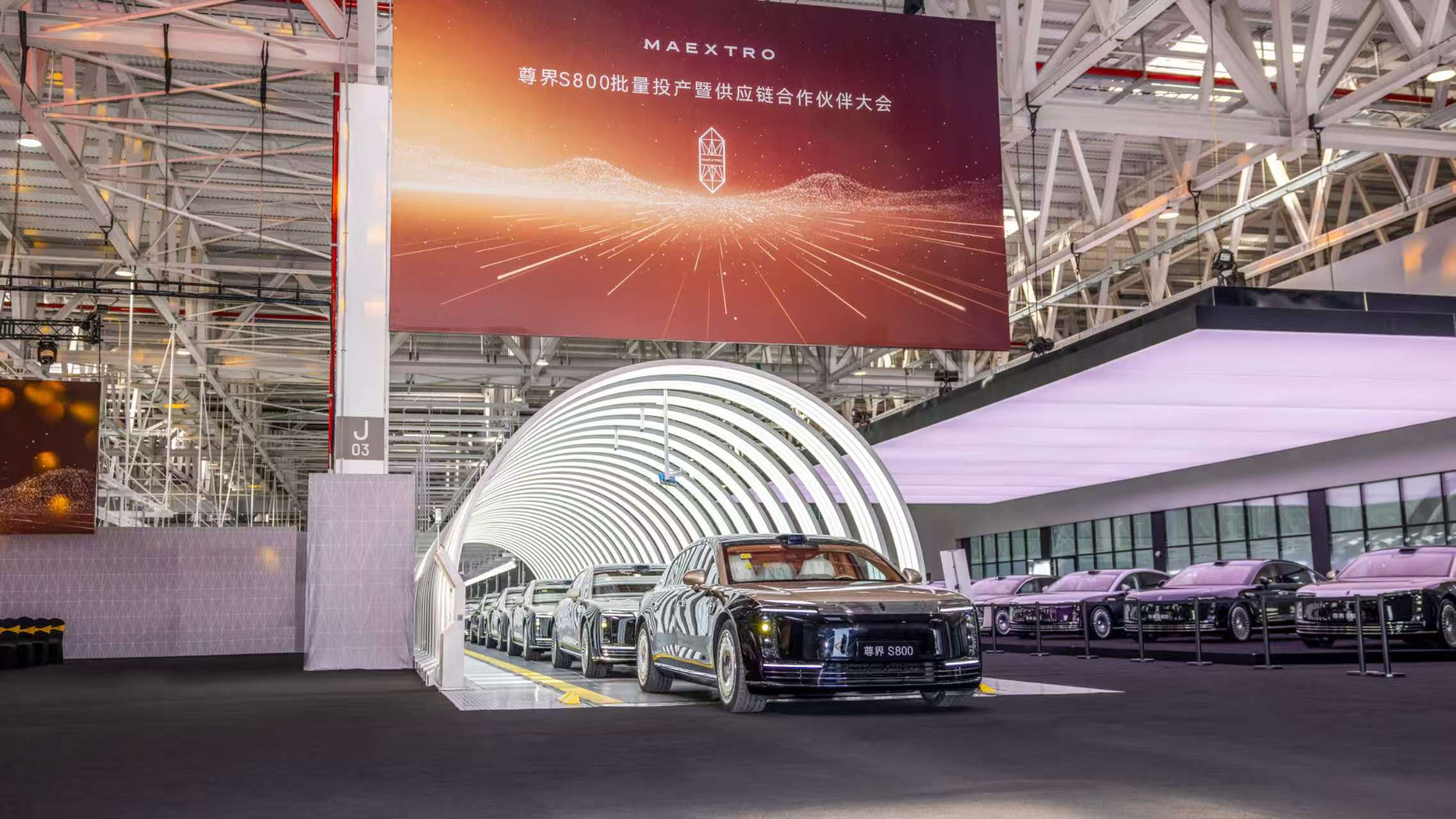
新华财经合肥6月18日电(记者吴慧珺)记者从安徽江淮汽车集团股份有限公司获悉,江淮与华为合作打造的超豪华轿车尊界S800于18日正式开启批量投 产,下周将开启首批交付。目前,双方正在加速推进尊界品牌第二款和第三款产品的研发。 6月18日,尊界S800批量投产仪式现场。 受访者供图 编辑:王菁 位于安徽省合肥市肥西县的尊界超级工厂俯瞰图。 受访者供图 尊界S800凝聚了中国智造的系统力量。在研发端,江淮汽车与华为组建了超5000人的研发团队,与清华大学、中国科学技术大学、同济大学等高校建立了 深度产学研合作机制,并与中国科学院院士团队、中国工程院院士团队在多个领域展开前沿技术攻关;在制造端,联合220余家供应链伙伴结成"品质同 盟",带动上下游共同进步。 "尊界S800批量投产是中国汽车品牌自信崛起、中国汽车工业由大向强的生动诠释,充分展现了在全球汽车工业变革浪潮中,中国汽车工业抓住机遇,将向 新能源转型过程中取得的先发优势,真正转化成了产业领先优势。"中国汽车工业协会常务副会长兼秘书长付炳锋说,江淮与华为的跨界合作,也是我国汽 车工业走出的一条以开放共赢推动产业融合、以科技创新破除"内卷"的发展新路。 上市2 ...


菱电电控拟4.78亿收购奥易克斯加码汽车电子 上市后业绩变脸净利连跌4年
Xin Lang Cai Jing· 2025-06-16 09:35
Core Viewpoint - The acquisition of 98.426% of Jiangsu Aoyikes Automotive Electronics Technology Co., Ltd. by Lingdian Electric Control for 478 million yuan is seen as a last-ditch effort to reverse the declining performance of Lingdian Electric Control, which has faced a continuous drop in net profit for four years [1][4]. Company Performance - Lingdian Electric Control's net profit has plummeted from 157 million yuan in 2020 to 15.9462 million yuan in 2024, a decrease of 89.8% [1]. - The company's gross margin has dropped from 35.83% in 2022 to 19.37% in 2024, while the net margin has fallen from 9.41% to 1.33% [1]. - In Q1 2025, the company reported a net profit increase of 4521.16% to 17.48 million yuan, but the non-recurring net profit was only 14.66 million yuan, indicating a heavy reliance on government subsidies and investment income [2]. Acquisition Details - Aoyikes, established in 2013, reported a revenue of 472 million yuan in 2024, showing no growth, and a net profit of 8.7311 million yuan, down over 40% from 2023 [3]. - The acquisition price of 478 million yuan represents a 53.97% premium over the assessed value of 486 million yuan for 100% of Aoyikes' equity [3]. - Performance compensation clauses have been set, requiring Aoyikes to achieve a cumulative net profit of at least 119 million yuan from 2025 to 2027 if the deal is completed in 2025 [3]. Market Challenges - Both companies are heavily reliant on fuel vehicle EMS products, with Lingdian Electric Control generating 81.64% of its revenue from EMS-related products in 2023, while only 10.17% came from new energy vehicle controllers [5]. - The Chinese automotive electronic control market is dominated by international companies, with local EMS suppliers holding only 1% market share, indicating a challenging competitive landscape for both companies [6].

最新议题!2025(第三届)中国固态电池技术发展与市场展望高峰论坛
鑫椤锂电· 2025-06-16 08:52
Core Viewpoint - The article emphasizes the critical role of solid-state batteries as the next-generation battery technology, addressing the limitations of traditional liquid lithium-ion batteries and highlighting their potential in various applications, including electric vehicles and energy storage systems [2][3]. Group 1: Background and Market Demand - The global energy transition and low-carbon development trends are driving the demand for advanced battery technologies with higher performance and safety [2]. - Traditional liquid lithium-ion batteries face technical bottlenecks in energy density and safety, necessitating the development of solid-state batteries [2]. Group 2: Technological Advancements - Solid-state batteries utilize solid electrolytes, offering significant improvements in energy density, safety, and cycle life compared to traditional batteries [2]. - China has made substantial progress in solid-state battery technology, achieving breakthroughs in material systems, cell structure design, and manufacturing processes [3]. Group 3: Current Production and Challenges - In 2024, China's production of solid-state and semi-solid-state batteries reached 5.2 GWh [3]. - The commercialization of solid-state batteries faces challenges, including the need for improved ionic conductivity of solid electrolytes and the stability of electrode/electrolyte interfaces [3]. Group 4: Upcoming Forum - A summit titled "2025 (Third) China Solid-State Battery Technology Development and Market Application Forum" will be held on July 8-9, 2025, in Shanghai, aimed at discussing the latest research, industrialization paths, and market trends in solid-state battery technology [4]. - The forum will gather experts, industry leaders, and investment representatives to foster collaboration and accelerate innovation in the solid-state battery sector [4].
真的需要这么多车型吗?第十七届轩辕汽车蓝皮书论坛第二天金句
汽车商业评论· 2025-06-15 00:16
Core Viewpoint - The 17th Xuanyuan Automotive Blue Book Forum emphasizes the need for innovation and differentiation in the automotive industry, particularly in the context of design and market strategies [2][5][6]. Group 1: Forum Highlights - The forum featured discussions on the "Ten Decisions" for the Chinese automotive industry, which sparked deep conversations about the future direction of the sector [3]. - The importance of design was highlighted, noting a historical shift from imitation to innovation and back to imitation, questioning whether this cycle represents true progress [4]. - The concept of "scenarios" in automotive product planning was introduced, emphasizing the need to integrate energy and drive systems into product design [4]. Group 2: Market Dynamics - The phenomenon of "involution" in the automotive market was discussed, with examples from leading companies like Geely and BYD, showcasing the challenge of product differentiation despite a large number of models [6][53]. - The competitive landscape is characterized by significant price reductions, particularly in the electric vehicle segment, with the need for companies to balance cost-cutting with maintaining product quality [14]. Group 3: Strategic Insights - The necessity for joint ventures to adapt to changing market conditions was emphasized, as they transition from a technology-for-market exchange to seeking new missions and goals [20][25]. - The role of design as a strategic tool for creating emotional connections with consumers was underscored, with a focus on how design can translate technology into meaningful user experiences [29][32]. Group 4: Future Trends - The discussion included the evolution of vehicles into "emotional companions," highlighting the importance of emotional value alongside functional value in product offerings [29][43]. - The potential for hydrogen energy and solid-state batteries was explored, indicating a shift towards diverse energy solutions in the automotive sector [63][67].


每周股票复盘:泰山石油(000554)2024年盈利创近十年新高,新能源转型加速
Sou Hu Cai Jing· 2025-06-13 21:05
Core Viewpoint - The company, Taishan Petroleum, is experiencing significant growth in profitability, driven by improved sales margins, market share optimization, and strategic investments in new energy sectors, positioning itself as a modern comprehensive energy service provider [3][6][8]. Company Performance - As of June 13, 2025, Taishan Petroleum's stock price reached 7.15 yuan, marking a 12.24% increase from the previous week, with a total market capitalization of 3.438 billion yuan [1]. - The company achieved a net profit of 99.32 million yuan in 2024, attributed to favorable sales margins and effective cost control measures [7]. Strategic Initiatives - The company is focusing on a "1234" development strategy aimed at enhancing employee welfare, solidifying traditional oil business, and accelerating the transition to new energy services [4][8]. - Taishan Petroleum is actively expanding its new energy initiatives, including the establishment of integrated charging and photovoltaic service stations in collaboration with local governments [3][6]. Market Position and Challenges - The company has improved its market share in gasoline and diesel by 0.46 and 0.93 percentage points, respectively, in response to government initiatives [3]. - The penetration rate of new energy vehicles in Shandong Province is approximately 47.7%, impacting traditional fuel sales, prompting the company to adapt its strategies accordingly [6][7]. Future Development Directions - The company aims to enhance its service offerings by integrating energy solutions across oil, gas, hydrogen, and electricity, while also focusing on digital economy initiatives [8]. - Taishan Petroleum plans to deepen its strategic partnerships and diversify its energy portfolio over the next five years, aligning with sustainability goals and carbon neutrality objectives [8].

泰山石油:加速向综合能源服务商蜕变
Zhong Zheng Wang· 2025-06-13 13:24
Group 1 - The core strategy of the company is defined as "oil is the foundation, gas is the focus, electricity is the trend, and service is the future," aiming to transform from traditional oil sales to a comprehensive energy service provider [1] - In 2024, the company is projected to achieve a net profit of 99.33 million, marking a peak in nearly a decade, driven by the expansion of refined oil sales margins, increased market share, and effective cost control [1] - The company has improved its gasoline and diesel market shares by 0.46 and 0.93 percentage points respectively, aided by government initiatives to combat illegal activities in the sector [1] Group 2 - The company is actively developing integrated service stations that combine charging and photovoltaic systems, with plans to expand its charging and photovoltaic business [2] - The company acknowledges that the hydrogen energy application scenarios are not yet mature, but it has the capability to build and operate hydrogen refueling stations, which will be initiated based on market conditions [2] - The company plans to increase its dividend payout ratio to 50% in 2024 and has established a share repurchase plan to optimize its capital structure [2]
奇瑞汽车香港车展首秀:以全域技术矩阵演绎全球化战略新范式
news flash· 2025-06-12 11:26
在2025年香港国际汽车博览会上,中国汽车品牌领军者奇瑞汽车以"技术奇瑞 全球绽放"为主题,完成 其首次战略级展台亮相。这场跨越维多利亚港的产业对话,不仅标志着奇瑞正式吹响进军港澳及东南亚 市场的号角,更通过七大品牌矩阵、十二款战略车型的集中展示,向全球汽车产业诠释了中国车企新能 源转型的范本级路径。 ...
泰山石油(000554) - 000554泰山石油投资者关系管理信息20250612
2025-06-12 07:58
Group 1: Financial Performance - The company achieved its highest profit in nearly a decade in 2024, driven by increased sales margins on refined oil products compared to the previous year [3] - The total operating costs decreased by 11.2% year-on-year in 2024, contributing to improved profitability [3] - The net profit for 2024 reached 99.32 million [8] Group 2: Market Strategy and Customer Management - The market share for gasoline and diesel increased by 0.46 and 0.93 percentage points respectively, due to enhanced customer management and strategic partnerships [3] - The company adopted a flexible procurement strategy to respond to market fluctuations, optimizing sales efficiency [3] Group 3: New Energy Transition - The company is actively promoting clean energy initiatives, including hydrogen and photovoltaic projects, in collaboration with local governments [4] - The company plans to accelerate the construction of charging stations and photovoltaic projects to support its energy transition [4] - The penetration rate of new energy vehicles in Shandong Province reached approximately 47.7% as of Q1 2025, impacting traditional fuel sales [7] Group 4: Corporate Governance and Value Management - The company increased its annual profit distribution ratio to 50% in 2024 as part of its value management strategy [6] - The return on equity (ROE) for 2024 was 9.9894%, reflecting improved profitability and shareholder returns [7] - The company is committed to enhancing its governance mechanisms and integrating ESG principles into its operations [9] Group 5: Future Development Plans - The company aims to establish a comprehensive energy service model, focusing on "oil as the foundation, gas as the key, electricity as the trend, and services as the future" [5] - The strategic plan includes diversifying into new energy sectors and enhancing service capabilities to create new profit growth points [9] - The company is set to implement its "1234" development strategy to achieve high-quality growth and establish itself as a leading modern comprehensive energy service provider [9]
另类央企,长安的 “放权” 与进攻
晚点LatePost· 2025-06-11 05:09
新能源业务已成长安的收入支柱,5 月收入占比超 55%。 6 月 5 日,长安汽车发布公告称,控股股东兵器装备集团将进行分立,汽车业务同步分立为一家独立 央企。长安是兵装旗下最核心的汽车子公司,毫无疑问新的独立央企将以其为主导。长安由此成为国 内第三家独立汽车央企,与东风汽车的重组事项随之中止。 对长安而言,这是身份的升级,也是一次能力的确认。因为在新能源这条路上,长安已跑在了绝大多 数央国企之前。它几乎是唯一一家能在同一时期培育出三个全新新能源品牌的央企:长安启源、深蓝 汽车与阿维塔。这三大品牌都已跨过月销万台的门槛,5 月共卖出 7.5 万辆新车。 长安能做到,是因为它并不像一家典型的央企。长安为三大新能源子品牌提供了足够的自主权,是最 早一批坚持与华为达成 HI 模式合作的央企,除了对外合作,它还拥有央企中规模相当庞大的智能化 团队。每当陷入困境,长安是以 "创业" 状态去面对,在这一点上它也更像民企。 新能源转型最快的汽车央企 早在 2017 年,长安就提出了 "香格里拉" 计划,启动全面向新能源转型的战略。经历长达 5 年的投入 期, 长安的新能源转型于 2022 年进入集中落地阶段 ,深蓝汽车、阿 ...