
算力

Search documents
疑似华宝基金前基金经理 以“劳动争议”起诉原公司
Shen Zhen Shang Bao· 2025-12-29 18:20
Group 1 - The core issue involves Huabao Fund being sued by Chen Long for "labor dispute," with the case accepted by the Shanghai Pudong New District People's Court, scheduled for a hearing on January 19, 2026 [1] - Chen Long joined Huabao Fund in September 2018 as a senior analyst and managed products starting from September 2, 2021, with a total tenure of 3 years and 62 days [1] - During Chen Long's management, the net value of two funds he managed decreased significantly, with a drop of 54.8% for Huabao Green Theme Mixed Fund and 46.75% for Huabao Competitive Advantage Mixed Fund [1] Group 2 - Chen Long resigned from the Huabao Green Theme Mixed Fund on April 9, 2024, and from the Huabao Competitive Advantage Mixed Fund on November 2, 2024, citing "business adjustment" as the reason for his departure [1] - In the last six months of his management, the A share of the Huabao Competitive Advantage Mixed Fund increased by nearly 18%, outperforming the benchmark by approximately 11 percentage points [1] - After Chen Long's departure, the semiconductor and domestic substitution sectors experienced a significant rebound, with the new manager, Shi Jian, achieving a return of 80.18% over 2 years and 98 days for the A share of the Huabao Competitive Advantage Mixed Fund [1]
跨界算力后 罗曼股份子公司再签1.56亿元大单
Zheng Quan Shi Bao Wang· 2025-12-29 11:16
Core Viewpoint - Roman Holdings (605289) is expanding its business into computing power services through its subsidiary, Wutong High-tech, which has secured significant contracts in this sector [1][2]. Group 1: Contract and Business Development - Wutong High-tech signed a contract worth approximately 156 million yuan for computing power services with Tianjin Maoyuan Equipment Leasing Co., Ltd. and China Merchants Intelligent Supply Chain Service Co., Ltd. [1] - Earlier, Wutong High-tech secured contracts totaling about 448 million yuan for the sale and service of computing equipment [2]. - The company focuses on providing domestic computing power solutions by integrating domestic GPU chips and related equipment through self-developed networking technology [2]. Group 2: Strategic Acquisition and Financial Performance - Roman Holdings plans to acquire a 39.23% stake in Wutong High-tech for a maximum price of 200 million yuan, along with a profit guarantee agreement for 400 million yuan from 2025 to 2027 [2]. - In the first three quarters of the year, Roman Holdings reported total revenue of 732 million yuan, a year-on-year increase of 63.1%, and a net profit attributable to shareholders of 21.09 million yuan, up 33.55% [2]. - The company aims to optimize resource integration, enhance its business scope, and improve profitability and competitiveness through this acquisition [2]. Group 3: Business Focus Areas - The company is focusing on three core business segments: urban lighting, smart energy, and digital entertainment [2]. - In the smart energy segment, the company is concentrating on building an industrial and commercial energy storage ecosystem in collaboration with CATL (300750) [3]. - In the digital entertainment segment, the subsidiary Shanghai Holovitz Digital Technology Co., Ltd. has obtained exclusive rights for the immersive night tour project "Harry Potter: Forbidden Forest Experience," set to launch in the second half of 2025 in Shenzhen [3].

一位武汉老股民的2025:A股创十年新高,账户盈利超30%
Sou Hu Cai Jing· 2025-12-29 10:11
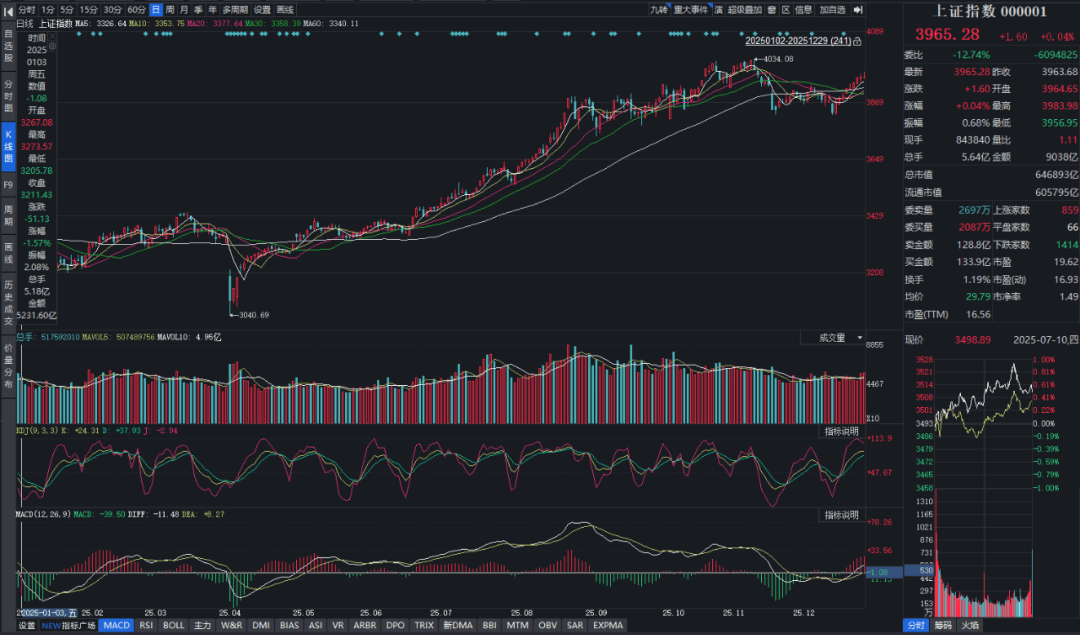
Core Viewpoint - The A-share market has experienced significant fluctuations in 2023, characterized by a structural bull market driven by policy changes, technological revolutions, and macroeconomic shifts, with the Shanghai Composite Index reaching a peak of 4034 points [2][11]. Group 1: Market Performance - The Shanghai Composite Index rose from a low of 3040 points to a peak of 4034 points within the year, reflecting a volatile market influenced by major events such as the introduction of the DeepSeek technology and various policy measures [2][11]. - The market saw a notable recovery after a period of decline, with the index hitting a low of 2689 points in August 2022 before rebounding significantly due to policy interventions [2][4]. Group 2: Investment Strategies - Investors are advised to focus on stocks with strong performance metrics and to avoid speculative trading, as the market has shown a clear distinction between stocks with solid fundamentals and those driven purely by hype [3][12]. - The importance of aligning investment choices with policy directions, industry trends, and company performance is emphasized, indicating that successful investors are those who adopt a value investment approach [3][12]. Group 3: Sector Insights - The technology sector, particularly in AI and computing power, has emerged as a key area for investment, with companies like DeepSeek leading the charge in innovation and market disruption [8][12]. - The commercial aerospace sector is highlighted as a promising investment area, benefiting from a confluence of policy support, technological advancements, and capital investment [12][13]. Group 4: Lessons Learned - The experience of investors in 2023 underscores the necessity of long-term investment strategies over short-term trading, with a focus on companies that demonstrate core technological capabilities and sustainable growth paths [13][12]. - The shift in market dynamics from a policy-driven narrative to an emphasis on industrial execution and performance is noted, suggesting a more mature investment landscape moving forward [11][13].





长城宏观:跨年攻势开启,关注科技与内需轮动
Sou Hu Cai Jing· 2025-12-29 08:40
Group 1: Market Overview - The A-share market showed a strong upward trend last week, with major indices generally rising. The market style continued to favor resource products and technology growth, while consumer sectors experienced a pullback [1] - In terms of industry performance, sectors such as non-ferrous metals (precious metals + industrial resources), military industry (commercial aerospace), and power equipment (data center power) led the gains, while consumer, banking, and coal sectors turned downward [1] Group 2: Macroeconomic Analysis - The national fiscal work conference emphasized the continuation of a more proactive fiscal policy in 2026, focusing on expanding fiscal spending and ensuring necessary expenditure. Key tasks include boosting domestic demand, increasing investment in new productive forces, and promoting employment and income growth [2] - From January to November, the total profit of industrial enterprises above designated size reached 66,268.6 billion yuan, a year-on-year increase of 0.1%. The manufacturing sector's profit totaled 50,317.9 billion yuan, growing by 5.0%. Notable growth was seen in the computer, communication, and other electronic equipment manufacturing sectors, while the oil and gas extraction sector saw a decline of 13.6% [2] Group 3: International Economic Context - In the U.S., third-quarter economic data exceeded expectations, leading to a cooling of interest rate cut expectations. The GDP growth rate for Q3 was 4.3%, surpassing the expected 3.3% and the previous 3.8%. The resilience of the U.S. economy is attributed to strong personal consumption, increased public spending, and improved export contributions [3] - Structural weaknesses in the labor market and the upcoming Federal Reserve leadership change may influence future interest rate decisions [3] Group 4: Investment Strategy - The market is expected to take a significant step forward as the year ends, supported by factors such as a systemic decline in risk-free interest rates and an anticipated surge in asset management demand [4] - Capital market reforms are enhancing the investability of Chinese assets and improving market resilience to risks, suggesting a potential shift from a volatile market to a more stable one [4] Group 5: Investment Directions - The focus is on technology, financial services, and consumer sectors. Specific areas of interest include technology growth driven by advancements in AI and computing infrastructure, as well as financial sectors like brokerage and insurance benefiting from capital market reforms [5] - The domestic policy to expand internal demand is expected to strengthen, making it a key theme alongside technology. Emerging consumption trends and events like sports and winter tourism are highlighted as potential investment opportunities [5]
被英伟达200亿美元“收编”!Groq创始人乔纳森·罗斯最值得听的一场深度对话
聪明投资者· 2025-12-29 07:04
Core Insights - The article emphasizes that rather than questioning whether AI is a bubble, it is more pertinent to ask what smart money is doing, highlighting significant investments by major companies like Google, Microsoft, and Amazon in AI [5][15][24] - The demand for computing power in AI is currently immense and unmet, suggesting that if companies like OpenAI and Anthropic doubled their reasoning power, their revenues could also double within a month [5][41] Group 1: AI Investment Landscape - Major tech companies are significantly increasing their capital expenditures in AI, with each round of investment surpassing the previous one [15][16] - The AI market is highly concentrated, with approximately 35 to 36 companies contributing to 99% of the revenue, indicating that it is still in a nascent stage [17][19] - Nvidia is expected to reach a market valuation of $10 trillion within five years, reflecting the industry's growth potential [8] Group 2: Nvidia and Groq Acquisition - Nvidia's acquisition of AI chip startup Groq for approximately $20 billion is seen as a strategic move to enhance its AI capabilities and integrate Groq's low-latency processors into its AI infrastructure [8][9] - Groq's unique selling proposition lies in its LPU chips designed specifically for AI reasoning, which operate independently of the CUDA ecosystem [9][86] - The acquisition is viewed as one of Nvidia's largest transactions, aimed at consolidating its position in the competitive AI landscape [9] Group 3: Chip Development Challenges - The article discusses the misconception that manufacturing chips is the most challenging aspect, asserting that software and keeping pace with industry evolution are more difficult [6][50][51] - Many companies struggle to successfully develop their own AI chips, as evidenced by the challenges faced by Google and others in the chip development space [34][36] Group 4: Economic Implications of AI - The article posits that the most valuable asset in the economy is labor, and enhanced computing power and AI can inject additional "labor" into the economic system [7] - Companies are advised to maintain high brand trust levels, as trust has a compounding effect on profitability [7] Group 5: Speed and Efficiency in AI - Speed is highlighted as a critical factor in user engagement and brand loyalty, with faster responses leading to stronger emotional connections with brands [49][46] - The article argues that the perception of acceptable delays in AI responses is fundamentally flawed, as speed significantly impacts user experience [49][42] Group 6: Future of AI and Chip Integration - The future of AI will likely see companies like OpenAI and Anthropic developing their own chips to maintain competitive advantages [52][50] - The article suggests that the integration of chips into AI systems will become increasingly important for maintaining market leadership [33][25] Group 7: Energy and Infrastructure for AI - The demand for energy to support the growing need for computing power in AI is immense, with renewable energy sources being a viable solution [119][120] - The article discusses the potential for countries like Norway to provide substantial energy resources for AI infrastructure, emphasizing the need for strategic partnerships [126][138]




别再将AI比作互联网 AI有没有泡沫? 2026AI投资关键还看AI大模型的“迭代力”和“落地力”
Zheng Quan Shi Bao Wang· 2025-12-29 04:45
Core Viewpoint - The AI technology industry is poised for unprecedented development opportunities as it transitions from being merely an "information connection tool" to a profound "productivity revolution" by 2026, with significant advancements in model capabilities and multi-modal technologies leading to large-scale applications in various sectors [1][2]. Group 1: Transition from Tool to Productivity Enhancement - The evolution of AI models in 2026 is likened to a "growing process," indicating a continuous and solid improvement in model capabilities [2]. - AI is now viewed as a key tool for enhancing productivity across industries, moving beyond concerns of market bubbles to practical applications, particularly in code generation and multi-modal capabilities [2]. - The advancements in AI will enable the generation of more realistic and coherent content, with improved reasoning speed and memory functions, enhancing applications in image and video generation [2]. Group 2: Industry Applications and Investment Opportunities - Investment opportunities in 2026 will be concentrated in sectors such as advertising, AI hardware, and autonomous driving, driven by enhanced model capabilities, particularly in memory and personalization [3]. - The advertising industry is expected to undergo revolutionary changes due to improved multi-modal generation capabilities, which will boost performance in the e-commerce sector [3]. - The maturity of the autonomous driving industry is anticipated to accelerate, with significant developments in L3 autonomous driving models and ongoing advancements from companies like Tesla, Huawei, and XPeng Motors [3]. Group 3: AI Infrastructure and Hardware - The demand for AI infrastructure is expected to grow as AI needs increase, making it a long-term investment opportunity [4]. - The complexity of AI models will drive the need for enhanced storage and computing capabilities, with data centers and cloud computing infrastructure becoming critical investment areas in 2026 [4]. - AI hardware, including AI glasses, smartphones, and PCs, will face significant market tests, with growth dependent on the integration of multi-modal capabilities [4]. Group 4: Market Dynamics and Investment Strategies - In the U.S. market, AI remains a core theme driving technology stocks, with major tech companies' AI revenues beginning to cover depreciation costs, allowing for effective valuation management [5]. - The Hong Kong market is supported by expectations of global liquidity easing, with AI model companies entering the IPO phase, indicating strong investment opportunities in AI infrastructure and applications [6]. - In the A-share market, the focus is on industry chain collaboration and specific application scenarios, with domestic model companies seeking monetization paths in vertical sectors like manufacturing and finance [6]. Group 5: Market Sentiment and Future Outlook - Concerns about excessive market gains are mitigated by the understanding that as technology becomes integral to productivity, performance improvements will naturally address valuation bubbles [7]. - The first half of 2026 is seen as a critical observation window, with stronger and more practical AI models expected to reshape market consensus, establishing AI as a genuine growth driver rather than just an investment theme [7].
别再将AI比作互联网,AI有没有泡沫? 2026AI投资关键还看AI大模型的“迭代力”和“落地力”
Zheng Quan Shi Bao Wang· 2025-12-29 04:06
Core Insights - The AI industry is poised for unprecedented growth opportunities as it transitions from being an "information connection tool" to a "productivity revolution" by 2026 [1][2] - The evolution of AI models will be gradual and substantial, enhancing capabilities in reasoning, memory, and content generation [2][3] Industry Trends - AI will increasingly serve as a key tool for productivity enhancement across various sectors, including advertising, e-commerce, AI hardware, and autonomous driving [2][3] - The advertising industry is expected to experience revolutionary changes due to improved multi-modal generation capabilities, which will drive performance growth in e-commerce [3] - The autonomous driving sector is anticipated to accelerate in 2026, with the first L3 autonomous driving models in China receiving approval, marking a significant step towards commercialization [3] Investment Opportunities - Investment opportunities will emerge in sectors where AI model capabilities are enhanced, particularly in advertising, AI hardware, and autonomous driving [3][4] - AI infrastructure will be a long-term investment opportunity, with increasing demand for storage and computing capabilities as AI models become more complex [4] - AI hardware, including devices like glasses, smartphones, and PCs, will face significant market tests in 2026, driven by the integration of multi-modal capabilities [4] Market Dynamics - In the U.S. market, AI remains a core theme driving technology stocks, with major tech companies' AI revenues beginning to cover depreciation costs [5] - The Hong Kong market is seeing a supportive liquidity environment, with AI model companies entering the IPO phase, indicating strong investment opportunities in AI infrastructure and applications [6] - The A-share market is focusing on industry chain collaboration and specific application scenarios, with domestic model companies entering a commercialization phase [6] Future Outlook - Concerns about excessive market gains should not hinder the growth of technology as performance improvements will naturally absorb valuation bubbles [7] - The first half of 2026 will serve as an observation window for the market, as stronger and more practical AI models are released [7] - The consensus will shift towards recognizing AI as a genuine growth driver rather than just an investment theme [7]
六个维度看懂中证红利ETF长期价值!机构:红利底仓价值突出,2026年或表现更优
Jin Rong Jie· 2025-12-29 03:01
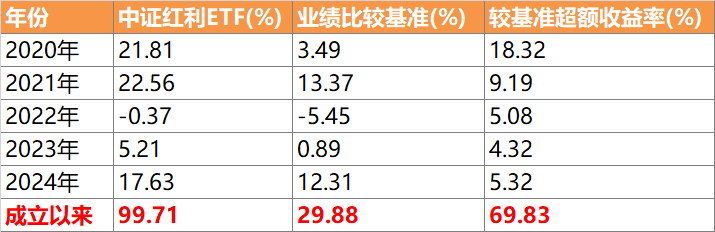
Core Viewpoint - The China Securities Dividend ETF (515080) has become a stable investment choice for many investors over its six years since listing, demonstrating strong performance and consistent dividend distribution [1][2]. Performance Overview - Since its inception, the China Securities Dividend ETF has outperformed its benchmark index, achieving a cumulative excess return of 69.83% as of Q3 2025 [2][3]. - The ETF has consistently outperformed its benchmark for five consecutive years since 2020, with annual returns as follows: 21.81% in 2020, 22.56% in 2021, -0.37% in 2022, 5.21% in 2023, and 17.63% in 2024 [3][19]. Dividend Distribution - The ETF has completed its fourth dividend distribution for the year in December 2025, with a distribution ratio of 1.26%, amounting to 0.2 yuan per ten shares [4]. - Since its listing, the ETF has distributed dividends 15 times, totaling 3.65 yuan per ten shares [4][5]. Growth in Scale and Investor Base - The scale of the China Securities Dividend ETF has increased from 340 million yuan at listing to 8.527 billion yuan, representing a 24-fold growth [7]. - The number of accounts holding the ETF has risen from 3,932 to 64,987, making it the leading ETF in its category [7]. Index Evolution - The underlying index of the ETF has undergone significant changes, with no overlap in the top ten constituent stocks compared to six years ago, indicating the index's adaptability and vitality [10][11]. Dividend Yield Comparison - The dividend yield of the China Securities Dividend Index has widened significantly compared to the 10-year government bond yield since 2019, with the current dividend yield at 5.12% versus 1.84% for government bonds [13]. Future Outlook - Analysts expect that the low interest rate environment will continue, making dividend assets attractive for long-term investors seeking stable cash flows [17]. - The market is anticipated to experience a "slow bull" trend in 2026, with dividend stocks expected to perform better than in 2025 due to their stable cash flow characteristics [17].
电解铜2026年报:供弱需强格局逐步巩固,铜价将不断挑战新高
Fo Shan Jin Kong Qi Huo· 2025-12-29 03:01
1. Report Industry Investment Rating No relevant content provided. 2. Core Viewpoints - In 2026, the price of electrolytic copper may show an inverted "V" trend throughout the year. It may fluctuate strongly in the first half of the year, challenging new highs, and weakly in the second half. The volatility of copper prices is expected to converge to a limited extent, and call options remain highly suitable. The main influencing factors include the Fed's monetary policy, Sino - US relations, changes in copper concentrate TC, and energy storage demand [4]. 3. Summary by Directory 3.1 2025 Copper Market Review - In 2025, copper prices showed a generally strong and fluctuating trend. By December 10, the Shanghai copper main - continuous contract had risen by nearly 25% during the year. The copper futures market went through four stages: in the first stage (January - March), the first wave of price increase was driven by the tightening supply of copper concentrate and the market's expectation of rising US inflation. In the second stage (April - mid - September), after hitting bottom, the price rebounded and then consolidated for a long time, affected by trade wars, Fed rate - cut expectations, and other factors. In the third stage (late September - mid - November), the second wave of price increase occurred due to the supply shortage of copper concentrate and positive market news. In the fourth stage (mid - November - present), the price repeatedly broke through historical highs, driven by market concerns about the Fed's future policies [7]. 3.2 Macroeconomic Environment Outlook 3.2.1 Fed Policy May Remain Loose - In 2025, the Fed's policy experienced multiple adjustments, including rate cuts and the end of the balance - sheet reduction plan. Looking ahead, according to the dot - plot after the December meeting, there is still one rate cut expected in 2026 and 2027. The market is concerned about whether the Fed will continue to expand its balance sheet and the independence of the Fed after Powell's term ends [11][12]. 3.2.2 Sino - US Game Will Continue - In 2025, Sino - US tariff disputes went through several rounds of escalation and mitigation. The US used tariff hikes as a bargaining chip. In the future, Sino - US tariff disputes are expected to continue, and the US may focus on issues such as fentanyl and rare - earth exports [13][15]. 3.3 Demand Side: Emerging Demands Show Obvious Increases and May Explode in 2026 3.3.1 Traditional Industries Have Limited Growth - **Real Estate Remains in a Downturn**: In 2025, despite a series of policies, real - estate investment, new construction, and completion data continued to decline. In 2026, although the government will continue to promote real - estate stability policies, the real - estate market is expected to continue to drag down copper demand in the short term [16][19]. - **White Goods Production and Sales First Strong Then Weak**: In 2025, with the support of the "trade - in" policy, white - goods production and sales were strong in the first half of the year but weakened later. In 2026, with the possible continuation of the policy and the replacement cycle, the year - on - year growth rate of production and sales of three major white goods is expected to be higher than in 2025. However, the year - on - year growth rate of exports of white goods has declined overall compared to last year, and its contribution to copper demand growth has weakened [23][24]. 3.3.2 Emerging Demands Will Gradually Become the Main Force of Copper Demand - **AI and Computing Power May Boost Future Power Grid Demand**: In 2025, power and grid infrastructure investment showed a trend of first increasing and then decreasing. In the future, AI and computing - power industries will become important demand drivers for power and grid infrastructure [29]. - **New - energy Vehicles Provide Stable Increases Despite Slower Growth**: In 2025, new - energy vehicle production and sales maintained a relatively high year - on - year growth rate, providing stable copper demand. In 2026, although the subsidy for new - energy vehicle purchase tax will be halved, the year - on - year growth rate of production and sales is still expected to remain at a relatively high level [32][34]. - **Photovoltaic Installation in China Has Stable Increases and Exports Are Impressive**: In 2025, due to policy changes, there was a "rush - to - install" phenomenon in the first five months, and the year - on - year growth rate of cumulative new installations and cumulative installations showed an inverted "V" trend. In 2026, the year - on - year growth rate of photovoltaic installation may be lower than in 2025 but will still be high. Photovoltaic cell exports are expected to maintain a high growth rate [35][37]. - **Energy Storage Demand May Explode**: In 2025, the new energy - storage installation volume in China is expected to increase by 24% year - on - year. In 2026, it is expected to reach 230GWh, with a year - on - year growth rate close to 70%. Globally, the new energy - storage installation volume in 2026 is expected to reach 480GWh, with a year - on - year growth rate of 60%, providing significant copper demand growth [44][47]. 3.4 Supply Side: Mine - end Shortage Persists, and Smelter Production Cuts May Expand 3.4.1 Frequent Overseas Mine Incidents Lead to Continuous Decline in Copper Concentrate TC - In 2025, overseas copper mines experienced many incidents, causing copper concentrate TC to decline continuously. CSPT called on domestic smelters to jointly cut production in the fourth quarter. In 2026, the global copper concentrate increment is expected to be 45 - 56 tons, mainly concentrated in the second half of the year. The shortage of copper concentrate will persist in the first half of 2026, and TC may remain at a very low level [49][62]. 3.4.2 Copper Mine Shortage Has Limited Impact on the Smelting End - In 2025, although copper concentrate was in short supply, the global and Chinese electrolytic copper production basically maintained the highest level in the same period of the past five years. In 2026, the shortage of copper concentrate may be difficult to ease in the first half of the year, and the domestic smelting industry may have a larger - scale joint production cut than in Q4 2025 [63]. 3.4.3 The Siphon Effect of US Copper Continues, and Spot Supplies of Shanghai and London Copper Are Tight - In 2025, due to factors such as tariffs, COMEX copper was at a significant premium, leading to a change in the global copper trade pattern. Copper flowed into the US, causing the inventory of COMEX copper to rise continuously, while the inventory of Shanghai and London copper decreased, resulting in a long - term tight spot supply and high prices [68][70]. 3.4.4 High Copper Prices Pressure Downstream Demand, and Social Inventory Remains at a High Level - In 2025, electrolytic copper social inventory increased to a high level in September, but it had little pressure on copper prices, which were mainly driven by macro factors and low copper concentrate TC [77]. 3.5 Future Outlook and Supply - Demand Balance Sheet 3.5.1 Global Copper Concentrate Supply - Demand Balance Remains Tight - In 2025, the global copper concentrate supply - demand balance was expected to be - 35 tons. In 2026, it is expected to be - 40 tons, with the supply gap widening compared to 2025. The shortage will persist in Q1 2026 and gradually ease in the later quarters [79][80]. 3.5.2 Electrolytic Copper Supply - Demand Balance - **Global**: In 2025, the global electrolytic copper supply - demand balance was in a tight state at - 5 tons. In 2026, it is expected to be - 21 tons, with the gap widening. - **China**: In 2025, the supply - demand balance of Chinese electrolytic copper was - 20.04 tons, with the gap nearly doubling compared to 2024. In 2026, it may decline slightly to - 30 tons, with the gap widening slightly compared to 2025 [81][83].
英伟达产业链观点更新
2025-12-29 01:04
Key Points Summary Industry Overview - The focus is on the semiconductor and computing power industries, particularly in the context of domestic substitution and advancements in technology [1][3]. Core Insights and Arguments - **Domestic Substitution Acceleration**: Domestic equipment manufacturers are enhancing capabilities and expanding cooperation, significantly increasing the domestic substitution rate in semiconductor equipment, especially in applications at the semiconductor level [1]. - **Surge in Computing Power Demand**: Applications such as mobile phones and smart terminals are driving a surge in computing power demand, with liquid cooling and power systems becoming critical components [1][6]. - **Catalysts for Overseas Computing Power Supply Chain**: The overseas computing power supply chain is expected to experience multiple catalysts in Q1 2026, with Nvidia's COWS wafer production capacity projected to grow by 60%-70% in 2026 and by 50%-60% in 2027 [1][7]. - **Profit Forecast for Zhongji Xuchuang**: Market expectations for Zhongji Xuchuang's profit in 2026 are around 35 billion to 40 billion RMB, potentially doubling to 70 billion to 80 billion RMB if Nvidia and Google maintain high growth in 2027 [1][9]. - **Focus on Large Models**: The market is particularly interested in OpenAI's GPT and XAI's Grok large models, with expectations that a new generation of large models will be released in Q1 2026, which could validate the Scaling Law [2][10]. Important but Overlooked Content - **Investment Targets in North America**: Recommended investment targets include optical module-related companies such as NewEase, Zhongji Xuchuang, Yuanjie Technology, and Tianfu Communication, with NewEase showing significant potential due to its relatively small stock price increase [4][11]. - **Liquid Cooling System Price Increase**: The price of liquid cooling systems corresponding to Nvidia's GT300 chip is approximately $1,500, which is expected to rise to $4,000 with the upgrade to Ruby 200, indicating a clear logic of simultaneous price and volume increase [4][12]. - **Key Subfields in the Semiconductor Industry**: Notable subfields include measurement detection, coating and developing, packaging equipment, and materials, with significant market potential due to low penetration rates [5]. - **Future Trends in Computing Power**: The computing power sector is expected to be a major focus over the next three to ten years, with critical supporting facilities like liquid cooling and power systems [6]. - **Investment Recommendations**: The highest certainty investment directions in the overseas computing power supply chain include the optical module industry, with a focus on NewEase, Zhongji Xuchuang, Yuanjie Technology, and Tianfu Communication, as well as the liquid cooling sector led by Yingweike [13].