
地缘政治

Search documents
西方政要扎堆访华:是经济现实还是地缘觉醒?|首席对策
Di Yi Cai Jing Zi Xun· 2026-02-02 12:26
Core Viewpoint - The recent influx of Western leaders visiting China indicates a shift in geopolitical dynamics, with a focus on economic cooperation and a response to changing global conditions [2][3][5]. Group 1: Western Leaders' Visits - Western leaders, including those from Europe and Canada, are visiting China primarily for two reasons: economic development and improving living standards [3][5]. - The visits reflect a recognition of China's potential market opportunities, especially as the country embarks on its "14th Five-Year Plan" aimed at high-quality development and open cooperation [3][5]. Group 2: Geopolitical Context - The changing geopolitical environment, particularly actions taken by the U.S., has prompted Western nations to seek reliable partners like China [4][5]. - As the U.S. disrupts international norms, China is perceived as a stable and responsible global player, enhancing its appeal as a partner for dialogue and cooperation [4][5]. Group 3: Western Nations' Internal Dynamics - Western countries are hesitant to fully abandon their traditional comfort zones, preferring to maintain a Western-centric international order [6][8]. - There is an internal struggle within Western nations regarding their approach to China, influenced by varying attitudes towards the U.S. and the complexities of their own political landscapes [6][8]. Group 4: Future Directions for Western Countries - Western nations are likely to focus on expanding their diplomatic space and enhancing their bargaining power with the U.S. while fostering cooperation with China [12][13]. - They may pursue issue-driven alliances to coordinate policies and enhance their political influence, particularly in economic and security matters [13].

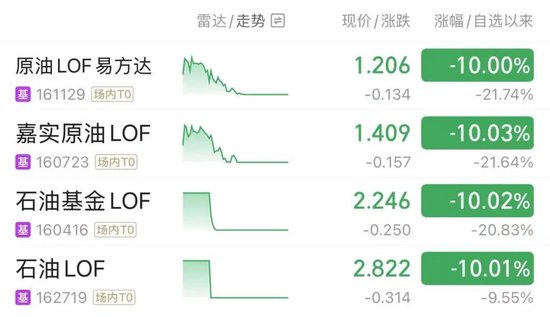
提示溢价风险后,4只原油LOF全部跌停!
Xin Lang Cai Jing· 2026-02-02 12:21
Core Viewpoint - The four oil LOFs managed by E Fund, Jiashi Fund, Huashan Fund, and Guangfa Fund all experienced a trading halt on February 2, with significant price drops following their resumption of trading, indicating volatility in the oil market driven by geopolitical factors and supply-demand dynamics [1][5]. Group 1: Fund Performance - All four oil LOFs, including Huashan's and Guangfa's, hit the trading limit down on their resumption day, with significant declines observed [1][5]. - The specific price changes for the funds included a drop of 10.00% for E Fund's oil LOF, 10.03% for Jiashi's oil LOF, 10.02% for Huashan's oil LOF, and 10.01% for Guangfa's oil LOF [2][3]. - The funds had previously issued warnings about significant premiums in their secondary market trading prices, advising investors to be cautious of potential losses from high premium purchases [2][7]. Group 2: Market Dynamics - Brent crude oil futures fell below $67 per barrel, while WTI crude oil futures dropped below $63, with both experiencing daily declines exceeding 3% [3][8]. - The volatility in oil prices is attributed to sudden shifts in geopolitical expectations, particularly concerning U.S.-Iran relations, which had previously driven prices to six-month highs [3][8]. - The International Energy Agency (IEA) forecasts a supply surplus in the global oil market this year, with supply exceeding demand by 3.85 million barrels per day [4][8]. Group 3: Future Outlook - Analysts suggest that the oil market may continue to experience volatility in the short term, with the potential for further price increases if geopolitical tensions escalate [4][9]. - The balance of supply and demand remains loose, indicating that much of the geopolitical risk premium has already been priced in, but any escalation in conflict could lead to upward pressure on oil prices [4][9].
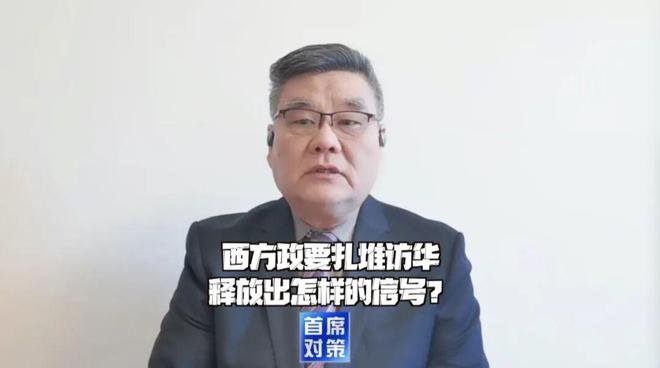
西方政要扎堆访华:是经济现实还是地缘觉醒?|首席对策
第一财经· 2026-02-02 11:57
作者 | 第一财经 梁相宜 黄晶晶 袁玉立 今年中国春节来得晚,给足了欧洲国家领导人扎堆来华的时间。从最早的马克龙,到刚刚离开中国的斯塔默,再到已吹风2月底将访华的德国总理默 茨,短短两个月时间,欧洲E3国家领导人,将集中完成中国之旅,切莫说这中间还穿插着韩国总统、芬兰总理、加拿大总理。而这一不同于以往的局面 到底意味着什么?《首席对策》专访北京外国语大学区域与全球治理高等研究院教授崔洪建,带来深入解读。 2026.02. 02 本文字数:3122,阅读时长大约5分钟 以下为访谈实录: 以它稳定的表现、负责任的姿态,展现出了安全发展上负责任大国的形象。 所以我想一方面是经济发展、经济合作的诉求,再一个来自于地缘政治的变化,给他们带来的刺激和影响,让他们不约而同地选择了要把中国作为一个 长期的保持对话和合作的可靠伙伴。 从西方国家内心来说 他们并不希望离开舒适区 美国触动盟友国家底线 西方国家幻想被打破 西方国家加强与中国的对话交流是大势所趋 西方政要集中访华主要是两方面诉求 受地缘政治变化刺激 西方转向更可靠的合作伙伴 第一财经: 崔老师好,我们看到年前中国的农历新年之前,欧洲政要,包括加拿大的总理卡尼,扎堆 ...

贵金属资金流向逆转:投机资金集中撤离,品种分化行情将至!
Sou Hu Cai Jing· 2026-02-02 11:21
除了宏观政策面的风向突变,交易层面的因素也放大了波动。在1月份价格飙升至历史高位的过程中, 黄金的相对强弱指数(RSI)等技术指标已进入严重超买区间,积累了巨大的获利了结压力。早期涌入 的投机资金与高杠杆交易盘在价格转向时集中平仓,引发了连锁式的技术性抛售。其中,白银因市场规 模相对较小、金融与工业属性交织且投机资金参与度更高,其价格波动较黄金更为剧烈。 针对后市走向,光大期货认为,贵金属价格剧烈调整是对前期极端超买与过度拥挤交易的一次"挤泡沫 和降杠杆"式的强制性清算,但支撑贵金属的长期核心变量(如美元信用体系重构、去美元化储备趋 势、地缘政治裂痕常态化)并未发生逆转,长期驱动逻辑依然完整。进入2月,市场将更加关注宏观、 政策信号与地缘事件驱动寻求贵金属的支撑点,波动率仍将维持高位,但各品种将走向分化。 从长周期来看,国联期货表示,贵金属整体趋势依然稳定。在全球秩序重构大势不可逆、地缘政治仍处 于高度不确定性、全球信用货币体系重构(美元信用松动)的长期宏观趋势背景下,黄金作为重要储备 资产,在避险、货币对冲及抗通胀的配置需求支持下,仍将维持强势格局。而白银在全球战略资产储备 需求升温、结构性供需缺口长期存在 ...

永安期货集运早报-20260202
Yong An Qi Huo· 2026-02-02 09:09
Group 1: Report Overview - The report is from the Energy and Chemicals Team of the Research Center, dated February 2, 2026 [2] Group 2: Contract Data Contract Price and Volume - EC2602: Yesterday's close was 1716.7, down 0.05%, with a basis of 142.6, volume of 453, and open interest of 2551, down 261 [2] - EC2604: Yesterday's close was 1227.0, down 1.82%, with a basis of 632.3, volume of 25237, and open interest of 35881, down 3788 [2] - EC2606: Yesterday's close was 1542.8, down 2.11%, with a basis of 316.5, volume of 5606, and open interest of 12303, up 997 [2] - EC2608: Yesterday's close was 1607.0, down 2.33%, with a basis of 252.3, volume of 694, and open interest of 1594, down 72 [2] - EC2610: Yesterday's close was 1122.5, down 2.49%, with a basis of 736.8, volume of 2674, and open interest of 8134, down 799 [2] Month - Spread Data - EC2502 - 2604: The previous day's spread was 489.7, with a daily increase of 21.9 and a weekly decrease of 36.8 [2] - EC2504 - 2606: The previous day's spread was - 315.8, with a daily increase of 10.5 and a weekly decrease of 68.4 [2] Group 3: Spot Market Data - The spot (European Line) "ટરનાટ" index on January 26, 2026 was 1859.31 points, down 4.86% from the previous period [2] - The SCFI (European Line) on January 30, 2026 was $1418/TEU, down 11.10% from the previous period [2] Group 4: Market Analysis and Recommendations Short - Term Market - Geopolitical tensions, stable Maersk February quotes, and expected March rush shipments may prevent short - term price drops [3] Near - Month Contracts - For the 04 contract, shorting should be done with caution. Watch for significant premiums. Pay attention to PA Alliance quotes and geopolitical situations [3] Far - Month Contracts - Short the 10 contract on rallies, based on the logic of off - season and tax - refund negatives. The valuations of 06 and 08 are hard to determine, and they will fluctuate widely within a reasonable range. Operate with caution under geopolitical uncertainties [3] Group 5: European Line Spot Situation - Downstream is booking February 2 (Week 6 - 7) cabins. Ships are receiving good cargo, but the pressure to attract cargo is increasing, and shipping companies need to attract cargo for ships during the Spring Festival [4] - The price center in Week 7 is $2140, equivalent to 1500 points on the futures. Maersk's Week 8 - 9 quotes are $1950 (unchanged from the previous period), and other shipping companies are also keeping their quotes unchanged for now [4] Group 6: News and Geopolitical Situation Military Exercise News - On February 1, Iranian officials said media reports about an Iranian Revolutionary Guard military exercise in the Strait of Hormuz were false, and no official statement had been issued [5] Diplomatic Negotiation News - On February 2, the US signaled a willingness to negotiate with Iran, and a meeting may be held in Turkey. However, experts believe that although both sides have a willingness to negotiate, there are serious differences, and the negotiation prospects are difficult [5][6]

国际油价显著下跌
新华网财经· 2026-02-02 08:44
Group 1 - The core viewpoint of the article highlights a significant decline in New York crude oil futures prices due to geopolitical factors, with prices dropping below $62.30 per barrel for March delivery and $66.30 per barrel for April delivery, marking a decline of over 3% compared to the previous trading day [2] - Analysts suggest that the market's expectations of a potential U.S. military strike on Iran have diminished, leading investors to sell long positions, which contributed to the oil price correction [2]

节前备货意愿不强 铜价短期可能进入调整阶段
Jin Tou Wang· 2026-02-02 08:10
Group 1 - The domestic futures market for non-ferrous metals experienced a collective decline, with the main copper futures contract hitting the limit down at 98,580.00 yuan/ton, a drop of 9.01% [1] - Geopolitical tensions between the U.S. and Iran have increased demand for safe-haven assets, leading to a surge in gold and silver prices, while the hawkish stance of the newly appointed Federal Reserve Chairman has caused significant declines in precious and non-ferrous metals [2] - Concerns over supply disruptions from South American mines have intensified, while domestic copper production remains high due to the availability of scrap copper as a smelting raw material [2] Group 2 - Domestic copper inventories as of February 2 were reported at 340,800 tons, showing a decrease of 600 tons from January 26 but an increase of 5,000 tons from January 29 [2] - The overall smelting output continues to grow despite a slight month-on-month decline in profits, indicating a potential adjustment phase for copper prices in the short term [3] - Key factors to monitor include changes in the U.S. dollar, copper smelting output, and downstream demand [3]
原油周报(SC):中东紧张局势持续,国际油价进一步走高-20260202
Guo Mao Qi Huo· 2026-02-02 08:00
投资咨询业务资格:证监许可【2012】31号 【原油周报(SC)】 中东紧张局势持续,国际油价进一步走高 国贸期货 能源化工研究中心 2026-02-02 叶海文 从业资格证号:F3071622 投资咨询证号:Z0014205 本报告非期货交易咨询业务项下服务,其中的观点和信息仅供参考,不构成任何投资建议;期市有风险,投资需谨慎 01 PART ONE 主要观点及策略概述 原油:中东紧张局势持续,国际油价进一步走高 | 影响因素 | 驱动 | 主要逻辑 | | --- | --- | --- | | 供给(中长期) | 中性 | (1)EIA:EIA继续小幅上调对2026年全球原油及相关液体产量预测,预计2026年全球原油及相关液体产量为10,765万桶/日,较2025年上升139万桶/ | | | | 日。(2)OPEC:2025年12月份OPEC国家原油产量为2856.4万桶/日,较2025年11月份上升10.5万桶/日;Non-OPEC DoC国家原油产量为1426.7万桶/日, | | | | 较2025年11月份下降34.3万桶/日。(3)IEA:2025年12月份OPEC国家原油产量为2882万桶 ...
国泰君安期货:原油触及跌停!化工品的反弹结束了吗?
Xin Lang Cai Jing· 2026-02-02 07:45
Core Viewpoint - The commodity futures market is experiencing significant adjustments, with precious metals and oil prices facing substantial declines. The focus is on the geopolitical situation regarding Iran and ongoing supply pressures in the oil market [2][8]. Group 1: Recent Developments in Oil Market - Geopolitical tensions have eased as the U.S. has expressed willingness to engage in talks with Iran regarding a nuclear agreement, leading to a decrease in short-term geopolitical premiums [2][8]. - OPEC+ has decided to maintain its production cut policy, with no increase in oil output planned for March. They may consider a phased restoration of production up to 1.65 million barrels per day based on market conditions [2][8]. Group 2: Market Dynamics and Future Outlook - The key short-term factor in the oil market remains the geopolitical developments concerning Iran, while long-term supply surplus pressures are expected to continue influencing oil prices [3][9]. - The recent drop in oil prices has approached the risk premium levels seen during the June conflict between Israel and Iran, indicating potential downward pressure on prices [3][9]. - For other chemical products, previous price increases were driven by rising oil costs due to geopolitical tensions and weather-related energy price spikes. However, with oil prices falling, cost support may weaken, and demand validation around the Chinese New Year should be monitored [11].

合成橡胶投资周报:宏观情绪推波助澜,BR维持宽幅震荡-20260202
Guo Mao Qi Huo· 2026-02-02 06:49
1. Report Industry Investment Rating - The investment rating for butadiene rubber is "oscillating with a bullish bias" [4] 2. Core Viewpoints of the Report - Butadiene has strong fundamental support, while cis - butadiene rubber faces profit and inventory pressures, and the number of warehouse receipts is increasing. With high bullish sentiment from macro and capital factors, both futures and spot prices are rising. Before the Spring Festival, there is an expectation of reduced production at cis - butadiene plants, and trading volume among traders and downstream users is decreasing. In the short - term, the futures price is expected to oscillate widely in the range of 12,800 - 13,300 yuan/ton, and in the long - term, the price of synthetic rubber is expected to rise further [4] 3. Summary According to Relevant Catalogs 3.1 Market Review - This week, the price of cis - butadiene rubber in the Shandong market rose significantly and then oscillated at a high level, with the spot price ranging from 12,300 to 13,100 yuan/ton. The increase was mainly due to the tight supply and rising prices of overseas butadiene resources, as well as the positive commodity market atmosphere. However, downstream users showed resistance to high prices, and the production of some northern private cis - butadiene rubber plants was reduced due to losses. Overall, the domestic production volume changed little [6] 3.2 Influence Factors of Butadiene Rubber 3.2.1 Supply - Last week, the domestic butadiene production was [unspecified] tons, with a capacity utilization rate of [unspecified]%; the production of high - cis butadiene rubber was [unspecified] tons, with a capacity utilization rate of [unspecified]%. Some butadiene plants remained shut down, while some restarted, and the weekly production increased. For cis - butadiene rubber, the plant of Maoming Petrochemical restarted, but attention should be paid to the operating load of private plants in North China due to poor profitability [4] 3.2.2 Demand - For semi - steel tires, agents made small - scale purchases at the end of the month, but the sales in the distribution channels and at the terminal were weak, inventory consumption was slow, and social inventory increased. For all - steel tires, the market remained sluggish in the second half of the month, with weak sales in distribution channels and at the terminal. Merchants focused on collecting payments, and the promotional policies of some brands were ineffective. Downstream users were cautious about purchasing and mostly postponed their procurement until after the festival [4] 3.2.3 Inventory - Last week, the port inventory of butadiene was 40,500 tons, a 17.39% increase from the previous week; the inventory of high - cis butadiene rubber among enterprises and traders was 34,430 tons, a 2.74% decrease from the previous week. The port inventory of butadiene increased due to the arrival of imported ships, while the inventory of cis - butadiene rubber at production enterprises decreased due to production losses and reduced operating loads, and the inventory of trading enterprises increased slightly [4] 3.2.4 Basis - The basis of cis - butadiene rubber in North China was - 890 yuan/ton, in East China was - 790 yuan/ton, and in South China was - 790 yuan/ton [4] 3.2.5 Spread/Price Ratio - The spread between RU and BR was 2,970 yuan/ton; the spread between NR and BR was - 155 yuan/ton; the price ratio of BR to SC was - 0.41% [4] 3.2.6 Profit - The production profit of butadiene through oxidative dehydrogenation was 1,918 yuan/ton, and through C4 extraction was 3,512.64 yuan/ton. The production profit of cis - butadiene rubber was - 418 yuan/ton, with a gross profit margin of - 3.12% [4] 3.2.7 Geopolitical and Macroeconomic Factors - Last week, the EIA crude oil inventory in the US increased by 3.6 million barrels more than expected, and the IEA maintained its expectation of a loose crude oil supply in 2026. Sinopec and China National Aviation Fuel Group were restructured. Tensions in the Middle East and the Russia - Ukraine region escalated due to the US's attack on Iran. The natural gas price soared by 60% due to the cold wave, and oil and gas prices rose in the short - term. Incidents such as the Trump administration's attempt to occupy Greenland and seize Russian oil tankers also increased market panic about geopolitics [4] 3.3 Trading Strategies - For single - sided trading, the strategy is mainly to buy on dips and follow the market and capital trends. For arbitrage, the strategy is to go long on BR and short on NR/RU [4] 3.4 Correlation Analysis of Related Varieties of Synthetic Rubber - The report provides correlation coefficient heat maps of price trends for crude oil, synthetic rubber, and natural rubber - related varieties over 1 - month and 3 - month periods, showing the relationships between different varieties [11] 3.5 Device Status - The report lists the maintenance and shutdown status of butadiene plants and high - cis butadiene rubber plants in China in 2026, including production enterprises, maintenance capacity, shutdown time, and expected startup time [12][13]