
债市调整

Search documents
固定收益市场周观察:本轮赎回压力或止于基金端
Orient Securities· 2025-08-25 13:07
Report Industry Investment Rating - Not provided in the given content Core Viewpoints of the Report - The adjustment environment of this round of the bond market is different from the past. The redemption pressure may stop at the fund level, and the situation of comprehensive and substantial supplementary decline in the bond market and significant redemption of wealth management products by residents may not occur [4][7]. - The redemption pressure caused by the decline of the bond market this time is mostly concentrated in the fund level. Institutions reduce bond positions and redeem funds, but the pressure may stop at institutional redemptions and not spread to residents redeeming wealth management products [15]. - The "right - hand side" signal of this round of the bond market may appear earlier than expected. Investors are advised to pay attention to central bank operations and interest rate trends [16]. Summary by Relevant Catalogs 1. Bond Market Weekly Viewpoint - During the recent bond market adjustment, investors have different views on bond investment. One view is that the bond market decline will end after short - term and credit bonds fully make up for the decline or after residents panic - redeem wealth management products. However, the report believes that the adjustment environment is different this time, and the redemption pressure may stop at the fund level [4][7]. - There are three reasons: 1) During this bond adjustment, funds are continuously loose, and the central bank cares about the capital market. The adjustment is not caused by capital shortage, and the risk of supplementary decline in bonds is controllable, which has less impact on wealth management products held by residents [8]. 2) This bond adjustment is in the stage of accelerating decline in broad - spectrum interest rates, and investors have a more adequate expectation of the decline in investment returns and are more likely to accept the decline in wealth management yields, making it less likely for negative feedback to occur [10]. 3) Wealth management products used the smoothing valuation method in 2024, which stabilized the scale and helped the stable liability side of wealth management [13]. 2. This Week's Focus in the Fixed - Income Market 2.1 Domestic August PMI to be Announced - China will announce August PMI, the US will announce July core PCE and August University of Michigan consumer confidence index, and the ECB will announce the minutes of the July monetary policy meeting [17]. 2.2 This Week's Interest - Bearing Bond Issuance Volume Declines - This week, the issuance of local bonds continues at a high level, and there is no issuance plan for national bonds at the end of the month. It is expected that a total of 5116 billion yuan of interest - bearing bonds will be issued, falling to a relatively low level in the same period. Among them, there is no issuance plan for national bonds, 81 local bonds are planned to be issued with a scale of 3516 billion yuan, and the actual issuance scale of policy - financial bonds is expected to be about 1600 billion yuan [19]. 3. Review and Outlook of Interest - Bearing Bonds 3.1 Net Reverse Repurchase Operation Injection of 1.37 Trillion - The central bank's open - market operation has a net injection of more than one trillion. The reverse repurchase injection scale first rises and then falls, with a total injection of 2077 billion yuan and a net injection of 1365.2 billion yuan. After adding the net withdrawal of treasury fixed - term deposits, the open - market operation has a net injection of 1265.2 billion yuan. The capital price first rises and then falls. The repurchase trading volume gradually rises to 7.38 trillion, and the overnight ratio average falls to around 88%. The capital interest rate first rises and then falls [22][23]. - The issuance scale of certificates of deposit declines, and the primary and secondary prices both rise. From August 18th to August 24th, the issuance scale is 549.2 billion yuan, the maturity scale is 794.7 billion yuan, and the net financing amount is - 245.5 billion yuan. The primary and secondary interest rates of certificates of deposit both rise [29]. 3.2 Weak Liability - Side Stability of Fixed - Income Asset Management Products - Last week, the Shanghai Composite Index broke through upwards again, and interest rates were under pressure. The liability - side stability of fixed - income asset management products was weak, facing greater redemption pressure. On Friday, the Shanghai Composite Index broke through 3800 points, and interest rates rose significantly again. On August 22nd, the yields of 1 - year, 3 - year, 5 - year, 7 - year, and 10 - year national bonds all increased compared with the previous week, with the 3 - year national bond rising the most, up 9.7bp [41]. 4. High - Frequency Data - On the production side, the operating rates are differentiated. The blast furnace operating rate and petroleum asphalt operating rate decline, while the semi - steel tire operating rate and PTA operating rate rise. The year - on - year decline in the average daily crude steel output in early August narrows [49]. - On the demand side, the year - on - year growth rates of passenger car manufacturers' wholesale and retail sales have rebounded to a relatively high level. The year - on - year growth rate of the commercial housing transaction area is still significantly negative. The export indices SCFI and CCFI have decreased by 3.1% and 1.5% respectively [49]. - On the price side, the crude oil price rises, the copper and aluminum prices are differentiated, and the coal prices are also differentiated. In the middle - stream, the building materials composite price index decreases by 1.1%, the cement index increases by 1.8%, and the glass index decreases by 3.1%. The output of rebar decreases, the inventory rapidly rises to 4.33 million tons, and the futures price decreases by 2.1%. In the downstream consumer sector, the prices of vegetables, fruits, and pork change by 1.9%, - 1.3%, and 0.2% respectively [50].
债基八月遇冷大幅回撤,专家建议优选短债与“固收+”基金避险
Sou Hu Cai Jing· 2025-08-22 12:47
Core Viewpoint - The stock market has experienced a significant rally since August, while bond funds have struggled due to rising long-term bond yields and tightening liquidity conditions [1][4]. Group 1: Stock Market Performance - Since August 4, the A-share market has been on an upward trend, with the Shanghai Composite Index breaking a nearly ten-year high and the total market capitalization reaching a historical record [1]. - Trading activity in the A-share market has been robust, with daily transaction volumes exceeding 2 trillion yuan since August 13 [2]. Group 2: Bond Market Dynamics - The bond market has faced a sharp decline, particularly after August 7, with the 30-year government bond futures experiencing a significant drop of 1.33% on August 18 [2]. - As of August 20, over 660 bond funds reported negative returns for the month, with 86 funds experiencing net value losses exceeding 1% [4]. - The 30-year government bond yield rose from a low of approximately 1.95% to over 2.1%, while the 10-year yield increased from around 1.68% to nearly 1.79% [6]. Group 3: Fund Performance and Investor Behavior - On August 18, ten bond funds saw daily net value declines exceeding 1%, with the maximum drop reaching 1.63% [4]. - The recent strong performance of the stock market has intensified the negative correlation between stocks and bonds, leading many bond fund investors to shift towards equities [4][5]. - Institutional behavior has diverged, with funds and brokerages being net sellers of long-duration bonds, while large banks and insurance companies have increased their allocation to various durations of government bonds [5]. Group 4: Future Outlook - Analysts suggest that while the most severe adjustments in the bond market may have ended, full stabilization will depend on signals of easing liquidity or a cooling of stock market sentiment [5]. - Recommendations for bond fund investors include shortening duration to mitigate volatility and considering "fixed income plus" funds to enhance yield flexibility and reduce single-asset risk [5].

多只农业ETF上涨;数百只债基年内亏损丨ETF晚报
2 1 Shi Ji Jing Ji Bao Dao· 2025-08-21 11:08
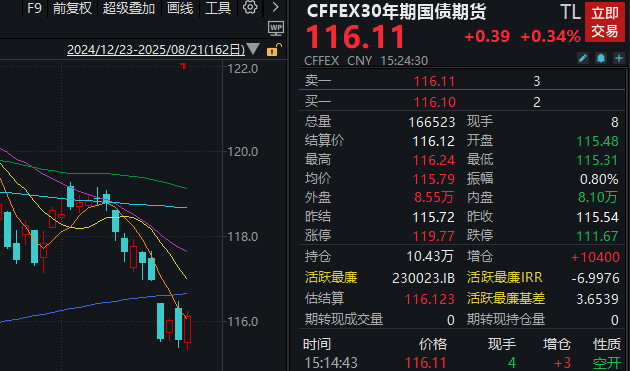
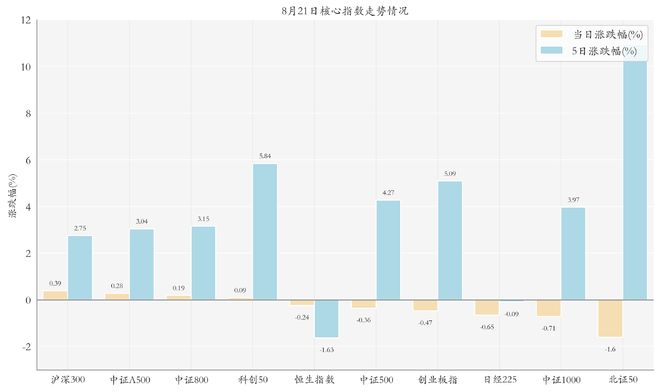
ETF Industry News - The three major indices showed mixed results today, with the Shanghai Composite Index rising by 0.13%, while the Shenzhen Component Index fell by 0.06% and the ChiNext Index decreased by 0.47% [1] - Several agricultural ETFs saw gains, including the Agricultural 50 ETF (516810.SH) which rose by 1.78%, and the Agricultural 50 ETF (159827.SZ) which increased by 1.69% [1] - The power equipment sector experienced declines, with the Kinetic New Energy ETF (588830.SH) dropping by 2.08% and the Energy Storage Battery ETF (159566.SZ) falling by 2.02% [1] Market Overview - China's ETF market has surpassed Japan, reaching an asset management scale of $681 billion in July, compared to Japan's $668 billion, making it the largest ETF market in Asia [2] - The increase in ETF products is supported by accelerated product approvals and strong funding supply, leading to greater recognition among retail investors for long-term, low-cost, and liquid ETF products [2] Bond Market Performance - The bond market is under pressure due to high-risk appetite, with long-term government bonds adjusting continuously, resulting in widespread declines in bond fund net values [3] - Data shows that nearly 100 bond funds have experienced a performance drop of over 1% since August, with more than 70% of pure bond funds reporting losses in August [3] Index Performance - On August 21, the Shanghai Composite Index closed at 3771.1 points, with a daily high of 3787.98 points, while the Shenzhen Component Index and ChiNext Index closed at 11919.76 points and 2595.47 points, respectively [4] - The top-performing sectors today included agriculture, oil and petrochemicals, and beauty care, with daily gains of 1.5%, 1.39%, and 0.98% respectively [6] ETF Market Performance - The average performance of various ETF categories indicates that strategy ETFs performed the best with an average increase of 0.47%, while cross-border ETFs had the worst performance with an average decline of 0.26% [9] - The top five performing ETFs today included the Chemical Industry ETF (516570.SH) with a gain of 1.99%, the China A50 ETF (560820.SH) with an increase of 1.83%, and the Agricultural 50 ETF (516810.SH) rising by 1.78% [11] Trading Volume - The top three ETFs by trading volume today were the A500 ETF (512050.SH) with a trading volume of 5.691 billion yuan, the Kinetic 50 ETF (588000.SH) with 5.501 billion yuan, and the A500 ETF Huatai (563360.SH) with 5.081 billion yuan [14]
低估值银行股攻守兼备,平安公司债ETF(511030)回撤控制稳定备受关注
Sou Hu Cai Jing· 2025-08-21 02:01
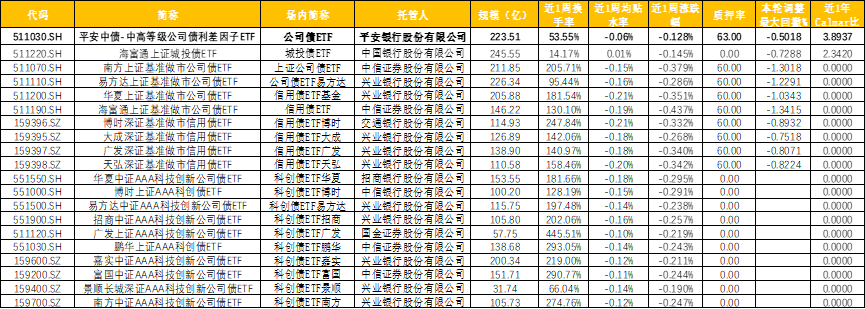
Group 1 - The fiscal financing side is believed to have peaked year-on-year, while the expenditure side may peak in September-October [1] - There are signs of increased activity in quasi-fiscal measures, with significant growth in policy bond financing in August, following the government's indication of 500 billion yuan in new policy development financial tools for this year [1] - Macro liquidity indicators suggest that social financing may have peaked, and M1 could peak around October [1] Group 2 - Micro liquidity is currently influenced by high margin trading and consumer credit subsidies, leading to unpredictable market conditions [1] - In this environment, investing in high-quality or undervalued banks is considered appropriate, emphasizing the importance of focusing on such opportunities [1] - The recent adjustment in the bond market has seen Ping An's corporate bond ETF (511030) rank first in terms of controlled drawdown, indicating relative stability and manageable risk [1] Group 3 - A detailed table of various ETFs is provided, showing their scale, recent performance, and other metrics, highlighting the performance of different bond ETFs in the market [1] - The data includes specific figures such as the scale of ETFs in billions, recent weekly performance percentages, and one-year performance metrics, which can be useful for investors [1]
超七成债基8月折戟,债市调整何时休?
券商中国· 2025-08-20 23:31
Core Viewpoint - The bond market is experiencing significant adjustments, with over 70% of bond funds reporting losses in August, primarily due to high-risk preferences in the equity market and a general decline in bond fund net values [2][3][4]. Group 1: Market Performance - As of August 20, the stock market's rebound has negatively impacted bond market sentiment, leading to declines in long-term government bond futures [2]. - More than 100 bond funds have seen performance declines exceeding 1% since August, with notable losses in funds heavily invested in long-term interest rate bonds [4]. - The overall performance of bond funds this year has been poor, with over 600 funds reporting losses, indicating a challenging environment for investors seeking stable returns [4]. Group 2: Fund Flows and Investor Behavior - In response to net value adjustments, some bond fund holders have opted for redemptions, with specific funds announcing adjustments to ensure the interests of their investors [5]. - There is a divergence in fund flows for bond ETFs, with some experiencing significant outflows while others, particularly those with larger declines, have seen substantial inflows [5]. Group 3: Future Outlook - Analysts express a mixed outlook for the bond market, with expectations of continued volatility and a potential stabilization in the near term, but caution against significant upward movements without a change in interest rate expectations [6][7]. - The current economic environment, including inflation and monetary policy, presents uncertainties for the bond market, leading to a defensive stance among investors [7][8].

债市大幅回调,基金经理压力大:积极应对未来市场变化
Sou Hu Cai Jing· 2025-08-20 18:20
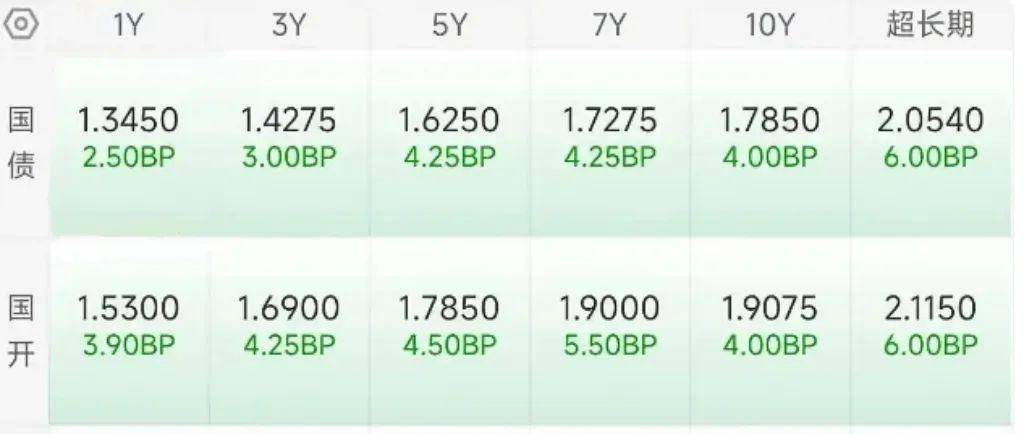
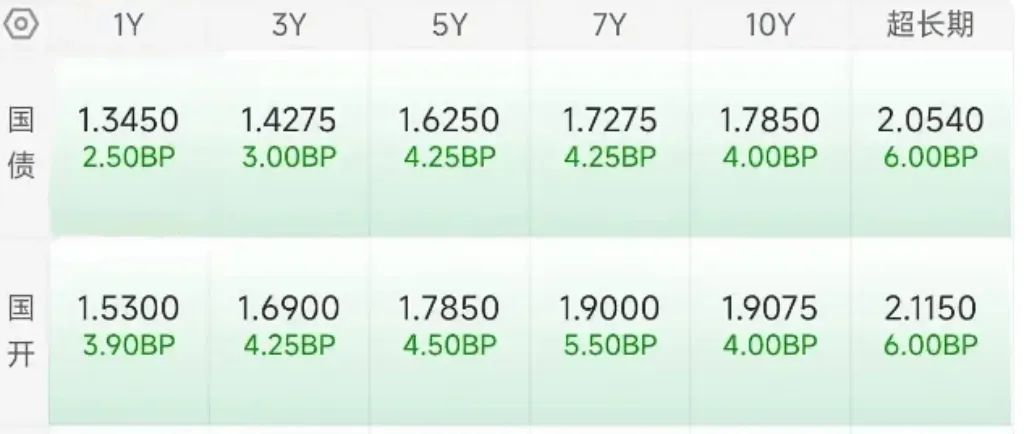
Group 1 - The bond market has experienced significant volatility, leading to increased pressure on fund managers, while the equity market continues to reach new highs [1][2] - On August 18, the bond market saw its most turbulent day of the month, with 10-year and 30-year treasury yields rising by 5 basis points and 6 basis points respectively, closing at 1.79% and 2.06% [1][2] - Fund managers are feeling unprecedented pressure due to declining net values of bond funds amidst rising equity fund returns, leading to low investor sentiment [2][3] Group 2 - The recent strong performance of the equity market contrasts sharply with the weakness in the bond market, particularly in long-term bonds, while short-term bonds remain relatively stable [3] - The current adjustment in the bond market is driven more by expectations rather than changes in the funding environment, with a potential shift from deflation to mild inflation impacting bond asset attractiveness [3] - A lack of investment from smaller banks and limited redemption willingness from institutional clients are contributing factors to the bond market's pressure [3] Group 3 - Fund managers are actively seeking strategies to cope with market fluctuations, maintaining a neutral to slightly high duration while focusing on shorter-term rates less affected by steepening yield curves [3]
债市“跌麻了”,基金经理直言“压力大”
Zhong Guo Ji Jin Bao· 2025-08-19 22:53
Core Viewpoint - The bond market is experiencing significant pressure and adjustments, contrasting with the strong performance of the equity market, leading to concerns among bond fund managers about redemption pressures and declining net asset values [1][3][6]. Market Performance - On August 18, the bond market faced its worst day in August, with 10-year and 30-year government bond yields rising by 5 basis points and 6 basis points respectively, closing at 1.79% and 2.06% [1]. - The average performance of pure bond funds was negative, with mid-to-long-term pure bond funds averaging -0.19% and short-term bond funds averaging -0.03% for the week [6][7]. Market Dynamics - The bond market is under pressure due to increased risk appetite in the equity market, leading to a "stock-bond seesaw" effect, where funds are being diverted from bonds to equities [3][4]. - The current bond market adjustment is driven more by expectations rather than changes in the funding environment, with a potential shift from deflation to mild inflation anticipated [3][4]. Fund Manager Strategies - Fund managers are adopting strategies such as shortening duration and adjusting portfolio structures to cope with the steepening yield curve [8][9]. - There is a consensus among fund managers that the bond market does not have the foundation for a long-term decline, with continued demand from institutional clients and a stable funding environment [2][8]. Investor Sentiment - Personal investors are expressing mixed feelings, with some feeling pessimistic about the bond market while others see potential buying opportunities [8][10]. - Fund managers suggest that investors consider extending their holding periods and maintaining a balanced approach to their portfolios, especially during market adjustments [10][11].
机构择券思路多,平安公司债ETF(511030)回撤控制排名第一,净值相对稳健且回撤可控
Sou Hu Cai Jing· 2025-08-19 02:10
Group 1 - The current 30-year government bond yield is around 2.05%, with a potential space of about 5 basis points for a small position in a rebound, focusing on central bank support [1] - For long-end trading, attention should be on bonds like 25T5 and 230023, with a preference for 4-5 year government bonds and avoiding 6Y and 8-9Y government development bonds [1] - The 10-year government bond spread is currently around 3 basis points, indicating a need for a bond switch as the excess value of new 10-year bonds is not strong [1] Group 2 - The Ping An Company Bond ETF (511030) has the best performance in terms of drawdown control during the recent bond market adjustment, with a net value stability and controlled drawdown [2] - The table provided shows various ETFs with their respective performance metrics, highlighting the Ping An ETF's 23.55% return over the past week and a 3.89% return over the past year [2] - Other ETFs listed show varying performance, with some experiencing significant drawdowns, indicating a diverse range of investment outcomes in the bond market [2]
债市盘中大幅调整
Sou Hu Cai Jing· 2025-08-18 07:01
Core Viewpoint - The bond market experienced a significant decline on August 18, primarily driven by rising stock market performance which increased risk appetite among investors [1] Bond Market Performance - Major government bond futures saw substantial declines, with the 30-year bond futures contract dropping by 1.01%, the 10-year contract down by 0.27%, and the 5-year and 2-year contracts falling by 0.18% and 0.14% respectively [1] - In the cash market, yields on key interbank bonds rose sharply, with the yield on the 30-year special government bond increasing by 4 basis points to 2.03%, and the 10-year bond yield rising by 2 basis points to 1.77% [1] Analyst Insights - Yang Yewei, Chief Analyst of Fixed Income at Guosheng Securities, indicated that the bond market's decline is mainly due to the stock market's rise, which has heightened risk appetite and led to concerns among investors holding long-duration bonds [1] - Despite the bond market's adjustment, Yang noted that the space for further declines is limited, as certain variables in the bond market will remain unchanged regardless of stock market performance [1] - The current liquidity in the market is expected to remain loose, and the demand from banks for bonds will not diminish due to the stock market's rise, providing a fundamental support for bond market stability [1]
固收|经济“预期差”下债市如何调整?
2025-08-18 01:00
Summary of Key Points from the Conference Call Industry Overview - The conference call primarily discusses the **Chinese economy** and its impact on the **bond market**. It highlights the current economic indicators, trade dynamics, and monetary policy implications. Core Insights and Arguments 1. **Economic Indicators**: July's PMI data shows a decline in manufacturing activity, with the manufacturing PMI at 49.3, down 0.4% month-on-month. The non-manufacturing PMI is at 50.1, also down 0.4% month-on-month, indicating a slowdown in business expansion [3][4][21]. 2. **Trade Dynamics**: Exports in July reached $321.7 billion, a year-on-year increase of 7.2%, but exports to the U.S. fell significantly by 21.7%. Exports to ASEAN and the EU grew by 16.6% and 9.2%, respectively [7][28]. 3. **Inflation Metrics**: The CPI remained stable, with a year-on-year change of 0%, while the PPI decreased by 3.6%. Food prices, particularly for meat and vegetables, saw notable declines, contributing to the CPI's stability [8][9][11]. 4. **Social Financing**: The total social financing in July showed a good performance, primarily driven by government bond issuance, with a total of 431.26 trillion yuan, reflecting a year-on-year growth of 9% [14][19]. 5. **Credit Conditions**: Credit data for July indicated a decrease in new loans, attributed to seasonal factors and a lack of comprehensive demand and investment recovery. New RMB loans decreased by 500 billion yuan [16][17]. 6. **Market Sentiment**: The bond market is under pressure due to low absolute yields, making bonds less attractive compared to other asset classes. The current yield on 10-year government bonds is around 1.68% [24][26]. 7. **Future Outlook**: The economic data suggests that the bond market may not experience significant negative impacts in the short term, with a neutral stance expected in the medium term. The overall sentiment towards the bond market remains positive [23][30]. Other Important but Potentially Overlooked Content 1. **Sector Performance**: The manufacturing sector is facing challenges, with new orders and production indices below critical levels, indicating a slower demand expansion compared to supply [4][10]. 2. **Employment Pressure**: The employment situation remains a concern, particularly with the influx of new graduates entering the job market, which may affect production and business operations [5][6]. 3. **Policy Implications**: The discussion emphasizes the need for ongoing monitoring of macroeconomic fundamentals and their sensitivity to the bond market, especially in light of potential U.S. interest rate cuts [22][23]. 4. **Investment Strategy**: The recommendation for investors is to adopt a neutral stance with a focus on short-term trading opportunities, particularly in the context of potential market corrections [27][31]. This summary encapsulates the key points discussed in the conference call, providing insights into the current economic landscape and its implications for the bond market.