去杠杆

Search documents
美股被币圈“带节奏”?华尔街大佬揭秘:算法正把比特币当晴雨表
智通财经网· 2025-11-21 03:04
Group 1 - The core sentiment on Wall Street experienced a surprising reversal, initially driven by Nvidia's strong earnings and a robust non-farm payroll report, which led to a more than 2% rise in the Nasdaq Composite Index, but all gains were erased by midday, resulting in a decline of over 2% at the close [1] - Multiple factors contributed to this reversal, including Nvidia's historically volatile stock price and complex non-farm data that weakened interest rate cut expectations [1] - The cryptocurrency market's movements were highlighted as a potential key trigger for the market's behavior, with Bitcoin's price crossing $90,000 being noted as a significant moment that coincided with the decline of major indices [1] Group 2 - Bitcoin's latest price fell by 6.59% to $86,450.5, with the overall cryptocurrency market experiencing a significant downturn, as Bitcoin has dropped over 30% from its historical peak [2] - A large-scale liquidation event on October 10, which saw over $19 billion in leveraged cryptocurrency positions forcibly closed, was identified as a direct cause of the recent decline [2] - The October 10 event severely weakened the capacity of market makers, who are crucial for liquidity in the cryptocurrency market, leading to a continued decline in the market over the following weeks [3]

帮主郑重:比特币跌破8.7万!四年周期+去杠杆,中长线该抄底还是观望?
Sou Hu Cai Jing· 2025-11-20 23:41
Group 1 - Bitcoin has fallen below $87,000 for the first time since April, with a single-day drop exceeding 4%, marking a decline that has persisted for over a month due to whale sell-offs and a lack of buying interest [1][3] - The market experienced a significant downturn after a record rise in October, leading to short-term traders continuously liquidating positions, which has resulted in increased selling pressure [3] - Two key factors driving the current decline are identified: the self-fulfilling nature of the "four-year cycle," where whales have sold over $20 billion in assets since September, and the ongoing deleveraging in the market, which has diminished the buying momentum that previously supported Bitcoin's rise [3] Group 2 - The volatility of cryptocurrencies is highlighted, advising against impulsive trading based on short-term emotions; investors are encouraged to reassess their long-term value outlook before making decisions [4] - It is recommended that potential investors wait for reduced volatility and stable support levels before entering the market, as the deleveraging process is not yet complete [4] - Emphasis is placed on managing position sizes due to the inherent risks associated with cryptocurrency investments, advocating for a steady approach rather than speculative betting [4]


核心CPI向上 物价拐点何时到来
Jing Ji Guan Cha Wang· 2025-11-15 06:19
Group 1 - The core viewpoint of the articles indicates that China's economic growth is facing challenges, with a decline in social retail sales and an increase in core CPI, suggesting a complex economic environment [2][3][12] - In October, the social retail sales total increased by 2.9% year-on-year, marking a continuous decline for five months, while the core CPI rose by 1.2%, indicating a potential turning point in consumer demand [2][8] - Experts highlight a "supply-demand imbalance" in the economy, emphasizing the need for enhanced consumer demand to address the declining retail sales growth [2][12] Group 2 - The increase in core CPI is attributed to factors such as the consumption stimulus from the National Day and Mid-Autumn Festival holidays, as well as rising gold prices, with service prices also showing a recovery [7][8] - The core CPI's growth reflects improvements in terminal consumer demand, but it also indicates underlying pressures on food and energy prices, which remain low [13][14] - The overall CPI has been operating at low levels, with experts suggesting that while the core CPI's increase is a positive sign, it is not sufficient to confirm a definitive turning point in the economy [11][12]

币安研究:加密市场在 10 月经历去杠杆冲击后下跌 6.1%,11 月有望迎来情绪修复
Sou Hu Cai Jing· 2025-11-13 12:58
Core Insights - The cryptocurrency market experienced a 6.1% decline in October, marking the first "red October" since 2018, following a deleveraging shock [1] - Despite the overall market pressure, BNB rose by 6.2% due to the launch of popular projects and the tokenization of a money market fund by China Merchants Bank [1] - Major tokens such as SOL, ADA, and DOGE saw declines exceeding 10% [1] Market Performance - The total value locked (TVL) in DeFi decreased by 4.85% [1] - The market capitalization of stablecoins increased by 3.54% [1] - Institutional demand for ETH remains strong, with treasury holdings reaching 5% of total supply [1] Future Outlook - The report suggests that November may see a recovery in market sentiment, with attention on the potential benefits from the end of the Federal Reserve's balance sheet reduction and improvements in US-China relations [1]
不是通胀要来了,真实体感还在变差!
Sou Hu Cai Jing· 2025-11-09 08:58
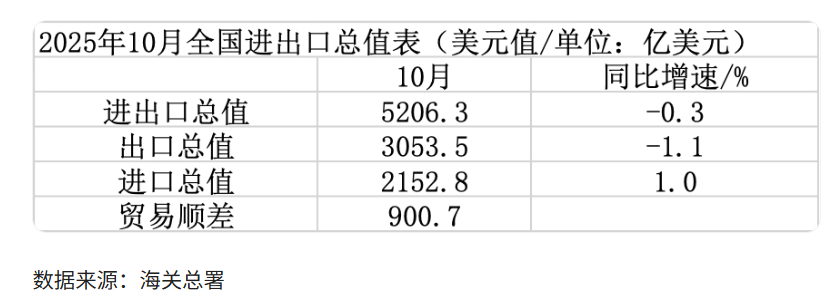
Core Viewpoint - The recent increase in the Consumer Price Index (CPI) and the narrowing decline in the Producer Price Index (PPI) suggest potential inflation, driven by rising global commodity prices and the effects of loose monetary and fiscal policies [1][2]. Economic Indicators - October CPI rose by 0.2% year-on-year, while core CPI, excluding food and energy, increased by 1.2% [1]. - The total import and export value in October was $520.63 billion, with exports at $305.35 billion (down 1.1% year-on-year) and imports at $215.28 billion (up 1.0% year-on-year) [6]. Investment Trends - National fixed asset investment decreased by 0.5% in the first three quarters, with private investment down by 3.1% [4]. - Investment in high-tech sectors has seen significant growth, exceeding 20%, while traditional sectors like real estate are struggling [6][7]. Consumer Behavior - Despite loose monetary policies, consumer borrowing is declining as individuals focus on deleveraging, impacting consumption [4]. - The introduction of new tax policies for e-commerce is expected to reduce disposable income for many, further constraining consumer spending [11][14]. Employment and Production - The potential for inflation may not translate into increased demand, as companies may reduce production in response to rising costs, leading to layoffs and decreased consumer spending [9][10]. - The shift towards high-tech investments may not provide immediate employment solutions for the broader workforce, which still relies heavily on traditional industries [7]. Trade Dynamics - The tightening of tax regulations is anticipated to negatively impact export activities, with businesses facing increased tax burdens and reduced profit margins [11][13][14]. - The overall trade environment is showing signs of contraction, with exports beginning to decline significantly from October onwards [5][13].
Assaí Atacadista(ASAI) - 2025 Q3 - Earnings Call Transcript
2025-11-07 15:00
Financial Data and Key Metrics Changes - The company has achieved a reduction in net debt by BRL 500 million, starting from an operational cash generation of BRL 4.2 billion, which is higher than the previous quarter [15][16][20] - EBITDA increased from 5.5% to 5.7%, reaching a margin of 7.6% [13][20] - Net income for the quarter was BRL 195 million, slightly down from BRL 198 million, reflecting the impact of financial results and tax credits [20][22] Business Line Data and Key Metrics Changes - The company has seen a performance difference between sectors, with classes A and B gaining volume while classes C, D, and E experienced a retraction in volumes [7][9] - B2B sales, which represent about 40-45% of total sales, showed a significant drop in volume, particularly in cash and carry formats [6][9] Market Data and Key Metrics Changes - Brazil's interest rates reached an all-time high of 15%, impacting consumer debt levels and spending behavior [7][9] - Retail formats serving classes A and B saw a volume increase of 2.7%, while cash and carry formats experienced an 8.3% drop in volume [8][9] Company Strategy and Development Direction - The company is focused on deleveraging and maintaining a strong cash generation strategy, with plans to continue opening new stores selectively [15][22] - There is an emphasis on expanding private label offerings and enhancing digital channels, particularly through partnerships for last-mile delivery [27][28] Management's Comments on Operating Environment and Future Outlook - Management acknowledged the challenging economic environment but expressed confidence in the company's ability to maintain stability and continue deleveraging [4][20] - The company anticipates a potential recovery in the bar sector and expects strong sales initiatives during the end-of-year period [49] Other Important Information - The company has set a public goal to achieve zero landfill by 2035 and is actively working on sustainability initiatives [23][24] - The app has registered 21 million customers, with 16 million being contactable, indicating strong customer engagement [55] Q&A Session Summary Question: Financial services dynamic and core business expenses - Management discussed ongoing initiatives to control expenses and the potential for further efficiency improvements without compromising customer service [30][31][32] Question: Profitability and CapEx guidance - The company reinforced its guidance for margin improvement while managing working capital and maintaining discipline in supplier relationships [35][36] Question: Update on private label and cash and carry trends - Management highlighted the importance of the cash and carry model and its exposure to lower-income consumers, while also discussing the potential for private label growth [39][40][41] Question: CapEx and store expansion strategy - The company confirmed plans to open new stores with high return potential while being cautious about overall investment levels due to rising interest rates [42][43][46] Question: October sales performance and competition in hygiene and beauty categories - Management expressed optimism about October's strong sales and acknowledged competitive pressures in the beauty market, particularly from higher-income segments [47][48] Question: Self-checkout impact and labor challenges - The company noted that self-checkout has improved customer experience and efficiency, despite challenges in hiring and maintaining staff levels [50][51][52] Question: Updates on app and Black Friday initiatives - Management shared plans for Black Friday promotions and highlighted the app's strong customer base as a key growth avenue [54][55]

AI板块估值调整或引发市场波动,黄金恐遭短期抛售但根基稳固
Jin Shi Shu Ju· 2025-11-07 04:14
Core Insights - The revaluation of artificial intelligence (AI) may increase market volatility and trigger a new round of deleveraging, impacting gold and other commodities, but any price distortions are expected to be short-term and will not affect the strong fundamentals of gold [1][4] Group 1: Market Dynamics - Recent weeks have shown signs of fatigue in the tech sector, particularly in AI-related stocks, with a parabolic rise pushing forward earnings to levels significantly above long-term norms, increasing the risk of a pullback [1] - The Nasdaq 100 futures experienced a mild decline of 4.3% from peak to trough, which is small compared to its over 20% gain for the year, indicating a shift in market sentiment [1] - High valuations, narrow market breadth, cyclicality of AI capital flows, and concentration of funds in a few large-cap stocks have contributed to recent market tension, with warnings from major bank CEOs about a potential 10%-20% market correction [1][2] Group 2: Volatility and Deleveraging - Volatility events are considered one of the most underestimated channels of transmission between stock market pressures and commodity price movements [2] - When volatility spikes, institutional portfolios targeting specific volatility or risk levels must reduce risk exposure, often leading to a broad sell-off, even in positions supported by strong fundamentals [2] - The "cash grab" phenomenon occurs where liquid, large-cap assets are sold off as immediate cash sources, impacting all positions, including commodities [2] Group 3: Gold and Commodity Outlook - Despite recent strong gains, gold is currently in a consolidation phase, but has not yet tested levels that would indicate a deeper correction or the end of a structural bull market [2][3] - Historical examples, such as the volatility spike in early April, show that even strong assets like gold can experience temporary declines during market stress, but typically recover quickly once forced selling subsides [3] - The current market environment may trigger another volatility event, but the risk of forced liquidation in precious and industrial metals has lessened due to previous meaningful corrections [3][4] Group 4: Fundamental Support for Commodities - The core support for gold and other investment metals remains unchanged, driven by fiscal uncertainty, persistent inflation, stable demand from central banks and investors, declining real interest rates, and ongoing geopolitical hedging needs [4][5] - Industrial metals continue to benefit from structural demand related to de-globalization, electrification, grid expansion, and rapid infrastructure development, alongside insufficient new mining capacity investments [5] - Volatility events may temporarily distort price signals across the commodity market, but they rarely alter the fundamental trajectory of markets with solid macro and micro foundations [5]
博时基金张李陵:新的宏观范式与资产价格
Xin Lang Ji Jin· 2025-11-03 10:02
Core Viewpoint - The current investment environment in China is characterized by a shift in asset pricing logic, focusing on "debt resolution, stable growth, and improved capital returns" as key policy themes [2][3] Group 1: Macroeconomic Environment - The leverage ratio in China's non-financial sectors has exceeded 300%, necessitating a focus on "debt reduction" [2] - China's policy response has been proactive, maintaining an M2 growth rate of 8%-9%, significantly higher than Japan's 3%-4% during its deleveraging phase [2] - The real estate market serves as a critical indicator of policy effectiveness, with first-tier city housing prices retracting about 20%, lower than the 30% and 50% declines seen in the U.S. and Japan, respectively [2][3] Group 2: Capital Market Dynamics - The A-share market has experienced a relatively mild adjustment compared to the severe market shocks seen in Japan and the U.S. during their deleveraging phases, with new highs reached post "9.24" [3] - Successful deleveraging is expected to anchor long-term housing price growth between 0%-3%, while stock performance may surpass that of real estate [3] Group 3: Economic Structural Transition - China's economic structure is undergoing a significant transformation, with investment's contribution to GDP dropping from approximately 70% a decade ago to around 30%, while consumption now accounts for nearly 50% [4] - This shift is expected to keep interest rates under pressure while maintaining ample liquidity in the market [4] Group 4: Future Market Outlook - The stock market has seen substantial gains, driven by abundant liquidity and reduced macroeconomic tail risks, with external demand emerging as a key catalyst [6] - The structure of China's export market is shifting towards emerging markets, which are becoming the main contributors to export growth, surpassing traditional markets like Europe and the U.S. [6] Group 5: Investment Logic in New Paradigm - The new investment logic suggests that domestic profit elasticity is generally weak, but liquidity may remain abundant, leading to a continued shift of household assets towards financial assets [7] - Growth sectors such as technology and pharmaceuticals are expected to follow U.S. economic and technological cycles, while capital goods and commodities may align with emerging market cycles [7]
油气交易业务反弹助力壳牌(SHEL.US)Q3利润超预期 股票回购与去杠杆齐头并进
智通财经网· 2025-10-30 08:49
Core Insights - Shell's Q3 profits exceeded expectations despite weak Brent crude oil prices, driven by strong oil and gas trading performance [1] - The company maintained a quarterly stock buyback of $3.5 billion and reduced net debt from $43.2 billion to $41.2 billion [1] - Adjusted net profit for Q3 fell approximately 10% year-on-year to $5.43 billion, surpassing analysts' average expectation of $4.74 billion [1] - Shell's LNG trading business saw a significant rebound, delivering 13 LNG cargoes in Q3 due to new infrastructure capacity in Canada [1] Company Strategy - CEO Wael Sawan has focused on cost-cutting, improving operational reliability, and divesting underperforming high-leverage assets to narrow the valuation gap with U.S. competitors [2] - Shell's stock price has increased by 16% since early 2025, outperforming its closest competitors [2] - The company reported strong performance in its marketing business and deepwater assets in the Gulf of Mexico and Brazil [2] Market Context - Global oil demand has stabilized in 2023, with Brent crude prices down about 14%, leading to a more subdued demand environment for major energy producers [2] - Energy companies are responding to this demand slowdown by cutting jobs, reducing new capacity investments, and in some cases, scaling back stock buybacks [2] Operational Performance - RBC Capital Markets noted that Shell's earnings and cash flow are supported by strong operational metrics, with a robust balance sheet [3] - The LNG Canada facility is expected to reach full capacity by 2026, with expansion decisions anticipated in the same year [3] - Canadian Prime Minister Mark Carney is pushing for accelerated construction of significant expansions at the LNG facility [3]

汤姆·李预测标到2025年底:四大催化剂可能引发重大市场突破
Sou Hu Cai Jing· 2025-10-26 16:31
Group 1 - The S&P 500 index may experience a significant breakthrough by the end of the year due to strong earnings reports, the Federal Reserve's easing monetary policy, potential positive outcomes from government shutdowns, and favorable news regarding deleveraging [1][3] - The current period is critical as companies are reporting strong earnings and the Federal Reserve is entering a loosening cycle, which could lead to a rally in the stock market [3] - The VIX index has surged, leading to some deleveraging in the market, which may create opportunities for upward movement in the S&P 500 index [3] Group 2 - The S&P 500 index is projected to reach at least 7000 points by year-end, with the current estimate being considered low [3] - Advancements in artificial intelligence (AI) technology are expected to benefit companies and consumers, enhancing visibility and returns on investments [3] - Lower interest rates anticipated for next year could alleviate financial burdens on households and consumers, further supporting market growth [3]