太空算力

Search documents
看好太空算力带动太空光伏需求,关注SpaceX合并xAI
INDUSTRIAL SECURITIES· 2026-02-09 10:45
Investment Rating - The industry investment rating is "Recommended (Maintain)" [1] Core Insights - The report highlights the potential growth in the space photovoltaic sector driven by SpaceX's acquisition of xAI, which is expected to create significant demand for solar energy in space [9][18] - The AIDC (Artificial Intelligence Data Center) sector is experiencing a surge in capital expenditure from major cloud companies, indicating strong growth opportunities for related electrical equipment manufacturers [9][13] - The solid-state battery industry is advancing towards commercialization, with significant policy support and technological developments expected to enhance profitability and valuation in the lithium battery sector [17][18] - The energy storage sector is set to benefit from the newly implemented capacity pricing policy, which is anticipated to drive rapid growth in demand for energy storage solutions [19] - The wind power sector is witnessing significant overseas expansion, with Chinese companies successfully securing projects and increasing exports, particularly in the offshore wind segment [20][22] Summary by Sections AIDC Electrical Equipment - Continuous high growth in capital expenditure is observed, with major companies like Alphabet and Amazon significantly increasing their 2026 capital expenditure forecasts [9][13] - The demand for high-density power solutions is expected to rise, providing historical growth opportunities for domestic AIDC manufacturers [10][13] Robotics - The launch of the full-size humanoid robot "Bolt" and advancements in AI-driven robotics are expected to create new investment opportunities in the robotics sector [14] - Companies like Xiaomi and Huawei are positioned to leverage their existing technology in the robotics field, presenting potential investment avenues [14] Solid-State Batteries - The solid-state battery industry is moving towards mass production, with key technological breakthroughs and supportive policies expected to accelerate the commercialization process [17][18] - Companies with strong technological capabilities and production capacity in solid-state battery materials and equipment are likely to benefit [17] Photovoltaics and Energy Storage - The integration of space computing capabilities is projected to open new growth avenues for the photovoltaic industry, with significant investments planned by SpaceX and Tesla [18] - The newly established capacity pricing policy for energy storage is expected to enhance investment confidence and drive rapid growth in the sector [19] Wind Power - Chinese companies are making significant strides in overseas markets, particularly in offshore wind projects, with a notable increase in exports expected [20][22] - The wind power sector is anticipated to enter a new growth cycle, supported by favorable policies and technological advancements [20][22] Grid Investment - The State Grid's investment is set to increase significantly, marking the beginning of a new phase of high-quality development in China's grid infrastructure [21][22] - The demand for smart grid solutions is expected to rise, driven by the need for enhanced energy management and integration of renewable sources [21][22]






一图看懂 | 太空算力概念股
市值风云· 2026-02-09 10:11
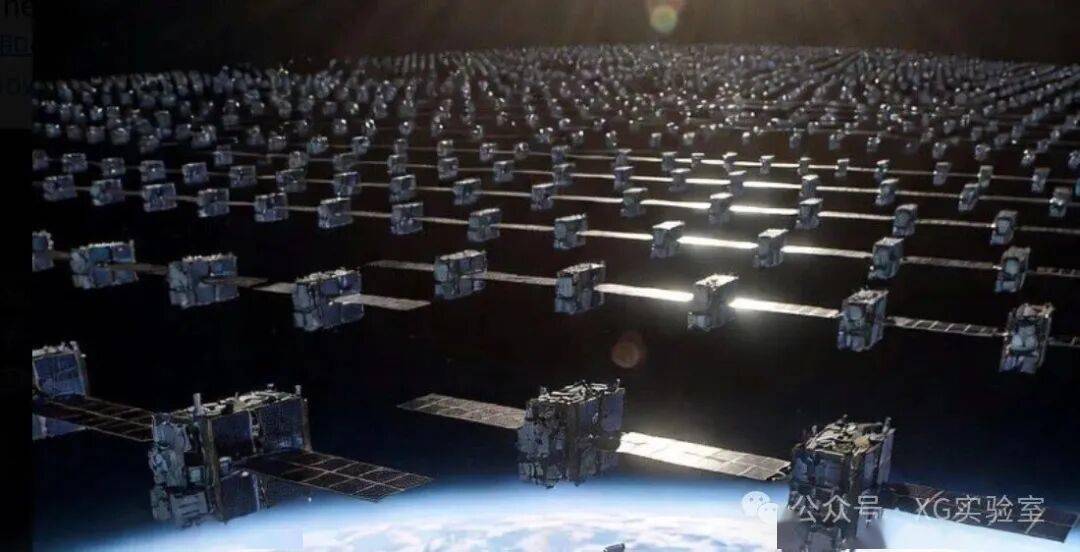
Group 1 - The article highlights that the most economically beneficial application of AI is in space, as it becomes the only long-term scalable computing power carrier due to ground electricity bottlenecks [5] - The demand for computing power is experiencing exponential growth, while global electricity production, excluding China, is stagnating [5] Group 2 - Key companies involved in core computing and operational energy support include Qianzhao Optoelectronics, Shunhao Co., and Zhongke Xingtou [6] - Companies in the computing chip sector include Hangyu Micro, Guangxun Technology, and Beijing Junzheng [6] - Infrastructure and manufacturing companies mentioned are Tianyin Electromechanical, Ruantong Power, and Lingyi Zhi Manufacturing [6]


机械行业2025年报业绩前瞻:业绩稳中向好,科技引领价值反转
Shenwan Hongyuan Securities· 2026-02-09 04:15
Investment Rating - The report rates the mechanical industry as "Overweight," indicating a positive outlook for the sector compared to the overall market performance [2][13]. Core Insights - The mechanical industry is expected to see stable performance with technological advancements leading to a value reversal. Key areas of growth include space photovoltaics, machine tools, robotics, and laser technology [4][7]. Summary by Sections Performance Forecast - The report predicts significant growth for 21 key tracked mechanical companies in Q4 2025, with notable forecasts such as Zoomlion (183%), DingTai High-Tech (179%), and Wolong Electric (82%) [4][5]. Space Photovoltaics - The commercial space sector is entering a new phase characterized by large-scale deployment and capability upgrades, leading to increased demand for space photovoltaics. The report highlights a projected super cycle in satellite manufacturing and launching over the next decade, driven by the need for satellite energy systems [4]. Machine Tools & Cutting Tools - The machine tool sector is expected to transition towards high-end, CNC, and intelligent manufacturing. The report anticipates a 9.7% increase in metal cutting machine production in 2025, with a strong focus on domestic production of core components [4][7]. - Cutting tool manufacturers are expected to benefit from rising raw material prices and increased domestic demand, with a focus on high-end product breakthroughs [4]. Robotics & Components - The humanoid robot industry is progressing towards commercialization, with significant developments expected in 2025. The report identifies three main trends: Tesla's humanoid robot iterations, global giants entering the robotics space, and various robot forms being deployed in practical applications [4]. Laser Technology - General laser technology is experiencing rapid growth due to advancements in high-power and specialized applications. The report recommends companies like Baichu Electronics and Dier Laser for investment [7]. Engineering Machinery - The report anticipates a resonance of domestic and foreign demand in 2026, driven by infrastructure projects and equipment upgrades. Key companies recommended include SANY Heavy Industry and XCMG [7]. Forklifts - The forklift market is projected to grow, with a 12.9% increase in total sales expected in 2025. The report emphasizes the trend towards automation and smart logistics in the industry [7]. Rail Transit Equipment - The report notes a strong demand for rail transit equipment, with a projected 6.0% increase in fixed asset investment in railways for 2025. Recommended companies include CRRC and Siwei Control [7].




科创新能源ETF(588830)涨超4.8%,特斯拉计划扩大太阳能电池制造业务
Xin Lang Cai Jing· 2026-02-09 02:40
科创新能源ETF紧密跟踪上证科创板新能源指数,上证科创板新能源指数从科创板市场中选取50只市值 较大的光伏、风电以及新能源车等领域的上市公司证券作为指数样本,以反映科创板市场代表性新能源 产业上市公司证券的整体表现。 数据显示,截至2026年1月30日,上证科创板新能源指数(000692)前十大权重股分别为天合光能、晶科 能源、阿特斯、奥特维、厦钨新能、大全能源、容百科技、嘉元科技、固德威、天奈科技,前十大权重 股合计占比46.03%。 科创新能源ETF(588830)、创业板新能源ETF鹏华(159261)、光伏ETF鹏华(159863) 光伏概念表现活跃,消息面上,特斯拉正评估美国多个选址,计划扩大太阳能电池制造业务,目标在未 来三年内实现每年100吉瓦的太阳能制造能力。特斯拉副总裁邦妮·埃格尔斯顿、太阳能产品工程高级经 理塞思·温格相继在领英发布岗位,面向全球招募制造工程师与材料科学家,直言要"以极限速度解决规 模化制造难题,助力美国可再生能源突破"。官网招聘更给出明确时间表:2028年底前,在美国本土实 现从原材料端起的100GW一体化光伏制造。兑现马斯克的Tesla的100GW产能,预计第一期10G ...

2026年中国太空光伏行业产业链、发展背景、需求量预测及未来趋势展望:受益于卫星发射数量激增及太空算力部署加速,太空光伏或成下一个增长蓝海[图]
Chan Ye Xin Xi Wang· 2026-02-09 01:14
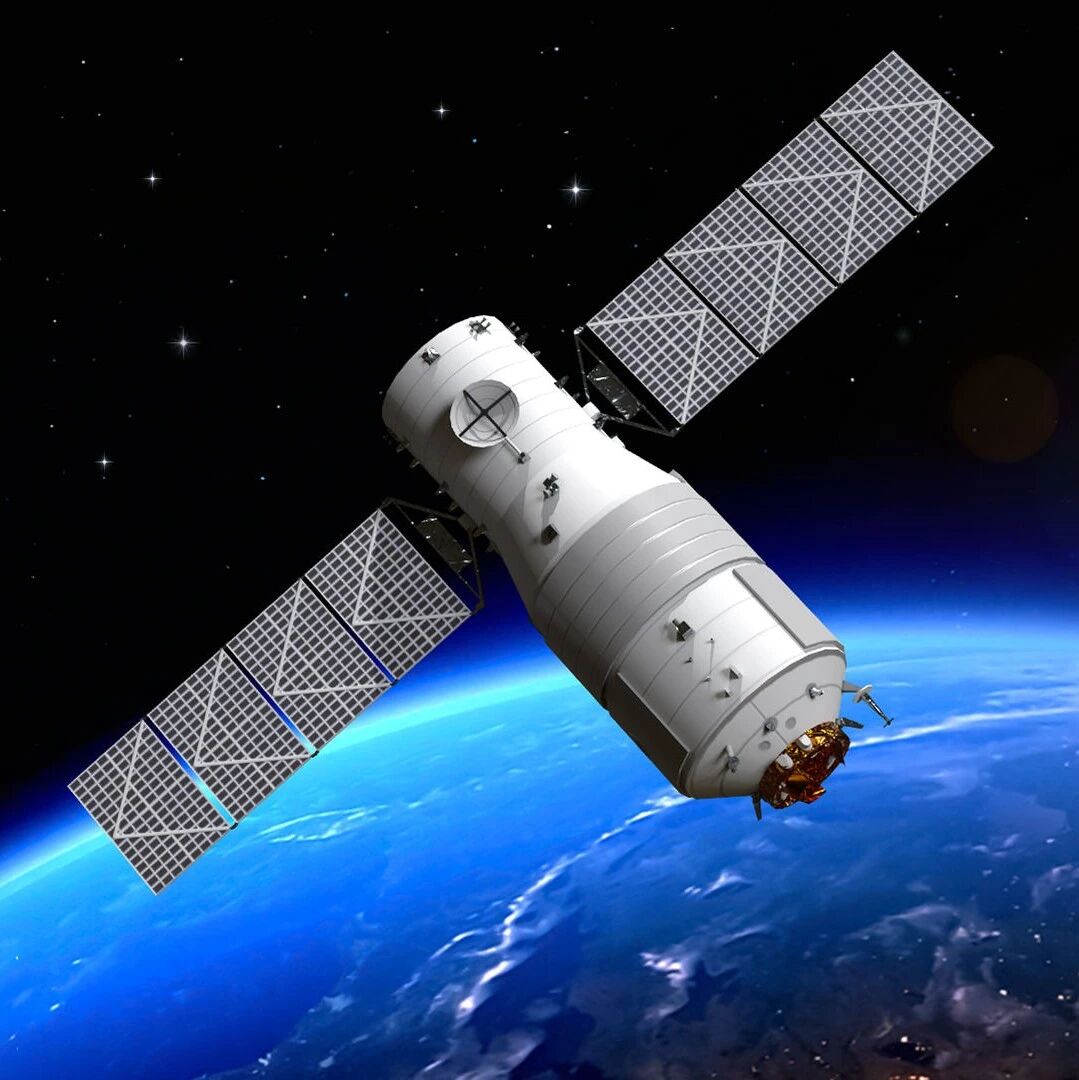
Core Viewpoint - Space photovoltaics is emerging as a strategic solution for commercial space and high-end applications, with significant growth expected due to the increasing demand for satellite launches and space computing capabilities [1][2][5] Group 1: Overview of Space Photovoltaics - Space photovoltaics refers to the use of solar photovoltaic technology in outer space environments to generate and supply energy, either transmitted wirelessly to the ground or used to power satellites and space stations [2][5] - The industry is at a turning point, with a projected increase in satellite launches leading to a shift from niche markets to large-scale applications [1][5] Group 2: Industry Development Background - The global satellite launch market is experiencing a surge, with over 10,000 low Earth orbit satellites expected to be registered by the end of 2025, including approximately 45,000 from the U.S. and 53,000 from China [5][6] - Space photovoltaics is seen as the only viable long-term power solution for spacecraft, as traditional energy sources face significant limitations in space [6][7] Group 3: Current Status of the Space Photovoltaics Industry - The industry has evolved from early applications of solar energy in satellites to advanced technologies, with gallium arsenide batteries achieving over 30% efficiency and becoming the gold standard for high-end space equipment [9][10] - The current technology roadmap includes short-term gallium arsenide, mid-term silicon-based HJT, and long-term perovskite tandem technologies, each achieving significant breakthroughs [10][11] Group 4: Market Size Forecast - By 2035, if satellite launches reach 15,000 annually and power per satellite increases from 15 kW to 30 kW, the total photovoltaic battery demand will reach 0.45 GW [11] Group 5: Industry Layout and Key Players - Companies such as Hangzhou Shangyi Optoelectronics Technology Co., Ltd., and Shenzhen Guangyin Technology Co., Ltd. are accelerating their involvement in the space photovoltaics sector, leveraging their expertise in materials and systems integration [2][12] - The collaboration between traditional aerospace companies and photovoltaic leaders is creating new growth opportunities in the "photovoltaics + aerospace" space [12] Group 6: Challenges and Trends in Industry Development - The space photovoltaics industry faces challenges such as high costs, the need for improved material reliability in extreme environments, and the lack of a mature supply chain [12][13] - Future trends indicate a gradual commercialization process, focusing initially on specific space facilities, then expanding to low Earth orbit satellite constellations, and eventually enabling large-scale energy transmission to Earth [12][13]

中信证券:太空光伏设备价值量或将实现跃迁式提升 重点推荐龙头公司
智通财经网· 2026-02-09 00:58
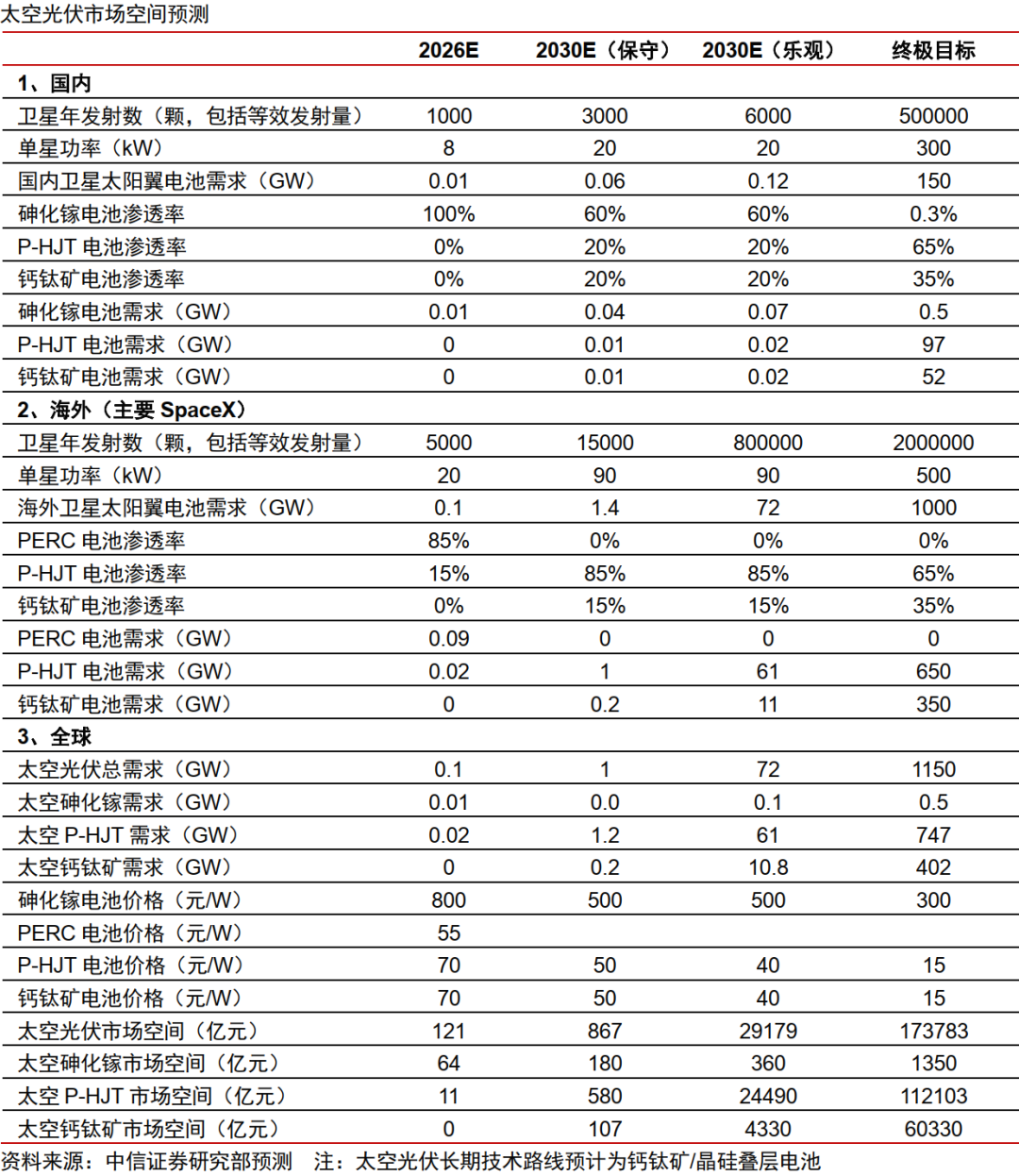
智通财经APP获悉,中信证券发布研报称,马斯克下注光伏制造,为轨道算力和AI供电铺路。中国头部光伏设备厂商具备极强的高效迭代和快速响应能 力,有望跻身特斯拉和SpaceX等相关设备供应链,并收获高额订单,打开全新成长空间。此外,太空光伏设备或具备明显"通胀"效应,价值量或将实现跃 迁式提升。重点推荐光伏设备龙头。 中信证券主要观点如下: SpaceX剑指轨道算力,太空光伏需求增长或远超想象。 SpaceX引领商业航天发展,加快星链(Starlink)建设和卫星升级,并申请部署百万颗卫星,正式进军太空数据中心。太空光伏是现阶段卫星和轨道算力的唯 一能源,其需求增速和市场空间有望迎来指数级增长。测算在保守情景下,2030年全球太空光伏需求量和市场空间或分别达1GW和800亿元以上;在乐观情 景下,2030年全球太空光伏需求和市场空间或分别达70GW和近3万亿元。预计未来5年,太空P型HJT和钙钛矿电池市场成长空间或达百倍、甚至千倍以 上。 马斯克下注光伏制造,光伏设备龙头迎重大机遇。 马斯克在2026年达沃斯论坛透露,特斯拉和SpaceX或分别基于地面用电和太空光伏需求规划在未来几年各建100GW光伏上下游制造产 ...

马斯克的“越狱”计划
Sou Hu Cai Jing· 2026-02-09 00:33
Group 1 - The article discusses a significant shift in the AI revolution, emphasizing that the real challenge lies in overcoming physical constraints rather than just improving algorithms [1] - It highlights that robots, particularly those like Musk's Optimus, represent a new era of "self-replicating industrial units," which could disrupt traditional labor cost models [3] - The article warns of an impending "breakpoint" in power supply within 36 months, as computational power grows exponentially while global electricity output remains stagnant [4] Group 2 - Musk's strategy involves moving energy-intensive computing to space to avoid terrestrial political hurdles, thus optimizing efficiency [6][7] - The concept of a vertically integrated "interstellar production line" is introduced, suggesting that competitors will face not just technological gaps but also "dimensional gaps" [8] - The article stresses the importance of energy conversion into productive capacity, indicating that the future of manufacturing will depend on who can efficiently harness and utilize cosmic energy [9] Group 3 - The conclusion emphasizes a pragmatic approach to engineering challenges, suggesting that when systems become bottlenecks, alternatives must be sought, such as moving operations to space [10] - The article notes that solar energy in space is five times more efficient due to the absence of atmospheric interference, and there are no bureaucratic delays in orbit [13] - It outlines a collaborative framework where SpaceX transports energy, space computing provides intelligent fuel, xAI refines digital processes, and Optimus executes physical production on Earth [14]
北京青年工程师团队在700公里轨道搭建“太空数据中心”:他们为AI时代打造“永不关机”的轨道算力
Xin Lang Cai Jing· 2026-02-08 22:43
Core Viewpoint - The article discusses the ambitious plan of Beijing's Xingkong Institute to establish a "Space Data Center" in orbit, aiming to overcome the limitations of terrestrial data centers and meet the growing computational demands of artificial intelligence and other technologies [1][5]. Group 1: Space Data Center Initiative - Beijing plans to build a computational constellation with a total power of 16GW over the next decade, addressing the increasing demand for computational power in the city [1]. - The initiative is driven by the need to support real-time computations for smart devices, autonomous driving systems, and AI models, with a projected requirement of 45,000P by the end of 2025 [2]. - The project aims to utilize the unique advantages of space, such as natural cooling at -269 degrees Celsius and continuous solar energy, to mitigate the physical limitations faced by ground-based data centers [3][5]. Group 2: Technological Challenges and Solutions - Ground-based data centers face significant challenges, including space constraints and high energy consumption, with over 40% of energy used for cooling [3]. - The "Chenguang-1" satellite, weighing 380 kg, is designed to validate key technologies for the space data center, including energy, cooling, and communication systems [6]. - The satellite's mission includes the first exploration of the technology route for space data centers and the verification of low-cost, efficient core technologies [6]. Group 3: Strategic Importance and Future Plans - The space data center is seen as a critical infrastructure for national security and technological competition, with implications for 6G and other advanced technologies [5]. - The project is structured in a three-step plan: "Sky Data Sky Compute" (2025-2027), "Ground Data Sky Compute" (2028-2030), and "Sky-Based Main Compute" (2031-2035), aiming to achieve significant advancements in computational capabilities [6]. - The competition for orbital resources is intensifying, with various international players, including the U.S., investing heavily in space computing technologies [7][9]. Group 4: Impact on Daily Life - The deployment of space-based computational resources is expected to revolutionize data processing, enabling real-time weather updates and early warnings for natural disasters [12]. - The "Chenguang-1" satellite is set to launch in the first half of 2026, marking a significant milestone in Beijing's efforts to extend its technological capabilities beyond Earth [13].
国泰海通·策略前瞻丨坚定信心,持股过节
国泰海通证券研究· 2026-02-08 14:56
报告导读: 海外金融紧缩预期边际改善,国内政策重心正转向内需主导。恐慌性抛售后, 中国股市已至关键位置,建议持股过节。新兴科技是主线,价值也会有春天。 投 资 要 点 ▶大势研判:持股过节。 近期中国股市波动较大,并出现单日恐慌式抛售,市场悲观情绪弥漫。究其原因:沃什"降息+缩表"倾向引发金融条件紧缩担忧、美股科 技龙头巨额资本开支扰动与前期A股权重ETF持续被抛售交织助推了交易波动和信心走弱,加之临近春节长假观望情绪升温,客观上股市微观结构受到负面冲击。 与当下谨慎共识不同的是,国泰海通策略坚决看好中国市场前景,建议持股过节:1)全球市场正快速计入美联储潜在的鹰派货币立场,但从路径角度沃什的降息 立场更鸽派和确定。与此同时,贝森特澄清强美元政策并非指干预汇率,海外金融紧缩预期边际改善。2)中国政府的政策重心正转向内需主导,并作为首要任 务,有望提振中国经济前景与资产回报。3)证监会近期再次强调"全力巩固资本市场稳中向好势头",A股上市公司亦掀起回购热潮。我们认为,中国股市将逐步 企稳与展开春季行情,眼下是增持良机。 ▶ 重要的边际:内需政策提速,价值迎来春天。 过去五年,中国内需增长经历了明显下行,比如房地 ...
卫网君:中国商业航天瓶颈不在复用火箭,而在"兼容性"缺失;马斯克"空天地一体"生态如何重构AI算力版图;太空光伏技术路线全解析
Sou Hu Cai Jing· 2026-02-08 13:31
Core Insights - SpaceX has submitted a groundbreaking application to the FCC to launch an "Orbital Data Center System" consisting of up to 1 million satellites, which would be 100 times the current number of satellites in orbit, marking a significant advancement in space infrastructure [3] - The proposed satellite constellation will operate at altitudes between 500 to 2000 kilometers, utilizing a mixed scheme of 30-degree inclination and sun-synchronous orbits to maximize solar energy efficiency [3] - Unlike Starlink, this system is not intended for direct ground communication but is speculated to serve as an AI computing infrastructure, leveraging inter-satellite laser links to create a space-based network powered by solar energy [3] - SpaceX aims to address concerns about space debris by implementing a "design for demise" standard, ensuring that satellites burn up upon failure, with ground casualty risks below 0.01% [3] - If approved, this initiative could usher in a new era of "space as computing power," providing energy and computational support for large-scale AI models and Tesla's Optimus robot network [3] Industry Overview - The space computing industry is transitioning from concept to engineering practice, with SpaceX leveraging its Starlink communication network and Starship launch capabilities to create an integrated "space-earth intelligent internet" [17] - The industry ecosystem includes satellite manufacturing, laser communication, on-orbit computing, and ground gateways, with key players such as SpaceX, Amazon Kuiper, and Telesat [17] - The supply chain involves critical technologies such as spacecraft platforms, efficient energy systems, inter-satellite links, and thermal management in space [17] Technological Developments - SpaceX's plan highlights the potential of space photovoltaics as a solution to energy supply challenges, with advancements in solar technology expected to evolve from gallium arsenide to HJT and ultimately to perovskite tandem cells [20] - Current space power systems primarily use three-junction gallium arsenide, which has high efficiency but is costly; HJT cells are anticipated to dominate low Earth orbit satellites and space data centers from 2026 to 2030 due to their lower cost and strong radiation resistance [20] - The cost of space photovoltaic power supply could be reduced by 22 times compared to ground data centers, making it a promising area for SpaceX's supply chain [20] Competitive Landscape - The competitive landscape includes various players with distinct technological focuses, such as SpaceX's Starlink V3, Google's radiation-resistant TPU chips, and Blue Origin's TeraWave multi-track network [12] - Amazon's Kuiper project faces significant challenges, including a lack of autonomous launch capacity, leading to a reliance on SpaceX for satellite deployment [30] - Blue Origin has shifted its focus from suborbital tourism to lunar exploration, indicating a strategic pivot in response to competitive pressures from SpaceX [33]