
日元套利交易

Search documents
抛售日本”才刚刚开始?日本遭遇股债汇“三杀
2 1 Shi Ji Jing Ji Bao Dao· 2025-11-21 13:44
日本市场恐慌 事实上,日本政府正陷入两难抉择。一方面,日本三季度经济出现萎缩,日本政府冒着债务负担加重的 压力推出庞大的经济刺激计划;另一方面,财政扩张叠加市场对日本央行推迟加息的预期,会进一步削 弱日元,而日元贬值又会反过来推高进口商品成本,与日本政府通过补贴来缓解通胀痛苦的做法背道而 驰。 南方财经21世纪经济报道记者胡慧茵 受日本政府力推积极的财政政策、主张保持宽松货币政策等因素 的影响,日本连日遭受股债汇"三杀"。 11月21日,据环球时报报道,日本政府正在制定一项规模超过20万亿日元的经济刺激方案。经济刺激计 划震动市场,日本国债收益率已持续多日大幅走高,与其反向变动的债券价格正不断走低,日本国债被 市场抛售。与此同时,日本汇市和股市也同步承压。其中,日元兑美元持续跌破157区间,日经225指数 也跌穿49000点。 出于对日本政府即将推出经济刺激计划的担忧,前一段时间日股的繁荣行情戛然而止,市场转头呈现出 股债汇三重下跌的行情,凸显"高市交易"的脆弱性。 "当前中日经贸的不确定性增强,叠加日本经济在美国关税政策下承压,市场风险情绪上涨。"复旦发展 研究院金融研究中心主任孙立坚对21世纪经济报道记者 ...
日本股债汇三杀,急推21万亿日元经济刺激计划
21世纪经济报道· 2025-11-21 13:43
Core Viewpoint - Japan is facing significant economic challenges due to a combination of expansive fiscal policies and a weak economy, leading to a sell-off in stocks, bonds, and the yen [1][3][10]. Group 1: Economic Stimulus and Market Reaction - The Japanese government is formulating an economic stimulus plan exceeding 20 trillion yen (approximately 1354 billion USD), which has caused market volatility [1][11]. - The Nikkei 225 index has dropped by 2.4%, closing at 48,625.88 points, while the yen has depreciated against the dollar, trading at 156.79 yen per dollar [3][11]. - The yield on Japan's 10-year government bonds fell by 1.98% to 1.780%, indicating market reactions to the government's fiscal measures [5][8]. Group 2: Monetary Policy and Currency Concerns - The Bank of Japan is hesitant about raising interest rates, which, combined with expansive fiscal policies, has led to concerns about the yen's depreciation and the stability of Japanese government bonds [10][12]. - Analysts express fears that the ongoing sell-off of Japanese assets may just be beginning, with potential implications for global liquidity and risk assets [3][10][15]. - The current fiscal and monetary policy mix is raising concerns about Japan's financial stability, with the debt burden reaching 250% of GDP and interest payments consuming about 23% of annual tax revenue [11][12]. Group 3: Economic Performance and External Factors - Japan's economy contracted by 0.4% in the third quarter, marking the first negative growth since early 2024, primarily due to weak domestic and external demand [16][17]. - The impact of U.S. tariffs on Japanese exports, particularly in the automotive sector, has exacerbated economic challenges, leading to a cautious consumer sentiment amid high inflation [17][18]. - Experts predict that the Bank of Japan may not raise interest rates until 2026, as current economic conditions do not necessitate immediate tightening [16][18].


“抛售日本”才刚刚开始?日本遭遇股债汇“三杀”
2 1 Shi Ji Jing Ji Bao Dao· 2025-11-21 13:43
Core Viewpoint - Japan is facing significant market turmoil due to a combination of aggressive fiscal policies and expectations of prolonged monetary easing, leading to a sell-off in stocks, bonds, and the yen [1][2][3]. Economic Stimulus Plan - The Japanese government is preparing an economic stimulus plan exceeding 21.3 trillion yen (approximately 135.4 billion USD), marking the largest such measure since the pandemic began [5]. - This plan is being implemented despite Japan's economy contracting in the third quarter, which raises concerns about increasing debt burdens [1][8]. Market Reactions - As of November 21, the Nikkei 225 index fell by 2.4% or 1198.06 points, while the yen traded at 156.69 to the dollar, showing a slight recovery from previous lows [2]. - The yield on Japan's 10-year government bonds decreased by 2.04% to 1.779%, indicating some market stabilization after previous spikes [2]. Debt Concerns - Japan's debt burden has reached 250% of its GDP, with interest payments consuming about 23% of annual tax revenue, raising alarms about fiscal sustainability [4]. - Analysts warn that a 100 basis point increase in bond yields could add over 2.8 trillion yen to Japan's annual financing costs [4]. Monetary Policy Dilemma - The Bank of Japan is hesitant to raise interest rates, which complicates the balance between fiscal expansion and monetary normalization [2][3]. - There are fears that if the government and central bank do not manage this balance effectively, it could lead to a significant sell-off in the yen and Japanese bonds, impacting global liquidity [2][6]. Global Implications - The volatility in Japan's debt and currency markets raises concerns about potential spillover effects on global markets, particularly if Japanese investors begin to unwind yen carry trades [6][7]. - Analysts suggest that a sudden tightening of monetary policy or aggressive currency interventions could trigger widespread asset sell-offs, affecting global risk assets [7][6]. Economic Performance - Japan's GDP contracted by 0.4% in the third quarter, marking the first negative growth since early 2024, driven by weak domestic and external demand [8][9]. - The impact of U.S. tariff policies on Japan's export-driven sectors, particularly automotive, has been significant, contributing to the economic slowdown [9].
TMGM外汇:英伟达的燃料还能让市场引擎运转多久?
Sou Hu Cai Jing· 2025-11-20 10:07
我毫不怀疑英伟达即将交出一份令人惊叹的、创纪录的财报。它超越预期的能力也几乎毋庸置疑。事实上,英伟达延续了打破 市场平均预期约20亿美元的奇特趋势,宣布营收达570亿美元——较去年同期增长62%。数据中心营收突破500亿美元大关,每股 收益同样超出预期。 但更令人惊叹的是——这与黄仁勋此前言论完全吻合——他宣称"Blackwell芯片销量突破天际"。公司现预计本季度营收将攀升 至650亿美元。这一数字虽高于分析师预期,但仍符合黄仁勋此前宣称的"今年及明年已售出价值约5000亿美元的Rubin和 Blackwell芯片"的预测。简而言之,昨日财报中没有任何令人意外的内容。英伟达延续了自2023年以来的最佳表现:持续带来超 预期惊喜。 多头们对此难以抗拒,股价应声跳涨5%。市场反应的关键转折或许在于黄仁勋的宣言:"我们已进入AI良性循环。AI生态正加 速扩张——更多基础模型厂商涌现,更多AI初创企业跨行业跨国发展。AI正无处不在、无所不能地全面渗透。" 随着市场对美联储鸽派预期的消退,美元指数已突破200日均线,今日亚洲时段延续升势。尽管这如同重温上月天气预报,但美 国9月就业数据仍值得关注。彭博共识预测显示,在 ...


日本长期债券遭抛售
第一财经· 2025-11-20 09:44
基准10年期日本国债收益率19日一度攀升0.04个百分点至1.78%,为2008年6月全球金融危机以来 的最高水平。20年期日本国债收益率升至2.795%,为1999年以来最高。30年期日本国债收益率盘 中甚至升至3.35%的历史新高。 2025.11. 20 本文字数:2516,阅读时长大约4分钟 作者 | 第一财经 后歆桐 封面图来源 | 新华社 随着日本政府公布1100亿美元规模的财政刺激计划,"高市交易"升级,日本长期债券遭抛售,10年 期日债收益率飙升至2008年金融危机以来最高水平,30年期日债收益率更创盘中历史新高。 这可能再次引发约20万亿美元的日元套利交易反转,威胁全球风险资产。 日本长债收益率升至数十年高位 分析师表示,推动日本国债收益率飙升的根本原因在于高市政府的财政刺激政策。18日,一个由与 高市关系密切的议员组成的日本执政党委员会小组提议编制一项超过25万亿日元(约合1610亿美 元)的补充预算,以资助高市计划推出的刺激方案。该提案称,政府"应当毫不犹豫地发行更多债 券",以资助在经济增长领域和危机管理方面的投资。该提议的金额将远远超过去年额外预算的13.9 万亿日元。一些日本官员随 ...

日本长期债券遭抛售,日元套利交易若反转,恐殃及全球流动性
Di Yi Cai Jing· 2025-11-20 09:33
Group 1 - The Japanese government has announced a $110 billion fiscal stimulus plan, leading to a sell-off of long-term Japanese bonds and a surge in yields, with the 10-year bond yield reaching its highest level since the 2008 financial crisis [1][4] - The proposed supplementary budget of over 25 trillion yen (approximately $161 billion) aims to fund the stimulus plan, significantly exceeding last year's additional budget of 13.9 trillion yen [4] - Analysts express concerns that the rising bond yields reflect a lack of confidence in Japan's sovereign debt sustainability, as the country's debt burden is about 250% of its GDP [5] Group 2 - The depreciation of the yen and rising bond yields may trigger a reversal of approximately $20 trillion in yen carry trades, posing a threat to global risk assets [3][7] - The yen has weakened against the dollar, falling below 155 yen for the first time since February, while the Nikkei 225 index experienced its largest single-day drop since April [5][6] - The Bank of Japan's potential delay in interest rate hikes, combined with fiscal expansion, could further pressure the yen and increase import costs, complicating the government's efforts to manage inflation [6][7] Group 3 - The rise in long-term Japanese bond yields could lead to forced liquidation of yen carry trades, which may impact global liquidity and risk assets [7][8] - Historical correlations suggest that unwinding yen carry trades could lead to declines in the S&P 500 and emerging market currencies, with potential drops of 1% to 3% in the latter within 30 days [8] - The tightening of liquidity may adversely affect all risk assets, including technology stocks and cryptocurrencies, as investors begin to hedge risks [8]
日本长期债券遭抛售!日元套利交易若反转 恐殃及全球流动性
Di Yi Cai Jing· 2025-11-20 09:14
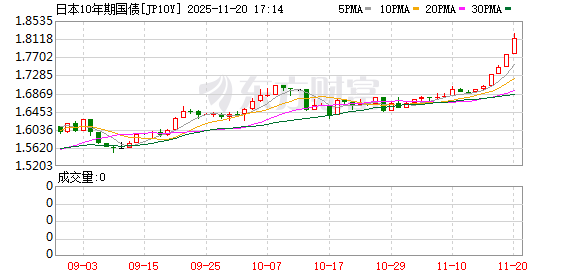
随着日本政府公布1100亿美元规模的财政刺激计划,"高市交易"升级,日本长期债券遭抛售,10年期日 债收益率飙升至2008年金融危机以来最高水平,30年期日债收益率更创盘中历史新高。 这可能再次引发约20万亿美元的日元套利交易反转,威胁全球风险资产。 日本长债收益率升至数十年高位 基准10年期日本国债收益率19日一度攀升0.04个百分点至1.78%,为2008年6月全球金融危机以来的最高 水平。20年期日本国债收益率升至2.795%,为1999年以来最高。30年期日本国债收益率盘中甚至升至 3.35%的历史新高。 分析师表示,推动日本国债收益率飙升的根本原因在于高市政府的财政刺激政策。18日,一个由与高市 关系密切的议员组成的日本执政党委员会小组提议编制一项超过25万亿日元(约合1610亿美元)的补充 预算,以资助高市计划推出的刺激方案。该提案称,政府"应当毫不犹豫地发行更多债券",以资助在经 济增长领域和危机管理方面的投资。该提议的金额将远远超过去年额外预算的13.9万亿日元。一些日本 官员随后的评论表明,这一规模可能会进一步扩大到17万亿日元。 金融市场独立分析师佩雷拉(Shanaka Anslem Pe ...
“高市早苗交易”引爆日元跌至155 华尔街双雄预警:日本干预“核按钮”尚未触发
Zhi Tong Cai Jing· 2025-11-04 04:01
Core Viewpoint - The immediate risk of Japanese yen intervention is low, even as the yen depreciates to the critical level of 155 yen per dollar, as the usual conditions for intervention have not been met [1][2] Group 1: Market Reactions - The yen has depreciated approximately 4% against the dollar in October, making it the worst performer among G-10 currencies [1] - The recent depreciation is attributed to the market's reaction to the new Prime Minister, Kishi Sanae, who is perceived to favor fiscal expansion and dovish monetary policy [2] - The so-called "Kishi Sanae trade" has led to significant volatility in the stock, bond, and currency markets, reflecting expectations of a return to "Abenomics" [2] Group 2: Government and Central Bank Stance - Japanese Finance Minister Katayama Satsuki has indicated that the government is closely monitoring the yen's movements, particularly those driven by speculation [3] - The last intervention by the Japanese Finance Ministry occurred in 2024, with the ministry having over $270 billion available for potential intervention [3] - Goldman Sachs predicts that intervention risks will significantly increase if the dollar-yen exchange rate reaches the 161-162 yen range [3] Group 3: Future Projections - Goldman Sachs expects the yen to gradually appreciate as hedging costs decrease and the dollar index weakens due to anticipated Fed rate cuts [4] - However, substantial fiscal stimulus measures under "Abenomics" and the potential for the U.S. economy to outperform other regions could undermine the yen's appreciation outlook [4]


华尔街先知Yardeni:"多头太多了",技术指标显示美股或已透支
Hua Er Jie Jian Wen· 2025-11-03 13:09
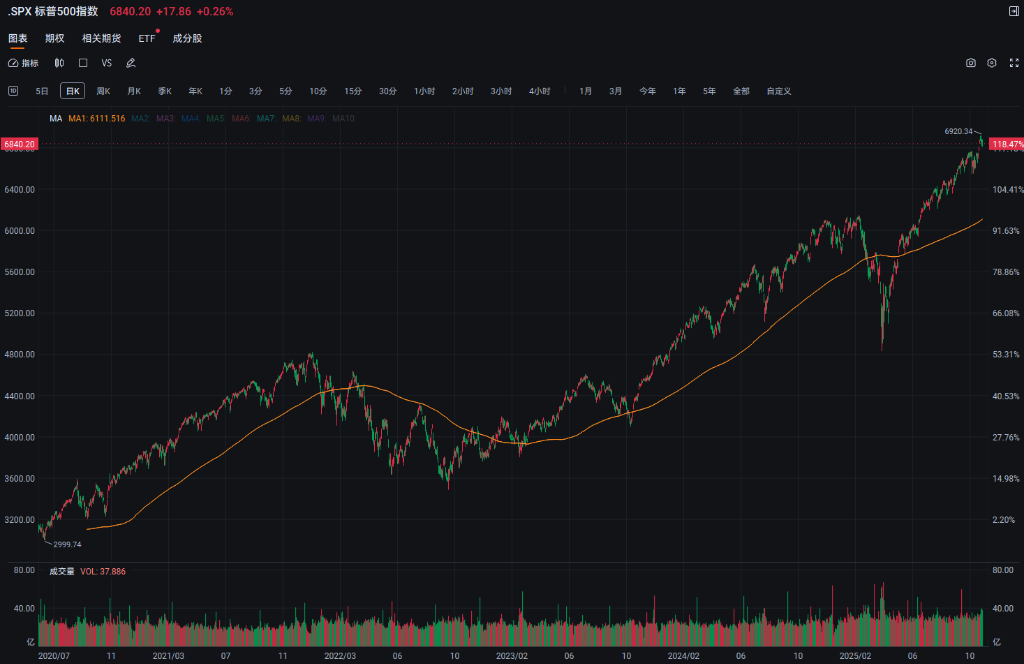
Core Viewpoint - Ed Yardeni, a prominent bull on Wall Street, has issued a rare warning about the U.S. stock market, suggesting that excessive optimism among investors has become a contrarian indicator, with the S&P 500 potentially retreating 5% from its peak by year-end [1][2]. Market Sentiment - Investor confidence has reached its highest level in a year, with the Investors Intelligence bull-bear ratio rising to 4.27, significantly surpassing the historical over-optimism threshold of 4.00 [3]. - Retail investors are also exhibiting strong confidence, as the American Association of Individual Investors (AAII) weekly survey shows bullish sentiment exceeding the historical average of 37.5% in five of the past seven weeks [6]. Technical Indicators - The S&P 500 index is currently 13% above its 200-day moving average, indicating a potential overextension of the rally [1][6]. - The Nasdaq 100 index is even more extreme, sitting 17% above its long-term support level, approaching the maximum gap level seen in July 2024, which previously led to a market sell-off [1][6]. Year-End Outlook - Despite maintaining a target of 7000 for the S&P 500 by the end of 2025, Yardeni anticipates a possible 5% decline from current highs by December [7]. - The focus is shifting towards the Federal Reserve's policy path as traders speculate on interest rate cuts, with upcoming speeches from Fed officials being closely monitored [8]. - Over half of the S&P 500 companies have reported quarterly earnings, with expectations for a 13% profit growth, nearly double the pre-season estimate of 7% [8].
日元对决--日本政府 vs 日本央行,去年的“日元套利交易”会重演吗?
Hua Er Jie Jian Wen· 2025-11-02 12:08
Core Viewpoint - The ongoing standoff between the Japanese government and the Bank of Japan regarding the weakening yen is reminiscent of last year's dramatic arbitrage trades and their eventual collapse [1][6]. Group 1: Government and Central Bank Standoff - The report from Nomura indicates that Prime Minister Fumio Kishida's government is effectively standing by, hoping the Bank of Japan will take action regarding the yen's depreciation and its impact on inflation [1]. - The Bank of Japan appears to be waiting for clearer signals from the government before making any moves [1][6]. - The current policy impasse has led to a decrease in market expectations for a December interest rate hike, dropping from a range of 50-60% to 46% [1]. Group 2: Historical Context and Market Dynamics - The current policy deadlock has investors recalling last spring's market dynamics, where a combination of shorting the yen and going long on Japanese stocks led to a significant rise in the USD/JPY exchange rate above 160 [3]. - Following an unexpected interest rate hike by the Bank of Japan in July 2024, these trades reversed sharply, causing the USD/JPY rate to plummet to around 140 [3]. Group 3: Risks of Inaction - Nomura's report warns that if the government and central bank delay action again, it could lead to a significant downturn in both the yen and Japanese stock prices when they finally intervene [6]. - The report emphasizes the importance of the government taking measures before speculative trading expands, as this could lead to a scenario similar to the July 2024 meeting where both the yen and stock prices fell sharply [6]. Group 4: External Pressures and Investor Sentiment - The report suggests that if the Japanese government maintains a non-interventionist stance, it may face increased external pressure, particularly from the U.S., which could lead to more pronounced verbal interventions [8]. - Despite a more than 3% rise in Japanese stocks as of October 20, foreign investors' buying activity remains subdued, with net purchases at only 58% of last summer's peak, indicating they have not exhausted their buying power [6][8].
