
银发经济

Search documents
黄金白银直线拉升,韩国股市KOSPI指数升逾2%创纪录新高
Jin Rong Jie· 2026-01-05 00:31
Group 1 - Gold and silver prices experienced significant increases, with spot gold rising to $4373, up 0.97%, and spot silver increasing by 2.17% [1][2] - COMEX silver saw a notable rise of over 3.53%, indicating strong market interest [1][2] - Oil prices showed volatility, with WTI crude oil at $57.27, down 0.05%, while ICE Brent crude oil slightly increased by 0.05% to $60.78 [2] Group 2 - U.S. President Trump threatened Venezuela's interim president, indicating potential further U.S. intervention, which could impact oil supply dynamics [3] - The South Korean stock market saw significant gains, with the KOSPI index rising over 2% to reach a historical high, driven by strong performances from major companies like Samsung Electronics [3] - South Korean President Lee Jae-myung emphasized the importance of restoring relations with China and highlighted opportunities for cooperation in renewable energy, biotechnology, and the silver economy [5]


国投证券:银发经济叠加自我保健需求,保健食品行业市场空间广阔
Zhi Tong Cai Jing· 2026-01-04 23:57
Core Insights - The health food industry has significant market potential, with global market size expected to exceed $140 billion by 2025, growing at a rate of 4.62%, while China's market is projected to reach 240 billion yuan, growing at 4.30% [1][2] - The aging population in China, projected to exceed 220 million people aged 65 and above by 2024, is expected to bolster demand for health food products, alongside the younger demographic's focus on beauty, anti-aging, and mental health issues [1][2] Industry Overview - The health food industry is characterized by a dual-track registration and filing system for market entry in China, with upstream suppliers, midstream manufacturers, and downstream distributors and retailers [2] - Consumer health demands are becoming increasingly specialized, with strong needs for products targeting immune systems, bone health, and beauty [2] Market Dynamics - The introduction of cross-border e-commerce has benefited imported brands, with a structural shift in sales channels as online sales are expected to reach 63.3% by 2025, significantly surpassing traditional offline sales [2] - The regulatory environment in China is relatively lenient, leading to a trend of long-tail brand emergence, which presents opportunities for third-party manufacturers [3] Competitive Landscape - The current market concentration in China's health food industry remains low, with the top three companies holding around 21% market share, indicating potential for increased concentration driven by technological innovation and value-driven strategies [3]
国投证券:银发经济叠加自我保健需求 保健食品行业市场空间广阔
智通财经网· 2026-01-04 22:32
Core Insights - The health food industry has significant market potential, with global market size expected to exceed $140 billion by 2025, growing at a rate of 4.62%, while China's market is projected to reach 240 billion yuan, growing at 4.30% [1][2] - The aging population in China, projected to exceed 220 million people aged 65 and above by 2024, is expected to bolster demand for health food products, alongside the younger population's focus on beauty, anti-aging, and mental health issues [1][2] Industry Overview - The health food industry operates under a dual-track registration and filing system in China, with upstream suppliers, midstream manufacturers, and downstream distributors and retailers [2] - Consumer health demands are becoming increasingly specialized, with strong needs for immune system support, bone health, and beauty-related products [2] Market Dynamics - The introduction of cross-border e-commerce has benefited imported brands, with a structural shift in sales channels expected, where online sales are projected to account for 63.3% by 2025, significantly surpassing traditional offline sales [2] - The relaxed regulatory environment in China is leading to a trend of long-tail brands entering the market, providing more opportunities for third-party manufacturers [3] Competitive Landscape - The current market concentration in China's health food industry remains low, with the top three companies holding around 21% market share, indicating potential for increased concentration driven by technological innovation and value-driven approaches [3]
元旦假期出行活力足 运输新场景成为假期经济新动力
Zhong Guo Zheng Quan Bao· 2026-01-04 22:17
Core Insights - The travel market experienced significant growth during the New Year holiday, with a total of 595 million cross-regional trips made from January 1 to January 3, 2026, representing a 19.62% increase compared to the same period last year [1] Group 1: Transportation Statistics - Railway passenger volume reached 48.09 million during the New Year holiday, with a daily average of 16.03 million, marking a year-on-year increase of 52.66% [2] - Self-driving remains the dominant mode of travel, with non-commercial small passenger vehicles accounting for 442 million trips, averaging 147 million trips per day, a 14.6% increase year-on-year [2] - Waterway passenger volume was 2.25 million, with a daily average of 749,300, reflecting a 32.9% year-on-year growth [2] - Civil aviation passenger volume reached 5.88 million, averaging 1.96 million per day, up 10.4% year-on-year [2] Group 2: Travel Trends and Innovations - The launch of the "China Snow Capital: My Altay" ice-themed train service aims to enhance the ice and snow tourism experience, reducing travel time by up to 4 hours [3] - The rental car market saw a surge, with Didi's rental bookings increasing by 243% during the holiday, with about half of users planning 2 to 4-day self-driving trips [2][5] - The development of autonomous driving technology is enhancing the self-driving experience, with L4 autonomous vehicles being piloted in Hainan, providing a unique travel experience [6] Group 3: Future Outlook - The integration of travel and tourism is expected to create new consumption scenarios, with the number of tourist trains increasing by 33.6% in 2025 [3] - The cruise and yacht sectors are anticipated to become significant growth points in transportation consumption [4]

元旦假期出行活力足
Zhong Guo Zheng Quan Bao· 2026-01-04 20:07
Group 1: Travel Market Overview - The travel market experienced significant growth during the New Year holiday, with a total of 595 million cross-regional trips, averaging 198 million trips per day, representing a 19.62% increase compared to the same period last year [1] - Railway passenger volume reached 48.1 million during the holiday, with a daily average of 16.02 million, marking a 52.66% year-on-year increase [1] - Self-driving remains the dominant mode of travel, with non-commercial small passenger car trips reaching 442 million, averaging 147 million per day, a 14.6% increase year-on-year [1] Group 2: Car Rental Market Growth - Didi Car Rental reported a 243% year-on-year increase in bookings during the New Year holiday, with about half of users planning 2 to 4-day self-driving trips [2] - The rental car market is projected to grow significantly, with the total number of small and micro passenger car rentals reaching 4 million, and an expected annual growth rate of around 15% during the 14th Five-Year Plan period [4] Group 3: Transportation Innovations - The introduction of L4 autonomous driving services in Hainan is enhancing the self-driving experience, with vehicles designed for tourism that integrate smart navigation and entertainment [3] - The "China Snow City: My Altay" themed train service was launched to promote ice and snow tourism, optimizing travel routes to connect various winter attractions [2] Group 4: Emerging Trends in Travel Consumption - The trend of self-driving tourism is becoming a new hotspot in travel consumption, with many roads becoming popular "check-in" locations, driving consumer demand and improving road service quality [5] - The cruise and yacht sectors are identified as growth points in transportation consumption, with Aida Cruises offering unique cultural experiences during the New Year [3]
内行人预测:明年2026年,这4个现象会席卷各地,建议提前准备
Sou Hu Cai Jing· 2026-01-04 17:06
Group 1: Real Estate Market Changes - The perception of housing is shifting from an investment asset to a necessity for living, with fewer people viewing real estate as a means to generate profit [3][5] - The decline in the number of first-time homebuyers, particularly among young people, is attributed to delayed marriage and a decreasing birth rate, leading to reduced demand for housing [5][6] - Government policies are reinforcing the idea that housing is for living, not speculation, with measures such as lifting purchase restrictions and lowering mortgage rates aimed at stabilizing the market [6][8] Group 2: AI Integration in Daily Life - AI is increasingly becoming integrated into everyday tasks, enhancing efficiency in various sectors, including retail and household management [9][12] - The necessity to adapt to AI tools is emphasized, as those who do not utilize these technologies may face challenges in completing tasks efficiently [12][13] Group 3: Aging Population and Economic Opportunities - The aging population in China is growing, with over 300 million people aged 60 and above, leading to increased demand for healthcare and eldercare services [15][17] - The silver economy presents significant opportunities, as older individuals are willing to spend on health and convenience, creating a market for products and services tailored to their needs [17][19] Group 4: Economic Outlook and Personal Financial Strategies - The economic outlook for 2026 is characterized by stability rather than explosive growth or systemic risks, with a focus on steady progress [19][20] - Individuals are advised to prioritize stable financial products and maintain emergency funds, while also integrating AI skills into their careers to enhance job security [20]
全面反弹!消费复苏驱动QDII重仓股走强,公募看好2026年机会
券商中国· 2026-01-04 14:57
Core Viewpoint - The article highlights the positive rebound of Chinese concept stocks in the US market during the New Year period, driven by signs of domestic consumption recovery and optimism about China's consumer market in 2026 [1][3][6]. Group 1: Market Performance - Public QDII funds heavily invested in Chinese concept stocks saw a significant rebound, with the Nasdaq Golden Dragon China Index rising by 4.36% on the first trading day of 2026 [3]. - Individual stocks such as Baidu surged over 15%, while other notable gains included 9.8% for Global Data, 5% for Manbang, 6% for iQIYI, and 2% for Pinduoduo, indicating strong performance across the board for internet and consumer leaders [3]. - The rebound reflects a shift in market sentiment towards consumer stocks, as previously favored tech stocks experienced adjustments during the holiday period [3]. Group 2: Investment Outlook - As the investment horizon shifts to 2026, leading stocks like Alibaba, Bilibili, and NetEase are showing strong upward momentum, suggesting global capital's optimistic outlook on China's consumption recovery [2][6]. - Fund managers are increasingly focusing on structural opportunities within the consumer sector, with many conducting research on companies that are adapting to new consumption trends [5]. Group 3: Policy and Economic Drivers - Multiple fund companies anticipate that government policies aimed at boosting consumption will play a crucial role in 2026, with expectations for increased fiscal spending and support for service consumption [6][7]. - The article notes that the "reward economy," "first release economy," and "silver economy" are emerging consumption trends that could catalyze growth and value re-evaluation for related companies [7]. Group 4: Performance of Consumer Funds - Consumer-focused funds have demonstrated strong performance, with the Southern Hong Kong Growth Flexible Fund achieving approximately 48% returns over the past year and 87% over two years, outperforming many volatile tech-focused funds [5]. - The article emphasizes the long-term attractiveness of the consumer sector, as evidenced by the performance of funds that prioritize quality and strategic stock selection [5].

“公建民营”养老托起幸福晚年
Xin Lang Cai Jing· 2026-01-04 13:52
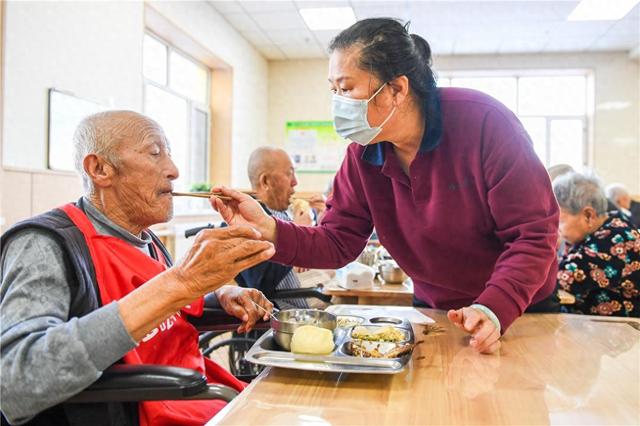
1月4日,呼伦贝尔市扎兰屯市社会福利中心综合楼养老中心的老年人在护工的细心照料下进食。 该养老中心是当地"公建民营"试点项目,打造了集智慧平台、医养结合、老年助餐等为一体的中高端养 老机构,全面提升养老服务设施与服务品质,让老年群体在家门口享受到环境优、服务全、有温度的养 老服务,助力当地银发经济发展。 转自:草原云 悉心照料。 内蒙古日报·草原云记者:王晓博 王鹏 新闻编辑:陈杨 健康监护。 照料高龄老人。 老人在房间内看电视。 ...
从数据看2025年铁路交出亮眼成绩单
Yang Shi Wang· 2026-01-04 09:09
Passenger Transport - In 2025, the national railway is expected to achieve a passenger volume of 4.255 billion, representing a year-on-year increase of 4.2%, with peak daily passenger numbers reaching 23.132 million, a historical high [1] - The railway will implement an action plan to increase tourism trains, launching 2,485 trains, a year-on-year increase of 33.6%, to support the tourism economy [1] - Services will be optimized, including the introduction of electronic tickets and expanded services for key passenger groups, with loyalty rewards for frequent travelers aged 60 and above [1] Freight Transport - In 2025, the national railway is projected to handle a freight volume of 4.066 billion tons, marking a 2.1% year-on-year growth, continuing a nine-year growth trend [2] - The China-Europe (Asia) freight trains are expected to operate 34,000 trains, sending 3.17 million TEUs, with respective year-on-year increases of 9.8% and 7.6% [2] - The logistics sector will see improvements, with a total railway logistics volume of 1.12 billion tons, a 20.6% increase, and a significant rise in automobile transport volume [2] Investment and Infrastructure - In 2025, fixed asset investment in railways is projected to reach 901.5 billion yuan, a 6% increase, demonstrating the strong impact of railway investment [3] - The national railway will focus on 102 major railway projects as outlined in the national "14th Five-Year" plan, with several key projects commencing construction and new lines being put into operation [3] - By the end of 2025, the total railway operating mileage is expected to reach 165,000 kilometers, with high-speed rail exceeding 50,000 kilometers [4]
大外交|韩国各大财团掌门人倾巢出动随总统访华 ,专家:从经济上重新认识中国
Xin Lang Cai Jing· 2026-01-04 08:11
Core Viewpoint - The visit of South Korean President Lee Jae-myung to China marks a significant opportunity for economic dialogue and cooperation between South Korea and China, with a focus on recalibrating perceptions of the Chinese market and enhancing bilateral trade relations [1][3][5]. Group 1: Economic Delegation and Activities - A large economic delegation consisting of over 200 South Korean business leaders, including heads of major corporations like Samsung, SK Group, and Hyundai, will accompany President Lee during his visit to China [1][2]. - The delegation will participate in the Korea-China Business Forum and sign cooperation memorandums, as well as engage in one-on-one business meetings organized by the Korea Trade-Investment Promotion Agency (KOTRA) [1][2]. Group 2: Shifts in Economic Relations - The economic relationship between South Korea and China has evolved from a complementary vertical division of labor to a coexistence of cooperation and competition, necessitating a reassessment of South Korea's approach to the Chinese market [1][3]. - The past six years of limited high-level exchanges due to various factors, including the pandemic and political changes in South Korea, have impacted economic interactions, making this visit particularly significant [2][3]. Group 3: Future Cooperation Areas - Discussions during the visit are expected to cover practical cooperation in supply chain investment, digital economy, environmental issues, cultural exchanges, tourism, and combating transnational crime [2][8]. - Both countries are looking to enhance cooperation in emerging fields such as artificial intelligence, biopharmaceuticals, green industries, and the silver economy, with a focus on mutual benefits and shared growth strategies [5][7]. Group 4: Trade Statistics and Economic Context - China has been South Korea's largest trading partner for many years, with bilateral trade reaching $328.08 billion in 2024, reflecting a 5.6% increase [5][6]. - South Korea remains a key investment destination for China, and the two countries have established a complementary relationship in critical industries such as semiconductors and batteries [6][7]. Group 5: Geopolitical Considerations - The ongoing U.S.-China competition poses challenges for South Korea, which is navigating pressures to decouple from China while maintaining strong economic ties [8][9]. - Despite U.S. pressures, the economic relationship between South Korea and China remains robust, with both countries recognizing the need for closer cooperation to mitigate external uncertainties [9].