套期保值

Search documents
冠通期货早盘速递-20250605
Guan Tong Qi Huo· 2025-06-05 09:43
Group 1: Hot News - The number of ADP employed people in the US in May increased by 37,000, lower than the expected 110,000 and the previous value of 62,000, with the slowest hiring rate since March 2023. After the data release, US President Trump called for a rate cut by Powell [2]. - The US ISM non - manufacturing PMI in May was 49.9, contracting for the first time in nearly a year, lower than the expected 52.0 and the previous value of 51.6 [2]. - Zhengzhou Commodity Exchange adjusted the application method for general - month hedging position limits for caustic soda, p - xylene, and bottle chips, and raised the combined limits for hedging and speculative positions of 14 varieties such as PTA [2]. - There was a rumor that Mongolia would raise the coal mineral resource tax to 20%, but as of now, there is no official decision on coal - related tax changes [2]. - Brazil's National Association of Grain Exporters (Anec) predicted that Brazil's soybean exports in June would be 12.55 million tons, lower than last year's 13.83 million tons and May's 14.2 million tons. It maintains the outlook of exporting 1.1 billion tons of soybeans in 2025, which would set a new record [2]. - Saudi Arabia hopes that OPEC+ will continue to accelerate oil production increases in the coming months, aiming to regain market share, and wants an increase of at least 411,000 barrels per day in August and possibly September [3]. Group 2: Commodity Market Capital Proportion - The capital proportions of different commodity sectors are: non - metallic building materials 2.57%, precious metals 29.99%, oilseeds 11.62%, soft commodities 2.45%, non - ferrous metals 20.38%, coal - coking - steel - ore 13.59%, energy 2.39%, chemicals 12.81%, grains 1.51%, and agricultural and sideline products 2.69% [4]. Key Attention - Key commodities to focus on are urea, rebar, Shanghai copper, and plastic [6]. Night - session Performance - Information about the night - session performance of commodity futures main contracts includes their price changes and position - increasing ratios [6]. Position Changes - Data shows the changes in commodity futures sector positions in the past five days [7]. Group 3: Performance of Major Asset Classes Equity - The daily, monthly, and annual percentage changes of various equity indices are presented, such as the Shanghai Composite Index with a daily increase of 0.42%, a monthly increase of 0.86%, and an annual increase of 0.73% [9]. Fixed - income - The daily, monthly, and annual percentage changes of different - term treasury bond futures are provided, for example, the 10 - year treasury bond futures had a daily increase of 0.09%, a monthly increase of 0.04%, and an annual decrease of 0.15% [9]. Commodity - The daily, monthly, and annual percentage changes of commodities are shown, like the CRB commodity index with a daily decrease of 0.09%, a monthly increase of 2.11%, and an annual decrease of 0.06% [9]. Others - The daily, monthly, and annual percentage changes of the US dollar index and CBOE volatility are given, with the US dollar index having a daily decrease of 0.47%, a monthly decrease of 0.63%, and an annual decrease of 8.91% [9].
浙期实业:以场外期权赋能棉企稳健发展
Qi Huo Ri Bao· 2025-06-05 06:27
列车飞驰,将一包包皮棉从天山棉田运往长三角纺织车间。沿着这条跨越五千公里的棉花产业链,期货 工具以专业力量为其护航,帮助相关经营主体抵御着市场风险。 近年来,随着市场环境的变化以及棉花行业竞争的日益加剧,棉企也对风险管理提出个性化、精细化的 需求,加快了期货衍生工具的升级速度。面对新挑战,浙期实业依托自身专业优势与丰富从业经验,积 极探索更能满足企业需求的新方案,以期权为核心不断提高期货服务的准度与效度,持续为实体企业提 供优质的风险管理服务。 "除了提高企业的套保效率外,怎样降低操作难度也是我们工作的关注点。"在谈及为A企业设计买入累 计看涨期权方案时,浙期实业场外负责人蓝旻解释。针对棉花市场行情特点,浙期实业在普通场外期权 的基础上为A企业定制了新方案,通过买入累计看涨期权的方式降低套保难度,从而让企业以较少的成 本实现对棉花库存的风险管理。 从去年4月以来,棉花期货价格持续走跌,并延续着较强的动荡态势,市场行情呈现复杂多变的特点。 对于棉企而言,传统的套保方案无法适应极端行情的变化,而现实的市场风险又在积累,寻找如何破局 的需求非常强烈。为此,浙期实业主动作为、靠前服务,以实体企业的经营痛点和发展难题为 ...
新能源及有色金属日报:矿端涨价,精炼镍盘面低开高走-20250605
Hua Tai Qi Huo· 2025-06-05 02:43
2025-06-04日沪镍主力合约2507开于121250元/吨,收于122590元/吨,较前一交易日收盘变化0.85%,当日成交量为 117416手,持仓量为83546手。 沪镍主力合约2507今天低开高走,日线收中阳线。07主力合约的成交量对比上个交易日有所放大,持仓量有小幅 减少。从量能方面来看,日线MACD的绿柱面积在缓慢缩窄,短周期内或许下跌趋势接近尾声,60分钟线在5月26 日的122000附近出现底背离现象,但端午节前的大幅下探击穿底背离的支撑位,关注上方122000-123000短期一线 压力位置,下方关注120000整数关口附近短线支撑位置。现货市场方面,金川镍早盘报价较上个交易日上调525元 /吨,市场主流品牌报价均有一定的涨幅。近期精炼镍盘面以弱势震荡为主,盘面虽有反弹迹象,但市场观望态度 居多,今天精炼镍现货成交整体表现一般,升贴水对比上个交易日有小幅下调,升贴水近期处于平稳的态势。其 中金川镍升水变化-50元/吨至2500元/吨,进口镍升水变化50元/吨至350元/吨,镍豆升水为 -450元/吨。前一交易日 沪镍仓单量为22299(261.0)吨,LME镍库存为201624(162) ...
铸造铝合金产业:原料价格易涨难跌 市场需求仍待提振
Qi Huo Ri Bao· 2025-06-05 02:00
Core Viewpoint - The upcoming launch of casting aluminum alloy futures on June 10 is expected to introduce a new pricing mechanism and risk management tools for the market, potentially transforming the current chaotic pricing landscape in the aluminum alloy spot market [1][2]. Industry Overview - China's casting aluminum alloy production capacity for 2024 is estimated at 13 million tons, with a production volume of approximately 6.2 million tons, accounting for 26.2% of global output [1]. - The industry consists of 129 large-scale casting aluminum alloy production enterprises, with a consumption volume of about 6.73 million tons, corresponding to a market value of approximately 130 billion yuan [1]. - The main product, ADC12, has a production volume of around 4.65 million tons, valued at about 90 billion yuan [1]. Market Conditions - The industry is currently facing low capacity utilization rates, remaining below 50%, with many enterprises experiencing a decline in order volumes by 15% to 20% [2]. - The average selling price of casting aluminum alloys has been decreasing due to intense competition, with theoretical profit margins remaining below 100 yuan per ton [2]. - Approximately 30% of casting aluminum alloy enterprises are currently operating at a loss, particularly small and medium-sized manufacturers [2]. Supply Chain Insights - The supply of scrap aluminum is characterized by structural tightness, with over 85% of production relying on domestic scrap aluminum resources [3]. - The pricing mechanism for scrap aluminum is based on both discount pricing and absolute pricing, with a notable premium for high-quality scrap [3]. Production Dynamics - The production capacity utilization varies significantly among enterprises, with some operating at 50% to 80%, which is higher than the industry average of about 40% [5]. - Raw material costs constitute 90% of the production cost structure, while energy costs account for only 2% [5]. Pricing and Demand Trends - The demand for aluminum alloys in the automotive sector is increasing, with customized requirements becoming more prevalent [6]. - The implementation of the "reverse invoicing" policy shows varied progress across regions, impacting the operational dynamics of enterprises [6]. Futures Market Participation - There is a strong willingness among recycling aluminum enterprises to participate in the upcoming aluminum alloy futures market, with industry leaders already forming teams to develop hedging strategies [7]. - The expected listing of aluminum alloy futures and options is anticipated to bring about a significant change in the pricing system, shifting from traditional pricing methods to a "futures + basis" pricing mechanism [8]. Strategic Implications - The introduction of aluminum alloy futures is expected to enhance pricing efficiency and provide new risk management tools for market participants, necessitating close attention to regional basis changes and the evolution of term structures [8].
整理:每日期货市场要闻速递(6月5日)
news flash· 2025-06-05 00:32
Group 1 - The Zhengzhou Commodity Exchange announced adjustments to the hedging position limits for various products, including an increase in the combined limits for hedging and speculative positions for 14 products, including PTA [1] - Reports indicated that Mongolia's coal resource tax might be raised to 20%, but the Mongolian Tax Authority confirmed that no official decision regarding changes to coal resource taxes or export taxes has been made [1] - In Tangshan, some steel mills plan to reduce the prices of various types of coke by 50 to 75 yuan per ton, effective from June 6, 2025 [1] - National building materials inventory decreased by 2.63% to 5.5047 million tons, while factory inventory fell by 0.92% to 3.2615 million tons, and production dropped by 0.90% to 4.2193 million tons [1] Group 2 - The Brazilian National Grain Exporters Association (Anec) estimates that soybean exports in June will be 12.55 million tons, down from 13.83 million tons in the same month last year, and lower than May's 14.20 million tons [2] - A foreign media survey predicts that U.S. net soybean export sales for the 2024/25 marketing year will range between 100,000 to 500,000 tons, while for the 2025/26 marketing year, it will be between 0 to 100,000 tons [2] - A Reuters survey forecasts that Malaysia's palm oil inventory for May 2025 will be 2.01 million tons, a 7.74% increase from April, with production expected to rise by 3% to 1.74 million tons and exports by 17.9% to 1.30 million tons [2] - A commodity research institution reported that Indonesia's palm oil production for the 2024/2025 fiscal year is expected to be 48.8 million tons, while Malaysia's is projected at 19 million tons, both remaining unchanged from previous estimates [2] Group 3 - A large lead recycling plant in East China has resumed production, but output remains unstable due to ongoing environmental inspections [3] - A zinc smelting plant in South China is undergoing maintenance for 10 to 15 days, which is expected to impact around 2,000 tons of production [3]
信凯科技: 金融衍生品业务管理制度
Zheng Quan Zhi Xing· 2025-06-04 12:06
Core Viewpoint - The document outlines the financial derivatives business management system of Zhejiang Xinkai Technology Group Co., Ltd., emphasizing risk prevention and control in derivatives trading, aligning with relevant laws and regulations [1][2]. Summary by Sections General Principles - The system aims to regulate the financial derivatives trading behavior of the company and its subsidiaries, ensuring compliance with laws such as the Company Law and Securities Law of the People's Republic of China [1]. - Financial derivatives include products like forwards, options, swaps, and currency swaps, which can be settled either through physical delivery or cash difference [1]. Operational Principles - The company and its subsidiaries must strictly control the types and scale of derivatives trading, ensuring it does not affect normal business operations [2]. - Derivatives trading should not be solely for profit but should be based on normal business operations, focusing on hedging and risk prevention related to exchange rates and interest rates [2]. Approval Authority - Any foreign exchange derivatives trading must be preceded by a feasibility analysis report submitted to the board of directors for approval [2]. - Overall plans and limits for derivatives trading must comply with regulations and require board approval; if exceeding board authority, shareholder approval is necessary [2]. Management and Operational Processes - The board authorizes the chairman and representatives to manage foreign exchange derivatives trading, including signing legal documents [4]. - The finance director leads the derivatives team, overseeing risk management, market analysis, and strategy formulation [4]. - The operations team is responsible for providing relevant data and ensuring approved funds for derivatives trading are monitored and reconciled monthly [5]. Risk Management - A risk measurement system is established to assess funding risks and price fluctuation risks associated with derivatives trading [6]. - In case of significant market changes that increase risks, the company must report and initiate emergency measures [6]. - A stop-loss mechanism is activated when market price fluctuations approach predetermined limits [6]. Information Disclosure - The company must disclose information regarding derivatives trading in accordance with regulations from the China Securities Regulatory Commission and the Shenzhen Stock Exchange [7]. - Any confirmed gains or losses from derivatives trading that exceed 10% of the most recent audited net profit must be disclosed promptly [7]. Other Provisions - The management system will be effective upon approval by the board and will be interpreted by the board [9].
融达期货助力新疆棉花产业链构建风险防控新格局
Qi Huo Ri Bao· 2025-06-03 04:58
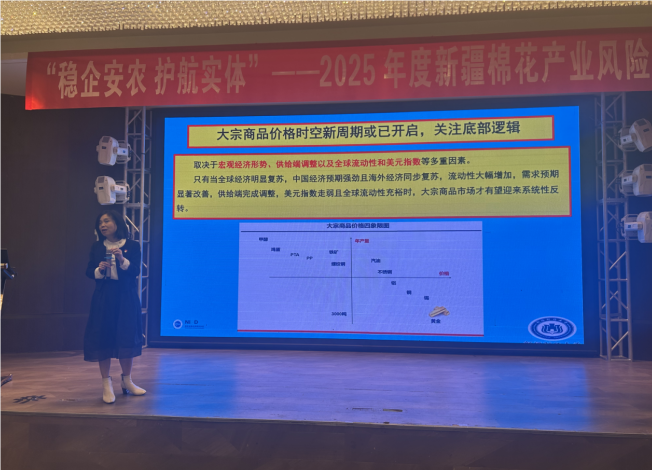
Group 1 - The event "Stable Enterprises and Safe Agriculture - Futures Services for the Cotton Industry" was successfully held in Xinjiang, focusing on risk management strategies in the global cotton market [1] - The conference gathered macroeconomic experts, industry authorities, risk management institutions, and enterprise representatives to discuss practical solutions for the cotton industry [1] - A total of 69 cotton-related enterprises and 87 representatives recognized the event's contributions to risk management [1] Group 2 - Professor He Wenbin from Xinjiang Finance University highlighted three long-term trends affecting the global economy: geopolitical fragmentation, technological transformation, and the impact of artificial intelligence on productivity [3] - China is transitioning from a real estate-driven economy to one focused on technological innovation, with significant growth in trade surplus and high-tech exports [3] - He Wenbin predicts continued policy support for domestic demand through monetary easing and regulatory coordination, while also implementing proactive fiscal policies to counter external challenges [3] Group 3 - Sun Gang, Deputy General Manager of Xinjiang Production and Construction Corps Cotton and Hemp Co., emphasized the importance of hedging as a common tool for managing price volatility in the cotton market [5] - He proposed flexible use of options, such as "buying put insurance strategies" to lock in profits during price declines and "covered call strategies" to enhance returns [5] - Sun Gang stressed the need for enterprises to follow the "four strong" principles: strong logic, strong systems, strong review, and strong iteration to build a dynamic risk management system [5] Group 4 - Researcher Li Shuaige from Rongda Futures reported that the cotton planting area in Xinjiang is expected to grow by 2.93% year-on-year by 2025, with northern and southern Xinjiang increasing by 3.68% and 2.39%, respectively [7] - Favorable climate conditions have improved seedling emergence rates and height indicators, with an estimated total cotton production in Xinjiang for this year ranging from 6.75 million to 6.95 million tons [7] - This data provides essential reference for cotton-related enterprises to anticipate the new year's supply-demand dynamics and supports the application of futures tools [7] Group 5 - Wang Sijia, Assistant General Manager of Henan Tongzhou Cotton Industry's U.S. branch, analyzed the cotton market fundamentals, indicating a projected cotton production of 6.97 million tons in China for the 2024/2025 season, an increase of 1.02 million tons year-on-year [9] - However, consumption is expected to decrease by 400,000 tons, leading to a rise in the inventory-to-sales ratio to 101.4%, an increase of 7 percentage points year-on-year [9] - The meeting served as a platform for cotton enterprises to exchange insights on macroeconomic assessments, supply-demand data, and risk management tools, addressing challenges posed by global trade restructuring and price volatility [9]

龙头股份: 龙头股份关于2025年度开展金融衍生品交易业务的公告
Zheng Quan Zhi Xing· 2025-05-30 10:19
Core Viewpoint - Shanghai Longtou (Group) Co., Ltd. plans to engage in financial derivatives trading in 2025 to hedge against foreign exchange risks, with a maximum single transaction amount of $5 million and an annual cumulative contract amount not exceeding $150 million [1][2]. Summary by Sections 1. Transaction Overview - The purpose of the trading is to mitigate operational risks arising from foreign exchange fluctuations, focusing on the company's actual business needs without engaging in speculative or arbitrage trading [2]. - The planned transaction amount will not exceed the company's foreign currency payment and receipt amounts, with a maximum single transaction of $5 million and an annual cumulative contract amount of $150 million [2]. - The funding for these transactions will come from the company's own funds, without involving raised capital [2]. - The types of financial derivatives to be used include forward foreign exchange contracts, foreign exchange swaps, and foreign exchange options [2]. 2. Transaction Duration and Authorization - The validity of the trading authorization will last for 12 months from the date of approval by the shareholders' meeting, allowing for the recycling of funds within the approved limits [3]. - The board of directors will be authorized to make investment decisions and sign relevant contracts within the approved limits, pending shareholder approval [3]. 3. Risk Analysis and Control Measures - The company acknowledges potential risks associated with financial derivatives trading, including market risk, credit risk, operational risk, and internal control risk [4]. - To mitigate these risks, the company will adhere to a strict risk management principle, ensuring that trading activities do not affect normal operations and are limited to low-risk financial products [4]. - The company will implement a regular reporting mechanism for its business activities and establish clear internal risk management procedures [4]. 4. Impact on the Company - The proposed financial derivatives trading is expected to enhance the company's financial stability by hedging against foreign exchange fluctuations, aligning with the long-term interests of the company and its shareholders [4]. - The accounting treatment for these transactions will comply with relevant accounting standards, ensuring proper recognition and measurement of financial instruments [4].

菜籽粕交割体系扩容 助力产业行稳致远
Qi Huo Ri Bao Wang· 2025-05-29 16:13
Core Viewpoint - The Zhengzhou Commodity Exchange (ZCE) has announced the addition of four designated delivery warehouses for rapeseed meal, aiming to optimize the delivery structure and enhance market service efficiency in a complex market environment [1][2]. Group 1: Market Impact - The adjustment of delivery warehouses provides more convenience for companies in the rapeseed meal sector to utilize futures tools [2]. - The expansion of delivery warehouses is expected to play a crucial role in repairing the market pricing mechanism, especially under the impact of U.S. tariff policies [2]. - The increase in delivery resources enhances the supply of deliverable rapeseed meal, covering major consumption areas in East and South China, thus providing a stable price anchor for the industry [2]. Group 2: Risk Management and Efficiency - The improved delivery warehouse system reconstructs the risk management model of the industry chain, enhancing hedging efficiency and allowing importers to convert volatile pricing risks into more stable basis risks [2]. - The addition of delivery warehouses significantly facilitates the delivery process in surrounding regions, leading to a notable increase in registered warehouse receipts for rapeseed meal [3]. - The expansion of delivery points helps companies effectively avoid operational risks arising from macroeconomic changes and reduces delivery costs, thereby improving overall delivery efficiency [3].
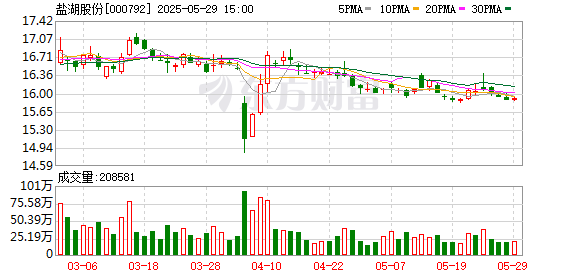
碳酸锂价格走低 盐湖股份套保引发关注
Qi Huo Ri Bao Wang· 2025-05-29 16:06
Core Viewpoint - The lithium carbonate price continues to decline, prompting companies to engage in hedging activities to mitigate risks associated with price volatility [2][5]. Group 1: Market Dynamics - On May 29, the main contract for lithium carbonate futures fell below the critical threshold of 60,000 yuan/ton, closing at 58,860 yuan/ton [2]. - The ongoing decline in lithium carbonate prices has led to increased hedging demand among industry players [2]. - Salt Lake Co. announced its intention to conduct futures hedging to reduce the impact of price fluctuations on its operations, which has drawn significant attention in the industry [2][5]. Group 2: Cost Structure - The production costs of lithium carbonate vary significantly among companies due to differences in processing methods, raw material sources, and operational costs [3]. - The mainstream production cost of lithium carbonate is between 75,000 and 85,000 yuan/ton, with some projects exceeding 90,000 yuan/ton [3]. - Salt Lake Co. benefits from a lower production cost of 30,000 to 40,000 yuan/ton, which is significantly advantageous compared to other methods [4]. Group 3: Financial Performance - Despite the overall decline in lithium carbonate prices, Salt Lake Co. reported a net profit of 4.663 billion yuan in 2024, leading the lithium mining sector [4]. - The gross profit margin for Salt Lake Co.'s lithium carbonate products reached 50.68% in 2024, well above the industry average [4]. Group 4: Industry Outlook - The current supply-demand mismatch is expected to persist, leading to continued accumulation of social inventory of lithium carbonate [5]. - Analysts suggest that even if lithium carbonate prices fall below production costs, companies may maintain production to fulfill long-term contracts [6]. - A stabilization in lithium carbonate prices may only occur if there are signs of production cuts or controlled shipment rates from companies [6].