
新消费

Search documents
巨星传奇上半年增收不增利 股东应占溢利同比减少58.88%
Zheng Quan Ri Bao Wang· 2025-08-30 04:45
Core Insights - The core viewpoint of the article highlights the financial performance of Giant Star Legend Group Limited for the first half of the year, showcasing a significant increase in revenue but a notable decline in profit attributable to shareholders [1]. Financial Performance - The group's revenue for the first half of the year reached 354 million yuan, representing a year-on-year growth of 33.0% [1]. - The profit attributable to shareholders was 10 million yuan, which reflects a year-on-year decrease of 58.88% [1]. Business Segments - Giant Star Legend operates primarily in two business segments: 1. IP Creation and Operation: This segment involves the creation and management of celebrity IPs, providing planning and management services for media content production and events, licensing celebrity IPs, and selling related products [1]. 2. New Consumption: The group develops and sells health management products through various online and offline channels [1]. Impact on Profitability - The group's profitability in the first half was adversely affected by a fair value loss of approximately 19.5 million yuan from investments in Hong Kong-listed securities, which is not directly related to the group's main business operations [1].
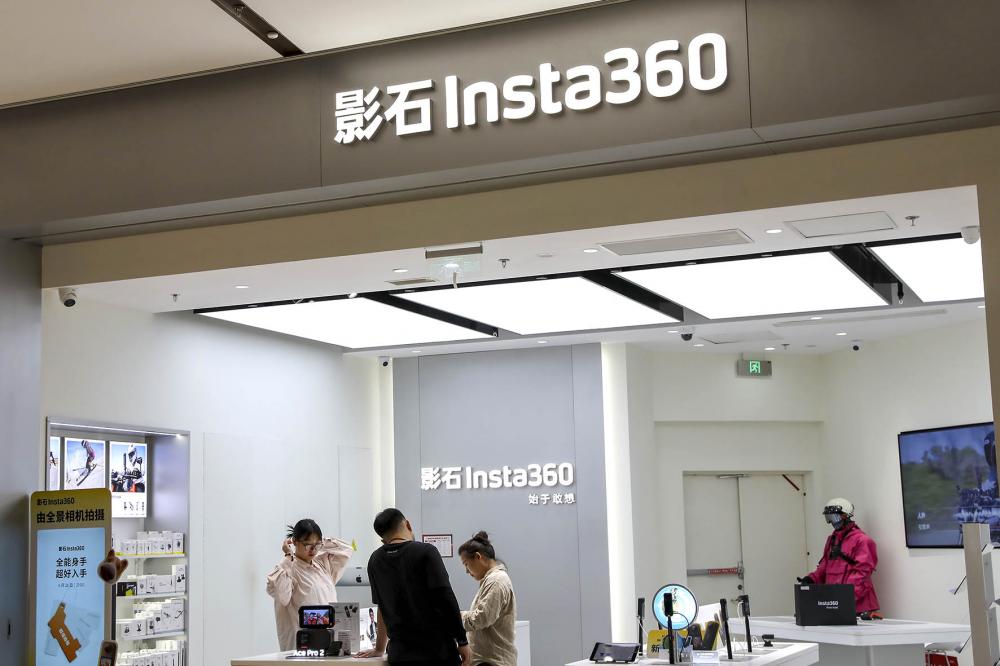
影石创新的“焦虑” 新战场能否撑起1200亿市值?
2 1 Shi Ji Jing Ji Bao Dao· 2025-08-29 23:51
Core Viewpoint - The financial report of YingShi Innovation (688775.SZ) reveals a significant revenue increase but minimal profit growth, indicating a "revenue growth without profit increase" dilemma [1][2]. Financial Performance - For the first half of 2025, the company achieved revenue of 3.67 billion yuan, a year-on-year increase of 51.2%, while net profit attributable to shareholders was 520 million yuan, only a slight increase of 0.3% [1]. - The sales expenses reached 628 million yuan, up 75.46% year-on-year, outpacing revenue growth by 24 percentage points, indicating diminishing returns on marketing investments [2]. - The gross profit margin remained high at 51.2%, but it has decreased compared to previous years, where it was 51.27%, 55.90%, and 52.21% from 2022 to 2024 [3]. R&D Investment - R&D expenses doubled to 562 million yuan, constituting 15.30% of total revenue, up from 11.55% [4][6]. - The increase in R&D spending is a key factor in the company's profit stagnation but is viewed as essential for overcoming growth challenges [2][4]. Market Position and Competition - The global market for panoramic cameras was valued at 5.03 billion yuan in 2023, with YingShi holding a 67.2% market share in the consumer segment, indicating a nearing market ceiling [9]. - The company faces intensified competition, particularly from DJI, which has launched new products directly competing with YingShi's offerings [6][10]. Strategic Direction - YingShi is pivoting towards the drone market, which is projected to have a compound annual growth rate of over 10.32%, with an expected market size exceeding 13 billion USD by 2033 [11][12]. - The company plans to launch two drone brands, including its own and a collaborative brand "YingLing Antigravity," although no actual revenue has been generated from these products yet [12]. Market Reaction - Following the announcement of its entry into the drone market, YingShi's stock price surged, with a market capitalization exceeding 140 billion yuan at its peak [12][13]. - As of August 29, the company's market capitalization was still at 129.2 billion yuan, with a dynamic P/E ratio of 130, reflecting high market expectations for its drone initiatives [13].

274只“翻倍基” 主动权益类基金近一年平均收益48%
Shang Hai Zheng Quan Bao· 2025-08-29 19:52
Core Viewpoint - The performance of actively managed equity funds has significantly improved, with an average return of over 48% in the past year, and more than 270 funds have doubled their net value [1][2]. Group 1: Fund Performance - As of August 28, 2023, 4378 actively managed equity funds reported an average return of 48.13%, with 4354 funds achieving positive returns [2]. - A total of 586 funds generated returns exceeding 80%, and 274 funds saw their net value double, with some funds achieving returns over 200% [2]. - Notable high-performing funds include 中信建投北交所精选两年定开混合基金 with a return of 264.31%, 华夏北交所创新中小企业精选两年定开混合基金 at 241.75%, and 中欧数字经济混合基金 at 237.52% [2]. Group 2: Investment Strategies - Fund managers are focusing on structural opportunities, particularly in sectors like artificial intelligence, innovative pharmaceuticals, and new consumption [4]. - The AI industry is expected to continue its growth trajectory, with significant investment opportunities in AI applications, autonomous driving, and humanoid robots [4][5]. - Fund managers are adjusting their portfolios to include stable assets like banks and insurance while increasing exposure to technology assets such as robotics and AI computing [5]. Group 3: Market Outlook - The overall sentiment towards the equity market has become more positive, with expectations that the most severe systemic shocks have passed [4]. - There is an emphasis on monitoring macroeconomic events that could introduce volatility, while still identifying opportunities in sectors like AI, innovative pharmaceuticals, and non-ferrous metals [4][5].

长盛同盛LOF: 长盛同盛成长优选灵活配置混合型证券投资基金(LOF)2025年中期报告
Zheng Quan Zhi Xing· 2025-08-29 11:29
Fund Overview - The fund is named Changsheng Tongsheng Growth Preferred Flexible Allocation Mixed Securities Investment Fund (LOF) and was established on December 26, 2014 [3] - The fund is managed by Changsheng Fund Management Co., Ltd. and custodied by Bank of China [2][3] - The fund aims to achieve long-term asset appreciation by focusing on sectors related to economic transformation, industrial upgrading, model innovation, and policy hotspots [3] Investment Strategy - The fund employs a combination of top-down industry selection and bottom-up stock picking to identify companies with high growth potential and reasonable valuations [3] - The asset allocation strategy involves dynamic adjustments among stocks, stock index futures, bonds, and money market instruments to control market risk and enhance allocation efficiency [3][4] Performance Metrics - As of June 30, 2025, the fund's net asset value was approximately RMB 385.95 million, with a total of 266,920,910.72 fund shares [3][20] - The fund achieved a net asset value per share of RMB 1.446, with a net value growth rate of 7.51% during the reporting period [15][20] - The fund's total realized income for the period was RMB 20.45 million, with a total profit of RMB 26.42 million [5][21] Financial Indicators - The fund's total assets amounted to RMB 388.83 million, with liabilities totaling RMB 2.87 million [19][20] - The fund's profit distribution for the reporting period was not implemented, in accordance with legal regulations and fund contract agreements [17] - The fund's performance benchmark is set at 50% of the CSI 300 Index return plus 50% of the China Bond Composite Index return [4][7] Management and Governance - The fund management company, Changsheng Fund Management Co., Ltd., was established in March 1999 and is one of the first ten fund management companies in China [8] - The company has a registered capital of RMB 206 million and manages a total of 73 open-end funds as of June 30, 2025 [8][9] - The fund management adheres to principles of honesty, diligence, and responsibility, ensuring fair treatment of all investment portfolios [12][13]

21特写|影石创新的“焦虑”:新战场能否撑起1200亿市值?
2 1 Shi Ji Jing Ji Bao Dao· 2025-08-29 11:00
Core Viewpoint - The financial report of YingShi Innovation reveals a significant revenue increase but a minimal profit growth, indicating a "revenue without profit" dilemma for the company [1][3]. Financial Performance - YingShi Innovation reported a revenue of 3.67 billion yuan, a year-on-year increase of 51.2%, while the net profit attributable to shareholders was 520 million yuan, only a slight increase of 0.3% [1]. - The company's sales expenses reached 628 million yuan, up 75.46% year-on-year, outpacing revenue growth by 24 percentage points [2]. - The sales expense ratio for the first half of the year was 17.10%, an increase of 2.37 percentage points compared to the previous year [3]. - The gross profit margin remained high at 51.2%, but it has decreased compared to previous years, where it was 51.27%, 55.90%, and 52.21% from 2022 to 2024 [3]. Research and Development Investment - R&D investment doubled to 562 million yuan, constituting 15.30% of total revenue, up from 11.55% [4]. - The increase in R&D expenses is a key factor contributing to the lack of profit growth but is also seen as essential for overcoming growth challenges [2][4]. Market Competition and Strategy - The competitive landscape in the smart imaging market is intensifying, with competitors like DJI launching new products that directly challenge YingShi's offerings [4][5]. - YingShi Innovation is adjusting its product strategy by launching new products, including the X5 panoramic camera and the GO Ultra flagship model [6]. - The company aims to enter the drone market, which is projected to have a significant growth potential, with a compound annual growth rate of over 10.32% expected [7]. Market Expectations and Valuation - Following the announcement of its entry into the drone market, YingShi's stock price surged, with a market capitalization exceeding 140 billion yuan at its peak [7][8]. - The current market valuation of YingShi Innovation is around 129.2 billion yuan, with a dynamic price-to-earnings ratio of 130, reflecting high market expectations for its drone development plans [8].
影石创新的“焦虑”:新战场能否撑起1200亿市值?
2 1 Shi Ji Jing Ji Bao Dao· 2025-08-29 10:58
Core Viewpoint - YingShi Innovation (688775.SZ) faces significant challenges post-IPO, highlighted by its first semi-annual report showing revenue growth but minimal profit increase, indicating a "revenue growth without profit" dilemma [1][3]. Financial Performance - For the first half of 2025, YingShi Innovation reported revenue of 3.67 billion yuan, a year-on-year increase of 51.2%, while net profit attributable to shareholders was 520 million yuan, only a slight increase of 0.3% [1]. - Following the earnings report, the company's stock price dropped by 8.48%, with total market capitalization falling below 130 billion yuan [2]. - Sales expenses reached 628 million yuan, up 75.46% year-on-year, outpacing revenue growth by 24 percentage points, indicating diminishing returns on marketing investments [2]. - The company's R&D expenses doubled to 562 million yuan, reflecting a strategic shift towards higher investment in innovation [2]. Business Segmentation - Revenue from consumer-grade panoramic cameras was 3.16 billion yuan, a 53.8% increase, while professional-grade panoramic camera revenue declined by 14.5% to 11 million yuan [3]. - The gross margin remained high at 51.2%, although it has decreased compared to previous years, with margins of 51.27%, 55.90%, and 52.21% from 2022 to 2024 [4]. Strategic Initiatives - The company is increasing R&D investment as a necessary path to overcome growth challenges, with R&D expenses constituting 15.3% of total revenue, up from 11.55% [5]. - YingShi Innovation is adjusting its product strategy in response to intensified competition, launching new products like the X5 panoramic camera and GO Ultra [6][7]. - The company aims to penetrate the drone market, which is projected to have a compound annual growth rate of over 10.32%, with a market size expected to exceed 13 billion USD by 2033 [8]. Market Position and Outlook - YingShi Innovation holds a 67.2% market share in the global consumer-grade panoramic camera market, indicating proximity to market saturation [7]. - The company’s entry into the drone sector is seen as a potential avenue for growth, especially as it seeks to create a second growth curve beyond its existing business [8]. - Following the announcement of its drone initiatives, the stock price surged, with market capitalization briefly exceeding 140 billion yuan [8][9].
上美股份(02145.HK):业绩高增,冲击百亿营收,长期价值继续凸显
Ge Long Hui· 2025-08-29 10:30
Core Viewpoint - The company, Up Beauty Co., has demonstrated strong financial performance in the first half of the year, with significant year-on-year growth in both revenue and net profit, reflecting its robust market position and operational efficiency [1][7]. Financial Performance - Up Beauty Co. achieved a revenue of 4.108 billion yuan, representing a year-on-year increase of 17.3%, and a net profit of 556 million yuan, up 34.7% year-on-year, indicating a strong growth trajectory [1]. - The gross profit reached 3.12 billion yuan, with a gross margin of 75.5%, which is an increase of 1.7 percentage points from the previous period, showcasing high profitability [1]. - The earnings per share were 1.32 yuan, a 30.7% increase year-on-year, with a mid-term dividend of 0.5 yuan per share, reflecting solid cash flow and a commitment to shareholder returns [7]. Market Position and Growth Strategy - The new consumption sector in the Hong Kong stock market has become a focal point for capital, with Up Beauty Co. positioned as a leading player benefiting from the rising trend of self-care consumption and emotional value in spending [1][2]. - The company employs a multi-brand strategy that enhances market coverage and product competitiveness, with its main brand, Han Shu, achieving a revenue of 3.344 billion yuan, a 14.3% increase year-on-year [8][9]. - The brand newpage has also shown remarkable growth, with a revenue of 397 million yuan, marking a 146.5% increase year-on-year, indicating strong market penetration [9]. Research and Development - Up Beauty Co. invested over 103 million yuan in R&D, a 31.7% increase year-on-year, which constitutes 2.5% of its revenue, and holds nearly 200 patents, enhancing its innovation capabilities [13]. - The establishment of the Han Shu Translational Medicine Fund aims to strengthen the integration of research and practical application, further supporting product innovation [13]. Future Growth Potential - The company is well-positioned to benefit from the ongoing transformation in the cosmetics industry, with domestic brands capturing 55% of the market share, indicating a shift towards local products [14][15]. - Up Beauty Co. plans to launch new brands, including high-end anti-aging and makeup lines, leveraging strong partnerships and its existing R&D capabilities to meet diverse consumer needs [18][21]. - The company is also expanding its global footprint, particularly in Southeast Asia, which presents new growth opportunities [22].

广发创业板定开: 广发创业板两年定期开放混合型证券投资基金2025年中期报告
Zheng Quan Zhi Xing· 2025-08-29 09:43
Core Viewpoint - The report provides a comprehensive overview of the performance and management of the Guangfa Growth Enterprise Board Two-Year Regular Open Mixed Securities Investment Fund for the first half of 2025, highlighting its financial metrics, investment strategies, and market outlook. Fund Overview - Fund Name: Guangfa Growth Enterprise Board Two-Year Regular Open Mixed Securities Investment Fund - Fund Manager: Guangfa Fund Management Co., Ltd. - Fund Custodian: China Construction Bank Co., Ltd. - Total Fund Shares at Period End: 242,631,412.08 shares [1] - Fund Net Asset Value at Period End: 209,921,589.98 RMB [2] Financial Performance - Realized Income for the Period: -5,773,176.69 RMB [2] - Profit for the Period: 19,940,221.84 RMB [2] - Average Fund Share Profit for the Period: 0.0822 RMB [2] - Net Asset Value Growth Rate for the Period: 10.50% [2] - Cumulative Net Value Growth Rate: -13.48% [2] Investment Strategy - The fund aims to identify and utilize potential investment opportunities across major asset classes, including stocks, fixed income securities, and cash, while maintaining strict risk control and liquidity [1]. - The investment strategy is based on macroeconomic analysis, policy trends, and market liquidity, adjusting the asset allocation according to different economic cycles [1]. Market Outlook - The report indicates a cautious optimism regarding the domestic economic recovery, emphasizing the need for additional policy support to sustain growth momentum [11]. - Key investment directions include global pricing resources, Chinese manufacturing exports, dividend assets, and emerging sectors such as AI and innovative pharmaceuticals [11]. Compliance and Governance - The fund management adheres to relevant laws and regulations, ensuring that all operations are compliant and in the best interest of fund shareholders [7][13]. - The fund's valuation process is overseen by an independent valuation committee to ensure fairness and objectivity [12]. Performance Comparison - The fund's performance is benchmarked against a composite index, with the fund's net value growth rate of 10.50% significantly outperforming the benchmark's return of 0.98% during the same period [11].



恒生消费ETF(513970)盘中涨近3%,泡泡玛特“迷你版LABUBU”60秒钟售罄!
Xin Lang Cai Jing· 2025-08-29 03:47
Group 1 - The Hang Seng Consumption Index (HSCGSI) has seen a strong increase of 1.25%, with notable gains from constituent stocks such as Shenzhou International (02313) up 7.16%, Haier Smart Home (06690) up 6.38%, and Zhenjiu Lidu (06979) up 5.97% [1] - The Hang Seng Consumption ETF (513970) rose by 0.58%, with intraday gains reaching nearly 3%, indicating active market trading with a turnover of 14.68% and a transaction volume of 294 million [1] - The new consumption concept has been gaining traction this year, with a report from Huafu Securities highlighting increased consumer preference for "relatively high premium + lower unit price" products, driving the popularity of small collectible toys, pet games, and gold jewelry [1] Group 2 - The Hang Seng Consumption ETF (513970) tracks the Hang Seng Consumption Index, which shows significant structural differences from A-share consumption, encompassing both traditional and emerging consumption leaders like Pop Mart, Lao Pu Gold, Miniso, and others [2] - As of the latest data, Pop Mart (09992) is the largest constituent stock of the Hang Seng Consumption Index, accounting for 12.80% of the index weight, with the top ten stocks collectively representing 62.32% [2] - The Hang Seng Consumption ETF (513970) allows T+0 trading, providing an investment avenue for those without a Hong Kong stock account, and there are also external linked funds available to facilitate investment in the Hong Kong consumption sector [2]

补涨行情来了?恒生科技指数ETF(513180)强势走高,理想汽车大涨超6%
Mei Ri Jing Ji Xin Wen· 2025-08-29 03:19
Group 1 - The Hong Kong stock market opened positively on August 29, with the Hang Seng Index rising by 0.39% to 25,095.45 points, and the Hang Seng Tech Index increasing by 0.80% [1] - The performance of tech stocks was mixed, with some gains in innovative drug concepts and a majority of Chinese brokerage stocks rising, while gold stocks were active and new consumption concepts opened high [1] - Long-term prospects for the Hong Kong stock market are supported by three main factors: the potential growth in AI technology and new consumption, continuous inflow of southbound funds, and the impact of monetary policy changes in China and the US [1] Group 2 - The Hang Seng Tech Index has previously underperformed compared to the A-share tech sector, but improved external liquidity narratives may lead to stronger upward momentum and a potential "catch-up" rally [2] - Investors without a Hong Kong Stock Connect account can consider the Hang Seng Tech Index ETF (513180) for exposure to core Chinese AI assets [2]
