去全球化

Search documents
特斯拉/美团/蔚来背后的神秘“捕手”:我在大语言模型上看不到持续竞争力
3 6 Ke· 2025-05-13 08:31
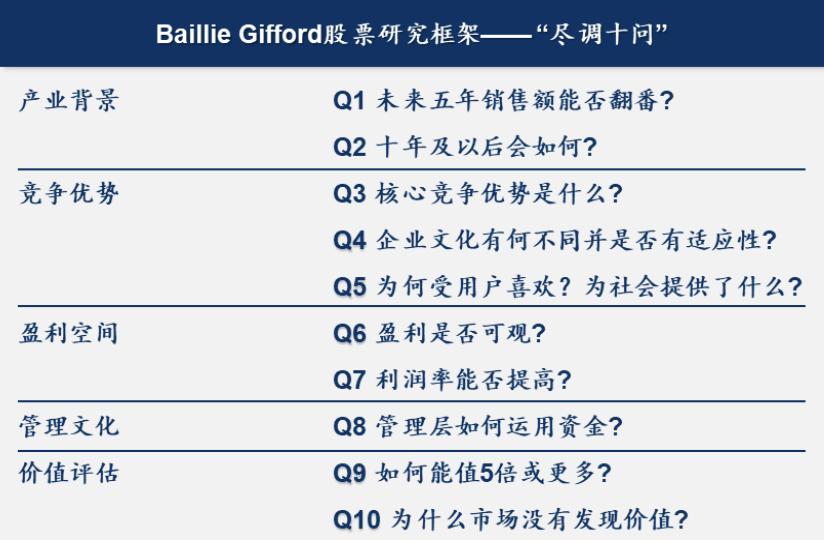
Group 1 - Baillie Gifford is a century-old investment firm based in Edinburgh, known for its value investment philosophy and long-term global growth strategy, focusing on identifying and investing in a select few high-quality companies with competitive advantages and innovation [1][2] - The firm has made early investments in major tech companies, including Amazon in 2004, Illumina in 2011, Tesla in 2013, and Alibaba in 2014, demonstrating a strong track record in identifying growth opportunities [1] - Baillie Gifford's significant investment in Tesla began with a $89 million stake in 2013, which grew to 14 million shares by 2017, resulting in a profit of approximately $17 billion after a seven-year holding period [1] Group 2 - In 2016, Baillie Gifford participated in Meituan's first round of financing and held a 12.08% stake during its IPO in 2018, maintaining its position through market fluctuations [2] - Peter Singlehurst, the firm's growth investment head, expressed confidence in ByteDance as a top investment opportunity, predicting a fivefold return despite current geopolitical tensions [2][5] - The firm has developed a framework of ten core due diligence questions to assess a company's growth potential, focusing on long-term growth opportunities, competitive advantages, organizational culture, and financial analysis [3][4] Group 3 - Baillie Gifford is cautious about investing in AI companies, particularly large language models, due to unclear competitive advantages at that level, despite recognizing the potential in foundational AI infrastructure [4][25] - The firm emphasizes the importance of maintaining strategic focus and avoiding "fill-duck" investments, which can lead to overvaluation and misallocation of resources [4][20] - The investment philosophy includes a focus on companies with strong return on equity (ROE) and sustainable business models, avoiding excessive capital influx that could distort long-term value [20][21] Group 4 - Baillie Gifford's investment in Amazon and Tesla exemplifies its strategy of identifying companies with scalable business models and long-term growth potential, even when they are initially unprofitable [24][50] - The firm believes that the current market conditions present unique opportunities for growth investments, particularly in companies that have demonstrated strong management and innovative business models [61][62] - The firm continues to actively seek investment opportunities in China, despite geopolitical risks, as it believes the risk-reward ratio remains favorable [46][44]


黄金:对耐心的奖赏
NORTHEAST SECURITIES· 2025-05-12 05:17
[Table_Info1] 有色金属 [Table_Date] 发布时间:2025-05-12 $$i k\neq\pm i k$$ 上次评级:优于大势 [Table_PicQuote] 历史收益率曲线 [Table_Trend] 涨跌幅(%) 1M 3M 12M 绝对收益 8% 1% -2% 相对收益 4% 2% -7% [Table_Market] 行业数据 成分股数量(只) 136 总市值(亿) 24568 流通市值(亿) 13349 市盈率(倍) 14.56 市净率(倍) 2.13 成分股总营收(亿) 31776 成分股总净利润(亿) 1882 成分股资产负债率(%) 50.80 [Table_Report] 相关报告 《黄金:情绪缓和,现实恶化,继续看多金价》 --20250506 《黄金:牛市未尽》 --20250428 《黄金:新世界秩序下的宠儿》 --20250421 《东北有色周报:关税反复+财政担忧+联储观 望,金价继续冲高》 --20250414 [Table_Author] 证券分析师:曾智勤 执业证书编号:S0550520110002 021-20363251 zengzq@nesc ...



特朗普,突发!美股全线跳水!中概股飘绿……
Sou Hu Cai Jing· 2025-05-09 15:04
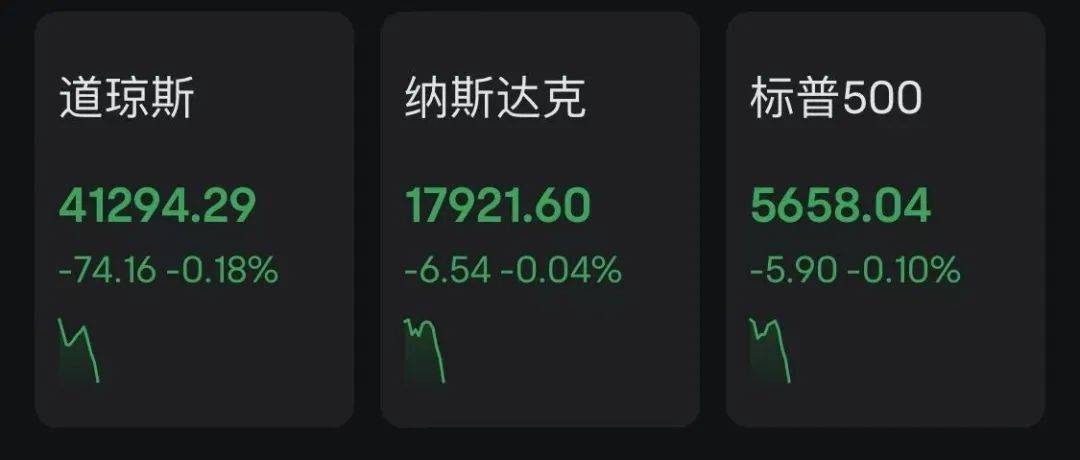
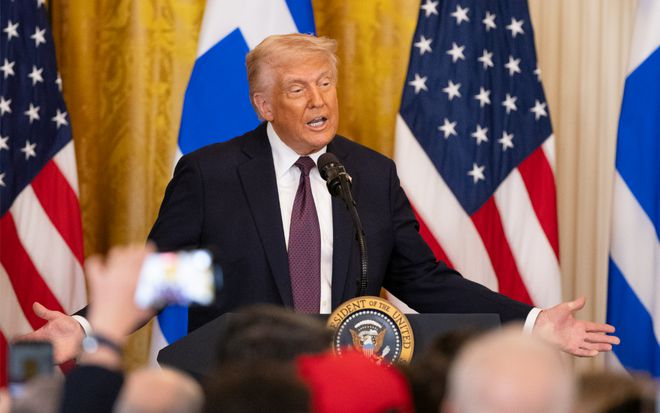
Group 1 - US stock market opened higher but subsequently dropped [1][2] - Notable performance from Tesla, which saw a nearly 7% increase in stock price, with reports of Elon Musk's AI startup XAI potentially raising new funding at a valuation of $120 billion [4] - Nasdaq China Golden Dragon Index opened with approximately 1% gain but later fell, with mixed performances among Chinese concept stocks [7] Group 2 - European markets showed positive movement with major indices in the UK, France, and Germany rising [9] - Gold prices continued to rise, increasing by nearly 1% [9] Group 3 - Federal Reserve officials expressed concerns about tariffs leading to economic slowdown and higher unemployment rates, indicating upward risks for inflation and unemployment [11] - President Trump commented on the US economy, claiming costs are down and there is no inflation, urging the Federal Reserve to lower interest rates for economic stimulation [12]

美联储威廉姆斯:不确定性将继续成为货币政策格局的决定性特征
news flash· 2025-05-09 12:53
Core Viewpoint - The Federal Reserve's Williams emphasizes that uncertainty will continue to be a defining characteristic of monetary policy in the foreseeable future due to structural changes in the global economic environment [1] Group 1 - Williams highlights the current high level of uncertainty and its persistence in the near term [1] - He attributes this uncertainty to structural changes such as artificial intelligence, de-globalization, and innovations in the financial system [1] - Williams refrains from commenting on the economic outlook or specific monetary policy actions [1] Group 2 - The independence of central banks is noted as a factor that can lead to better outcomes in the current uncertain environment [1]
专访保德信专题研究部总监Jakob Wilhelmus:全球化迈进“双轨时代”,投资者如何危中寻机?
Sou Hu Cai Jing· 2025-05-07 10:12
Group 1: Global Trade and Economic Impact - The U.S. tariff policy is significantly deteriorating global trade prospects, with a projected 0.2% decline in global goods trade volume by 2025 [1] - The global trade landscape is being restructured into two distinct tracks: one that continues to thrive and another that is experiencing rapid de-globalization [1][3] - Approximately 25% of global GDP is concentrated in industries critical to national security, such as semiconductors and energy, which are less affected by U.S. tariffs [3] Group 2: Investment Opportunities - Despite tariff and industrial policy challenges, sectors like semiconductors, electric vehicles, and mining still present rich investment opportunities [2][8] - Advanced chips are crucial for AI applications and are becoming a focal point of great power competition, with leading firms able to mitigate regional risks through diversified customer bases [8] - The electric vehicle market is expanding, particularly in regions like Southeast Asia and Latin America, where Chinese brands are gaining traction despite facing tariffs in Western markets [9] Group 3: Structural Advantages and Market Dynamics - Investors should focus on specific companies and value chains that possess structural advantages, rather than being swayed by emotional responses to tariffs [2][6] - The dual-track globalization may require investors to reassess their risk frameworks and conduct geopolitical stress tests on their portfolios [6] - Countries with manufacturing capabilities and those rich in metals and minerals, such as Australia and Chile, are expected to benefit from the new global economic landscape [7]

全球化的丧钟为谁而鸣?
虎嗅APP· 2025-05-02 03:38
Core Viewpoint - The article discusses the evolution of globalization from 1.0 to 3.0, highlighting the impact of MAGAism and the rise of protectionism, leading to a potential collapse of the current global trade system and the emergence of a new, more inclusive globalization model driven by digital technology and emerging economies [1][2][3]. Group 1: Globalization 1.0 - Globalization 1.0 was established post-World War II, primarily led by the United States, focusing on rebuilding economies through international cooperation and the establishment of organizations like the IMF and World Bank [7][8]. - The General Agreement on Tariffs and Trade (GATT) was signed in 1947, leading to a significant reduction in global tariff levels, with an average annual trade growth rate of 7.8% from 1950 to 1973 [7][8]. - The period was characterized by a division between capitalist and socialist blocs, resulting in a structured but not fully globalized trade system [9]. Group 2: Globalization 2.0 - Globalization 2.0 began after the Cold War, marked by the establishment of the WTO in 1995, which facilitated a true global economic integration, particularly between the U.S. and China [11][12]. - The period saw rapid trade liberalization, with global tariffs dropping from 6.2% in 1991 to 3.2% in 2006, and significant growth in international investment [12][13]. - The rise of emerging economies, particularly China and India, began to reshape the global economic landscape, contributing to a multi-polar world [15]. Group 3: MAGAism and Its Impact - MAGAism has led to a rise in protectionist policies in the U.S., which may provide short-term benefits to certain industries but could disrupt global supply chains and increase consumer costs in the long run [20][21]. - The political polarization in the U.S. has intensified, with MAGAism exacerbating divisions between different social and economic groups, impacting political stability and governance [21][22]. - The global implications of MAGAism include a decline in U.S. leadership in international affairs and a shift towards a more fragmented global trade environment [22][23]. Group 4: Transition to Globalization 3.0 - The article posits that the world is transitioning towards Globalization 3.0, characterized by a more inclusive and technology-driven economic model, despite the challenges posed by de-globalization and protectionism [26][27]. - Emerging economies are advocating for a more open and cooperative global economic system, as seen in initiatives like the Belt and Road Initiative and RCEP [26]. - The future of globalization is seen as an inevitable trend, with the potential for a new economic order that is less dominated by major powers and more reliant on digital technologies [27].
达里奥再次发声!
Zhong Guo Ji Jin Bao· 2025-04-29 15:52
Core Viewpoint - The ongoing trade tensions and tariff issues between the U.S. and other countries, particularly China, are leading to a significant reduction in trade dependencies, which is becoming a necessary reality for many exporters and importers [2][3]. Group 1: Trade Relations and Dependencies - Many exporters to the U.S. and importers from the U.S. are recognizing the need to drastically reduce trade ties with the U.S. due to the persistent nature of trade issues, regardless of tariff changes [2]. - There is a growing consensus among countries that reducing interdependence with the U.S. is essential, as they navigate trade, capital market, geopolitical, and military relationships [2]. Group 2: Economic Imbalances and Sustainability - The current global economic situation is characterized by unsustainable consumption patterns in the U.S., which is the largest consumer of manufactured goods and the largest producer of debt assets [3]. - The significant trade and capital imbalances are creating unsustainable conditions, necessitating a reduction in these imbalances to avoid severe risks [3]. Group 3: Global Order and Political Challenges - The world is on the brink of a collapse in monetary order, domestic politics, and international relations, driven by unsustainable fundamentals that are measurable and evident [4]. - Historical parallels can be drawn from past events, indicating that the current chaos is a contemporary version of how monetary, political, and geopolitical orders evolve [4]. Group 4: Strategic Planning and Solutions - A calm, analytical, and coordinated approach is essential to address the challenges of imbalances and self-sufficiency, aiming for a "perfect" deleveraging and rebalancing [5]. - There is a proposed "three-part, 3% solution" to tackle U.S. government debt issues, which could yield better outcomes than the current trajectory [5].
陶冬:特朗普连砍三刀,美元难逃一劫
Di Yi Cai Jing· 2025-04-28 02:24
然而,美国重建产业链的时间可能要以年为单位计算,但是产生的物价压力、衰退风险却是以月来计算 的,市场反应更是以日计算。特朗普在贸易政策上的倒行逆施,直接伤到了美元根基,美元失去了全球 化支撑的贸易之锚、信用之锚。这是美元资产近期极度动荡的根本原因。 布雷顿森林体系坍塌后,美国抛弃了以黄金作锚定的承诺。美元依靠在全球贸易中的绝对垄断,维持着 全球交易货币、储蓄手段的尊崇地位。美元交易在全球外汇交易中占比88%,全世界外债发行中70%是 美元债,各国外汇储备里美元占比59%,世界外贸中大约54%用美元报价,银行间同业拆借中美元占比 47%。 世界上暂时还没有一个可以取代美元的替代货币,所以美元的主导地位并非一时半会可以消失。但是美 元软实力毫无疑问被弱化,美元信用遭到质疑,这是本轮美元急跌的逻辑。笔者承认,今年以来对美元 走势看错了,最主要的原因是没有料到特朗普政府会那么打关税战,完全置美元信誉于不顾。 从长期和结构上看,"去全球化"势必带来"去美元化"。美元成为世界货币的一个重要原因,正是长期的 贸易逆差,使得巨额美元流向海外,海外美元再通过投资美债、美股回流到美国。IMF估计,海外投资 者总共持有大约22万亿 ...
“没有美国”的全球化,会是什么样子 | 新京报专栏
Xin Jing Bao· 2025-04-10 13:41
▲特朗普资料图。图/新华社 随着特朗普对全球几乎所有国家和地区普遍征收所谓"对等关税",一道高耸的关税大墙在美国与各国之 间拔地而起。 除了针对中国,在无厘头的计算方法下,欧盟等美国传统盟友也被无差别攻击,柬埔寨和越南这样的小 国对美出口也面临高额关税。对越南这类经济高度依赖出口、出口高度依赖美国的经济体来说,这记关 税大棒无疑会带来极其严峻的影响。 毋庸讳言,继在美墨边境建起隔离墙后,特朗普政府又在美国与全世界之间构建起了难以跨越的关税藩 篱。 自特朗普第一任期以来,美国就滥用出口管制与贸易救济措施,频繁使用301关税措施与232调查。作为 二战后全球自由贸易体系的建立者与长期主导者,美国的这些做法使全球化面临着前所未有的冲击。 自2018年中美贸易争端爆发以来,世界一直笼罩在不同经济体脱钩断链和去全球化的阴云之下。而今, 在特朗普政府关税政策出台的大背景下,阴云似有变成暴雨的可能。 因此,人们不得不思考,一个"没有美国"的全球化是否可能,如果可能又如何存在?而世界各国该如何 应对这场狂风暴雨? 一场"美国反对美国"的闹剧 事实上,放在几年前,谁也不会想到,吃尽全球化红利、依赖全球化发展起来的美国会有如今这 ...
Ray Dalio重磅发文:一生一次,关税之外可能即将到来的更大规模冲击会是什么?
对冲研投· 2025-04-09 11:55
文 | Ray Dalio 来源 | 地平线全球策略 编辑 | 杨兰 审核 | 浦电路交易员 Ray Dalio 近日发文:不要误以为当前正在发生的一切主要只是关于关税的问题。 当前,市场对新一轮关税的宣布及其对经济和市场的重大影响给予了高度关注,这是完全合 理的。但与此同时,人们几乎没有注意到导致这些措施出台的根本原因——以及未来可能到 来的更大规模的冲击。别误会,这些关税确实是重要的事件,但多数人忽略了正在推动一切 (包括关税本身)的更深层次力量。 在我最新的文章(本文)中,我讨论了一个我认为更值得高度关注的问题: 我们正在经历一场典型的全球货币、政治与地缘秩序的系统性瓦解。这类瓦解每一代人只会 遇到一次,但在历史上,它在类似不可持续的条件下曾多次上演。 这正是自给自足成为优先目标的战争式博弈的表现。 此时此刻,人们理所应当地将大量注意力集中在新宣布的关税及其对市场和经济的巨大影响 上,但对促使这些措施出台的深层背景、以及可能即将到来的更大规模冲击,却几乎无人关 注。 不要误会,这些关税公告确实是重大事件,而我们都知道特朗普总统是促成它们的直接推 手,但大多数人忽视了那些让他当选总统、以及最终推动关税出台 ...