商业模式

Search documents
段永平持仓来了!二季度加仓苹果、拼多多、谷歌C和英伟达
Ge Long Hui· 2025-08-15 05:28
Group 1 - The core viewpoint of the article highlights that Duan Yongping, known as the "Chinese Buffett," has made significant adjustments to his investment portfolio, increasing his holdings in Apple, Pinduoduo, Google C, and Nvidia while reducing positions in Occidental Petroleum, Alibaba, Microsoft, and TSMC [1] - As of the end of Q2 2025, Duan's investment account, H&H, holds a total of 10 U.S. stocks with a market value of $11.5 billion, approximately 82.5 billion RMB [1] - Apple's stock remains the largest holding in Duan's portfolio, valued at $7.205 billion, accounting for 62.47% of the total holdings, with an increase of 894,400 shares compared to the previous quarter [1] Group 2 - Duan Yongping's investment philosophy emphasizes long-termism and value investing, focusing on companies with strong business models [2][3] - He advocates for investing only in companies within one's understanding and avoiding leverage and speculation [2][5] - Key considerations for investing in a company include its ability to generate long-term profits and how those profits are distributed to shareholders [3][4] Group 3 - Duan learned the importance of business models from Warren Buffett, emphasizing the significance of monopolies and competitive advantages [4] - A good business model is characterized by consistent profits and cash flow, making it difficult for competitors to enter the market [4][5] - Duan believes that exceptional business models are rare, and the better the business model, the higher the investment certainty and lower the risk [5][6]


从VLOG到纪录片,大V扎堆儿做起“社会实验”
3 6 Ke· 2025-08-14 13:14
Group 1 - The core viewpoint of the article highlights the evolution of content creation among self-media creators, particularly the shift from food vlogging to documentary-style storytelling, as exemplified by the Bilibili creator "食贫道" [1][3][10] - "食贫道" has successfully transitioned from a food blogger to a documentary creator, achieving over 10 million in revenue, which has boosted confidence in the struggling documentary market [3][12] - The documentary market remains challenging, with a limited audience and few successful examples, leading to a trend towards lighter, more accessible content formats [14][16] Group 2 - Many creators are adopting a documentary approach to enhance their brand value and social impact, moving from personal experiences to broader societal observations [5][20][23] - The production costs for high-quality content are significant, with "食贫道" citing a production cost of 600,000 for a single episode, making it difficult for mid-tier creators to replicate this success [24][26] - Creators are exploring diverse monetization strategies, including brand collaborations and content paid subscriptions, to ensure sustainable operations [28][31]


丰山集团2025年中报简析:营收净利润同比双双增长,盈利能力上升
Zheng Quan Zhi Xing· 2025-08-12 22:39
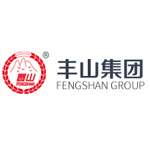
Financial Performance - The company reported a total revenue of 619 million yuan for the first half of 2025, representing an increase of 18.74% year-on-year [1] - The net profit attributable to shareholders reached 30.31 million yuan, a significant increase of 235.4% compared to the previous year [1] - The gross profit margin improved to 15.23%, up 85.4% year-on-year, while the net profit margin turned positive at 4.58%, reflecting a 200.12% increase [1] Quarterly Analysis - In Q2 2025, the total revenue was 297 million yuan, showing a year-on-year growth of 14.81% [1] - The net profit for Q2 was 13.94 million yuan, which is a 221.43% increase compared to the same quarter last year [1] Cost and Expenses - Total selling, administrative, and financial expenses amounted to 38.25 million yuan, accounting for 6.18% of revenue, a decrease of 19.55% year-on-year [1] - The company experienced a significant increase in financial expenses, up 194.83%, attributed to a decrease in interest from time deposits [3] Cash Flow and Assets - The net cash flow from operating activities decreased by 85.12%, primarily due to increased cash payments for goods [4] - The company’s cash and cash equivalents decreased by 32.21% year-on-year, indicating a reduction in liquidity [2] Debt and Liabilities - Interest-bearing liabilities increased by 19.20% to 613 million yuan, raising concerns about the company's debt levels [1] - The company’s debt ratio reached 21.89%, suggesting a need for careful monitoring of its debt situation [4] Investment and Returns - The company’s return on invested capital (ROIC) has been historically variable, with a median ROIC of 13.44% since its listing [4] - The company has recorded two years of losses since its IPO, indicating potential weaknesses in its business model [4]
迪贝电气2025年中报简析:净利润增12.94%,盈利能力上升
Zheng Quan Zhi Xing· 2025-08-08 22:39
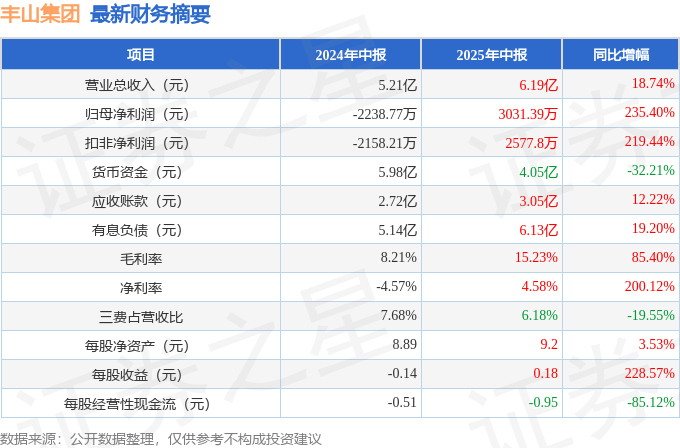
Core Viewpoint - The recent financial report of Dibai Electric (603320) shows a decline in total revenue but an increase in net profit, indicating mixed performance in the company's financial health [1][3]. Financial Performance Summary - Total revenue for the first half of 2025 was 498 million yuan, a decrease of 6.89% compared to 2024 [1]. - Net profit attributable to shareholders reached 42.47 million yuan, an increase of 12.94% year-on-year [1]. - The gross profit margin improved to 15.81%, up by 2.51% year-on-year, while the net profit margin increased to 8.53%, up by 21.29% [1]. - The total of selling, administrative, and financial expenses was 8.95 million yuan, accounting for 1.8% of revenue, a decrease of 41.28% [1]. - Earnings per share remained stable at 0.29 yuan, while operating cash flow per share decreased to 0.31 yuan, down by 31.4% [1]. Key Financial Changes - Cash and cash equivalents increased significantly by 56.67% due to the maturity of bank deposits and financial products [3]. - Accounts receivable decreased by 13.08% due to a reduction in unpledged bank acceptance bills [3]. - Inventory saw a decline of 11.41% as finished and semi-finished goods inventory decreased [3]. - Short-term borrowings dropped by 89.19% due to a reduction in bill discounts [3]. - Revenue decreased by 6.89% primarily due to a decline in motor product sales and falling silicon steel material prices [3]. Business Evaluation - The company's return on invested capital (ROIC) was 6.8%, indicating average capital returns [4]. - The historical median ROIC since the company went public is 8.68%, suggesting better investment returns in the past [4]. - The company relies heavily on research and development for its business performance, necessitating further investigation into the underlying drivers [4].

梳理一下本次i8权益调整大家关心的问题
理想TOP2· 2025-08-05 05:38
Core Viewpoint - The article discusses the recent adjustments made by the company regarding the i8 SKU, including pricing changes and feature enhancements, while raising questions about the implications for profitability and organizational capabilities. Group 1: i8 SKU Adjustments - The company has decided to adjust the i8 SKU based on a 98% MAX Ultra option rate, reducing the price of the MAX version by 10,000 and adding a platinum sound system, with options for additional features at a cost of 10,000 [1]. Group 2: Strategic Questions - Questions are raised regarding how the L series will operate following the i8 adjustments [3]. - The potential impact of the i8 changes on gross margin, net profit margin, and free cash flow is questioned [3]. - There is speculation about whether the company's recent operations have been chaotic and the underlying reasons for this [3]. - The article questions the current organizational capability of the company and how it should be evaluated [3]. - It discusses whether the CEO has made multiple misjudgments in recent years and how to interpret this phenomenon [3]. - The article explores the relationship between the CEO's acceptance of potential misjudgments and the overall confidence in the company's future [3]. - It inquires about the long-term trends in the industry and the CEO's insights on what is clear and what remains uncertain [3]. - The article differentiates between events that were anticipated by the company and those that were not in recent months [3]. - It questions whether a positive long-term outlook for the company requires that many factors align with its expectations [3]. - The company's ability to manage public sentiment and its expected development in this area are evaluated [3]. - A comparison of the company's core advantages and disadvantages relative to competitors like Huawei and Xiaomi is made [3]. - The article discusses the short-term perception of smart vehicles as a poor business model and questions the long-term viability of smart vehicles and AI robotics [3]. - It examines the relationship between smart vehicles and AI, particularly the importance of foundational model capabilities [3]. - The potential of the VLA and the company's smart cockpit is questioned, suggesting that many may underestimate it [3]. - The company's position in the AI and hardware-software integration field is assessed [3].


小摩:首予港铁公司目标价29港元 评级“中性”
Zhi Tong Cai Jing· 2025-08-05 03:08
Core Viewpoint - Morgan Stanley has initiated coverage on MTR Corporation (00066) with a target price of HKD 29 and a "Neutral" rating, highlighting the company's unique business model that combines railway operations with real estate development [1] Summary by Relevant Categories Business Model - MTR Corporation utilizes a distinctive business model that integrates railway operations with real estate development, leveraging its transportation infrastructure to unlock real estate investment opportunities [1] Financial Performance - The risk-reward profile for MTR appears balanced, with local railway operations in Hong Kong showing a rebound post-pandemic [1] - However, the company's upside potential is constrained by several factors, including sluggish growth in leasing business and anticipated slowdown in real estate development profits starting in 2027 [1] Capital Expenditure and Profit Outlook - The development of the Northern Link project in Hong Kong is expected to increase capital expenditure requirements [1] - These factors collectively suggest a potential 16% decline in MTR's earnings compound annual growth rate (CAGR) for the fiscal years 2025-2027, which may limit the possibility of significant revaluation of its stock [1] Dividend Expectations - Despite the challenges, Morgan Stanley anticipates that MTR's dividends will remain stable [1]

毛利大于一切
Hu Xiu· 2025-08-05 00:10
Group 1 - Gross profit is a crucial financial metric that reflects the viability of a business model and indicates whether a business is fundamentally sound [2][3][22] - Higher gross profit is always preferable, as it provides a buffer for management decisions and operational flexibility [4][9][62] - During due diligence, the primary focus should be on gross profit, examining what is sold, at what price, and the associated costs [5][23][62] Group 2 - Businesses can be categorized based on gross profit and turnover rates, with high gross profit and high turnover being the most desirable combination [10][11] - Low gross profit or flawed logic in gross profit calculations can lead to business failure, making it essential to validate gross profit calculations during analysis [8][14][39] - Many companies struggle with accurate cost accounting, which can lead to misleading gross profit figures, necessitating a thorough review of cost calculation methods [46][49][54] Group 3 - The importance of gross profit extends to secondary markets, where significant fluctuations in gross profit can indicate underlying issues [35][36] - Accurate gross profit calculations are vital for understanding a company's financial health, as they can reveal discrepancies in revenue and cost recognition [55][57] - Positive gross profit can still indicate value even if net profit is negative, as it contributes to cash flow and overall financial stability [58][61]
资本还有理性?大麦涨幅是猫眼140倍
Hu Xiu· 2025-08-01 06:24
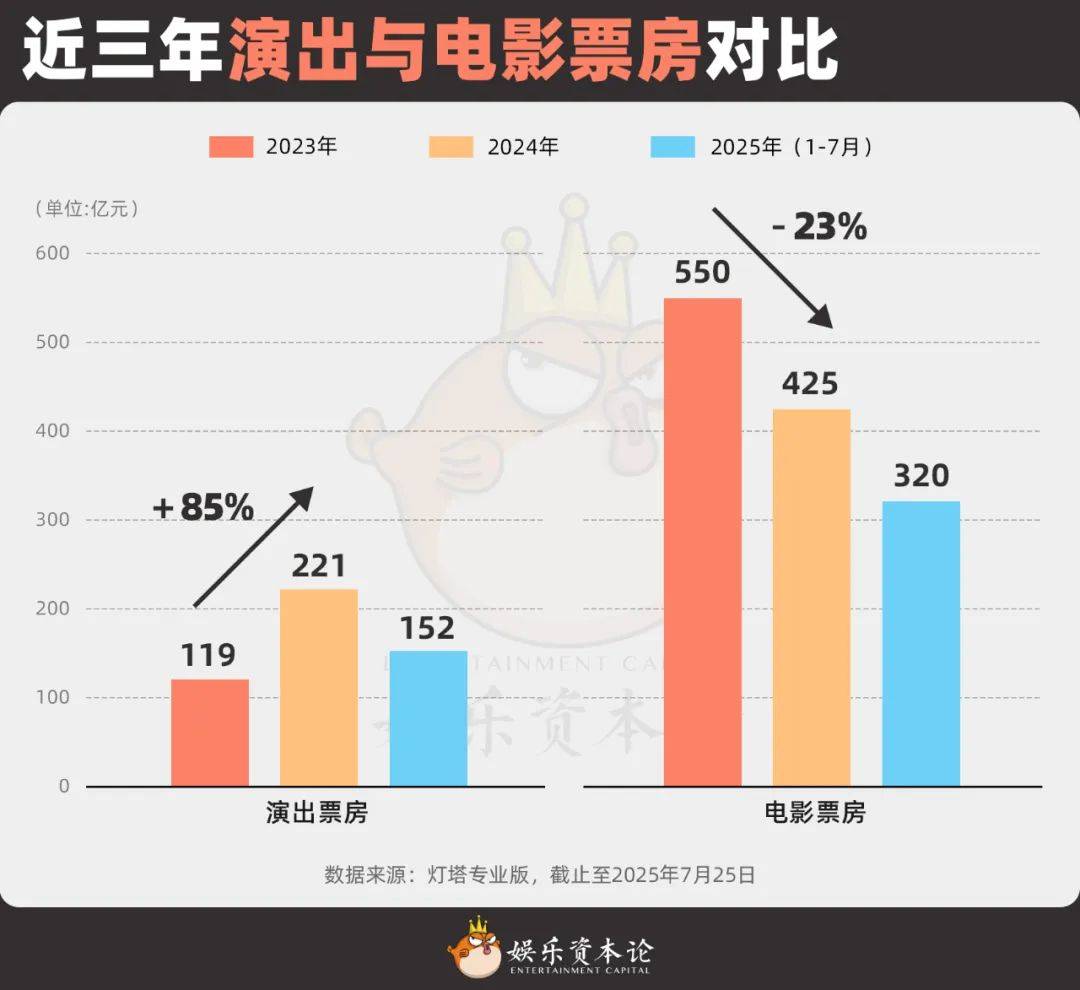
Core Insights - The music industry is significantly outperforming the film industry, with concert revenues contributing 90% of the total 220 billion RMB in the performance sector, which saw an 85% increase year-on-year, while film box office revenues are projected to decline by 23% in 2024 [1][2][9]. Group 1: Industry Performance - The performance industry, including music, theater, and dance, generated a total box office revenue of 220 billion RMB last year, with music alone accounting for 90% of this figure [1]. - The concert segment is the primary driver of growth within the music industry, contributing 90% of its revenue, while other forms like music festivals account for the remaining 10% [1]. - In contrast, the film industry is facing a downturn, with total box office revenues expected to drop by 23% in 2024 [1]. Group 2: Market Dynamics - Investors are losing patience with the film industry, as evidenced by the drastic decline in the market value of companies like iQIYI, which has seen a 90% drop from its peak, while Tencent Music Entertainment (TME) has increased its market value significantly [1][2]. - TME's market value has grown from 210 billion RMB to 330 billion RMB, indicating a 27-fold increase compared to iQIYI's current valuation [1]. Group 3: Company Comparisons - Alibaba Pictures, after rebranding to Damai Entertainment, has seen its stock price rise over 140% this year, while Maoyan Entertainment's stock has only increased by 1% [2]. - Damai's revenue has outperformed that of Alibaba Pictures' film projects, highlighting its dominance in the ticketing market [6][8]. Group 4: Financial Performance - TME's revenue from music subscriptions grew by 25.9% to 15.227 billion RMB, driven by a 16.6% increase in paid users and an increase in average revenue per user (ARPU) [20]. - In contrast, iQIYI's revenue has stagnated, with its net profit remaining precarious, indicating a stark difference in financial health between the two companies [19][20]. Group 5: Consumer Behavior - The willingness of consumers to pay high ticket prices for concerts, despite the rising costs, contrasts with the challenges faced by the film industry regarding ticket pricing [2][15]. - The music industry has successfully increased its membership numbers and ARPU, while the film industry struggles with a saturated membership model [2][21]. Group 6: Global Trends - The trend of music surpassing film in market value is not unique to China, as evidenced by global reports indicating that music rights have outstripped film rights in value [26]. - Major streaming platforms like Spotify continue to show robust growth, while traditional film platforms like Netflix are facing challenges in maintaining subscriber growth [30].
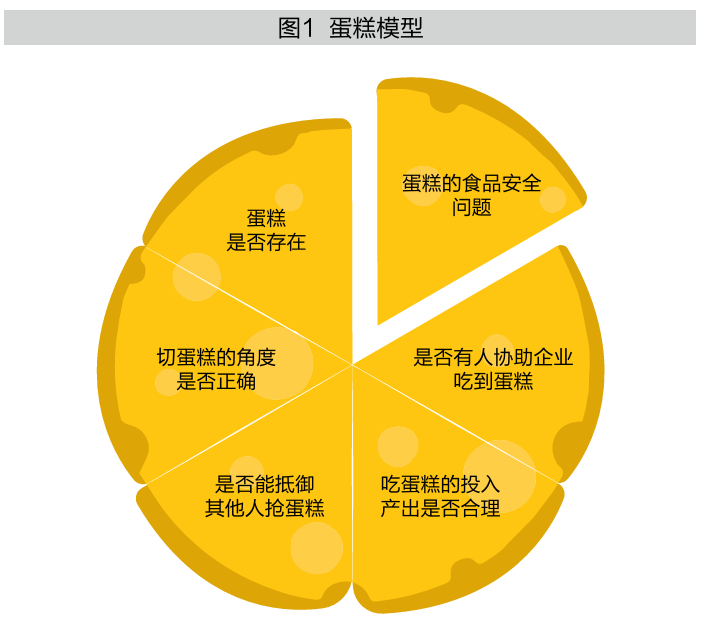
如何避免成为AI墓地的一员?
Hu Xiu· 2025-07-23 05:15
Core Insights - The article discusses the increasing number of failed AI projects, with a specific focus on the "AI Graveyard," which has seen a growth from 738 to over 1100 projects in just six months, representing a growth rate of over 50% [1] - It emphasizes the importance of a robust business model for AI companies to survive in a competitive market, highlighting that many failed projects focused too much on large model technology without considering the significance of business model design [2][34] Group 1: AI Graveyard and Project Failures - The "AI Graveyard" includes a wide range of AI applications, from general functionalities like AI voice and image processing to specialized products in data analysis and marketing management [1] - Notable failures include projects from major companies and startups, such as OpenAI's Whisper.ai and Google's competitor Neeva, indicating that even established players are not immune to failure [1] Group 2: Business Model Importance - A core reason for the high failure rate in AI projects is the neglect of business model design, which is crucial for identifying application scenarios and creating value [2] - Companies are advised to evaluate their survival capabilities using a "cake model," which assesses product value space, cutting mode, resource capabilities, profitability, ecosystem support, and data security [3][6][19] Group 3: Evaluating Product Value Space - The existence of a product's value space is critical; many failed projects had a narrow value proposition, such as AI Pickup Lines, which lacked a broad market application [8] - Successful products must create significant value and either capture existing market share or create new market opportunities [8][9] Group 4: Cutting Mode and Market Entry - Companies need to adopt a sharp cutting mode to effectively address user pain points and ensure market acceptance [12] - OpenAI's ChatGPT is cited as a successful example of a product that effectively engaged users and generated interest in large models [12][13] Group 5: Resource Capabilities and Barriers - AI companies must establish strong barriers to protect their market position, as many startups rely on generic large model applications that can easily be replicated [17][18] - The threat from tech giants entering the market poses additional challenges for smaller companies lacking robust competitive advantages [18] Group 6: Profitability and Cost Control - Companies must design sustainable profitability models that balance pricing strategies with market competition to avoid price wars [19][20] - High development costs for large models, such as OpenAI's GPT-4, highlight the financial challenges faced by AI companies [21][22] Group 7: Ecosystem Support - The success of AI products often depends on the existence of a supportive ecosystem that facilitates continuous iteration and market adoption [26] - OpenAI's Sora and Adobe Premiere are contrasted in their approaches to ecosystem development, with Adobe focusing on optimizing existing processes rather than attempting to overhaul the entire industry [27][29] Group 8: Data Security Risks - Data security remains a significant concern for AI applications, with examples like Whisper.ai illustrating the potential risks associated with sensitive data handling [30][31] - Companies must prioritize data security in their product designs, especially when serving high-stakes industries [32][33] Group 9: Need for Business Model Innovation - The article concludes that many AI companies need to upgrade their business models to remain competitive, particularly in the context of China's unique industrial landscape [34][35]
7月荐书 | 周期罗盘 复利长坡
Di Yi Cai Jing· 2025-07-22 02:08
Group 1 - The core principle of investment is to establish the mindset of "buying businesses as an owner" and to evaluate their moat and cash flow over a ten-year horizon [1] - Understanding the eternal rhythm of wealth creation involves recognizing cycles and the impact of monetary illusions on time value [1] - A comprehensive framework that integrates micro business value, medium-term cycle positioning, and macro monetary environment is essential for rational decision-making in volatile markets [1] Group 2 - The book "The Way: Q&A with Duan Yongping" provides over 200 replicable thinking models covering asset allocation, business selection, and life strategy [3] - A good business model should not enter a low-margin period, as low margins indicate poor business models and minimal product differentiation [3] - Entrepreneurs should engage in ventures they are passionate about, as genuine interest can drive success [4] Group 3 - "Cycles, Valuation, and Human Nature" illustrates that asset price fluctuations are influenced by human emotions, with valuation anchors shifting due to greed and fear [6] - Identifying extreme emotional valuation misalignments is crucial for successful investment strategies, rather than merely predicting market turning points [6] Group 4 - Economic recovery can be assessed by understanding the reasons behind economic downturns and recognizing the role of inventory levels and downstream demand in driving recovery [7] - The development of macroeconomics since the 1970s emphasizes the importance of establishing a micro foundation to address economic fluctuations more rigorously [8] Group 5 - "Lessons from Inflation" discusses the psychological dynamics between central banks, governments, and markets, highlighting that policy errors and greed are the true culprits of inflation [10] - The book emphasizes that inflation creates unfairness, disproportionately affecting those with limited financial resources while benefiting those with pricing power [12][13]