
消费市场

Search documents
8月重磅经济数据出炉
2 1 Shi Ji Jing Ji Bao Dao· 2025-09-15 13:13
Economic Performance Overview - In August, the industrial added value of large-scale enterprises increased by 5.2% year-on-year and 0.37% month-on-month [1] - The service production index rose by 5.6% year-on-year in August [1] - The total retail sales of consumer goods grew by 3.4% year-on-year and 0.17% month-on-month in August [1] - From January to August, fixed asset investment (excluding rural households) increased by 0.5% year-on-year, while excluding real estate development investment, it grew by 4.2% [1][4] Investment Trends - Manufacturing investment increased by 5.1% year-on-year from January to August, although the growth rate is declining [4] - Infrastructure investment (excluding power, heat, gas, and water production and supply) grew by 2.0%, down 1.2 percentage points from the previous period [4] - Real estate development investment decreased by 12.9% year-on-year, with the decline rate widening by 0.9 percentage points [4][5] Real Estate Market Dynamics - The real estate market is experiencing fluctuations but is moving towards stabilization, with a narrowing decline in sales and housing prices [5] - Recent adjustments in housing policies in some cities have shown positive effects, leading to improved market transactions [5] - The government is focusing on enhancing urban renewal and increasing the supply of high-quality housing to meet demand [5][6] Consumer Market Insights - The retail sales of consumer goods showed a year-on-year growth of 4.6% from January to August, with service retail sales increasing by 5.1% [8] - Key consumer goods categories, such as furniture and home appliances, saw significant sales growth in August, with increases of 18.6% and 14.3% respectively [8] - The film industry also experienced a surge, with box office revenue and attendance increasing by 48.6% and 66.9% year-on-year in August [8][9] Trade and Export Performance - In August, the total goods import and export volume increased by 3.5% year-on-year, with exports growing by 4.8% and imports by 1.7% [9] - Cumulatively, from January to August, exports rose by 6.9%, while imports fell by 1.2% [9] - Exports to the U.S. saw a significant decline of 32.9%, which was a major drag on overall export performance [9] Price Trends - The Producer Price Index (PPI) decreased by 2.9% year-on-year in August, but the decline rate narrowed by 0.7 percentage points compared to the previous month [9][10] - Factors contributing to the PPI changes include improved market competition, increased demand in emerging industries, and the effects of consumption-boosting policies [10]


股指 短线宽幅波动
Qi Huo Ri Bao· 2025-09-11 01:15
Market Overview - A-share market trading activity has decreased, with a slight decline in transaction volume in the Shanghai and Shenzhen markets, indicating that incremental capital has not yet formed a consistent expectation in the short term, leading to a wide fluctuation in the market [1][4] - The overall A-share market is experiencing significant fluctuations, with notable sector rotation. Benefiting from interest rate cut expectations and "anti-involution" policies, sectors such as electric power equipment and non-ferrous metals have seen substantial gains, while previously high-performing sectors like computers and communications have shown weakness [1] Economic Indicators - In August, China's exports increased by 4.4% year-on-year in USD terms, below the expected 5.9% and previous value of 7.2%. Imports grew by 1.3%, also below expectations [1] - The decline in exports to the US has intensified, with a drop of 33.1% in August, negatively impacting total exports by 5.1 percentage points, while exports to the EU and ASEAN exceeded previous values [1] Consumer Price Index (CPI) and Producer Price Index (PPI) - In August, China's CPI growth remained flat month-on-month, with a year-on-year decrease to -0.4%. The PPI growth shifted from a decline to flat, with a significant narrowing of the year-on-year decline [2] - Prices of pork and eggs have shown lower-than-seasonal increases, while some food prices continue to decline, affecting non-food items [2] Infrastructure and Real Estate - High-frequency data for August indicates a slight increase in the year-on-year growth rate of petroleum asphalt and cement shipments. The National Development and Reform Commission has allocated 300 billion yuan for the third batch of "two heavy" construction projects, which will support infrastructure growth [3] - In the real estate sector, first-tier city housing prices have declined more than those in second and third-tier cities, with sales of commercial housing in 30 cities in August still needing improvement [3] Consumer Behavior - The retail sales growth rate for social consumer goods in August is expected to moderate. The previous year's "old-for-new" subsidy funds have been gradually distributed, but this year faces a high base environment and increased consumer sensitivity to price changes [3] Global Economic Context - Recent expectations for overseas interest rate cuts have risen, with the US adding only 22,000 non-farm jobs in August, below the expected 75,000 and previous 79,000. The unemployment rate rose to 4.3%, the highest since November 2021 [4] - Following the employment data release, the dollar index and US bond yields fell, while gold, US stocks, and copper prices surged. Market sentiment has shifted towards recession, with an increased probability of the Federal Reserve cutting rates three times this year [4]
上海美国商会报告:贸易战并未触发大量美企回流美国
Di Yi Cai Jing· 2025-09-11 00:40
Group 1 - The report indicates that 71% of surveyed companies expect to achieve profitability in 2024, an increase from 66% in 2023, with significant differences across industries: 80% in manufacturing, 69% in retail, and 55% in services [1][2] - 48% of surveyed companies perceive the regulatory environment in China as transparent, a notable increase of 13 percentage points from the previous year [2] - 39% of surveyed U.S. companies believe they have benefited from government measures to promote consumption in China, while 37% see positive effects from market opening initiatives [2] Group 2 - Nearly half (48%) of surveyed companies call for the U.S. government to eliminate all tariffs on Chinese goods, with 64% expecting revenue declines due to the tariff war [4][5] - 69% of surveyed companies anticipate negative impacts on their operations if the U.S. were to revoke China's permanent normal trade relations status, with manufacturing being the most affected sector at 78% [5] - The report highlights that only 18% of companies considered relocating investments to the U.S., indicating that the trade war has not significantly triggered a return of U.S. companies [5]
13.2万亿元、50.6%……多领域活力数据折射经济强大韧性与潜力
Yang Shi Wang· 2025-09-07 01:53
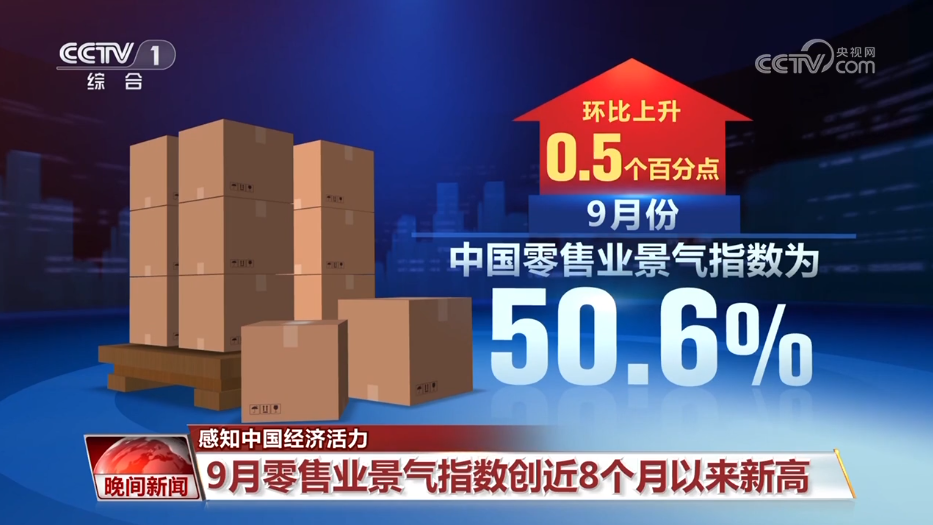
Economic Resilience and Retail Sector - In September, China's retail industry prosperity index reached 50.6%, an increase of 0.5 percentage points month-on-month, marking the highest level in eight months, indicating a positive trend in retail development [3] - The retail sector's performance is supported by policies aimed at expanding domestic demand and promoting consumption, with retail sales of 11 categories of light industrial goods reaching 4.9 trillion yuan, a year-on-year increase of 11.4% [8] Logistics and Transportation - In August, 15 new international air cargo routes were opened, with over 30 round-trip flights added weekly, totaling 152 new routes in the first eight months of the year [5] - The road logistics price index for August was reported at 105.1 points, reflecting a month-on-month increase of 0.01% and a year-on-year increase of 0.8%, indicating a vibrant road logistics market [7] Light Industry Performance - In the first seven months of the year, China's light industry maintained steady operation with a total revenue of 13.2 trillion yuan and a profit of 760.1 billion yuan, supported by strong production and market scale [8] - The investment growth in the light industry remains robust, with major sectors experiencing double-digit growth rates, surpassing the national fixed asset investment and manufacturing investment growth rates [10] Export Dynamics - Light industry exports reached 535.75 billion USD in the first seven months, accounting for 25.1% of the national total, with 11 out of 21 major categories showing growth [12] Foreign Investment in Guangdong - Guangdong province saw a 32.7% year-on-year increase in the number of newly established foreign-funded enterprises, totaling 17,000 in the first seven months [13][14] - The actual use of foreign capital in Guangdong reached 65.67 billion yuan, an increase of 8.2% year-on-year, with the manufacturing sector accounting for 29.1% of the total [16] Customs Special Supervision Areas - The comprehensive bonded zones and bonded logistics parks have contributed significantly to foreign trade, accounting for one-fifth of the national import and export value despite occupying less than 0.02% of the land area [16][18] - By 2024, the import and export value of customs special supervision areas is expected to grow by over 30% compared to 2020 [16]
【广发宏观贺骁束】高频数据下的8月经济:数量篇
郭磊宏观茶座· 2025-09-02 07:56
Core Viewpoint - The article discusses the current state of various sectors in the Chinese economy, highlighting fluctuations in production, demand, and infrastructure investment, while also noting the impact of seasonal factors and policy constraints on these trends. Group 1: Power Generation - As of August 28, the cumulative power generation from coal-fired power plants decreased by 1.3% year-on-year, which is lower than the 3.9% decline in July [1][6] - The Three Gorges Reservoir's inflow data showed a significant narrowing of the decline in August compared to July, suggesting that hydroelectric power generation may exceed July levels [1][6] Group 2: Industrial Production - The operating rates in the industrial sector showed mixed results, with upstream production slightly slowing down month-on-month but generally improving year-on-year [7][8] - As of the fourth week of August, the operating rate of high furnaces increased by 6.8 percentage points year-on-year, while the operating rate for coking enterprises rose by 4.5 percentage points [7][8] Group 3: Steel Production - Major steel mills maintained a stable average daily production of rebar at around 2.2 million tons, with a year-on-year increase of over 27% due to low base effects [10] - Hot-rolled coil production also remained stable at approximately 3.2 million tons per day, with a year-on-year change turning positive [10] Group 4: Infrastructure Investment - The funding availability rate for construction projects continued to recover, reaching 59.2% as of August 26, with a month-on-month increase of 0.5 percentage points [11][12] - The cement dispatch rate recorded 38.1%, showing a year-on-year increase of 3.1% despite a month-on-month decline [11][12] Group 5: Real Estate Market - Real estate sales continued to show weakness, with a year-on-year decline of 9.9% in the average daily transaction area across 30 major cities in August [15][16] - The number of second-hand housing transactions in 82 cities increased by 24.5% year-on-year, indicating some recovery in the market [16] Group 6: Automotive Sector - Retail sales of passenger vehicles grew by 3% year-on-year in August, a slowdown from the previous 7% growth, attributed to high base effects from last year [19] - The wholesale volume of passenger vehicles increased by 12% year-on-year, maintaining a steady growth trend [19] Group 7: Container Throughput - Container throughput at domestic ports showed a year-on-year growth of 10.2% from August 4 to August 24, indicating strong export activity [21] - The average cargo throughput also increased by 6.3% year-on-year during the same period [21]

上半年湖南消费市场成绩亮眼
Shang Wu Bu Wang Zhan· 2025-08-29 02:31
Group 1 - The total retail sales of consumer goods in Hunan Province reached 1,039.181 billion yuan in the first half of the year, with a year-on-year growth of 6.2%, which is 1.2 percentage points higher than the national average [1] - The "trade-in" policy has effectively stimulated the potential of domestic demand in Hunan Province, with a total of 9.7038 million applications for subsidies submitted by June 30, 2025 [1] - The cumulative amount of subsidies claimed reached 7.53 billion yuan, which has driven a total sales amount of 57.057 billion yuan [1]
1-7月东莞经济整体稳中向好,外贸总额同比增长15.6%
Nan Fang Du Shi Bao· 2025-08-27 05:57
Economic Overview - Dongguan's economy showed overall stability in the first seven months of 2025, adhering to the provincial "1310" deployment and focusing on high-quality development [2] Industrial Production - The industrial added value of large-scale enterprises increased by 4.9% year-on-year. Key industries such as electronic information manufacturing, electrical machinery and equipment manufacturing, and chemical manufacturing saw increases of 9.1%, 8.7%, and 12.0% respectively [3] - New momentum industries experienced rapid growth, with advanced manufacturing and high-tech manufacturing added value rising by 7.8% and 9.1% respectively [3] - High-tech product output showed significant growth, with servers, integrated circuits, sensors, and smartwatches increasing by 257.2%, 87.1%, 46.8%, and 45.4% respectively [3] Foreign Trade - The total foreign trade import and export volume reached 888.6 billion yuan, a year-on-year increase of 15.6%. Imports were 346.24 billion yuan (up 26.1%), and exports were 542.36 billion yuan (up 9.8%) [4] - In July, the total foreign trade volume grew by 11.4% year-on-year, with imports increasing by 21.6% and exports by 5.9% [4] Consumer Market - The total retail sales of consumer goods amounted to 250.851 billion yuan, reflecting a year-on-year growth of 3.0%. Dining revenue grew by 2.5%, while goods retail increased by 3.1% [5] - The "old for new" consumption policy showed positive effects, with significant increases in retail sales of furniture (78.9%), communication equipment (77.7%), and building materials (37.5%) [5] - Online consumption demand remained strong, with retail sales through public networks increasing by 27.4% [5] Fixed Asset Investment - Total fixed asset investment decreased by 8.8% year-on-year, but the decline narrowed by 2.1 percentage points compared to the first half of the year. Excluding real estate development, fixed asset investment grew by 10.4% [6] - Investment in new momentum industries grew rapidly, with advanced manufacturing investment increasing by 38.5% and high-tech manufacturing investment by 43.2% [7] - Infrastructure investment rose by 6.3%, while real estate development investment fell by 48.5% [7] Fiscal and Financial Performance - General public budget revenue reached 50.45 billion yuan, a year-on-year increase of 2.2%, while expenditure was 55.209 billion yuan, up 0.4% [8] - By the end of July, the balance of financial institutions' deposits was 2875.951 billion yuan, growing by 6.1% year-on-year, with household deposits increasing by 10.6% [8] Consumer Price Index - The Consumer Price Index (CPI) decreased by 1.1% year-on-year, with six categories of goods and services showing price declines [9] - Notable declines were observed in transportation and communication (3.1%), clothing (2.8%), and education and culture (1.4%) [9]

国光连锁: 江西国光商业连锁股份有限公司2025年半年度报告
Zheng Quan Zhi Xing· 2025-08-25 16:42
Core Viewpoint - Jiangxi Guoguang Commercial Chain Co., Ltd. reported a revenue increase of 6.50% in the first half of 2025, driven by improved product competitiveness and consumer demand [2][5]. Company Overview and Financial Indicators - The company operates 41 stores primarily in Jiangxi Province, focusing on fresh produce and food products [5]. - Key financial metrics for the first half of 2025 include: - Revenue: CNY 1,448.39 million, up 6.50% from CNY 1,359.98 million [2]. - Total profit: CNY 27.93 million, a 5.59% increase from CNY 26.46 million [2]. - Net profit attributable to shareholders: CNY 19.90 million, up 4.15% from CNY 19.10 million [2]. - Net cash flow from operating activities: CNY 143.94 million, an increase of 12.44% [2]. Industry Analysis - The retail industry in China is experiencing growth, with a 5.0% year-on-year increase in total retail sales of consumer goods in the first half of 2025 [5]. - Online retail sales grew by 8.5%, indicating a shift towards e-commerce [5]. - The county and rural markets are expanding, with rural retail sales increasing by 4.9% [5]. Business Operations - The company has focused on enhancing its local market presence and upgrading store formats to improve customer experience [5]. - The retail segment generated CNY 135.01 million in revenue, reflecting a 7.58% increase [5]. - The company maintains a high proportion of self-owned properties, which helps mitigate rental cost risks [5]. Competitive Advantages - The company has established strong local supply chains and partnerships, enhancing its bargaining power with suppliers [5]. - Efficient logistics and distribution systems support the operational effectiveness of the stores [5].

下半年中国经济:政策托底驱动产业实现升级
Jin Rong Shi Bao· 2025-08-25 01:35
Economic Growth and Resilience - In the first half of 2025, China's GDP grew by 5.3%, reflecting strong growth resilience despite a complex global economic environment [1][2] - The growth was primarily supported by effective policy measures and a recovering domestic demand market [2][3] Policy Support and Domestic Demand - Fiscal and monetary policies worked in tandem to support economic growth, with a record issuance of special government bonds amounting to 555 billion yuan, an 18 percentage point increase from the previous year [2] - The recovery in domestic demand was driven by consumer confidence improvements and infrastructure investments, which countered the downturn in the real estate market [2][3] Consumer Market Dynamics - The consumer market showed signs of recovery, heavily influenced by government subsidies, particularly the "trade-in" policy, which contributed approximately 1.3 trillion yuan to consumer spending in 2024 [4][5] - Future consumer market growth will depend on stable income growth and enhanced consumer confidence, with a focus on optimizing the consumption environment [5][6] Investment Focus - Investment priorities for the second half of 2025 will center on high-quality infrastructure projects and strategic initiatives, particularly in new infrastructure sectors like 5G and renewable energy [8][14] - Policies will encourage private investment through improved business environments and market access [8][14] Export Market Challenges - The export landscape is expected to face increased pressure due to tariffs and global economic uncertainties, despite previous resilience [9][10] - Diversification of export markets has been a strategic focus, with ASEAN's share increasing while the U.S. share has decreased to 11.9% [9] Technological Innovation and Industry Upgrading - Policies will support technological innovation and industry upgrading, particularly in high-tech sectors like semiconductors and AI, through financial incentives and regulatory support [11][12] - The government aims to enhance the competitiveness of export products through innovation and improved trade structures [10][11] Employment Strategies - Employment stability is a priority, with measures to support entrepreneurship and job creation, particularly for youth [13][14] - The government will enhance vocational training and employment services to improve labor market outcomes [13] Macroeconomic Policy Outlook - The macroeconomic outlook for the second half of 2025 is optimistic, with coordinated policies expected to sustain growth [14][15] - Emphasis will be placed on balancing employment stability, economic growth, and risk management, with a focus on long-term sustainable development [15][16]
中国零售地产与消费市场2025年上半年研究报告-仲量联行
Sou Hu Cai Jing· 2025-08-24 13:05
Core Insights - The report from JLL highlights the dynamics of China's retail real estate and consumer market in the first half of 2025, focusing on consumption fundamentals, supply and demand in retail real estate, structural adjustments, regional differences, and innovation trends [5][6]. Group 1: Consumption Fundamentals - In the first half of 2025, per capita disposable income continues to grow, supporting the consumer market [1]. - Consumer demand is becoming more diverse, with a notable emphasis on health, experience, and personalization, leading to increased attention on sectors like fitness and healthcare services [1]. - The integration of online and offline shopping experiences is deepening, with platforms like Douyin significantly influencing consumer decision-making [1]. Group 2: Retail Real Estate Supply and Vacancy Rates - There is a noticeable differentiation in the supply of retail real estate across key cities, with some cities seeing concentrated new supply, particularly in A-class cities [1]. - Overall market vacancy rates are showing regional disparities, with core city premium shopping areas experiencing lower vacancy rates, while non-core areas and some third and fourth-tier cities face pressure to reduce excess supply [1]. - Rental levels in core shopping districts remain relatively stable, while some emerging districts experience slight fluctuations [1]. Group 3: Structural Adjustments in Retail Formats - There are significant adjustments in the structure of retail formats, with varying proportions across categories. For instance, the share of dine-in restaurants in A-class cities dropped from 22.8% in the first half of 2024 to 15.3% in 2025 [2]. - Fast food and snacks maintain stable proportions, while coffee and beverage categories have seen increases, particularly in B-class cities [2]. - The service sector is growing significantly, with fitness venues in A-class cities increasing their share from 2.3% to 8.3% [2]. Group 4: Regional Market Performance - A-class cities (e.g., Beijing, Shanghai) leverage strong consumer power and commercial maturity, leading to a high proportion of emerging and experiential formats [3]. - B-class cities (e.g., Chengdu) show strong commercial vitality with active adjustments in dining and fashion sectors [3]. - C and D-class cities primarily focus on meeting basic consumer needs, with traditional dining and lifestyle formats dominating, while new formats are lagging [3]. Group 5: Innovation Trends - Retail spaces are increasingly focusing on creating engaging environments and collaborating with popular culture IPs to attract foot traffic [3]. - Membership systems are being upgraded, and VIP services are optimized to enhance consumer loyalty [3]. - Digital operations are deepening, with online platforms driving traffic and precision marketing, while some retail spaces explore "retail+" models to expand their business boundaries [3].
