数字服务税

Search documents
华泰证券今日早参-20250623
HTSC· 2025-06-23 01:03
Macro Insights - The report indicates a weak export performance, with port container throughput showing a month-on-month decline, suggesting a slowdown in external demand [2][3] - Domestic economic data for May shows a mixed picture, with industrial production slowing and real estate cycles weakening, while consumption growth was boosted by one-off factors [2][3] - The report highlights that some cities are increasing support for the real estate sector, such as Guangzhou's plan to lift purchase restrictions [2] Strategy Insights - The report suggests that short-term risk appetite may not improve, recommending a cautious approach to positions [3] - It notes that high consumer demand is difficult to sustain, with pressures from real estate adjustments and slowing exports becoming more evident [3] - The report emphasizes a focus on large financial sectors and suggests gradual accumulation in sectors with potential for acceleration, such as innovative pharmaceuticals and AI [3] Fixed Income Insights - The report discusses the necessity and limitations of interest rate policies, indicating that while there is a need for rate cuts, the space for such actions is limited [9] - It suggests that the bond market is currently biased towards a bullish direction, but with limited room for significant gains [9] - The report recommends focusing on specific opportunities in medium to long-term bonds and high-quality credit bonds [9] Real Estate Insights - The report tracks the implementation of the stock housing storage policy, noting that while there have been some positive developments, the actual scale of implementation remains limited [11] - It highlights that local governments are gaining more autonomy in the acquisition process, which could enhance the effectiveness of the policy [11] - The report anticipates that continued policy optimization could contribute significantly to stabilizing the real estate sector [11] Power Equipment and New Energy Insights - The report states that inverter exports reached 5.97 billion yuan in May, with a month-on-month increase of 2.7%, indicating strong demand from Southeast Asia [13] - It emphasizes that long-term demand for inverters is expected to remain robust due to factors such as rising electricity prices and increased installations of wind and solar power [13] - The report recommends specific companies in the sector, including DeYue Co., GuDeWei, and SunPower, as having strong performance support [13] Company-Specific Insights - The report initiates coverage on YunDa Co. with a target price of 13.05 yuan, highlighting its strong growth potential driven by domestic and overseas wind power projects [16] - It also covers YaXiang Integration, giving it a target price of 38.40 yuan, citing its competitive position in the cleanroom engineering services market [17] - The report highlights Changjiang Infrastructure as a buy with a target price of 64.73 HKD, noting its strong cash flow and consistent dividend growth [18]
全线下跌!关税,突传重磅!
券商中国· 2025-06-19 23:22
Group 1: EU and US Tariff Negotiations - The EU is attempting to reach a trade agreement with the US similar to the one between the UK and the US, aiming to resolve some disputes before the July 9 deadline to avoid immediate tariff retaliation against the US [2][4] - As of June 19, major European stock indices fell over 1%, indicating market concerns regarding the ongoing tariff negotiations [2] - The US has raised tariffs on EU steel and aluminum products from 25% to 50%, with President Trump threatening to increase tariffs to 50% if no agreement is reached [5] Group 2: Global Investment Risks - The UN warns that due to tariff policy uncertainties and escalating geopolitical tensions, global foreign direct investment (FDI) is at risk of declining for the third consecutive year [3][17] - The UN's report indicates a projected 11% decline in global FDI in 2024, following a significant drop in 2023 [18] - The report highlights that trade tensions have led to a downward adjustment of most FDI outlook indicators, with early 2025 data showing record lows in transaction and project activities [19] Group 3: Internal EU Dynamics - Internal divisions within the EU are weakening its negotiating position, with some countries like France advocating for retaliation against the US, while others like Italy and Hungary prefer continued negotiations [9][10] - The EU is considering a 10% "reciprocal tariff" along with lower tariff quotas in sectors like steel and automobiles, which some member states may reluctantly accept [11] - The EU has proposed increasing purchases of liquefied natural gas and military equipment to reduce its trade surplus with the US, which stands at €198 billion annually [12]


德国拟对谷歌(GOOGL.US)等科技巨头征收10%数字税 或招致美国关税报复
智通财经网· 2025-05-30 12:18
Group 1 - Germany's new culture minister, Wolfram Weimer, revealed plans to impose a 10% tax on large online platforms like Alphabet's Google and Meta's Facebook, potentially escalating trade tensions with the Trump administration [1] - Weimer criticized these companies for their "cunning tax evasion" and emphasized that they benefit significantly from Germany's media, culture, and infrastructure while contributing little in taxes [1] - The proposal is part of a broader consideration by the German government to introduce a digital services tax, aligning with agreements made by the ruling coalition earlier this year [2] Group 2 - The timing of this proposal coincides with sensitive U.S.-EU relations, as the Trump administration has accused the EU of unfair trade practices and has plans to impose tariffs on EU imports [2] - The U.S. is prepared to retaliate against countries perceived to have unfair tax systems, with legislative measures in Congress aimed at imposing "retaliatory taxes" on nations that levy digital services taxes on U.S. companies [2][3] - Weimer's comments highlight concerns over monopolistic structures of large digital platforms, which he argues limit competition and threaten freedom of speech [3]


关税战后是资本战?隐藏“资本税”伏笔,特朗普“大漂亮”法案引发市场强烈警惕
华尔街见闻· 2025-05-30 00:49
Core Viewpoint - The article discusses the potential implications of a hidden tax provision, known as Section 899, embedded in the recent U.S. tax and spending bill, which could escalate the trade war into a capital war, threatening foreign investors holding trillions of dollars in U.S. assets [1][2]. Group 1: Legislative Impact - Section 899 introduces significant changes to the tax treatment of foreign capital in the U.S., marking the most extensive unfavorable changes since the 1984 Deficit Reduction Act and the 1966 Foreign Investors Tax Act [2]. - The provision targets countries with "discriminatory" tax policies, imposing a punitive tax on passive income (such as interest and dividends) from these nations, starting with a 5% increase and potentially rising to 20% above the statutory rate [1][4]. Group 2: Market Reactions - Analysts highlight that this legislation creates a framework for the U.S. government to weaponize capital markets, challenging the open nature of U.S. capital markets and mirroring tactics used in the ongoing trade war [6]. - The low threshold for triggering retaliatory taxes means that many developed market countries could be affected, with the potential for significant disruptions in global capital markets [6]. Group 3: Economic Consequences - The legislation poses a threat to U.S. Treasury demand, as it could lead to a decline in actual yields on U.S. debt by nearly 100 basis points, particularly affecting foreign government holdings of U.S. debt [6]. - If passed, Section 899 could generate an estimated $116 billion in revenue over ten years, but it risks prompting a mass withdrawal of foreign investors from U.S. assets, further undermining the attractiveness of U.S. financial markets [8]. Group 4: Broader Implications - The provision is seen as a tool for the Trump administration to negotiate against countries imposing digital service taxes, which are perceived as unfairly targeting U.S. multinational companies [7]. - The potential for increased long-term interest rates and a weakening dollar is highlighted, as the unfavorable tax environment could deter foreign investment, exacerbating existing challenges in the U.S. financial landscape [8][9].
关税战后是资本战?隐藏“资本税”伏笔,特朗普“大漂亮”法案引发市场强烈警惕
Hua Er Jie Jian Wen· 2025-05-30 00:43
Core Viewpoint - The introduction of Clause 899 in the recent tax and spending bill poses a significant threat to foreign investors holding U.S. assets, potentially escalating the trade war into a capital war [1][2]. Group 1: Legislative Impact - Clause 899 aims to impose increased tax rates on investors from countries deemed to have "discriminatory" tax policies, starting with a 5% increase on passive income, escalating by 5% annually, up to a maximum of 20% [1]. - This legislation represents the most extensive unfavorable change to foreign capital tax treatment since the 1984 Deficit Reduction Act and the 1966 Foreign Investor Tax Act [2]. Group 2: Targeted Entities - The clause primarily targets countries that impose digital services taxes on large tech companies like Meta, including Canada, the UK, France, and Australia, as well as those utilizing global minimum corporate tax agreements [3]. - Affected parties include sovereign wealth funds, pension funds, government investment entities, retail investors, and companies holding U.S. assets [3]. Group 3: Market Reactions and Predictions - Analysts predict that the clause could disrupt bond markets even before it is utilized, as it is seen as a tool for the Trump administration to negotiate against digital services taxes [5]. - The clause is expected to receive broad Republican support, increasing its likelihood of being included in the final Senate reconciliation bill [5]. Group 4: Economic Consequences - If passed, Clause 899 could generate an estimated $116 billion in tax revenue over ten years, but it may also lead to a significant withdrawal of foreign investment from U.S. assets [6]. - The current market response appears calm, but U.S. assets have underperformed this year, with the S&P 500 rising only about 0.4%, compared to a 20% increase in the German benchmark index [6]. Group 5: Broader Implications - The clause's implementation could undermine the attractiveness of U.S. Treasury securities for foreign investors, further pressuring the dollar and potentially increasing long-term interest rates [7]. - The overall sentiment suggests that the U.S. may face challenges in maintaining its status as a favorable investment destination due to the adverse tax environment introduced by Clause 899 [7].
欧洲反击瞄准美国科技巨头,德国考虑征收10%数字税
Hua Er Jie Jian Wen· 2025-05-30 00:23
Core Points - Germany plans to impose a 10% digital services tax on major online platforms like Google and Meta, citing tax avoidance and the need for these companies to contribute more to the local economy [1][2] - The German government is dissatisfied with the lack of taxation on substantial profits earned by tech giants in the country, which they believe creates monopolistic structures and threatens free speech [1][3] - The proposed tax could generate hundreds of millions of euros in additional revenue, but there are concerns about whether this tax burden will be passed on to advertisers and users, potentially increasing costs for digital services [5] Group 1 - The German culture minister, Wolfram Weimer, is drafting legislation for a 10% digital services tax targeting large online platforms [1] - The German government has previously agreed to such a tax in coalition talks, indicating a commitment to proceed despite potential trade tensions with the U.S. [1][4] - The tax proposal aligns Germany with other countries like the UK, France, and Italy that have implemented similar measures [2] Group 2 - There are concerns that the tax could escalate trade disputes with the U.S., as past actions have led to investigations and potential retaliatory tariffs against countries imposing digital taxes [3][4] - The tax could have broader implications for the global profitability of tech giants, with potential stock price volatility if other nations follow suit [5] - Alphabet and Meta have not yet responded to the tax proposal, but market sentiment is already adjusting to the uncertainty surrounding it [5]

安永:加拿大应该在企业应于6月30日缴纳数字服务税之前取消数字税
news flash· 2025-05-27 21:34
5月27日,安永会计师事务所国际税务和交易服务合伙人莱斯利·伊万尼在加拿大多伦多的一次会议上表 示,加拿大应该在企业应于6月30日缴纳数字服务税之前取消数字税。伊万尼在国际财政协会加拿大税 务活动上表示:"现在或许是时候废除它了,因为目前还没有人缴纳过数字服务税。" ...
“离婚冷静期”里的中美欧
吴晓波频道· 2025-05-26 17:02
Core Viewpoint - The article discusses the escalating trade tensions between the U.S. and the EU, highlighting the potential economic impacts and strategic implications of the proposed tariffs and countermeasures. Group 1: U.S.-EU Trade Tensions - The U.S. President threatened to impose a 50% tariff on EU products starting June 1, 2025, which was later postponed to July 9, 2025 [1][2][6] - This situation is referred to as "Tariff War 2.0," indicating a renewed escalation in trade conflicts following a brief period of calm in U.S.-China relations [3][4] - The EU's response to U.S. tariffs is critical, as it is the third-largest economy globally, with approximately 2% of its GDP dependent on U.S. demand [12] Group 2: EU's Countermeasures - The EU has initiated countermeasures against U.S. tariffs, including a detailed list of products worth €95 billion targeted for tariffs, covering various sectors such as aircraft, automobiles, and agricultural products [14][15][16] - The EU's strategy includes not only retaliatory tariffs but also alternative measures like the proposed digital services tax, which could significantly impact U.S. tech companies operating in Europe [20][22] - The EU's internal divisions among member states regarding the response to U.S. tariffs may slow down its reaction, as different countries have varying levels of economic dependence on the U.S. [31][33] Group 3: Strategic Implications - The ongoing trade tensions may provide opportunities for China to strengthen its economic ties with the EU, as both regions navigate their relationships with the U.S. [37][40] - The EU aims to maintain its status as a key ally of the U.S. while also exploring deeper economic relations with China, reflecting a complex geopolitical landscape [41][48] - The article suggests that the EU's internal market barriers could be reduced, potentially enhancing its competitive position against the U.S. [39][37]

特朗普再次把炮口对准盟友,称“欧盟更过分”,欧盟有何后手?
Di Yi Cai Jing· 2025-05-13 13:55
不过,欧洲汽车制造商协会的数据显示,2024年从欧盟出口到美国的汽车约为75万辆,而从美国出口到欧洲的汽 车为17万辆。 目前,美欧之间已经启动了贸易谈判,欧盟提出了一份可能构成正式贸易谈判基础的方案。据报道,这些选项包 括在液化天然气和人工智能(AI)等领域进行投资,以及在钢铁、汽车、芯片、航空、制药和关键原材料等战略 领域开展合作。 据央视报道,欧盟委员会(下称"欧委会")执行副主席兼贸易委员东布罗夫斯基斯在12日重申,欧盟将继续致力 于与美国通过谈判找到解决方案,同时推进与各成员国的合作,以便在必要时制定可能的应对措施。 英国杜伦大学跨国法教授兼全球政策研究所联合主任杜明教授对第一财经记者表示,美欧之间在贸易方面的问题 在于,特朗普政府认为欧盟存在过度监管和非关税壁垒问题,譬如对科技公司的征税以及征收增值税等等,美方 或寻求通过项目的方式来削减欧盟的相关壁垒。 特朗普"变脸",贝森特吐槽欧洲 "我认为美国和欧洲(谈成协议)可能会慢一些。"贝森特表示。 美国总统特朗普再次把"炮口"对准欧盟。 在当地时间12日的白宫记者会上,特朗普表示,欧盟"更过分",欧盟对待美国非常不公平。他称,欧盟对美卖了 1300万 ...

没有签署实体文件,最终细节尚未成文,英美宣布达成“重大贸易协议”
Huan Qiu Shi Bao· 2025-05-08 22:25
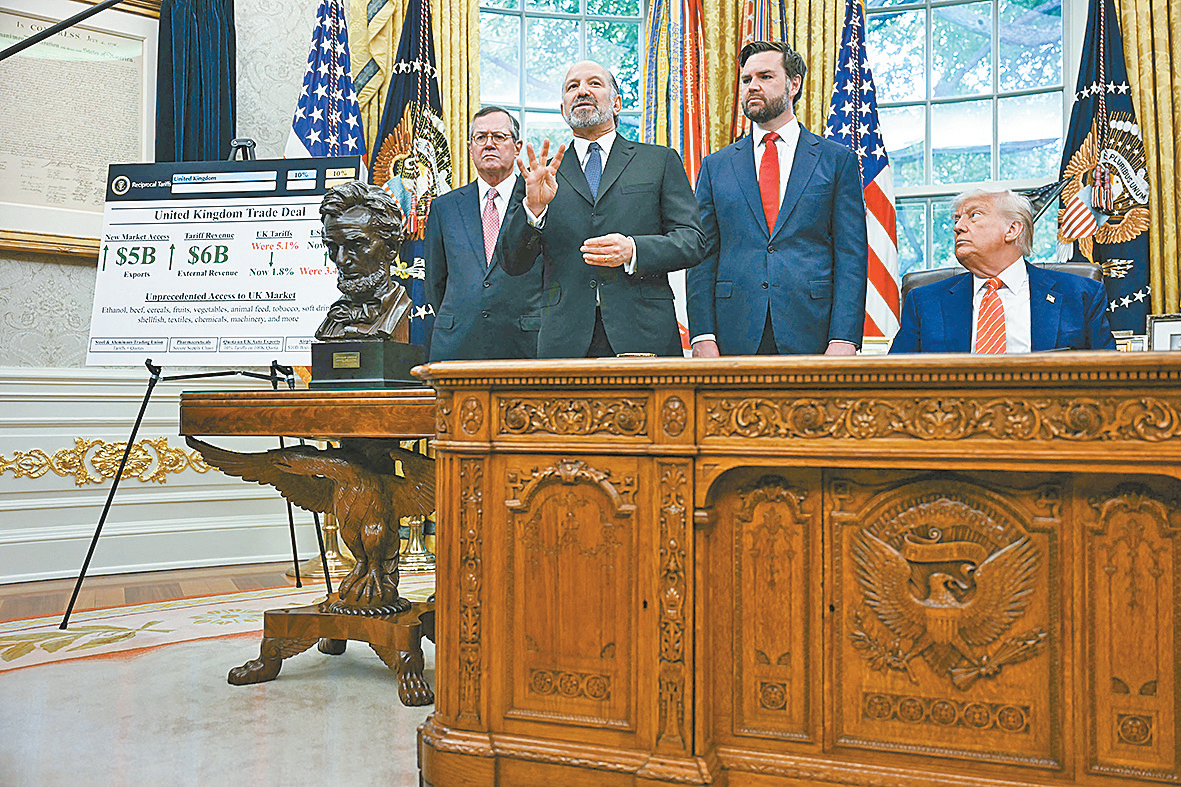
Group 1 - The announcement of a significant trade agreement between the US and the UK was made by President Trump, which is expected to strengthen future relations between the two countries [1][3] - The UK government confirmed the news, but some UK officials were surprised by the announcement, indicating that negotiations had been productive but not necessarily conclusive [3][4] - The trade agreement is seen as limited and short-term, primarily addressing tariffs on specific goods rather than a comprehensive trade deal [5][6] Group 2 - The UK plans to reduce or eliminate its digital services tax in exchange for concessions from the US, which currently generates approximately £800 million annually for the UK government [4] - The agreement allows the UK to export 100,000 cars to the US at a 10% baseline tariff, which is crucial for the UK automotive industry, particularly given the 25% tariff on cars [4][5] - The overall impact of the agreement on the UK economy is expected to be minimal, with the automotive sector representing less than 1% of the UK's GDP and the agreement not significantly improving economic growth prospects [5][6]