
油价波动

Search documents
油气ETF(159697)涨超1.4%,区域局势升温推动油价走高
Sou Hu Cai Jing· 2026-01-06 03:34
Group 1 - The core viewpoint of the news is that the geopolitical situation is driving oil prices higher, with the Venezuelan oil supply being significantly disrupted, leading to a potential short-term increase in oil prices [1] - The China Securities report indicates that Venezuela's oil exports have essentially halted, creating a supply disruption in the global market, with a potential shortfall of around 1 million barrels per day [1] - The current global oil market remains in a supply surplus, with expectations that oil prices will fluctuate between $60 to $70 per barrel despite short-term upward pressure [1] Group 2 - The National Oil and Gas Index (399439) has seen a strong increase of 1.45%, with significant gains in constituent stocks such as Intercontinental Oil and Gas (600759) up 9.21% and Shanghai Petrochemical (600688) up 4.36% [1] - The top ten weighted stocks in the National Oil and Gas Index as of December 31, 2025, include major companies like China National Petroleum (601857) and China Petroleum & Chemical (600028), collectively accounting for 67.11% of the index [2] - The Oil and Gas ETF (159697) closely tracks the National Oil and Gas Index, reflecting the price changes of publicly listed companies in the oil and gas sector [2][3]



中银国际:料委内瑞拉事件或令油价近期下跌 中国石油股份短期面临抛售压力
智通财经网· 2026-01-06 01:28
Core Viewpoint - The report from Zhongyin International indicates that the recent capture of Venezuelan President Maduro by the US military and President Trump's encouragement for US oil companies to invest in Venezuela's oil industry may negatively impact oil prices due to the potential doubling of Venezuela's oil production to 2 million barrels per day over time [2] Group 1: Oil Price Impact - Trump's statements are expected to exert downward pressure on oil prices [2] - Zhongyin International believes that WTI crude oil prices will not remain below $50 per barrel in the long term, as this would hinder US companies' investments in Venezuela [2] Group 2: Market Monitoring - Close attention is required on the situations in Iran and Ukraine, as they may influence market dynamics [2] - Zhongyin International maintains a "neutral" rating on the Chinese oil industry, anticipating potential selling pressure on China Petroleum & Chemical Corporation (00857) in the short term [2]



Crude prices edge lower as Maduro overthrow casts uncertainty over oil-rich Venezuela
CNBC· 2026-01-04 23:07
Core Viewpoint - The overthrow of President Nicolas Maduro has created uncertainty in Venezuela's oil sector, impacting crude oil prices and U.S. investment strategies in the region [1][2]. Oil Prices - U.S. crude oil prices decreased by 31 cents (0.54%) to $57.01 per barrel, while global benchmark Brent fell by 22 cents (0.36%) to $60.53 per barrel [1]. U.S. Investment Objectives - The Trump administration aims to facilitate U.S. investment in Venezuela's oil sector, with plans for major U.S. oil companies to invest billions to repair the country's oil infrastructure [2]. Venezuela's Oil Reserves - Venezuela holds the largest proven crude oil reserves globally, totaling 303 billion barrels, which accounts for approximately 17% of the world's total [3]. Production Trends - Venezuela's oil production has significantly declined from a peak of 3.5 million barrels per day in the late 1990s to about 800,000 barrels per day currently [4]. Current U.S. Operations - Chevron is the only major U.S. oil company currently operating in Venezuela, exporting around 140,000 barrels per day as of the end of Q4 2025 [4]. Short-term Price Impact - The short-term impact of Maduro's removal on oil prices is uncertain; production may increase if a U.S.-backed government is established and sanctions are lifted [5]. Long-term Production Outlook - Long-term U.S. investment could lead to increased production, potentially exerting downward pressure on oil prices, although recovery is expected to be gradual and partial [6]. Investment Requirements - It is estimated that $10 billion annually is needed to restore Venezuela's oil production to historic levels, with a stable security environment being crucial for growth [7]. Potential Production Recovery - Full sanctions relief could result in several hundred thousand barrels of production returning within a year, provided there is an orderly transition of power [7]. Risks of Chaotic Transition - A chaotic change of power could lead to significant disruptions, similar to past scenarios in Libya or Iraq, complicating recovery efforts [8].

原油周度报告-20260104
Guo Tai Jun An Qi Huo· 2026-01-04 08:32
1. Report Industry Investment Rating - Not provided in the content 2. Core Viewpoints of the Report - This week, the view on crude oil is to focus on short - term sentiment - driven positives and consider adding short positions on rallies. The market may open high and then decline, with short positions recommended to be held. In the first half of the year, Brent and WTI are under significant downward pressure, potentially testing $50 per barrel, while the decline of SC may be less than that of foreign benchmarks, testing 380 yuan per barrel. Although the decline in oil prices has accelerated under the influence of trade frictions, a long - term decline is unlikely to happen overnight. Attention should be paid to potential reversals in macro - expectations, which may lead to increased volatility in oil prices [5][6]. 3. Summary by Relevant Catalogs 3.1 Overview - Global crude oil supply features "regional differentiation + geopolitical disturbances". The demand is dominated by the Asia - Pacific region, showing significant regional disparities. The overall view is that the market may open high and then decline, with short - term sentiment - related upside and long - term downward pressure on prices [6]. 3.2 Macroeconomics - The gold - to - oil ratio has strengthened again. Short - term inflation has declined, and attention should be paid to "re - inflation" trading in the medium to long term. The RMB exchange rate has strengthened again, and social financing has stabilized [18][20][21]. 3.3 Supply - OPEC+ decided to suspend production increases in Q1 2026. The production of some countries has changed, such as the increase in production in Guyana and Brazil, and the potential impact of sanctions on the supply of Venezuela and Iran. The export volume of OPEC + core members reached a peak in September and declined in the fourth quarter. US shale oil drilling and production have stabilized [8][9][23]. 3.4 Demand - The operating rates of refineries in the US and Europe have rebounded, and those of Chinese state - owned and private refineries have also increased. The global refining capacity has a net increase of 3.6 million barrels per day. The demand in China is shifting from fuel to chemical raw materials, and the demand in Europe is weak [10][63][65]. 3.5 Inventory - US commercial crude oil inventories have stabilized, while Cushing inventories remain significantly below the historical average. European diesel inventories have decreased, and gasoline inventories have increased. Global in - transit crude oil inventories have declined from a high level, and global crude oil floating storage is high [67][71][73]. 3.6 Price and Spread - The spot market was weak during the holiday season. The Dubai spot spread entered a contango for the first time in two years. North American basis has stabilized, the monthly spread has rebounded slightly, and the valuation of SC is at a medium - low level with a stable monthly spread [83][94][95].
委内瑞拉如被美国暂时“接管”,市场为何看低油价
Di Yi Cai Jing· 2026-01-04 06:31
Core Viewpoint - The recent military actions by the U.S. against Venezuela may lead to a significant shift in the global oil market, with potential implications for oil supply and prices. Group 1: Venezuela's Oil Production and Impact - Venezuela, a key oil-producing nation with proven reserves of approximately 303 billion barrels, accounts for about 17% of global oil reserves, surpassing Saudi Arabia [1] - Current oil production is around 1 million barrels per day, with exports at approximately 900,000 barrels per day, which could face disruption if the country continues to resist U.S. influence [2] - Historically, Venezuela's oil production peaked at 3.75 million barrels per day, indicating substantial long-term growth potential if stability is restored [3] Group 2: Market Predictions and Supply Dynamics - Analysts predict that if U.S. oil companies return to Venezuela, production could increase by 500,000 barrels per day over the next two years, potentially raising the total global oil supply [3] - The international oil market is expected to experience oversupply, with oil prices projected to fluctuate between $55 and $80 per barrel by 2025, and further decline to $50 to $70 per barrel by 2026 [4] - The process of restructuring Venezuela's oil industry is anticipated to be lengthy, as past political instability and sanctions have led to a significant decline in production and aging infrastructure [4]
曝光!马杜罗首次发声:新年快乐!委内瑞拉副总统在俄境内?俄方回应!油价,重大变数
Zheng Quan Shi Bao Wang· 2026-01-04 04:26
Group 1 - The situation in Venezuela has garnered global attention, particularly following the reported capture of President Maduro by U.S. forces, which may lead to significant implications for the global oil market [1][2][3] - Venezuela holds the world's largest proven oil reserves, approximately 303 billion barrels, accounting for one-fifth of global total reserves, making its political stability crucial for oil supply dynamics [3][4] - The U.S. plans to manage Venezuela until a "safe" transition occurs, with expectations that major U.S. oil companies will invest billions to revitalize Venezuela's struggling oil industry [3][4] Group 2 - Current oil production in Venezuela is less than 1 million barrels per day, which is less than 1% of global oil production, and its export volume is about 500,000 barrels per day [4] - Analysts predict that despite the geopolitical event, the oil market may not experience significant price spikes due to existing oversupply and weak demand [4][5] - The potential for increased oil production in Venezuela could further suppress oil prices, as the market is already facing a surplus [5]
曝光!马杜罗首次发声:新年快乐!委内瑞拉副总统在俄境内?俄方回应!油价,重大变数
券商中国· 2026-01-04 04:15
Core Viewpoint - The situation in Venezuela has drawn global attention, particularly following the reported capture of President Maduro by U.S. forces, which may significantly impact the global oil market due to Venezuela's vast oil reserves [1][2][6]. Group 1: U.S. Military Action and Maduro's Capture - A video released by the U.S. White House shows Maduro being escorted to the DEA office, marking his first public appearance after being captured [2][3]. - The U.S. military launched a large-scale operation in Venezuela, resulting in the capture of Maduro and his wife, with President Trump stating that the U.S. will "manage" Venezuela until a "safe" transition occurs [6][4]. - Venezuela's Vice President, Delcy Rodriguez, has been appointed to assume presidential duties, claiming that the U.S. aims to overthrow the Venezuelan government to seize its oil and natural resources [4][6]. Group 2: Impact on Oil Prices - Venezuela holds approximately 303 billion barrels of proven oil reserves, accounting for one-fifth of the global total, which could make it a more significant oil supplier if U.S. plans succeed [7]. - Analysts predict that the current geopolitical event will not lead to a significant spike in oil prices due to an oversupply in the market and weak demand [7][8]. - The Brent crude oil price is expected to rise only slightly, by $1 to $2, following the military action, with predictions indicating it may remain below $60.75 per barrel [8]. Group 3: Long-term Market Implications - The potential for Venezuela's oil production to increase could further suppress oil prices in the long run, despite the immediate geopolitical tensions [9]. - The ongoing geopolitical risks, including the situation in Venezuela, are likely to influence market dynamics, with analysts noting that the market is currently facing unprecedented news risks compared to previous U.S. administrations [9].

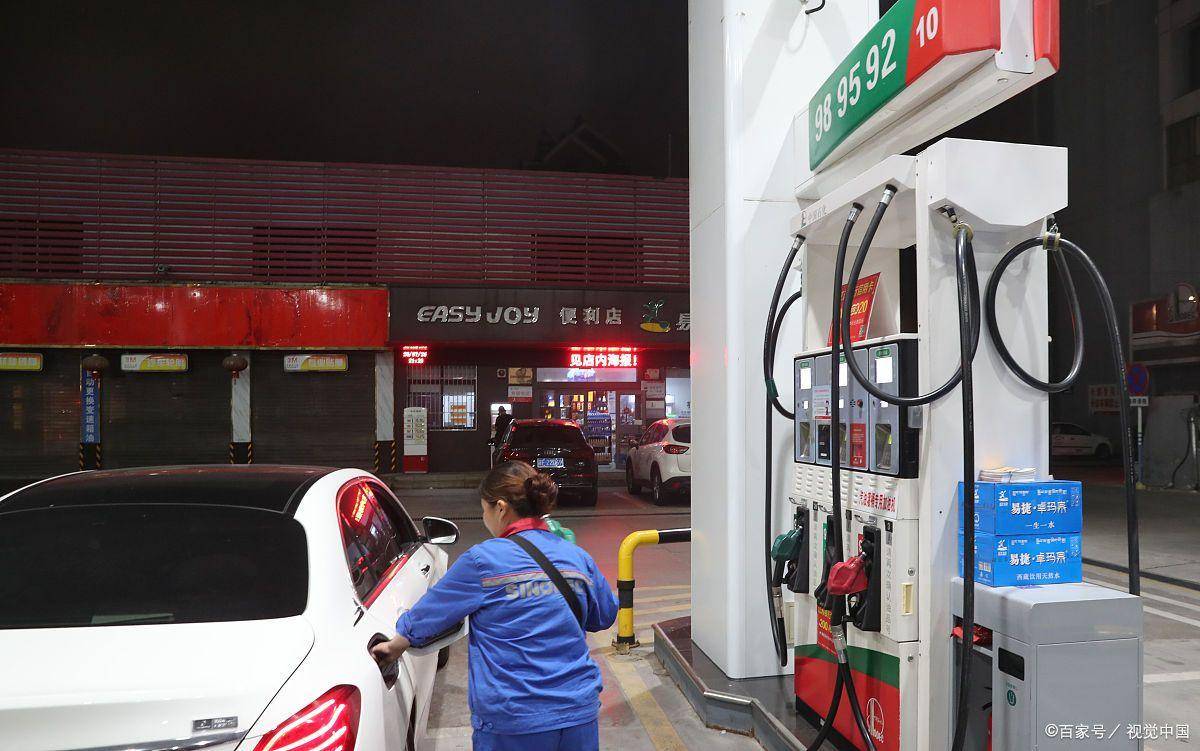
今日油价:1月2日92、95号汽油、柴油最新油价价格,今日油价下跌
Sou Hu Cai Jing· 2026-01-02 19:35
Core Viewpoint - The price of 92-octane gasoline in Shandong has decreased to 6.67 yuan per liter, a drop of 1.4 yuan compared to previous prices, leading to significant savings for consumers [1]. Price Trends - Throughout the year, gasoline prices have fluctuated significantly, with 25 adjustments made, resulting in an overall decrease of nearly 1,000 yuan per ton, translating to a reduction of 0.7 to 0.8 yuan per liter [1]. - In the second half of the year, there were 13 price adjustments, with only 2 increases, indicating a general downward trend in gasoline prices [1]. Regional Price Variations - There are notable differences in gasoline prices across various regions, with 98-octane gasoline priced at 9.1 yuan per liter in Shanghai and 7.7 yuan in Urumqi, reflecting a difference of 1.5 yuan due to transportation costs [1]. - Prices for 92-octane gasoline in different regions are as follows: - North China: Beijing 6.70, Tianjin 6.69, Hebei 6.69, Shanxi 6.66 [1] - East China: Shanghai 6.67, Jiangsu 6.68, Zhejiang 6.68 [2] - Central China: Hubei 6.71, Henan 6.71, Hunan 6.66 [3] - South China: Guangdong 6.73, Guangxi 6.77, Hainan 7.82 [4] Future Price Predictions - There is speculation that gasoline prices may rise again due to international factors, including production cuts by Saudi Arabia and Russia, and decreasing inventories in the U.S. [7]. - The upcoming price adjustment on the 6th could result in higher prices if crude oil continues to rise, making it advisable for consumers to fill their tanks beforehand [7].
华尔街日报:一盎司白银现在竟然比一桶石油更值钱
美股IPO· 2025-12-29 00:19
Core Viewpoint - The price of silver has surpassed that of oil for the first time in 45 years, driven by strong demand for the precious metal and an oversupply of oil leading to lower fuel prices [3]. Group 1: Silver Market Dynamics - Silver prices have reached a record high of $76.486 per ounce, significantly higher than the $56.74 per barrel price of U.S. crude oil [3]. - Demand for silver is robust from both investors and industrial buyers, particularly in sectors like solar energy, where nearly 30% of annual silver production is consumed [4]. - The competition for silver is intensifying as industrial buyers, including those in the solar panel industry, compete with investors who are shifting from gold to more affordable silver [4]. Group 2: Investment Trends - The surge in gold prices has led to increased silver imports in countries like India, where silver is favored by savers [5]. - Exchange-traded funds (ETFs) are also seeing a shift, with the largest silver ETF, iShares Silver Trust, priced at $71.12 per share, compared to the SPDR Gold Trust at $416.74 per share [5]. - The supply of silver is constrained, as it is primarily a byproduct of mining other metals, and the global pure silver reserves are nearly depleted [5]. Group 3: Price Predictions and Market Sentiment - Silver bulls argue that the gold-silver ratio is around 60, suggesting potential for silver prices to rise significantly [6]. - Conversely, some analysts predict a decline in precious metal prices, forecasting silver to drop to around $42 per ounce by the end of next year [7]. - The oil market is also under pressure, with expectations of a 21% drop in oil prices by 2025, which could further impact the silver market if the price ratio reverses [8].

加元持续拉锯震荡政策分化油价成核心博弈点
Jin Tou Wang· 2025-12-24 02:37
Core Viewpoint - The USD/CAD exchange rate is currently at 1.3676, reflecting a narrow fluctuation pattern driven by the divergence in monetary policies between the US and Canada, alongside factors such as international oil price volatility, economic fundamentals, and geopolitical risks [1][2]. Group 1: Monetary Policy Divergence - The Bank of Canada has completed four rate cuts totaling 100 basis points this year and maintained the overnight rate at 2.25% on December 10, indicating a neutral to hawkish stance that has led to market expectations of a rate hike in 2026 [1]. - In contrast, the Federal Reserve has implemented its third rate cut of the year in December, lowering the key interest rate to a range of 3.5%-3.75%, with internal dissent highlighting significant policy divergence within the Fed [2]. - The contrasting monetary policies of the two central banks are a primary driver of the ongoing pressure on the USD/CAD exchange rate [2]. Group 2: Economic Fundamentals - Canada's economy showed resilience with a 2.6% annualized GDP growth in Q3, reversing previous contractions, and a drop in the unemployment rate to 6.5%, the lowest in nearly 16 months [1]. - The Canadian dollar, as a commodity currency, is influenced by oil prices, which have declined by 15.2% since 2025, impacting Canada's oil export revenues and providing some support for the USD/CAD exchange rate [2]. Group 3: Technical Analysis and Market Sentiment - The USD/CAD exchange rate is currently characterized by bearish dominance but with slowing momentum, as indicated by technical indicators [3]. - Short-term price fluctuations are expected to remain within the range of 1.3740-1.3830, with key support at 1.3720-1.3680 and resistance at 1.3830 and 1.3890 [3]. - Some institutions are beginning to adopt a bullish outlook on the Canadian dollar, anticipating it could rise to 77 cents against the USD by 2026 due to factors such as narrowing interest rate differentials and enhanced economic resilience [3]. Group 4: Future Outlook - The future trajectory of the USD/CAD exchange rate will depend on multiple factors, including guidance from the Bank of Canada on interest rate hikes, core inflation data, and statements from Federal Reserve officials [3]. - Additionally, OPEC+ production policies, international oil price trends, and developments in US-Canada trade negotiations will be critical variables influencing the exchange rate [3]. - The ongoing divergence in monetary policies, oil price recovery, and the pace of Canada's economic recovery will determine the long-term direction of the exchange rate [3].