滞涨

Search documents
宁证期货今日早评-20250516
Ning Zheng Qi Huo· 2025-05-16 02:45
今 日 早 评 重点品种: 【短评-铁矿石】2025年5月上旬,重点统计钢铁企业钢材 库存量1606万吨,环比上一旬增加77万吨,增长5.0%;比年初 增加369万吨,增长29.8%;比上月同旬增加2万吨,增长0.1%; 比去年同旬减少22万吨,下降1.4%,比前年同旬减少155万吨, 下降8.8%。评:主力期价偏强震荡,量缩仓增。现阶段,得益 于市场情绪回暖,贴水修复逻辑支撑下矿价领涨产业链,短期 维持偏强运行,但鉴于需求趋于触顶,而供应维持高位,基本 面并未好转,上行驱动不强,高位谨慎看涨,谨防逻辑切换至 现实端。 期货从业资格号:F0255552 期货投资咨询从业证书号:Z0010784 姓名:曹宝琴 邮箱:caobaoqin@nzfco.com 期货从业资格号:F3008987 期货投资咨询从业证书号:Z0012851 姓名:蒯三可 邮箱:kuaisanke@nzfco.com 期货从业资格号:F3040522 期货投资咨询从业证书号:Z0015369 姓名:丛燕飞 邮箱:congyanfei@nzfco.com 期货从业资格号:F3020240 期货投资咨询从业证书号:Z0015666 【短评-黄金 ...
鲍威尔,重磅来袭
证券时报· 2025-05-13 04:24
鲍威尔正面临关键考验。 美联储官员们释放的政策信号将持续扰动市场。根据日程安排,周四,美联储主席鲍威尔将在一场活动上致开幕词,就美联储货币政策评估发表讲话。另 外,美联储副主席杰斐逊、美联储理事库格勒和沃勒也都将在本周陆续出席活动,或将释放最新的货币政策信号。 5月12日,美联储理事库格勒表示,通胀率仍高于美联储2%的目标。非住房市场服务的通胀率在三月仍维持在3.4%,表明持续存在的通胀压力。此外,花旗 将下一次美联储降息的预测时间从六月推迟至七月。 宏观数据方面,周二,美国劳工统计局将公布美国4月消费者物价指数(CPI),将反映特朗普政府的关税政策对美国通胀的最新影响,将给美联储决策者们 提供重要参考。 此外,腾讯、阿里巴巴、网易、京东等中国互联网科技巨头都将在本周陆续披露最新业绩。其中,关于AI的最新进展、资本开支等或将成为市场关注的焦 点。 美联储官员将密集发声 在美联储5月议息会议结束后,美联储官员们本周将密集出席活动,并发表讲话,或将释放重磅政策信号,备受市场关注。 北京时间5月15日(周四),美联储主席鲍威尔将在一场活动上致开幕词,就美联储货币政策评估发表讲话。 有分析称,在美联储的双重使命(充分 ...




刚刚!暴涨1000点
Zhong Guo Ji Jin Bao· 2025-05-12 15:44
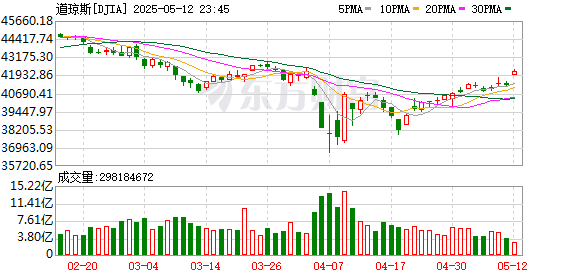
Group 1 - The easing of tensions in the US-China trade war has led to a significant rebound in global risk assets, with US stock markets experiencing substantial gains [3][5][6] - The Dow Jones Industrial Average surged approximately 1000 points, while the Nasdaq and S&P 500 indices rose over 3.5% and 2.7% respectively [1][6] - Market optimism is driven by hopes for a broader agreement between the two largest economies, resulting in a decline in gold and safe-haven currencies [3][5] Group 2 - The reduction of tariffs between the US and China exceeded expectations, with a framework for ongoing dialogue established, which is positively viewed by the stock market [5][7] - US Treasury Secretary Scott Bessenet announced that both countries agreed to lower "reciprocal" tariffs by 115% within 90 days, reducing US tariffs on Chinese goods to 30% and Chinese tariffs on US goods to 10% [7] - UBS expects that the uncertainty surrounding trade has peaked, predicting that by the end of the year, the actual tariff levels in the US will gradually decrease to around 15% [8] Group 3 - Major technology stocks saw significant increases, with Apple rising nearly 6% as it considers raising prices for its upcoming iPhone series while avoiding attributing the price hike to US tariffs [8][9] - Individual stock performances included Micron Technology up 8.57%, Amazon up 7.54%, and Tesla up 6.79%, reflecting a strong rally in the tech sector [9] - The Chinese stock index also rose over 4%, and the Chinese yuan appreciated by 400 points, indicating a positive market response in China as well [9]
鲍威尔,重磅来袭!
券商中国· 2025-05-12 15:41
鲍威尔正面临关键考验。 美联储官员们释放的政策信号将持续扰动市场。根据日程安排,周四,美联储主席鲍威尔将在一场活动上致开 幕词,就美联储货币政策评估发表讲话。另外,美联储副主席杰斐逊、美联储理事库格勒和沃勒也都将在本周 陆续出席活动,或将释放最新的货币政策信号。 5月12日,美联储理事库格勒表示,通胀率仍高于美联储2%的目标。非住房市场服务的通胀率在三月仍维持在 3.4%,表明持续存在的通胀压力。此外,花旗将下一次美联储降息的预测时间从六月推迟至七月。 宏观数据方面,周二,美国劳工统计局将公布美国4月消费者物价指数(CPI),将反映特朗普政府的关税政 策对美国通胀的最新影响,将给美联储决策者们提供重要参考。 此外,腾讯、阿里巴巴、网易、京东等中国互联网科技巨头都将在本周陆续披露最新业绩。其中,关于AI的 最新进展、资本开支等或将成为市场关注的焦点。 美联储官员将密集发声 在美联储5月议息会议结束后,美联储官员们本周将密集出席活动,并发表讲话,或将释放重磅政策信号,备 受市场关注。 北京时间5月15日(周四),美联储主席鲍威尔将在一场活动上致开幕词,就美联储货币政策评估发表讲话。 有分析称,在美联储的双重使命( ...

游客锐减、港口停滞、企业收缩,特朗普关税如何反噬美国“经济命脉”?
Di Yi Cai Jing Zi Xun· 2025-05-12 09:32
美国特朗普政府的关税措施不仅损害货物贸易,也波及占美国经济70%以上的服务业。 据标普全球,贸易政策的不确定性限制了美国服务业需求增长,客户在支出方面表现出一定的犹豫,4 月来自国外的新业务出现了自2022年11月以来最大的下降。这对商业预期产生了负面影响,企业商业预 期降至两年半以来的最低水平,也是自2020年疫情高峰期以来最弱的水平。 尽管需求疲软,服务提供商仍在4月大幅提高销售价格,导致产出价格通胀升至三个月高点。企业表 示,关税导致的供应链成本上涨是主要推手。 威廉姆森称:"关税导致进口价格上涨,也在推高服务业企业的成本,并通过价格上涨传递到消费者导 向行业,如餐饮和酒店。服务业的最终结果是增长停滞和通货膨胀上升的风险增加,或是滞涨。" 不确定的商业前景也打击了招聘活动,就业人数增速远低于历史平均水平。同时,输入成本仍处于较高 水平。企业普遍报告称,关税推高了供应商价格,而工资上涨进一步加剧了运营成本压力。 根据经济分析公司标准普尔全球(S&P Global),由于贸易政策的不确定性,4月美国服务业商业活动 的增长速度已回落至近一年半以来最慢的水平。 "目前,服务出口正以2022年以来从未有过的速度下 ...
国际金价持续走高,市场聚焦本周美联储会议,机构看好避险和滞涨仍是中长期黄金交易的核心
Sou Hu Cai Jing· 2025-05-06 02:33
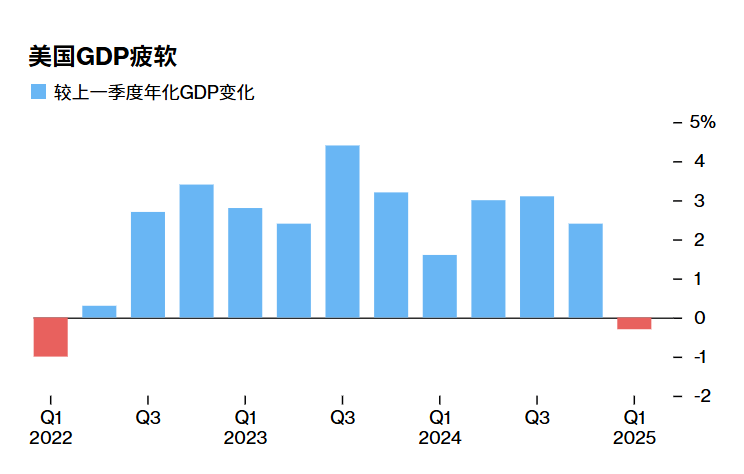
此外,本周美联储将公布利率决议。据每日经济新闻,当地时间5月7日(北京时间5月8日凌晨2: 00),美联储将公布最新利率决议,投资者希望美联储能够尽快降息。不过,目前市场普遍预计美联储 将在此次会议上维持利率不变,降息或出现在6月。 5月6日,国际金价持续走高,COMEX黄金涨逾2%至3390美元/盎司,现货黄金升至3380美元/盎司上 方。 受此拉动,黄金相关ETF纷纷走高,截至10:16,黄金ETF华夏(518850)涨2.32%;黄金股ETF (159562)涨4.01%,其持仓股四川黄金、华钰矿业、晓程科技、周大福等股纷纷走强。 消息面上,据新华社,美国商务部4月30日公布数据显示,2025年第一季度,美国国内生产总值 (GDP)环比按年率计算萎缩0.3%。这是2022年以来美国经济的最差季度表现。 华福证券表示,短期而言,美"对等关税"的潜在风险及不确定性引发市场避险情绪支撑金价,整体呈现 易涨难跌格局;中长期而言,全球关税政策和地缘政治的不确定性背景下,避险和滞涨交易仍是黄金交 易的核心,长期配置价值不改。 (本文机构观点来自持牌证券机构,不构成任何投资建议,亦不代表平台观点,请投资人独立判断和决 ...
今夜!美股惊魂!
Zhong Guo Ji Jin Bao· 2025-04-30 16:14
大家晚上好,已经开启假期模式了吗?今晚我们简单看点海外市场的消息。 美股惊魂 4月30日晚间,美股上演惊魂一刻,盘初出现全面抛售,由于一系列疲软的数据引发市场对经济放缓和顽固通胀的担忧,交易员情绪紧 张。 道指一度暴跌近800点,纳指一度跌近3%,随后上演深"V"走势,跌幅收窄,截至发稿,道指跌约200点,纳指跌约1.2%,标普500指数 跌约0.9%。 经济数据显示出悲观信号。ADP研究机构的数据显示,美国企业4月招聘速度放缓至九个月以来的最低水平,表明对劳动力的需求正在 减弱。美国第一季度国内生产总值(GDP)出现自2022年以来的首次萎缩,部分原因是关税生效前进口激增,也受到消费者支出放缓的 影响。同时,一项通胀指标加速上行。 Jonestrading的首席市场策略师迈克尔·奥鲁克表示:"经济数据低于预期,而GDP中的价格成分却高于预期,这引发了市场对'滞涨'的担 忧。虽然GDP数据只是略低于预期,但似乎存在企业在关税实施前提前进口以及库存积累的现象,这将在未来拖累经济增长。" 周三发布的报告在通胀方面也带来了一些缓解信号。一项剔除食品和能源的商品通胀指标今年首次出现下降。核心服务价格(不包括住 房和能 ...
华尔街又一机构“认栽” 汇丰大幅下调标普500指数目标点位
智通财经网· 2025-04-29 15:35
华尔街又一机构"认栽",这次是汇丰银行。 在这种环境下,汇丰建议投资者保持防御性持仓,偏好经济下行中抗压能力较强的行业,例如消费必需 品(如食品、日用品)与医疗保健。在滞涨时期,大宗商品与医疗行业的表现也通常优于大盘;相反,公 用事业和可选消费品公司往往表现不佳。 智通财经APP获悉,由于对美国经济增长放缓、通胀持续粘性以及债券收益率下滑的预期,汇丰周二宣 布将标普500指数的年底目标点位从6700点大幅下调至5600点。 这一决定与今年以来多家大银行因关税担忧而调低美股预期的动作一致。汇丰表示,在全球经济前景依 旧不明、关税政策仍具不确定性的情况下,建议客户采取防御性策略应对市场动荡。 汇丰美洲区股票策略主管Nicole Inui与分析师Preethkar Rajamani在报告中指出:"市场将在衰退和滞涨的 担忧之间来回震荡,直到贸易不确定性缓解、美联储降息、或通胀压力不再加剧。" 他们预计美联储将在6月启动降息周期,但指出通胀与关税方面的忧虑仍需数月时间才能消散。因此, 即使利率政策出现转向,市场仍会高度关注关键经济数据,并据此进行敏感反应。 他们表示:"如果硬数据转弱,市场将迅速进入'衰退交易'模式; ...

牛市趋势并未被打破 贵金属表现依旧受到市场瞩目
Sou Hu Cai Jing· 2025-04-29 06:16
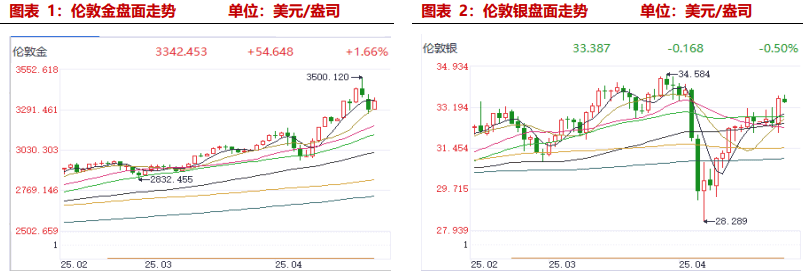
来源:银河期货 作者:银河期货 研报正文 第一部分 前言概要 【行情回顾】 4月,贵金属表现依旧受到市场瞩目。伦敦金上触历史新高3500.12美元/盎司,月涨幅7%;伦敦银受到黄金的托举 回到近期高位、但未能突破34.5附近的阻力,月跌幅2%。沪金触及836.3元/克的历史高点,月涨幅9%。沪银相对疲 软,月跌幅2.4%。 【市场展望】 往后看,各经济体对于关税的博弈仍有不断反复的可能,关税政策进展和美国经济基本面间的演绎节奏具有高度的 不确定性,预期和现实间的差距将成为贵金属价格波动的放大器,而黄金作为对冲滞涨风险的优质资产、且贵金属 当前牛市的趋势并未被打破,可仍以低多思路为主。 【策略推荐】 1.单边:延续低多思路。 2.套利:观望。 3.期权:领式看涨期权。 风险提示:央行购金不及预期,关税谈判进展超预期、美国经济韧性超预期、光伏需求不及预期。 第二部分 行情复盘与前瞻 一、行情回顾 4月,贵金属表现依旧受到市场瞩目。伦敦金从3122美元启动,中间受到流动性的拖累出现回调,而后开启快速拉 涨的走势,一度上触历史新高3500.12美元/盎司,月涨幅7%;伦敦银月初的回调更深,此后受到黄金的托举回到近 期 ...