美联储缩表

Search documents
又见暴跌,这波全球流动性杀什么时候结束?
Sou Hu Cai Jing· 2025-11-21 09:59
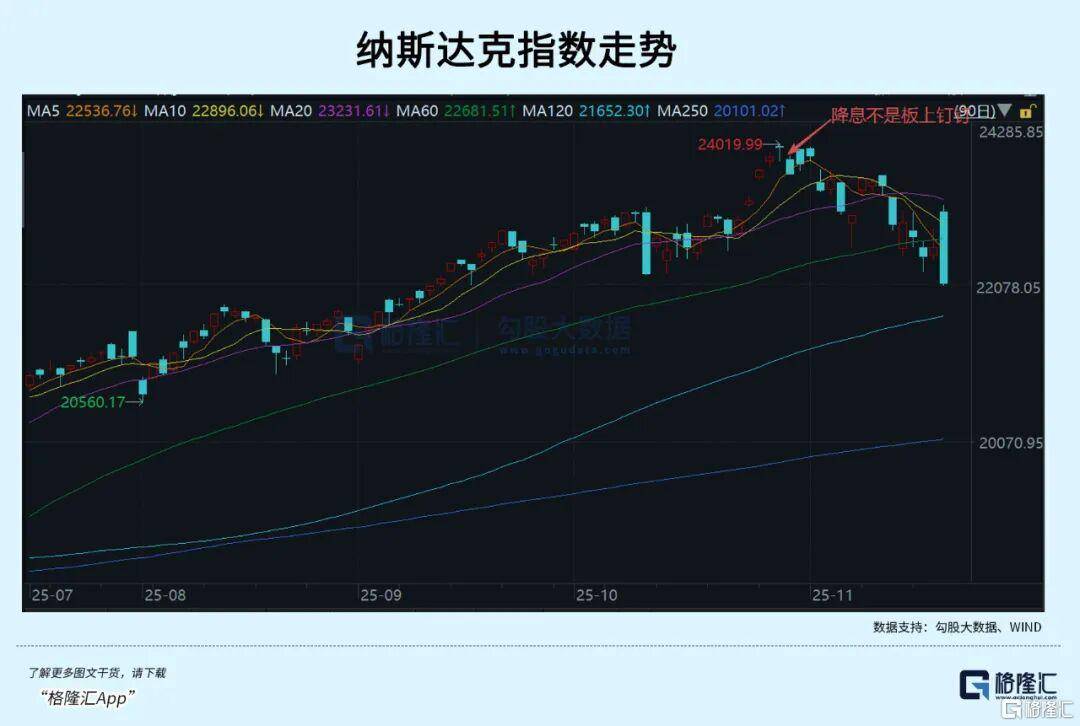
Core Viewpoint - The current global liquidity crisis is primarily driven by the U.S. government shutdown and the Federal Reserve's uncertain monetary policy, leading to widespread declines in various asset classes, including stocks, gold, and cryptocurrencies, while the U.S. dollar index rises above 100 [1][2][7]. Group 1: Causes of Global Liquidity Crisis - The liquidity crisis began with the U.S. government shutdown, which prevented the flow of funds into the market, causing short-term borrowing rates to spike [2][4]. - The Federal Reserve's meeting on October 30 further exacerbated the situation, as Chairman Powell indicated uncertainty regarding future interest rate cuts, which led to a loss of market confidence [2][6]. - The failure of the U.S. Senate to pass a funding bill on November 4 intensified market fears, resulting in a significant sell-off across various asset classes [4][5]. Group 2: Market Reactions and Implications - Following the government shutdown's resolution, the market initially rebounded; however, the lack of timely economic data and increasing divisions among Federal Reserve officials created further uncertainty [6][7]. - The announcement that the October non-farm payroll data would not be released until December contributed to a decline in the probability of interest rate cuts, with the likelihood dropping to 32% [7][9]. - The market's focus has shifted back to liquidity concerns, with the potential for a more severe downturn if economic data continues to show weakness [10][11]. Group 3: Future Outlook - The liquidity crisis is expected to end around mid-December, coinciding with the release of significant economic data, including employment reports, which are anticipated to be poor due to the government shutdown's impact [12][15]. - The Federal Reserve is likely to halt its balance sheet reduction by December 1, which may lead to a resumption of asset purchases if economic conditions worsen [13][14]. - The recovery of global liquidity could prompt investment opportunities across various markets, including U.S. stocks, A-shares, and Hong Kong stocks, depending on the timing and nature of the economic data released [16].

越跌越买!规模最大的恒生科技指数ETF、恒生互联网ETF连续16日获资金净申购
Ge Long Hui· 2025-11-21 01:56
Group 1 - The Hong Kong stock market opened lower today, with the Hang Seng Technology Index dropping by 2.21%, and the Hang Seng Internet ETF and Hang Seng Technology Index ETF falling by 2% and 1.6% respectively [1] - Despite the declines, there has been a net inflow of funds into the Hang Seng Technology Index ETF totaling 4.472 billion yuan over 16 trading days from October 30 to November 20, during which the index fell by 10.11% [1] - The Hang Seng Internet ETF also saw a net inflow of 2.518 billion yuan over the same period, despite a 10.24% decline [1] Group 2 - Recent adjustments in the Hong Kong stock market are attributed to factors such as the "AI bubble theory," tightening liquidity in the US market, and profit-taking by institutions after a more than 20% increase in the Hang Seng Technology Index this year [1] - The Hang Seng Technology Index has experienced a cumulative decline of over 18% since October 3, which may present a buying opportunity [1] - Positive factors include strong Q3 financial results and Q4 guidance from Nvidia, which may help alleviate concerns regarding the "AI bubble," along with Alibaba's upcoming financial report on November 25 [1] Group 3 - The Hang Seng Internet ETF has a weight of over 80% in leading internet stocks, with an AI content exceeding 90%, including major companies like Alibaba, Tencent, NetEase, JD.com, and Baidu [2]




11.20黄金连跳大跌90美金 继续争夺4100
Sou Hu Cai Jing· 2025-11-20 07:19
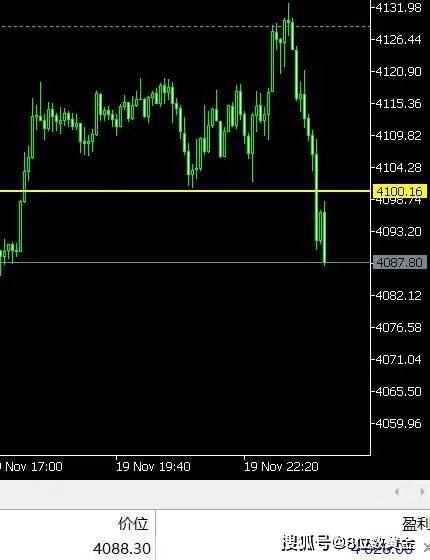
Core Viewpoint - Gold prices experienced significant volatility, with sharp declines following a period of high trading, indicating ongoing market adjustments and uncertainty in the economic landscape [1][12]. Market Performance - Gold saw a dramatic drop after reaching around 4129, falling below the 4100 mark, and subsequently rebounding to 4040 before facing further declines [5][7][12]. - The market is currently in a phase of rapid fluctuations, characterized by quick rises and falls, with adjustments being the primary focus [8]. Technical Analysis - The key resistance level is identified at 4100, with potential upward movement towards 4142 if broken [9]. - Conversely, if the price fails to maintain above 4100, further downward pressure is expected, with support levels at 4040 and 4000 [10][12]. Influencing Factors - Recent U.S. unemployment claims data showed significant revisions, indicating rising layoffs and increasing uncertainty, which has positively impacted gold prices [13]. - The narrowing trade deficit in the U.S. exceeded expectations, while the absence of key economic data for October has left the market in suspense regarding future Federal Reserve actions [13]. - Geopolitical factors, including easing tensions between the U.S. and Russia, have also contributed to the recent volatility in gold prices [13]. Upcoming Events - The upcoming non-farm payroll report is anticipated to provide critical insights into the labor market, which could further influence market dynamics and financial stability [14].
2025美元流动性的三维度观测
Sou Hu Cai Jing· 2025-11-19 07:16
Core Insights - The report analyzes the current state and future trends of US dollar liquidity through a three-dimensional observation matrix, focusing on the federal funds market, the repo market, and the offshore dollar market, indicating that while liquidity remains ample, structural pressures are building [1][3]. Group 1: Federal Funds Market - The core observation metric has shifted from "price" to "scale," with total reserves in the banking system reflecting the abundance of base dollars. As of September 2025, total reserves are maintained at $3.2 trillion, accounting for 12.9% of total bank assets, indicating a relatively ample liquidity condition [1][11]. - Despite the Federal Reserve's balance sheet reduction since June 2022, the use of reverse repo tools has buffered the impact, preventing a significant withdrawal of reserves from the banking system [1][11]. - Continuous balance sheet reduction, rising Treasury General Account balances, and the nearing exhaustion of overnight reverse repo tools indicate that reserves are under pressure and may approach the liquidity warning line set by the Federal Reserve [1][3]. Group 2: Repo Market - The repo market serves as a crucial hub for dollar liquidity, with the Secured Overnight Financing Rate (SOFR) and the behavior of primary dealers being key observation points. Recently, the spread between SOFR and the overnight reverse repo rate has widened, indicating tightening liquidity conditions [2][18]. - The ratio of primary dealer reverse repos to reserve balances has been increasing, suggesting a tightening of funding supply, although it has not yet reached crisis levels seen in past financial stress periods [2][18]. - The Federal Reserve's standing repo facility has been heavily utilized at quarter-end, highlighting vulnerabilities in the repo market during structural gaps [2][21]. Group 3: Offshore Dollar Market - The offshore dollar market has shown characteristics of "bondification" and "derivatization," with traditional bank credit declining and bonds and foreign exchange derivatives becoming the main drivers of credit expansion [2][25]. - Monitoring offshore dollar liquidity is challenging through quantity indicators; thus, the currency swap basis has become an important observation metric. A widening basis indicates dollar scarcity, while a narrowing trend since 2025 suggests maintained liquidity even under external shocks [2][30]. - The transition from LIBOR to SOFR as the primary pricing benchmark reflects a shift in global dollar pricing power from offshore to onshore markets, diminishing the relevance of LIBOR-related indicators [2][29].

美国政府关门36天!谁在阻碍特朗普政府?会爆发更大的危机吗?
Sou Hu Cai Jing· 2025-11-16 03:52
Core Points - The U.S. government shutdown has reached a record duration, surpassing the previous record of 35 days set in 2018, with the latest funding bill failing for the 14th time [1][6] - The shutdown is primarily due to a stalemate between the two parties over healthcare subsidies, with one side wanting to extend subsidies and the other aiming to cut spending and reduce staff [6][8] - Approximately 750,000 federal employees are on unpaid leave, and many Americans are struggling financially due to the lack of income, leading to increased reliance on food assistance [10] Economic Impact - The Congressional Budget Office estimates that the economic loss from the shutdown is about $7 billion for every four weeks, potentially reaching $14 billion if it lasts eight weeks [10] - The shutdown has led to increased liquidity pressure in the financial markets, with the Treasury General Account (TGA) balance rising significantly while normal government spending is halted [12] - Interbank borrowing costs have risen, with the Secured Overnight Financing Rate (SOFR) reaching 4.22%, indicating tight cash conditions in the banking sector [13] Market Reactions - The ongoing liquidity issues are affecting the stock market, which has been supported by a few leading AI companies [16] - The Federal Reserve's decision to halt balance sheet reduction in December is a response to the liquidity pressures caused by the shutdown [15] - The potential for a rapid release of funds into the market once the government reopens could create a rebound opportunity for the market [18]

暴跌才是最佳机会?比特币全线崩盘!市场被血洗后的“唯一活路”:这三个抄底条件缺一不可!
Sou Hu Cai Jing· 2025-11-14 07:01
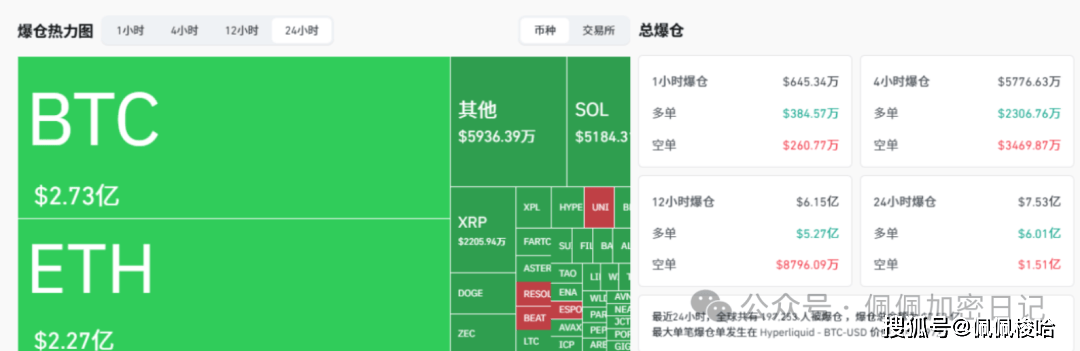
Core Insights - The recent market turmoil has led to a significant number of liquidations, with 197,244 individuals liquidated and a total liquidation amount of $753 million [1][2] - The decline in the stock market and Bitcoin's new lows indicate a challenging environment, with further analysis needed to determine potential support levels and rebound opportunities [1][6] Market Conditions - The recent drop in the market is attributed to a $125 billion U.S. Treasury auction absorbing liquidity and the Federal Reserve's lack of concrete actions regarding balance sheet reduction [3][11] - The stock market's correction, influenced by previous overextensions, has had a negative impact on the cryptocurrency market, which has been following the stock market's downward trend [4][5] Bitcoin Analysis - Bitcoin is currently in a consolidation phase, with a potential support range identified between $93,300 and $98,115, where a rebound is expected [6] - A short-term trading strategy suggests entering positions around $99,600, with a stop-loss below recent lows, while monitoring for potential rebounds above $101,600 [7][10] Ethereum Analysis - Ethereum has not reached new lows, with a recent minimum of approximately $3,154, indicating some support at previous low levels [10] - A trading strategy for Ethereum suggests entering positions in the $3,234 to $3,200 range, with a clear exit strategy if recent lows are breached [10] Market Sentiment - The current market sentiment is characterized by a self-fulfilling pessimism, where declining prices lead to increased fear, uncertainty, and doubt (FUD), making it difficult for the market to recover without significant capital inflows [5][14] - The market is showing signs of reluctance from investors to engage in secondary market activities, indicating a challenging environment for new investments [14]
币安研究:加密市场在 10 月经历去杠杆冲击后下跌 6.1%,11 月有望迎来情绪修复
Sou Hu Cai Jing· 2025-11-13 12:58
Core Insights - The cryptocurrency market experienced a 6.1% decline in October, marking the first "red October" since 2018, following a deleveraging shock [1] - Despite the overall market pressure, BNB rose by 6.2% due to the launch of popular projects and the tokenization of a money market fund by China Merchants Bank [1] - Major tokens such as SOL, ADA, and DOGE saw declines exceeding 10% [1] Market Performance - The total value locked (TVL) in DeFi decreased by 4.85% [1] - The market capitalization of stablecoins increased by 3.54% [1] - Institutional demand for ETH remains strong, with treasury holdings reaching 5% of total supply [1] Future Outlook - The report suggests that November may see a recovery in market sentiment, with attention on the potential benefits from the end of the Federal Reserve's balance sheet reduction and improvements in US-China relations [1]
美国流动性危机了吗?及美元流动性研究框架
2025-11-10 03:34
Summary of Key Points from the Conference Call Industry Overview - The discussion revolves around the **U.S. repurchase (repo) market** and its liquidity conditions, particularly in the context of recent fluctuations in repo rates and the Federal Reserve's monetary policy actions. Core Insights and Arguments 1. **Repo Rate Surge**: At the end of October, the U.S. repo rate surged to **47 basis points**, the highest since the pandemic, indicating significant liquidity pressure in the market [1][2][11]. 2. **Use of Fed's Standing Repo Facility**: The usage of the Federal Reserve's standing repo facility peaked at **$50 billion**, marking the highest level since its establishment in 2021, before declining significantly in the following days [2][21]. 3. **Market Composition**: The U.S. repo market consists of **money market funds, dealer banks, and hedge funds**, with funds flowing primarily through tri-party repos and bilateral delivery versus payment agreements [1][4]. 4. **Liquidity Distribution**: The repo market experienced two distinct phases during the Fed's balance sheet reduction, affecting liquidity distribution and borrowing costs among market participants [7][8]. 5. **Impact of Government Actions**: The recent U.S. government shutdown and Treasury bond issuance led to an increase in the Treasury General Account (TGA) balance, which in turn reduced bank reserves and affected the repo market dynamics [9][21]. 6. **End-of-Month Effects**: At month-end and quarter-end, dealer banks reduce their balance sheets to meet regulatory requirements, leading to increased borrowing costs for hedge funds and spikes in repo rates [10][11]. 7. **Misinterpretation of Liquidity Crisis**: Claims of a liquidity crisis among foreign banks' U.S. branches were deemed incorrect, as the observed decrease in their reserves was a natural outcome of reduced arbitrage activities rather than a liquidity shock [12]. 8. **Liquidity Definition**: Liquidity refers to the ease with which economic entities can obtain cash, and a liquidity crisis occurs when institutions struggle to access necessary cash [13][14]. 9. **Comparison of Liquidity Events**: The liquidity crisis in March 2020, triggered by the pandemic, was characterized by widespread asset sell-offs and a significant rise in the dollar's value, contrasting with the more contained liquidity pressures observed in recent months [17][18]. 10. **Future Repo Market Outlook**: The repo market's liquidity pressure is expected to ease, contingent on the reopening of the government and potential court rulings affecting TGA balances. The Fed may also consider resuming asset purchases if repo rates continue to rise significantly [21][22]. Other Important but Overlooked Content - **Arbitrage Mechanisms**: In normal conditions, the tri-party repo rate should lie between the Fed's overnight reverse repo rate (3.75%) and the standing repo facility rate (4%), ensuring that money market funds earn more than depositing with the Fed [5][6]. - **Market Resilience**: Recent fluctuations in the repo market have not significantly impacted broader asset classes, indicating a degree of resilience in the financial system [19]. - **Dollar Strength**: The recent strength of the dollar is attributed to various factors, including the Fed's stance on interest rates and positive economic data, rather than a direct liquidity crisis [24].
美元流动性的三维度观测
Sou Hu Cai Jing· 2025-11-09 08:35
Core Insights - The report by Industrial and Commercial Bank of China (Asia) establishes a "3×3 USD Liquidity Analysis Matrix" to systematically monitor changes in USD liquidity through three core markets: the federal funds market, the repo market, and the offshore USD market, using indicators of scale, price, and policy [1][2][3]. Federal Funds Market - The federal funds market is the cornerstone of USD liquidity, with total reserves reflecting the banking system's foundational liquidity. As of September 2025, total reserves are projected to be $3.2 trillion, accounting for 12.9% of total bank assets, indicating a still ample liquidity environment [1][3][13]. - The Federal Reserve's balance sheet reduction (QT) continues, but the Reverse Repo Program (RRP) serves as a buffer, keeping the federal funds rate stable within the policy range [1][3][13]. - The discount window is used cautiously due to the "stigma effect," typically only utilized during crises [1][17]. Repo Market - The repo market is a crucial liquidity hub, with attention on the Secured Overnight Financing Rate (SOFR) and the capacity of primary dealers. As of September 2025, the SOFR-ON RRP spread has widened to 16 basis points, indicating tightening liquidity conditions [2][20]. - The ratio of primary dealer reverse repos to reserves has risen to 0.88, reflecting accumulated pressure, though it remains below crisis levels [2][20]. - The Standing Repo Facility (SRF) usage reached a historical high in June 2025, highlighting the market's vulnerability to liquidity pressures [2][21]. Offshore USD Market - The offshore USD market is characterized by "bondification" and "derivatization," with cross-currency swap (CCS) basis as a key indicator. A narrowing CCS basis trend in 2025 suggests ample offshore liquidity [2][26][27]. - The use of central bank currency swaps and the FIMA repo facility are critical tools for maintaining global USD liquidity stability, with significant usage during systemic liquidity crises [2][35][38]. - The offshore market's liquidity is difficult to monitor through quantity indicators alone, as it relies heavily on cross-border borrowing and derivatives [2][29][31].


如何解读美国回购市场流动性收紧︱重阳问答
重阳投资· 2025-11-07 07:32
Core Viewpoint - The article discusses the tightening liquidity in the US repurchase market, highlighting the significant widening of the spread between the Secured Overnight Financing Rate (SOFR) and the Overnight Reverse Repurchase Rate (ONRRP) to 47 basis points, the highest since the pandemic began in 2020, and the surge in the usage of the Standing Repo Facility (SRF) to $50 billion, marking a new high since its establishment in 2021 [2][3]. Group 1: Causes of Liquidity Tightening - The liquidity tightening is attributed to a combination of the US government shutdown and month-end factors, with the usage of overnight reverse repos declining sharply after the Federal Reserve halted interest rate hikes and accelerated balance sheet reduction [3]. - The Treasury General Account (TGA) balance has risen to $1 trillion, significantly above the acceptable level of $850 billion, further draining liquidity from the repo market [3]. - The combination of reduced liquidity in the repo market and banks being more cautious in external financing due to regulatory requirements at month-end has led to the rapid widening of the SOFR and ONRRP spread [3]. Group 2: Current Market Impact - Despite the tightening liquidity in the repo market, there has not been a substantial impact on other financial markets, as the daily limit for the SRF is $500 billion, and the Federal Reserve can quickly respond to liquidity needs [4]. - Recent data shows that the SOFR and ONRRP spread has narrowed to 25 basis points, indicating a decrease in the usage of the SRF [4]. - The performance of risk assets has been more reflective of their inherent vulnerabilities, with notable declines in global risk asset prices, but short-term fluctuations in the money market are not expected to have a direct and lasting impact on stock prices [4].