AI革命

Search documents
多因素助推铜价迭创历史新高 股期标的同步飙升
Zhong Guo Zheng Quan Bao· 2025-12-30 23:53
Core Viewpoint - The copper market is experiencing a significant price surge, with LME three-month copper prices rising over 40% and reaching a historical high of $12,960 per ton, driven by macroeconomic factors and supply-demand dynamics [1][2]. Group 1: Price Performance - Since late November 2025, copper prices have accelerated, with LME three-month copper hitting a record high of $12,960 per ton on December 29 [2]. - The Shanghai copper futures also saw a significant increase, surpassing 100,000 yuan per ton and peaking at 102,660 yuan per ton [2]. - The non-ferrous metal sector has become a popular investment area, with the industry index rising over 92% in 2025, and leading companies like Zijin Mining and Jiangxi Copper seeing stock price increases of over 125% and 153%, respectively [2]. Group 2: Supply and Demand Dynamics - Analysts indicate that the tight supply of copper concentrate is a core driver of rising copper prices, exacerbated by U.S. tariff policies affecting price volatility and inventory levels [3][4]. - The demand for copper is expected to remain robust due to significant growth in AI data centers and global energy infrastructure, which is anticipated to offset declines in other sectors like real estate [5]. Group 3: Future Outlook - Institutions are optimistic about copper prices in 2026, predicting that the Fed's interest rate cuts and ongoing de-dollarization trends will support prices [6]. - The expected core trading range for Shanghai copper futures in 2026 is projected to be between 83,000 yuan per ton and 130,000 yuan per ton, while LME three-month copper is expected to range from $10,300 to $16,000 per ton [6]. - Key factors influencing copper prices include the commodity's monetary attributes, supply constraints, and structural demand growth driven by technological advancements and energy transitions [6][7].
多因素助推铜价迭创历史新高 机构认为后市仍将进一步上行
Zhong Guo Zheng Quan Bao· 2025-12-30 21:14
Core Viewpoint - The recent surge in copper prices, following record highs in gold and silver, is seen as a remedy for investors who missed earlier opportunities. The London Metal Exchange (LME) three-month copper price has increased by over 40%, making it a standout in the 2025 commodity market [1][2]. Group 1: Copper Price Surge - Copper prices officially began to accelerate from late November 2025, reaching a historical high of $12,960 per ton on December 29. The Shanghai copper futures also surpassed 100,000 yuan per ton, peaking at 102,660 yuan [2]. - The performance in the futures market has positively impacted the stock market, with the non-ferrous metal sector becoming a popular investment area. The non-ferrous metal industry index rose over 92% in 2025, with leading stocks like Zijin Mining up over 125% and Jiangxi Copper up over 153% [2][3]. Group 2: Market Predictions and Influencing Factors - Analysts predict that copper prices will continue to rise in 2026, driven by macroeconomic conditions and supply-demand dynamics. The first half of 2025 was influenced by tariff expectations, while the second half shifted focus to supply risks [3][5]. - The tight supply of copper concentrate is identified as a core reason for the price increase, exacerbated by U.S. tariff policies that have led to significant price volatility [3][6]. Group 3: Demand and Supply Dynamics - The current "copper rush" is attributed to both the monetary attributes of commodities and fundamental supply-demand factors. The global macro environment remains uncertain, but trends such as de-globalization and monetary expansion are driving commodity prices higher [4][5]. - Supply-side constraints, including frequent production disruptions and accidents in copper mines, have led to a significant reduction in expected copper concentrate output. Meanwhile, demand from sectors like AI data centers and energy infrastructure is expected to offset declines in traditional sectors [4][5]. Group 4: Future Outlook - Institutions are optimistic about copper prices in 2026, anticipating that the Federal Reserve's interest rate cuts and ongoing de-dollarization will support prices. The long-term tight supply of copper concentrate, coupled with production disruptions and U.S. scrap copper export regulations, is expected to further constrain supply [5][6]. - The demand for copper is projected to grow significantly due to the energy transition and AI expansion, with expectations for a price range of 83,000 to 130,000 yuan per ton for Shanghai copper futures and $10,300 to $16,000 per ton for LME three-month copper [5][6].
多因素助推铜价迭创历史新高
Zhong Guo Zheng Quan Bao· 2025-12-30 21:11
● 本报记者 马爽 "错过了上车金银的机会,或许买铜是一种补救方式。"近期,一则投资者的发帖在市场中引发共鸣。在 金银价格迭创历史新高之际,铜市已然接棒,开启"狂飙"模式,伦敦金属交易所(LME)三个月期铜累 计涨超40%,成为2025年大宗商品市场耀眼的明星之一。 这轮铜价的强势上行,不仅带动期货市场价格屡创新高,更传导至股市相关板块,带动产业链个股走 强,全球范围内的"抢铜狂潮"就此拉开序幕。展望2026年,多位业内人士认为,宏观环境、供需格局等 因素有望支撑铜价进一步上行。 股期标的同步飙升 从2025年11月下旬开始,铜价正式开启加速上涨模式,价格迭创历史新高。Wind数据显示,12月29 日,LME三个月期铜价格盘中一度触及12960美元/吨的历史新高。与此同时,近期,沪铜期货主力合约 价格在突破10万元/吨的关键关口后进一步攀升,最高触及102660元/吨。 期货市场的亮眼表现同步传导至股市,有色金属板块成为年度热门赛道之一。Wind数据显示,截至12 月30日收盘,申万一级有色金属行业指数2025年累计涨超92%;成分股方面,紫金矿业累计涨超 125%,洛阳钼业累计涨超202%,江西铜业累计涨超 ...
反内卷、抢存量、谋海外……2025中国快递10大瞬间
3 6 Ke· 2025-12-30 11:29
Core Insights - The express delivery industry is transitioning from a high-growth phase to a focus on efficiency and service competition, indicating a need for independent thinking and adaptation to new challenges [1] - The industry is experiencing a slowdown in growth rates, with the overall business volume growth dropping to 5% in November, down from 20% earlier in the year, suggesting a shift towards a more mature and stable growth phase [3] Group 1: Industry Trends - The "anti-involution" campaign initiated by the State Post Bureau aims to address the industry's low-price competition, leading to improved profitability for express companies, although some frontline outlets still face challenges due to rising costs [2] - The double eleven shopping festival saw a total of 139.38 billion packages collected, marking a 9% increase from the previous year, but the growth rate is slowing, indicating a potential shift in consumer behavior and market saturation [3] - The introduction of tax reporting requirements for online platforms starting October 1, 2025, will expose fraudulent activities such as order brushing, pushing the industry towards compliance and authenticity [5] Group 2: Company Developments - YTO Express launched its strategic hub, the Dongfang Tiandi Port, with an investment of 12.2 billion yuan, marking a significant step in its internationalization strategy and aiming to enhance its competitive edge in the logistics sector [6] - Shentong Express completed the acquisition of Daniao Logistics for 362 million yuan, enhancing its operational capabilities and positioning itself in the "quality express" market while Alibaba shifts its focus towards core strategic areas [7] - JD Logistics and SF Express are expanding their international operations, with JD launching a new self-operated B2C brand in Saudi Arabia and SF establishing international air routes, indicating a strong push towards global market penetration [14] Group 3: Technological Advancements - The integration of AI technologies in the express delivery sector is transforming operations, with applications in route optimization and operational efficiency, exemplified by YTO's "smart routing" system [9] - The rise of robotics in the industry is being observed, with advancements in sorting and delivery processes, although challenges remain in achieving efficiency comparable to human workers [15] Group 4: Market Dynamics - The frequent switching of return logistics among various express companies highlights the competitive nature of the market, with companies vying for the more profitable return business as opposed to standard deliveries [10] - The emergence of "sheep shearing" tactics among consumers exploiting platform loopholes poses a challenge for express companies, necessitating stricter regulations to protect the integrity of the logistics chain [12]



美股市值逼近70万亿美元,背后原因是什么
2 1 Shi Ji Jing Ji Bao Dao· 2025-12-30 02:30
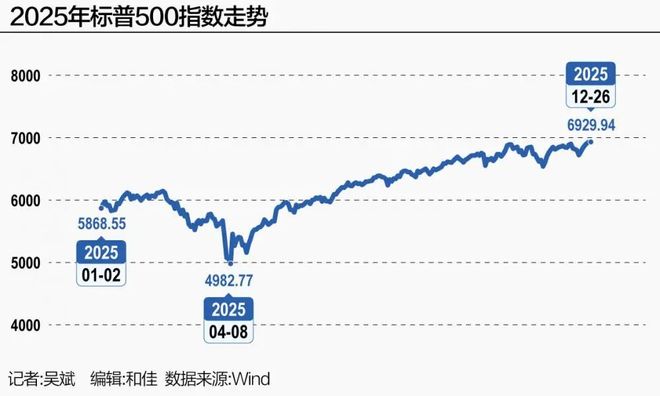
Market Overview - The S&P 500 index is approaching the 7000-point mark, with a significant market capitalization increase driven by the AI revolution and the Federal Reserve's easing policies, bringing the total market value close to $70 trillion [1][6] - In 2025, the S&P 500 index is expected to have a year-to-date increase of 17.82%, while the Nasdaq is projected to rise by 22.18%, indicating a strong performance across major indices [1] Valuation Concerns - The Buffett Indicator (total market capitalization/GDP) has reached 223%, significantly exceeding the 70%-80% range considered reasonable, raising concerns about potential market corrections if liquidity tightens or AI profits fall short [4] - Current high valuations are underpinned by several factors, including low risk-free rates, substantial share buybacks, and the dominance of passive investment strategies, which may distort price discovery in the market [6][7] AI Sector Dynamics - The AI sector is anticipated to remain a key driver of market performance in 2026, shifting focus from mere technological advancements to profitability and capital returns [9][10] - Companies are expected to demonstrate tangible revenue growth from AI investments, particularly in data centers and traditional industries, to maintain investor confidence [9][11] Investment Trends in Asia - As the U.S. economy slows and valuations remain high, Asian markets are becoming increasingly attractive to investors, with expectations of continued capital flow towards Asia in 2026 [13][14] - Factors driving this trend include a structurally weaker dollar, significant valuation differences between U.S. and Asian markets, and higher economic growth rates in Asia compared to the U.S. [13][14] Structural Opportunities in China - Investment opportunities in China for 2026 are identified in three key areas: self-sufficiency in hard technology, benefits from mergers and acquisitions in competitive industries, and growth driven by demographic changes [15] - The focus on sectors such as semiconductors, AI applications, and industries benefiting from consolidation is expected to yield high valuation premiums [15]

美股市值逼近70万亿美元,背后原因是什么
21世纪经济报道· 2025-12-30 02:23
Core Viewpoint - The article discusses the significant rise of the U.S. stock market, particularly the S&P 500 index nearing the 7000-point mark, driven by factors such as AI advancements and Federal Reserve policies, while also highlighting the potential risks associated with high valuations and market dynamics [1][4]. Group 1: Market Performance and Drivers - The U.S. stock market has seen a substantial increase, with the Dow Jones up 14.49%, S&P 500 up 17.82%, and Nasdaq up 22.18% year-to-date, indicating a strong performance over the past three years [1][5]. - Three main drivers of this market surge are identified: 1. Discount rate logic, where the market bets on lower risk-free rates and compressed risk premiums [5]. 2. Cash flow return through dividends and buybacks, which has created a "floor" effect on valuations [6]. 3. The liquidity illusion from passive investments, where high trading volumes in ETFs and index funds lead to a self-reinforcing cycle of stock price increases [6]. Group 2: Valuation Concerns and Risks - The Buffett Indicator (total market cap/GDP) has reached 223%, significantly above the 70%-80% range considered reasonable, raising concerns about potential market corrections if liquidity tightens or AI profits fall short [4][7]. - Current high valuations are contingent on several factors: a soft landing for the U.S. economy, successful interest rate cuts, and sustained profit margins, particularly for AI leaders [7]. - Two deep-seated risks are highlighted: 1. The relatively high U.S. Treasury yields compared to the low earnings yield of the S&P 500, leading to a near-zero or inverted equity risk premium [7]. 2. The current high index levels are largely driven by passive funds, creating a "virtual inflation" that could lead to rapid sell-offs if liquidity conditions change [7]. Group 3: AI's Role and Future Outlook - AI is expected to remain a key driver for the U.S. stock market in 2026, shifting from a focus on hardware to profitability and capital returns [9][10]. - The potential for AI to impact various sectors is noted, with expectations for capital expenditures in data centers to support performance [9]. - Risks associated with AI include valuation disparities among companies, tightening regulatory policies, and the potential for underwhelming commercial applications of AI technologies [10][11]. Group 4: Investment Opportunities in Asia - As the U.S. economy slows and valuations remain high, Asian markets are becoming increasingly attractive to investors, with several factors driving this trend: 1. A structural weakness in the dollar, leading to capital outflows from dollar assets [12]. 2. Significant valuation differences, with the S&P 500's TTM P/E at 29.5 compared to 14.1 for the CSI 300 [12]. 3. Higher economic growth rates in Asia, particularly China, which is projected to grow at around 5% in 2026 [12][13]. - The article emphasizes three structural opportunities in the Chinese market for 2026: 1. Focus on hard technology and self-sufficiency, particularly in semiconductors and AI applications [13]. 2. Benefits from mergers and acquisitions leading to industry consolidation and improved profitability [13]. 3. Growth opportunities driven by demographic changes and consumer trends, particularly in healthcare and entertainment sectors [13][14].

2025年指数投资回忆录:锚点里的价值碎片
Sou Hu Cai Jing· 2025-12-25 01:13
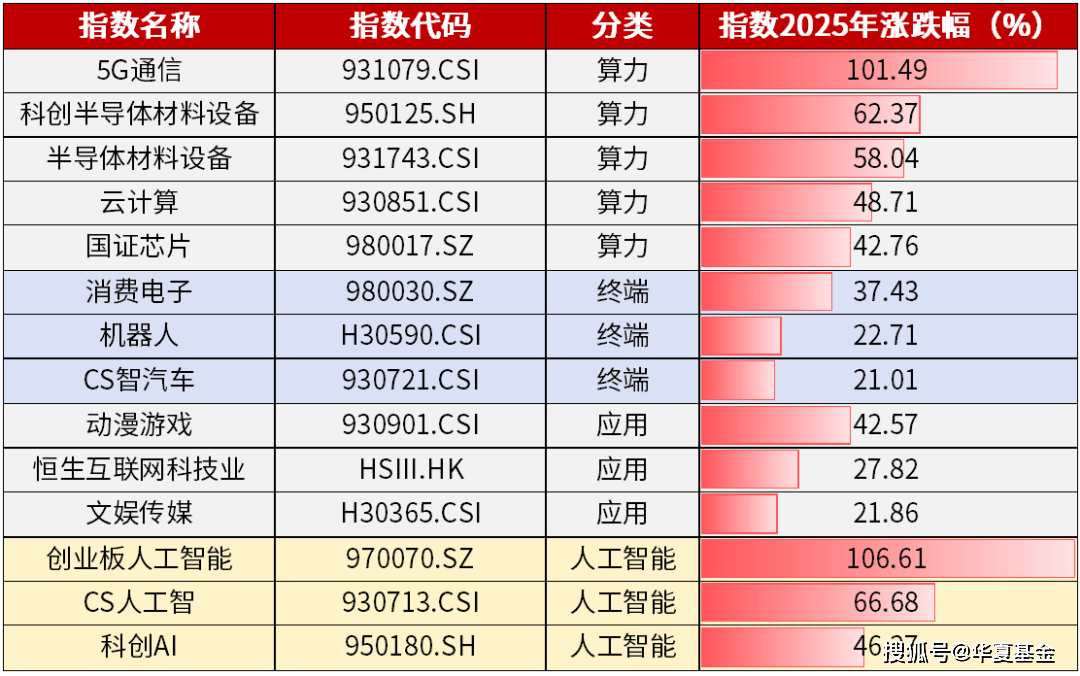
Core Insights - 2025 is recognized as a significant year for assets, with a shift in investment strategies focusing on industry trends, valuation restructuring, and global pricing power [1] - Understanding indices is crucial for grasping market consensus during specific periods, making it an essential skill for investors [1] Group 1: Seasonal Highlights - Spring marked a technological revaluation led by AI breakthroughs, reshaping market narratives around Chinese technology [2] - The AI and technology-related indices saw substantial annual gains, with the 5G communication index increasing by 101.49% and the AI-focused indices also performing strongly [3][6] - The introduction of new products related to the Sci-Tech Innovation Board simplified access to technology investments for the general public [4] Group 2: Mid-Year Developments - Mid-year saw a focus on dividend strategies, with low-volatility dividend indices gaining recognition for their stability and reliability [7] - The market acknowledged the value of dividends that do not rely on macroeconomic acceleration, with various categories of dividend assets being tailored to meet different investor needs [7] Group 3: Autumn Trends - Autumn brought renewed focus on fundamentals as US-China tariff negotiations began, with the AI industry and traditional sectors showing improved profitability [8] - The A-share market experienced significant trading volumes, with daily transactions exceeding 30 trillion, marking a ten-year high [8] Group 4: Year-End Reflections - By year-end, the Shanghai Composite Index briefly surpassed 4000 points, but concerns over AI sector bubbles and fluctuating monetary policy led to increased market volatility [9] - The A500 core index emerged as a balanced investment option, appealing to investors seeking stability amid market fluctuations [9] Group 5: Investment Trends - Industry-specific ETFs became the most attractive investment area, driven by technology and cyclical sectors, particularly in AI, semiconductors, and resource stocks [14] - The Hong Kong stock market attracted investor interest due to its differentiated value propositions, suggesting a strategy of gradual investment in undervalued assets [15] - Gold prices surged over 70% during the year, highlighting the importance of rational asset allocation in gold investments [16] - Broad-based indices like the CSI A500 and CSI 300 delivered solid returns, emphasizing the effectiveness of a balanced investment strategy [17] Group 6: Bond Market Insights - The bond ETF market saw significant growth, reflecting a strong demand for stable, low-risk assets despite the diminishing tax advantages of government bonds [18] Group 7: Future Outlook - The consensus around indices indicates a collective understanding of market dynamics, with ETFs experiencing rapid growth [19] - The narrative around AI technology is expected to continue evolving, with potential applications across various industries anticipated in 2026 [22] - The Hong Kong market presents promising opportunities, particularly in technology, consumer goods, and high-dividend stocks [22] - A diversified and balanced asset allocation strategy is projected to become increasingly important in the face of market uncertainties [23]
【招银研究|2026年度展望②】海外宏观与策略:美强欧弱、美股缓升
招商银行研究· 2025-12-23 09:22
Overview - The article presents a macroeconomic outlook for 2026, highlighting a "strong US and weak Europe" scenario, with monetary policies diverging as the US is expected to lower rates while Europe maintains its stance [1][2]. Group 1: US Economic Outlook - The US economy is projected to maintain steady growth, supported by fiscal measures during the midterm election year, with GDP growth expected at 4.8% [2][5]. - Consumer spending is anticipated to rise, with retail sales growth reaching 4.5%, driven by strong consumption policies [2][5]. - Fixed asset investment is expected to recover to a growth rate of 1.8%, bolstered by increased fiscal spending and major project initiations [2][5]. - Inflation is projected to be mild, with CPI at 0.5% and PPI at -1.4%, leading to a nominal GDP growth of 4.3% [2][5]. Group 2: Monetary and Fiscal Policy - Fiscal policy is expected to become more proactive, with a target deficit rate maintained at 4.0%, corresponding to a deficit scale of 5.85 trillion [3]. - The total fiscal expenditure is projected to be 43 trillion, an increase of 1.6 trillion from the previous year, with potential for additional tools based on economic conditions [3]. - Monetary policy is anticipated to be moderately accommodative, with a possible OMO rate cut of 10 basis points to 1.3% and a reserve requirement ratio cut of 50 basis points [3]. Group 3: Capital Market Trends - The domestic stock market is expected to grow, driven by improved liquidity and performance, with A-shares continuing to outperform [4]. - The bond market may experience low volatility, with the 10-year government bond yield expected to rise slightly to 1.8% [4]. - In the international market, the 10-year US Treasury yield is projected to decline to around 4.0%, while US stocks and Hong Kong stocks are expected to rise [4]. Group 4: Global Economic Dynamics - The article emphasizes a continued divergence in economic performance, with the US benefiting from trade policies while Europe and Japan face challenges [1][8]. - Japan's economy may face stagnation due to inflation pressures, potentially leading to interest rate hikes, contrasting with the US and European central banks [1][8]. - The overall global liquidity may be impacted by Japan's monetary policy shifts, which could lead to renewed volatility in financial markets [1][8].
有色ETF华宝(159876)创上市新高!山东黄金领涨超4%!机构:有色金属正在经历爆发性的一年
Xin Lang Cai Jing· 2025-12-23 02:45
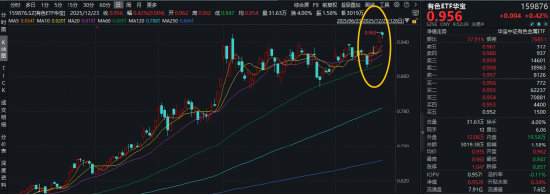
Core Viewpoint - The non-ferrous metal sector continues to surge, with the largest non-ferrous ETF, Huabao (159876), reaching a new high, up over 0.6% in intraday trading on December 23 [1][9]. Group 1: Market Performance - Leading gold stocks such as Shandong Gold rose over 4%, while Yunnan Zinc Industry and Zhongjin Gold increased by more than 1% [3][11]. - The international prices of gold and silver have reached historical highs, driven by geopolitical tensions that have increased demand for safe-haven assets [3][11]. - Year-to-date, gold prices have surged over 60% [3][11]. Group 2: Economic Factors - Recent strength in gold prices is attributed to the December interest rate cut, higher-than-expected unemployment rates, and lower-than-expected CPI, which have raised expectations for further rate cuts in January [4][12]. - The long-term outlook for gold prices is positive due to a low current gold reserve in China and a trend of central bank gold purchases [4][12]. Group 3: Future Trends in Non-Ferrous Metals - By 2025, metals such as copper, aluminum, cobalt, and lithium are expected to perform well, driven by three main factors: energy transition, AI revolution, and strategic reserves amid global competition [5][12]. - The duration of the super cycle for non-ferrous metals will depend on the recovery of the US dollar's credit, progress in strategic reserves, and the effectiveness of "anti-involution" policies [5][12]. - The upcoming "spring market" presents opportunities for investors, supported by a weak dollar cycle, policy backing, and industrial upgrades [5][12]. Group 4: Investment Strategy - A diversified investment approach through the Huabao non-ferrous ETF (159876) and its linked funds is recommended to capture the beta performance across the non-ferrous metal sector [6][12]. - This ETF covers a wide range of industries including copper, aluminum, gold, rare earths, and lithium, which helps in risk diversification compared to investing in single metal sectors [6][12].



直击2025证券时报分析师年会!投研天团苏州论剑
券商中国· 2025-12-19 03:53
Core Viewpoint - The 2025 Securities Times Analyst Annual Conference and Best Analyst Awards Ceremony was held in Suzhou, focusing on enhancing financial service quality and supporting the development of the real economy [2][4]. Group 1: Event Overview - The conference gathered over 60 securities firms, nearly 100 listed companies, and more than 300 financial institutions, totaling around 2,000 attendees [4]. - Keynote speeches were delivered by prominent figures, including the Chief Economist of Changjiang Securities and the Chairman of Jiemai Technology [4]. - The main forum emphasized the importance of financial services in supporting the real economy, with subsequent specialized forums addressing hot investment topics [4]. Group 2: Best Analyst Awards - The 2025 Best Analyst Awards were announced, showcasing a strong lineup of analysts in the Chinese securities research field [5]. - The Superior Super Research (SSR) team award was given to top firms including Changjiang Securities, GF Securities, and others, highlighting their industry influence [6]. - In macroeconomic research, GF Securities' research team led by Guo Lei won first place, followed by teams from Huachuang Securities and others [6]. Group 3: Investment Strategy Discussion - From December 18 to 19, top analysts discussed macroeconomic trends and investment strategies for 2026 with representatives from major investment institutions [8]. - Guo Lei noted two key characteristics for 2025's pricing: the rise of global narratives and the differentiation of economic fundamentals, with precious metals and emerging market stocks expected to perform well [8]. - Looking ahead to 2026, Guo Lei predicted a convergence of global narratives and a narrowing of domestic economic disparities, with potential for improved investment conditions [9].