
价值投资

Search documents
中泰资管田瑀:AI时代的价值投资和科技投资并不对立 价值判断需满足三个条件
Zhi Tong Cai Jing· 2025-11-11 12:08
Group 1 - The differentiation in the market this year has sparked discussions on the relationship between value investing and technology investing, suggesting they are not mutually exclusive [1][6] - Value investing can encompass technology sectors as long as certain criteria are met, such as the ability to assess long-term demand, business models, and competitive advantages [1][4] - The development of AI is expected to accelerate demand growth in the semiconductor industry, which remains stable in its business model despite technological changes [1][6][22] Group 2 - The semiconductor industry, particularly wafer foundry and storage sectors, is seen as having a strong potential for growth due to AI's increasing computational demands [1][6][28] - AI has changed the computing paradigm, increasing the need for storage capacity and bandwidth, which has become a bottleneck in the industry [1][30][31] - The shift towards domestic semiconductor production in China is driven by the need for self-sufficiency, creating opportunities for local companies to develop competitive advantages [1][34][35] Group 3 - The slowing of Moore's Law is a recognized phenomenon, indicating that advancements in semiconductor manufacturing will occur at a slower pace [1][38][41] - The semiconductor manufacturing industry may evolve into a slower-changing sector, with challenges in scaling production and enhancing chip capabilities [1][42] - The importance of deep research and understanding of the semiconductor industry is emphasized, as it is crucial for evaluating business models and investment opportunities [1][19][21]
侃股:股市已进入年报行情初期
Bei Jing Shang Bao· 2025-11-11 11:38
Group 1 - The core viewpoint emphasizes that the expectations for annual reports are increasingly influencing stock prices, with companies showing improved performance attracting more investor interest [1] - The third-quarter report serves as a precursor to the annual report, shaping investors' outlook on final annual performance, where positive expectations can lead to increased attention from investors [1] - The shift from short-term trading strategies to long-term value investing is highlighted, as investors recognize that a strong annual report reflects not only past performance but also future growth potential [1] Group 2 - Investors are now focusing more on future expectations, including industry trends, product development, and market share expansion, which can lead to higher valuations for companies with growth potential [2] - This shift indicates a greater emphasis on risk-reward ratios and a re-evaluation of long-term returns, where companies that can navigate future uncertainties may offer substantial investment opportunities [2] - Investors are encouraged to adjust their strategies by enhancing industry research and understanding a company's strategic planning and innovation capabilities to assess future positioning [2] Group 3 - Maintaining rationality and patience is crucial during the initial phase of the annual report season, as stock prices may fluctuate due to differing market perceptions, but long-term investment principles should be upheld [3]
巴菲特谢幕前狂囤现金:3800亿弹药瞄准何处?
Sou Hu Cai Jing· 2025-11-11 10:31
文/李悦 "我要'安静辞职'了。" 当地时间11月10日,巴菲特(Warren Buffett)在感恩节致股东信中,用英式幽默宣布了一个时代的终结——他将不再撰写伯克希尔(Berkshire Hathaway)的年度报告,也不再在股东大会上发表长篇讲话。 这意味着,那封每年被全球投资者奉为"投资圣经"的致股东信,将止于第60个年头。 而真正的传承早已在静默中完成,今年年底阿贝尔(Greg Abel)即将接过权杖,掌舵伯克希尔。对于阿贝尔的投资风格,前海开源基金首席经济学 家、基金经理杨德龙对和讯网表示,相较于巴菲特,阿贝尔年纪轻一些,对于新科技的接受程度会更高一些,所以在投资方向上可能会偏向巴菲 特不太擅长投资的一些科技领域。 但质疑声从未停止。5月巴菲特宣布交棒计划后,伯克希尔股价应声下跌,反映出市场的深层忧虑。 杨德龙认为,投资者主要担心的是,巴菲特退休之后,阿贝尔能否延续巴菲特的风格并带领企业发展。另外,未来伯克希尔能不能复制过去60年 的投资奇迹,也存在很大的不确定性。 01 告别时刻 过去近60年里,巴菲特的年度致股东信一直是投资界的"必读经典",影响着全球无数投资者的决策。 当地时间11月10日, ...

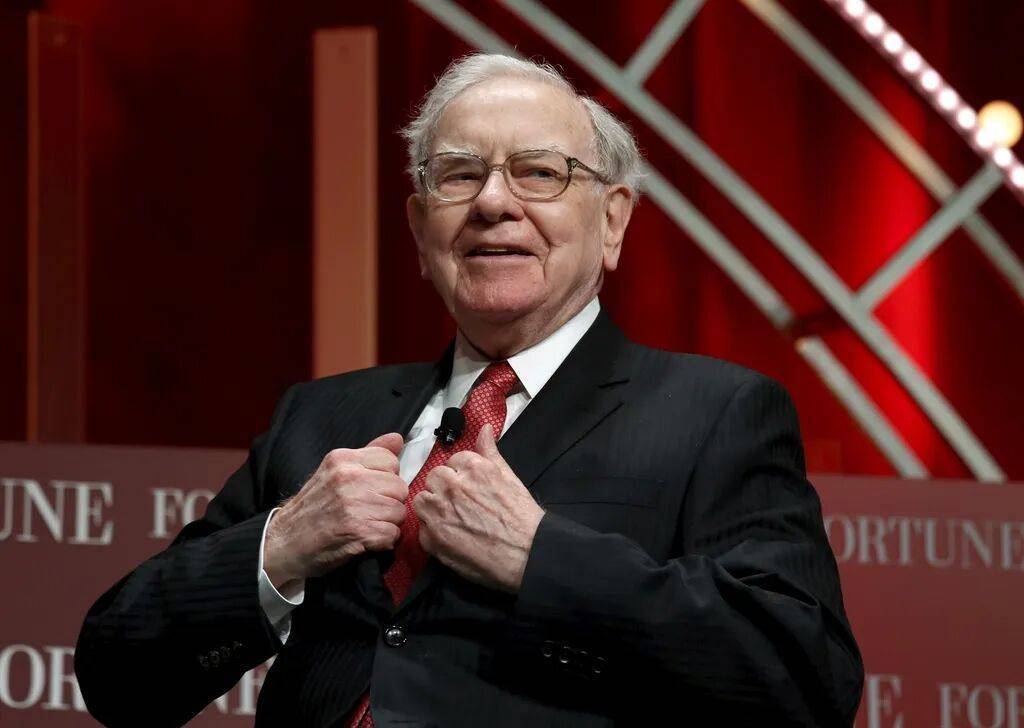
巴菲特价投核心是什么?普通人应如何借鉴?价投合不合适大A?
Sou Hu Cai Jing· 2025-11-11 10:07
Core Insights - The article discusses the challenges ordinary investors face in adopting value investing strategies, emphasizing that understanding both external techniques and internal mindset is crucial for success [1][6]. Group 1: Misconceptions about Value Investing - A common misconception is that value investing simply involves holding stocks for a long time, without considering the importance of the entry point [3]. - The timing of stock purchases is critical; buying at high prices can lead to losses despite holding for years [3][4]. - Investors often misunderstand dividends, thinking that dividend payments equate to profit, while failing to recognize the impact of stock price adjustments [3]. Group 2: Importance of Growth Potential - Companies must demonstrate growth potential for value investing to be effective; high dividend yields in declining industries can be misleading [4]. - Growth potential should be assessed from both the macroeconomic environment and the company's individual capabilities [4]. Group 3: Internal Mindset and Emotional Resilience - Emotional resilience and the ability to withstand market fluctuations are essential components of successful value investing [6][8]. - Investors must maintain confidence during market downturns and avoid the temptation to sell during short-term volatility [6][8]. - The mindset to resist chasing stocks during upward trends is equally important to avoid missing out on long-term gains [6][8]. Group 4: Conclusion on Value Investing in A-Share Market - The article concludes that the A-share market is not inherently unsuitable for value investing; rather, the issues lie in investors' understanding and execution of the strategy [6].

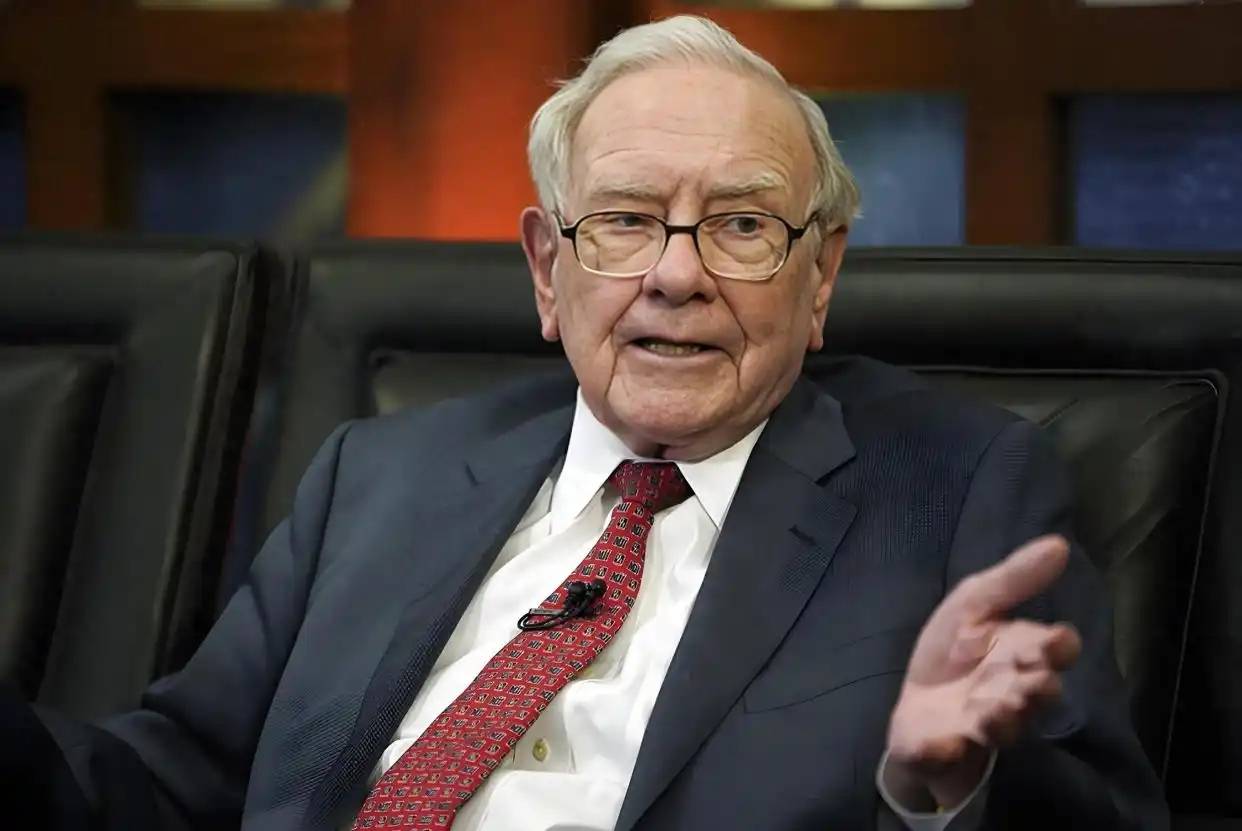
巴菲特谢幕前狂囤现金:3800亿弹药瞄准何处?
和讯· 2025-11-11 10:06
Core Viewpoint - Warren Buffett announced his retirement from writing Berkshire Hathaway's annual report and delivering long speeches at shareholder meetings, marking the end of an era for the company and its investors [2][3][6]. Group 1: Farewell Moment - Buffett's annual letters to shareholders have been considered an "investment bible" for nearly 60 years, influencing countless investors globally [5]. - He will continue to write his annual "Thanksgiving letter," which has been a tradition since 1965, expressing his appreciation for Berkshire's shareholders [7]. Group 2: Financial Performance - Berkshire Hathaway reported impressive third-quarter results with total revenue of $94.972 billion and net profit of $30.796 billion, a 17% year-over-year increase [11]. - The company's cash reserves reached a record $381.67 billion, reflecting Buffett's cautious approach to accumulating capital in the current market environment [11]. Group 3: Succession Planning - Greg Abel, aged 63, is set to succeed Buffett as CEO by the end of the year, marking the beginning of the "Abel era" at Berkshire Hathaway [12][13]. - Buffett praised Abel's management skills and deep understanding of the insurance business, indicating confidence in his ability to lead the company [13][16]. Group 4: Investment Philosophy - Abel shares a similar long-term investment philosophy with Buffett, emphasizing the importance of understanding a company's long-term vision and risks [17]. - Analysts suggest that Abel may be more open to investing in technology sectors, which Buffett traditionally avoided, due to his younger age and different perspective [17][18].
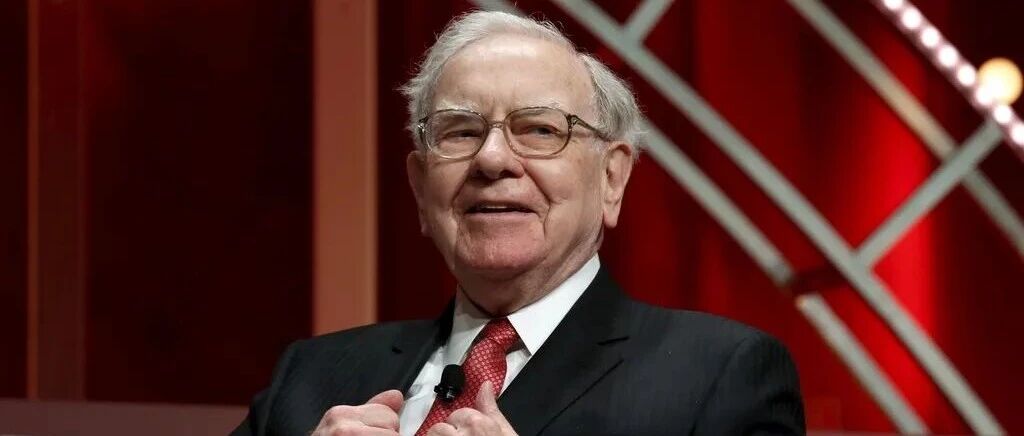
杨德龙:股神巴菲特正式退休 但价值投资理念历久弥新
Xin Lang Cai Jing· 2025-11-11 10:01
Group 1 - Warren Buffett, at 95 years old, is preparing to retire as CEO of Berkshire Hathaway, transferring his $149 billion fortune to family foundations while retaining enough shares to support successor Greg Abel [1][3] - Buffett will no longer write the annual shareholder letters, which are highly regarded by investors, and Abel will take over this responsibility along with hosting future annual meetings [3] - Berkshire Hathaway's third-quarter operating profit increased by 34% year-over-year, with a record cash holding of $381.7 billion, reflecting a cautious investment strategy amid high market valuations [3] Group 2 - The A-share and Hong Kong markets have experienced volatility, influenced by the performance of major U.S. tech stocks and profit-taking in previously high-flying sectors [4] - The market has seen a rotation from technology stocks, referred to as "small growth stocks," to traditional sectors like consumer goods, which are termed "old growth stocks," indicating a shift in investor sentiment [4] - Despite short-term challenges, the long-term investment potential of strong consumer brands remains, suggesting that new funds may seek opportunities in undervalued traditional stocks [4][6] Group 3 - The current bull market is characterized by a concentration of funds in technology stocks, with expectations that as the market stabilizes above 4000 points, other sectors will also see upward movement [5][6] - Investors are advised to balance their portfolios, taking profits from high-performing tech stocks to invest in traditional sectors like consumer goods and renewable energy, ensuring a defensive position during market rotations [6] - The overall market sentiment remains positive, with expectations for improved profitability and market performance in the latter half of the bull market cycle [6]
“股神”巴菲特谢幕信:从年底起“安静退场”
Xin Lang Cai Jing· 2025-11-11 08:30
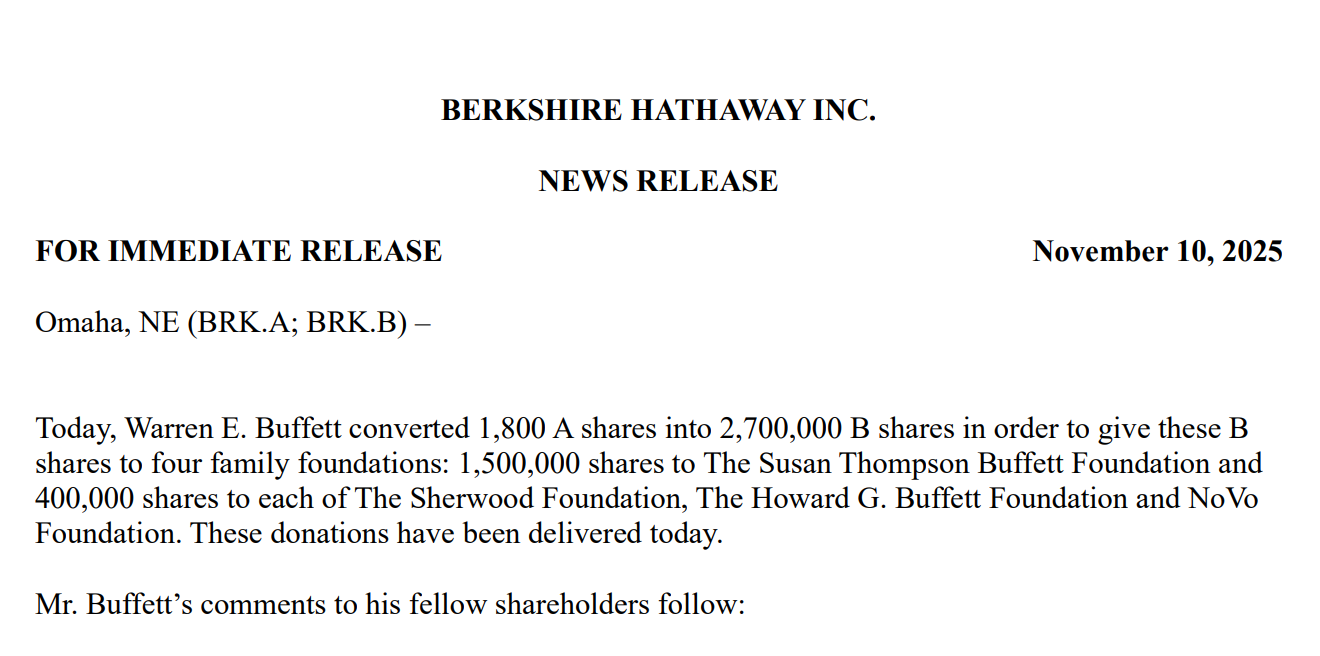
Core Insights - Warren Buffett's recent letter marks his formal announcement of a "quiet exit" from Berkshire Hathaway, indicating he will no longer write annual reports or speak extensively at shareholder meetings [3] - The letter, approximately 8 pages long, focuses on personal reflections rather than company performance, highlighting his childhood experiences, friendship with Charlie Munger, and deep affection for Omaha [3] - Buffett praised his successor, Greg Abel, stating that Abel's understanding of the business exceeds his current level, and he predicts that Berkshire will only need "5-6 CEOs" to sustain itself for another century [3] Donations and Philanthropy - On November 10, Buffett converted 1,800 shares of Class A stock into 2.7 million shares of Class B stock to donate to four family charitable foundations, with a total value exceeding $1.3 billion (approximately 9.5 billion RMB) [4] - The donations include 1.5 million shares to the Susan Thompson Buffett Foundation and 400,000 shares each to the Sherwood Foundation, Howard G. Buffett Foundation, and NoVo Foundation [4] - Buffett emphasized the importance of allowing his children, aged 67 to 72, to manage the majority of his estate distribution, avoiding future reliance on alternate trustees [4] Company Background - Berkshire Hathaway, under Buffett's leadership, has transformed from a struggling textile company into one of the world's most influential investment holding companies, with a market value exceeding $1 trillion by November 2025 [6] - The company holds significant stakes in major corporations such as Apple, American Express, Coca-Cola, and Occidental Petroleum, alongside fully owning diverse businesses like GEICO insurance and BNSF railway [6] - Buffett's investment philosophy, which includes value investing, long-term holding, and the concept of economic moats, has influenced generations of investors globally [6]
股神谢幕:巴菲特的传承、失误与伯克希尔的百年蜕变
Sou Hu Cai Jing· 2025-11-11 08:00
Core Insights - Warren Buffett is set to step down from Berkshire Hathaway after 61 years, marking the end of an era with a letter reflecting gratitude and wisdom [2] - The transition of leadership to Greg Abel signifies a blend of triumphs and challenges in the company's history [2] Company Evolution - Berkshire Hathaway began as a textile company in 1839, facing significant challenges by the time Buffett took over in 1965, including a 10-year decline in shareholder equity and losses exceeding $10 million [3] - Buffett's transformative strategies included acquiring an insurance company in 1967, investing in Coca-Cola in 1988, and acquiring Burlington Northern Santa Fe Railway in 2010, leading to a diversified empire across various sectors [3] Current Challenges - As of 2025, Berkshire's market capitalization is approximately $1.07 trillion, with a stock price increase of less than 10% since the beginning of the year, underperforming compared to major indices [4] - Following the announcement of Buffett's retirement, the stock price has decreased by 7.93%, contrasting with a 20.15% rise in the S&P 500 during the same period, raising questions about the sustainability of the "Buffett premium" [4] - Berkshire's cash reserves have reached $354.3 billion, accounting for 29% of total assets, presenting a challenge for the incoming leadership to effectively utilize these funds [4] Lessons from Buffett's Career - Buffett has openly discussed his investment mistakes, which have contributed to the maturation of Berkshire's investment logic [5][6] - Key mistakes include emotional decision-making in acquiring Berkshire's textile operations, misjudging trends with Dexter Shoe Company, and the consequences of blind pursuit of high valuations in Kraft Heinz [7][8][10] - Buffett's experiences highlight the importance of rational decision-making, timely corrections, and understanding one's investment circle of competence [11][12] Leadership Transition - Greg Abel, the incoming CEO, has a background in accounting and has been with Berkshire since 1992, demonstrating a track record of successful management and strategic acquisitions [12][13] - Buffett has expressed confidence in Abel's ability to manage the company, emphasizing a shared philosophy of cost control and prudent management [14][16] Buffett's Final Reflections - In his farewell letter, Buffett shared insights on wealth, life lessons, and the importance of learning from past mistakes, urging investors to remain optimistic about Berkshire's future [16][17] - He acknowledged the potential risks associated with leadership transitions and the need for careful management of executive health and compensation disclosures [18] Conclusion - Buffett's departure marks a significant transition for Berkshire Hathaway, but the company's foundational principles and investment strategies are expected to endure under Abel's leadership [19][20] - The future success of Berkshire will depend on its ability to adapt to market conditions while maintaining its established investment philosophy [20]

一个时代的落幕
Xin Lang Cai Jing· 2025-11-11 07:56
Core Points - Warren Buffett announced his retirement as CEO of Berkshire Hathaway, marking the end of an era in investment management [1][2][3] - Buffett reflects on his 80-year investment journey, attributing part of his success to luck and the historical context of his upbringing [4][5][10] - He emphasizes the importance of choosing role models and the value of kindness in the investment world [11][12][13] Company Insights - Buffett's departure raises questions about the future leadership and direction of Berkshire Hathaway [1][2] - The transition of management to successors indicates a strategic shift within the company [2] - Buffett's investment philosophy remains relevant, advocating for long-term investments in stable indices like the S&P 500 [19] Market Analysis - Current market conditions are perceived as expensive, with a recommendation to invest in quality assets over time [22] - The potential for a significant market downturn is acknowledged, but the focus remains on long-term value [23] - The performance of quality assets is expected to rebound, while poor assets may face rapid declines [25] Industry Trends - The impact of AI applications on profitability in the tech sector, particularly among Hong Kong internet companies, is noted [26][27] - Future advancements in power and computing capabilities may lead to a shift in profitability from AI computing firms to AI application companies [28] - The overall market is projected to fluctuate between 3500 and 4500 on the Shanghai Composite Index, indicating uncertainty in market predictions [29]

巴菲特财富:常识战胜浮躁
Zheng Quan Shi Bao Wang· 2025-11-11 07:22
Core Insights - Warren Buffett announced his retirement as CEO of Berkshire Hathaway by the end of 2025, with Abel set to take over, marking the end of an era for the company [1] - Buffett's investment philosophy emphasizes viewing investments as ownership in companies, focusing on the ability and willingness of companies to pay dividends [1][2] - The concept of value investing, which Buffett embodies, remains relevant regardless of market conditions, highlighting the importance of maintaining a long-term perspective [4] Investment Philosophy - Buffett's core investment principle is centered around dividends, which depend on a company's operational success and management's willingness to distribute profits [1] - The ability to influence dividend policies is a significant factor in Buffett's investment decisions, as seen in his investments in Japanese trading companies [2] - Value investing is characterized by a calm and rational approach, avoiding decisions that cause sleepless nights, and maintaining independence in thought [3] Market Behavior - The contrast between speculative behavior during market upswings and a focus on value investing during downturns is a common issue for ordinary investors [4] - The allure of leveraging investments can lead to poor decision-making, emphasizing the need for a grounded understanding of investment principles [4] - Buffett's teachings serve as a reminder that common sense will ultimately prevail over market volatility and emotional trading [4]