粮食安全

Search documents
土豆里的“大食物观”(微观)
Ren Min Ri Bao· 2025-05-19 22:01
Core Insights - The recent successful trial production of potato-based staple foods, such as potato steamed buns and "potato rice," has garnered significant attention in the industry and society [1][2]. Group 1: Nutritional and Economic Value - Potatoes are recognized as a comprehensive nutritional food, rich in vitamins, minerals, essential amino acids, and dietary fiber, with vitamin C content exceeding that of most apples and potassium content surpassing that of bananas [2]. - The industrial development of potatoes as staple food is crucial for improving national dietary structure and enhancing public health [2]. - Potatoes are particularly valuable for farmers in arid and marginal areas of China, where other crops struggle to grow, thus serving as a reliable crop [2]. Group 2: Agricultural Development and Food Security - China's potato planting area has stabilized at around 70 million acres, maintaining the highest production globally, with over 70% of planting regions located in poverty-stricken areas [2][3]. - The increase in potato production in China has shifted from area expansion to yield improvement [2]. - Ensuring food security requires a comprehensive approach to food resource development, focusing on the entire process from production to consumption [3]. Group 3: Innovation and Processing Potential - The potato's versatility has led to various innovative uses, including starch, pre-prepared dishes, and the extraction of high-nutrition potato protein, which is gaining popularity in the plant protein market [3]. - By-products of potato processing, such as potato residue, are being developed into dietary fiber supplements or animal feed, showcasing significant economic potential [3]. - Emphasizing technological innovation is essential for enhancing agricultural productivity and the added value of agricultural products [3].
四端协同发力把牢粮食安全关
Xin Hua Ri Bao· 2025-05-19 21:39
Core Viewpoint - The article emphasizes the importance of strengthening agricultural production and ensuring food security in China, as outlined in the 20th National Congress report and the 2025 Central Document No. 1, focusing on enhancing supply capacity, reducing losses, leveraging opportunities, and eliminating drawbacks in the agricultural sector [1][2][3][4][5][6] Group 1: Increasing Production - The article highlights the necessity of increasing arable land to secure future food supply, emphasizing the importance of land quality and ecological factors in enhancing actual grain production capacity [2] - It discusses measures to optimize land use, including balancing land occupation and compensation, promoting land reclamation, and preventing non-agricultural and non-grain use of arable land [2] - The article also mentions the need to improve existing arable land quality through targeted measures based on soil quality assessments and promoting organic fertilizer usage [2] Group 2: Reducing Losses - The article outlines the significance of reducing food waste as a critical component of enhancing national food security, with a focus on the entire supply chain from production to consumption [3] - It emphasizes the need for effective pest control, proper agricultural machinery operation, and scientific grain storage techniques to minimize losses during production and storage [3] - The article advocates for improved processing techniques and transportation methods to reduce hidden losses and enhance the efficiency of food distribution [3] Group 3: Leveraging Opportunities - The article discusses the transition of China's agriculture from a "large country with small farmers" to a "strong agricultural nation," highlighting the integration of technology in agricultural practices [4] - It identifies the importance of high-quality labor and digital technologies in enhancing agricultural productivity and promoting sustainable practices [4] - The article stresses the need for a green transformation in agriculture to reduce resource consumption and promote modern agricultural development [4] Group 4: Eliminating Drawbacks - The article addresses the importance of agricultural inputs such as seeds, fertilizers, and pesticides in ensuring food safety, emphasizing the need for strict regulation and quality control [5][6] - It calls for the elimination of counterfeit agricultural products and the establishment of a robust regulatory framework to protect agricultural resources [5][6] - The article highlights the necessity of protecting intellectual property rights in the seed industry to ensure food security and promote high-quality agricultural products [6]
金融赋能 助力“湘米”更“香” 访国家金融监督管理总局湖南监管局党委书记、局长向恒
Jin Rong Shi Bao· 2025-05-19 01:48
Core Viewpoint - Hunan province plays a crucial role in ensuring national food security, with a stable grain planting area and production capacity, supported by financial initiatives to enhance agricultural productivity and resilience [1][2][3]. Financial Support for Grain Security - Hunan's financial regulatory body emphasizes the importance of food security, implementing policies to ensure credit supply and insurance coverage across the entire grain production chain, with a loan balance of 153.5 billion yuan in key grain sectors, a 20.7% increase year-on-year [1][2]. - The province's rice insurance amount reached 46.01 billion yuan in 2024, ranking first in the country, demonstrating a strong commitment to safeguarding agricultural investments [1]. Focus on Agricultural Infrastructure - Financial support is directed towards high-standard farmland construction, with a loan balance of 41.36 billion yuan, reflecting a 29% increase, and innovative financing models are being developed to enhance project viability [2]. - The integration of agricultural technology financing is encouraged to improve mechanization levels, with 5.26 billion yuan in loans issued to 11,000 agricultural entities for machinery [2]. Innovation in Financial Services - Hunan's financial institutions are enhancing agricultural insurance services by creating a risk map for major crops and developing new insurance products to cover various agricultural risks [3]. - The establishment of credit rating systems for new agricultural entities aims to improve financing accessibility, with comprehensive credit records being developed for all entities in need [3]. Support for Seed Industry Development - Hunan is recognized as a major seed industry province, with financial services tailored to support seed innovation and development, resulting in 12.43 billion yuan in loans to 42,000 agricultural entities [4]. - The focus is on providing comprehensive services to core seed enterprises and their supply chains, promoting high-quality development in the grain sector [4]. Future Directions - The regulatory body plans to continue enhancing financial support for food security, focusing on innovative product development and collaboration with various departments to ensure effective policy implementation [5]. - Emphasis will be placed on increasing financial resources for agricultural production and ensuring that financial services align with the needs of rural revitalization [5].
中国订单暴涨300%!明明约定好互相减税,为何中国还是不买美国货
Sou Hu Cai Jing· 2025-05-18 23:50
Group 1 - The core point of the article is the unexpected outcome of the US-China trade agreement, where China significantly increased exports to the US, but did not reciprocate with increased purchases of American goods, leading to pressure on the Trump administration [3][5][10] - Following the announcement of the tariff reduction, Chinese exports to the US surged by nearly three times, with some sectors experiencing increases of 270% to 300% in orders within three days [6][8] - The overall tariff rate dropped from 145% to 30%, but concerns remain about the potential for tariffs to be reinstated after the 90-day "honeymoon period" [8][10] Group 2 - The historical context reveals that China's previous experiences with US agricultural imports have led to a cautious approach, particularly after the 2003 soybean crisis, which highlighted the risks of over-reliance on a single source [12][16][19] - China has diversified its supply chains, focusing on South America for agricultural imports, with projections indicating that by Q1 2025, 68% of China's soybean imports will come from South America, significantly outpacing imports from the US [21][23] - Investments in agricultural technology and seed development are part of China's strategy to enhance self-sufficiency and reduce dependency on US imports, with a goal of achieving self-sufficiency in major crops by 2030 [28][30] Group 3 - The article emphasizes that the current trade dynamics are not merely about whether to buy American goods, but rather about the strategic decision of whether there is a necessity to purchase them at all, given the competitive alternatives available [26][34] - The political landscape in the US complicates trade relations, as the Trump administration's policies are influenced by domestic political pressures, making them unpredictable and less appealing for long-term partnerships [32][34] - The shifting global resource allocation and the strategic adjustments by China indicate a significant transformation in trade relationships, moving away from reliance on the US towards a more independent and diversified trade network [34][35]


奋力书写“中国饭碗”的河南担当
He Nan Ri Bao· 2025-05-18 23:37
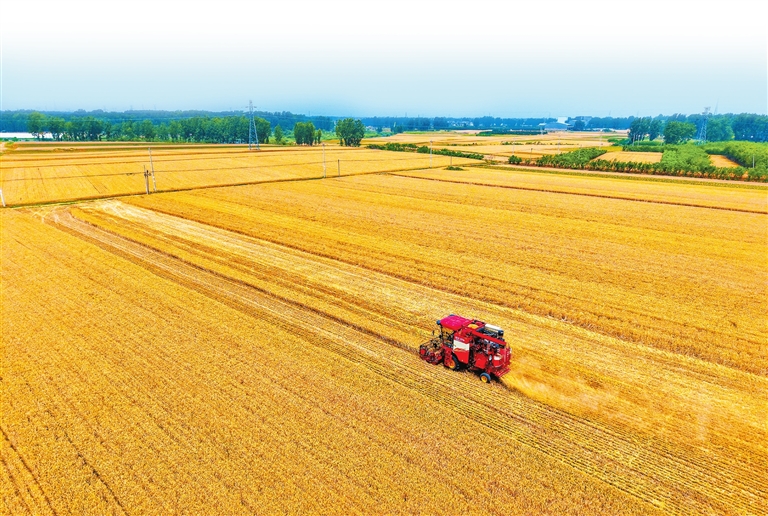
春争日,夏争时,又到一年"三夏"时节。 "三夏"生产一头连着夏粮丰收,一头连着秋粮播种,事关全年粮食和重要农产品稳定供给,是粮食生产承上 启下的关键环节。 今年是"十四五"规划收官之年,也是巩固拓展脱贫攻坚成果同乡村振兴有效衔接5年过渡期的最后一年,抓 好"三夏"生产,对稳住"三农"基本盘、抓牢粮食安全主动权意义重大。 "粮食生产是河南的一大优势、一张王牌,这个优势、这张王牌任何时候都不能丢。"作为全国小麦生产第一 大省,河南的每一粒麦子都承载着"中国饭碗"的分量。 破逆境,夏粮韧性生长 "小满不满,麦有一险",农谚道尽了夏粮生产的脆弱性。3月中旬以来,干旱少雨与大风天气持续,旱情在中 原大地蔓延,给小麦生产带来了不利影响。 整个4月份,扶沟县黄土地种植合作社负责人袁公平每天都泡在麦田里。"虽然老天不帮忙,但人勤地不懒, 咱得让它喝饱水。"袁公平认着"地不欺人"的死理儿,浇灌出麦田里旺盛的绿意。 水不仅要浇得上,更要浇得好。在浚县西部丘陵地带,智能灌溉系统搭配滴灌微喷技术,破解灌溉成本高的 难题。"系统能自动监测土壤湿度,按需供水,节水超60%,成本也省了一大半。"屯子镇毛门村种粮大户李 学红不住赞叹。 今年 ...
中美大幅降税后,中国订单暴增,特朗普发现,中方还是不买美国货
Sou Hu Cai Jing· 2025-05-18 20:02
Group 1 - The core point of the article highlights the significant increase in Chinese exports to the U.S. following the adjustment of tariffs, with container orders surging nearly 300% [1][3] - Data from Vizion indicates that container bookings from China to the U.S. rose by 277% to 21,530 standard containers, compared to 5,709 previously, reflecting a nearly threefold increase [1][3] - In Yiwu, a major trading hub in China, local merchants are experiencing a surge in orders as U.S. clients rush to place new orders, indicating a strong demand for Chinese goods [1][3] Group 2 - Despite the increase in exports, there is a lack of corresponding demand for U.S. goods in the Chinese market, as China continues to diversify its import sources, particularly in agricultural products [3][5] - China is investing in infrastructure in South America, such as a major export terminal in Brazil and a deep-water port in Peru, to enhance its agricultural supply chain [3][5] - Historical experiences, particularly in the soybean market, have made China cautious about relying heavily on U.S. agricultural imports, leading to a preference for established trade relationships with other regions [5][7] Group 3 - The article suggests that the current trade dynamics reflect a genuine demand for trade between the two countries, but China's reluctance to increase imports from the U.S. is influenced by past experiences and uncertainties regarding U.S. trade policies [7] - The ongoing instability in U.S. trade policies, particularly regarding high-tech industries, contributes to China's cautious approach in engaging with U.S. products [5][7] - Future developments in U.S.-China economic relations will depend on policy adjustments and cooperation negotiations between the two nations [7]

田间地头尽显“科技范儿” 希望的田野勾勒出丰收脉络
Yang Shi Wang· 2025-05-17 02:39
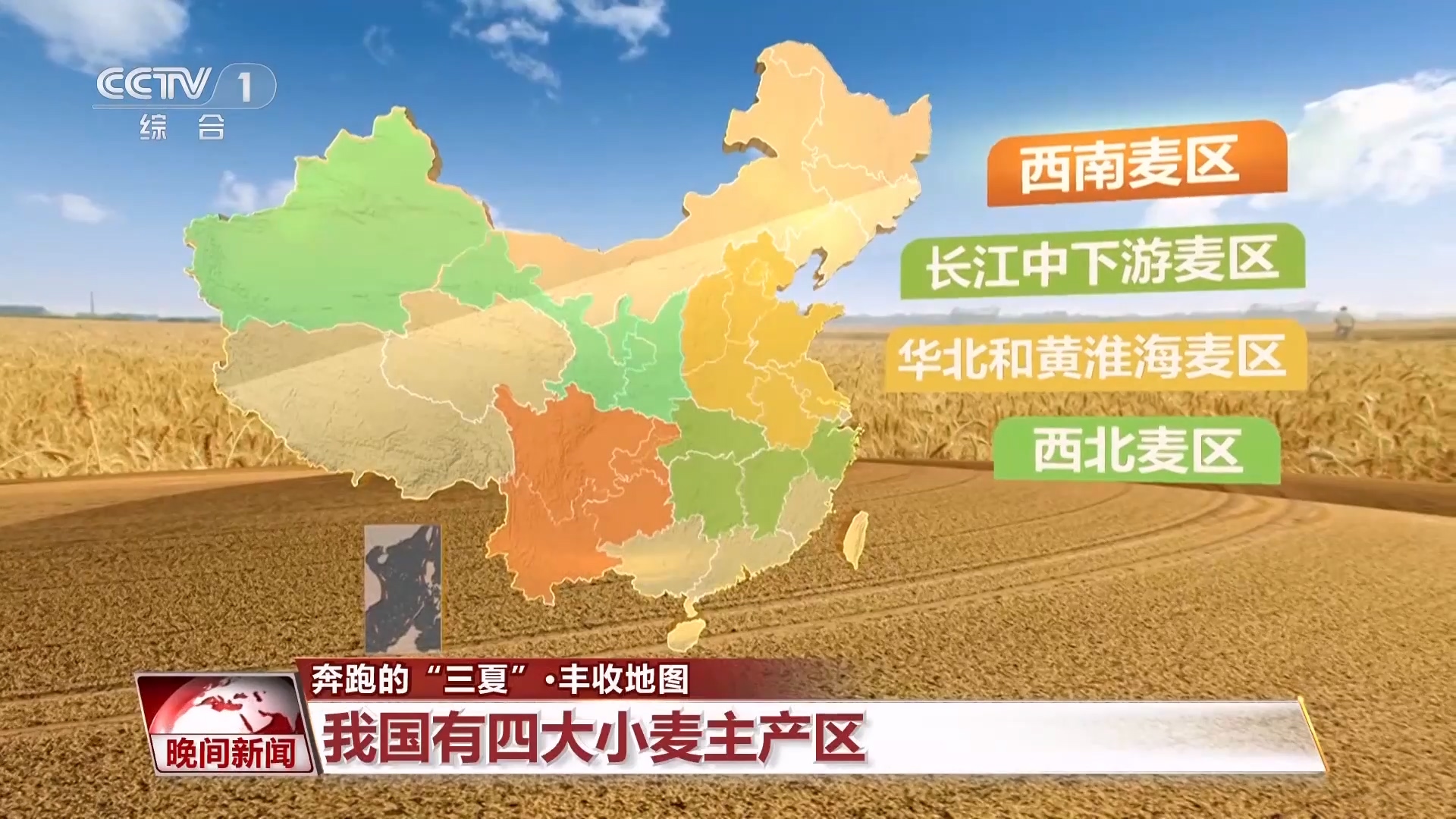
Group 1 - The summer grain harvest is entering a critical period, with various regions focusing on agricultural production to ensure stable grain output for the year [2][4] - In Hebei, over 33 million acres of winter wheat are entering the filling stage, utilizing irrigation robots and satellite systems to save 40%-50% water compared to traditional methods [4] - In Shandong, over 60 million acres of winter wheat are in the flowering and filling stage, with local data platforms guiding farmers in pest management and field operations [4] Group 2 - The main production area for winter rapeseed is seeing large-scale harvesting, with Hunan having harvested 19.15 million acres and Guizhou over 40% of its 8.63 million acres [5][7] - In Northeast China, spring sowing is accelerating, with Liaoning province having sown 41.87 million acres, accounting for 77.8% of the expected area [8][10] - Jilin province has added 2 million acres of protective tillage and 1 million acres of integrated water and fertilizer application for corn planting, with over 90% of corn sowing completed [10] Group 3 - The summer grain harvest is crucial as it accounts for over 20% of the total annual grain production, with more than 90% being winter wheat [10] - China has four major wheat production areas, including Southwest, Yangtze River, North China and Huang-Huai-Hai, and Northwest regions [12][14] - The harvesting of winter wheat will occur from mid-May to early July, with the largest production area in North China and Huang-Huai-Hai contributing over 70% of the national winter wheat area and nearly 80% of the production [18][19]
【省供销合作社】陕西供销合作社系统多措并举保障粮食安全
Shan Xi Ri Bao· 2025-05-17 00:23
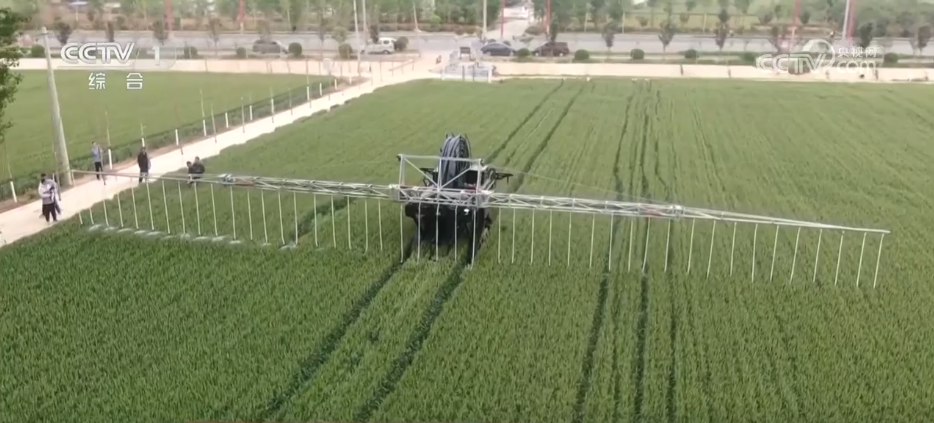
Group 1 - Since mid-March, the province has experienced low rainfall, high temperatures, and strong winds, leading to drought conditions that challenge grain production [1] - The provincial supply and marketing cooperative system has taken swift action to organize drought relief efforts, including the use of drones for large-scale spraying of foliar fertilizers and drought-resistant agents [1][2] - The provincial agricultural materials group has proposed remedial measures for drought-affected areas, actively dispatching fertilizers and pesticides needed for summer corn planting [1] Group 2 - As of now, the agricultural service company in Pu County has completed spraying operations on 2,700 acres of wheat, with over 1,000 acres still in progress, expected to be completed by May 20 [2] - The supply and marketing cooperative in Binzhou has mobilized over 40 agricultural machines to irrigate 560 acres of wheat and 3,200 acres of corn [2] - The provincial supply and marketing cooperative has called on all cooperative systems to closely monitor drought conditions and continuously optimize drought relief measures to ensure stable grain production [2]
又到一年夏收季!全国丰收地图来了
Yang Shi Wang· 2025-05-16 15:56
Core Viewpoint - The summer harvest season has begun in China, with winter wheat being the primary crop, accounting for over 20% of the total annual grain production [1] Group 1: Wheat Production Regions - China has four major wheat production areas: Southwest Wheat Area, Yangtze River Middle and Lower Reaches Wheat Area, North China and Huang-Huai-Hai Wheat Area, and Northwest Wheat Area [2][4] - The Southwest Wheat Area, which includes Yunnan, Guizhou, Sichuan, and Chongqing, has already started harvesting winter wheat, covering an area of approximately 15 million acres, accounting for 4.5% of the national total [5] Group 2: Harvest Timeline - By late May, the Yangtze River Middle and Lower Reaches Wheat Area, including Hubei, Hunan, Jiangxi, Zhejiang, and Shanghai, will begin harvesting winter wheat, with a planting area of about 18.17 million acres, representing 5.4% of the national total [7] - Large-scale harvesting of winter wheat in the North China and Huang-Huai-Hai Wheat Area will commence from late May to early June, with these provinces contributing over 70% of the national planting area and nearly 80% of the production [9] - The harvesting period for winter wheat will extend from mid-May to early July, ensuring the collection of 340 million acres of winter wheat [11] Group 3: Spring Wheat Harvest - In July and August, spring wheat in regions north of the Great Wall, including Inner Mongolia, Heilongjiang, Jilin, and Liaoning, will begin to mature and be harvested [12]
川普天塌了,不是说好互相减税吗?为啥中国人还是不买美国货
Sou Hu Cai Jing· 2025-05-16 08:33
Core Viewpoint - The article discusses the implications of China's agricultural strategies in response to U.S. trade policies, particularly focusing on the historical context of the "soybean war" and the current shift towards securing food supply chains in South America. Group 1: Historical Context - The entry of China into the WTO in 2001 was marked by the requirement to open its agricultural market, which led to the influx of major U.S. grain companies [3] - The "soybean war" in 2003 saw U.S. soybean prices spike from $2,000 to $4,400 per ton due to a fabricated supply crisis, resulting in significant losses for Chinese oil manufacturers and farmers [3][4] - The introduction of genetically modified soybeans by the U.S. further marginalized Chinese soybean production, with 90% of seeds used in Northeast China being from Monsanto [4] Group 2: Current Strategies - China has invested in infrastructure in South America, such as ports and railways, to secure its food supply and reduce dependency on U.S. imports [6][8] - The quality and price of South American soybeans and corn are now competitive with U.S. products, leading to a shift in consumer preferences among Chinese citizens [6] - The strategy of "infrastructure for food" allows China to control the supply chain, making it cheaper to import from South America than from the U.S. [8] Group 3: Future Implications - The article suggests that the U.S. trade policies have inadvertently strengthened China's position in the global food market, making it a key player in food security [6][10] - China's investments in South America are seen as a long-term strategy to ensure food sovereignty and reduce vulnerability to external pressures [10] - The ongoing negotiations between China and the U.S. reflect a shift in power dynamics, with China leveraging its agricultural resources as a bargaining chip [10]