
AI应用

Search documents
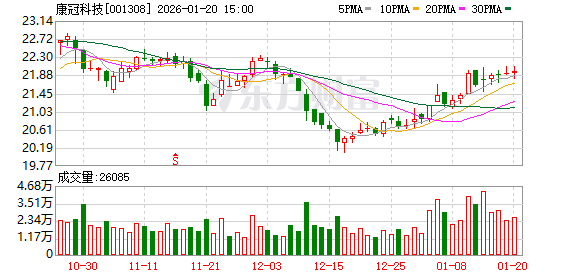
康冠科技:公司目前有整机生产线、机板生产线、灯条生产线、膜切生产线等数十条各类主要生产线
Mei Ri Jing Ji Xin Wen· 2026-01-20 10:55
Group 1 - The company has multiple production lines including complete machine production lines, circuit board production lines, light bar production lines, film cutting production lines, SMT placement production lines, and automated backlight module production lines [1] - To enhance production efficiency, the company is focusing on building new production lines and upgrading existing ones to improve automation levels [1] - The company encourages stakeholders to refer to its disclosed announcements for more information regarding its production and operations [1] Group 2 - An investor inquired about the company's digitalization and automation strategies, specifically whether all production lines have implemented automation and the role of AI applications in the company's development [3]

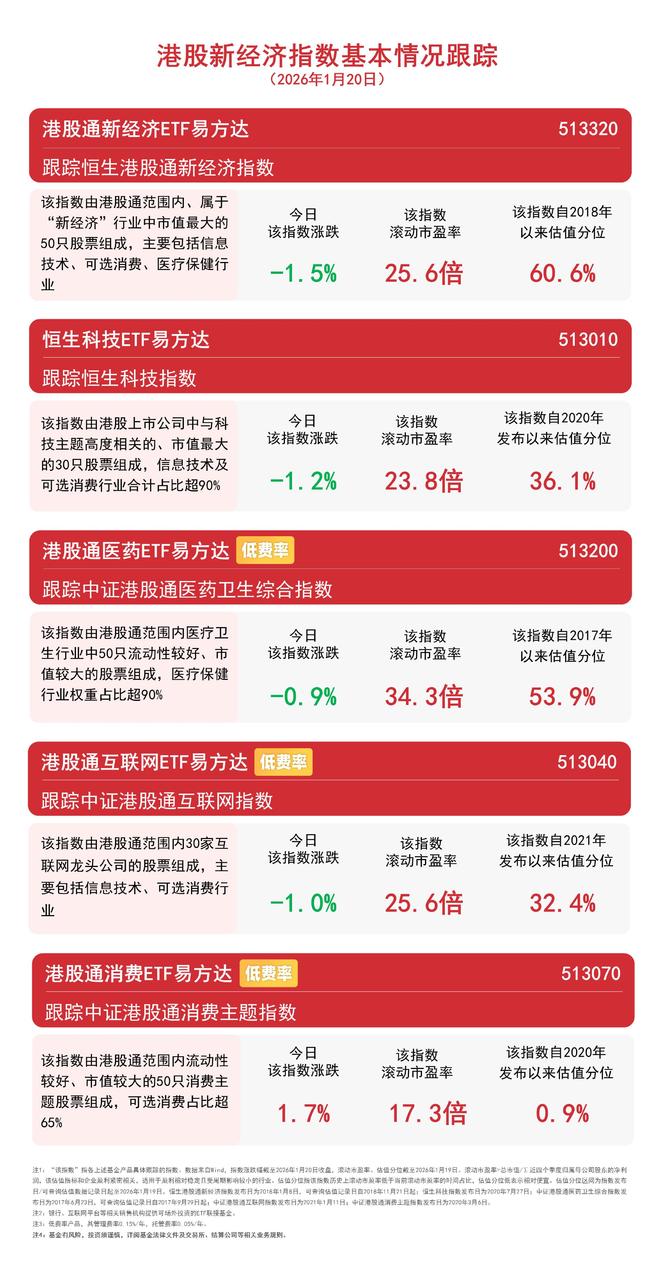
机构称AI应用仍具备较大成长空间,关注港股通互联网ETF易方达(513040)、恒生科技ETF易方达(513010)等产品投资价值
Mei Ri Jing Ji Xin Wen· 2026-01-20 10:44
Group 1 - The core viewpoint of the news highlights the divergence in the Hong Kong stock market, with consumer concepts showing strength while AI application sectors continue to adjust [1] - The CSI Hong Kong Stock Connect Consumer Theme Index rose by 1.7%, while the CSI Hong Kong Stock Connect Pharmaceutical and Health Index fell by 0.9%, the CSI Hong Kong Stock Connect Internet Index decreased by 1.0%, the Hang Seng Technology Index dropped by 1.2%, and the Hang Seng Hong Kong Stock Connect New Economy Index declined by 1.5% [1] - There has been a continuous inflow of funds, with the Hong Kong Stock Connect Internet ETF (513040) and the Hang Seng Technology ETF (513010) both receiving over 1 billion yuan in net inflows this year [1] Group 2 - According to CITIC Securities, the AI application sector is expected to be a main focus starting in early 2026, with multiple catalysts for AI applications anticipated in the future [1] - AI is gradually penetrating daily life through various hardware, including automobiles, robots, smart glasses, smart home devices, and wearables like smart rings and headphones [1] - On the software side, the upgrade in model inference capabilities is accelerating the deployment of enterprise-level Agentic AI, indicating significant growth potential for AI applications in China [1]
固收周报丨转债中的哪些结构性机会值得关注?
Xin Lang Cai Jing· 2026-01-20 10:39
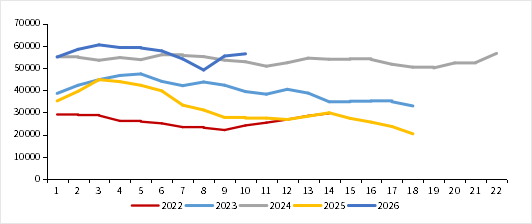
Group 1: Market Overview - The funding environment is expected to tighten this week due to the tax period, with government bond net payment increasing and disturbances from the Beijing Stock Exchange's new listings, leading to an anticipated rise in funding rates [1][3] - The central bank's intention to support the market is clear, with major banks maintaining high levels of net lending, and overnight rates expected to peak below 1.6% [1][3] Group 2: Government Bond Supply - This week, government bond issuance has significantly increased, totaling 706.57 billion yuan, with net payments rising approximately 250 billion yuan to 206.52 billion yuan, primarily concentrated in the latter half of the week [4] - Local government bonds saw net payments of 217.22 billion yuan, with issuance accelerating; however, the actual issuance in January is only 54.08% of the planned amount [4] - The issuance of national bonds has increased significantly, with a net payment of -10.7 billion yuan and a total issuance of 475 billion yuan, marking a substantial increase compared to previous periods [4][5] Group 3: Interbank Certificates of Deposit - The maturity scale of interbank certificates of deposit remains large at 706.71 billion yuan, and banks are expected to issue more certificates to replenish liabilities amid the tax period and market disturbances [6][7] Group 4: Credit Market Insights - The credit bond market is advised to focus on medium to short-duration defensive strategies, with a notable performance in secondary capital bonds and city investment bonds [9][31] - The total issuance of credit bonds last week was 288.2 billion yuan, with a weighted average issuance rate of 1.91%, down 11 basis points from the previous week [30] Group 5: Equity and Convertible Bond Market - The stock market showed mixed results, with the Shanghai Composite Index down 0.45% and the Shenzhen Component Index up 1.14%, indicating sectoral divergence [34] - The convertible bond index rose by 1.08%, outperforming the stock indices, with an overall increase in conversion premiums [38]
招行信用卡迎新“掌门”:厉明东到任,老将刘加隆转任顾问、曾三度执掌卡中心
Xin Lang Cai Jing· 2026-01-20 10:37
Core Insights - The leadership of China Merchants Bank's Credit Card Center has changed, with Liu Jialong retiring and Li Mingdong set to take over pending regulatory approval [1][2] Group 1: Leadership Transition - Liu Jialong, a veteran with 30 years at China Merchants Bank, has served multiple terms as the head of the Credit Card Center and has been instrumental in the development of the bank's credit card business [1][4] - Li Mingdong, the incoming general manager, has extensive experience in retail finance and wealth management, having held various senior positions within the bank [1][5] Group 2: Credit Card Business Development - Under Liu Jialong's leadership, the bank's credit card business has been at the forefront of industry innovation, particularly in digital transformation, including the launch of the first mobile app in the industry and the introduction of smart customer service platforms [4] - The bank's credit card issuance has seen significant growth, with over 1 billion cards issued by the end of 2017, although the industry is now facing a decline, with the total number of credit cards in China dropping from 8.07 billion in September 2022 to 7.07 billion in September 2025 [5][6] Group 3: Industry Challenges - The credit card industry is undergoing a transformation from rapid growth to a focus on high-quality development, facing challenges such as risk management, declining consumer spending, and narrowing interest margins [6] - As of September 2025, the bank reported a credit card transaction volume of 20,209.60 billion yuan, a year-on-year decrease of 8.54%, and a decline in both interest and non-interest income [6] - The bank's non-performing loan ratio for credit cards was reported at 1.74% as of September last year, a slight decrease from 1.75% at the end of 2024 [7]

德邦基金“吸金120亿”合规拷问:实盘大V无证荐基是否触碰红线?
Xin Lang Cai Jing· 2026-01-20 09:20
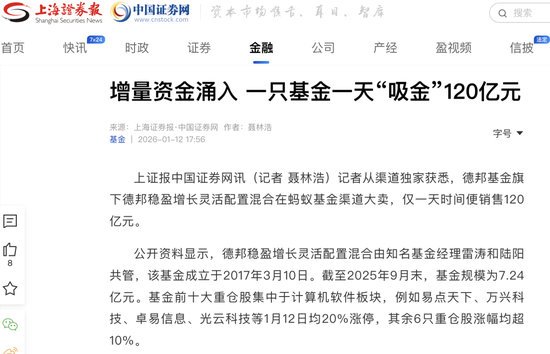
Core Viewpoint - The article discusses the phenomenon of a significant influx of capital into the Debon Fund's "Debon Stable Growth Flexible Allocation Mixed Fund," which reportedly attracted 12 billion yuan in a single day, highlighting the interplay of social media influencers, platform algorithms, and the anxiety of smaller fund companies in the public fund industry [1][23]. Group 1: Fund Performance and Market Reaction - On January 12, the Debon Stable Growth Fund experienced a surge, with both A and C shares rising over 8% as the AI application sector in the A-share market exploded [2][24]. - The fund's management denied the authenticity of the reported capital influx, emphasizing reliance on periodic reports, yet market reactions indicated skepticism due to rapid implementation of purchase limits [4][25]. Group 2: Marketing Strategies and Influencer Impact - The marketing strategy employed by the fund resembles "hunger marketing," creating a sense of scarcity and urgency among investors [6][27]. - A prominent social media influencer showcased a significant investment in the fund, leading to a wave of follower investments, although the influencer later clarified that claims of collaboration and commission were unfounded [7][28]. Group 3: Regulatory and Ethical Concerns - Many influencers lack the necessary qualifications for fund sales and engage in questionable practices by promoting funds without proper risk disclosures, which raises ethical concerns [8][29]. - Reports suggest that Debon Fund offered unusually high commission rates to influencers, potentially leading to misrepresentation of the fund's risk profile and encouraging impulsive investment decisions among followers [8][29]. Group 4: Fund Characteristics and Risks - The Debon Stable Growth Fund, despite its name suggesting stability, has a high stock allocation of 93.98% and minimal bond exposure, indicating a high-risk profile [9][30]. - The fund's historical performance has been underwhelming, with an annual return of only around 8% in 2025, which is below its benchmark [13][34]. Group 5: Company Context and Strategic Decisions - Following a change in control to state-owned assets, Debon Fund faces pressure to improve its scale and market presence, leading to aggressive marketing strategies [15][36]. - The company operates as a small public fund with a total scale of approximately 66.5 billion yuan, ranking around 80th in the industry, which drives its pursuit of rapid growth through high-risk products [16][37]. Group 6: Market Dynamics and Investor Implications - The article highlights the disconnect between the marketing strategies employed and the actual risks faced by investors, particularly during market volatility [19][40]. - The long-term value of the fund for investors remains uncertain, especially as market conditions change and the initial excitement fades [20][41].
1月20日主题复盘 | 创业板大幅调整,化工股、黄金逆势走强,房地产也迎资金关注
Sou Hu Cai Jing· 2026-01-20 08:41
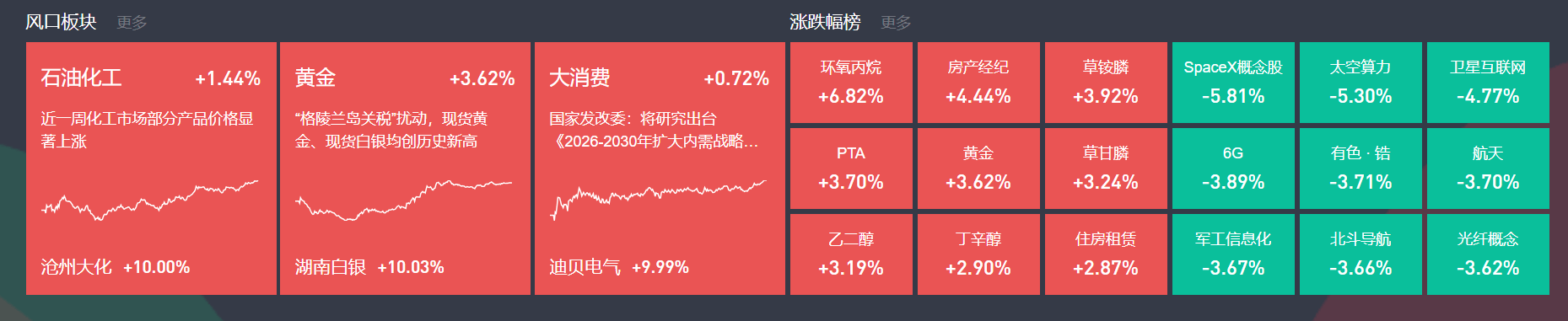
Market Overview - The market opened high but closed lower, with the ChiNext index dropping nearly 2%. Chemical stocks surged, with companies like Cangzhou Dahua and Xinxiang Chemical Fiber hitting the daily limit. Precious metals and consumer stocks also performed well, while real estate stocks rebounded. In contrast, the commercial aerospace sector faced adjustments, and computing hardware stocks fell sharply, with over 3,100 stocks declining across the Shanghai and Shenzhen markets, totaling a transaction volume of 2.8 trillion yuan [1]. Chemical Industry - The chemical sector experienced significant gains, with Cangzhou Dahua and Xinxiang Chemical Fiber achieving consecutive daily limits. Recent reports indicated that from January 12 to 18, the prices of certain chemical products, such as epoxy propylene, increased by 7.9% week-on-week, and prices for organic silicon intermediates also rose [4][5]. - The domestic epoxy propylene market continued its upward trend, supported by tight supply and low overall inventory levels. The price of propylene rose by 4.88% compared to the previous week, indicating strong cost support. The demand side was driven by the "last train" effect of the cancellation of export tax rebates for polyether, leading to active market trading [5][6]. Real Estate Sector - The real estate sector saw a significant rise, with companies like Hefei Urban Construction and Cheng Investment Holdings hitting the daily limit. Analysts noted that the changes in the second-hand housing inventory post-Spring Festival would be a key focus for the market, influencing supply-demand dynamics and financial institutions' concerns regarding collateral depreciation [7][8]. Gold Market - The gold sector remained active, with companies such as Hunan Silver and Zhaojin Mining reaching the daily limit. On January 20, spot gold prices broke the $4,700 per ounce mark, setting a new historical high. Since the beginning of the year, spot gold has consistently risen, surpassing multiple price thresholds [9][10]. - Analysts expect that the upcoming U.S. Federal Reserve meeting will influence gold prices, with a high likelihood of further interest rate cuts, which could provide upward momentum for gold [10][12]. Other Notable Sectors - The consumer sector, domestic chips, and smart grid industries showed localized activity, while AI applications and aerospace sectors faced the most significant declines [12].

A股震荡调整,化工、贵金属板块走强
Shang Hai Zheng Quan Bao· 2026-01-20 08:28
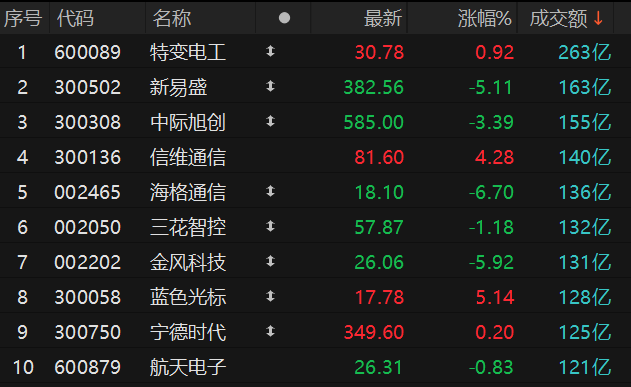
Market Overview - The A-share market continued its volatile adjustment pattern, with the Shanghai Composite Index closing at 4113.65 points, down 0.01%. The Shenzhen Component Index fell by 0.97%, the ChiNext Index decreased by 1.79%, and the Sci-Tech Innovation Board Index dropped by 1.65%. The total trading volume in the Shanghai and Shenzhen markets was 28,041 billion yuan [1]. Sector Performance - The chemical sector showed strength during the trading session, with over ten stocks including Weiyuan Co. and Hongqiang Co. hitting the daily limit. The precious metals sector remained active, with Hunan Silver reaching the daily limit. The real estate sector experienced fluctuations, with Dayue City and Urban Investment Holdings also hitting the daily limit. The AI application concept saw localized activity, with Jiayun Technology and Zhejiang Wenhu Interconnect reaching the daily limit. Conversely, the commercial aerospace and optical communication modules faced significant declines [1]. Individual Stock Highlights - TBEA Co. had the highest trading volume at 26.3 billion yuan. It was followed by Xinyi Technology and Zhongji Xuchuang, with trading volumes of 16.3 billion yuan and 15.5 billion yuan, respectively. Other notable stocks included Xinwei Communication and Haige Communication, with trading volumes of 14 billion yuan and 13.6 billion yuan, respectively [2][3]. Market Signals - Two significant signals emerged in the market: first, the renewed trade war between the US and Europe has led to a risk-averse sentiment in global capital markets, pushing gold prices to new highs and strengthening the A-share precious metals sector. Second, China has introduced a new round of demand expansion plans, leading to a recovery in the consumer sector, with stocks like He Bai Group, Kangxin New Materials, and Hanshang Group hitting the daily limit [3].
港股收评:恒指跌0.29%,科技股弱势,黄金股拉升走强,招金矿业等多股再创新高
Ge Long Hui· 2026-01-20 08:20
Market Performance - The Hong Kong stock market indices experienced a decline, with the Hang Seng Technology Index falling by 1.16%, while the Hang Seng Index and the National Enterprises Index decreased by 0.29% and 0.43% respectively, with the Hang Seng Index dropping below the 26,500 points mark [1] Sector Performance - Major technology stocks continued to decline, particularly Xiaomi, which fell nearly 3% to reach a new low, while Tencent and Meituan dropped over 1% [1] - Geopolitical tensions led to a rise in international gold prices, benefiting gold stocks such as Zijin Mining International, China National Gold International, and Zhaojin Mining, which reached historical high prices [1] - The civil aviation sector is expected to see record passenger transport volume during the Spring Festival, with three major airline stocks leading the aviation sector's gains [1] - The real estate sector remained active due to ongoing favorable policies, with optimism for 2026 [1] Declining Sectors - The commercial aviation, automotive, and Apple-related stocks faced significant declines, while the biopharmaceutical sector continued its downward trend [1] - Popular sectors such as military, semiconductor, and AI applications showed weakness, with leading stock SMIC dropping over 3%, and Zhizhu falling over 7% [1] - Copper-related stocks continued to decline, with China Nonferrous Mining falling for four consecutive days [1]
A股收评:创业板指跌1.79% 化工、贵金属板块逆势爆发
2 1 Shi Ji Jing Ji Bao Dao· 2026-01-20 07:23
Market Overview - The three major indices collectively declined, with the ChiNext Index dropping by 1.79% and briefly falling over 2% during the trading session [1][2] - The Shanghai Composite Index fell by 0.01%, and the Shenzhen Component Index decreased by 0.97% [1][2] - The total trading volume in the Shanghai and Shenzhen markets reached 2.78 trillion yuan, an increase of 694 billion yuan compared to the previous trading day [1][2] - Over 3,100 stocks in the market experienced declines [1][2] Sector Performance - The chemical sector showed strong performance, with over ten constituent stocks hitting the daily limit, including Hongbaoli, Shandong Heda, Weiyuan Co., and Hongqiang Co. [1][2] - Precious metals continued to perform well, with Zhaojin Gold achieving two consecutive limit-ups and Hunan Silver also hitting the limit [1][2] - The real estate sector was active, with Dayue City and Urban Investment Holdings reaching the daily limit [1][2] - AI application stocks saw localized gains, with Jiayun Technology, Yue Media, and Zhejiang Wenhu Interconnect hitting the limit [1][2] Declining Sectors - The computing hardware and commercial aerospace sectors experienced significant declines [1][2] - Stocks in the commercial aerospace sector collectively fell, with Shenjian Co. facing four consecutive limit-downs and Aerospace Power experiencing two consecutive limit-downs [1][2]
游戏ETF(516010)开盘涨超1.4%,游戏公司AI应用布局不断
Mei Ri Jing Ji Xin Wen· 2026-01-20 06:36
Group 1 - The core viewpoint of the article highlights the significant application of AI in the gaming industry, particularly in areas such as social companionship, dating games, and nurturing games [1] - The gaming ETF (516010) tracks the anime and gaming index (930901), which selects listed companies involved in anime production, game development, content distribution, and platform operation to reflect the overall performance of the anime and gaming industry [1] - The index focuses on various segments of the anime and gaming industry chain, emphasizing the performance of growth-oriented companies with innovation capabilities and market potential, primarily within the media and entertainment sector [1] Group 2 - AI companionship is exemplified by Minimax's Talkie, which represents a typical application of AI in creative role-playing and programming assistance [1] - The world model, commercialized by Fei-Fei Li in November, continues to advance, with important applications in gaming, VR content, and robotics [1]