绿色低碳转型

Search documents
国家统计局:2025年前三季度规模以上锂离子电池制造行业增加值同比增长29.8%
Guo Jia Tong Ji Ju· 2025-10-21 01:53
Economic Overview - The GDP growth for the first three quarters of 2023 was 5.2%, an increase of 0.2 and 0.4 percentage points compared to the previous year and the same period last year, respectively, with an economic increment of 39,679 billion yuan, which is 1,368 billion yuan more year-on-year [2][6] - The urban unemployment rate averaged 5.2% in the first three quarters, remaining stable compared to the first half of the year, while the Consumer Price Index (CPI) slightly decreased by 0.1% year-on-year, but the core CPI, excluding food and energy, rose by 0.6% [2][7] Industry Performance - The manufacturing value added of lithium-ion batteries, shipbuilding and related equipment, and electric motors increased by 29.8%, 22.9%, and 17.1% year-on-year, respectively [11] - The production of new energy vehicles, electric bicycles, and tablet computers grew by 29.7%, 27.1%, and 9.5%, respectively [11] - The production of wind and solar power saw double-digit growth year-on-year in the first three quarters [11][15] High-Quality Development - The proportion of value added from equipment manufacturing and high-tech manufacturing reached 35.9% and 16.7% of the total industrial value added, respectively [3] - Non-fossil energy consumption accounted for approximately 1.7 percentage points more of the total energy consumption compared to the previous year [3] New Energy and Technology - The production of lithium-ion power batteries for automobiles increased by 46.9% year-on-year [15] - The production of solar batteries grew by 14.0% year-on-year [15] Policy Impact - The implementation of macroeconomic policies has effectively supported economic stability, with a focus on expanding domestic demand and enhancing market vitality [10][12] - The final consumption expenditure contributed 53.5% to economic growth in the first three quarters, an increase of 9.0 percentage points compared to the previous year [10] Innovation and R&D - R&D expenditure increased by 8.9% compared to the previous year, with a notable rise in the number of R&D personnel [13][17] - The value added of high-tech manufacturing increased by 9.6% year-on-year, with significant growth in integrated circuit manufacturing and electronic materials [14] Green Development - The production of renewable energy products, including new energy vehicles and solar batteries, showed significant growth, with new energy vehicle production increasing by 29.7% [15][20] - The comprehensive utilization of waste resources increased by 14.4% in the first three quarters [15]
电车出行折射中国“十四五”绿色转型力度
Zhong Guo Xin Wen Wang· 2025-10-21 01:49
Core Insights - The article highlights the significant progress China is making in its green transition during the "14th Five-Year Plan" period, particularly in the electric vehicle (EV) sector and charging infrastructure [1][6]. Charging Infrastructure Development - During the recent holiday period, China's highway EV charging reached 123 million kilowatt-hours, with a daily average increase of over 45% year-on-year, marking a historical high [1]. - By the end of August 2025, China is expected to have 17.348 million electric vehicle charging points, approximately ten times the number from five years ago [2]. - The number of charging facilities on highways has increased to over 40,000, five times the number from five years ago, with significant expansion into rural areas [2]. Charging Speed and Technology - The average power of newly added DC charging stations has increased from 73.90 kilowatts at the end of 2021 to 98.51 kilowatts by June 2025, indicating a rapid adoption of high-power charging facilities [3]. - Shenzhen has established 1,057 supercharging stations and over 487,000 charging piles, surpassing the number of gas stations and making "full charge with a cup of coffee" a reality [3]. Renewable Energy Integration - The "14th Five-Year Plan" has seen a rapid increase in renewable energy, with the share of renewable energy generation capacity rising from 40% to around 60% [4]. - Wind and solar power generation has significantly increased, with their contribution to total electricity consumption rising from 9.7% in 2020 to an expected 18.6% by 2024 [4]. Traditional Energy Transition - 95% of coal-fired power units in China have achieved ultra-low emissions, with ongoing improvements in coal gangue utilization rates [5]. - The recent announcement of new national contribution targets aims for non-fossil energy to account for over 30% of total energy consumption by 2035, with a sixfold increase in wind and solar capacity compared to 2020 [5]. Future Ambitions - The new targets set forth are more ambitious and indicate that the next five years will see an even greater push towards green transformation in China [6].
持续深化“三个年”活动,推动美丽陕西建设迈出坚实步伐
Zhong Guo Huan Jing Bao· 2025-10-21 01:24
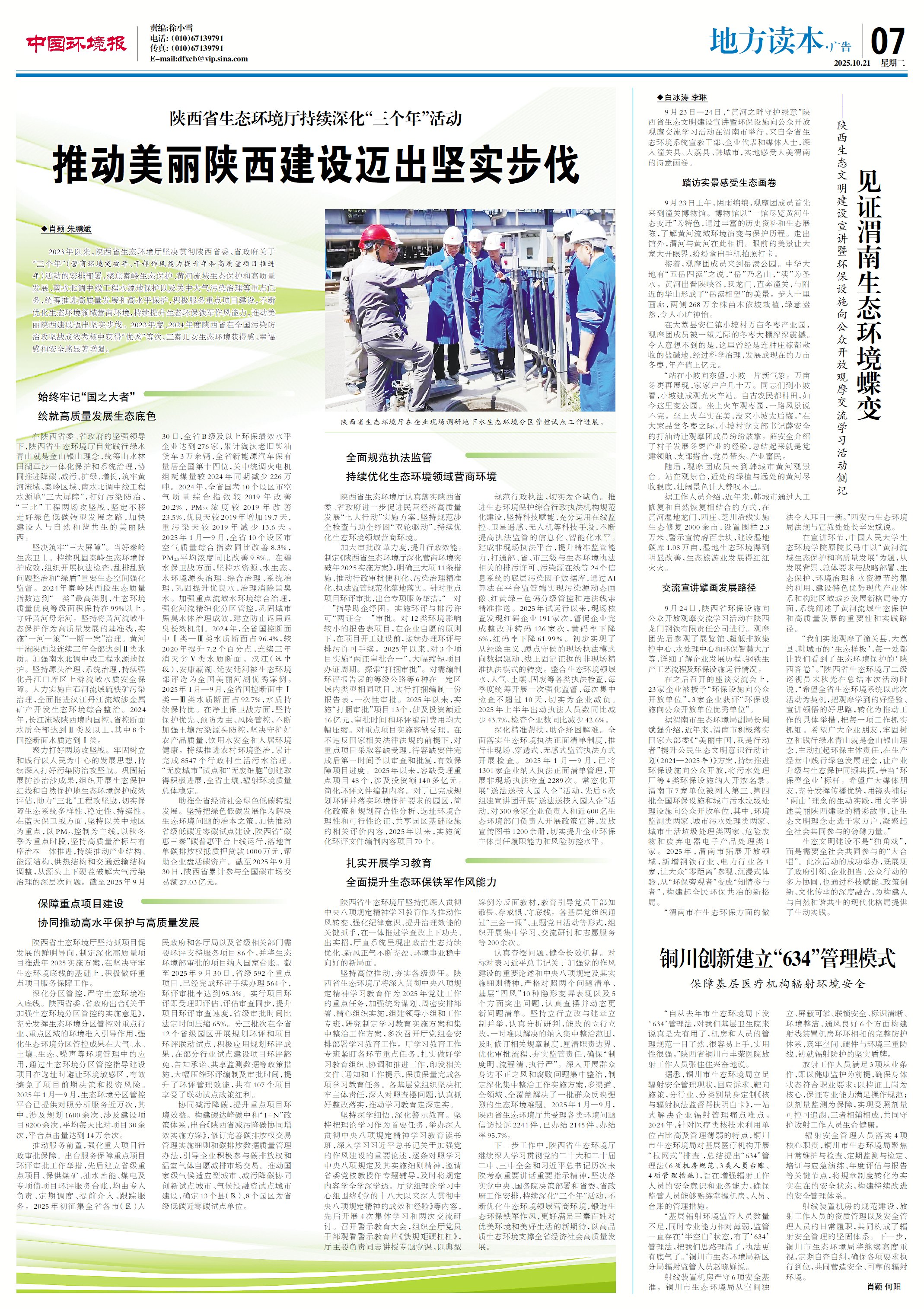
Core Viewpoint - The Shaanxi Provincial Ecological Environment Department is actively implementing the "Three Years" initiative to enhance the business environment, improve the capabilities of officials, and promote high-quality projects, focusing on ecological protection and pollution control, thereby advancing the construction of a beautiful Shaanxi [2][4][14]. Group 1: Ecological Protection and High-Quality Development - The department emphasizes the integration of ecological protection and high-quality development, particularly in the Qinling Mountains and the Yellow River basin, while also addressing air pollution in the Guanzhong area [2][4][14]. - In 2023 and 2024, Shaanxi Province received an "excellent" rating in the national pollution prevention and control assessment, significantly enhancing the ecological environment satisfaction among residents [2][4]. Group 2: Pollution Control and Environmental Quality - The ecological quality index for the Qinling section in Shaanxi is expected to reach the highest category by 2024, with over 99% of the area maintaining good ecological quality [4][15]. - The Yellow River's water quality in Shaanxi has consistently met Class II standards for three consecutive years, with ongoing efforts to protect water sources [4][15]. - By 2024, 96.4% of national control sections in the province are projected to meet Class I to III water quality standards, improving by 7.2 percentage points since 2020 [16]. Group 3: Economic and Administrative Reforms - The department is implementing reforms to streamline administrative processes, including a "two-in-one" approval system for environmental assessments and pollutant discharge permits, significantly reducing project approval times [5][23]. - As of September 2025, 95.3% of provincial key projects have completed environmental assessment procedures, with a 65% reduction in approval times compared to legal requirements [19][23]. Group 4: Green and Low-Carbon Development - Shaanxi is promoting green and low-carbon development as a fundamental strategy to address ecological issues, with initiatives like the "Carbon Benefit Sanqin" platform facilitating carbon asset management for enterprises [17]. - By September 2025, the province has participated in national carbon market transactions totaling 2.703 billion yuan [17]. Group 5: Enhancing Business Environment - The department is committed to optimizing the business environment in the ecological sector, implementing measures to support private sector development and reduce burdens on enterprises [22][24]. - A comprehensive administrative enforcement system is being established to enhance regulatory efficiency and reduce the compliance burden on businesses [24][25].

我省启动产品碳足迹标识认证国家试点
Liao Ning Ri Bao· 2025-10-21 01:09
Group 1 - The launch of the product carbon footprint labeling certification pilot in Liaoning Province marks a new path in exploring green management throughout the product lifecycle and building a low-carbon industrial system [1][2] - The product carbon footprint labeling certification aims to prove that the quantified results of a product's carbon footprint during its lifecycle meet certification requirements and can achieve continuous self-reduction or removal of greenhouse gases [1] - The pilot program for carbon footprint labeling certification was initiated by the National Market Supervision Administration and related ministries, with cities like Yingkou, Anshan, Dandong, and Fushun successfully selected for the national pilot [1] Group 2 - The steel (magnesium products) industry is a key traditional industry in Liaoning Province, and the initiation of carbon footprint labeling certification will significantly promote the green and low-carbon transformation of the magnesium industry, enhancing the high-end quality and international branding of magnesium products [2] - The provincial market supervision bureau has been promoting the establishment of carbon footprint management standards, technological innovation, and practical applications under the principle of "government-enterprise collaboration, social interaction, and multi-party governance" [2] - The provincial market supervision bureau aims to empower green and low-carbon governance through quality certification, guiding pilot regions to leverage industry advantages and create replicable and promotable successful cases to contribute to national carbon peak and carbon neutrality goals [2]
刘长松、潘家华:“十五五”时期,我国该如何全面应对气候变化造成的安全挑战?
Zhong Guo Huan Jing Bao· 2025-10-20 23:15
Core Viewpoint - The global climate crisis is intensifying, with the average global temperature in 2024 surpassing the pre-industrial level increase of 1.5°C for the first time, posing severe challenges to urban safety and socio-economic development in China [1][2]. Group 1: Global Climate Situation - The global temperature is rising rapidly, with 2024 confirmed as the hottest year on record, exceeding the 1.5°C target [2]. - Nine out of sixteen climate tipping points have already been breached, including significant ice melt in Greenland and Antarctica, coral reef death, and thawing permafrost [2]. - The frequency and severity of climate disasters are increasing, with an average of 350 to 500 major disaster events occurring annually over the past 20 years, projected to rise to 560 by 2030 [3]. Group 2: Economic and Social Impact - Developing countries face greater losses from disasters, averaging 1% of GDP annually, compared to 0.1%-0.3% for developed countries, with the Asia-Pacific region experiencing the highest losses at 1.6% of GDP [3]. - Climate change is identified as the greatest development and security threat of the 21st century, affecting approximately 3.3 to 3.6 billion people living in highly vulnerable areas [3]. Group 3: International Cooperation Challenges - Geopolitical tensions and rising trade barriers hinder international climate cooperation, exacerbating the climate security situation [5]. - The EU's Carbon Border Adjustment Mechanism (CBAM) and increased tariffs on Chinese electric vehicles are examples of unilateral measures that disrupt global trade and impact China's green transition [5]. Group 4: China's Climate Security Risks - China is in a climate-sensitive zone, facing risks to ecosystems, human health, and infrastructure due to climate change [6]. - Extreme weather events, such as heatwaves and floods, are increasing, with significant economic losses and impacts on key industries across all major regions [6][7]. - The risk of ecosystem degradation, urban environmental challenges, and public health threats are rising, with extreme heat and vector-borne diseases becoming more prevalent [7][8]. Group 5: Policy and Strategic Recommendations - A comprehensive climate security framework is needed, focusing on mitigation, adaptation, and safety strategies to address the escalating risks [10]. - Investment in climate resilience infrastructure and early warning systems is crucial to enhance adaptive capacity and reduce economic losses from extreme weather [12]. - Strengthening international collaboration and domestic climate governance is essential to effectively tackle climate security challenges [12][13].
透过“三季报”看中国经济稳步前行(经济新方位)
Ren Min Ri Bao· 2025-10-20 22:10
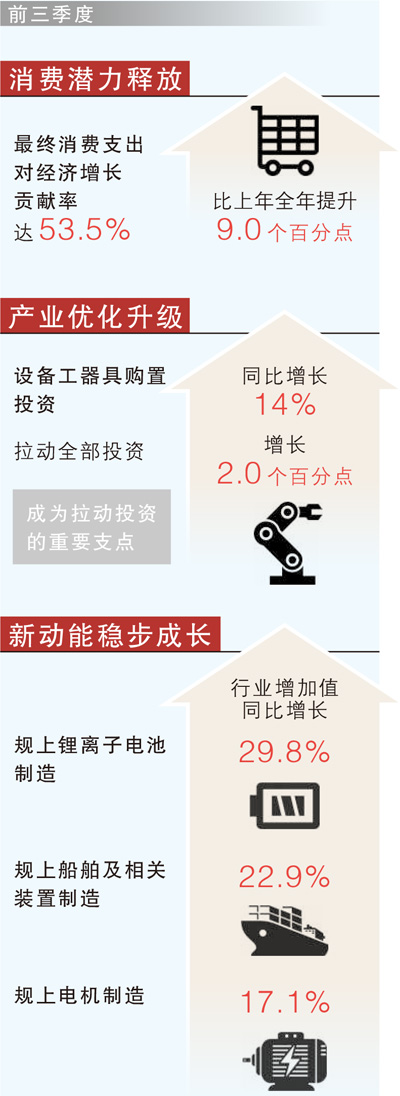
Economic Overview - The GDP growth for the first three quarters is 5.2%, with a 4.8% growth in the third quarter, indicating a stable economic performance [4][10] - The economic increment reached ¥39,679 billion, which is an increase of ¥1,368 billion year-on-year [5] - The average urban unemployment rate for the first three quarters is 5.2%, remaining stable compared to the first half of the year [5][10] Consumption and Investment - Final consumption expenditure contributed 53.5% to economic growth, an increase of 9.0 percentage points compared to the previous year [7][8] - Investment in equipment and tools increased by 14%, contributing 2.0 percentage points to overall investment growth [7][8] - The retail sales of household appliances and audio-visual equipment, cultural office supplies, furniture, and communication equipment all maintained double-digit growth [8] Industry Performance - The added value of the lithium-ion battery manufacturing industry grew by 29.8%, while shipbuilding and related equipment manufacturing increased by 22.9% [8] - The high-tech manufacturing sector's added value accounted for 16.7% of the total industrial added value, indicating a shift towards high-quality development [6][11] - The production of new energy vehicles and electric bicycles saw significant increases of 29.7% and 27.1%, respectively [8] Trade and International Relations - The total import and export volume increased by 6.0% year-on-year, showcasing strong resilience in foreign trade [11] - Foreign exchange reserves remained above $3.3 trillion, with the RMB exchange rate showing stability [5][11] Policy Impact - The implementation of macroeconomic policies has effectively supported current economic stability and long-term growth potential [7][12] - The government has allocated ¥300 billion in special long-term bonds to stimulate consumer demand through trade-in programs [7][8] - The manufacturing purchasing managers' index (PMI) has shown signs of recovery, indicating improved market conditions [9][11]
能源结构持续优化
Jing Ji Ri Bao· 2025-10-20 22:01
Group 1 - The core viewpoint of the articles highlights the stable growth of China's economy and energy consumption, with a significant increase in the share of non-fossil energy consumption [1] Group 2 - Energy production has steadily increased, with major energy products such as coal, oil, and gas showing growth. The industrial raw coal output reached 3.57 billion tons, a year-on-year increase of 2.0% [2] - Oil and gas production also saw moderate growth, with industrial crude oil output at 160 million tons (up 1.7%) and natural gas output at 194.9 billion cubic meters (up 6.4%) [2] - Electricity production was robust, with industrial power generation at 7.3 trillion kilowatt-hours, a year-on-year increase of 1.6%. Notably, clean energy sources like nuclear, wind, and solar power saw significant growth rates of 9.2%, 10.1%, and 24.2% respectively [2] Group 3 - Energy supply security has improved, with a decrease in energy imports. Coal imports fell to 35 million tons, down 11.1%, while crude oil imports increased to 42 million tons, up 2.6% [3] - Natural gas imports decreased to 9.286 million tons, down 6.2%, indicating a narrowing decline compared to the first half of the year [3] - The electricity supply has been effective, with record-high national power loads and enhanced coordination among power sources, networks, and storage [3] Group 4 - The energy consumption structure is undergoing a green transition, with total energy consumption increasing by 3.7% year-on-year. The share of non-fossil energy in total energy consumption rose by 1.7 percentage points [4] - The share of clean energy sources in industrial power generation reached 35.3%, an increase of 1.9 percentage points compared to the previous year [4]
经济运行总体平稳稳中有进(锐财经)
Ren Min Ri Bao· 2025-10-20 20:50
Economic Growth - China's GDP grew by 5.2% year-on-year in the first three quarters, ranking among the top major economies [1][2] - The economic increment reached 39,679 billion yuan, an increase of 1,368 billion yuan compared to the previous year [1][2] Employment and Prices - The average urban survey unemployment rate for the first three quarters was 5.2%, unchanged from the first half of the year [2] - The Consumer Price Index (CPI) slightly decreased by 0.1% year-on-year, while the core CPI, excluding food and energy, rose by 0.6% [2] International Trade - China's foreign trade showed strong resilience, with import and export volumes reaching historical highs, and the growth rate rebounding quarter by quarter [2][3] - By the end of September, foreign exchange reserves remained above 3.3 trillion USD, with the RMB exchange rate showing stability and appreciation [2] High-Quality Development - The proportion of added value from equipment manufacturing and high-tech manufacturing reached 35.9% and 16.7%, respectively [3] - Non-fossil energy consumption's share of total energy consumption increased by approximately 1.7 percentage points year-on-year [3] Policy Impact - A series of policies have effectively stabilized the economy and supported long-term development [4] - Final consumption expenditure contributed 53.5% to economic growth, an increase of 9.0 percentage points from the previous year [4] Investment Trends - Investment in equipment and tools increased by 14.0% year-on-year, contributing 2.0 percentage points to overall investment growth [4] - Specific sectors such as computer and office equipment manufacturing, general equipment manufacturing, and transportation equipment manufacturing saw significant investment growth [4] New Growth Drivers - Industries such as lithium-ion battery manufacturing, shipbuilding, and electric motor manufacturing experienced year-on-year value-added growth of 29.8%, 22.9%, and 17.1%, respectively [5] - The production of new energy vehicles and electric bicycles also saw substantial increases [5] Economic Stability - The third quarter GDP growth was 4.8%, reflecting a slight decline from the previous quarter but still higher than most major economies [7] - The total economic output for the third quarter reached 35.5 trillion yuan, surpassing the projected total for the third-largest economy in 2024 [7] Future Outlook - The stable growth in the first three quarters lays a solid foundation for achieving annual targets [8] - Emphasis will be placed on effectively leveraging policies to balance short-term growth with long-term development [8]
【新华解读】5.2%!前三季度我国经济稳的主基调没变
Xin Hua Cai Jing· 2025-10-20 16:12
Core Viewpoint - China's GDP growth in the first three quarters of 2023 reached 5.2%, indicating stable economic performance despite external pressures and internal challenges [1][2]. Economic Performance - The GDP for the first three quarters was 1,015,036 billion yuan, with a year-on-year growth of 5.2%, which is an increase of 0.2 and 0.4 percentage points compared to the previous year and the same period last year, respectively [2]. - The economic increment reached 39,679 billion yuan, which is 1,368 billion yuan more than the previous year [2]. External and Internal Challenges - The global economic environment is characterized by insufficient growth momentum, trade protectionism, geopolitical conflicts, and international trade frictions, which have intensified adverse impacts on China's economy [2][4]. - Despite these challenges, China's economy demonstrated resilience, achieving a growth rate that ranks among the top of major economies [2][4]. Economic Structure and Quality - The proportion of added value from high-tech manufacturing and equipment manufacturing in the industrial sector reached 35.9% and 16.7%, respectively [3]. - Non-fossil energy consumption as a share of total energy consumption increased by approximately 1.7 percentage points year-on-year [3]. - The information transmission, software, and IT service sectors saw an 11.7% growth in added value, accelerating by 1.7 percentage points compared to the previous year [5]. Quarterly Economic Trends - The GDP growth rates for the first three quarters were 5.4%, 5.2%, and 4.8%, respectively, with the decline in the third quarter attributed to complex external conditions and domestic structural adjustments [4][6]. - The total economic output in the third quarter reached 35.5 trillion yuan, surpassing the projected total for the third-largest economy in 2024 [6]. Future Outlook - Experts suggest that achieving the annual economic growth target of around 5% remains feasible, supported by ample policy space and tools available for macroeconomic adjustments [7][8]. - The government is expected to enhance counter-cyclical economic policies, particularly through public investment to stimulate production and consumption [7].
中国经济高质量发展扎实推进的态势没有改变
Sou Hu Cai Jing· 2025-10-20 15:02
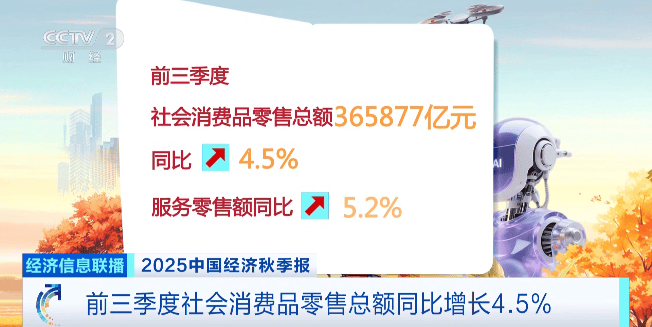
Core Viewpoint - China's GDP growth for the first three quarters of the year is 5.2%, indicating a stable and progressive economic development despite various pressures [1][3][5]. Economic Performance - The GDP for the first three quarters is 10,150.36 billion yuan, with a year-on-year growth of 5.2%, an acceleration of 0.4 percentage points compared to the previous year, and an economic increment of 396.79 billion yuan, which is 136.8 billion yuan more than the previous year [3]. - The industrial added value for large-scale industries increased by 6.2%, while the manufacturing sector grew by 6.8% [3]. - Retail sales of consumer goods reached 3,658.77 billion yuan, growing by 4.5%, with service retail sales increasing by 5.2% [3]. - Manufacturing investment saw a rapid growth of 4.0% year-on-year [3]. Employment and Prices - The urban survey unemployment rate remained stable compared to the first half of the year [3]. - The core Consumer Price Index (CPI) has seen an expanding growth for five consecutive months, indicating effective policies to expand domestic demand and promote consumption [3]. International Trade - China's foreign trade demonstrated resilience, with total goods trade value reaching 33.61 trillion yuan, a year-on-year increase of 4% [3]. - The exchange rate of the renminbi has remained stable and has shown an upward trend [3]. High-Quality Development - The proportion of added value from equipment manufacturing and high-tech manufacturing in large-scale industries reached 35.9% and 16.7%, respectively [7]. - Non-fossil energy consumption as a percentage of total energy consumption increased by approximately 1.7 percentage points year-on-year [7]. - New export drivers have emerged, with double-digit growth in the export of "new three samples" products [7]. Consumer Behavior - Significant growth in cultural, tourism, and sports-related consumption was noted, with an estimated 888 million domestic trips during the Mid-Autumn and National Day holidays, showcasing the resilience and vitality of the economy [11].