
商业银行净息差

Search documents
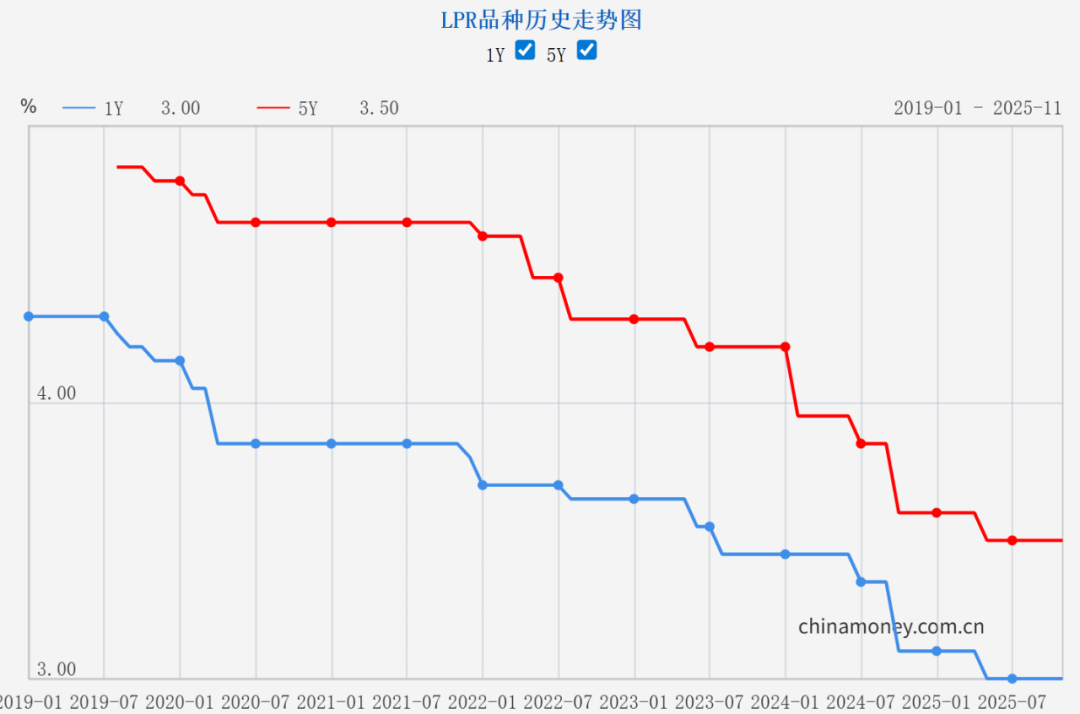
2月LPR报价继续持平
Ren Min Ri Bao· 2026-02-24 20:13
Core Viewpoint - The People's Bank of China announced that the Loan Prime Rate (LPR) for one year remains at 3.0% and for five years or more at 3.5%, unchanged from the previous month, indicating stability in monetary policy and market conditions [1] Group 1: LPR Announcement - The one-year LPR is set at 3.0% and the five-year LPR at 3.5%, effective until the next announcement [1] - This marks the ninth consecutive month that both LPR tenors have remained unchanged since June 2025 [1] Group 2: Market Conditions - The stability in policy rates, particularly the central bank's 7-day reverse repurchase rate, suggests that the pricing basis for the LPR has not changed significantly [1] - Recent data indicates that the net interest margin for commercial banks remained at a historical low by the end of Q4 2025, reducing the incentive for banks to lower the LPR [1] Group 3: Monetary Policy Support - In January 2026, the central bank introduced a package of structural monetary policies aimed at supporting key sectors of the economy, such as technology innovation and small enterprises, which reinforces the current monetary policy's stability [1]
盛松成:适时降准降息 配合积极的财政政策
Jing Ji Guan Cha Bao· 2026-01-10 12:22
Group 1 - The core viewpoint presented by Sheng Songcheng is that China's monetary policy is likely to adopt a "small step" approach, with a preference for reserve requirement ratio (RRR) cuts over interest rate reductions, while still allowing for some flexibility in both areas [1][2] - Sheng emphasizes that the monetary policy transmission mechanism in China is complex and relies heavily on the cooperation of commercial banks and the financial system, making it difficult for the central bank to precisely control changes at each stage of the transmission [1] - The central bank's toolbox for monetary policy has been expanding, with various liquidity support tools and secondary market treasury transactions being utilized to manage liquidity and stabilize interest rate fluctuations [2] Group 2 - Sheng argues that RRR cuts are more beneficial than interest rate cuts, as they increase the funds available for commercial banks, thereby better supporting proactive fiscal policies [2] - Since 2016, the statutory RRR has been cut 23 times, reducing the RRR for large deposit-taking financial institutions from 17.5% to 9%, a total decrease of 8.5 percentage points, while the policy interest rate has only been adjusted 14 times [2] - The current net interest margin of commercial banks is at a historical low of 1.42%, significantly down from over 3.5% in 2008, indicating that large interest rate cuts could further pressure banks' operations [3]
关键利率,维持不变!
Zhong Guo Zheng Quan Bao· 2025-11-20 04:35
Core Viewpoint - The Loan Prime Rate (LPR) remains unchanged for both the 1-year and 5-year terms, reflecting market expectations and stable monetary conditions [2][3]. Group 1: LPR Stability - The 1-year LPR is set at 3.0% and the 5-year LPR at 3.5%, with no changes from the previous period [2]. - The 7-day reverse repurchase rate, which serves as the pricing basis for LPR, remains at 1.40%, indicating no shifts in the underlying conditions for LPR [3]. Group 2: Banking Sector Insights - Commercial banks are experiencing low net interest margins, which limits their motivation to lower LPR quotes. The net interest margin was reported at 1.42% at the end of Q3, unchanged from Q2 but down 10 basis points from the end of the previous year [3]. - The weighted average interest rate for new corporate loans in October was 3.1%, approximately 40 basis points lower than the same period last year, while the rate for new personal housing loans was also 3.1%, down about 8 basis points year-on-year [3]. Group 3: Economic Outlook - Analysts suggest that the focus on stabilizing economic operations in Q4 of this year and Q1 of next year may lead to a phase of increased growth policies, with potential downward adjustments in LPR by year-end [4]. - A decrease in LPR could further lower loan rates for businesses and individuals, stimulating internal financing demand [4].

10月LPR保持不变 年内降息降准可期
Bei Jing Shang Bao· 2025-10-20 15:35
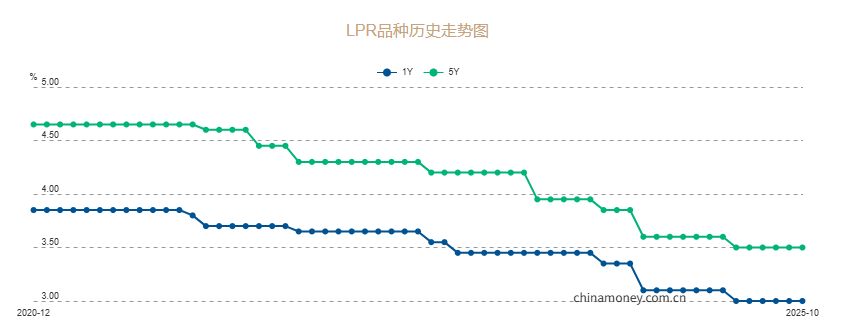
Core Viewpoint - The Loan Prime Rate (LPR) remains unchanged for five consecutive months, with the one-year LPR at 3% and the five-year LPR at 3.5%, reflecting stable monetary policy and market expectations [1][2][3]. Group 1: LPR Stability - The LPR has not changed since May 2025, when it was reduced by 10 basis points from 3.1% to 3% for the one-year rate and from 3.6% to 3.5% for the five-year rate [2]. - The stability of the LPR is attributed to unchanged policy rates, with the People's Bank of China conducting a 1.89 trillion yuan reverse repurchase operation at a rate of 1.4%, maintaining consistency in monetary policy [2][3]. - Analysts suggest that the current environment, including rising financing costs for commercial banks and historical low net interest margins, limits the motivation for banks to lower LPR quotes further [2][3]. Group 2: Future LPR Expectations - There is potential for a decrease in LPR before the end of the year, driven by efforts to stimulate domestic demand and stabilize the real estate market [4][5]. - The average interest rate for newly issued loans in September 2025 was approximately 3.1%, which is 40 basis points lower than the previous year, indicating a trend towards lower borrowing costs [4]. - External factors, such as the U.S. Federal Reserve's potential rate cuts, may further support the case for a reduction in LPR, as domestic monetary policy could become more accommodative [5][6]. Group 3: Market Conditions and Impacts - The net interest margin for commercial banks has been declining, reaching 1.42% by the end of Q2 2025, down 10 basis points from Q4 2024, indicating pressure on bank profitability [3]. - Recent economic data show a decline in consumption, investment, and industrial production, which may necessitate stronger measures to stabilize growth and employment in the fourth quarter [5][6]. - The anticipated regulatory measures may include targeted reductions in the five-year LPR to alleviate high mortgage rates and stimulate housing demand [6].
10月LPR出炉!连续5个月不变
Zhong Guo Zheng Quan Bao· 2025-10-20 02:45
Core Viewpoint - The People's Bank of China announced that the Loan Prime Rate (LPR) for both 1-year and 5-year terms remains unchanged at 3.0% and 3.5% respectively, marking the fifth consecutive month of stability in LPR rates [1][4]. Group 1: LPR Stability - The stability of the LPR aligns with market expectations, indicating no changes in the pricing basis for October [3][4]. - The low net interest margin for commercial banks reduces the incentive to lower LPR quotes, as banks face slightly increased financing costs in the money market [4]. Group 2: Loan Rates - Current corporate and personal loan rates are at low levels, with the weighted average interest rate for new corporate loans at approximately 3.1%, down about 40 basis points year-on-year, and for personal housing loans also at about 3.1%, down about 25 basis points year-on-year [4]. Group 3: Future Outlook - Experts suggest that there is still room for LPR to decline, particularly as measures to boost domestic demand and stabilize the real estate market are implemented [4]. - The central bank may consider using tools such as reserve requirement ratio cuts and restoring government bond trading to inject long-term liquidity into the banking system, potentially leading to further reductions in LPR in the coming months [4].
9月通胀数据点评:食品价格继续对冲核心通胀
Bank of China Securities· 2025-10-16 07:53
Report Industry Investment Rating - The report does not provide an industry investment rating [1][3][5] Core Viewpoints - Food prices continue to offset core inflation, and the low inflation of food may be persistent due to the slowdown in catering consumption growth and abundant supply of edible agricultural products. Policy rate cuts may face increased difficulty in a scenario where the stock market remains strong [1][3][7] Summary by Related Content CPI Analysis - In September, the core CPI continued to stabilize trend - wise, with a year - on - year increase of 1.0%. However, food prices offset core inflation, resulting in a slight year - on - year decline in the overall CPI. Food price increases were hindered by the slowdown in catering consumption growth, which may be persistent as catering consumption is now driven only by per - capita consumption demand growth. Abundant supply of edible agricultural products also suppresses food prices [3][6][7] PPI Analysis - In September, the PPI was flat month - on - month and continued to stabilize year - on - year. In the coal - steel industry chain, the coking coal spot price index in late September was close to the average level in December last year, and the futures main contract closing price fluctuated around the December average. But the price index of downstream rebar still had a gap compared to the December average. The decline in international oil prices in the first two weeks of October may put pressure on the October PPI [12][13] Policy Rate Analysis - Considering the continued improvement of the year - on - year PPI and core CPI indicators in September, the urgency of policy rate cuts is limited. The narrowing of commercial banks' net interest margins may still be a constraint on policy rate cuts. With the strong stock market, the year - on - year growth rate of commercial banks' time and other deposits has declined. If the stock market remains strong, it may be more difficult for commercial banks to further reduce deposit rates, and thus policy rate cuts may also face increased difficulty [3][13]
21社论丨推动货币政策措施落实落细,充分释放政策效应
2 1 Shi Ji Jing Ji Bao Dao· 2025-09-29 22:37
Core Viewpoint - The recent meetings of the Central Political Bureau and the People's Bank of China indicate a shift in monetary policy focus towards execution, reflecting confidence in the current economic stability and a reduced necessity for aggressive easing measures [1][2]. Group 1: Economic Performance - The industrial added value for large-scale enterprises grew by 6.2% year-on-year in the first eight months of the year, slightly lower than the 6.4% growth in the first half [1]. - The service production index maintained a year-on-year growth of 5.9%, consistent with the first half of the year [1]. - The economy is expected to achieve the annual growth target of 5.0%, indicating that there is no immediate need for policy intensification [1]. Group 2: Monetary Policy Adjustments - The People's Bank of China has shifted its language from "implementing a moderately loose monetary policy" to "ensuring detailed implementation," emphasizing the importance of execution [1][2]. - The net interest margin for commercial banks narrowed to a historical low of 1.42% in the second quarter, raising concerns about the impact of monetary easing on bank profitability [2]. - The central bank's focus is on balancing financial support for the real economy while maintaining the health of financial institutions [2]. Group 3: Policy Tools and Coordination - The central bank is committed to maintaining ample liquidity through various tools such as reverse repos and medium-term lending facilities [3]. - Structural monetary policy tools will be utilized to support sectors like technology innovation, consumption, small and micro enterprises, and foreign trade [3]. - There is an emphasis on the coordination between fiscal and monetary policies, with discussions on government bond issuance and offshore RMB bond mechanisms [3][4].
居民存款定期化趋势开始收敛,商业银行净息差下行将变缓
Hua Xia Shi Bao· 2025-09-28 11:19
Group 1 - The trend of residents' deposits becoming more time-bound is a significant phenomenon in the banking sector, but this trend is slowing down due to declining deposit rates and banks' cost-cutting measures [2] - From January to August 2024, residents' demand deposits increased by 5.202 billion yuan (1.3%), while time deposits rose by 76.391 billion yuan (7.7%), indicating a serious trend towards time deposits [2] - In 2025, residents' demand deposits decreased by 18.404 billion yuan (4.2%), while time deposits increased by 60.940 billion yuan (5.4%), showing that the trend towards time deposits continues but at a slower pace [2] Group 2 - For enterprises, the deposit structure shows a different trend; from January to August 2024, enterprise demand deposits decreased by 57.468 billion yuan (22.8%), while time deposits increased by 17.073 billion yuan (3.1%) [4] - In 2025, enterprise demand deposits increased by 8.798 billion yuan (4.4%), while time deposits slightly decreased by 0.947 billion yuan (0.16%), indicating a reversal of the time deposit trend for enterprises [5] - The significant increase in enterprise demand deposits this year is attributed to government bond issuance, which alleviated corporate debt pressure, allowing companies to invest more [6] Group 3 - The continuous decline in time deposit rates has led to an inverted yield curve, with short-term rates exceeding long-term rates, prompting banks to reduce time deposits to lower funding costs and improve net interest margins [6] - The average net interest margin of 58 listed banks has declined for five consecutive years, reaching 1.52% in 2024, with further narrowing to 1.43% in the first quarter of this year [6] - Although the rate of decline in net interest margins may slow, the downward trend is expected to continue [7]

盛松成:我国降准优于降息 但降息仍有空间|政策与监管
清华金融评论· 2025-09-17 09:23
Core Viewpoint - China's monetary policy is shifting towards using reserve requirement ratio (RRR) cuts instead of aggressive interest rate cuts to protect bank interest margins and maintain indirect financing channels, while also allowing for gradual interest rate reductions and innovative structural tools to stabilize finance and promote transformation [1][2]. Group 1: Monetary Policy Adjustments - Since 2016, China has adjusted the RRR 23 times, all downward, reducing the RRR for major deposit-taking financial institutions from 17.5% to 9.0%, a total decrease of 8.5 percentage points [3]. - In contrast, the policy interest rates have only been adjusted 14 times since 2016, indicating a preference for RRR cuts over significant interest rate reductions [3][4]. - The current average RRR for Chinese financial institutions is approximately 6.2%, suggesting substantial room for further RRR cuts compared to major economies where RRR tools are less utilized [5]. Group 2: Impact on Banking Sector - The net interest margin for commercial banks in China has decreased to 1.42%, the lowest on record, which raises concerns about the sustainability of the banking sector if interest rates are cut too aggressively [3][4]. - The banking sector is crucial for supporting the real economy, as it accounts for 89.7% of financing in China, compared to only 42% in the U.S., where direct financing plays a larger role [4]. Group 3: Fiscal and Monetary Policy Coordination - RRR cuts will increase the funds available for commercial banks, enabling them to better support proactive fiscal policies, as approximately 68% of national debt and 75% of local government debt is held by commercial banks [6]. - The effectiveness of monetary policy is contingent on the cooperation of commercial banks and the financial system, especially given the low excess reserve ratio in China [6]. Group 4: Interest Rate Dynamics - There is limited elasticity of consumption and investment to interest rate changes in China, which diminishes the effectiveness of interest rate cuts in stimulating economic activity [8]. - The decline in interest rates has led to a reduction in household deposits, with a decrease of 1.11 trillion yuan in July, indicating a relationship between lower interest rates and reduced savings [8]. - Despite the current low inflation and a slight appreciation of the yuan against the dollar, there remains room for further interest rate cuts, especially as external conditions improve with potential U.S. rate cuts [8][9]. Group 5: Structural Monetary Policy Tools - China has been innovating structural monetary policy tools, which have become increasingly important in supporting weak economic sectors and key areas such as technology innovation and green development [9]. - As of the end of 2024, structural monetary policy tools are expected to account for approximately 14.2% of total bank assets in China, highlighting their growing significance [9].
LPR报价连续3个月保持不变
Hua Xia Shi Bao· 2025-08-20 02:57
Core Viewpoint - The People's Bank of China (PBOC) has maintained the Loan Prime Rate (LPR) for both the 1-year and 5-year terms at 3.0% and 3.5% respectively, which aligns with market expectations [2] Group 1: LPR Quotation Stability - The LPR rates for August remained unchanged due to the stability of the policy interest rates, specifically the central bank's 7-day reverse repurchase rate [2] - Market interest rates have seen an upward trend recently, but banks lack the incentive to lower the LPR due to historically low net interest margins [2] Group 2: Economic Context - The continuous stability of the LPR for three months is attributed to a relatively strong macroeconomic performance in the first half of the year, reducing the immediate need for downward adjustments [2] - Experts suggest that the current period is one of policy observation, indicating a cautious approach to monetary policy adjustments [2] Group 3: Future Expectations - Analysts anticipate that the central bank may implement a new round of interest rate cuts and reserve requirement ratio reductions around the beginning of the fourth quarter, which could lead to a subsequent decrease in the LPR [2]
