
LPR报价

Search documents
2026年3月LPR报价保持不变,年中前后有望下调
Dong Fang Jin Cheng· 2026-03-20 02:57
Group 1: Report Industry Investment Rating - Not provided Group 2: Core Viewpoints of the Report - In March 2026, the LPR quotes remained unchanged, which was in line with market expectations. The direct reasons were that the pricing basis of LPR quotes remained unchanged and there was a lack of motivation for banks to actively lower the LPR quote spreads. The fundamental reason was that the macro - economy started strongly in 2026, and the current demand for stabilizing growth was not high, so the monetary policy was in an observation period [3][4]. - It is expected that a comprehensive policy - based interest rate cut will likely occur around mid - year, with a cut of 10 to 20 basis points, which will drive the LPR quotes to follow suit. This is an important measure to promote consumption and investment and hedge against external uncertainties [4]. - Due to factors such as geopolitical fluctuations and the continuous implementation of anti - involution policies, the price level will rise moderately this year, and the CPI increase will still be low. The exchange rate factor's impact on the flexible adjustment of domestic monetary policy is weakening, providing sufficient space for moderately loose monetary policy including interest rate cuts [5]. - It is expected that the regulatory authorities may guide the 5 - year - plus LPR quotes to decline significantly and combine with fiscal interest subsidies to lower the residential mortgage interest rate, which is crucial for stimulating housing market demand and reversing market expectations [5]. Group 3: Summary by Related Content LPR Quotes in March 2026 - On March 20, 2026, the 1 - year LPR was reported at 3.0% (the same as last month), and the 5 - year - plus LPR was reported at 3.5% (the same as last month) [2]. Reasons for Unchanged LPR Quotes in March - The pricing basis of LPR quotes remained unchanged as the policy interest rate (7 - day reverse repurchase rate) was stable [3]. - There was a lack of motivation for banks to actively lower the LPR quote spreads. Although the medium - and long - term market interest rates declined slightly, the commercial banks' net interest margin was at a historical low in Q4 2025, and there was pressure on the net interest margin to narrow in Q1 2026 [3]. Fundamental Reasons for Unchanged LPR Quotes since the Beginning of the Year - The macro - economy started strongly in 2026, with exports exceeding expectations, and improvements in consumption and investment growth in January - February. The new quality productivity sectors such as high - tech manufacturing developed rapidly, so the current demand for stabilizing growth was not high [4]. - In January 2026, the central bank launched a package of structural monetary policies, so the monetary policy was in an observation period [4]. Future Outlook - It is expected that a comprehensive policy - based interest rate cut will occur around mid - year, with a cut of 10 to 20 basis points, driving the LPR quotes to follow suit [4]. - The price level will rise moderately this year, and the CPI increase will be low. The exchange rate factor's impact on domestic monetary policy adjustment is weakening, providing space for moderately loose monetary policy [5]. - It is expected that the regulatory authorities may guide the 5 - year - plus LPR quotes to decline significantly and combine with fiscal interest subsidies to lower the residential mortgage interest rate [5].
LPR报价连续9个月不变
Sou Hu Cai Jing· 2026-02-24 19:48
Core Viewpoint - The latest Loan Prime Rate (LPR) for both 5-year and 1-year terms remains unchanged for nine consecutive months, with the 5-year LPR at 3.5% and the 1-year LPR at 3% [1] Group 1: LPR Stability - The LPR quotes for February align with market expectations, as the policy interest rate has remained stable since February, indicating no changes in the pricing basis for LPR [1] - The current net interest margin for commercial banks is at a historical low of 1.42%, suggesting a lack of motivation for banks to actively lower LPR quotes [1] Group 2: Economic Context - The stability of the LPR since June 2025 is attributed to strong export performance and rapid development in high-tech manufacturing sectors, which have helped the macro economy withstand external trade fluctuations and domestic real estate adjustments [1] - In January 2026, the central bank is expected to introduce a package of structural monetary policies to enhance support for key areas of the national economy, indicating that monetary policy will remain in an observation phase with expectations for stable policy rates and LPR quotes [1]
LPR报价连续9个月“按兵不动”
Qi Huo Ri Bao Wang· 2026-02-24 16:38
Group 1 - The People's Bank of China (PBOC) announced that the Loan Prime Rate (LPR) for 1-year remains at 3.0% and for 5-year and above at 3.5%, unchanged for nine consecutive months since June 2025 [1] - The stability of the LPR is attributed to three main factors: the anchoring effect of policy interest rates, pressure on banks' net interest margins, and the current monetary policy entering an observation period [1] - The net interest margin for commercial banks is at a historical low of 1.42% as of Q4 2025, leading banks to prefer maintaining current rates to protect their profit margins [1] Group 2 - The macroeconomic recovery in China is progressing well, with new growth drivers being cultivated, indicating that there is no urgent need for a comprehensive interest rate cut in the short term [2] - The PBOC has already implemented several structural monetary policy tools in January, focusing on supporting key sectors through targeted measures [2] - There is a possibility of interest rate cuts in Q2 2026 due to three reasons: reduced external pressure on the RMB as the US enters a rate-cutting cycle, the PBOC's reduction of the relending rate, and potential economic pressure from a slowdown in external demand [2]
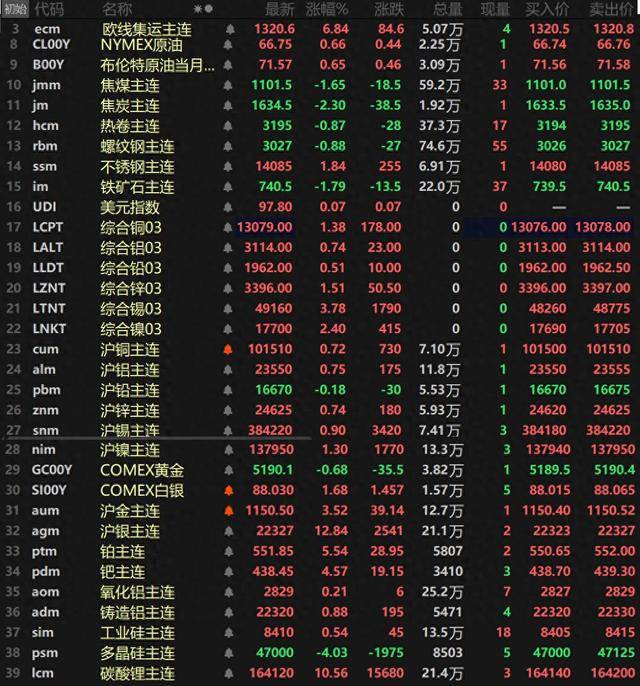
金属近全线飘红 沪银涨近13% 碳酸锂涨超10% 伦锡涨逾3%
Sou Hu Cai Jing· 2026-02-24 09:50
Metal Market - Domestic base metals experienced a general increase, with the exception of lead, which fell by 0.18%. Nickel led the gains with a rise of 1.3%, while other metals saw increases of less than 1% [1] - Lithium carbonate futures surged by 10.56% near the close, while polysilicon dropped by 4.03% and industrial silicon rose by 0.54% [1] - In the black metal sector, most commodities declined, with stainless steel increasing by 1.84%, while iron ore fell by 1.79% and rebar and hot-rolled coil both saw declines of around 0.8% [1] - Internationally, base metals were also up, with tin leading at 3.78%, followed by nickel at 2.4% and copper at 1.38% [1] - Precious metals showed mixed results, with COMEX gold down by 0.68% and COMEX silver up by 1.68%. In the domestic market, Shanghai gold rose by 3.52% and Shanghai silver surged by 12.84% [1][2] Macro Environment - The Ministry of Commerce announced the inclusion of 20 Japanese entities in an export control list to safeguard national security, prohibiting exports of dual-use items to these entities [5] - The People's Bank of China conducted a net withdrawal of 9.264 billion yuan through reverse repos, maintaining the operation rate at 1.40% [6] - The US dollar index rose by 0.07% to 97.8, with reports indicating potential new tariffs on several industries by the US government under the guise of national security [7] - Oil prices increased slightly, with WTI up by 0.66% and Brent up by 0.65%, as the market assesses the negotiation landscape between the US and Iran [8]

2026年2月LPR报价保持不变,二季度有望下调
Dong Fang Jin Cheng· 2026-02-24 06:34
Group 1: LPR Rates and Stability - The LPR rates for February 2026 remain unchanged at 3.0% for the 1-year term and 3.5% for the 5-year term, consistent with market expectations[1] - The stability in LPR pricing is attributed to the unchanged policy interest rates and a lack of incentive for banks to lower LPR due to historically low net interest margins of 1.42%[2] Group 2: Economic Outlook and Monetary Policy - The macroeconomic environment has remained resilient, supported by strong exports and growth in high-tech manufacturing, allowing for the achievement of economic growth targets in 2025[3] - The People's Bank of China has implemented structural monetary policies to support key sectors, indicating a period of observation for monetary policy with stable LPR rates expected[3] Group 3: Future Projections and Risks - The U.S. Supreme Court's ruling on tariffs introduces uncertainty in U.S. trade policy, which may exert downward pressure on China's macroeconomic performance in Q2 2026[4] - There is a potential for comprehensive policy rate cuts in Q2 2026 to stimulate consumption and investment, which could lead to a reduction in LPR rates[4] Group 4: Inflation and Housing Market - Inflation is expected to rise moderately in 2026, but overall price increases will remain low, providing room for accommodative monetary policy including potential rate cuts[5] - Regulatory measures may be taken to significantly lower the 5-year LPR to address high mortgage rates and stimulate housing demand[5]
去年全国城镇新增就业1267万人 发改委正研究制定城乡居民增收计划
Xin Lang Cai Jing· 2026-01-26 06:39
Employment and Labor Market - In 2025, the new urban employment reached 12.67 million, with an average urban survey unemployment rate of 5.2%, indicating overall stability in the employment situation [1] - The Ministry of Human Resources and Social Security plans to implement new employment policies for youth, including college graduates, and enhance recruitment activities [1] - Measures will be taken to support migrant workers and improve employment assistance for vulnerable groups, including veterans [1] Energy Sector - In 2025, 7,084 out of 7,480 key energy-consuming units passed energy measurement reviews, achieving a compliance rate of 94.71% [1] - The energy measurement reviews aim for full coverage of key energy-consuming units during the 14th Five-Year Plan period [1] Financial Sector - The Loan Prime Rate (LPR) for one year is set at 3.0% and for five years or more at 3.5%, remaining unchanged for eight consecutive months [2] - The People's Bank of China indicates there is still room for further reductions in reserve requirements and interest rates [2] Consumer Finance - The implementation period for the personal consumption loan interest subsidy policy has been extended to the end of 2026, with a 1% annual subsidy rate for eligible consumption [4] - The policy now includes credit card installment payments as part of the support scope [4] Tourism Sector - The 2026 version of the team tourism contract template will be implemented nationwide starting March 31, 2026, focusing on enhancing service quality and consumer protection [5] Investment and Economic Development - A special guarantee plan for private investment totaling 500 billion yuan will be implemented over two years to support small and micro enterprises [6] - The plan aims to provide loan guarantees for various business activities, including equipment purchases and digital transformation [6] Pharmaceutical Sector - In 2025, the National Medical Products Administration approved 76 innovative drugs, with 30 of them successfully entering the national medical insurance directory, achieving a coverage rate of 70% for new drugs approved in the first half of the year [6] Fiscal Policy - In 2025, the issuance of ultra-long special government bonds reached 1.3 trillion yuan to support consumption and economic transformation [7] - The funds are allocated for consumer subsidies and to stimulate sales in related sectors, enhancing the quality of life for citizens [7] Regulatory Framework - The National Supervisory Commission will implement the "Regulations on the Disclosure of Supervisory Work Information" starting March 1, 2026, to enhance transparency in supervisory activities [8] Economic Strategy - The National Development and Reform Commission is developing plans to stabilize employment and increase residents' income, which are crucial for boosting domestic demand [8]

有色金属周报:美元指数回落,有色板块震荡走高-20260126
Guo Mao Qi Huo· 2026-01-26 06:07
Group 1: Report Overview - Report Title: [Non-ferrous Metals Weekly Report] - Dollar Index Drops, Non-ferrous Sector Oscillates Higher [1] - Report Date: January 26, 2026 - Analysts: Fang Fuqiang, Xie Ling, Lin Jingyan Group 2: Investment Ratings - No investment ratings for the entire industry are provided in the report Group 3: Core Views - The dollar index has declined, leading to an oscillating upward trend in the non-ferrous sector [1] - For copper, short - term price pressure exists due to the US delaying new tariffs on key mineral imports, but the decline is limited due to the falling dollar index and improved market sentiment [8] - For zinc, the fundamental contradictions are insufficient, and its price is mainly affected by the sector's trend, suggesting a high - selling and low - buying strategy [95] - For nickel and stainless steel, due to factors such as potential supply shortages in Indonesia and shipping incidents in the Philippines, nickel prices are expected to be strong in the short - term, and stainless steel prices will run at a high level, with attention to potential risks such as short - squeeze in near - month contracts [198][199] Group 4: Summary by Section 4.1 Non - ferrous Metal Price Monitoring - The dollar index is at 97.5, with a daily decline of 0.79%, a weekly decline of 1.88%, and an annual decline of 0.78%. The exchange rate CNH is 6.9642, with a daily increase of 0.02%, a weekly decline of 0.07%, and an annual decline of 0.35% [6] - Most non - ferrous metals show varying degrees of price changes, with some rising and some falling. For example, the price of lithium carbonate has a significant increase, with a daily increase of 7.55%, a weekly increase of 24.16%, and an annual increase of 49.30% [6] 4.2 Copper (CU) - **Macro Factors**: China's 2025 GDP growth meets expectations, and recent domestic policies may improve domestic demand. The US has some policy stances that affect market risk appetite, and the dollar index is under pressure [8] - **Raw Material End**: The spot processing fee of copper ore decreases, the port inventory slightly increases, and the long - term processing fee benchmark for 2026 is set at 0 [8] - **Smelting End**: The loss of smelters using spot copper ore slightly expands, while the profit of those using long - term contracts increases [8] - **Demand End**: The downstream demand is released as the copper price falls, and the operating rate of refined copper rods increases [8] - **Inventory**: Global copper inventories increase significantly [8] - **Investment View**: The copper price is expected to oscillate with a slight upward trend. It is recommended to look for opportunities to go long at low levels [8] 4.3 Zinc (ZN) - **Macro Factors**: The macro - sentiment is complex, with geopolitical disturbances and central bank policy expectations affecting the market [95] - **Raw Material End**: The average domestic processing fee remains stable, the imported processing fee continues to decline, and the supply of zinc ore may be affected by geopolitical risks [95] - **Smelting End**: The domestic zinc ingot production continues to shrink, and the average loss per ton of zinc for smelters narrows slightly [95] - **Demand End**: The downstream is in the seasonal off - season, and the procurement is mainly for rigid needs [95] - **Inventory**: The social inventory and LME inventory of zinc ingots both show a slight increase [95] - **Investment View**: The zinc price is mainly affected by the sector's trend, and a high - selling and low - buying strategy is recommended [95] 4.4 Nickel - Stainless Steel (NI - SS) - **Macro Factors**: The US PCE inflation data meets expectations, and the Fed's interest - rate cut expectation remains unchanged. The Chinese central bank may implement further policies. Indonesia's policies increase concerns about nickel supply [198][199] - **Raw Material End**: The premium of Indonesian nickel ore is firm, the rainfall in the Philippine production area affects transportation, and the domestic port inventory of nickel ore is decreasing [198][199] - **Smelting End**: The production of pure nickel and nickel - iron may increase, and the production of stainless steel is expected to rise in January [198][199] - **Demand End**: The social inventory of stainless steel is decreasing, and the downstream is in the pre - Spring Festival stocking period. The demand for new energy is affected by the production schedule of precursor enterprises [198][199] - **Inventory**: Global nickel inventories are increasing [198] - **Investment View**: Nickel prices are expected to be strong in the short - term, and stainless steel prices will run at a high level. Attention should be paid to supply disturbances and potential short - squeeze risks [198][199]
宏观金融数据日报-20260123
Guo Mao Qi Huo· 2026-01-23 02:40
Report Summary 1. Report Industry Investment Rating - Not provided in the given content 2. Core Viewpoints - The current LPR quotes remain stable. The main reasons are that the central bank's 7 - day reverse repurchase rate remains unchanged and the bank's liability cost is stable while the net interest margin is at a historical low, so commercial banks lack the motivation to actively lower LPR [4]. - Although the valuation levels of some technology themes in the A - share market are at historical highs, the overall A - share valuation is at a reasonable and neutral level. The regulatory attitude is to crack down on "pseudo - leaders" without fundamental support, and the policy continues to protect the "long - bull" pattern of the stock index. The current capital - driven force for the market is still strong, and the domestic fundamentals are in the bottom - building stage. It is expected that the upward trend of the stock index has not ended, and the short - term shock adjustment space is limited. Long - term investors can gradually build long positions [6]. 3. Summary by Relevant Contents Interest Rates and Bond Market - DRO01 closed at 1.42 with a 9.59bp increase, DR007 closed at 1.51 with a 1.22bp increase, GC001 closed at 1.53 with a 3.50bp decrease, GC007 closed at 1.56 with a 0.50bp increase, SHBOR 3M closed at 1.60 with a 0.20bp decrease, and LPR 5 - year remained at 3.50 with no change [3]. - The 1 - year treasury bond closed at 1.28 with a 0.25bp increase, the 5 - year treasury bond closed at 1.55 with a 1.00bp increase, the 10 - year treasury bond closed at 1.84 with a 0.65bp increase, and the 10 - year US treasury bond closed at 4.26 with a 4.00bp decrease [3]. - The central bank conducted 210.2 billion yuan of 7 - day reverse repurchase operations with an operating rate of 1.40%. The maturity of reverse repurchase on the same day was 179.3 billion yuan, resulting in a net investment of 30.9 billion yuan [3]. Stock Index Futures and Stock Market - The closing prices and changes of major stock indexes: The Shanghai - Shenzhen 300 rose 0.01% to 4723.7, the Shanghai 50 fell 0.46% to 3053.1, the CSI 500 rose 0.57% to 8387.6, and the CSI 1000 rose 0.75% to 8309.3 [5]. - The trading volume and position changes of stock index futures: IF trading volume decreased by 4.7% to 114,719, and the position increased by 1.0% to 289,557; IH trading volume decreased by 3.5% to 52,603, and the position increased by 1.5% to 97,532; IC trading volume decreased by 19.5% to 138,385, and the position decreased by 0.1% to 329,619; IM trading volume decreased by 19.5% to 172,599, and the position decreased by 2.5% to 372,277 [5]. - The total trading volume of the Shanghai, Shenzhen, and Beijing stock markets was 2.7166 trillion yuan, an increase of 92.6 billion yuan from the previous day, and it exceeded 2.5 trillion yuan for the 14th consecutive trading day. Most industry sectors closed up, with aerospace, mining, shipbuilding, glass fiber, gas, petroleum, photovoltaic equipment, coal, and cement building materials sectors leading the gains, while electronic chemicals and insurance sectors leading the losses [5]. Stock Index Futures Basis - The basis of IF contracts: The current - month contract was at a 0.46% premium, the next - month contract at a 0.58% premium, the current - quarter contract at a 2.13% premium, and the next - quarter contract at a 3.16% premium [7]. - The basis of IH contracts: The current - month contract was at a 1.60% discount, the next - month contract at a 1.69% discount, the current - quarter contract at a 0.36% discount, and the next - quarter contract at a 1.37% premium [7]. - The basis of IC contracts: The current - month contract was at a 2.46% discount, the next - month contract at a 0.95% discount, the current - quarter contract at a 2.29% premium, and the next - quarter contract at a 3.50% premium [7]. - The basis of IM contracts: The current - month contract was at a 1.31% discount, the next - month contract at a 1.29% premium, the current - quarter contract at a 5.64% premium, and the next - quarter contract at a 6.57% premium [7].
LPR连续8个月“按兵不动” 专家:短期内货币政策将处于观察期
Mei Ri Jing Ji Xin Wen· 2026-01-20 12:37
Core Viewpoint - The latest Loan Prime Rate (LPR) remains unchanged at 3.0% for 1-year and 3.5% for over 5 years, marking eight consecutive months of stability, with expectations for GDP growth to rebound to around 4.7% in Q1 2026 [1][2]. Group 1: Reasons for Unchanged LPR - The stability of the LPR is attributed to the unchanged policy interest rates, particularly the central bank's 7-day reverse repurchase rate, which indicates that the pricing basis for the LPR has not changed [2]. - Major mid to long-term market interest rates, including the 1-year interbank certificates of deposit yield, have remained stable, leading to little change in commercial banks' financing costs [2]. - The lack of incentive for banks to lower the LPR is due to historically low net interest margins [2]. Group 2: Economic Outlook and Policy Implications - Despite a decline in economic growth in Q4 2025 due to real estate market adjustments and weakened investment and consumption, stable employment and rising price levels are noted [3]. - The implementation of new policies in January 2026, including a structural interest rate cut of 0.25%, is expected to support economic recovery, alongside the gradual effects of previous investment expansion policies [3]. - The regulatory body may guide a significant reduction in the 5-year LPR to alleviate high mortgage rates and stimulate housing demand [3]. Group 3: Future Monetary Policy Direction - The central bank's recent structural interest rate cut indicates a reduced necessity for comprehensive rate cuts in the short term [4]. - The balance between supporting the real economy and maintaining the health of the financial sector is crucial, as the net interest margin for commercial banks remains at a historical low of 1.42% [4]. - Future monetary policy may involve a combination of measures, including reserve requirement ratio cuts and interest rate reductions, depending on market conditions and fiscal policy implementation [5][6].
2026年1月LPR报价保持不变,二季度有望跟进政策利率下调
Dong Fang Jin Cheng· 2026-01-20 02:56
Group 1: LPR Pricing and Economic Indicators - The LPR for 1-year and 5-year periods remains unchanged at 3.0% and 3.5% respectively as of January 2026, consistent with market expectations[1] - The stability in LPR pricing is attributed to unchanged policy rates and stable market interest rates, particularly in the interbank lending market[2] - Economic growth is projected to rebound to approximately 4.7% year-on-year in Q1 2026, despite challenges in the real estate market and weakened investment and consumption[3] Group 2: Future Monetary Policy Outlook - There is potential for a comprehensive policy rate cut in Q2 2026, which may lead to a decrease in LPR pricing to stimulate consumption and investment[3] - The 2026 inflation rate is expected to remain low, allowing for a moderately accommodative monetary policy, including potential interest rate cuts[4] - The Federal Reserve's anticipated rate cuts in 2026 may reduce constraints on domestic monetary policy adjustments[5] - Regulatory measures may be implemented to significantly lower the 5-year LPR to address high residential mortgage rates and stimulate housing demand[5]