方便速食

Search documents
75亿,自热火锅顶流破产了
虎嗅APP· 2026-02-07 13:34
以下文章来源于融中财经 ,作者王涛 融中财经 . 中国领先的股权投资与产业投资媒体平台。聚焦报道中国新经济发展和创新投资全产业链。通过全媒体 资讯平台、品牌活动、研究服务、专家咨询、投资顾问等业务,为政府、企业、投资机构提供一站式专 业服务。 本文来自微信公众号: 融中财经 ,作者:王涛 谁有能想到,曾经大红大紫的自热火锅顶流"自嗨锅"走到了破产的边缘。 最近,自嗨锅关联公司杭州金羚羊企业管理咨询有限公司新增一则破产审查案件,申请人为马某,经 办法院为杭州市余杭区人民法院。更多的信息显示,目前杭州金羚羊企业管理咨询有限公司关联多条 被执行人信息,被执行总金额超1.4亿元。 将时针拨回到2021年的那个冬天,自嗨锅正站在它事业的巅峰。彼时,全国各大商超的货架上,橙 色包装的自嗨锅占据着最醒目的位置;电梯广告里,明星代言的广告语轮番轰炸;直播间里,主播们 卖力地展示着"15分钟吃上热火锅"的魔力。 品牌创始人蔡红亮频繁现身各类创业论坛,分享他如何从一个零食帝国(百草味)的缔造者,转身成 为"方便食品革命者"的故事。资本的狂热达到了顶点——CMC资本、高榕资本、华映资本等一线机 构争相入局,公司估值逼近百亿大关,年 ...

颐海国际
2026-01-26 02:50
Summary of Conference Call on Yihai International Company Overview - **Company**: Yihai International - **Industry**: Food and Beverage - **Analyst**: Tian Di, West Securities Key Points and Arguments Investment Thesis - **Dividend Yield**: Yihai has a dividend payout ratio exceeding 90%, with a projected valuation of around 15 times for 2026, resulting in a dividend yield of over 6% [1][2] - **Growth Potential**: The company is expected to benefit from the recovery in the restaurant sector, particularly due to its 30% revenue linkage with Haidilao, which could enhance Yihai's performance and valuation [1][2] New Growth Drivers - **B-end and Overseas Markets**: Currently, B-end customers and overseas markets contribute approximately 13-14% of total revenue, with growth rates exceeding 30%, and B-end growth potentially reaching over 50% [2][3] - **Long-term Outlook**: The overseas market, particularly in Southeast Asia, could expand from $400 million to $1.5-2 billion, indicating significant growth potential [2][3] Financial Projections - **Revenue Growth**: Projected revenue growth of about 6% for 2026, with profit growth around 10%, considered conservative [3][4] - **Historical Performance**: The company has experienced fluctuations in stock price and valuation since its IPO in 2016, with a peak valuation in 2021 due to high growth expectations [4][5] Market Conditions - **Industry Challenges**: The food and beverage sector has faced price wars and declining prices due to rapid capacity expansion, leading to lower revenue growth expectations [5][6] - **Current Market Sentiment**: Market expectations for growth are low, particularly for Haidilao and related products, but long-term growth potential remains [5][6] Revenue Breakdown - **Revenue Sources**: Yihai's revenue is approximately $6.5-6.6 billion, with nearly 30% from Haidilao. The remaining revenue is from B-end and C-end sales, with C-end sales showing stability but limited growth [6][7] - **C-end Performance**: C-end sales have been stable, with volume growth offset by price declines, but price stabilization is expected to improve revenue [12][13] B-end Market Strategy - **Large B Customers**: Revenue from large B customers reached approximately $400 million in 2025, with expectations for continued growth [15][16] - **Small B Customers**: A new team has been established to target small B customers, with significant growth potential anticipated [21][22] Overseas Market Strategy - **Southeast Asia Focus**: Southeast Asia is the largest market, accounting for about 60% of overseas revenue, with significant growth potential due to local consumption habits [28][29] - **Product Localization**: Yihai is developing localized products for Southeast Asian markets, which could enhance market penetration [30][31] Profitability Outlook - **Margin Improvement**: Profit margins are expected to improve due to price stabilization and reduced promotional discounts, with potential for profit growth to exceed 10% [35][36] - **Valuation**: The company is currently valued at around 15 times earnings for 2026, with a stable dividend yield of over 6% [36][37] Additional Important Insights - **Market Positioning**: Yihai's ability to sell to local consumers in overseas markets is a unique advantage compared to competitors [33][34] - **Future Growth Catalysts**: Potential for exceeding profit growth expectations if restaurant recovery accelerates and overseas market localization succeeds [37] This summary encapsulates the key insights and projections discussed during the conference call regarding Yihai International's performance, market strategies, and growth potential in the food and beverage industry.

食品饮料行业周度更新:数据复盘看2025年食品主要品类增长及格局变化-20260119
Changjiang Securities· 2026-01-18 23:30
Investment Rating - The industry investment rating is "Positive" and is maintained [9] Core Insights - From 2024 to 2025, most food categories are expected to experience negative year-on-year sales growth, facing significant growth pressure. Frozen food is relatively outstanding, achieving nearly 2% positive growth in 2025. The decline in growth rates for condiments and dairy products has notably narrowed. However, convenient fast food and snack categories are under considerable pressure, with the former expected to decline by 8% in 2025 and the latter experiencing a continuous decline of over 10% for two consecutive years, primarily due to channel fragmentation, price wars, and consumer downgrading [2][4][14]. Summary by Relevant Sections Sales Growth Trends - The sales growth rate for most food categories is projected to remain negative from 2024 to 2025, with frozen food showing a positive growth of nearly 2% in 2025. The growth rate decline for condiments and dairy products has significantly narrowed, while convenient fast food and snack categories are under pressure, with the former expected to decline by 8% and the latter over 10% [2][4][14]. Sales Volume Trends - The year-on-year change in sales volume for various categories generally follows the same trend as sales revenue. The snack category is expected to see a significant increase in sales volume decline in 2025 compared to 2024, contrasting with the moderate decline in sales revenue. This is attributed to the rise of bulk snack channels, which have diverted demand for smaller purchases, forcing traditional retail channels to increase single-item specifications to maintain cost-effectiveness, thereby reducing sales volume [4][14]. Price Trends - Over the past five quarters (Q4 2024 to Q3 2025), the price index for food, beverages, and daily chemicals has consistently remained below 100, indicating ongoing price downward pressure. By Q4 2025, the indices for these three categories are concentrated between 98-99, with food slightly better than the others, but the difference is minimal. The overall price trend is converging, with a narrowing fluctuation range, indicating a lack of significant independent trends across categories, primarily influenced by the macroeconomic environment [4][16]. Subsector Performance - The food and beverage index has shown a 0.19% increase since early 2026, lagging behind the Shanghai and Shenzhen 300 index, which increased by 2.20%. The recent week has seen leading gains in red wine and snack sectors, while the white wine and condiment sectors have experienced significant pullbacks [6][42]. Industry Dynamics - The industry is actively responding to market changes through digital transformation, new product incubation, and capital operations. Notable movements include Guizhou Moutai's user growth on the "i Moutai" platform and East Peak Beverage's projected significant profit growth for 2025. Additionally, new product launches and strategic partnerships are being pursued by various companies to adapt to changing consumer preferences [7][48][49].




知行数据观察:方便速食品类
知行战略咨询· 2026-01-14 14:21
Investment Rating - The report indicates a positive investment outlook for the convenience food industry, projecting significant growth and opportunities in the coming years [12]. Core Insights - The convenience food market in China is expected to grow from CNY 673.6 billion in 2023 to over CNY 1 trillion by 2026, with a compound annual growth rate (CAGR) of approximately 17.5% from 2024 to 2026 [12]. - The industry is driven by evolving consumer demands, faster lifestyles, and continuous product innovation, indicating a robust future growth trajectory [12]. - Regulatory trends are shifting towards health-oriented standards, promoting low-fat and low-salt products, which aligns with consumer health consciousness [14]. Summary by Sections Industry Macro Market Research - The convenience food industry is defined as food products that are pre-prepared for easy consumption, catering to the fast-paced lifestyle of consumers [10]. - The market size has shown consistent growth, with a notable increase from CNY 3,948 billion in 2016 to CNY 6,736 billion in 2023, and is projected to reach CNY 10,749 billion by 2026 [12][13]. - The growth rate has fluctuated, with a significant increase expected in the coming years, reaching 17.5% in 2024 and 17.6% in 2025 [12]. Online Industry Trend Overview - As of September 2025, Douyin has surpassed Taobao in sales volume for convenience foods, achieving a sales figure of CNY 264.2 billion across both platforms [19]. - Douyin's sales strategy focuses on low prices and high sales volume, leading to a significant market share increase [19]. - The report highlights a shift in consumer purchasing behavior, with Douyin's emerging brands showing strong growth compared to traditional brands on Taobao [30]. Brand Analysis - The report identifies key brands in the convenience food sector, noting that while traditional brands like Bai Xiang and Kang Shi Fu dominate in sales, newer brands on Douyin are experiencing rapid growth [30]. - The concentration of top brands is higher on Douyin, indicating a more competitive landscape where new entrants can thrive [30]. - Specific product categories such as instant noodles and rice dishes are experiencing varied growth rates, with some traditional categories facing declines while others, like plant-based options, are gaining traction [22][25]. Consumer Behavior Insights - Approximately 40% of consumers reported increased spending on convenience foods in 2024, with diverse consumption scenarios emerging, including outdoor activities [16]. - The report emphasizes the need for brands to innovate in product convenience and adaptability to meet the evolving consumer preferences [16]. - The convenience food market is characterized by seasonal trends, with certain products like zongzi seeing spikes in sales during specific festivals [32].





2025中国酸辣粉行业发展报告-纳食产业研究院
Sou Hu Cai Jing· 2025-10-27 04:10
Group 1 - The convenience food industry is experiencing a transformation driven by consumer demand upgrades, supply chain improvements, and production process innovations, leading to product diversification and innovation [1] - Regional specialty foods like snail noodles and spicy sour noodles are gaining national and international recognition, becoming significant economic carriers that promote cultural exchange and stimulate domestic demand [1] - The spicy sour noodle sector is expanding rapidly, contributing positively to local employment and regional economic development, while facing pressures from the overall convenience food industry's challenges [1] Group 2 - The spicy sour noodle market is shifting from basic satiation to quality consumption, entering a new phase focused on health attributes and high-end experiences [2] - The industry is proactively seeking transformation, moving from scale growth to value enhancement amid significant changes in consumer trends and market competition [2] - The overall consumption of instant noodles has decreased by 4 billion packs from 2020 to 2023, with projections indicating a drop to 43.8 billion packs in 2024 and an 8.9% year-on-year decline in sales by Q2 2025 [2] Group 3 - The spicy sour noodle industry is entering a phase of standardization and collaboration, with the establishment of the Henan Spicy Sour Noodle Industry Alliance in October 2024 to promote industry development and product quality [8] - Companies are innovating and collaborating to adapt to industry changes, with brands like Lixing and Jinghua expanding OEM businesses and creating private label products with new retail platforms [12] - The industry is expected to achieve breakthroughs in product innovation, channel expansion, standardization, and brand development, driven by collaborative development across the entire supply chain [14] Group 4 - The competitive landscape of the spicy sour noodle segment is characterized by a diverse array of market participants, with a low concentration level, particularly in online platforms, indicating potential for market share growth for smaller brands [19] - The offline market concentration for spicy sour noodles is projected to increase, with the top 10 brands holding approximately 66.14% market share in 2024 [19] - The industry is witnessing a shift towards healthier, more refined, and standardized products, as consumer preferences evolve beyond basic nutritional needs [16] Group 5 - The price of sweet potato starch is expected to stabilize after experiencing fluctuations, with prices around 9,500 yuan per ton in early 2024, followed by a gradual increase into 2025 [23] - The domestic market for cassava starch has seen a downward trend due to weak demand, with prices expected to decline further in the first half of 2025, before potentially rising again [26]

年销10亿后,「莫小仙」王正齐说要换种活法
36氪未来消费· 2025-10-22 15:00
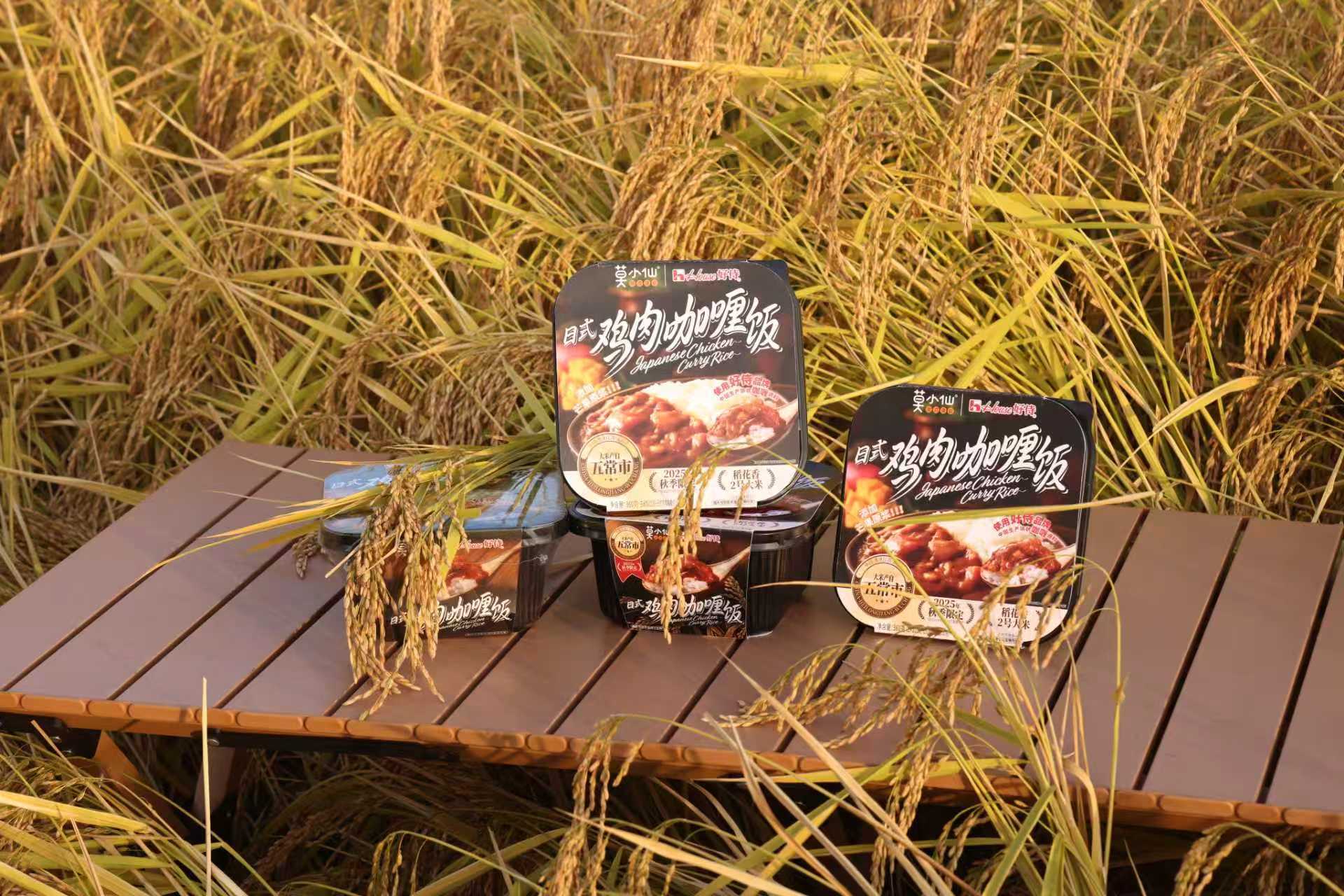
Core Insights - The article discusses the transformation of the Chinese retail landscape, emphasizing the shift from channel-driven growth to product-driven strategies for brands like Mo Xiaoxian [4][5][11]. Group 1: Company Transformation - Mo Xiaoxian, a fast-food brand established in 2017, has experienced significant growth, achieving over 1 billion yuan in sales by 2022, driven by e-commerce and offline channels [4][5]. - The founder, Wang Zhengqi, has shifted focus from sales to product development, indicating a new phase in the company's strategy as the retail environment evolves towards a quality-driven market [4][5][11]. - The recent launch of a curry product line, developed in collaboration with the Japanese company House Foods, marks a strategic pivot towards creating differentiated products [9][10][11]. Group 2: Market Dynamics - The retail environment in China is undergoing profound changes, with a consensus among industry players that profit maximization is essential, leading to the closure of unprofitable channels [5][15]. - The fragmentation of the retail channel system is evident, with various players targeting specific consumer segments, making competition more intense and necessitating a focus on unique product offerings [15][19]. - The acceptance of curry flavors in China is increasing, with over 2 million posts on Xiaohongshu discussing curry, indicating a growing consumer interest that Mo Xiaoxian aims to capitalize on [9][10]. Group 3: Product Development and Strategy - The development of the curry product line took over nine months, highlighting the company's commitment to quality and consumer experience [11][12]. - Wang Zhengqi emphasizes the need for differentiation and cost leadership in product development, aiming to create unique offerings that resonate with consumers [12][19]. - The company plans to explore more global flavors and traditional Chinese culinary elements, indicating a broader strategy for product diversification [12][19].

年销10亿后,「莫小仙」王正齐说要换种活法
3 6 Ke· 2025-10-22 02:21
Core Insights - The company "Mo Xiaoxian" is transitioning from a sales-driven model to a product-driven approach in response to changes in the retail environment and consumer preferences [1][2][8] - The introduction of a new curry product line, developed in collaboration with the Japanese company "Hao Shi," marks a strategic shift for Mo Xiaoxian, aiming to capture a unique market opportunity in the fast-food sector [4][5][9] Group 1: Company Strategy - Mo Xiaoxian's founder, Wang Zhengqi, emphasizes the need for product innovation as the retail landscape evolves, moving away from reliance on channel expansion [1][2] - The company has undergone significant restructuring, focusing on product development and quality, with a dedicated team for creating new offerings [8][10] - The new curry series, including products like "Japanese Chicken Curry Udon" and "Japanese Black Chocolate Beef Curry Udon," aims to meet the growing consumer interest in curry flavors [5][4] Group 2: Market Trends - The acceptance of curry flavors in China is increasing, with over 2 million posts on social media platform Xiaohongshu highlighting its popularity among younger consumers [4] - The retail channel landscape is becoming fragmented, with various players targeting different consumer segments, leading to increased competition and a shift in focus towards product differentiation [10][11] - The company recognizes the importance of collaborating with top-tier suppliers and leveraging unique product attributes to stand out in a crowded market [5][9] Group 3: Operational Changes - Mo Xiaoxian has invested in building its own factory, which began operations in 2024, to enhance control over product quality and production processes [13] - The company is restructuring its management, with Wang Zhengqi shifting his focus from sales to product development, spending 70% of his time with the product team [10][15] - The goal is to create differentiated products that provide value to distributors and consumers, addressing the challenges posed by evolving retail dynamics [15][14]
从线下POS数据看方便速食与速冻食品的创新升级
Sou Hu Cai Jing· 2025-10-19 06:04
Group 1: Frozen Food Market - In Q2 2025, the frozen food category was the only segment to achieve positive growth, with sales increasing by over 1% year-on-year, amidst a decline in beverages, snacks, and dairy products [1][5][14] - Frozen sausages saw remarkable performance, with sales soaring over 30% year-on-year, maintaining growth for four consecutive quarters and capturing a market share exceeding 6% [1][29] - The pizza category experienced explosive growth, with sales skyrocketing over 50% year-on-year, particularly in the small-sized pizzas priced between 10 to 15 yuan [1][34] Group 2: Instant Food Market - The overall instant food market declined by 10.1%, but instant noodles emerged as the best-performing subcategory, leveraging price increases to enhance category value [2][10] - Korean-style spicy noodles dominated the flavor segment with an absolute market share of nearly 48%, significantly outpacing other flavors [2][23] - Brands like Bai Xiang and Samyang showed strong performance, with Bai Xiang achieving six consecutive quarters of market share growth and Samyang's sales in the spicy noodle segment increasing by over 20% [2][20] Group 3: Consumer Trends and Innovations - The report highlights a "kitchen efficiency revolution" driving product innovation and brand changes, focusing on convenience, taste, and personalization [2][10] - The rise of air fryers, with cumulative sales surpassing 100 million units, is reshaping the competitive landscape for frozen foods [1][26] - New product adaptations, such as the collaboration of traditional foods with modern branding and the restructuring of pizza specifications, reflect changing consumer preferences [2][10]

马上赢-食品行业:从线下POS数据看方便速食与速冻食品的创新升级-251015
Xin Lang Cai Jing· 2025-10-15 04:27
Core Insights - The overall trend in the food, beverage, and alcohol categories shows that frozen food sales increased by over 1% year-on-year in Q2 2025, making it the only growing category, with hot pot meatballs and frozen sausages leading the growth [1] Frozen Food Category - Hot pot meatballs are positioned in the star quadrant, holding the second-largest market share, and experienced a year-on-year growth of 20% [1] - Frozen sausages saw a year-on-year sales increase of 30%, entering the star quadrant [1] - Pizza recorded the highest year-on-year sales growth of over 50%, placing it in the potential quadrant [1] Convenience Food Category - Instant noodles have been performing the best within the convenience food category, with the price index surpassing 100 since August 2024, leading to an overall price index for convenience foods exceeding 100 in October 2024 [1] - Sales of instant noodles, room temperature ham sausages, and low-temperature sausages are experiencing a year-on-year decline of approximately 8%, positioned at the intersection of the star and mature quadrants [1] - Snail noodles are the best-performing category in the star quadrant, with a year-on-year decline of 3% [1]
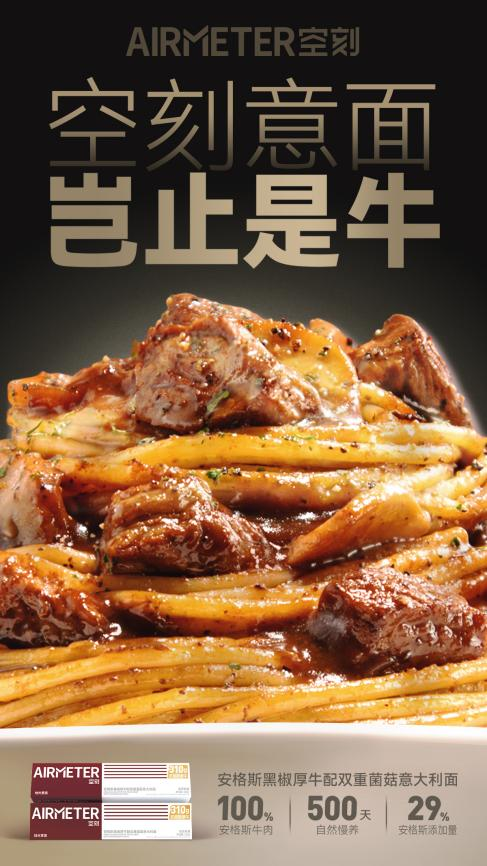
刷新行业标准!空刻安格斯厚牛意面全新升级,引领行业高品质变革
Zhong Guo Shi Pin Wang· 2025-09-25 04:25
Core Insights - The company is transitioning the instant food industry from a "convenience-first" approach to a "quality and convenience" model, responding to the growing consumer demand for high-quality products [1] - The upgraded Angus Black Pepper Thick Beef Pasta features a revolutionary approach to core ingredients, aiming to fill the gap in high-end Western instant food and reshape consumer perceptions of quality [1][9] Group 1: Product Innovation - The Angus Thick Beef Pasta upgrade emphasizes the pursuit of high-end meat ingredients, with a beef content increased to 29% and a unique 2.5cm thick cut that locks in juices and enhances flavor [3] - The combination of mushrooms and black pepper in the product also adds more layers of flavor, showcasing the company's commitment to quality ingredients [3] Group 2: Supply Chain and Sourcing - The company is a pioneer in ingredient traceability within the light-cooking pasta sector, focusing on sourcing high-quality ingredients globally, including selecting premium Angus beef from specific regions [5] - The sourcing strategy includes utilizing the North Latitude 47° region, known for its ideal conditions for raising Angus cattle, ensuring a high-quality product through a scientifically managed feeding process [5] Group 3: Brand Philosophy and Consumer Engagement - The company promotes a philosophy of "slow nurturing for quality," resonating with consumers who value high-quality living, as exemplified by the endorsement from prominent figures like Luo Zhenyu [7] - The brand aims to provide a premium dining experience that can be prepared in just 15 minutes, emphasizing the balance between quality and convenience [7] Group 4: Industry Leadership and Responsibility - The Angus Thick Beef Pasta upgrade reflects the company's commitment to leading the industry towards higher standards, encouraging other brands to enter the high-quality competition space [9] - The company aims to enhance the value of local premium ingredients and promote the integration of quality Chinese ingredients into everyday meals, thereby driving the overall advancement of the Western fast food sector [9]