
咖啡

Search documents
瑞幸咖啡出海美国,高价策略能否征服本土消费者?
Sou Hu Cai Jing· 2025-08-11 07:21
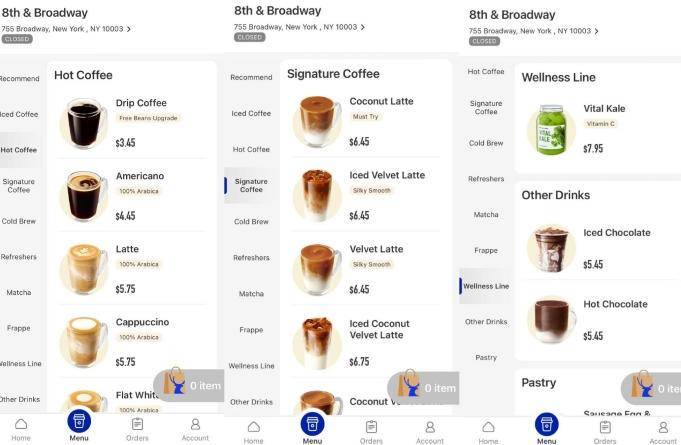
Core Insights - Luckin Coffee has opened two stores in New York, marking a significant step in its U.S. market entry, adopting a more cautious approach compared to its aggressive domestic expansion strategy [1][3] - The pricing strategy in the U.S. aligns closely with Starbucks, with drink prices ranging from $3.45 to $7.95, indicating a shift from the "high cost-performance" model familiar to domestic consumers [3][5] - The locations of the new stores are strategically chosen to attract Chinese students and international tourists, enhancing brand visibility and competition with local coffee giants [3][5] Pricing Strategy - The pricing of Luckin's beverages in the U.S. is comparable to Starbucks, with the most expensive item priced at $7.95 and the cheapest at $3.45, reflecting a new market positioning [3][5] - Compared to Dunkin', Luckin's prices exceed by 50% to 100%, which may complicate its market integration and slow down expansion efforts [6] Operational Strategy - The two stores serve as a "control experiment" for Luckin to test profitability and competitive strength against established brands like Starbucks [5] - The company aims to adapt its offerings based on local consumer preferences and feedback, enhancing its brand's local adaptability [5] Market Potential - The U.S. coffee market is projected to grow from $28 billion in 2024 to $39.2 billion by 2033, presenting a significant opportunity for Luckin if it can establish a foothold [5] - As of the end of Q1, Luckin had a total of 24,097 stores globally, with only 65 located outside China, primarily in Singapore, indicating room for international growth [5] Challenges - Initial entry into the U.S. market presents challenges such as high store and labor costs, as well as supply chain adaptation issues, which may lead to increased overall costs [5] - The company may consider promotional strategies similar to those used in China, such as distributing coupons and offering discounts, to accelerate market penetration [6]


果然财评|花300万买了20公斤咖啡豆,买的究竟是什么?
Qi Lu Wan Bao· 2025-08-11 06:37
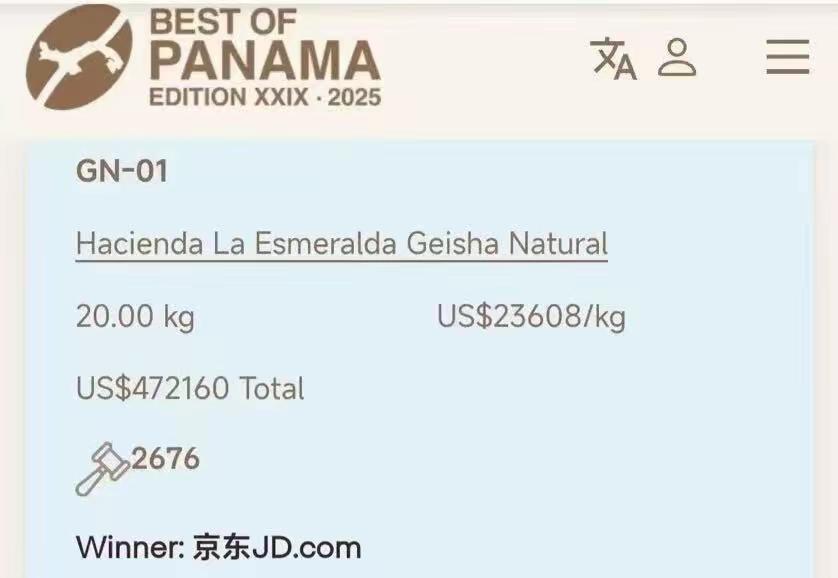
Core Insights - JD.com made headlines by purchasing 20 kilograms of top-quality coffee beans from the renowned Emerald Estate for over 3 million RMB at the "Best of Panama" auction, highlighting the significance of quality and scarcity in the premium coffee market [3][4] - The acquisition serves as an entry ticket into the high-end coffee market, where JD.com has already invested over 100 million RMB to support premium coffee brands and enhance its product offerings [4] - This move strengthens JD.com's supply chain influence and brand presence in the coffee industry, allowing for better procurement of quality coffee beans and enhancing its market competitiveness [4][5] Group 1: Quality and Scarcity - The GN-01 coffee beans purchased by JD.com scored 97 points at the BOP competition, the highest score for sun-dried Geisha coffee in the event's history, emphasizing their exceptional quality [3] - The limited availability of only 20 kilograms of these beans further underscores their rarity and desirability among coffee enthusiasts [3] Group 2: Market Positioning - JD.com aims to cater to the growing demand for high-quality coffee as consumer preferences shift towards premium products, positioning itself as a leader in the high-end coffee segment [4] - The company has established partnerships with various premium coffee brands and is focused on creating a differentiated product line to enhance its brand image in the competitive coffee market [4] Group 3: Supply Chain and Brand Influence - By securing a valuable supply of premium coffee beans, JD.com enhances its bargaining power in the coffee supply chain, ensuring consistent quality for its products [4] - The high-profile purchase has significantly increased JD.com's visibility and credibility in the coffee sector, potentially translating into higher consumer trust and sales for its coffee offerings [5][6] Group 4: Competitive Landscape - The closure of stores by brands like Peet's Coffee and Starbucks' strategic shifts in China indicate a challenging environment for premium coffee brands, highlighting the need for effective operational strategies [6] - The evolving dynamics in the coffee market suggest that opportunities may lie at the intersection of extreme quality and efficient operations, which JD.com is strategically targeting [6]

坐拥3000多家咖啡馆 新晋“咖啡之城”贵阳走差异化发展之路
Zhong Guo Chan Ye Jing Ji Xin Xi Wang· 2025-08-11 05:35
Core Insights - Guiyang, located in Southwest China, has rapidly developed into a "Coffee City" with over 3,000 coffee shops, making it one of the cities with the highest coffee shop density in the country [1][2][10] Coffee City - Within a 3-kilometer radius, there are more than 20 specialty coffee shops, attracting tourists who seek hidden gems [2] - Guiyang has a population of approximately 6 million, resulting in a coffee shop density of about 2,000 people per shop, surpassing Shanghai's density of around 3,000 people per shop [2] - The coffee culture in Guiyang has been nurtured since 2005, with the introduction of specialty coffee shops like "Yue Reading Time" and "Soil Coffee" [2][3] - The rise of coffee consumption in Guiyang is attributed to the local population's willingness to spend on self-indulgence, ranking in the top five nationally [2] Coffee Soil - Local coffee shop owners emphasize enhancing their professional skills, contributing to a unique "coffee soil" that fosters numerous coffee-related stories [6] - The community coffee shop "Heishi Coffee" has seen a resurgence since 2018, with a daily cup output exceeding 300 during peak times [5] - "Hengguan Coffee" owner Liu Kaisheng transitioned from a barista to a professional roaster, establishing a dedicated roasting studio [5][6] Diverse Coffee Scene - Guiyang's specialty coffee shops exhibit a flourishing diversity, with baristas specializing in various coffee disciplines such as brewing, roasting, and latte art [7] - Innovative offerings, such as "Heishi Coffee's" unique pairing of local ingredients with coffee, have become market hits [8] - Cross-industry collaborations are emerging, with coffee shops integrating themes like bookstores, cat cafes, and art spaces, enhancing the coffee culture [9]
幸运咖逆袭:从下沉市场到一二线城市,咖啡新势力全面进击
Sou Hu Cai Jing· 2025-08-10 15:20
Core Viewpoint - The rapid expansion of Luckin Coffee, a brand under Mixue Ice City, indicates a strategic shift towards the high-end market, aiming to establish a significant presence in first- and second-tier cities while maintaining its stronghold in lower-tier markets [1][3]. Group 1: Expansion Strategy - Luckin Coffee has set an ambitious target to exceed 10,000 stores by 2025, with nearly 7,000 stores currently operational across over 300 cities [1]. - The number of new store openings in the second quarter has surged by 164% year-on-year, showcasing remarkable growth [1]. - The brand's previous focus on lower-tier markets is shifting as it adapts to the growing demand for quality beverages in more developed urban areas [1][3]. Group 2: Competitive Landscape - The entry into first- and second-tier cities signifies a more competitive environment for Luckin Coffee, as it will face established brands and higher consumer expectations regarding product quality and brand experience [3][4]. - To meet the demands of urban consumers, Luckin Coffee is enhancing its store image and optimizing its product offerings, including a price adjustment for American coffee in first-tier cities [3]. Group 3: Supply Chain and Cost Advantage - The strong supply chain of Mixue Ice City supports Luckin Coffee by streamlining procurement, production, and logistics, which lowers costs and increases efficiency [3]. - This cost advantage allows Luckin Coffee to offer high-quality coffee products at competitive prices, particularly appealing to consumers in lower-tier markets [3]. Group 4: Market Trends - The strategic moves of various brands, including Luckin Coffee's urban expansion and competitors' rural penetration, reflect a significant transformation in the coffee market, emphasizing the need for continuous innovation and brand development [4]. - The evolving landscape necessitates that coffee companies enhance their capabilities to thrive in an increasingly competitive environment [4].

被誉为“星巴克祖师爷”,知名连锁品牌大量关店?公司回应
Mei Ri Jing Ji Xin Wen· 2025-08-10 10:03
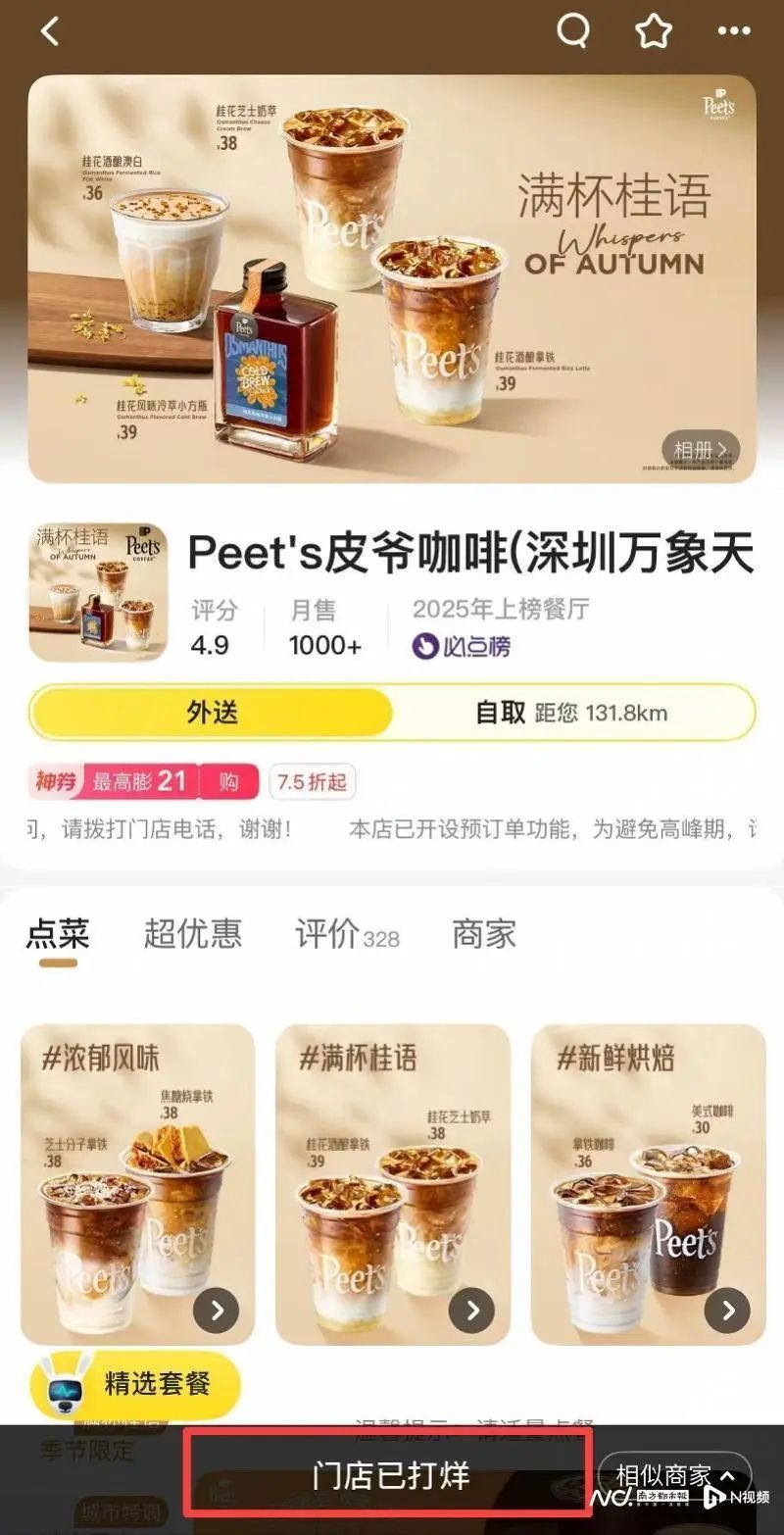
Core Viewpoint - Peet's Coffee, a well-known global coffee chain, has closed its first store in South China, located in Shenzhen, due to the expiration of its lease, reflecting a broader trend of store closures amid strategic adjustments in the competitive coffee market [1][4][6]. Company Summary - Peet's Coffee opened its first store in South China in September 2021 and has operated for nearly four years before closing [4]. - The company has recently closed several other locations, including its first store in Guangzhou and others in Hangzhou and Beijing, primarily due to lease expirations [4][6]. - Peet's Coffee has approximately 270 stores across 20 provinces and 35 core cities in China, with plans to continue expanding its store count in the second half of the year [4][6]. - The parent company, JDE Peet's, reported a strong organic sales growth of 23.8% for Peet's Coffee in China, contributing to a global sales increase of 7.9% [4]. Industry Summary - The coffee market in China is experiencing intense competition, with various brands engaging in price wars, leading to a shift in strategies among coffee retailers [6][7]. - Analysts suggest that the restaurant industry is entering a phase of consolidation, where companies are closing underperforming stores while opening new ones in more strategic locations [7]. - Peet's Coffee has adopted a more cautious growth strategy, focusing on operational efficiency and quality rather than engaging in price wars [6][9]. - The introduction of the Ora Coffee brand, which offers more affordable products, indicates a response to changing consumer preferences and market dynamics [9].
突然闭店!知名品牌又一门店退场
券商中国· 2025-08-10 05:54
一要干活儿就犯困? 说到提神办法 很多深圳er会选择来一杯咖啡 相信对于爱喝咖啡的广东人来讲 对这家咖啡一定不陌生 皮爷咖啡(Peet's Coffee) 近日, 全球知名咖啡连锁品牌皮爷咖啡(Peet's Coffee)在华南地区的首店——深圳万象天地店已 显示暂停营业, 有消息称是因为租约到期后关店。 大众点评显示,该店于2021年8月被收录, 这意味着该品牌华南首店在进入中国市场4年后悄然退 场。 此前,媒体报道皮爷咖啡于今年还关闭了广州、杭州、北京等地的多家门店。 除了皮爷咖啡,去年精品咖啡Seesaw也被爆出关闭了全国近半门店,还发生了员工欠薪的纠纷;另 一精品咖啡M Stand自去年开始开店速度大幅降低。 首家皮爷咖啡悄然退场 南都N视频记者发现,不少网友在社交平台发布了深圳万象天地店闭店的消息, 有部分门店老客在 营业的最后一天还特意赶去打卡。 有网友表示 前几天还来过,怎么说没就没了 图图图 ¥69/人 今天是万象天地皮爷店最后一天,照例一早起床去 喝一杯,看看它,听听音乐,一转眼陪了我快4年的 咖啡店. 对于我来说对它更像是一个老朋友,承载 着我这几年的心情,我的开心不开心,当我心情不 好时 ...

突然闭店!知名品牌又一门店退场,此前已关多家高人气店
Nan Fang Du Shi Bao· 2025-08-10 01:10
Group 1 - Peet's Coffee has closed its first store in South China, located in Shenzhen, after four years of operation, due to the expiration of its lease [4][12][16] - The closure of Peet's Coffee reflects a broader trend in the specialty coffee market in China, where several brands, including Seesaw and M Stand, have also reduced their store counts significantly [6][17] - Local coffee chains like Luckin Coffee and Kudi Coffee are rapidly expanding and capturing market share, driven by competitive pricing strategies [18][22] Group 2 - The coffee market in China is undergoing a transformation, with a shift in consumer perception towards coffee as an everyday beverage rather than a luxury item [20][26] - The price war initiated by Kudi Coffee and Luckin Coffee, offering products at 9.9 yuan, has reshaped the competitive landscape, forcing established brands like Starbucks to adapt their pricing strategies [18][20] - New entrants from the tea beverage sector, such as Lucky Coffee and Guming, are entering the coffee market, leveraging existing supply chains and networks to offer competitively priced products [23][25][26]

瑞幸闯入星巴克腹地
Jing Ji Ri Bao· 2025-08-09 21:52
Core Viewpoint - Luckin Coffee is making a bold entry into the U.S. market by opening two stores in New York City, signaling a competitive challenge to Starbucks, particularly in the coffee market where it has already gained significant market share in China [1][2]. Group 1: Market Position and Strategy - Luckin Coffee has successfully expanded its market share in China, surpassing Starbucks in total store count, quarterly revenue, and annual revenue by 2024 [2]. - The company has adopted a digital-first approach, utilizing mobile app-based ordering and promotions to attract consumers, which has proven effective in its home market [1][2]. - In the U.S., Luckin Coffee is replicating its successful Chinese model, offering a mix of popular coffee types and unique beverages from its Chinese menu [1]. Group 2: Competitive Landscape - Starbucks has seen a decline in its market share in China, dropping from over 40% in 2017 to 14% in 2024, despite the coffee market growing at an annual rate of 15% [2]. - The competitive environment in the U.S. is challenging, with Starbucks holding approximately 40% market share and over 17,000 locations, while Luckin's revenue is significantly lower, at only one-tenth of Starbucks' market value [4]. - Starbucks is attempting to adapt by introducing more non-coffee beverages and lowering prices, but faces challenges as consumer preferences shift towards convenience and value [3]. Group 3: Future Outlook - Luckin Coffee's future success in the U.S. will depend on its ability to adapt to a highly competitive and culturally diverse market, requiring ongoing evolution in branding, service, and operational strategies [4]. - The coffee industry is characterized by competition not just in products, but also in brand philosophy, consumer experience, and lifestyle alignment, indicating that understanding future consumer preferences will be crucial for market positioning [4].

40元咖啡接连“败走”中国,谁还买单?
东京烘焙职业人· 2025-08-09 08:33
Core Viewpoint - Peet's Coffee, referred to as the "ancestor of Starbucks," is facing significant challenges in the Chinese market, with recent store closures indicating a struggle to maintain its presence and competitiveness [7][8][15]. Industry Dynamics - Peet's Coffee has closed several key locations, including its first store in South China, which was considered a benchmark for its market presence [8][11]. - Despite a reported increase in organic sales and a 23.8% growth in adjusted EBIT for Peet's Coffee in China, the brand is experiencing anxiety over its market position, leading to the introduction of a low-cost sub-brand and new consumption policies [11][14]. - The overall specialty coffee market in China is facing a slowdown, with growth rates dropping from 25% in 2023 to an expected 12% in 2025, contrasting with a global growth forecast of 9.2% [24][30]. Competitive Pressures - The specialty coffee sector is under pressure from both internal cost structures and external price wars, with many brands, including Peet's, Seesaw, and M Stand, experiencing operational challenges and closures [28][21]. - The average consumer price for coffee is declining, with significant drops in both takeaway and in-store purchases, indicating a shift towards more price-sensitive consumer behavior [30][39]. - A growing number of coffee-related businesses are entering the market, increasing competition and market saturation, with a 19.54% year-on-year increase in registered coffee enterprises [29]. Consumer Behavior Shifts - Consumer preferences are shifting towards value for money, with 80% of coffee consumers making decisions based on price, and only 4% willing to pay over 25 yuan for coffee [38]. - The traditional "third space" concept associated with specialty coffee is losing appeal, as younger consumers gravitate towards independent coffee shops and affordable local brands [38][42]. - The average consumer's perception of coffee is evolving into a daily necessity, leading to a decline in the average transaction value for both delivery and in-store purchases [30][39]. Future Outlook - The specialty coffee market is expected to undergo a significant transformation, requiring brands to adapt to new consumer demands and find a balance between cost control, product innovation, and localization [42]. - Brands like Peet's Coffee are at a crossroads, needing to redefine their positioning to cater to both niche and mainstream markets while overcoming the challenges posed by increased competition and changing consumer preferences [42].
美国对巴西加征50%高关税给智利带来难得机遇
Shang Wu Bu Wang Zhan· 2025-08-08 17:31
Core Viewpoint - The recent trade dispute between the U.S. and Brazil, initiated by a 50% tariff on various Brazilian imports, presents both challenges and opportunities for Chilean exports to the U.S. [1] Group 1: Trade Dispute Details - On July 30, U.S. President Trump signed an executive order imposing a 50% tariff on multiple products imported from Brazil [1] - The tariff affects 700 product categories, including civilian aircraft, energy, orange juice, precious metals, timber, and fertilizers, which account for 45% of Brazil's total exports to the U.S. [1] Group 2: Implications for Chile - Chilean analysts believe that the trade dispute provides a rare opportunity for Chile to increase its exports to the U.S. by substituting products previously imported from Brazil [1] - Chile can potentially boost its exports of coffee, meat products, and fruits to the U.S. as a result of Brazil's increased tariffs [1] Group 3: Competitive Landscape - Despite the opportunities, there is a risk that Brazil may export its products at lower prices to third countries, including Chile, to mitigate the impact of the tariffs [1] - This could lead to increased competition for similar products in the Chilean market, particularly in chicken and certain agricultural products [1]